
Salicylic Acid Is recorded written history as far
- Slides: 15
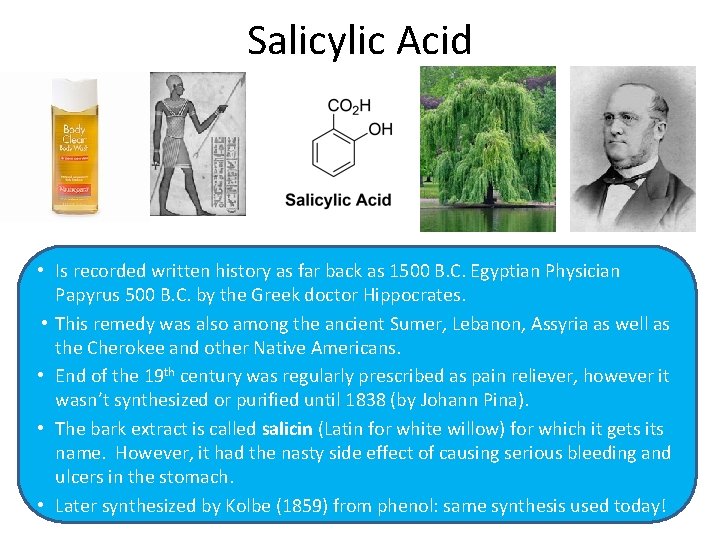
Salicylic Acid • Is recorded written history as far back as 1500 B. C. Egyptian Physician Papyrus 500 B. C. by the Greek doctor Hippocrates. • This remedy was also among the ancient Sumer, Lebanon, Assyria as well as the Cherokee and other Native Americans. • End of the 19 th century was regularly prescribed as pain reliever, however it wasn’t synthesized or purified until 1838 (by Johann Pina). • The bark extract is called salicin (Latin for white willow) for which it gets its name. However, it had the nasty side effect of causing serious bleeding and ulcers in the stomach. • Later synthesized by Kolbe (1859) from phenol: same synthesis used today!
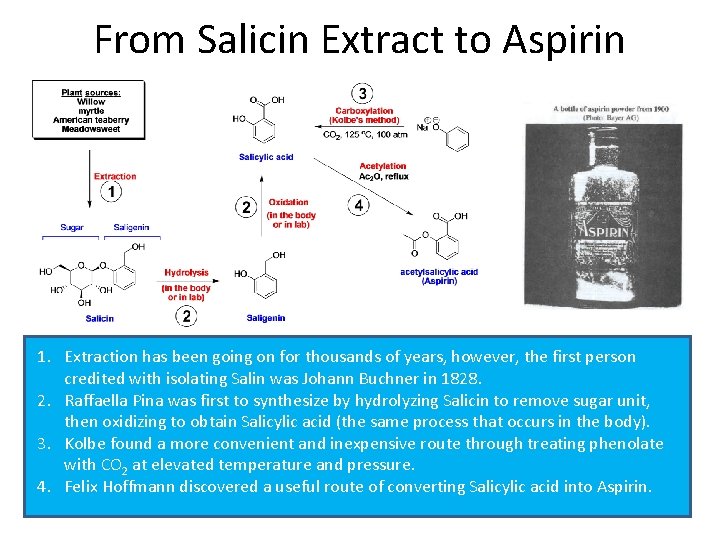
From Salicin Extract to Aspirin 1. Extraction has been going on for thousands of years, however, the first person credited with isolating Salin was Johann Buchner in 1828. 2. Raffaella Pina was first to synthesize by hydrolyzing Salicin to remove sugar unit, then oxidizing to obtain Salicylic acid (the same process that occurs in the body). 3. Kolbe found a more convenient and inexpensive route through treating phenolate with CO 2 at elevated temperature and pressure. 4. Felix Hoffmann discovered a useful route of converting Salicylic acid into Aspirin.
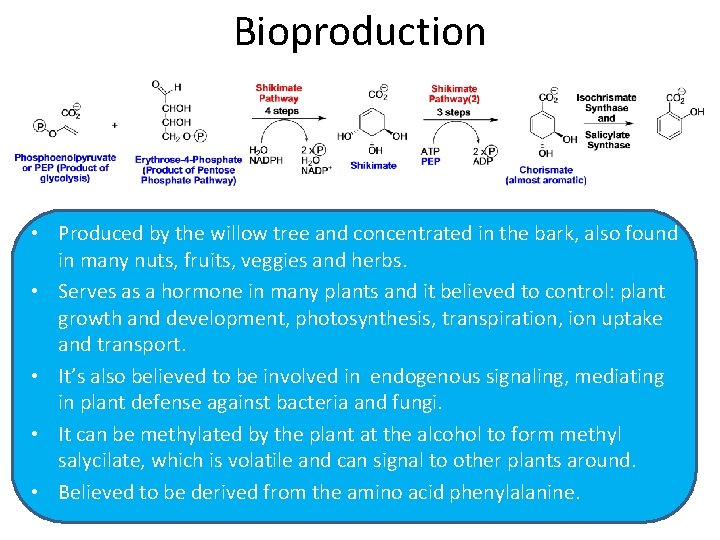
Bioproduction • Produced by the willow tree and concentrated in the bark, also found in many nuts, fruits, veggies and herbs. • Serves as a hormone in many plants and it believed to control: plant growth and development, photosynthesis, transpiration, ion uptake and transport. • It’s also believed to be involved in endogenous signaling, mediating in plant defense against bacteria and fungi. • It can be methylated by the plant at the alcohol to form methyl salycilate, which is volatile and can signal to other plants around. • Believed to be derived from the amino acid phenylalanine.
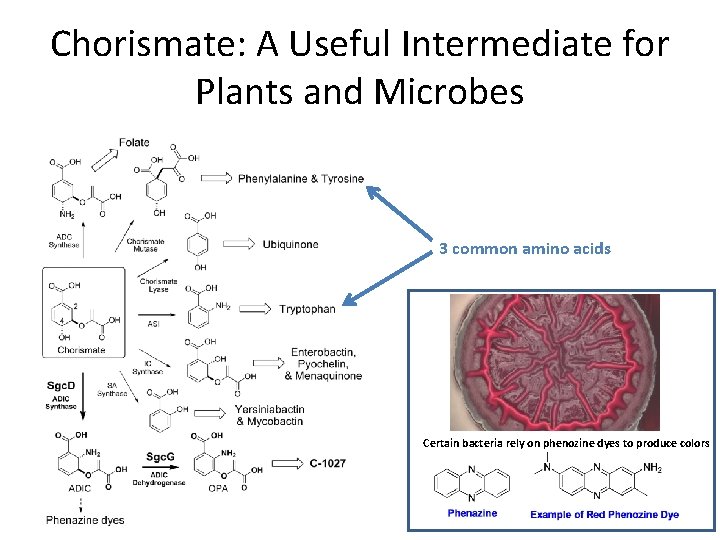
Chorismate: A Useful Intermediate for Plants and Microbes 3 common amino acids Certain bacteria rely on phenozine dyes to produce colors
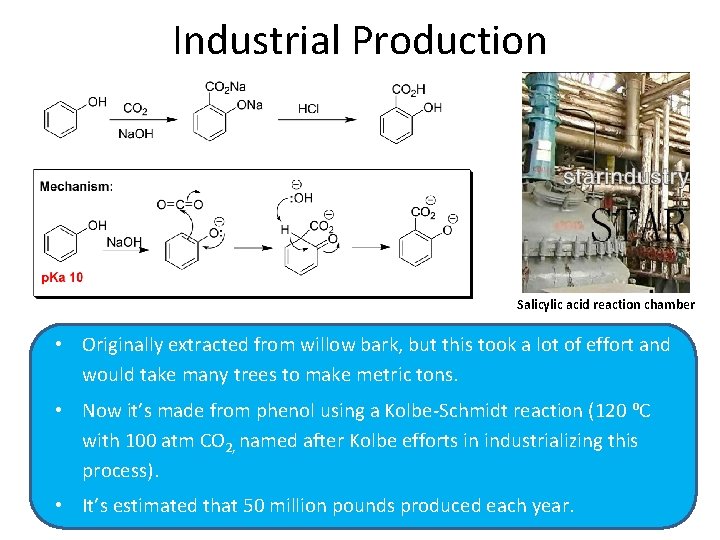
Industrial Production Salicylic acid reaction chamber • Originally extracted from willow bark, but this took a lot of effort and would take many trees to make metric tons. • Now it’s made from phenol using a Kolbe-Schmidt reaction (120 o. C with 100 atm CO 2, named after Kolbe efforts in industrializing this process). • It’s estimated that 50 million pounds produced each year.
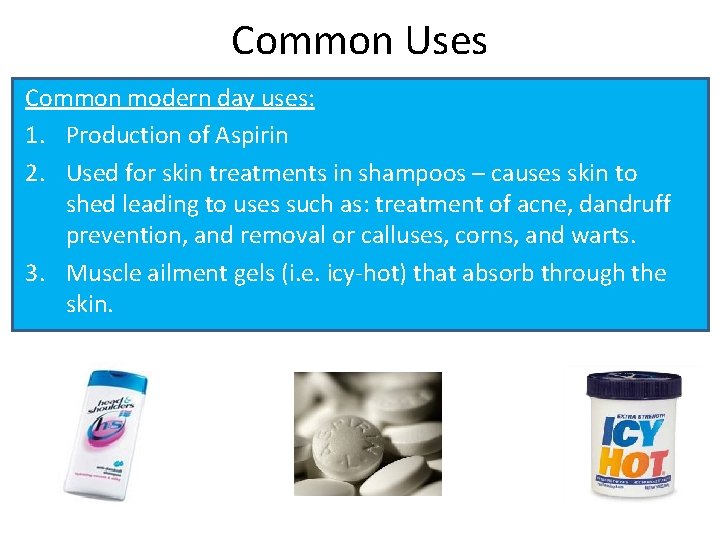
Common Uses Common modern day uses: 1. Production of Aspirin 2. Used for skin treatments in shampoos – causes skin to shed leading to uses such as: treatment of acne, dandruff prevention, and removal or calluses, corns, and warts. 3. Muscle ailment gels (i. e. icy-hot) that absorb through the skin.
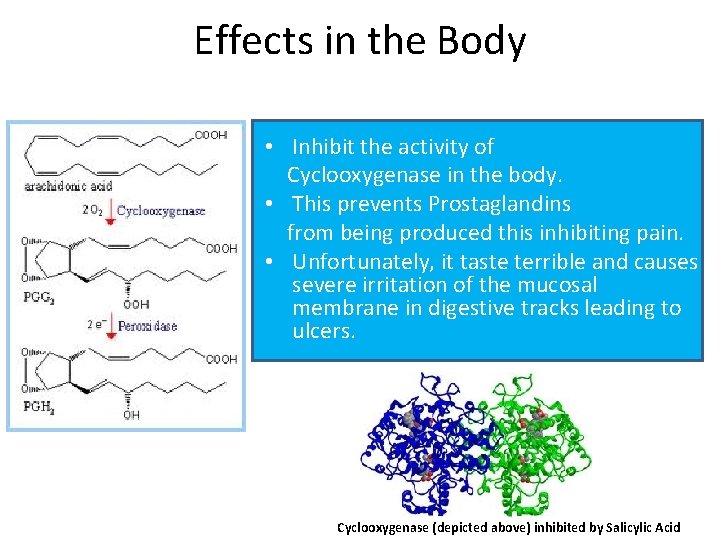
Effects in the Body • Inhibit the activity of Cyclooxygenase in the body. • This prevents Prostaglandins from being produced this inhibiting pain. • Unfortunately, it taste terrible and causes severe irritation of the mucosal membrane in digestive tracks leading to ulcers. Cyclooxygenase (depicted above) inhibited by Salicylic Acid
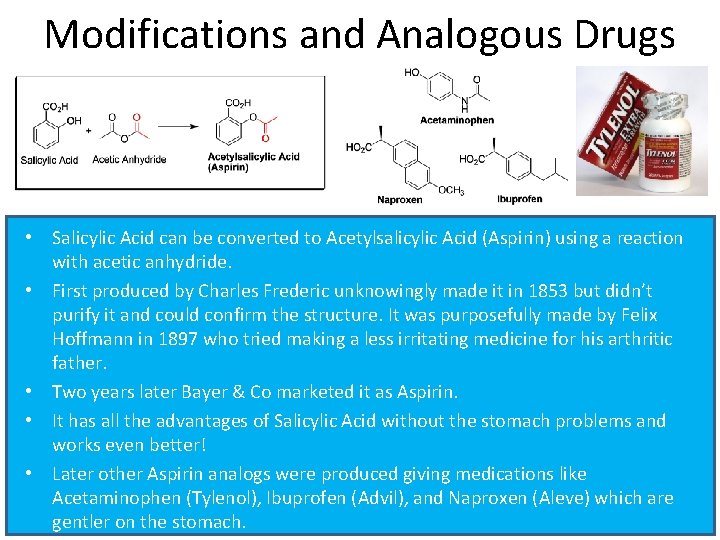
Modifications and Analogous Drugs • Salicylic Acid can be converted to Acetylsalicylic Acid (Aspirin) using a reaction with acetic anhydride. • First produced by Charles Frederic unknowingly made it in 1853 but didn’t purify it and could confirm the structure. It was purposefully made by Felix Hoffmann in 1897 who tried making a less irritating medicine for his arthritic father. • Two years later Bayer & Co marketed it as Aspirin. • It has all the advantages of Salicylic Acid without the stomach problems and works even better! • Later other Aspirin analogs were produced giving medications like Acetaminophen (Tylenol), Ibuprofen (Advil), and Naproxen (Aleve) which are gentler on the stomach.
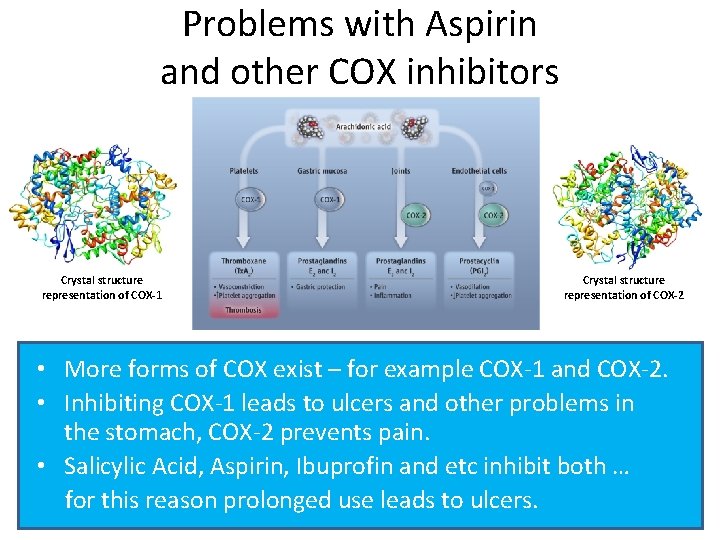
Problems with Aspirin and other COX inhibitors Crystal structure representation of COX-1 Crystal structure representation of COX-2 • More forms of COX exist – for example COX-1 and COX-2. • Inhibiting COX-1 leads to ulcers and other problems in the stomach, COX-2 prevents pain. • Salicylic Acid, Aspirin, Ibuprofin and etc inhibit both … for this reason prolonged use leads to ulcers.
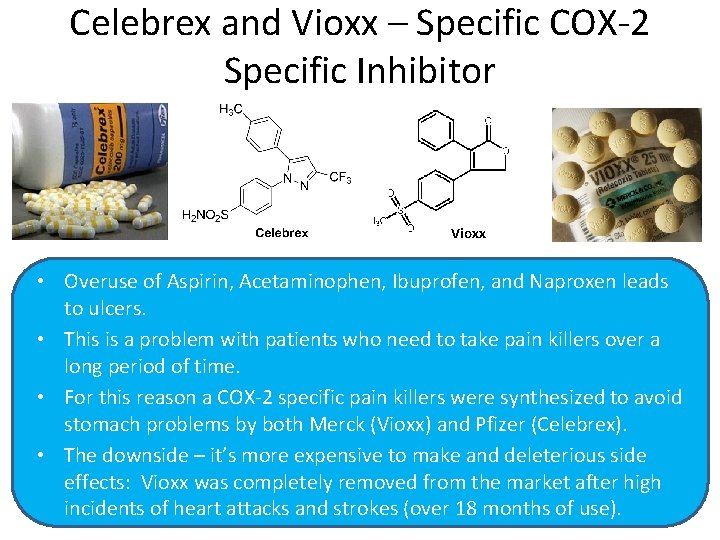
Celebrex and Vioxx – Specific COX-2 Specific Inhibitor Vioxx • Overuse of Aspirin, Acetaminophen, Ibuprofen, and Naproxen leads to ulcers. • This is a problem with patients who need to take pain killers over a long period of time. • For this reason a COX-2 specific pain killers were synthesized to avoid stomach problems by both Merck (Vioxx) and Pfizer (Celebrex). • The downside – it’s more expensive to make and deleterious side effects: Vioxx was completely removed from the market after high incidents of heart attacks and strokes (over 18 months of use).
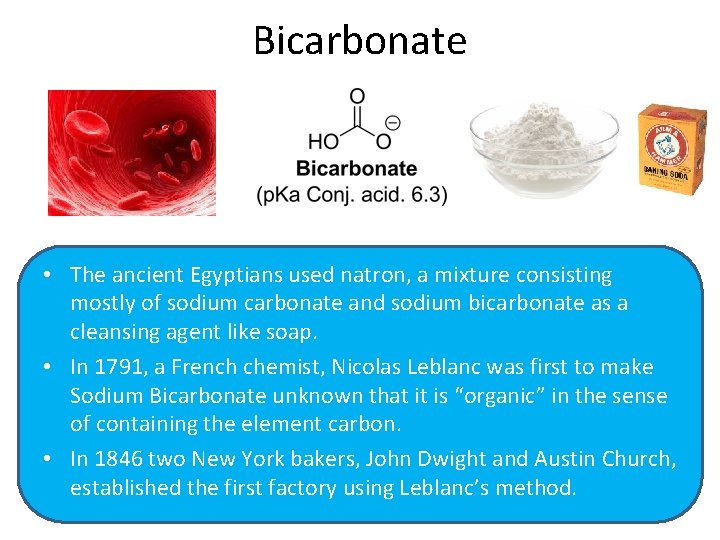
Bicarbonate • The ancient Egyptians used natron, a mixture consisting mostly of sodium carbonate and sodium bicarbonate as a cleansing agent like soap. • In 1791, a French chemist, Nicolas Leblanc was first to make Sodium Bicarbonate unknown that it is “organic” in the sense of containing the element carbon. • In 1846 two New York bakers, John Dwight and Austin Church, established the first factory using Leblanc’s method.
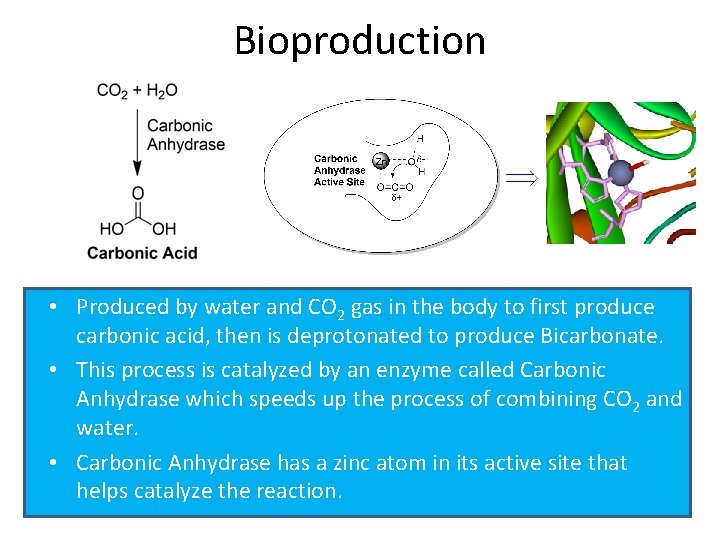
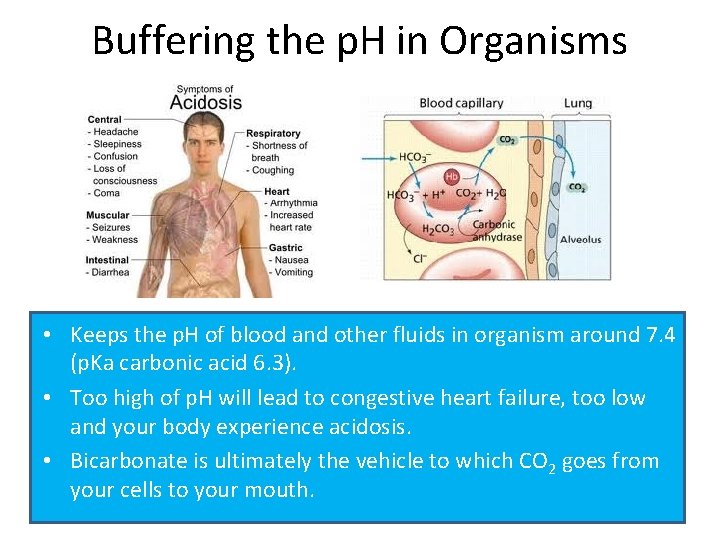
Bioproduction • Produced by water and CO 2 gas in the body to first produce carbonic acid, then is deprotonated to produce Bicarbonate. • This process is catalyzed by an enzyme called Carbonic Anhydrase which speeds up the process of combining CO 2 and water. • Carbonic Anhydrase has a zinc atom in its active site that helps catalyze the reaction.
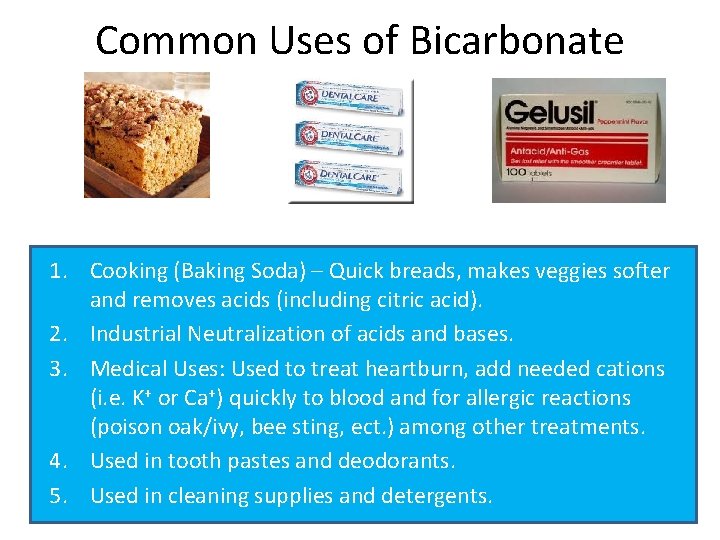
Common Uses of Bicarbonate 1. Cooking (Baking Soda) – Quick breads, makes veggies softer and removes acids (including citric acid). 2. Industrial Neutralization of acids and bases. 3. Medical Uses: Used to treat heartburn, add needed cations (i. e. K+ or Ca+) quickly to blood and for allergic reactions (poison oak/ivy, bee sting, ect. ) among other treatments. 4. Used in tooth pastes and deodorants. 5. Used in cleaning supplies and detergents.
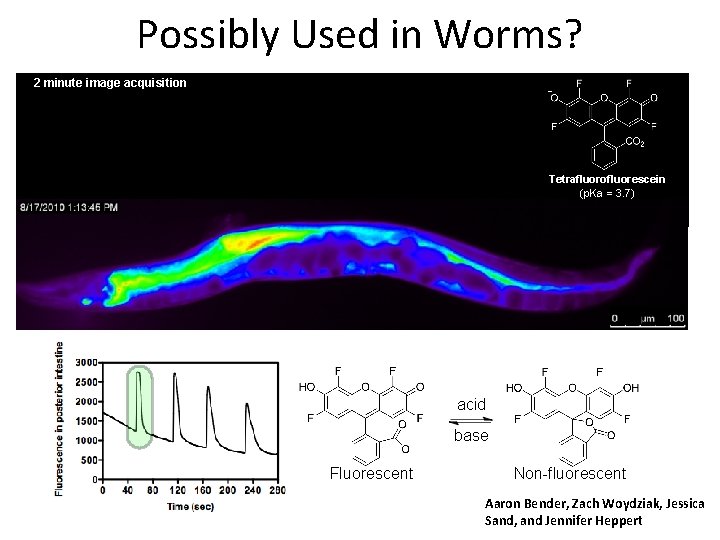
Possibly Used in Worms? 2 minute image acquisition Tetrafluorofluorescein (p. Ka = 3. 7) Intestinal lumen acid base Fluorescent Non-fluorescent Aaron Bender, Zach Woydziak, Jessica Sand, and Jennifer Heppert
Buffering the p. H in Organisms • Keeps the p. H of blood and other fluids in organism around 7. 4 (p. Ka carbonic acid 6. 3). • Too high of p. H will lead to congestive heart failure, too low and your body experience acidosis. • Bicarbonate is ultimately the vehicle to which CO 2 goes from your cells to your mouth.