
SALES CONTROL SYSTEM INTRODUCTION Every Hotel needs proper
- Slides: 15
SALES CONTROL SYSTEM INTRODUCTION: Every Hotel needs proper and effective control system in order to run its operations smoothly and effectively, without any fraudulent activities. This control is required at each and every stage of the Food and Beverage Cycle, i. e. : Taking the customer’s food or beverage order Announcing these orders to kitchen or bar as the case may be Getting the order correct and ready on time Serving the correct order, on time with correct serving temperature to the guest Making the correct bill Setting the bill Closing of the restaurant
CHECKING SYSTEM IT REFERS TO: • ORDER TAKING • BILLING METHODS TYPES IN CHECKING SYSTEMS : • CHECK & BILL SYSTEM (FAST FOOD & CAFES) • SERVICE WITH ORDER (CANTEENS) • DUPLICATE SYSTEM (RESTAURANTS) • TRIPLICATE SYSTEM (UPSCALE RESTAURANT)
SYSTEMS IN CHECKING: • MANUAL • COMPUTERISED
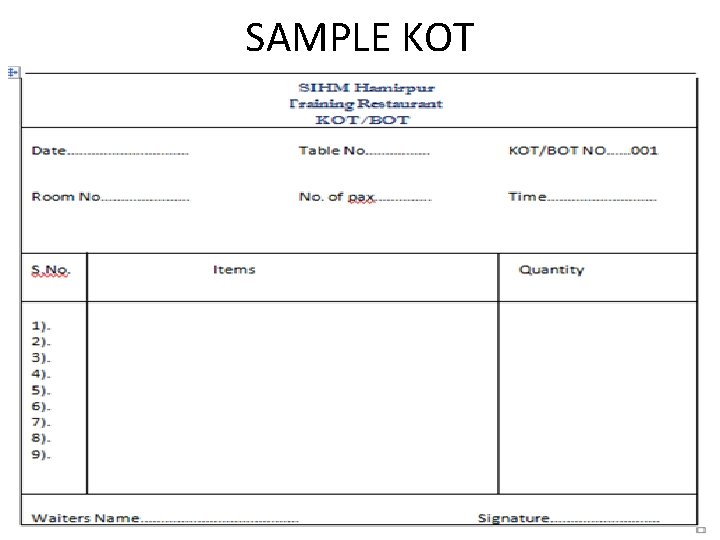
KOT KITCHEN ORDER TICKET/TOKEN KOT is prepared by food service personnel to intimate the food order of the guest to the kitchen staff. It helps in serving the right order to the right person. The KOT consists of details such as table number, covers, name of the waiter, date, time, items ordered, and its quantity.
TYPES OF KOT DUPLICATE (2 COPIES) TRILICATE (3 COPIES) SUIVANT (Additional Kot) SUPPLEMENT (For extra portion) ACCIDENT RETOUR/EN PLACE (Replacement For wrong dish)
SAMPLE KOT
BILLING • In the restaurants, when the guest request for the bill, the waiter collects it from the cashier and checks it whether all items are entered and priced correctly. It is always advisable for the waiter to double check the addition. Then the bill is presented to the guest in a bill folder. • Many types of billing methods are used in foods service operations. The type of method used depends on style and volume of business
BILLING TYPES Bill as check: in a duplicate checking system, the second copy of the food check is used as a bill Separate bills: The bill is made for the second copy of the food check. The second is given to the cashier. Based on that, the cashier prepares a bill that has two copies. The top copy of the bill is presented to the guest.
BILLING TYPES Pre-paid: The customer purchases tickets or coupons in advance, either for specific meal or specific value. No-Charge: in this system, the guest is not charged for receiving the goods or services. Deferred: This type of system is used in catering function. In this, a service has been requested by an individual, firm, or company, which has been confirmed and taken place.
MODES OF PAYMENTS CASH CREDIT CARDS DEBIT CARDS CHEQUES TRAVELLER’S CHEQUE
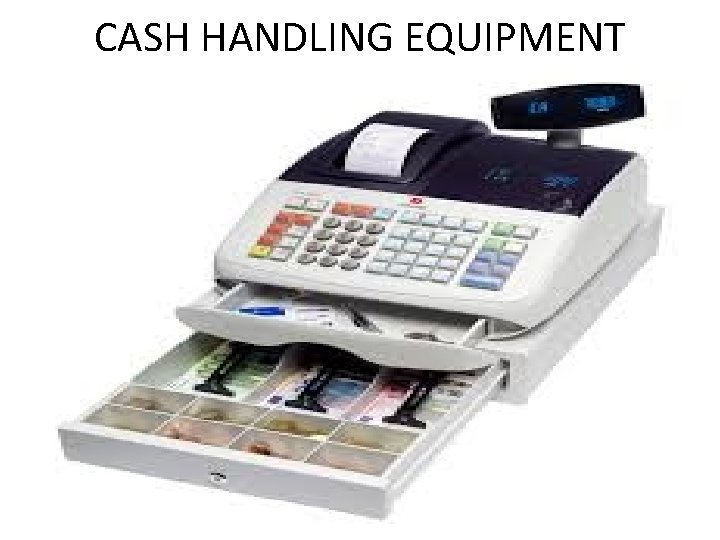
CASH HANDLING EQUIPMENT
A BILLING MACHINE • An electronic cash register is a mechanical device used to calculating and recording sales transactions. It usually prints a receipt for the customer. It has an attached drawer for storing cash. The cash drawer can be opened after a sale, except when special keys, which only senior employees have. This reduces the risk of cash pilferage. Its following advantages are; Print checks, including the printing of previously entered items. Provide an analysis of sales by waiter per hour shift period. Provide an analysis of sales made by type of product. Analysis of sales by method of payment (cash, cheque, credit card, etc…) • Complete automatic tax calculations and cover service charges. • • •
RECORD KEEPING • Sales Summary Sheet The sales summary sheet is an analysis of all the transactions/cash taken during the particular period of service. It is prepared to know the revenue generated through the sales of food, beverages, the modes of bill settlement- cash, cheque, credit card, amount charged to room accounts, tax amount, discounts given etc. the basic information required in a sales summary sheet includes the following:
RECORD KEEPING Ø Date • • • Ø Bill number Ø Table number Ø Number of cover per table Ø Bill amount Ø Modes of payment- cash, credit card, cheque, posted to room Ø Analysis of food, beverages, and other sales items.
RECORD KEEPING Point-of –sale systems are computerized system incorporating registers, computers and peripheral equipments, usually on a computer network. These systems keep track of sale & can generate records used in accounting and book keeping