
Salem District 12 northwest Oregon counties Approximately 403
- Slides: 20
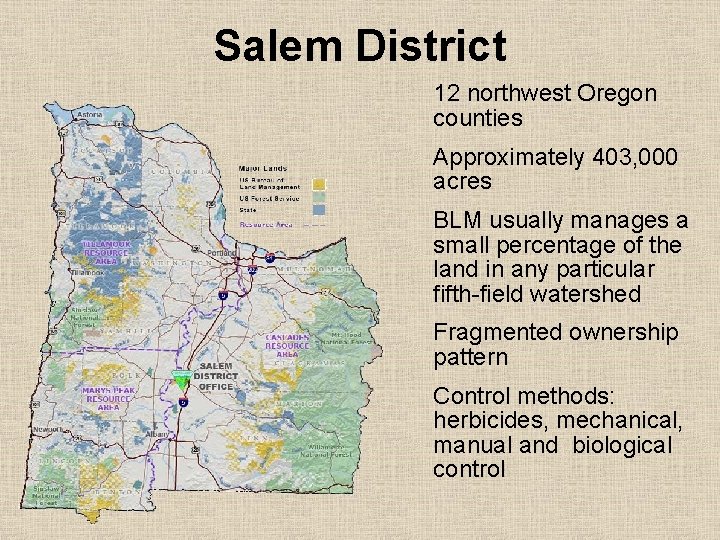
Salem District 12 northwest Oregon counties Approximately 403, 000 acres BLM usually manages a small percentage of the land in any particular fifth-field watershed Fragmented ownership pattern Control methods: herbicides, mechanical, manual and biological control
Invasive Plant Management in the Salem District • • Prevention and detection Education and awareness Inventory Planning Integrated weed management Coordination Monitoring, evaluation, research and technology transfer
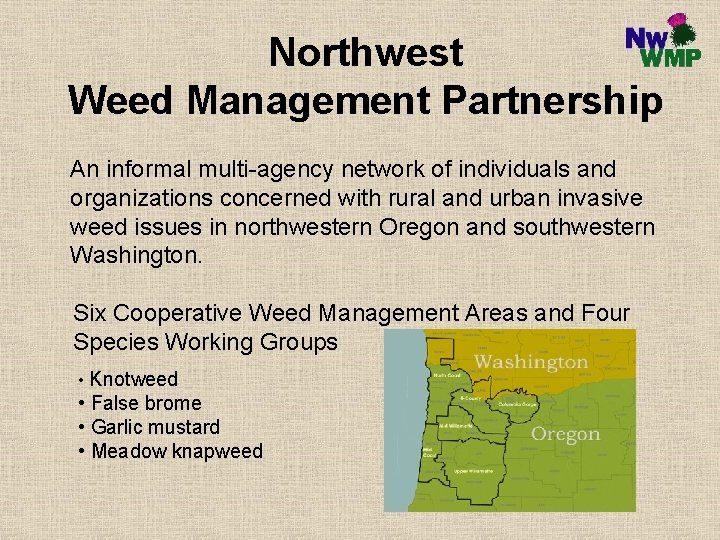
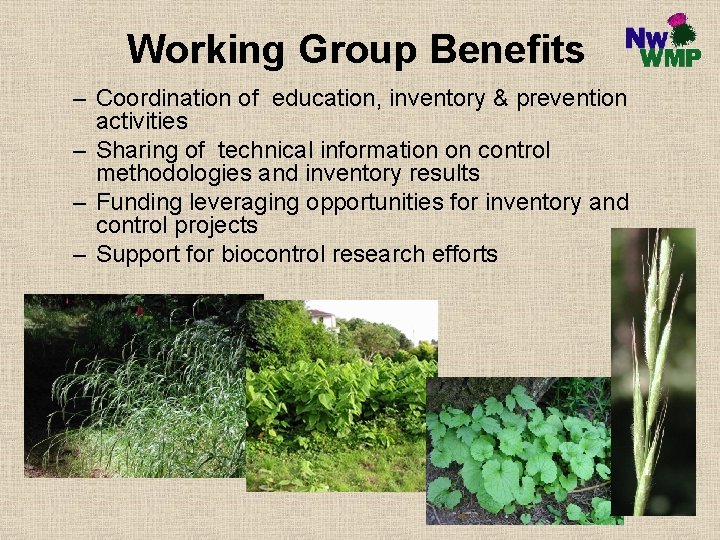
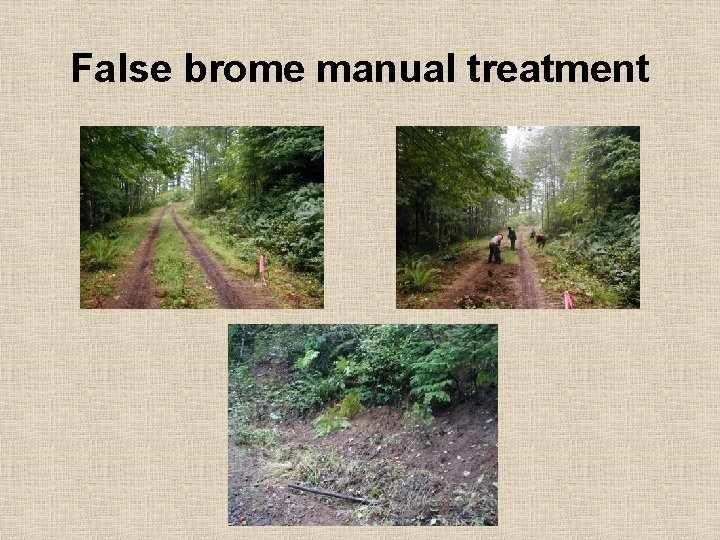
Northwest Weed Management Partnership An informal multi-agency network of individuals and organizations concerned with rural and urban invasive weed issues in northwestern Oregon and southwestern Washington. Six Cooperative Weed Management Areas and Four Species Working Groups • Knotweed • False brome • Garlic mustard • Meadow knapweed
Cooperative Weed Management Area Advantages • Technology transfer and information sharing • Early Detection Rapid Response • Partnered projects • Annual Management and Operating Plans: – Weed control and inventory projects – Outreach and education on priority species to slow further spread and gain support for control efforts
Working Group Benefits – Coordination of education, inventory & prevention activities – Sharing of technical information on control methodologies and inventory results – Funding leveraging opportunities for inventory and control projects – Support for biocontrol research efforts
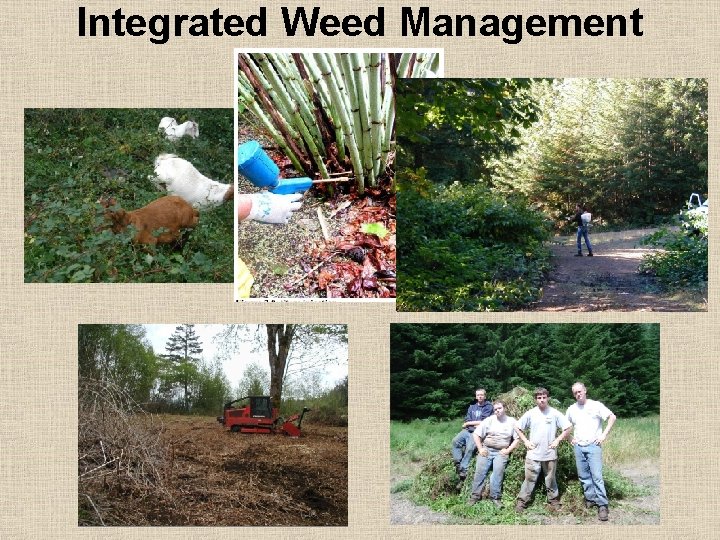
Integrated Weed Management
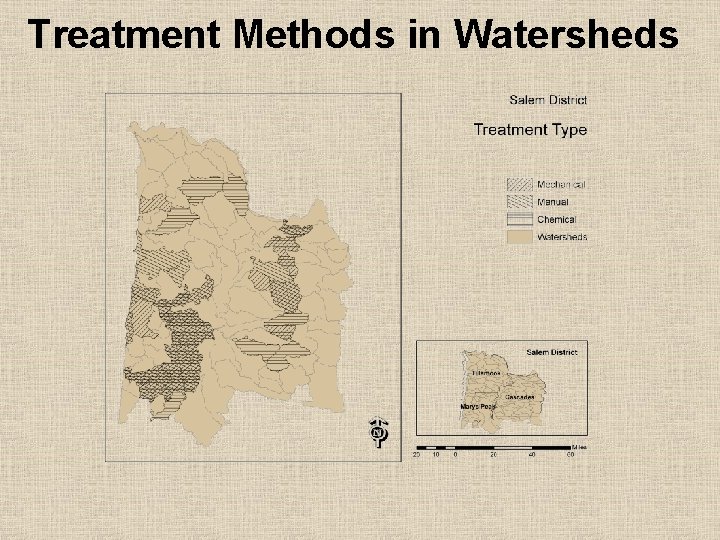
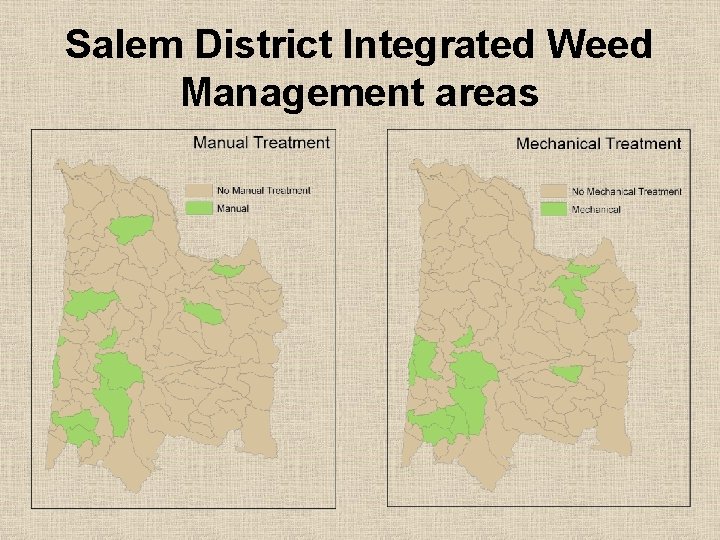
Treatment Methods in Watersheds
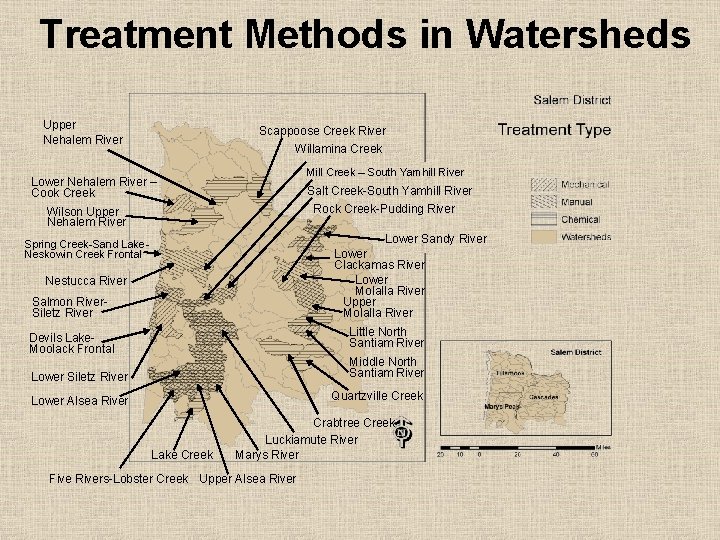
Treatment Methods in Watersheds Upper Nehalem River Scappoose Creek River Willamina Creek Mill Creek – South Yamhill River Lower Nehalem River – Cook Creek Salt Creek-South Yamhill River Rock Creek-Pudding River Wilson Upper Nehalem River Lower Sandy River Spring Creek-Sand Lake. Neskowin Creek Frontal Lower Clackamas River Lower Molalla River Upper Molalla River Nestucca River Salmon River. Siletz River Little North Santiam River Devils Lake. Moolack Frontal Lower Siletz River Middle North Santiam River Lower Alsea River Quartzville Creek Lake Creek Crabtree Creek Luckiamute River Marys River Five Rivers-Lobster Creek Upper Alsea River
Salem District Integrated Weed Management areas
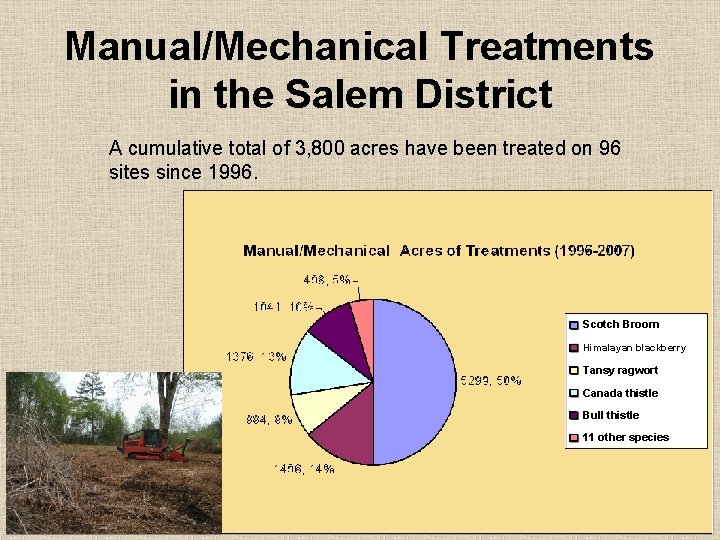
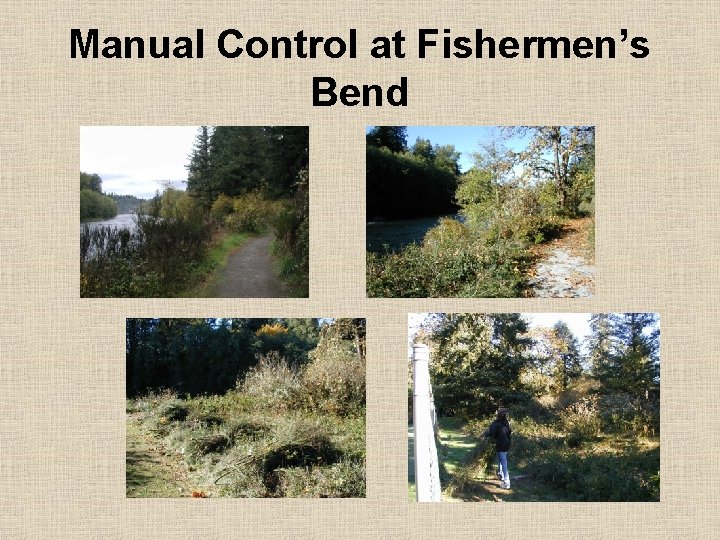
Manual/Mechanical Treatments in the Salem District A cumulative total of 3, 800 acres have been treated on 96 sites since 1996. Scotch Broom Himalayan blackberry Tansy ragwort Canada thistle Bull thistle 11 other species
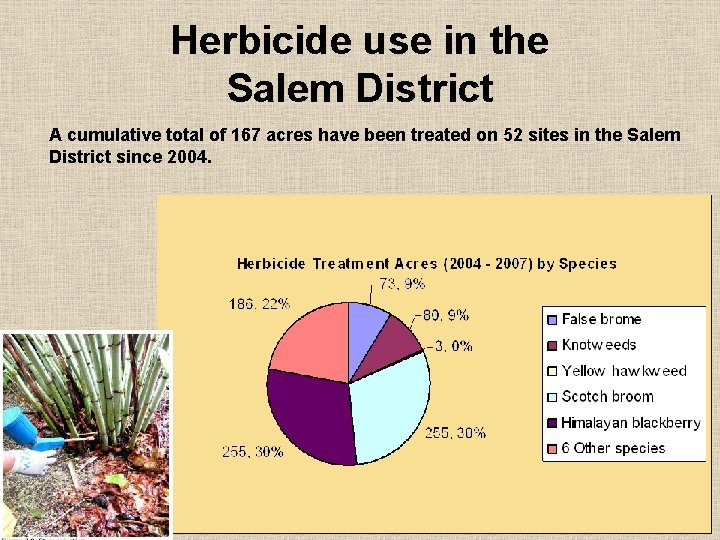
Herbicide use in the Salem District A cumulative total of 167 acres have been treated on 52 sites in the Salem District since 2004.
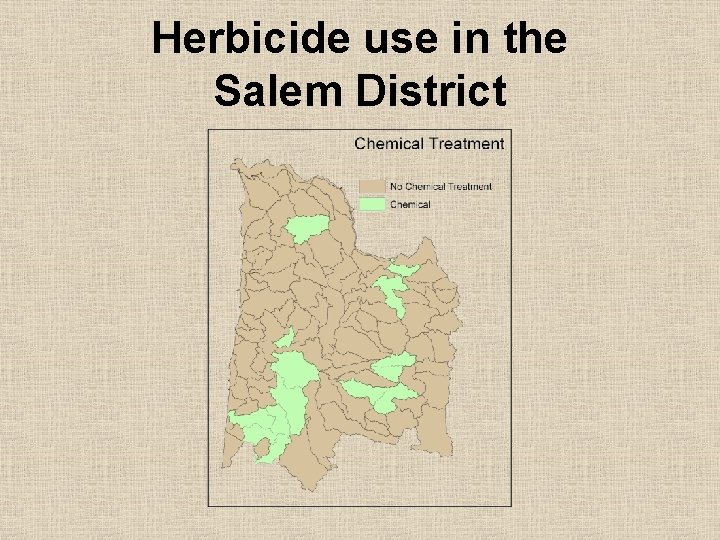
Herbicide use in the Salem District
Salem District Integrated Weed Management NEPA Coverage • Westside Salem Integrated Non-Native Plant Management Plan Decision Rationale EA # OR 080 -06 -09 • Cascades Resource Area Invasive Non-Native Plant Management Environmental Assessment Decision Rationale EA # OR-080 -02 -02 • Both tiered to the Record of Decision for the Northwest Area Noxious Weed Control Program (May 1987)
Pesticide Use Proposals (PUPs) etc. • PUPS ensure compliance with applicable laws, policies and NEPA decisions. • Five levels of review and approval culminating with the deputy state director • Adjacent land owners notification and coordination • Applications are done by contractors and cooperators. • Pesticide Application Records (PARs) – 24 /10
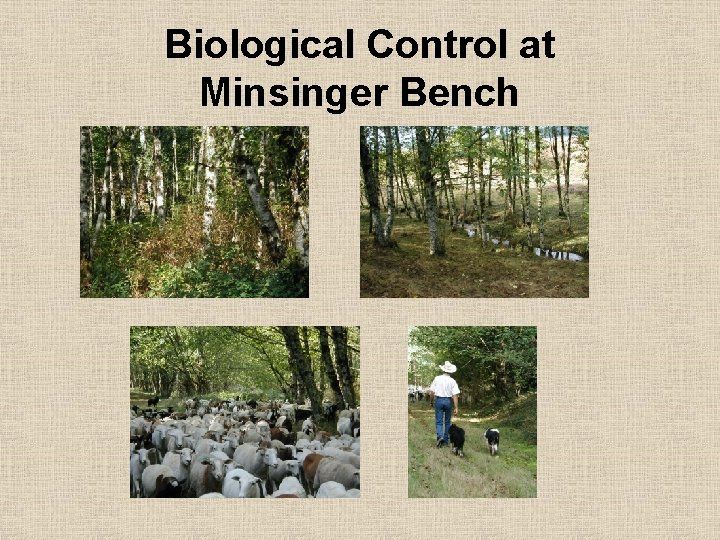
Biological Control in the Salem District • Coordinated through the Oregon Department of Agriculture • Uses approved natural enemies to invasive plants • Important integrated weed management tool since the 1970’s • Salem District already had a good distribution of available biological control agents in 1995 • No new releases have been made on Salem District administered lands since before 1995
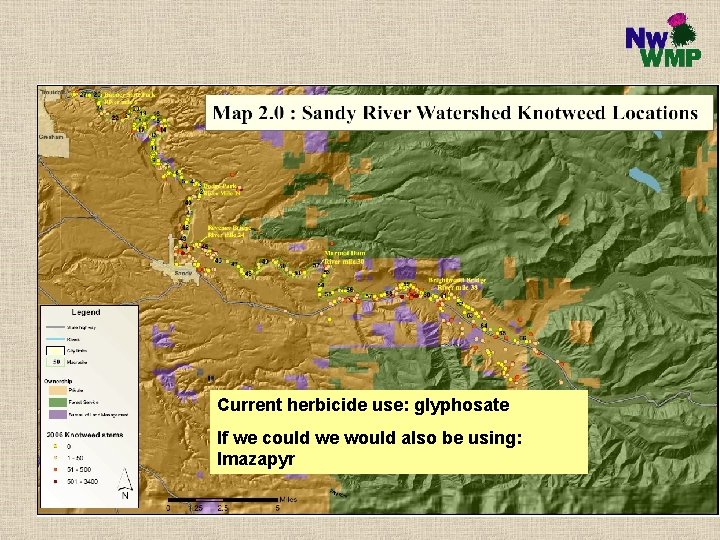
Current herbicide use: glyphosate If we could we would also be using: Imazapyr
Manual Control at Fishermen’s Bend
False brome manual treatment
Biological Control at Minsinger Bench
How Vegetation Treatment EIS Would Help • Ability to treat invasive species other than officially listed noxious weeds with herbicides. • Improve rapid response capabilities with more effective herbicides • Easier to effectively coordinate with neighbors and partners on treatment projects • Improve long term success and landscape health • Reduce long term costs