
SALADS Foods 2 PARTS OF A MEAL 1
- Slides: 19
SALADS Foods 2
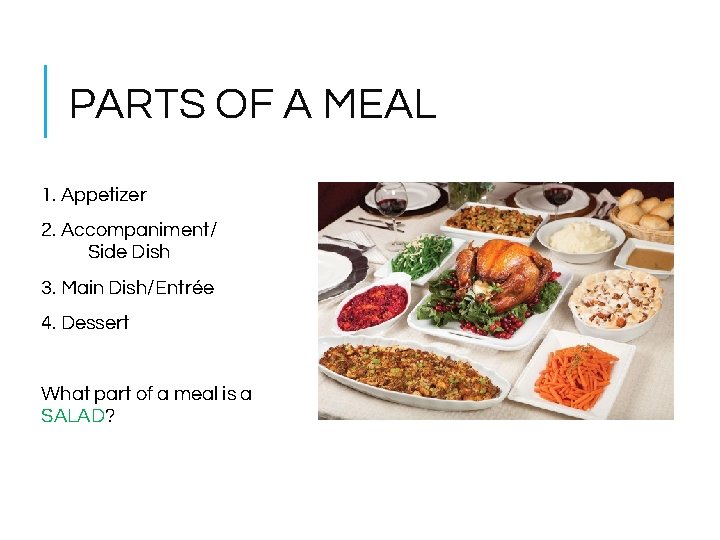
PARTS OF A MEAL 1. Appetizer 2. Accompaniment/ jkjkjkj. Side Dish 3. Main Dish/Entrée 4. Dessert What part of a meal is a SALAD?
4 SALAD CATEGORIES Appetizer salad - Small, light salad served before the main course. • Green, Caesar, etc Side Dish/Accompaniment - Served with and compliments the main course • Pasta, potato, fruit, vegetable, gelatin
4 SALAD CATEGORIES Main Dish – large salad, includes protein and is substantial and satisfying • Shredded Chicken, Beef spinach, etc… Dessert - Served after the main course. May be sweetened, molded, or frozen, using gelatin or fruit. Whipped cream is usually the “dressing” • Gelatin, fruit
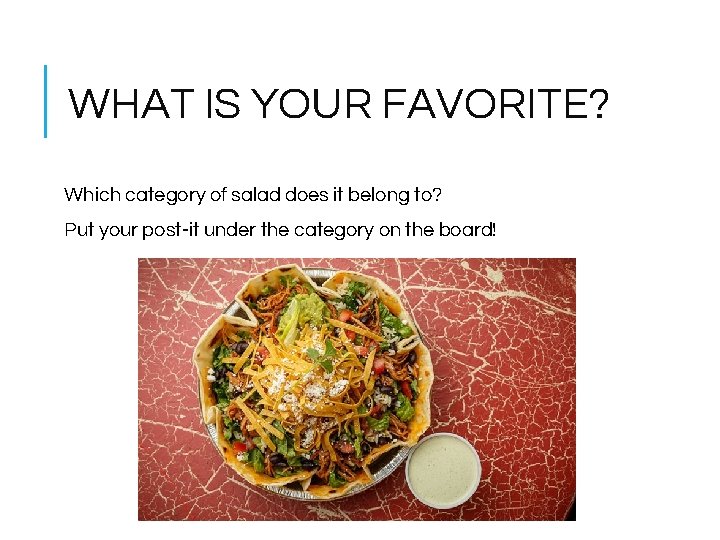
WHAT IS YOUR FAVORITE? Which category of salad does it belong to? Put your post-it under the category on the board!
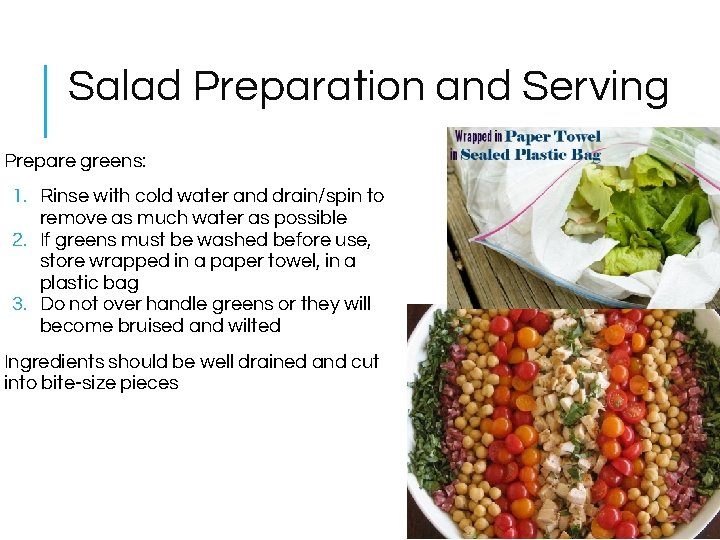
Salad Preparation and Serving Prepare greens: 1. Rinse with cold water and drain/spin to remove as much water as possible 2. If greens must be washed before use, store wrapped in a paper towel, in a plastic bag 3. Do not over handle greens or they will become bruised and wilted Ingredients should be well drained and cut into bite-size pieces
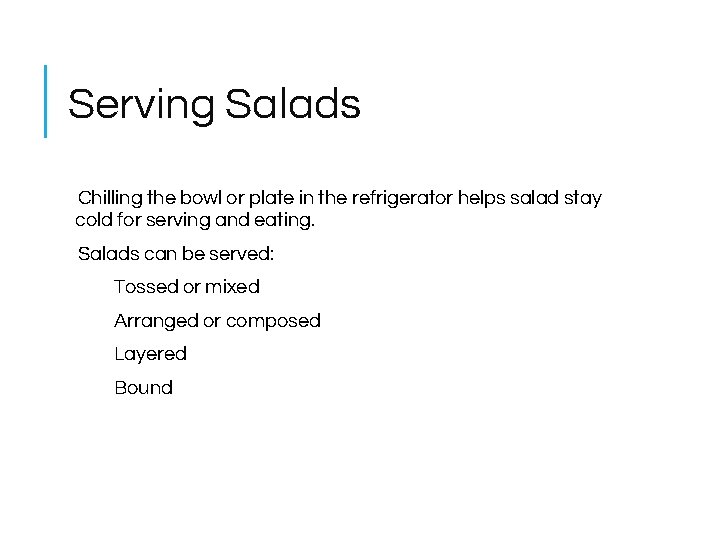
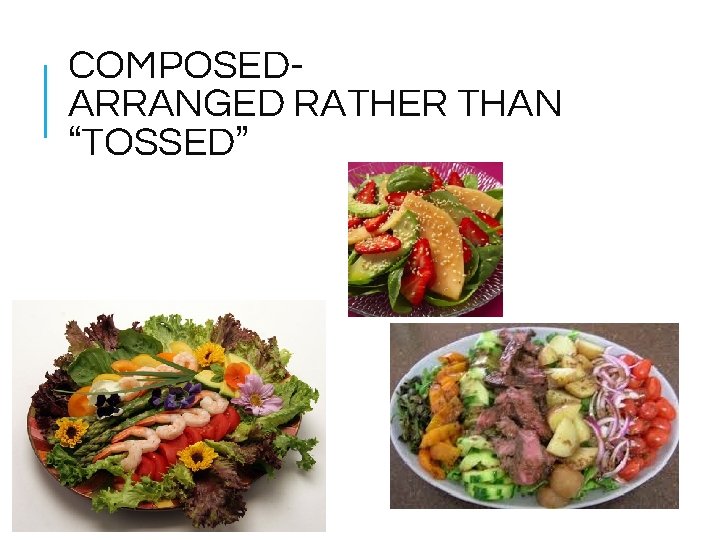
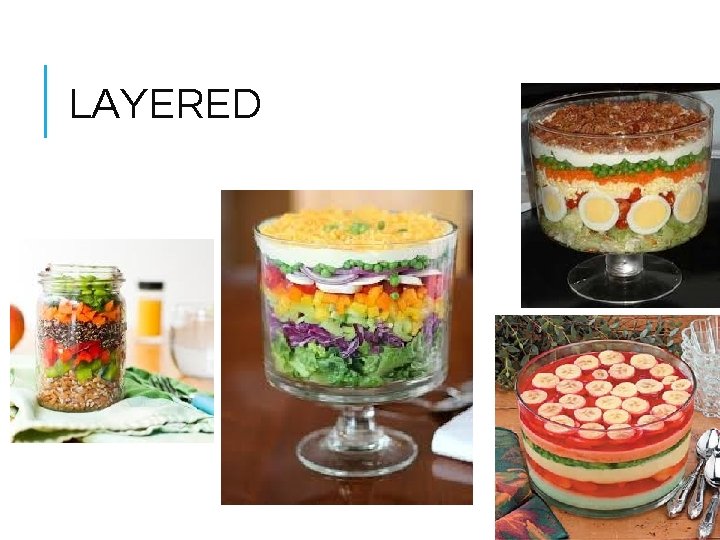
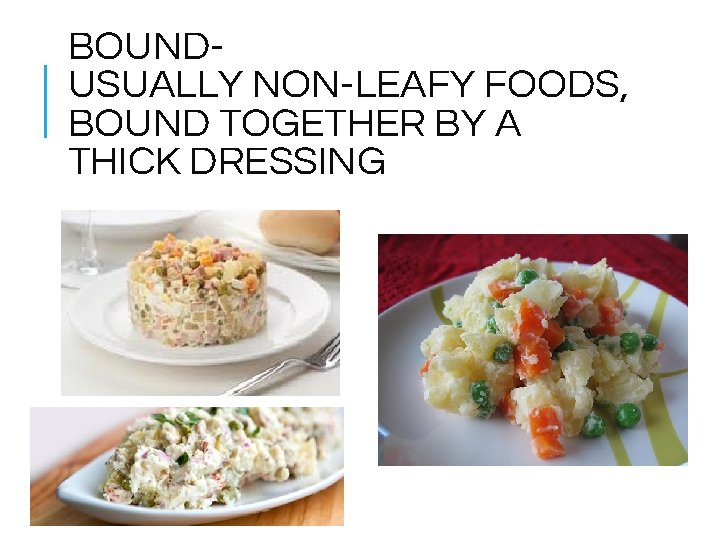
Serving Salads Chilling the bowl or plate in the refrigerator helps salad stay cold for serving and eating. Salads can be served: Tossed or mixed Arranged or composed Layered Bound
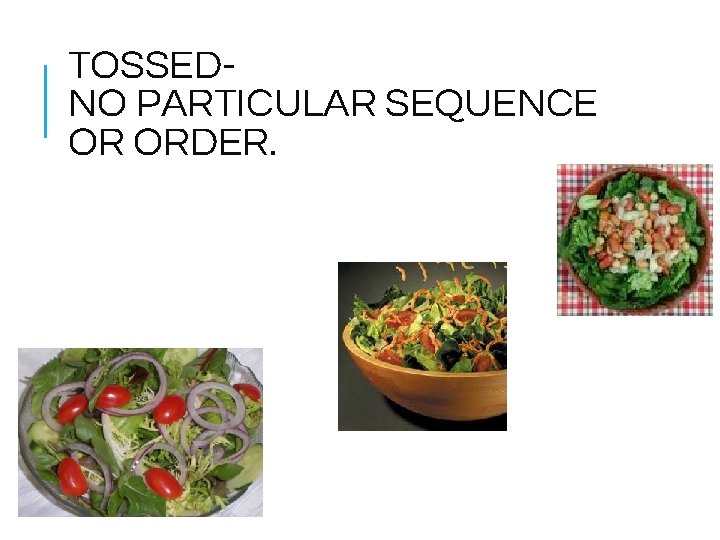
TOSSEDNO PARTICULAR SEQUENCE OR ORDER.
COMPOSEDARRANGED RATHER THAN “TOSSED”
LAYERED
BOUNDUSUALLY NON-LEAFY FOODS, BOUND TOGETHER BY A THICK DRESSING
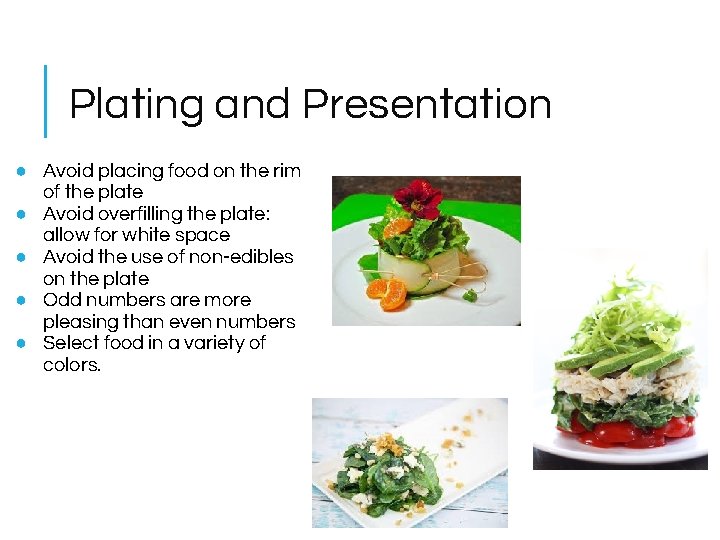
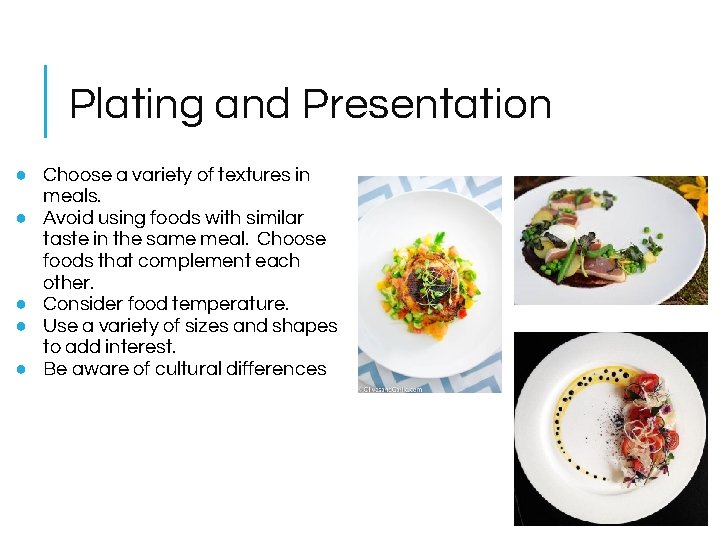
Plating and Presentation ● Avoid placing food on the rim of the plate ● Avoid overfilling the plate: allow for white space ● Avoid the use of non-edibles on the plate ● Odd numbers are more pleasing than even numbers ● Select food in a variety of colors.
Plating and Presentation ● Choose a variety of textures in meals. ● Avoid using foods with similar taste in the same meal. Choose foods that complement each other. ● Consider food temperature. ● Use a variety of sizes and shapes to add interest. ● Be aware of cultural differences
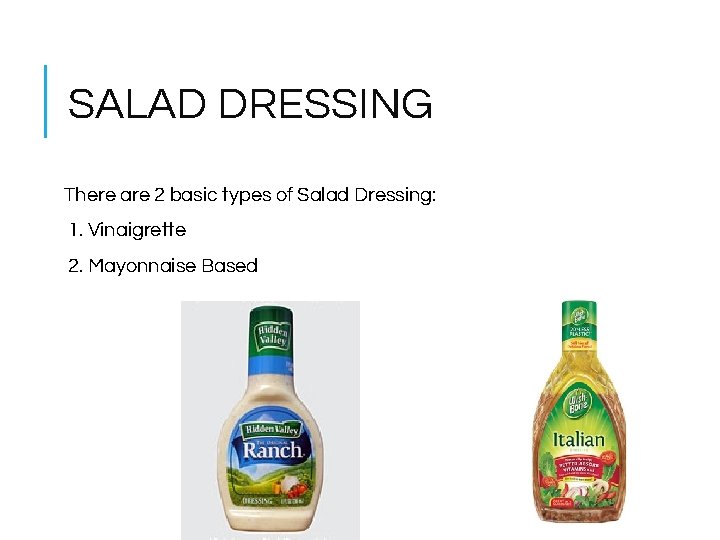
SALAD DRESSING There are 2 basic types of Salad Dressing: 1. Vinaigrette 2. Mayonnaise Based
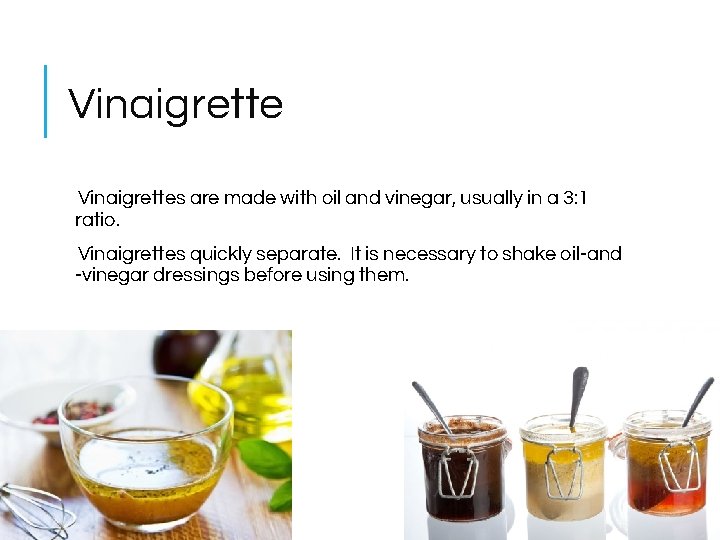
Vinaigrettes are made with oil and vinegar, usually in a 3: 1 ratio. Vinaigrettes quickly separate. It is necessary to shake oil-and -vinegar dressings before using them.
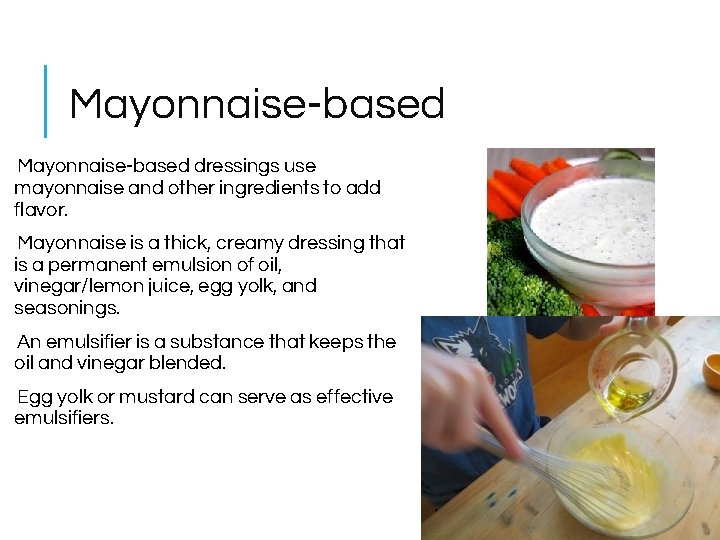
Mayonnaise-based dressings use mayonnaise and other ingredients to add flavor. Mayonnaise is a thick, creamy dressing that is a permanent emulsion of oil, vinegar/lemon juice, egg yolk, and seasonings. An emulsifier is a substance that keeps the oil and vinegar blended. Egg yolk or mustard can serve as effective emulsifiers.
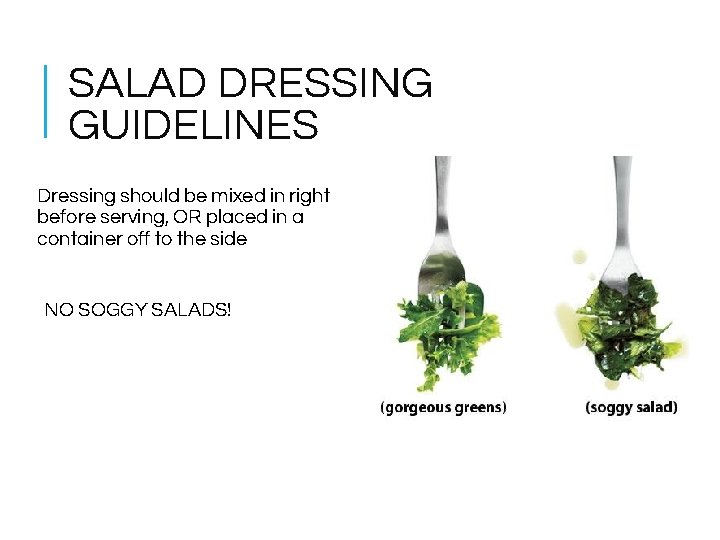
SALAD DRESSING GUIDELINES Dressing should be mixed in right before serving, OR placed in a container off to the side NO SOGGY SALADS!
JAMIE OLIVER’S PRINCIPLES OF SALADS
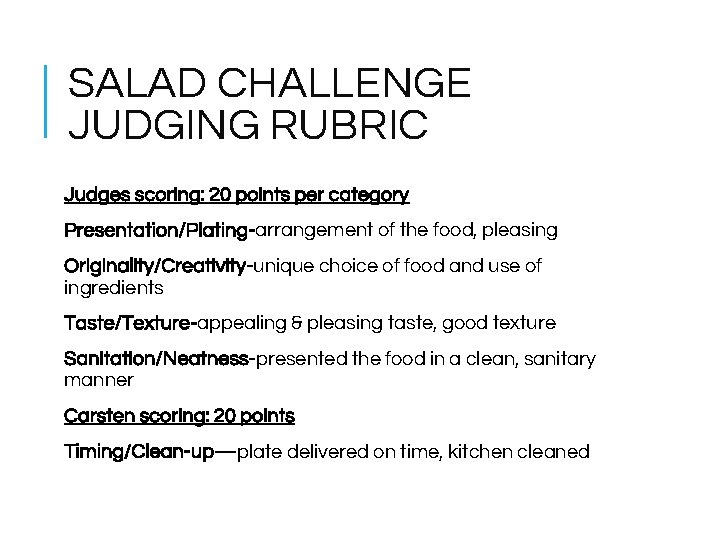
SALAD CHALLENGE JUDGING RUBRIC Judges scoring: 20 points per category Presentation/Plating-arrangement of the food, pleasing Originality/Creativity-unique choice of food and use of ingredients Taste/Texture-appealing & pleasing taste, good texture Sanitation/Neatness-presented the food in a clean, sanitary manner Carsten scoring: 20 points Timing/Clean-up—plate delivered on time, kitchen cleaned