
Sagittal alignment of the spine is changing Evolution


- Slides: 11
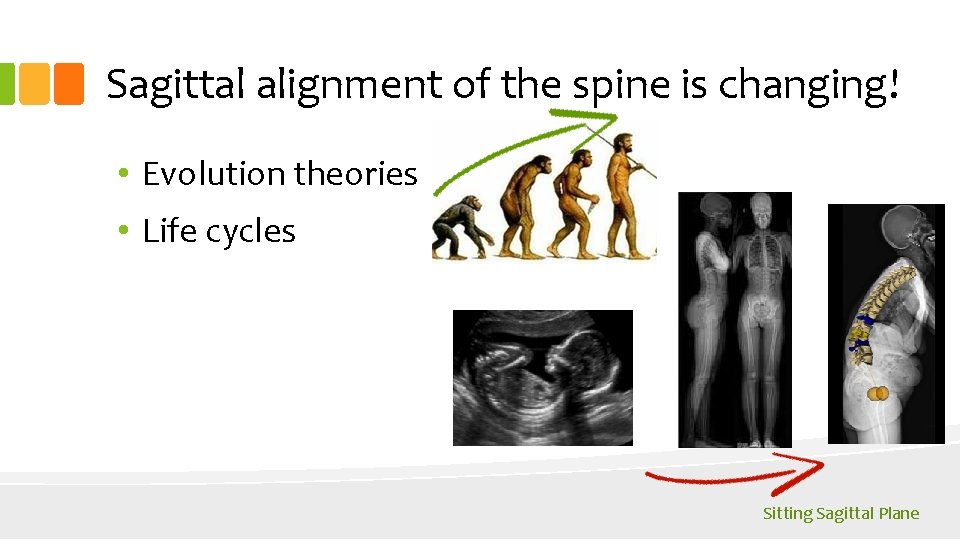
Sagittal alignment of the spine is changing! • Evolution theories • Life cycles Sitting Sagittal Plane
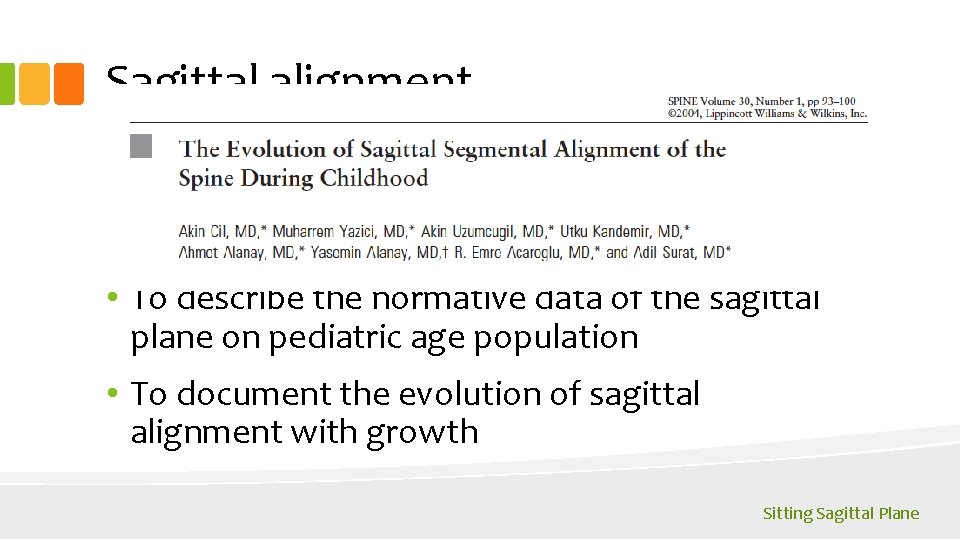
Sagittal alignment • Planning of the 3 D reconstruction of the spine – Normative data about the sagittal plane • Segmental sagittal plane analysis • To describe the normative data of the sagittal plane on pediatric age population • To document the evolution of sagittal alignment with growth Sitting Sagittal Plane
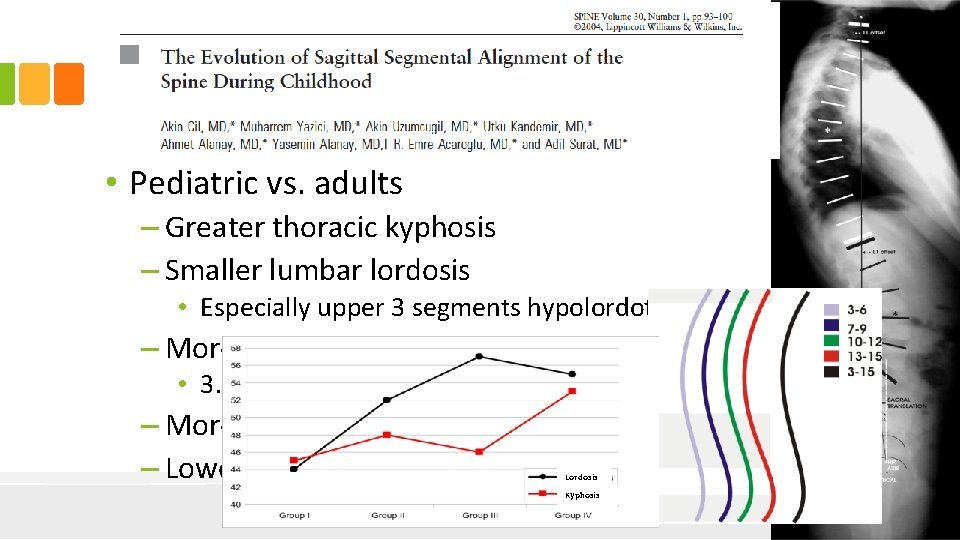
• Pediatric vs. adults – Greater thoracic kyphosis – Smaller lumbar lordosis • Especially upper 3 segments hypolordotic – More kyphotic thoracolumbar region • 3. 6 o-9. 8 o – More forward sagittal vertical axis – Lower sacral inclination Lordosis Kyphosis Sitting Sagittal Plane
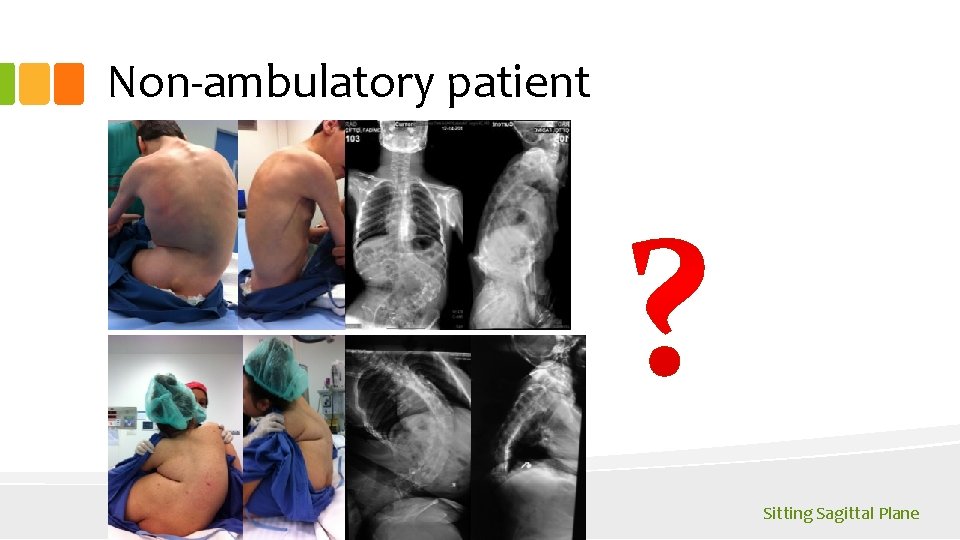
Non-ambulatory patient Sitting Sagittal Plane
Purpose • Describe normative values in sitting position • Document evolution of alignment with growth Sitting Sagittal Plane
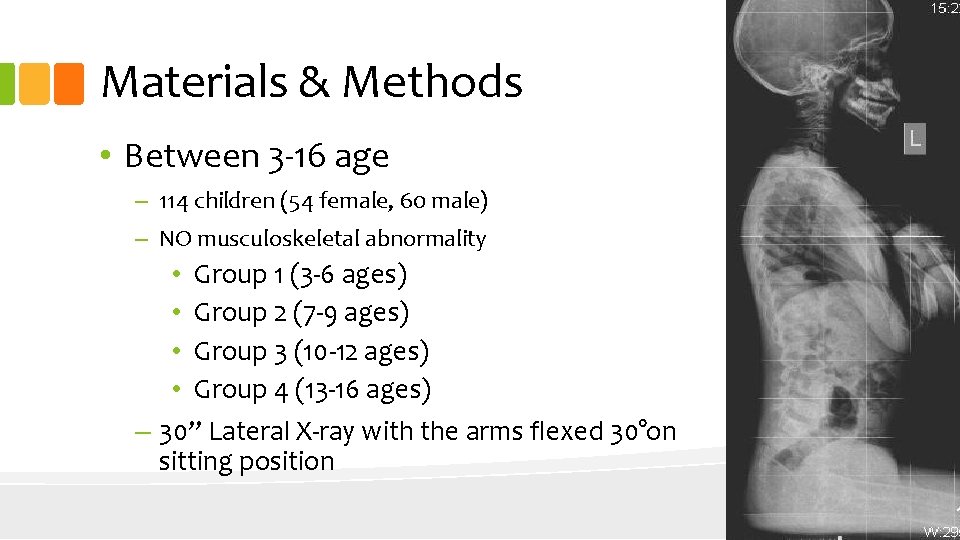
Materials & Methods • Between 3 -16 age – 114 children (54 female, 60 male) – NO musculoskeletal abnormality • Group 1 (3 -6 ages) • Group 2 (7 -9 ages) • Group 3 (10 -12 ages) • Group 4 (13 -16 ages) – 30” Lateral X-ray with the arms flexed 30°on sitting position Sitting Sagittal Plane
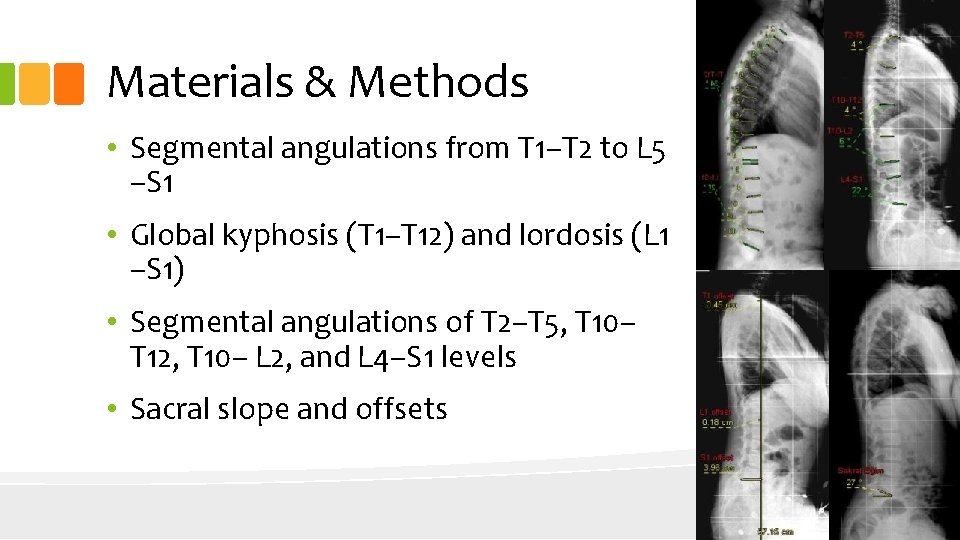
Materials & Methods • Segmental angulations from T 1–T 2 to L 5 –S 1 • Global kyphosis (T 1–T 12) and lordosis (L 1 –S 1) • Segmental angulations of T 2–T 5, T 10– T 12, T 10– L 2, and L 4–S 1 levels • Sacral slope and offsets Sitting Sagittal Plane
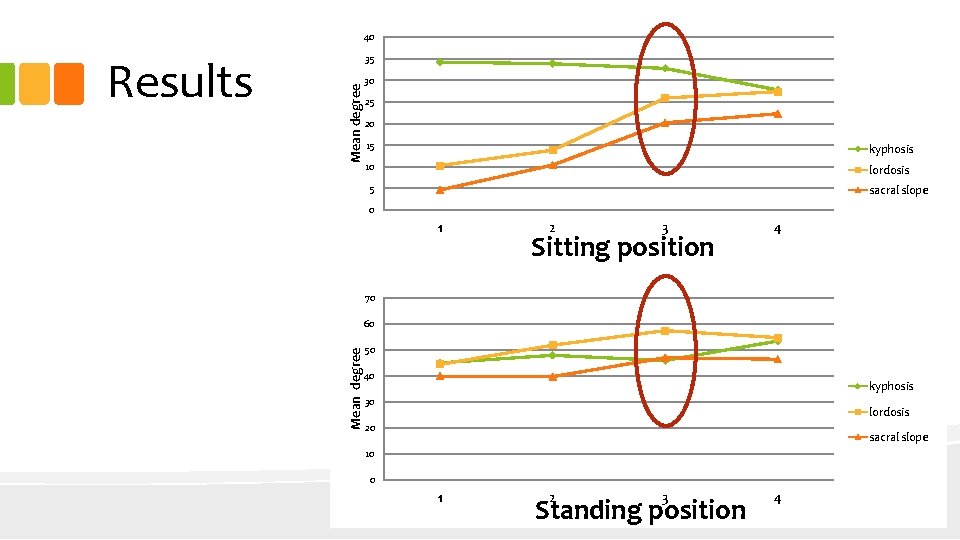
Results • Global kyphosis and lordosis angles are different in sitting positon • Smaller thoracic kyphosis and lumbar lordosis • Alignment (both segmental and global) is changing with age – Statistically significant differences • T 2 -T 5, T 5–T 6, L 1–L 2, L 4–S 1, L 5 -S 1, lumbar lordosis and sacral slope Sitting Sagittal Plane
40 Mean degree 30 25 20 15 kyphosis 10 lordosis 5 sacral slope 0 1 2 3 Sitting position 4 70 60 Mean degree Results 35 50 40 kyphosis 30 lordosis 20 sacral slope 10 0 1 2 3 Standing position 4 Sitting Sagittal Plane
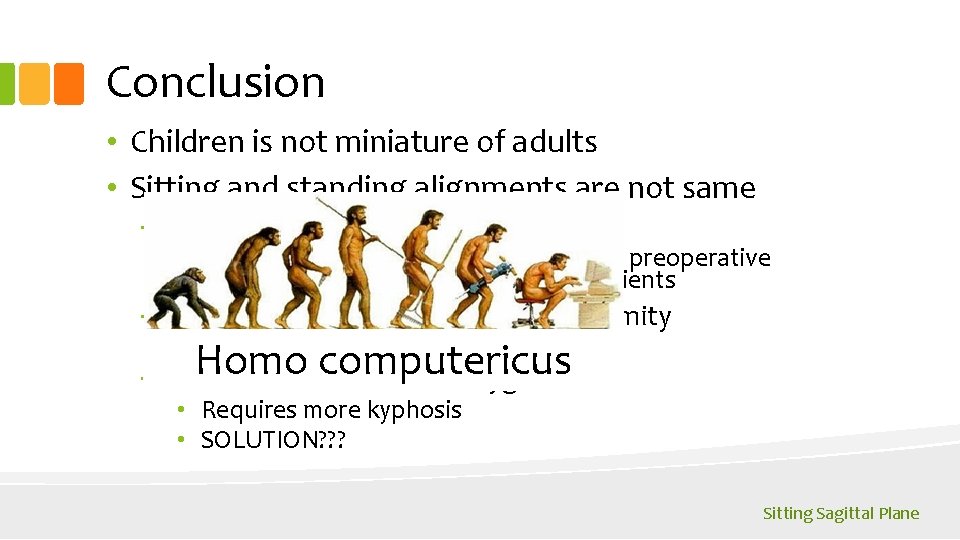
Conclusion • Children is not miniature of adults • Sitting and standing alignments are not same – Less kyphosis and lordosis • These findings should be considered in preoperative planning of young non-ambulatory patients – However, patients with upper extremity weakness/paralysis Homo computericus – Self catheterization and hygiene • Requires more kyphosis • SOLUTION? ? ? Sitting Sagittal Plane