
Safewards Soft words Refresher Explanationinformation Role modelling Patient
- Slides: 18
Safewards Soft words Refresher
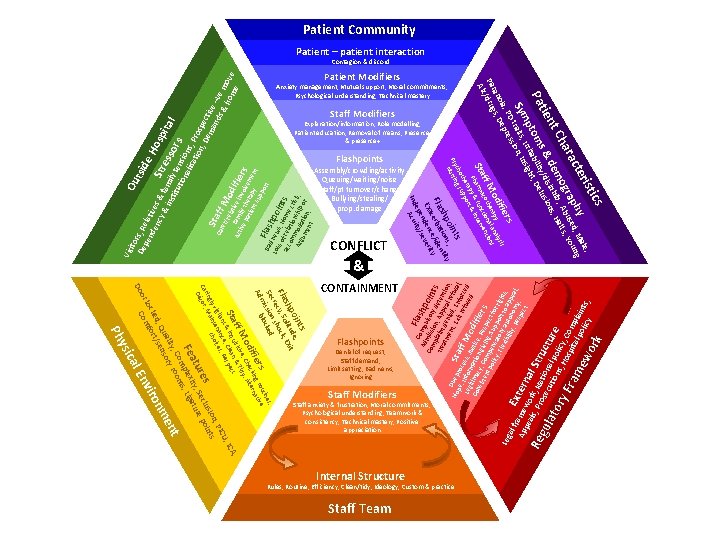
Explanation/information, Role modelling, Patient education, Removal of means, Presence & presence+ Staff Modifiers Denial of request, Staff demand, Limit setting, Bad news, Ignoring Flashpoints Staff anxiety & frustration, Moral commitments, Psychological understanding, Teamwork & consistency, Technical mastery, Positive appreciation Staff Modifiers A, , IC Rules, Routine, Efficiency, Clean/tidy, Ideology, Custom & practice Internal Structure Staff Team ics s s, ne c ti blo rs g rou tive ifie ckin erna od e, Che dy, Alt ff M isitiv & Ti Sta & inqu, Clean spect t oin de, shp litu Exit Fla ecy, Soshock, r Sec ission ked m Ad CONTAINMENT ork Anxiety management, Mutual support, Moral commitments, Psychological understanding, Technical mastery rist hy , Male, g cte p ed un ara ogra. , Abusall. s, Yo Ch em nhib s, H nt & d y/disi lusion tie Pa ptomsritabiliitght, De , Ir ns Symtraits sion, I s rs , PD re oia s, Dep an Par /drug Alc Patient Modifiers al f E r Ap ame xter pe wo n Re als, Prork, Natal Stru gul io s ato ecutionnal polcture ic s, ry Fra Hospitya, Comp la lp me w olicy ints, & sis ifie od erapy al analyns ff M coth ction entio Sta. Pharmya & fun& interv rap ort the upp cho g s ts Psy ursin N or al E sic t U Re ce ilan enan ices, PIC vig t n, cho gly Main sio nts rin Ca cor, es eclu poi Dé tur ity, S ture Fea plex , Liga om ooms , C t lity ory r en ua s , Q sen nm ked rt/ iro loc omfo nv C Do y Ph Leg Flashpoints Assembly/crowding/activity Queuing/waiting/noise Staff/pt turnover/change Bullying/stealing/ prop. damage oin s; y shp tion ntit Fla rba ide e c ce/ ty Exa nden everi s e ep ity/ Ind Acu CONFLICT C Fla Ad omp shp uls m o Co mp ission ory d ints l a tre int , App eten atm de ti e en nied al ref on, D t, E , En usa Ho ue p S t x pe l a it r f f , roc efu orce , Leg Infor ess, J f M sed d m o u Co itima atio stice dif nsi cy, n g , R ier ste e i nt Comp ving, spec s po licy ensa Supp t for , Fl tor ort righ exi y a bili uto to ap ts, p ty, n Re omy eal, spe , ct ie ctiv mil in e p y th volv rs ati era em en en t su py t pp F o l r Ba a t d n sh Los ew po s o s, H in acc f rela ome ts om tio cri Arg mod nship sis, um atio or en n, t Ou ito tsid De rs, Re pe e. H nd lative en osp cy s & f Str & i am ita e s nst i l itu ly ten sors tio na sions lisa tio , Pros n, De pecti ma ve Sta nd –ve Ca s& rer ff M /re ho move lat od me i F ve if a A Vis Patient Community Patient – patient interaction Contagion & discord
“Violence by patients in psychiatric settings is frequently associated with the quality of staff-patient interactions” (Lancee, Gallop, Mc. Cay & Toner, 1995, p. 609)
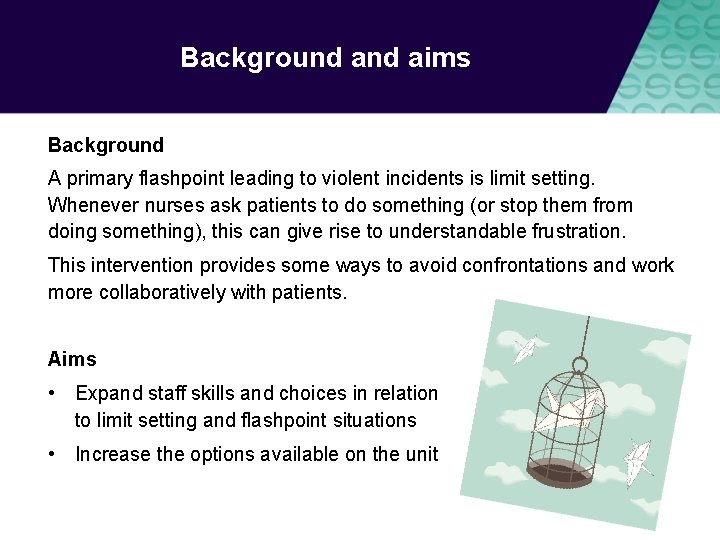
Background aims Background A primary flashpoint leading to violent incidents is limit setting. Whenever nurses ask patients to do something (or stop them from doing something), this can give rise to understandable frustration. This intervention provides some ways to avoid confrontations and work more collaboratively with patients. Aims • Expand staff skills and choices in relation to limit setting and flashpoint situations • Increase the options available on the unit
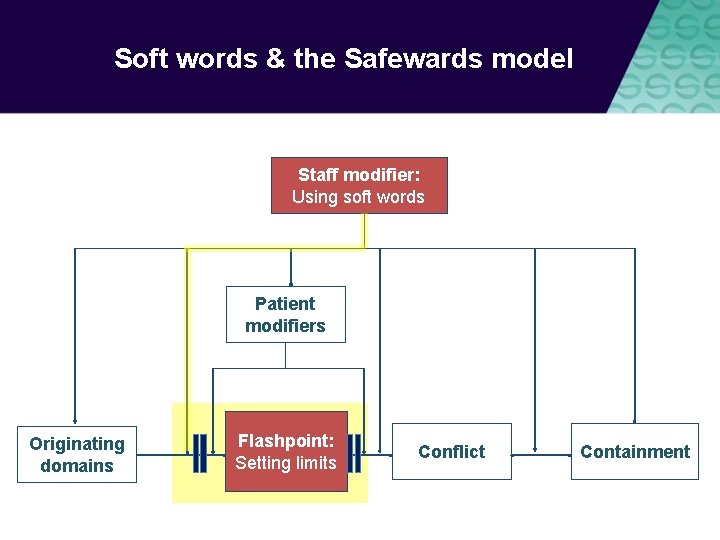
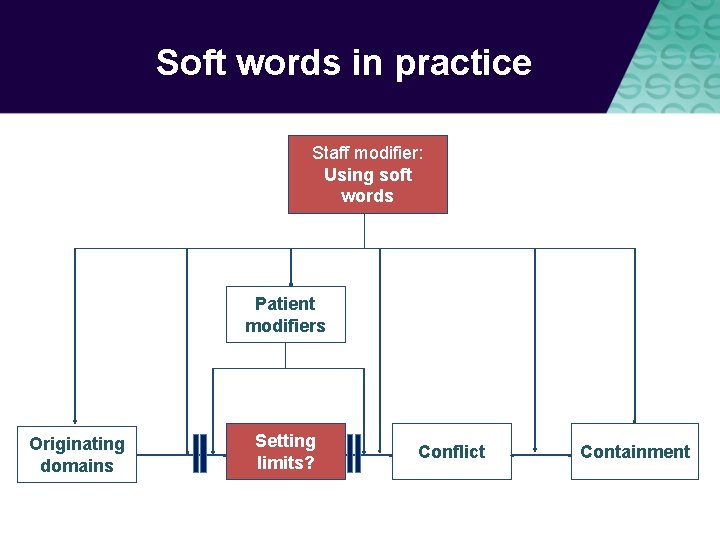
Soft words & the Safewards model Staff modifier: Staff modifiers Using soft words Patient modifiers Originating domains Flashpoint: Flashpoints Setting limits Conflict Containment
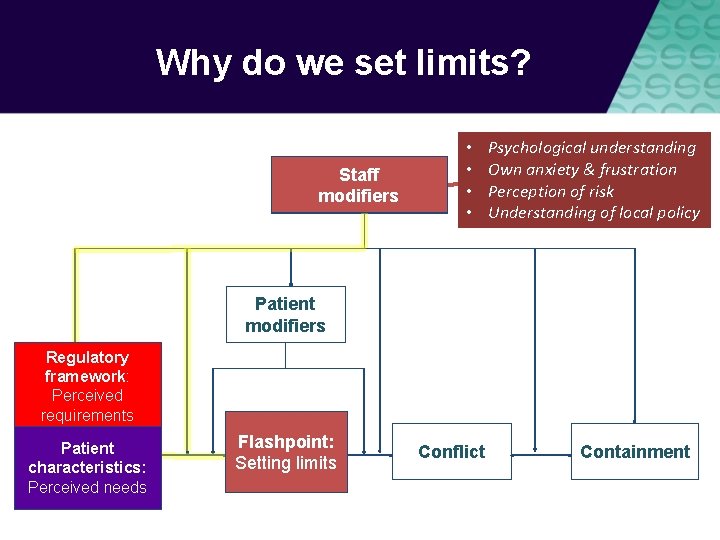
Why do we set limits? Staff modifiers • • Psychological understanding Own anxiety & frustration Perception of risk Understanding of local policy Patient modifiers Regulatory framework: Perceived requirements Originating Patient domains characteristics: Perceived needs Flashpoint: Flashpoints Setting limits Conflict Containment
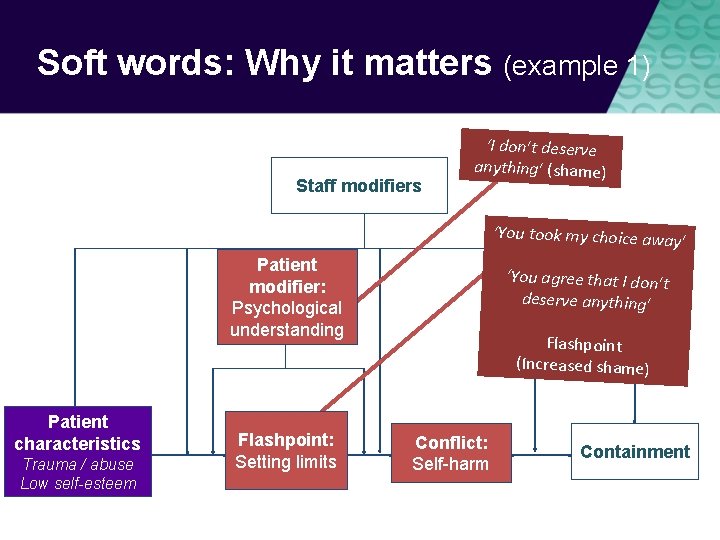
Soft words: Why it matters (example 1) Staff modifiers ‘I don’t deserve anything’ (shame) ‘You took my choice away ’ Patient modifier: Patient Psychological modifiers understanding Patient Originating characteristics Trauma / abuse domains Low self-esteem Flashpoint: Flashpoints Setting limits ‘You agree that I don’t deserve anything’ Flashpoint (Increased shame) Conflict: Conflict Self-harm Containment
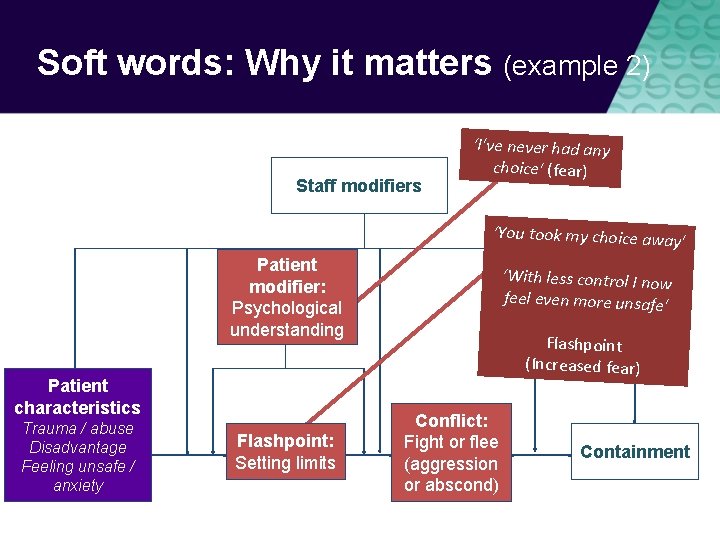
Soft words: Why it matters (example 2) Staff modifiers ‘I’ve never had any choice’ (fear) ‘You took my choice away ’ Patient modifier: Patient Psychological modifiers understanding Patient characteristics Trauma / abuse Originating Disadvantage domains Feeling unsafe / anxiety Flashpoint: Flashpoints Setting limits ‘With less control I now feel even more unsafe’ Flashpoint (Increased fear) Conflict: Fight or flee Conflict (aggression or abscond) Containment
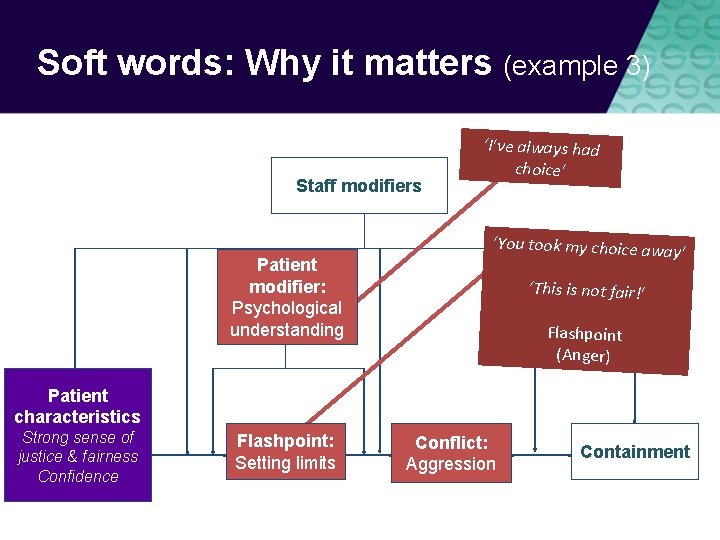
Soft words: Why it matters (example 3) Staff modifiers Patient modifier: Patient Psychological modifiers understanding Patient characteristics Strong sense of Originating justice & fairness domains Confidence Flashpoint: Flashpoints Setting limits ‘I’ve always had choice’ ‘You took my choice away ’ ‘This is not fair!’ Flashpoint (Anger) Conflict: Conflict Aggression Containment
Soft words in practice Staff modifier: Using soft Staff modifiers words Patient modifiers Originating domains Setting Flashpoints limits? Conflict Containment
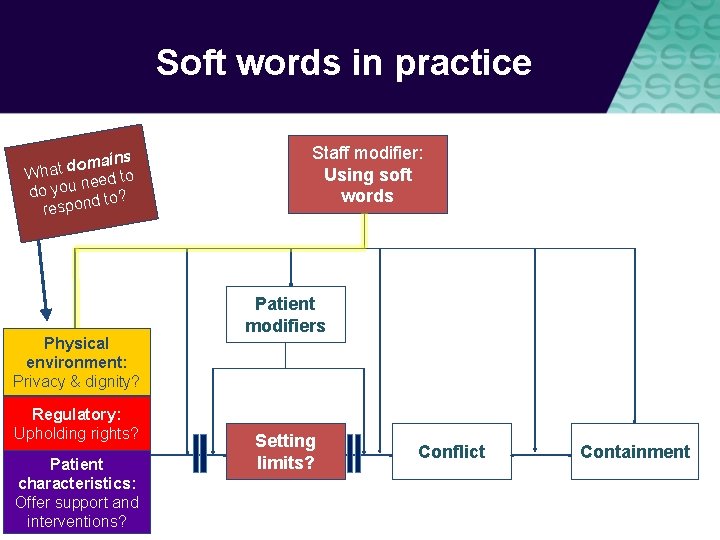
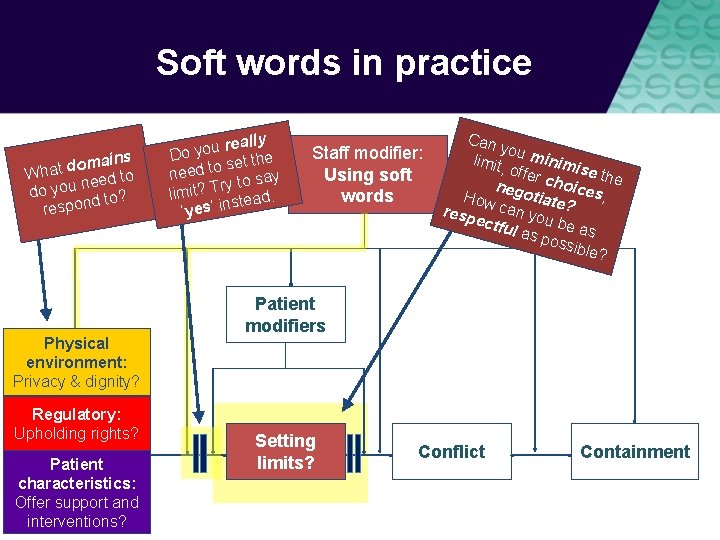
Soft words in practice ains m o d t a Wh eed to n u o y do d to? respon Physical environment: Privacy & dignity? Regulatory: Upholding rights? Originating Patient domains characteristics: Offer support and interventions? Staff modifier: Using soft Staff modifiers words Patient modifiers Setting Flashpoints limits? Conflict Containment
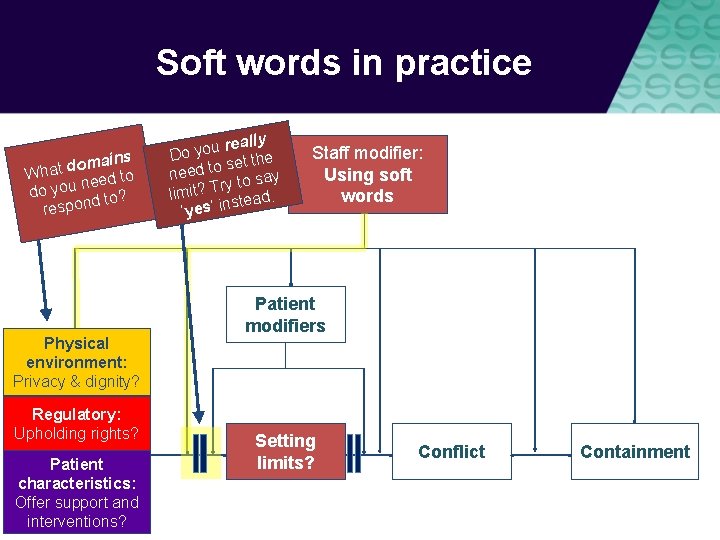
Soft words in practice ains m o d t a Wh eed to n u o y do d to? respon Physical environment: Privacy & dignity? Regulatory: Upholding rights? Originating Patient domains characteristics: Offer support and interventions? really u o y o D et the s o t d nee to say y r T ? t limi stead. n i ’ s e ‘y Staff modifier: Using soft Staff modifiers words Patient modifiers Setting Flashpoints limits? Conflict Containment
Soft words in practice ains m o d t a Wh eed to n u o y do d to? respon Physical environment: Privacy & dignity? Regulatory: Upholding rights? Originating Patient domains characteristics: Offer support and interventions? really u o y o D et the s o t d nee to say y r T ? t limi stead. n i ’ s e ‘y Can yo Staff modifier: limit, u minim ise t offer Using soft h c h oice e nego Staff modifiers s, tiate How words ? resp can yo u ectfu l as be as poss ible? Patient modifiers Setting Flashpoints limits? Conflict Containment
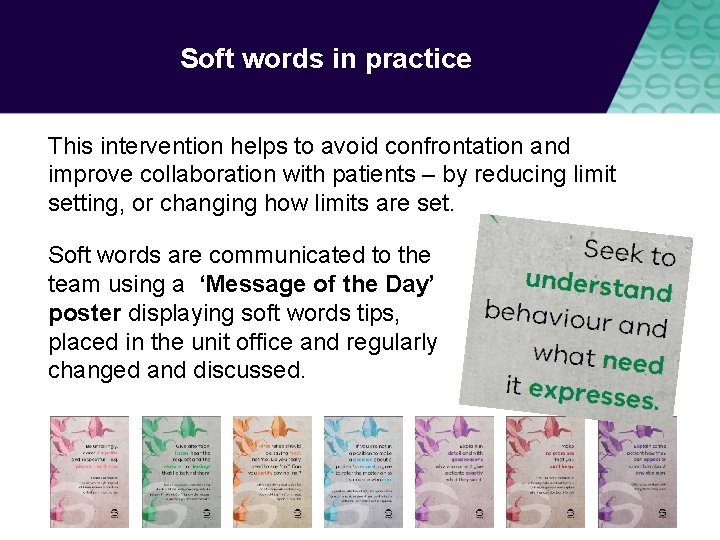
Soft words in practice This intervention helps to avoid confrontation and improve collaboration with patients – by reducing limit setting, or changing how limits are set. Soft words are communicated to the team using a ‘Message of the Day’ poster displaying soft words tips, placed in the unit office and regularly changed and discussed.
Task: Identifying themes Read through the poster examples and determine: – How you might use the poster in practice – Which theme/s each of your posters refers to (see below) Themes • Being respectful and polite • Turning down a request from a patient • Asking a patient to do something • Asking a patient to stop doing something
Role of the intervention lead Remind team about soft words • Change the soft words poster every day • Draw attention to the poster Encourage others to consider limit setting and Soft Words in different situations • In reflective practice and supervision • During review of policy and procedures • In handover or debriefing following incidents related to limit setting Who might be the most suitable lead?
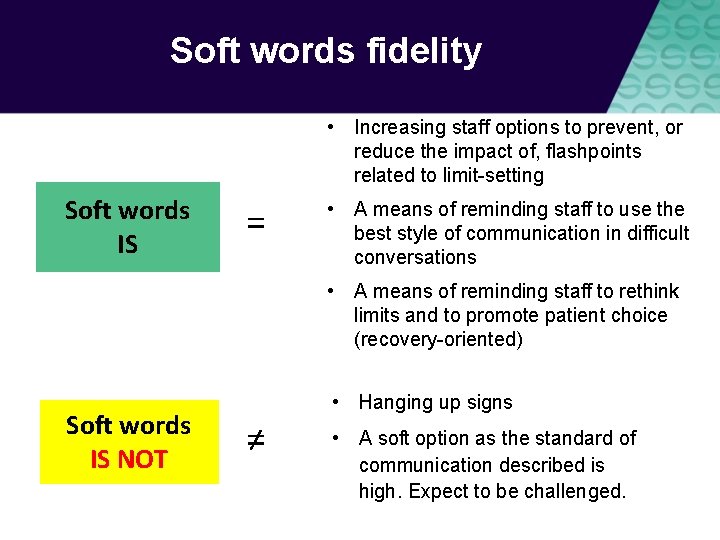
Soft words fidelity • Increasing staff options to prevent, or reduce the impact of, flashpoints related to limit-setting Soft words IS = • A means of reminding staff to use the best style of communication in difficult conversations • A means of reminding staff to rethink limits and to promote patient choice (recovery-oriented) Soft words IS NOT ≠ • Hanging up signs • A soft option as the standard of communication described is high. Expect to be challenged.
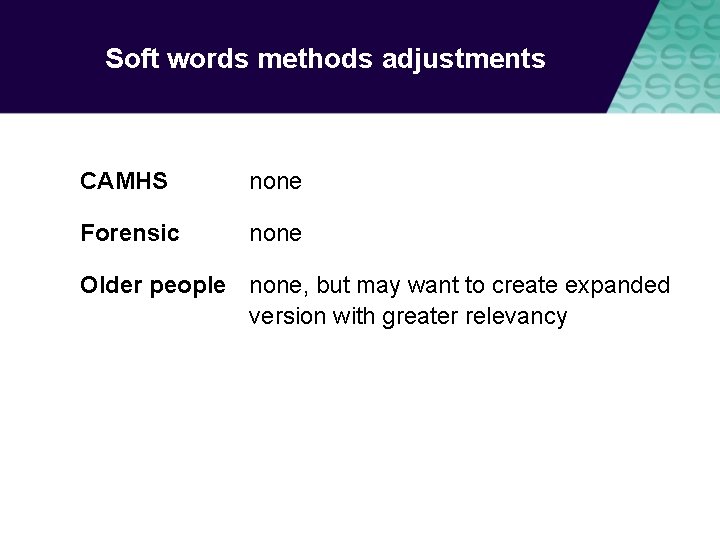
Soft words methods adjustments CAMHS none Forensic none Older people none, but may want to create expanded version with greater relevancy