
Safewards making wards more peaceful places Len Bowers
Safewards – making wards more peaceful places Len Bowers Professor of Psychiatric Nursing and team
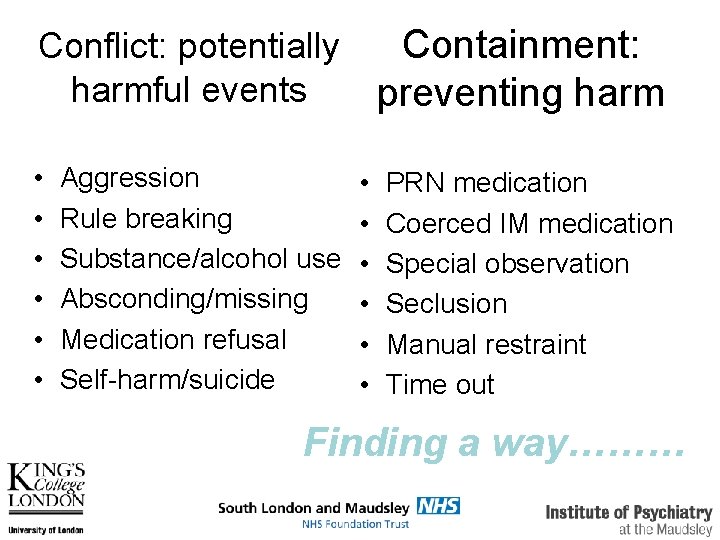
Containment: preventing harm Conflict: potentially harmful events • • • Aggression Rule breaking Substance/alcohol use Absconding/missing Medication refusal Self-harm/suicide • • • PRN medication Coerced IM medication Special observation Seclusion Manual restraint Time out Finding a way………
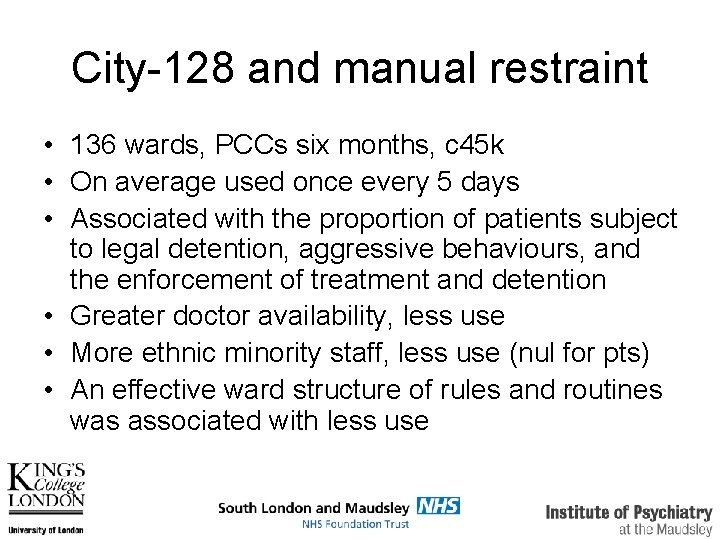
City-128 and manual restraint • 136 wards, PCCs six months, c 45 k • On average used once every 5 days • Associated with the proportion of patients subject to legal detention, aggressive behaviours, and the enforcement of treatment and detention • Greater doctor availability, less use • More ethnic minority staff, less use (nul for pts) • An effective ward structure of rules and routines was associated with less use
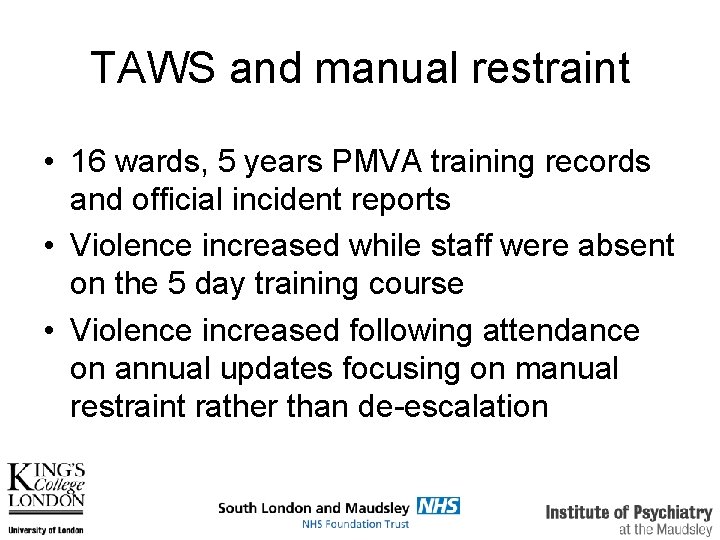
TAWS and manual restraint • 16 wards, 5 years PMVA training records and official incident reports • Violence increased while staff were absent on the 5 day training course • Violence increased following attendance on annual updates focusing on manual restraint rather than de-escalation
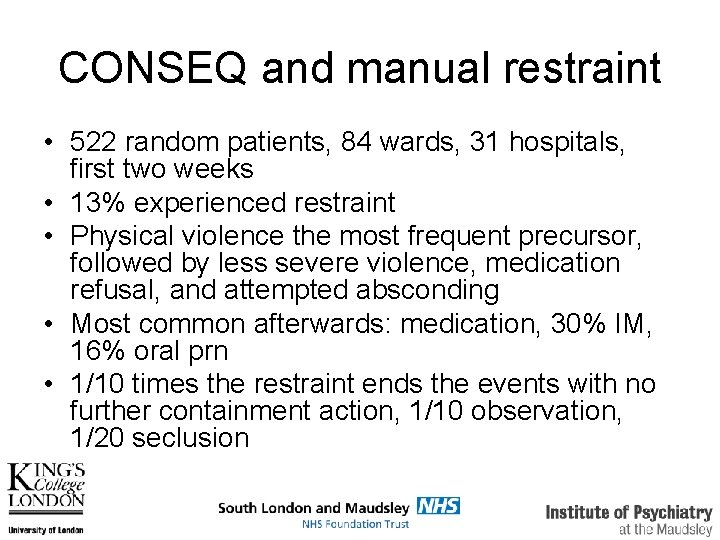
CONSEQ and manual restraint • 522 random patients, 84 wards, 31 hospitals, first two weeks • 13% experienced restraint • Physical violence the most frequent precursor, followed by less severe violence, medication refusal, and attempted absconding • Most common afterwards: medication, 30% IM, 16% oral prn • 1/10 times the restraint ends the events with no further containment action, 1/10 observation, 1/20 seclusion
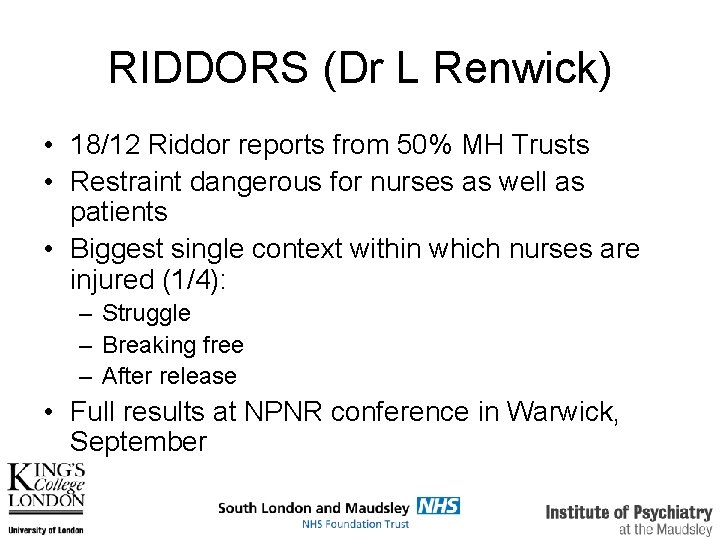
RIDDORS (Dr L Renwick) • 18/12 Riddor reports from 50% MH Trusts • Restraint dangerous for nurses as well as patients • Biggest single context within which nurses are injured (1/4): – Struggle – Breaking free – After release • Full results at NPNR conference in Warwick, September
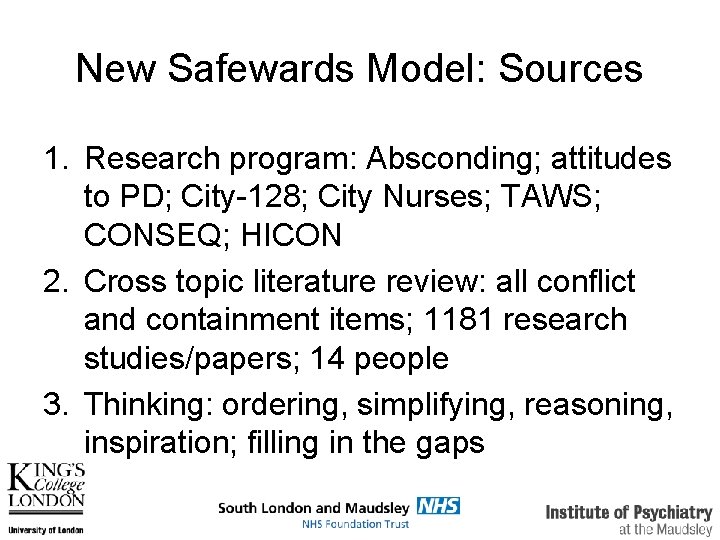
New Safewards Model: Sources 1. Research program: Absconding; attitudes to PD; City-128; City Nurses; TAWS; CONSEQ; HICON 2. Cross topic literature review: all conflict and containment items; 1181 research studies/papers; 14 people 3. Thinking: ordering, simplifying, reasoning, inspiration; filling in the gaps
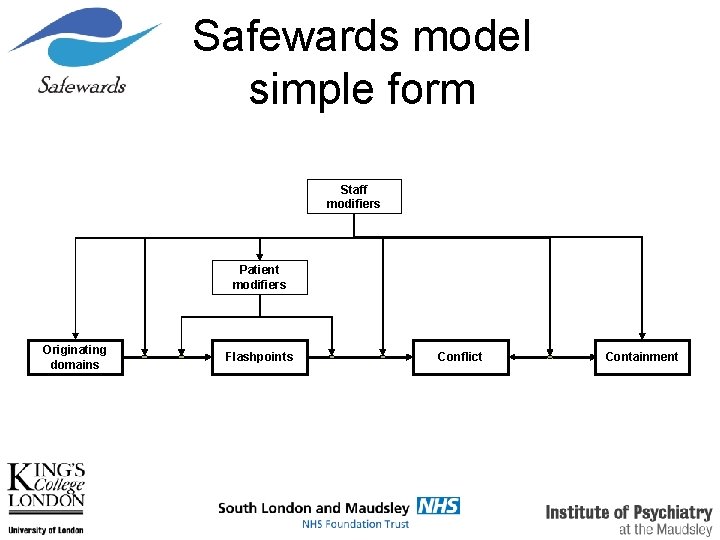
Safewards model simple form Staff modifiers Patient modifiers Originating domains Flashpoints Conflict Containment
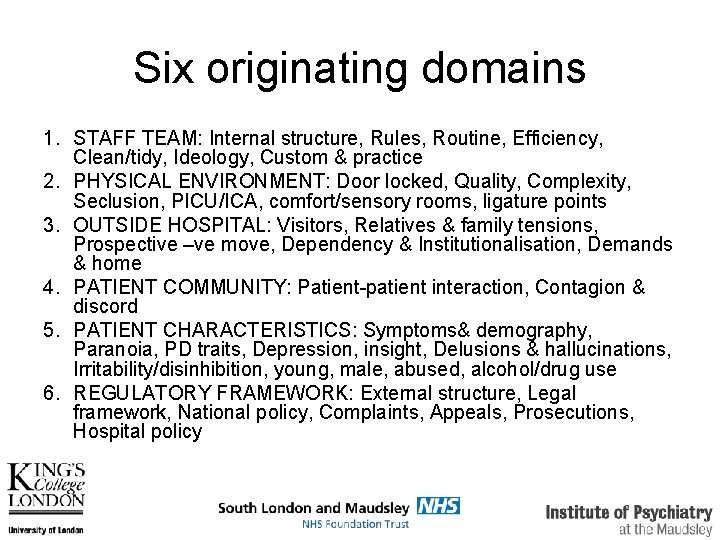
Six originating domains 1. STAFF TEAM: Internal structure, Rules, Routine, Efficiency, Clean/tidy, Ideology, Custom & practice 2. PHYSICAL ENVIRONMENT: Door locked, Quality, Complexity, Seclusion, PICU/ICA, comfort/sensory rooms, ligature points 3. OUTSIDE HOSPITAL: Visitors, Relatives & family tensions, Prospective –ve move, Dependency & Institutionalisation, Demands & home 4. PATIENT COMMUNITY: Patient-patient interaction, Contagion & discord 5. PATIENT CHARACTERISTICS: Symptoms& demography, Paranoia, PD traits, Depression, insight, Delusions & hallucinations, Irritability/disinhibition, young, male, abused, alcohol/drug use 6. REGULATORY FRAMEWORK: External structure, Legal framework, National policy, Complaints, Appeals, Prosecutions, Hospital policy
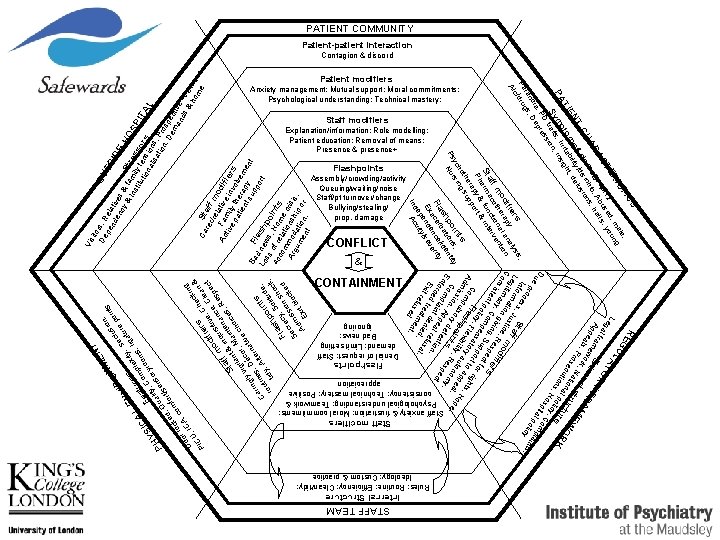
Anxiety management; Mutual support; Moral commitments; Psychological understanding; Technical mastery; Explanation/information; Role modelling; Patient education; Removal of means; Presence & presence+ S RE CONTAINMENT Flashpoints Staff anxiety & frustration; Moral commitments; Psychological understanding; Teamwork & consistency; Technical mastery; Positive appreciation Staff modifiers Internal Structure STAFF TEAM Rules; Routine; Efficiency; Clean/tidy; Ideology; Custom & practice M ; ion ts lus poin c se re NV es xity; ligatu E r le ; AL eatu omp oms IC F y; C ryro S Y lit so ua sen PH Q rt/ d; ke omfo c lo c or A; g Do ; IC kin ec n & CU I s h r P ie ; C lea t dif sitive ce; C pec o m qui an Res aff & in inten es; t S nt a oic M h la igi cor, ve c v y é l ati D g rin es, ltern s a n C uti ; A int de; ro tidy po olitu ck; h s S ho Flarecy; ion s ed s c ck Se dmis t blo i A Ex Denial of request; Staff demand; Limit setting Bad news; ignoring ON IR Staff modifiers Assembly/crowding/activity Queuing/waiting/noise Staff/pt turnover/change Bullying/stealing/ prop. damage Flashpoints CONFLICT & Vis ito OU De rs; R pe ela TS nd tiv ID en es E cy & HO S & f Ins ami tres SP titu ly te so ITA tio ns rs na ion L lis s ati ; P on ro ; D spe em ct an ive ds –v & em ho me ove Ca St a rer /re ff m l Ac Fam ative odif tiv i e p ily t invo ers ati her lve en ap m en ts y t up Ba po d n Flas rt Lo h e w p ss s o ac of re ; Ho ints me co l a m ti Ar mod onsh crisis gu me ation ip or ; nt ; Patient modifiers IC G ; U ST ale g LA Le RI ; m un TO g a TE phy sed ; yo l R Y Ap fram Ex AC gra ; Abu all. s F e p t e R AR mo hib ns; h als wor ern AM ; P k; N al CH de disin usio E ro a s W s& ility/ del s NT e tio tru ; m b t OR c uti nal ctu TIE pto Irrita sigh on po re K in m s; s; lic PA H Sy trait ion; os y; C pit om ss D Du a p , P pre l e p p oli laint oia De ro cy s; ran gs; In ce s S Pa /dru is; Le form s; Ju taf s g lys at Alc s fm ier i a y dif rap l an ion Cons timac ion g tice; od ist y; ivin Re ifie mo the ona ent o i C s e n aff ac ct erv t p om g; S pec rs St arm fun & int oli pe up t fo n p c Ph y & rt F y; sa or r r C Ad om las Flex tory t to ights rap ppo a m the g su iss puls hpo ibilit auto ppe ; Ho s ho nt yc rsin C ion ory int y; R nom al; pe; oi ns; ity o ; t d s e Ps Nu E s hp tio en nf mp App ete pe y; l o ct as ba /id r c ain ea ntio Fl acer nce erity Ex ed tr t de l refu n; n e i Ex ende /sev t r efu atm ied; sal; ep uity se ent d ; Ind Ac T EN PATIENT COMMUNITY Patient-patient interaction Contagion & discord
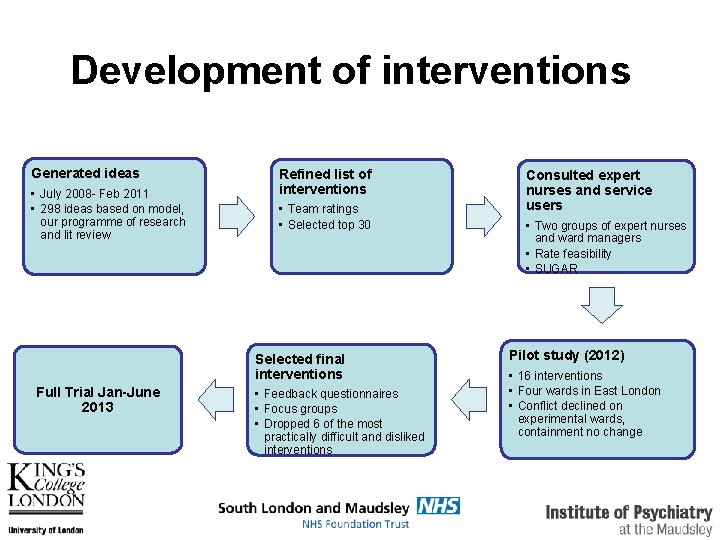
Development of interventions Generated ideas • July 2008 - Feb 2011 • 298 ideas based on model, our programme of research and lit review Refined list of interventions • Team ratings • Selected top 30 Selected final interventions Full Trial Jan-June 2013 • Feedback questionnaires • Focus groups • Dropped 6 of the most practically difficult and disliked interventions Consulted expert nurses and service users • Two groups of expert nurses and ward managers • Rate feasibility • SUGAR Pilot study (2012) • 16 interventions • Four wards in East London • Conflict declined on experimental wards, containment no change
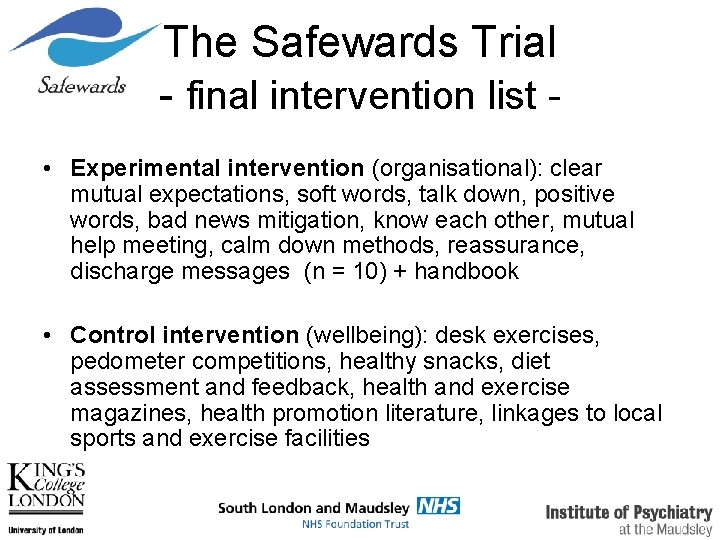
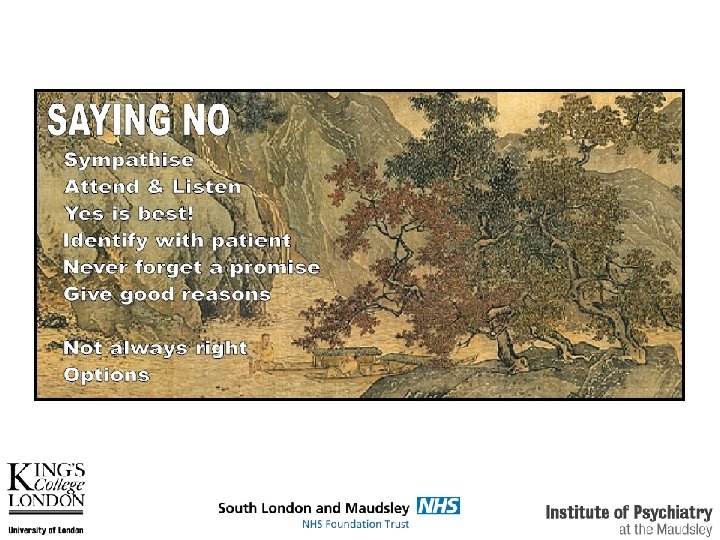
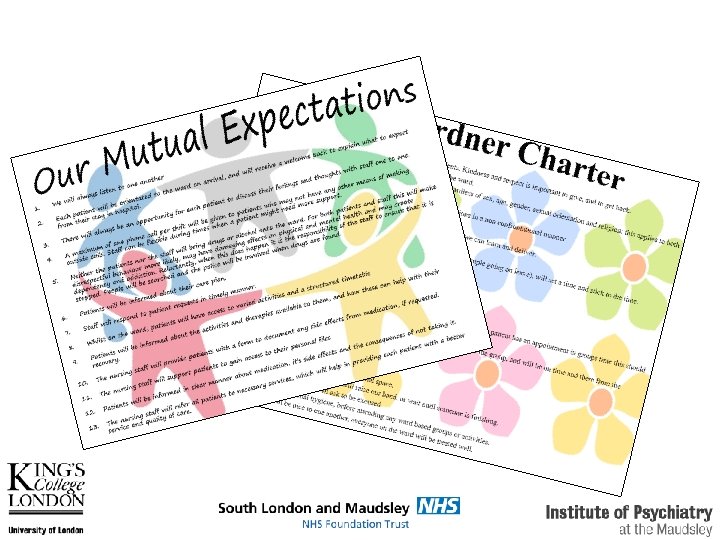
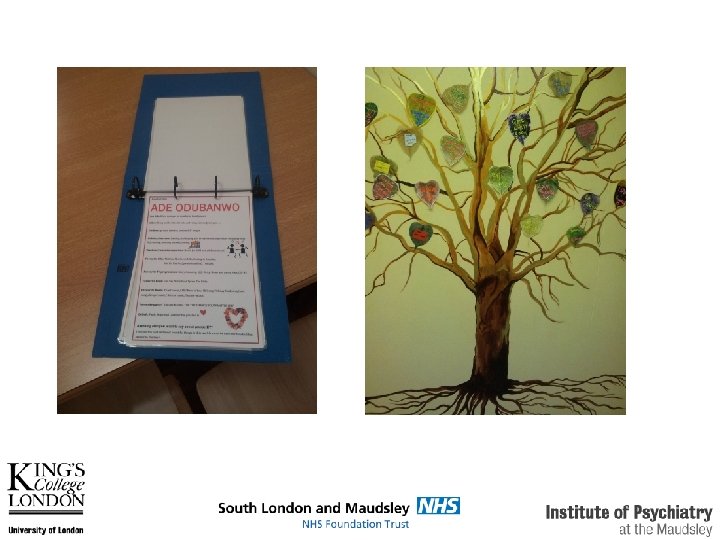
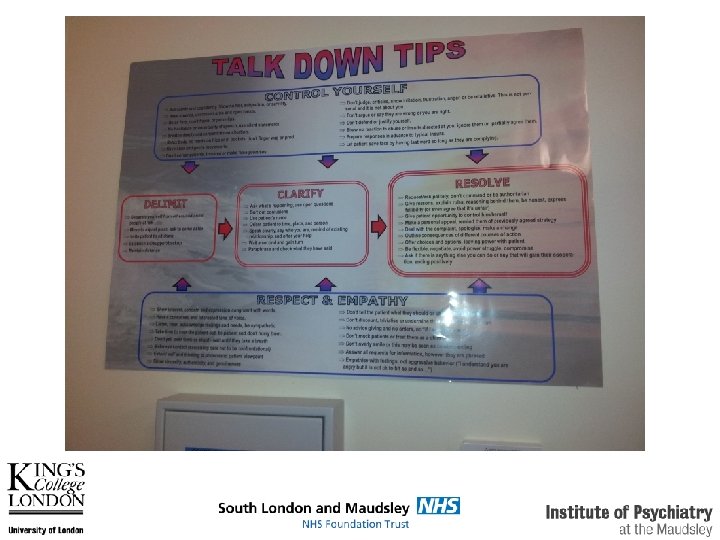
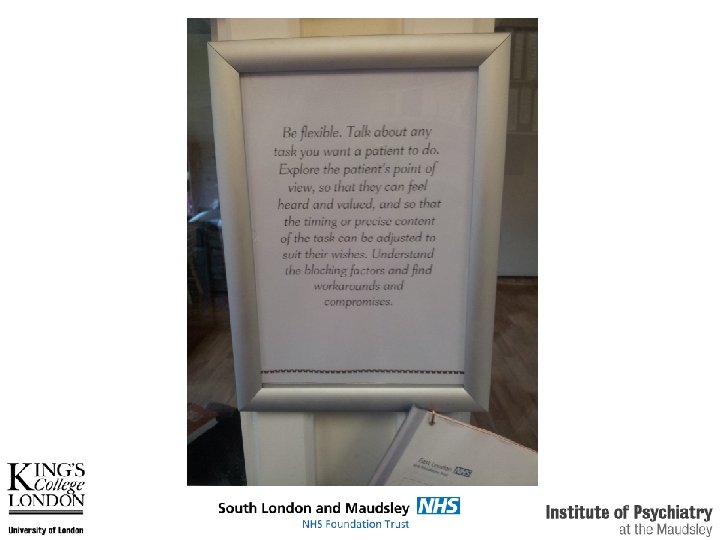
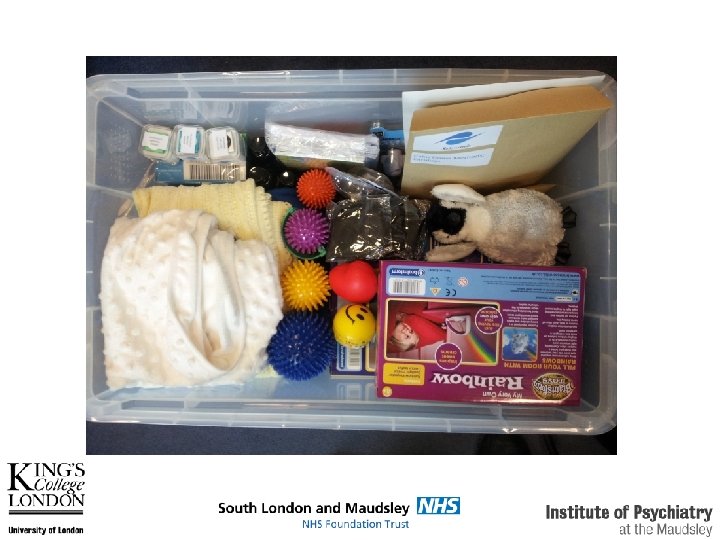
The Safewards Trial - final intervention list • Experimental intervention (organisational): clear mutual expectations, soft words, talk down, positive words, bad news mitigation, know each other, mutual help meeting, calm down methods, reassurance, discharge messages (n = 10) + handbook • Control intervention (wellbeing): desk exercises, pedometer competitions, healthy snacks, diet assessment and feedback, health and exercise magazines, health promotion literature, linkages to local sports and exercise facilities
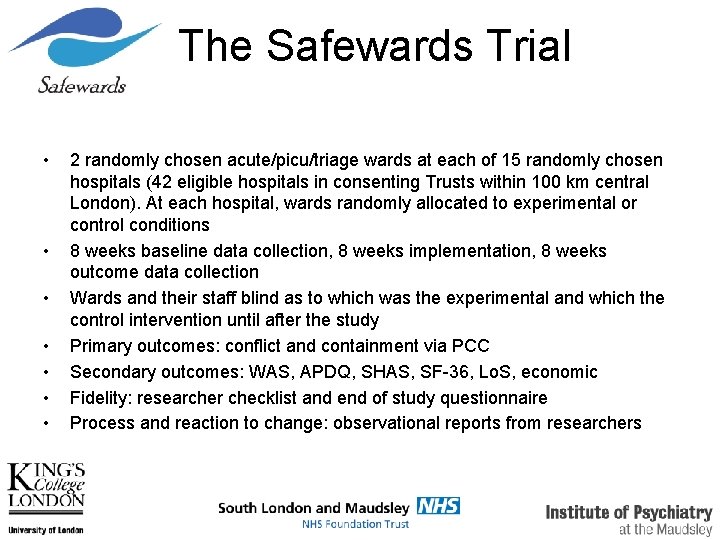
The Safewards Trial • • 2 randomly chosen acute/picu/triage wards at each of 15 randomly chosen hospitals (42 eligible hospitals in consenting Trusts within 100 km central London). At each hospital, wards randomly allocated to experimental or control conditions 8 weeks baseline data collection, 8 weeks implementation, 8 weeks outcome data collection Wards and their staff blind as to which was the experimental and which the control intervention until after the study Primary outcomes: conflict and containment via PCC Secondary outcomes: WAS, APDQ, SHAS, SF-36, Lo. S, economic Fidelity: researcher checklist and end of study questionnaire Process and reaction to change: observational reports from researchers
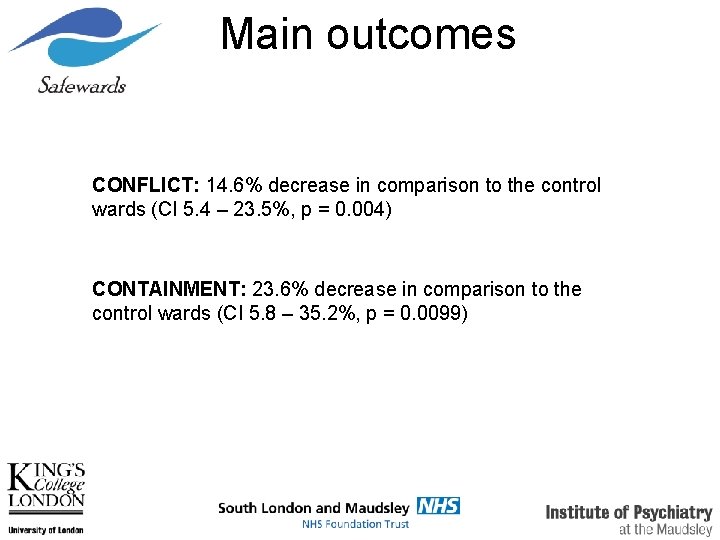
Main outcomes CONFLICT: 14. 6% decrease in comparison to the control wards (CI 5. 4 – 23. 5%, p = 0. 004) CONTAINMENT: 23. 6% decrease in comparison to the control wards (CI 5. 8 – 35. 2%, p = 0. 0099)
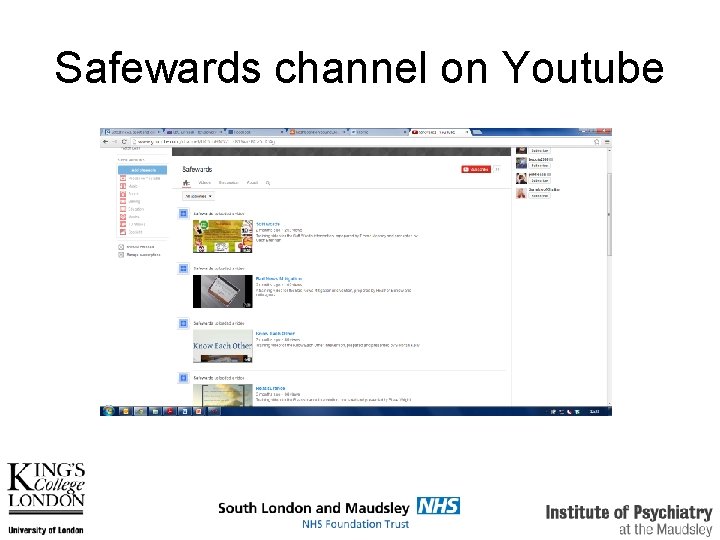
Safewards channel on Youtube
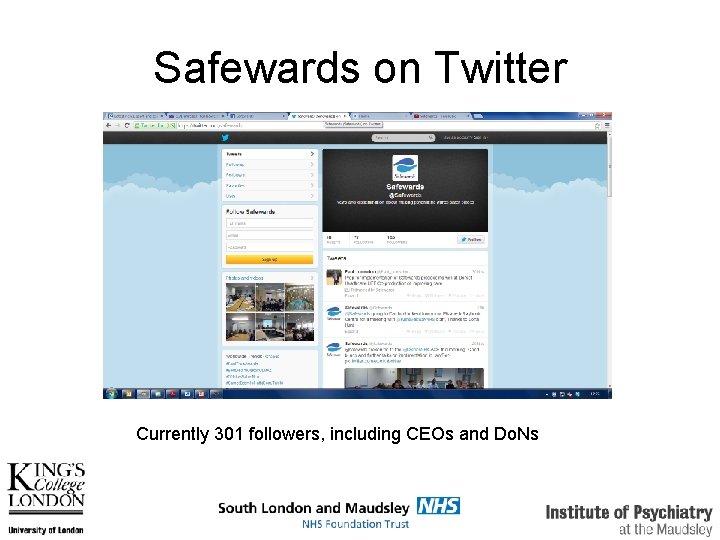
Safewards on Twitter Currently 301 followers, including CEOs and Do. Ns
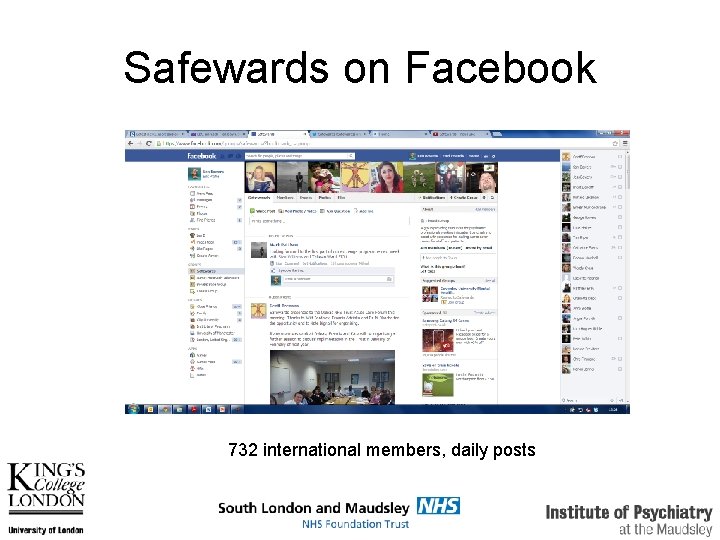
Safewards on Facebook 732 international members, daily posts
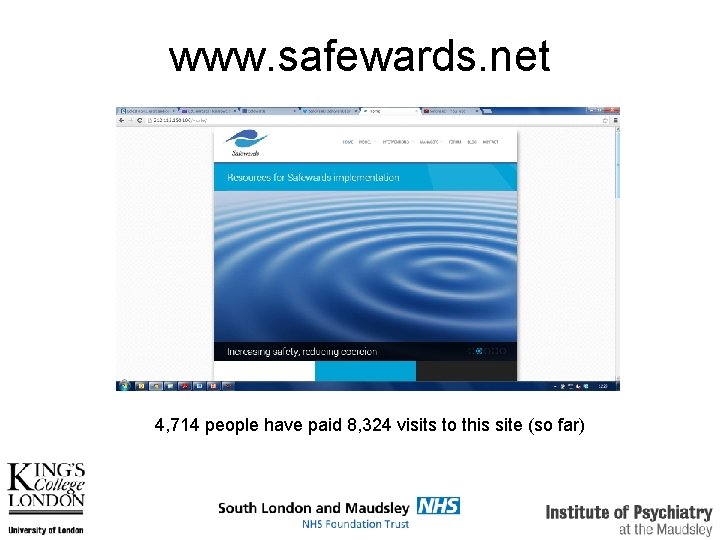
www. safewards. net 4, 714 people have paid 8, 324 visits to this site (so far)
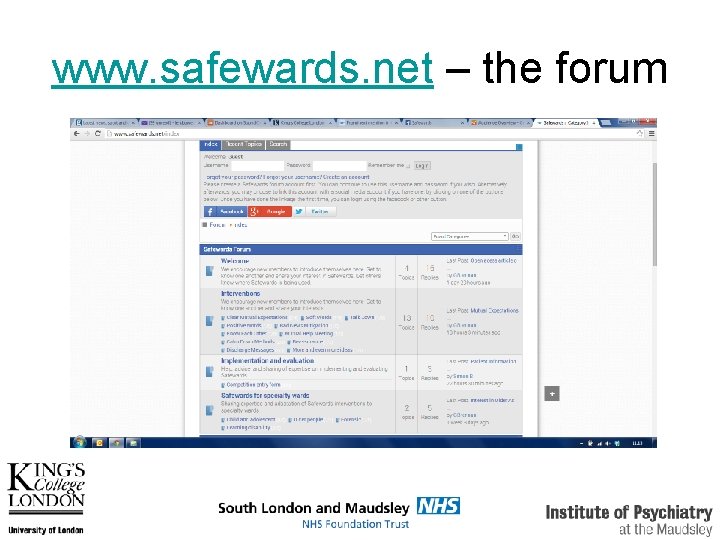
www. safewards. net – the forum
Safewards is popular • 17 MH Trusts have made a commitment to implement Safewards across acute wards and other areas • Safewards team has had contact with 37 MH Trusts • Nursing management association for psychiatric hospitals in Germany, ditto Switzerland, the Nursing association for adherence therapy and 5 hospitals € for translation of website and materials • State of Victoria, $2 million for Safewards implementation and evaluation
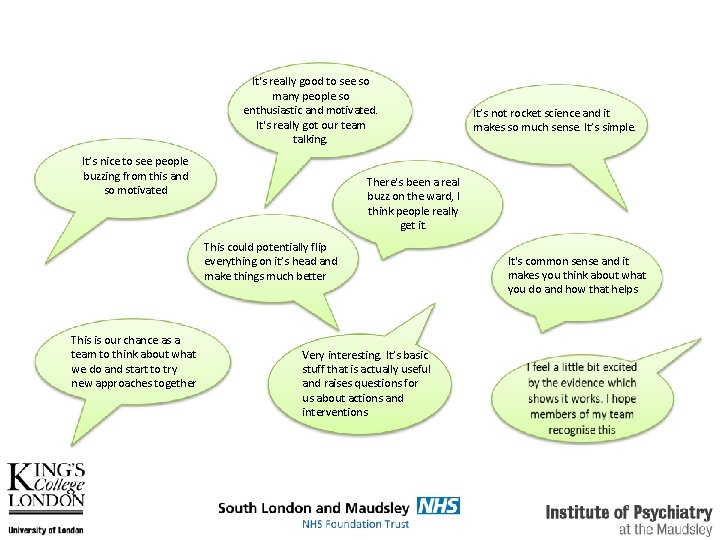
It's really good to see so many people so enthusiastic and motivated. It's really got our team talking. It’s nice to see people buzzing from this and so motivated There's been a real buzz on the ward, I think people really get it. This could potentially flip everything on it’s head and make things much better This is our chance as a team to think about what we do and start to try new approaches together It’s not rocket science and it makes so much sense. It’s simple. Very interesting. It’s basic stuff that is actually useful and raises questions for us about actions and interventions It's common sense and it makes you think about what you do and how that helps
Safewards at a personal level “I myself, however, have incorporated the interventions into every aspect of my nursing care, and the results are fantastic”
Summary • A brand new, large scope explanatory model has been formulated: the Safewards Model • Its test, the Safewards RCT, has had a positive outcome • We recommend that inpatient nurses implement these interventions • Complementary to Starwards, which we also recommend • Compatible with, and enhances AIMS accreditation • There are lots of resources to help you on the web: – – youtube safewards channel twitter feed www. facebook. com/groups/safewards/ www. safewards. net • Join the forum, get support and help each other! • Meet the challenge, personal and professional www. kcl. ac. uk/mentalhealthnursing len. bowers@kcl. ac. uk
This is independent research funded by the National Institute for Health Research (NIHR) under its Programme Grants for Applied Research programme (RP-PG-0707 -10081) and supported by the NIHR Mental Health Research Network. The views expressed are those of the author(s) and not necessarily those of the NHS, the NIHR or the Department of Health. www. kcl. ac. uk/mentalhealthnursing len. bowers@kcl. ac. uk
- Slides: 30