
Safewards Know each other Refresher Explanationinformation Role modelling
- Slides: 15
Safewards Know each other Refresher
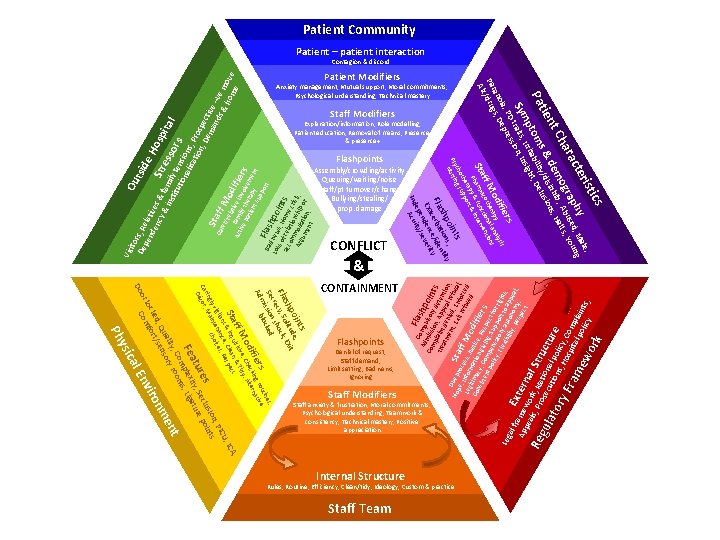
Explanation/information, Role modelling, Patient education, Removal of means, Presence & presence+ Staff Modifiers Denial of request, Staff demand, Limit setting, Bad news, Ignoring Flashpoints Staff anxiety & frustration, Moral commitments, Psychological understanding, Teamwork & consistency, Technical mastery, Positive appreciation Staff Modifiers A, , IC Rules, Routine, Efficiency, Clean/tidy, Ideology, Custom & practice Internal Structure Staff Team ics s s, ne c ti blo rs g rou tive ifie ckin erna od e, Che dy, Alt ff M isitiv & Ti Sta & inqu, Clean spect t oin de, shp litu Exit Fla ecy, Soshock, r Sec ission ked m Ad CONTAINMENT ork Anxiety management, Mutual support, Moral commitments, Psychological understanding, Technical mastery rist hy , Male, g cte p ed un ara ogra. , Abusall. s, Yo Ch em nhib s, H nt & d y/disi lusion tie Pa ptomsritabiliitght, De , Ir ns Symtraits sion, I s rs , PD re oia s, Dep an Par /drug Alc Patient Modifiers al f E r Ap ame xter pe wo n Re als, Prork, Natal Stru gul io s ato ecutionnal polcture ic s, ry Fra Hospitya, Comp la lp me w olicy ints, & sis ifie od erapy al analyns ff M coth ction entio Sta. Pharmya & fun& interv rap ort the upp cho g s ts Psy ursin N or al E sic t U Re ce ilan enan ices, PIC vig t n, cho gly Main sio nts rin Ca cor, es eclu poi Dé tur ity, S ture Fea plex , Liga om ooms , C t lity ory r en ua s , Q sen nm ked rt/ iro loc omfo nv C Do y Ph Leg Flashpoints Assembly/crowding/activity Queuing/waiting/noise Staff/pt turnover/change Bullying/stealing/ prop. damage oin s; y shp tion ntit Fla rba ide e c ce/ ty Exa nden everi s e ep ity/ Ind Acu CONFLICT C Fla Ad omp shp uls m o Co mp ission ory d ints l a tre int , App eten atm de ti e en nied al ref on, D t, E , En usa Ho ue p S t x pe l a it r f f , roc efu orce , Leg Infor ess, J f M sed d m o u Co itima atio stice dif nsi cy, n g , R ier ste e i nt Comp ving, spec s po licy ensa Supp t for , Fl tor ort righ exi y a bili uto to ap ts, p ty, n Re omy eal, spe , ct ie ctiv mil in e p y th volv rs ati era em en en t su py t pp F o l r Ba a t d n sh Los ew po s o s, H in acc f rela ome ts om tio cri Arg mod nship sis, um atio or en n, t Ou ito tsid De rs, Re pe e. H nd lative en osp cy s & f Str & i am ita e s nst i l itu ly ten sors tio na sions lisa tio , Pros n, De pecti ma ve Sta nd –ve Ca s& rer ff M /re ho move lat od me i F ve if a A Vis Patient Community Patient – patient interaction Contagion & discord
Background • Good therapeutic relationships between staff and patients are the foundation of effective care • If patients and staff have information about each other they can find common areas of interest • Sharing areas of interest makes engagement easier for both patients and staff, especially in tense situations • It’s helpful to have topics for conversation
Aims • Build stronger relationships between patients, and between patients and staff • Assist social interaction • Nurture a sense of common humanity while maintaining safety …making conflict less likely
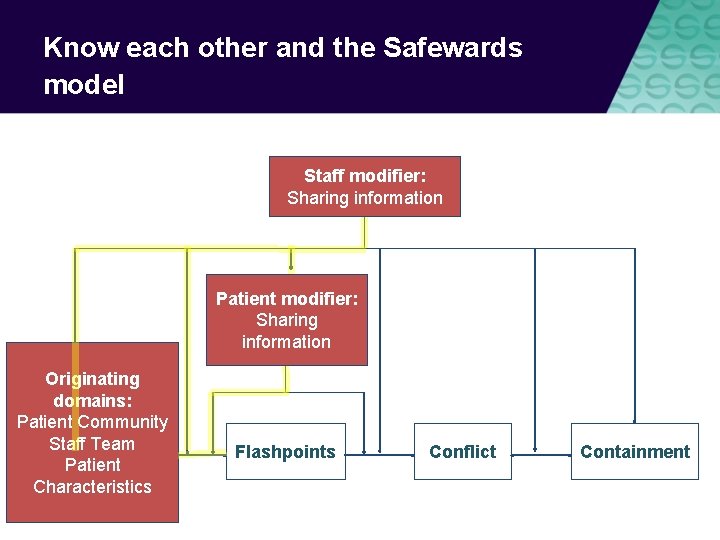
Know each other and the Safewards model Staff modifier: Staff modifiers Sharing information Patient modifier: Patient Sharing modifiers information Originating domains: Patient Community Staff Team Originating Patient domains Characteristics Flashpoints Conflict Containment
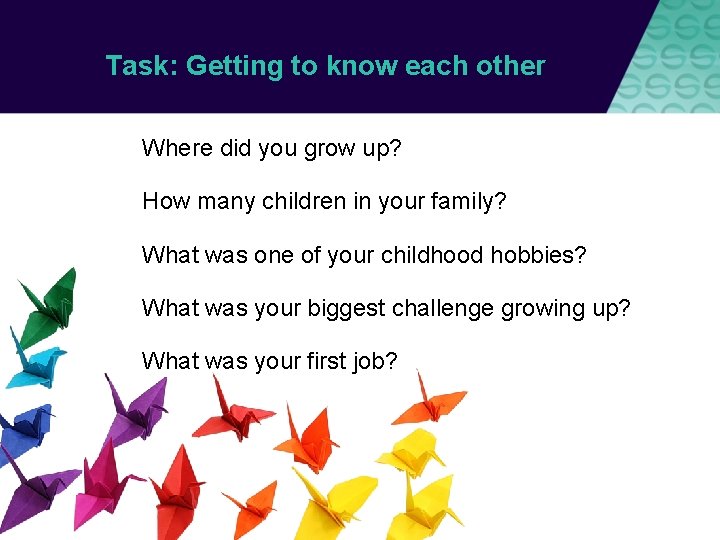
Task: Getting to know each other Where did you grow up? How many children in your family? What was one of your childhood hobbies? What was your biggest challenge growing up? What was your first job?
Information collected What information do we generally collect about patients? • It is usually negative and often focuses on: – past history of psychiatric illness – risks – disabilities • Little of the information collected provides a basis for relationship building What do patients know about staff?
Task: What non-controversial information might you wish to share?
Examples of non-controversial information • • • Qualifications Years of experience working in mental health Hospitals and various locations worked Previous jobs Hobbies and interests Favourite TV program and reasons Favourite film and why Favourite book and why Preferred music genre What bad advice have you taken? What bad advice have you given? What is your top life tip?
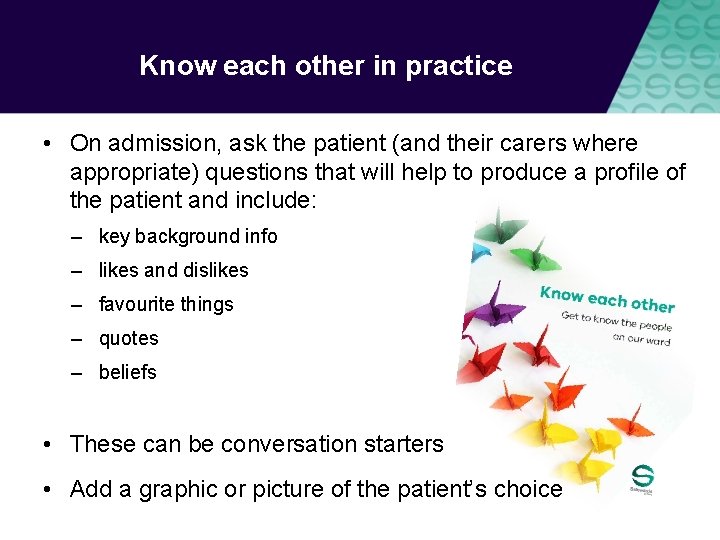
Know each other in practice • On admission, ask the patient (and their carers where appropriate) questions that will help to produce a profile of the patient and include: – key background info – likes and dislikes – favourite things – quotes – beliefs • These can be conversation starters • Add a graphic or picture of the patient’s choice
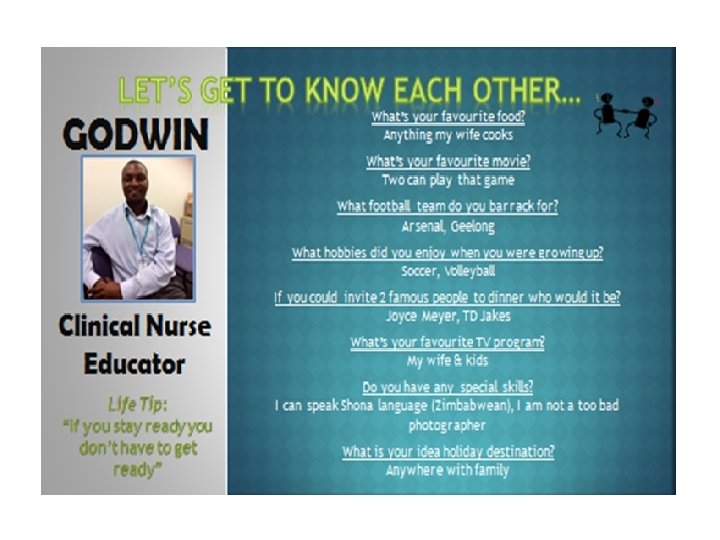
Know each other in practice • Produce a know each other folder or display for all staff and patients on the unit • Use the know each other templates or modify and create your own • Appoint a lead to: • prepare the folder or display • draw patients’ attention to the information • make sure the know each other information stays out on the unit • replace any sheets that get lost
Paste an example of a know each other form filled out from someone in your service here
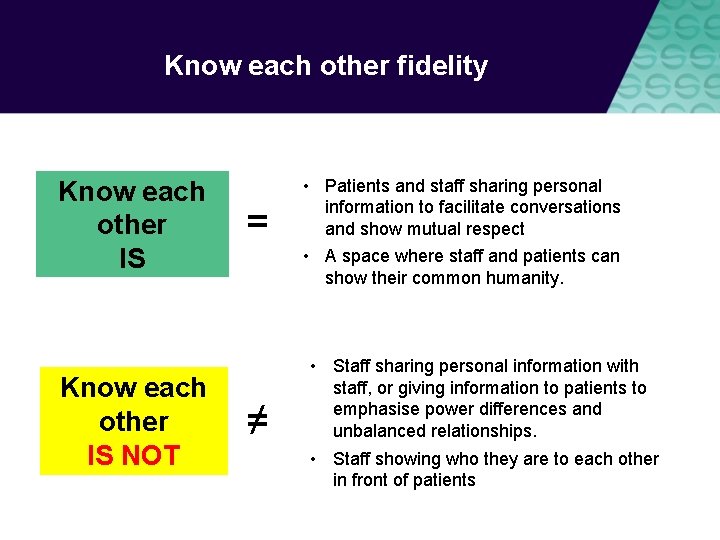
Know each other fidelity Know each other IS NOT = ≠ • Patients and staff sharing personal information to facilitate conversations and show mutual respect • A space where staff and patients can show their common humanity. • Staff sharing personal information with staff, or giving information to patients to emphasise power differences and unbalanced relationships. • Staff showing who they are to each other in front of patients
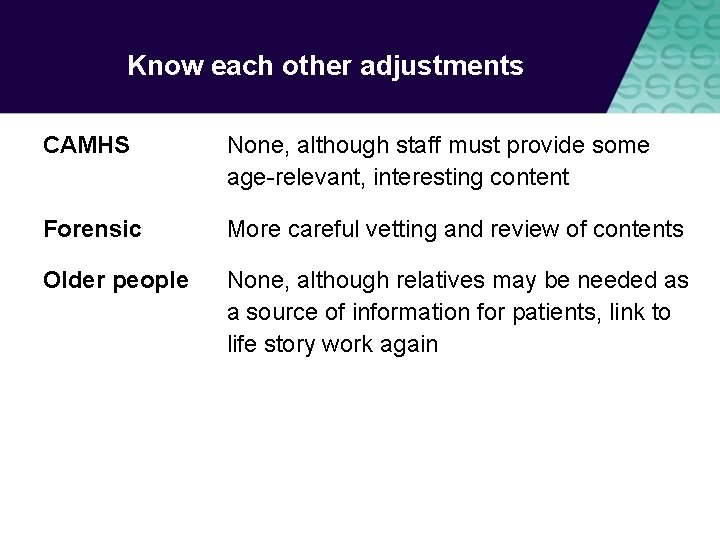
Know each other adjustments CAMHS None, although staff must provide some age-relevant, interesting content Forensic More careful vetting and review of contents Older people None, although relatives may be needed as a source of information for patients, link to life story work again