
Safety Talk Occupational Tobacco Smoke Exposure Sheet 1
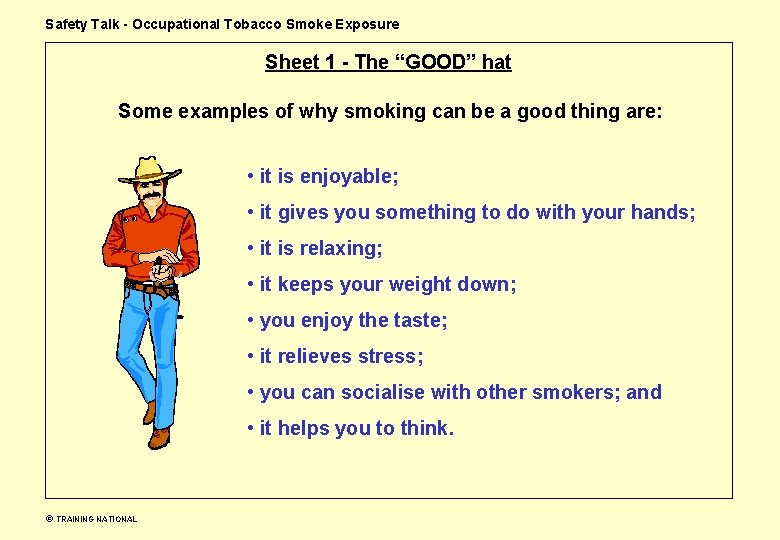
Safety Talk - Occupational Tobacco Smoke Exposure Sheet 1 - The “GOOD” hat Some examples of why smoking can be a good thing are: • it is enjoyable; • it gives you something to do with your hands; • it is relaxing; • it keeps your weight down; • you enjoy the taste; • it relieves stress; • you can socialise with other smokers; and • it helps you to think. TRAINING NATIONAL
Safety Talk - Occupational Tobacco Smoke Exposure Sheet 2 - The “BAD” hat Some examples of why smoking tobacco can be a bad thing are: • it tastes unpleasant; • it smells unpleasant; • it’s harmful to your health; • it’s antisocial if colleagues don’t smoke; • it’s expensive; • it adversely affects fitness; • it’s addictive; and • it doesn’t look good. TRAINING NATIONAL
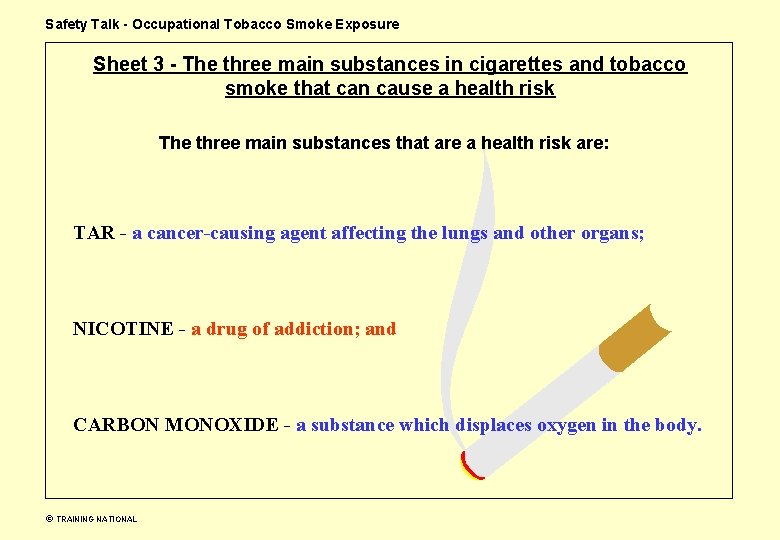
Safety Talk - Occupational Tobacco Smoke Exposure Sheet 3 - The three main substances in cigarettes and tobacco smoke that can cause a health risk The three main substances that are a health risk are: TAR - a cancer-causing agent affecting the lungs and other organs; NICOTINE - a drug of addiction; and CARBON MONOXIDE - a substance which displaces oxygen in the body. TRAINING NATIONAL
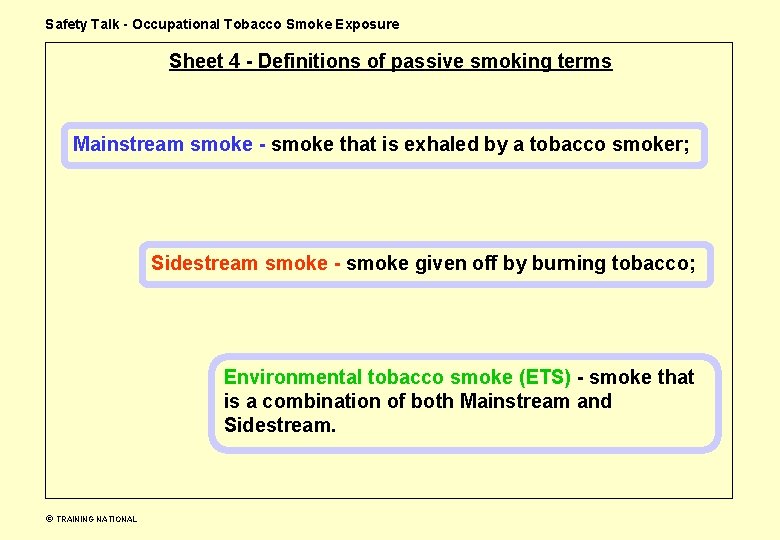
Safety Talk - Occupational Tobacco Smoke Exposure Sheet 4 - Definitions of passive smoking terms Mainstream smoke - smoke that is exhaled by a tobacco smoker; Sidestream smoke - smoke given off by burning tobacco; Environmental tobacco smoke (ETS) - smoke that is a combination of both Mainstream and Sidestream. TRAINING NATIONAL

Safety Talk - Occupational Tobacco Smoke Exposure Sheet 5 - The risk assessment THE RISK ASSESSMENT SHOULD IDENTIFY: • the extent of smoking in the workplace; • where smoking occurs; • high risk areas, such as chemical and explosive storage areas; • the type of ventilation system used; and • the physical layout of the workplace. TRAINING NATIONAL

Safety Talk - Occupational Tobacco Smoke Exposure Sheet 6 - Risk assessment and policy development The steps you should take to start a smoking policy are: · establish a working party with representatives from all groups; · decide where and when smoking will be allowed; · set dates in advance of when changes will occur; · make the changes gradually; · signpost smoking areas clearly and provide cigarette disposal facilities; and · explain the reasons for the policy and its objectives (health risk and legal liability). TRAINING NATIONAL
Safety Talk - Occupational Tobacco Smoke Exposure Sheet 7 - Issues associated with workplace smoking Whether you are an employer or employee, smoker or nonsmoker, you might like to know more about: · legal issues, such as Occupational Health & Safety, Workers’ Compensation and passive smoking laws; · the health risks of ETS; · your rights in the workplace; · assessing the risk of ETS in the workplace; · where to get help to quit smoking; and · the assistance available to help you to develop a smoke-free policy. TRAINING NATIONAL Work togeth a bette er for r work place
- Slides: 7