
Safety Talk How to Identify Hazards Sheet 1
- Slides: 10
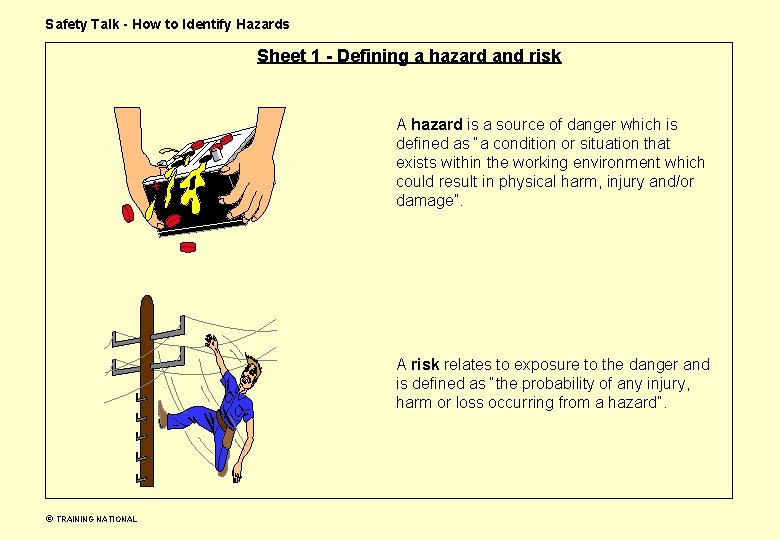
Safety Talk - How to Identify Hazards Sheet 1 - Defining a hazard and risk A hazard is a source of danger which is defined as “a condition or situation that exists within the working environment which could result in physical harm, injury and/or damage”. A risk relates to exposure to the danger and is defined as “the probability of any injury, harm or loss occurring from a hazard”. TRAINING NATIONAL
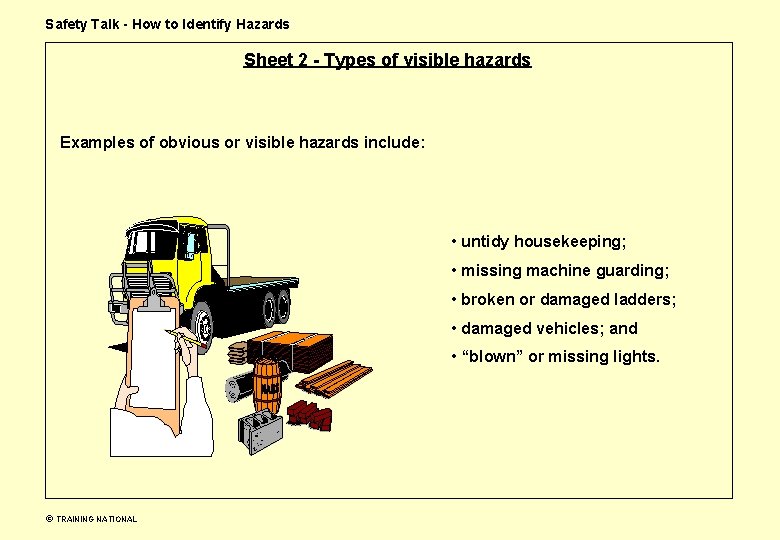
Safety Talk - How to Identify Hazards Sheet 2 - Types of visible hazards Examples of obvious or visible hazards include: • untidy housekeeping; • missing machine guarding; • broken or damaged ladders; • damaged vehicles; and • “blown” or missing lights. TRAINING NATIONAL
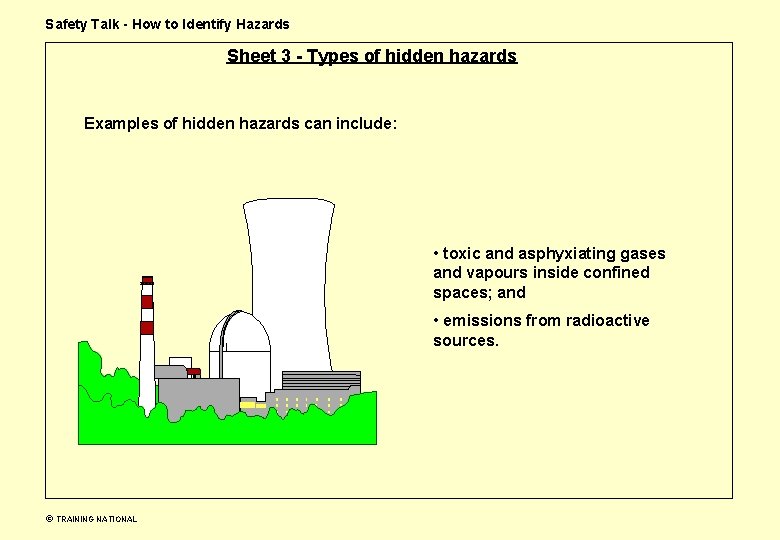
Safety Talk - How to Identify Hazards Sheet 3 - Types of hidden hazards Examples of hidden hazards can include: . • toxic and asphyxiating gases and vapours inside confined spaces; and • emissions from radioactive sources. TRAINING NATIONAL
Safety Talk - How to Identify Hazards Sheet 4 - Types of developing hazards Examples of developing hazards include: • building and structural damage created by vibration or sagging foundations; • corrosion and excessive weathering of metal components; • abnormal wear and tear on critical parts of machinery; equipment or plant; and • deterioration from ultra-violet radiation and chemical reaction. TRAINING NATIONAL
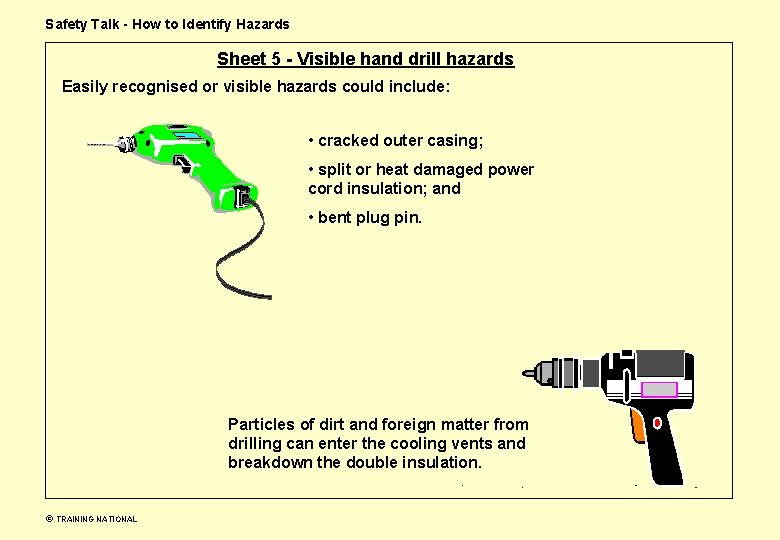
Safety Talk - How to Identify Hazards Sheet 5 - Visible hand drill hazards Easily recognised or visible hazards could include: • cracked outer casing; • split or heat damaged power cord insulation; and • bent plug pin. Particles of dirt and foreign matter from drilling can enter the cooling vents and breakdown the double insulation. TRAINING NATIONAL
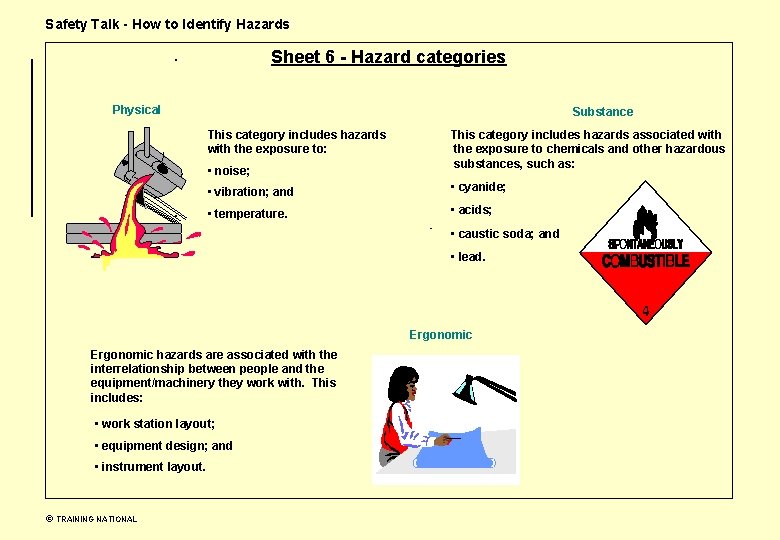
Safety Talk - How to Identify Hazards Sheet 6 - Hazard categories Physical Substance This category includes hazards with the exposure to: • noise; This category includes hazards associated with the exposure to chemicals and other hazardous substances, such as: • vibration; and • cyanide; • temperature. • acids; • caustic soda; and • lead. Ergonomic hazards are associated with the interrelationship between people and the equipment/machinery they work with. This includes: • work station layout; • equipment design; and • instrument layout. TRAINING NATIONAL
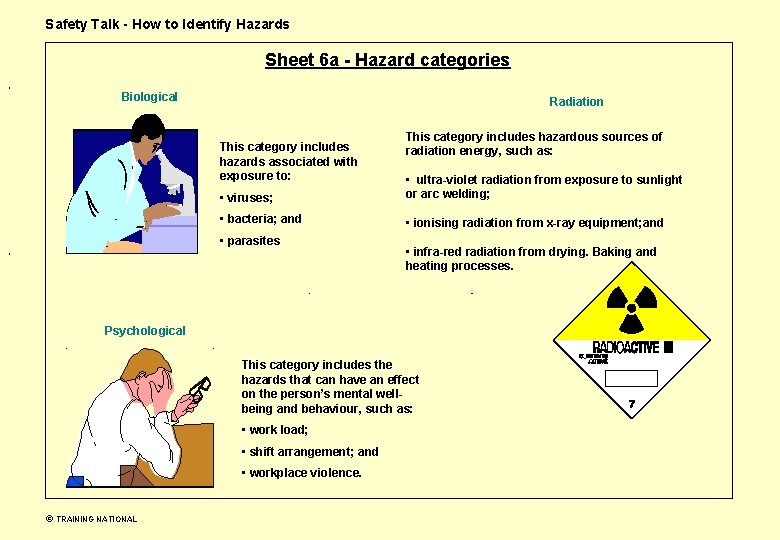
Safety Talk - How to Identify Hazards Sheet 6 a - Hazard categories Biological Radiation This category includes hazards associated with exposure to: This category includes hazardous sources of radiation energy, such as: • viruses; • ultra-violet radiation from exposure to sunlight or arc welding; • bacteria; and • ionising radiation from x-ray equipment; and • parasites • infra-red radiation from drying. Baking and heating processes. Psychological This category includes the hazards that can have an effect on the person’s mental wellbeing and behaviour, such as: • work load; • shift arrangement; and • workplace violence. TRAINING NATIONAL
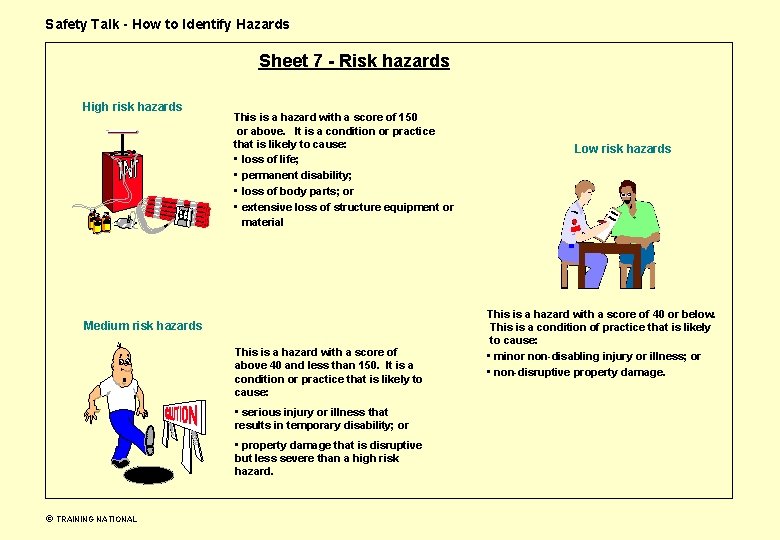
Safety Talk - How to Identify Hazards Sheet 7 - Risk hazards High risk hazards This is a hazard with a score of 150 or above. It is a condition or practice that is likely to cause: • loss of life; • permanent disability; • loss of body parts; or • extensive loss of structure equipment or material Medium risk hazards This is a hazard with a score of above 40 and less than 150. It is a condition or practice that is likely to cause: • serious injury or illness that results in temporary disability; or • property damage that is disruptive but less severe than a high risk hazard. TRAINING NATIONAL Low risk hazards This is a hazard with a score of 40 or below. This is a condition of practice that is likely to cause: • minor non-disabling injury or illness; or • non-disruptive property damage.
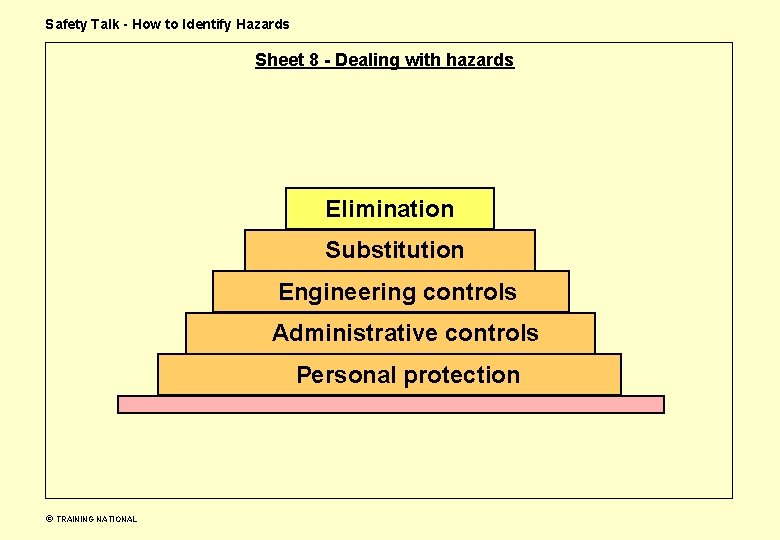
Safety Talk - How to Identify Hazards Sheet 8 - Dealing with hazards Elimination Substitution Engineering controls Administrative controls Personal protection TRAINING NATIONAL
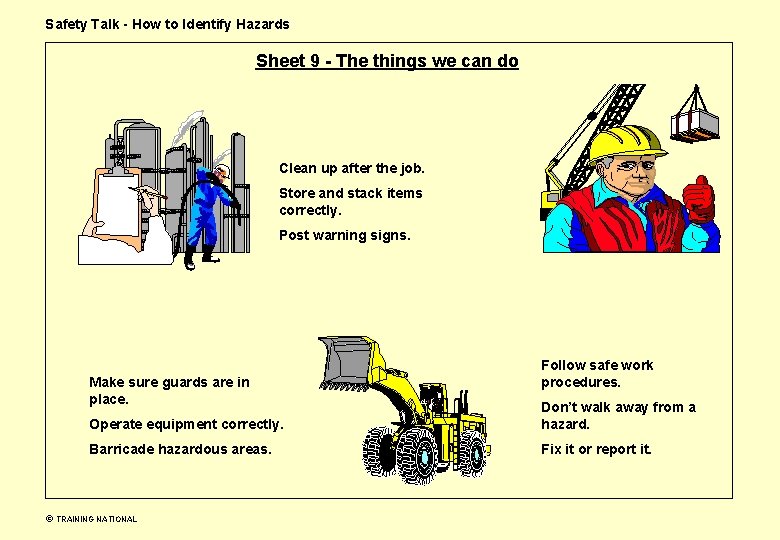
Safety Talk - How to Identify Hazards Sheet 9 - The things we can do Clean up after the job. Store and stack items correctly. Post warning signs. Make sure guards are in place. Follow safe work procedures. Operate equipment correctly. Don’t walk away from a hazard. Barricade hazardous areas. Fix it or report it. TRAINING NATIONAL