
Safety Talk Heat Stress Sheet 1 The causes
- Slides: 5
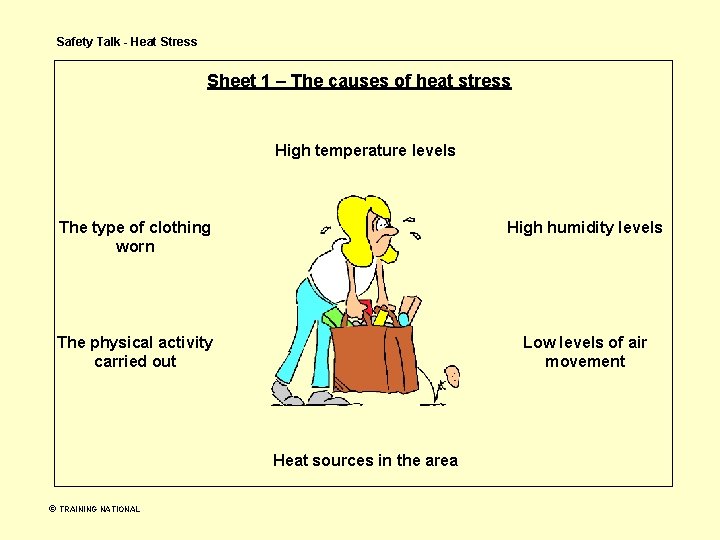
Safety Talk - Heat Stress Sheet 1 – The causes of heat stress High temperature levels The type of clothing worn High humidity levels The physical activity carried out Low levels of air movement Heat sources in the area TRAINING NATIONAL
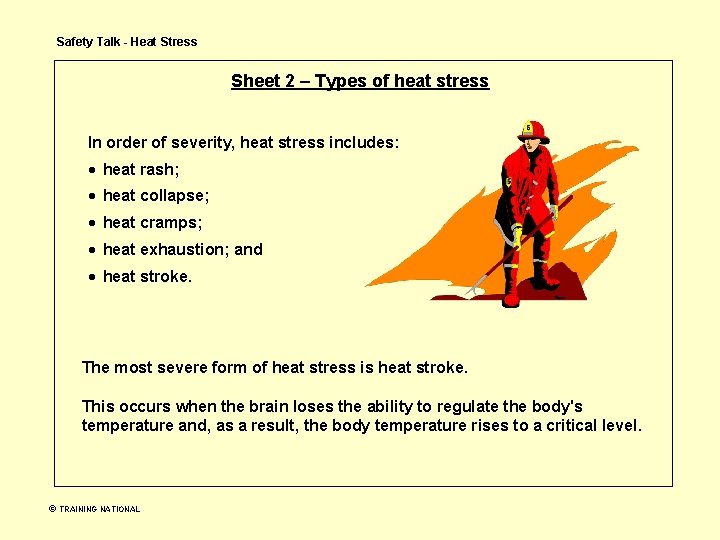
Safety Talk - Heat Stress Sheet 2 – Types of heat stress In order of severity, heat stress includes: · heat rash; · heat collapse; · heat cramps; · heat exhaustion; and · heat stroke. The most severe form of heat stress is heat stroke. This occurs when the brain loses the ability to regulate the body's temperature and, as a result, the body temperature rises to a critical level. TRAINING NATIONAL
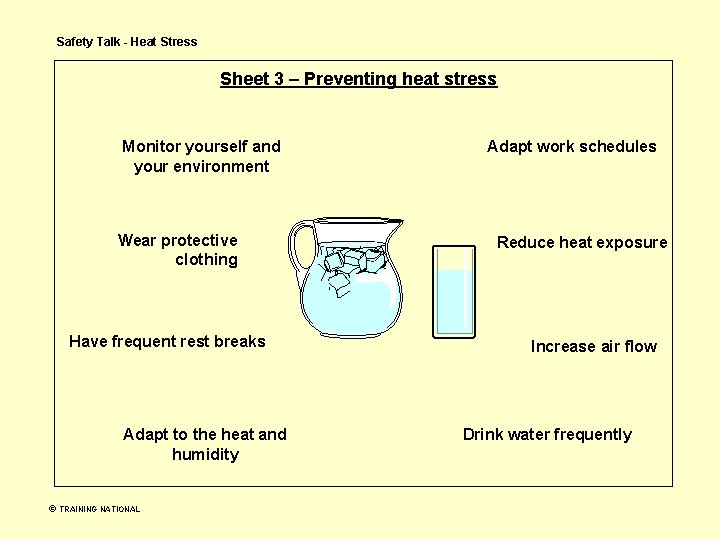
Safety Talk - Heat Stress Sheet 3 – Preventing heat stress Monitor yourself and your environment Wear protective clothing Have frequent rest breaks Adapt to the heat and humidity TRAINING NATIONAL Adapt work schedules Reduce heat exposure Increase air flow Drink water frequently
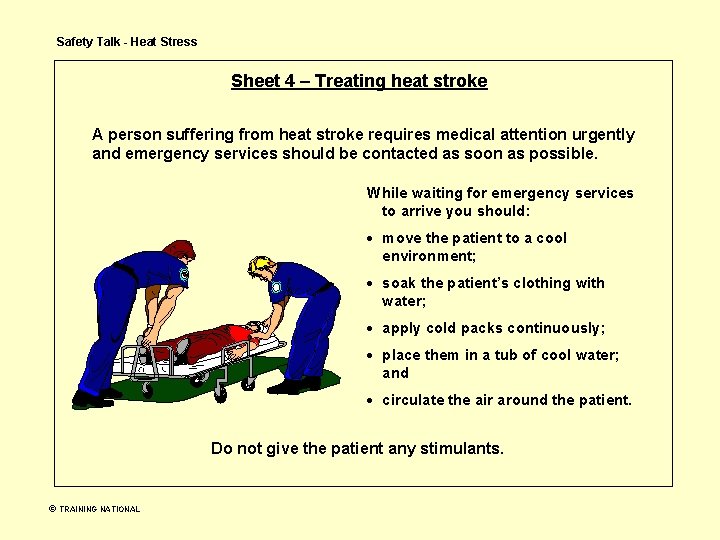
Safety Talk - Heat Stress Sheet 4 – Treating heat stroke A person suffering from heat stroke requires medical attention urgently and emergency services should be contacted as soon as possible. While waiting for emergency services to arrive you should: · move the patient to a cool environment; · soak the patient’s clothing with water; · apply cold packs continuously; · place them in a tub of cool water; and · circulate the air around the patient. Do not give the patient any stimulants. TRAINING NATIONAL
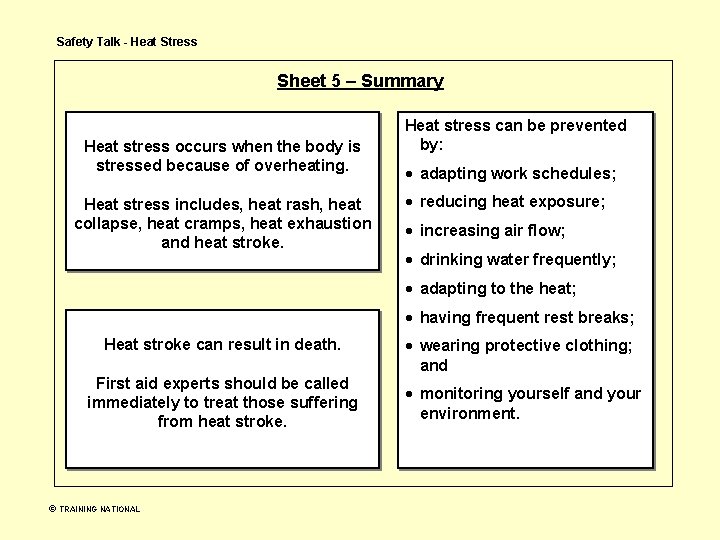
Safety Talk - Heat Stress Sheet 5 – Summary Heat stress occurs when the body is stressed because of overheating. Heat stress includes, heat rash, heat collapse, heat cramps, heat exhaustion and heat stroke. Heat stress can be prevented by: · adapting work schedules; · reducing heat exposure; · increasing air flow; · drinking water frequently; · adapting to the heat; · having frequent rest breaks; Heat stroke can result in death. First aid experts should be called immediately to treat those suffering from heat stroke. TRAINING NATIONAL · wearing protective clothing; and · monitoring yourself and your environment.