
SAFETY TALK Hazardous Communication 1 INTRODUCTION Everyone in
- Slides: 3
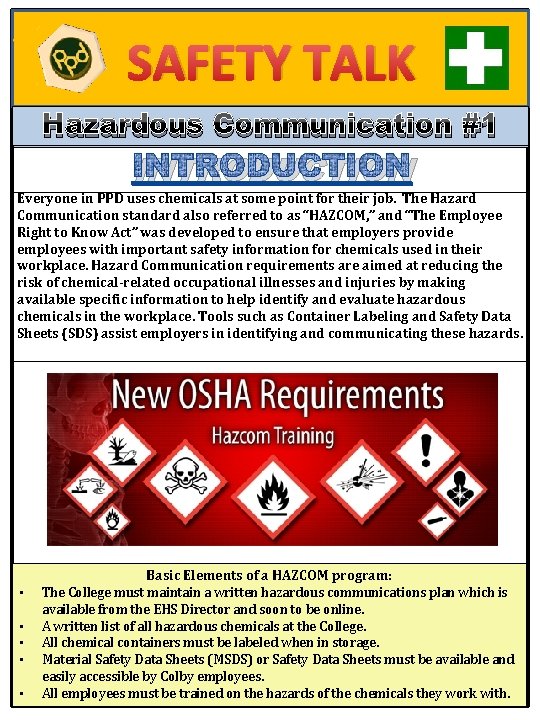
SAFETY TALK Hazardous Communication #1 INTRODUCTION Everyone in PPD uses chemicals at some point for their job. The Hazard Communication standard also referred to as “HAZCOM, ” and “The Employee Right to Know Act” was developed to ensure that employers provide employees with important safety information for chemicals used in their workplace. Hazard Communication requirements are aimed at reducing the risk of chemical-related occupational illnesses and injuries by making available specific information to help identify and evaluate hazardous chemicals in the workplace. Tools such as Container Labeling and Safety Data Sheets (SDS) assist employers in identifying and communicating these hazards. • • • Basic Elements of a HAZCOM program: The College must maintain a written hazardous communications plan which is available from the EHS Director and soon to be online. A written list of all hazardous chemicals at the College. All chemical containers must be labeled when in storage. Material Safety Data Sheets (MSDS) or Safety Data Sheets must be available and easily accessible by Colby employees. All employees must be trained on the hazards of the chemicals they work with.
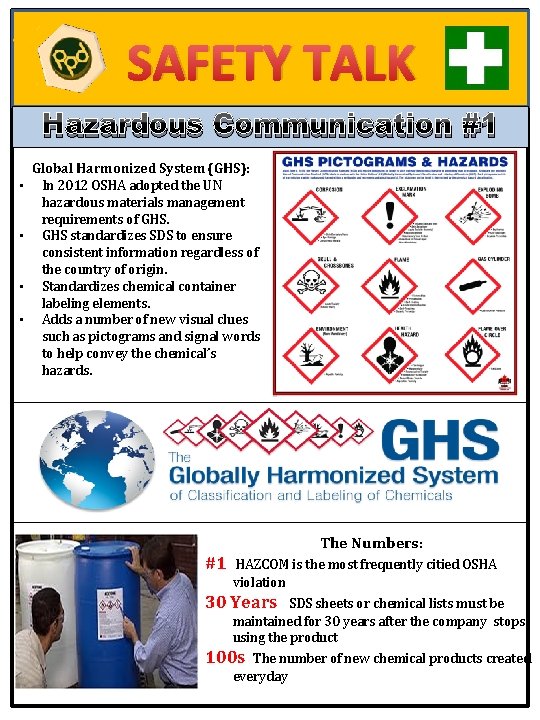
SAFETY TALK Hazardous Communication #1 • • Global Harmonized System (GHS): In 2012 OSHA adopted the UN hazardous materials management requirements of GHS standardizes SDS to ensure consistent information regardless of the country of origin. Standardizes chemical container labeling elements. Adds a number of new visual clues such as pictograms and signal words to help convey the chemical’s hazards. The Numbers: #1 HAZCOM is the most frequently citied OSHA violation 30 Years SDS sheets or chemical lists must be maintained for 30 years after the company stops using the product 100 s The number of new chemical products created everyday
SAFETY TALK Hazardous Communication #1 Review / Discussion Questions: 1. 2. 3. 4. This is the first of a series on the hazardous communication program at Colby College. What additional HAZCOM topics do you feel still need to be discussed and why? Where would you get a copy of Colby written Hazardous Communications Program? What are some elements of GHS that have been added to the standard? Why did OSHA adopt the GHS standard? Printed Name Signature Questions, concerns or comments contact the EHS Director at extension 5504.