
Safety Storage and Treatment of High Level Disinfection
- Slides: 19
Safety, Storage and Treatment of High Level Disinfection Chemicals CHAD FISHER HAZARDOUS WASTE COMPLIANCE INSPECTOR WA STATE DEPARTMENT OF ECOLOGY JANUARY 29, 2016
Overview for Today �Dangerous waste (DW) management overview �High Level Disinfectants: Examples and Safety Concerns �Treatment and disposal to sewer �Challenges (violations) we’re seeing during dangerous waste inspections … with example photos �Useful resources: online guidance and labels
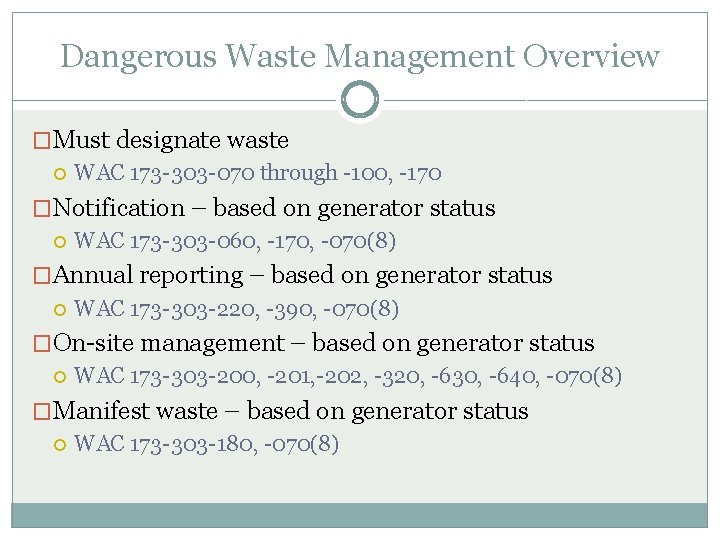
Dangerous Waste Management Overview �Must designate waste WAC 173 -303 -070 through -100, -170 �Notification – based on generator status WAC 173 -303 -060, -170, -070(8) �Annual reporting – based on generator status WAC 173 -303 -220, -390, -070(8) �On-site management – based on generator status WAC 173 -303 -200, -201, -202, -320, -630, -640, -070(8) �Manifest waste – based on generator status WAC 173 -303 -180, -070(8)
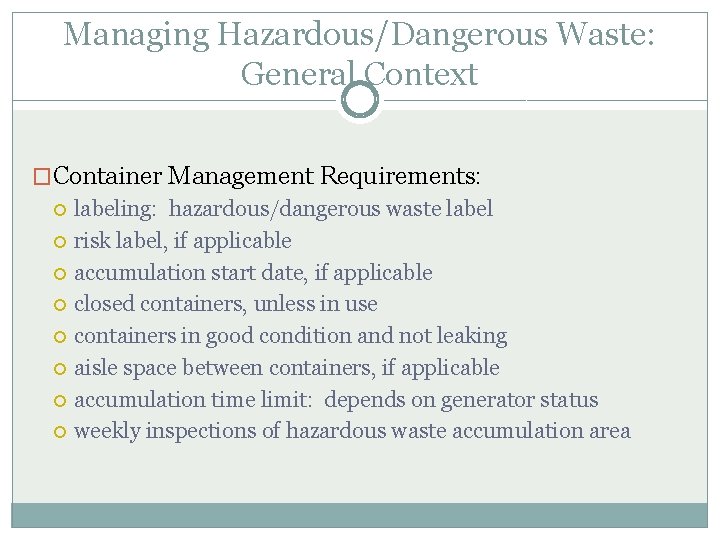
Managing Hazardous/Dangerous Waste: General Context �Container Management Requirements: labeling: hazardous/dangerous waste label risk label, if applicable accumulation start date, if applicable closed containers, unless in use containers in good condition and not leaking aisle space between containers, if applicable accumulation time limit: depends on generator status weekly inspections of hazardous waste accumulation area
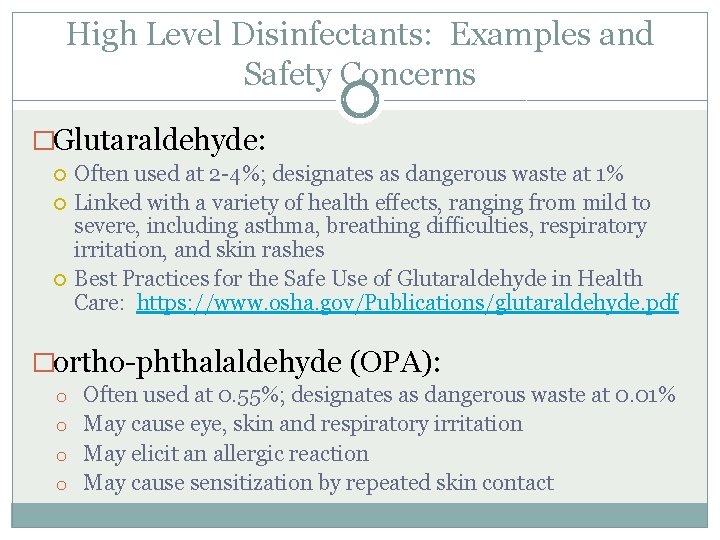
High Level Disinfectants: Examples and Safety Concerns �Glutaraldehyde: Often used at 2 -4%; designates as dangerous waste at 1% Linked with a variety of health effects, ranging from mild to severe, including asthma, breathing difficulties, respiratory irritation, and skin rashes Best Practices for the Safe Use of Glutaraldehyde in Health Care: https: //www. osha. gov/Publications/glutaraldehyde. pdf �ortho-phthalaldehyde (OPA): o Often used at 0. 55%; designates as dangerous waste at 0. 01% o May cause eye, skin and respiratory irritation o May elicit an allergic reaction o May cause sensitization by repeated skin contact
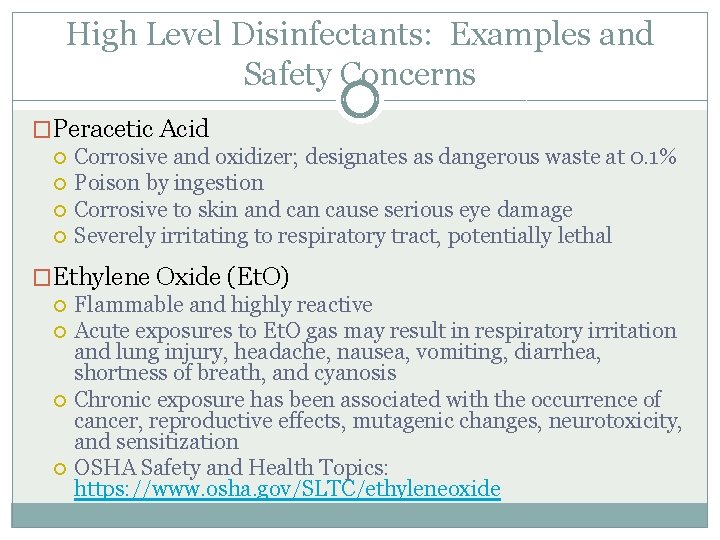
High Level Disinfectants: Examples and Safety Concerns �Peracetic Acid Corrosive and oxidizer; designates as dangerous waste at 0. 1% Poison by ingestion Corrosive to skin and can cause serious eye damage Severely irritating to respiratory tract, potentially lethal �Ethylene Oxide (Et. O) Flammable and highly reactive Acute exposures to Et. O gas may result in respiratory irritation and lung injury, headache, nausea, vomiting, diarrhea, shortness of breath, and cyanosis Chronic exposure has been associated with the occurrence of cancer, reproductive effects, mutagenic changes, neurotoxicity, and sensitization OSHA Safety and Health Topics: https: //www. osha. gov/SLTC/ethyleneoxide
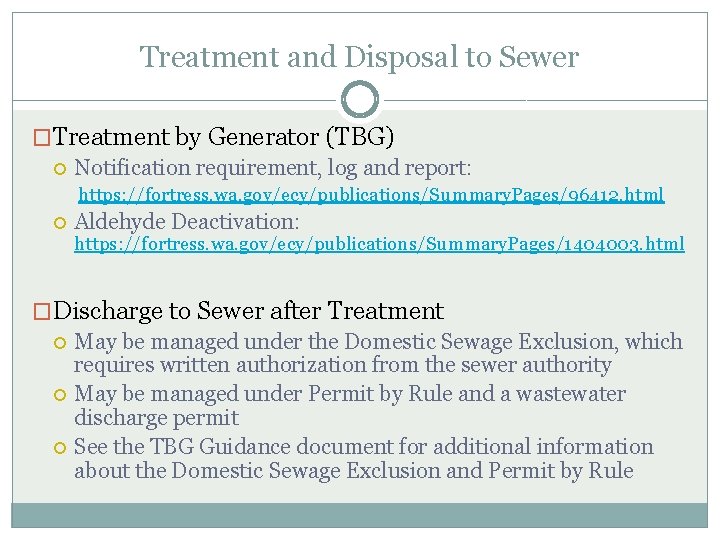
Treatment and Disposal to Sewer �Treatment by Generator (TBG) Notification requirement, log and report: https: //fortress. wa. gov/ecy/publications/Summary. Pages/96412. html Aldehyde Deactivation: https: //fortress. wa. gov/ecy/publications/Summary. Pages/1404003. html �Discharge to Sewer after Treatment May be managed under the Domestic Sewage Exclusion, which requires written authorization from the sewer authority May be managed under Permit by Rule and a wastewater discharge permit See the TBG Guidance document for additional information about the Domestic Sewage Exclusion and Permit by Rule
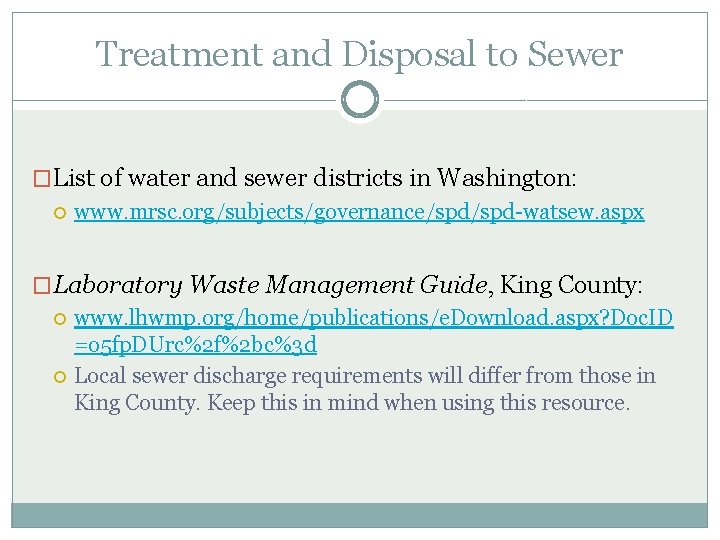
Treatment and Disposal to Sewer �List of water and sewer districts in Washington: www. mrsc. org/subjects/governance/spd-watsew. aspx �Laboratory Waste Management Guide, King County: www. lhwmp. org/home/publications/e. Download. aspx? Doc. ID =o 5 fp. DUrc%2 f%2 bc%3 d Local sewer discharge requirements will differ from those in King County. Keep this in mind when using this resource.
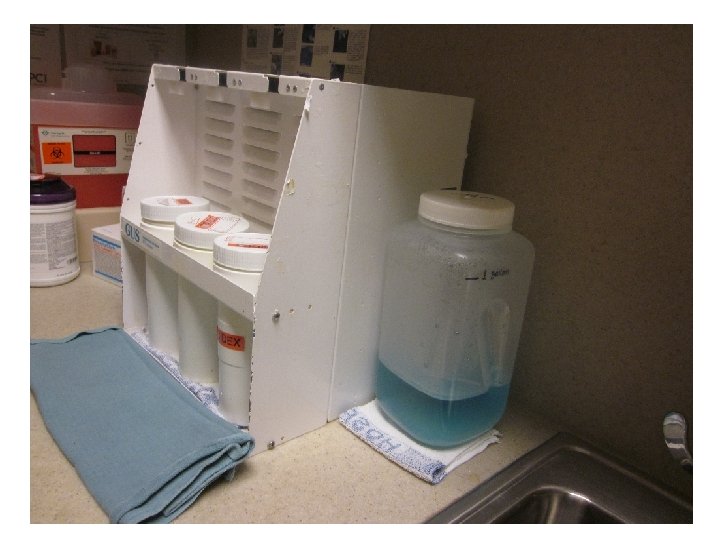
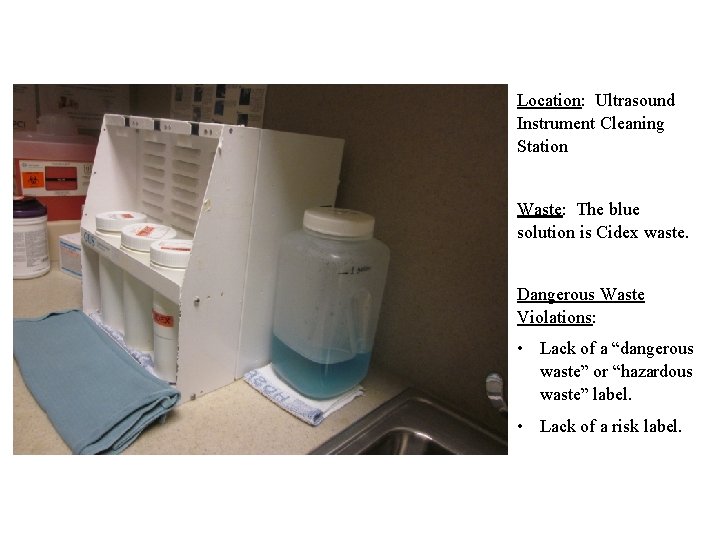
Location: Ultrasound Instrument Cleaning Station Waste: The blue solution is Cidex waste. Dangerous Waste Violations: • Lack of a “dangerous waste” or “hazardous waste” label. • Lack of a risk label.
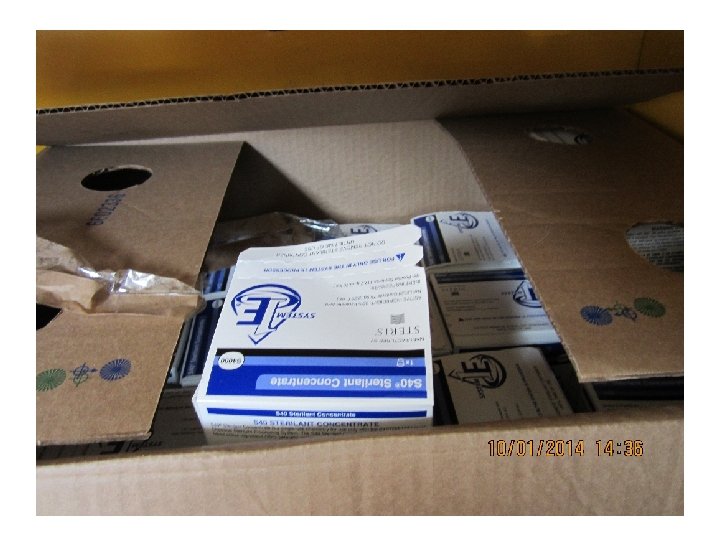
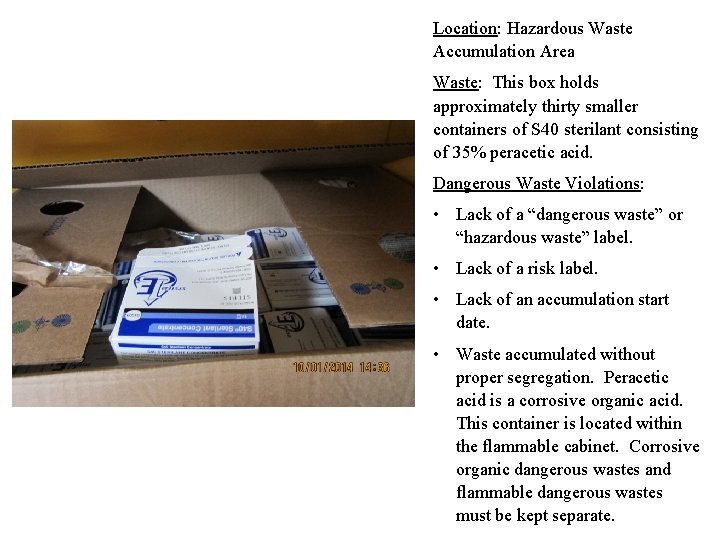
Location: Hazardous Waste Accumulation Area Waste: This box holds approximately thirty smaller containers of S 40 sterilant consisting of 35% peracetic acid. Dangerous Waste Violations: • Lack of a “dangerous waste” or “hazardous waste” label. • Lack of a risk label. • Lack of an accumulation start date. • Waste accumulated without proper segregation. Peracetic acid is a corrosive organic acid. This container is located within the flammable cabinet. Corrosive organic dangerous wastes and flammable dangerous wastes must be kept separate.
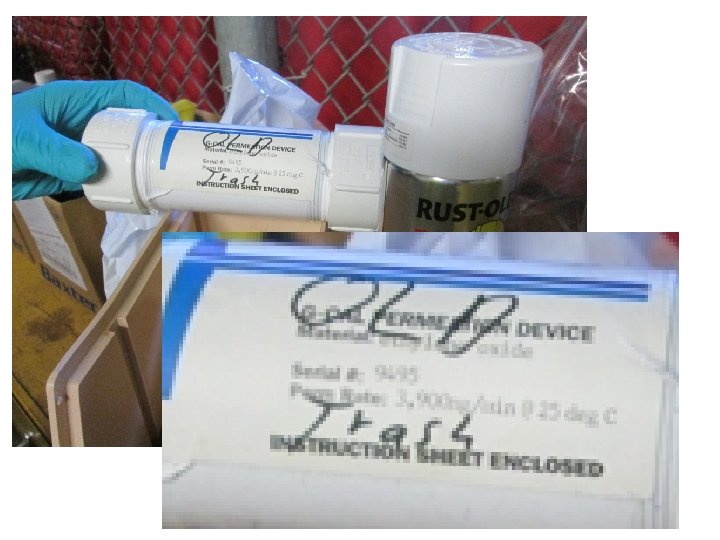
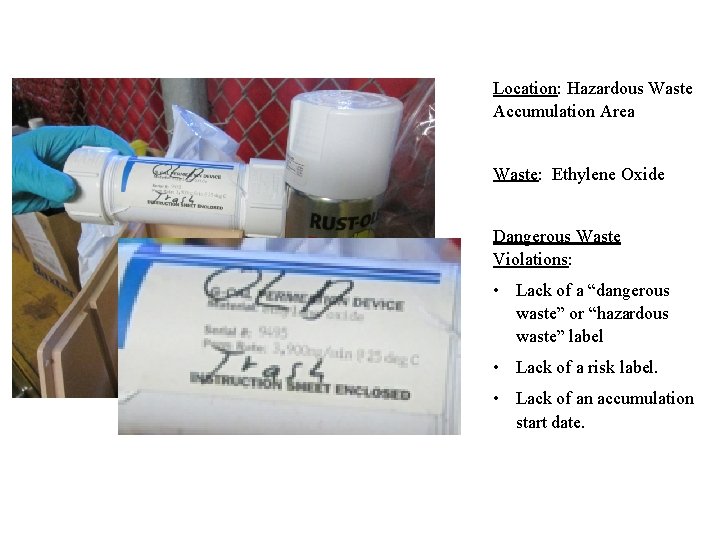
Location: Hazardous Waste Accumulation Area Waste: Ethylene Oxide Dangerous Waste Violations: • Lack of a “dangerous waste” or “hazardous waste” label • Lack of a risk label. • Lack of an accumulation start date.
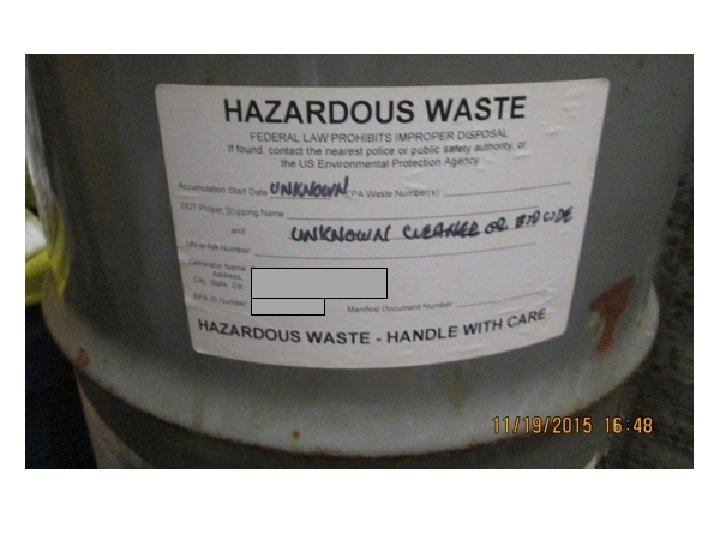
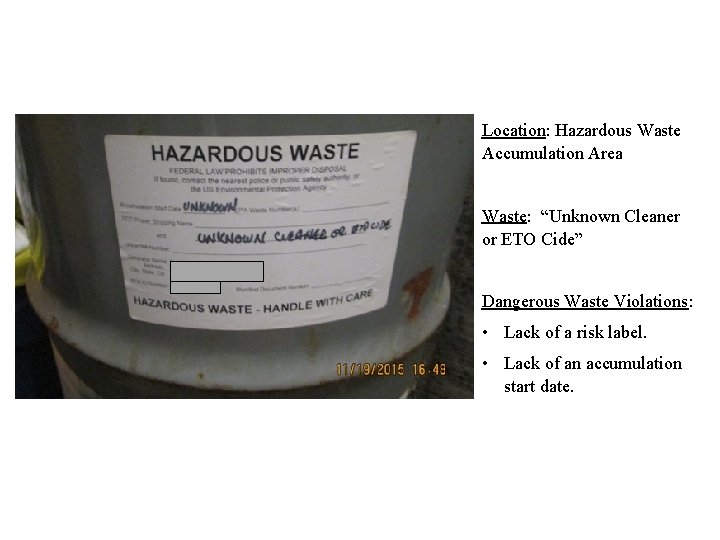
Location: Hazardous Waste Accumulation Area Waste: “Unknown Cleaner or ETO Cide” Dangerous Waste Violations: • Lack of a risk label. • Lack of an accumulation start date.
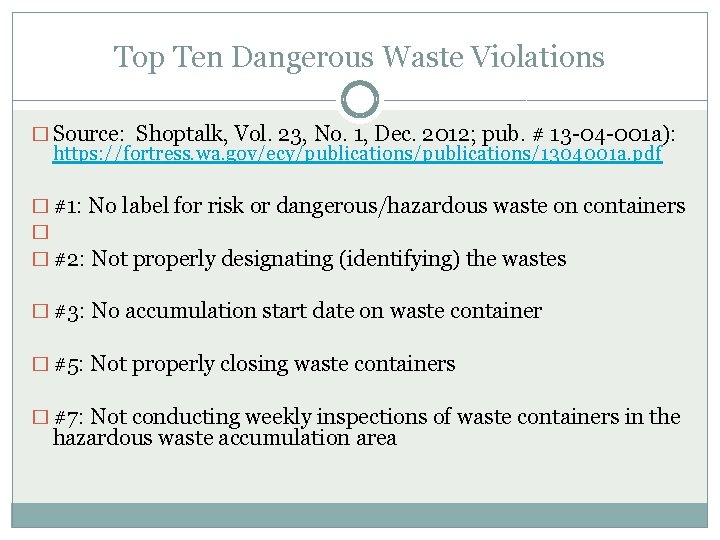
Top Ten Dangerous Waste Violations � Source: Shoptalk, Vol. 23, No. 1, Dec. 2012; pub. # 13 -04 -001 a): https: //fortress. wa. gov/ecy/publications/1304001 a. pdf � #1: No label for risk or dangerous/hazardous waste on containers � � #2: Not properly designating (identifying) the wastes � #3: No accumulation start date on waste container � #5: Not properly closing waste containers � #7: Not conducting weekly inspections of waste containers in the hazardous waste accumulation area
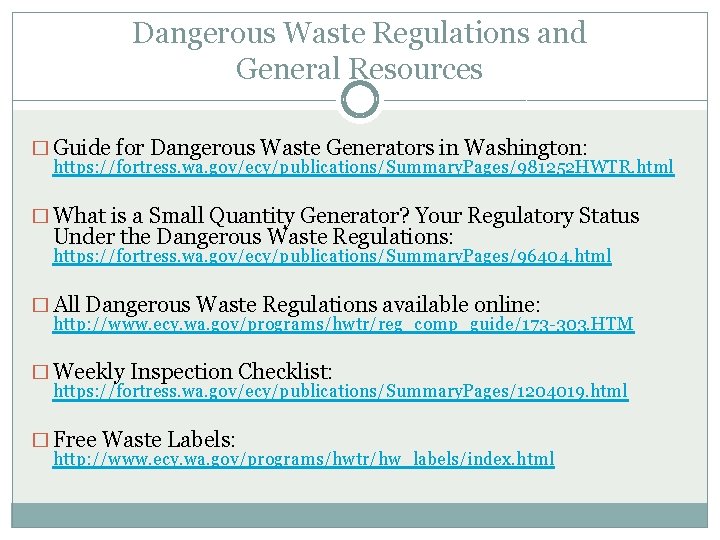
Dangerous Waste Regulations and General Resources � Guide for Dangerous Waste Generators in Washington: https: //fortress. wa. gov/ecy/publications/Summary. Pages/981252 HWTR. html � What is a Small Quantity Generator? Your Regulatory Status Under the Dangerous Waste Regulations: https: //fortress. wa. gov/ecy/publications/Summary. Pages/96404. html � All Dangerous Waste Regulations available online: http: //www. ecy. wa. gov/programs/hwtr/reg_comp_guide/173 -303. HTM � Weekly Inspection Checklist: https: //fortress. wa. gov/ecy/publications/Summary. Pages/1204019. html � Free Waste Labels: http: //www. ecy. wa. gov/programs/hwtr/hw_labels/index. html
Contacts: Pollution Prevention and Dangerous Waste Management Northwest Region � Technical assistance Jenny Yoo � � � 425. 649. 7166 jyoo 461@ecy. wa. gov � Compliance assistance Chad Fisher � Southwest Region � Compliance assistance 425. 649. 7281 cfis 461@ecy. wa. gov � � Holly Cushman � � 509. 575. 2724 hcus 461@ecy. wa. gov � Compliance assistance Amy Cook � � 509. 575. 2477 acoo 461@ecy. wa. gov 360. 407. 7553 lper 461@ecy. wa. gov Eastern Region � Compliance assistance Andy Maher � Central Region � Technical assistance Lisa Perle � 509. 329. 3612 anma 461@ecy. wa. gov Statewide Questions – Ecology HQ Tom Cusack � � 360. 407. 6755 tcus 461@ecy. wa. gov