
SAFETY STANDARD 6 SAFE WORKING CONDITIONS Each worker
- Slides: 21
SAFETY STANDARD 6
SAFE WORKING CONDITIONS • Each worker must personally practice kitchen safety • Wear personal protective clothing: Aprons: clean (bacteria grows quickly) Gloves: single use only Shoes: slip – resistant & sturdy Chef Hat: clean
MSDS • Material Safety Data Sheet • Must be on file for each chemical/cleaner used at establishment • Contains - Safe use & handling - Physical/ health/ fire/ reactivity hazards - Precautions - Protective equipment - 1 st Aid info - Hazardous ingredients
WHAT IS FIRST AID? • Medical treatment given to an injured persons - Light injuries or - Complete treatment can be provided
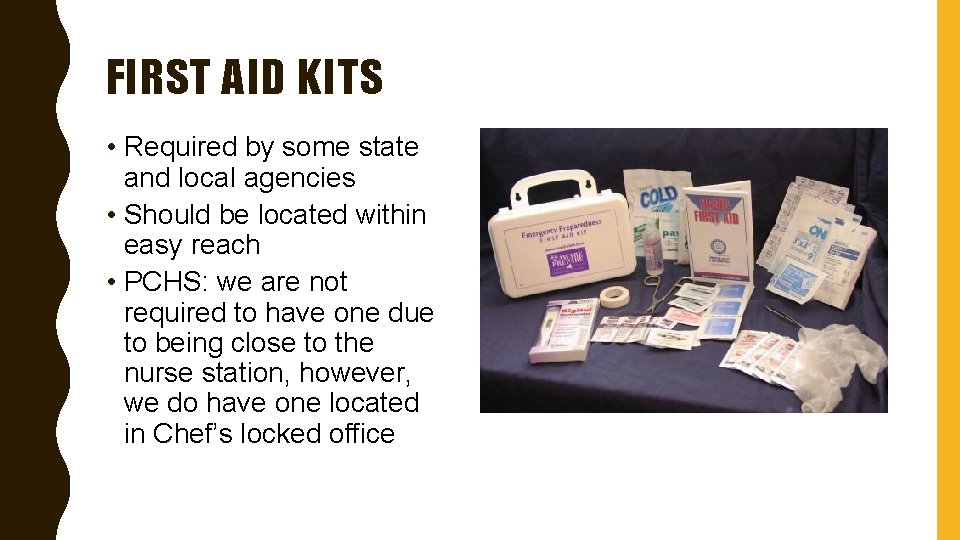
FIRST AID KITS • Required by some state and local agencies • Should be located within easy reach • PCHS: we are not required to have one due to being close to the nurse station, however, we do have one located in Chef’s locked office
TYPES OF BURNS • 1 st Degree: Skin turns red, feels sensitive, swells. Do not apply ice but run cool running water over it & cover it with a wet towel • 2 nd Degree: Blisters form, oozing occurs. Treat the same as 1 st but seek medical attention • 3 rd Degree: Painless – all nerves have been affected. Skin may turn white & soft OR black & hard. Seek medical attention ASAP • Chemical Burns: flush chemical off with cool water for 20 mins.
CUTS ( MOST COMMON INJURY IN THE KITCHEN) 1. Abrasions : minor cut caused by rubbing the skin against something else (rug burn) 2. Lacerations: cut or tear of skin ( knife cut) 3. Avulsion: cut removes a piece of skin or body part (severed finger) 4. Punctures: wound resulting from a sharp object that pierces & makes a deep hole
PREVENTING CUTS • Replace worn or outdated equipment • Wash sharp utensils separately • Carry knives appropriately • May attention to what you are doing and your surroundings
MINOR WOUNDS TREATMENT • Disposable gloves to protect yourself and victim • Clean with soap and water • Place sterile gauze over the cut • Apply direct pressure until bleeding stops. DO NOT remove gauze once bleeding stops (you may tear the scab) • If bleeding does not stop, hold limb above heart
SERIOUS WOUNDS TREATMENT • Call 911 first • Wear disposable gloves • Control bleeding by applying pressure • Elevate the area while applying pressure • Keep adding gauze until bleeding stops but do not remove previous one • Wash hands thoroughly after 911 has arrived
STRAINS, SPRAINS, AND FALLS • Sprains and strains result from twisting or wrenching body out of normal position • Caused by tripping or falling
LIFTING AND CARRYING • Bend at the knees • Keep your back straight (don’t hunch over) • Lift straight up (like you are doing squats) • Don’t twist your body as you pick up or move object • Set the load down slowly. Keep back straight the entire time
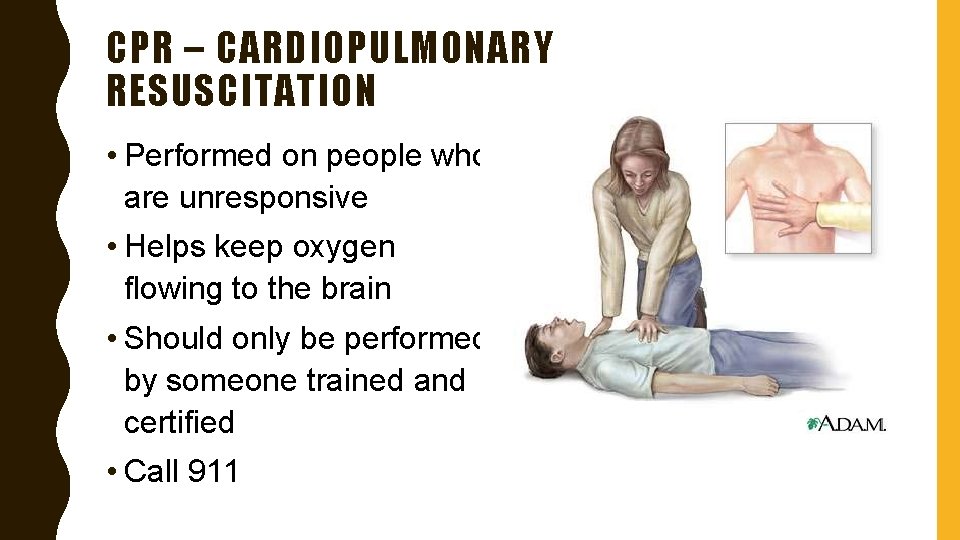
CPR – CARDIOPULMONARY RESUSCITATION • Performed on people who are unresponsive • Helps keep oxygen flowing to the brain • Should only be performed by someone trained and certified • Call 911
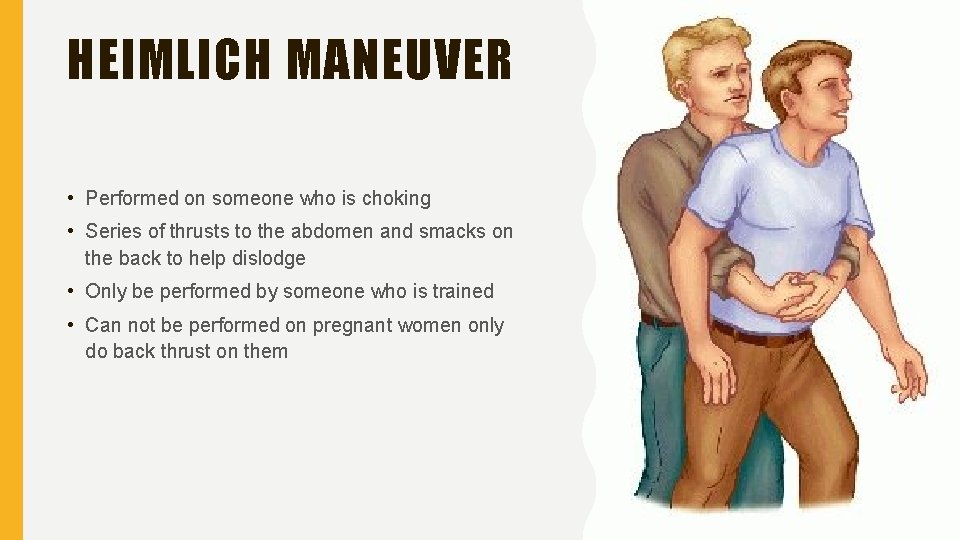
HEIMLICH MANEUVER • Performed on someone who is choking • Series of thrusts to the abdomen and smacks on the back to help dislodge • Only be performed by someone who is trained • Can not be performed on pregnant women only do back thrust on them
TYPES OF FIRE HAZARDS • Open flames & heat : can set paper/ food/ grease/ clothing/ metal on fire • Grease: layer of dirt or grease often cause of flare-up or fire in the kitchen. Keep equipment clean • Electrical wiring: 30% of all accidental fires are caused by faulty electrical wiring. Don’t overload outlets and use them carefully • Unsafe storage areas: store flammable items and linens away from open flames. Keep bleaches and chemicals away as well
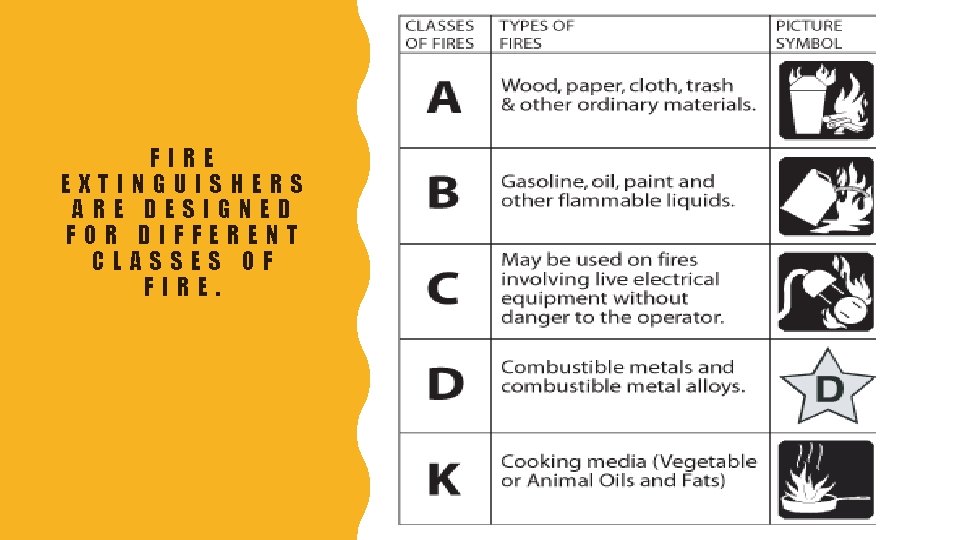
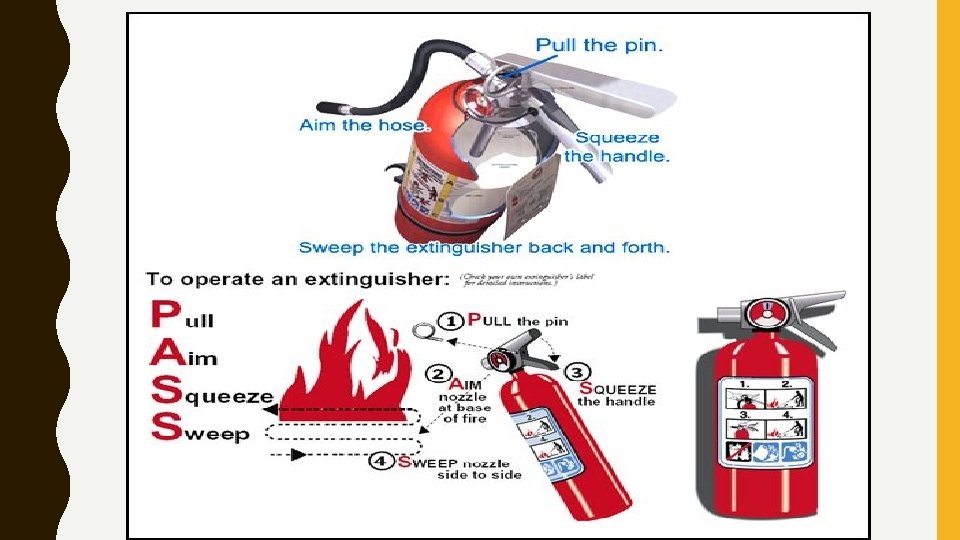
FIRE EXTINGUISHERS ARE DESIGNED FOR DIFFERENT CLASSES OF FIRE.
FIRE EXTINGUISHERS • Remove fire’s fuel supply • Deny oxygen • Cool the fire’s fuel below its combustion point • Disrupt the flame’s chain reaction by using dry chemical extinguisher
AUTOMATIC HOOD AND SPRINKLER SYSTEMS • Triggered by heat of a fire • National Fire Protection Association REQUIRES that specialized systems by installed over ranges, griddles, broilers, and deep fat fryers - Release chemicals like carbon dioxide instead of water to put fires out
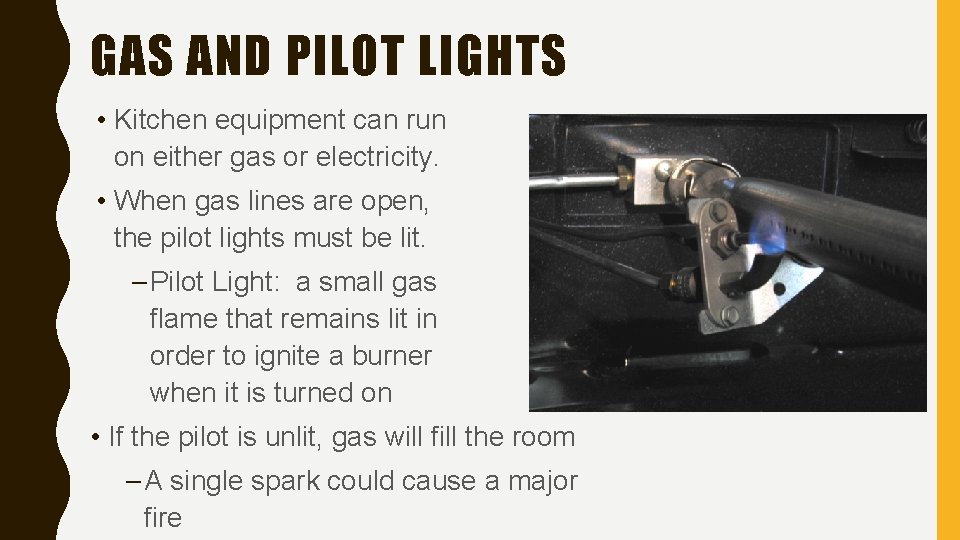
GAS AND PILOT LIGHTS • Kitchen equipment can run on either gas or electricity. • When gas lines are open, the pilot lights must be lit. – Pilot Light: a small gas flame that remains lit in order to ignite a burner when it is turned on • If the pilot is unlit, gas will fill the room – A single spark could cause a major fire
EVACUATIONS AND SAFETY • Must identify when & how employees are to respond to different emergencies. Must have at least 2 routes • Don’t ever leave anything unattended • Be aware of your surroundings • Don’t leave anything flammable near flames or heat sources Safety • Wear long sleeves to cover arms • Let people know you are carrying something hot • Prevent steam burns lift lids away from your face