
SAFETY SANITATION Objectives Identify ways foods become contaminated
SAFETY & SANITATION
Objectives • • Identify ways foods become contaminated Define different types of food borne illnesses Ways to prevent food poisoning How to prevent kitchen accidents
Sanitation: * keeping foods free from contamination Safety: * practicing safety procedures to prevent accidents.
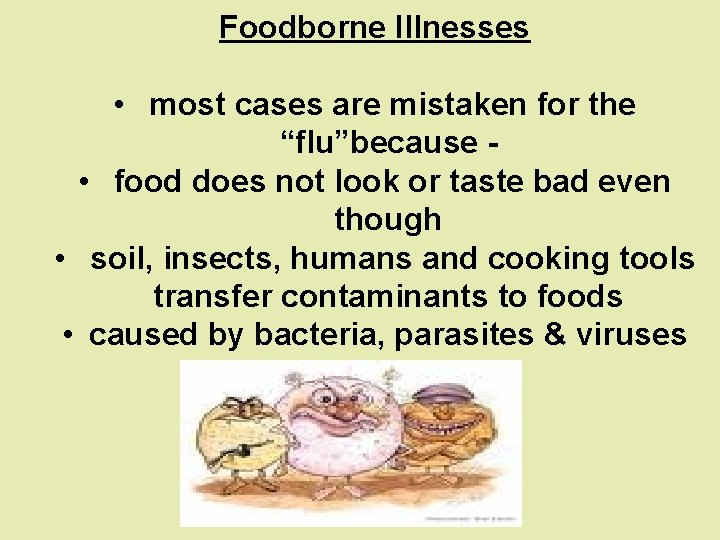
Foodborne Illnesses • most cases are mistaken for the “flu”because • food does not look or taste bad even though • soil, insects, humans and cooking tools transfer contaminants to foods • caused by bacteria, parasites & viruses
Bacterial Foodborne Illness
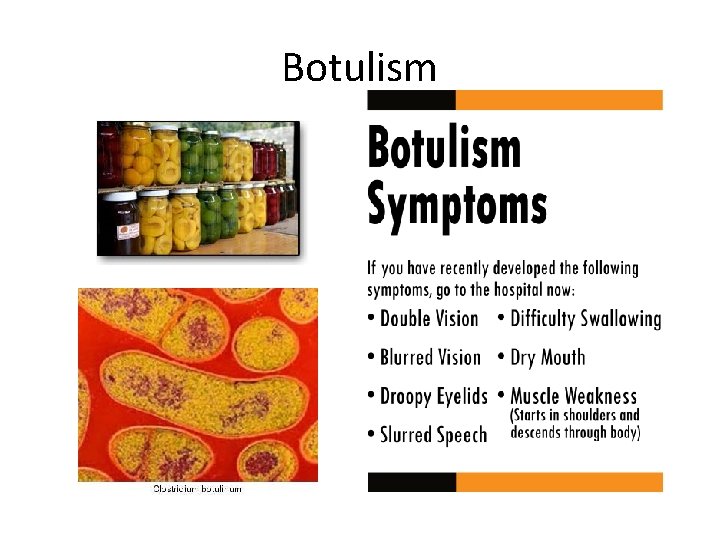
Botulism
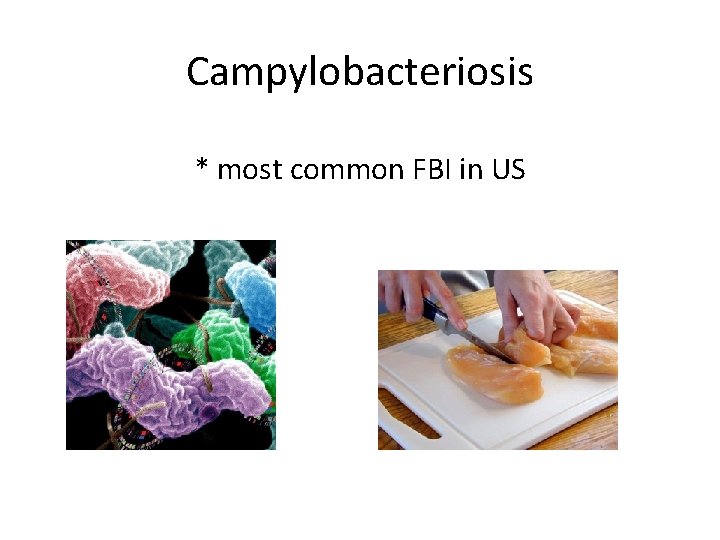
Campylobacteriosis * most common FBI in US
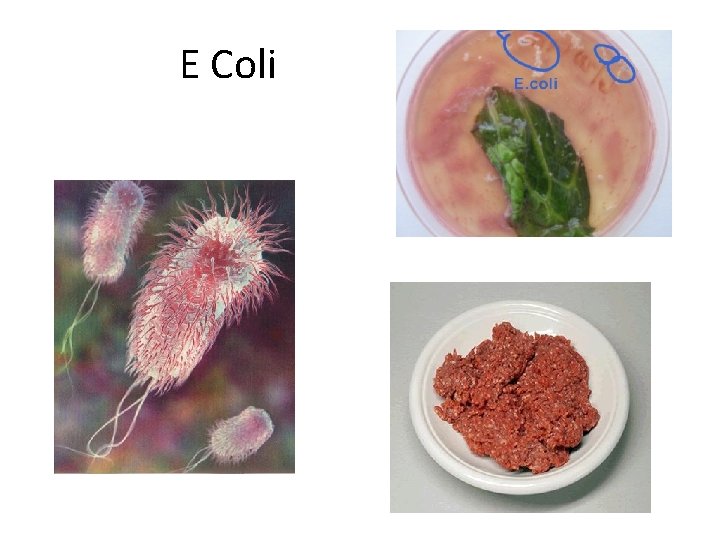
E Coli
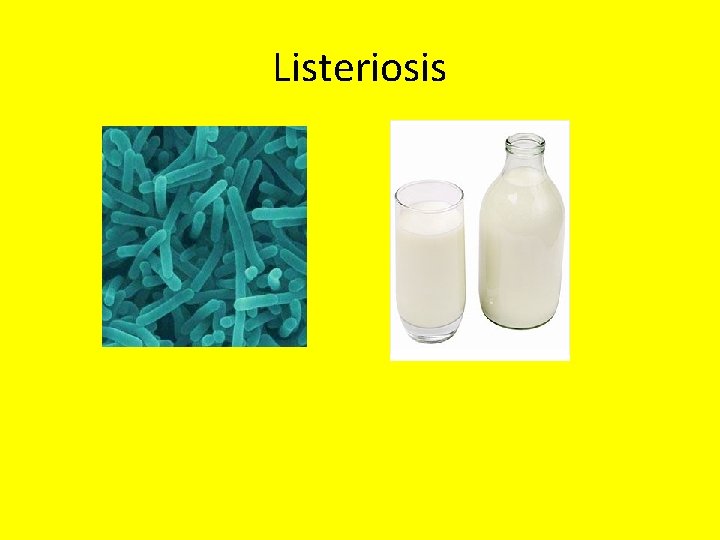
Listeriosis
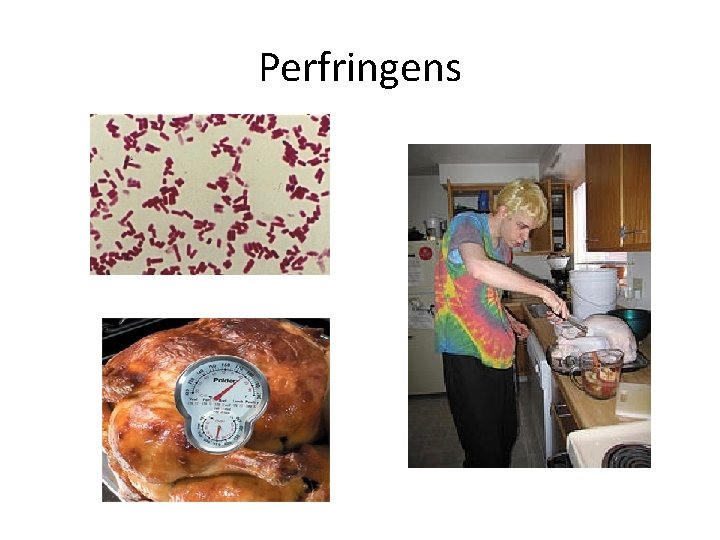
Perfringens
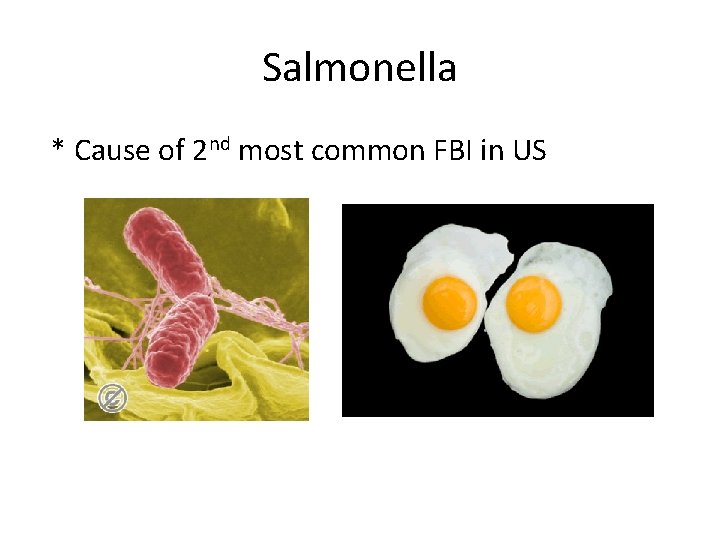
Salmonella * Cause of 2 nd most common FBI in US
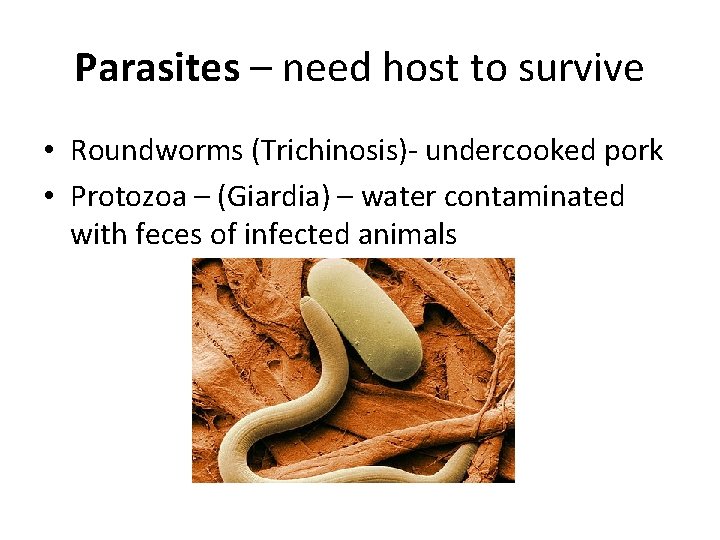
Parasites – need host to survive • Roundworms (Trichinosis)- undercooked pork • Protozoa – (Giardia) – water contaminated with feces of infected animals
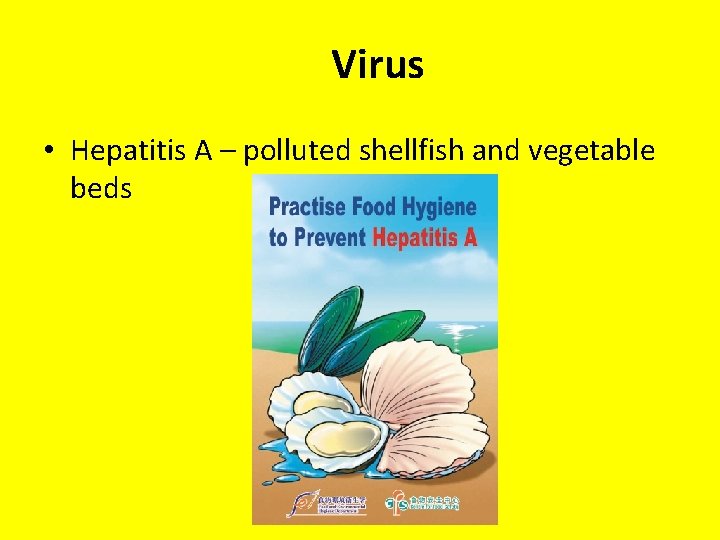
Virus • Hepatitis A – polluted shellfish and vegetable beds
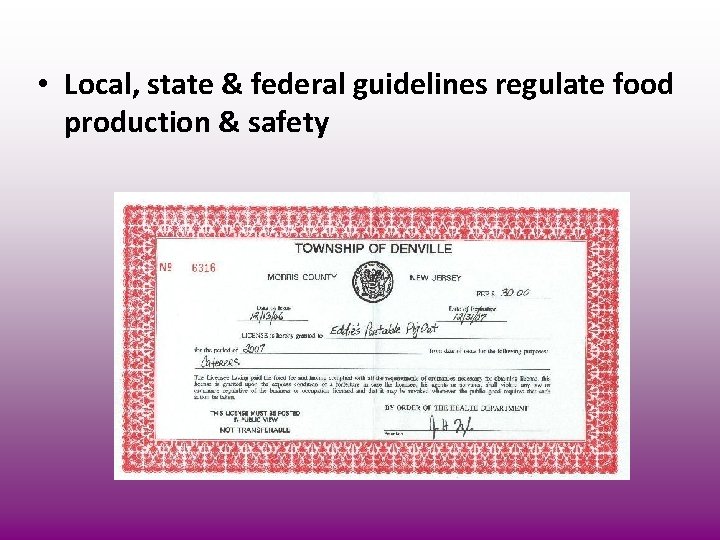
• Local, state & federal guidelines regulate food production & safety
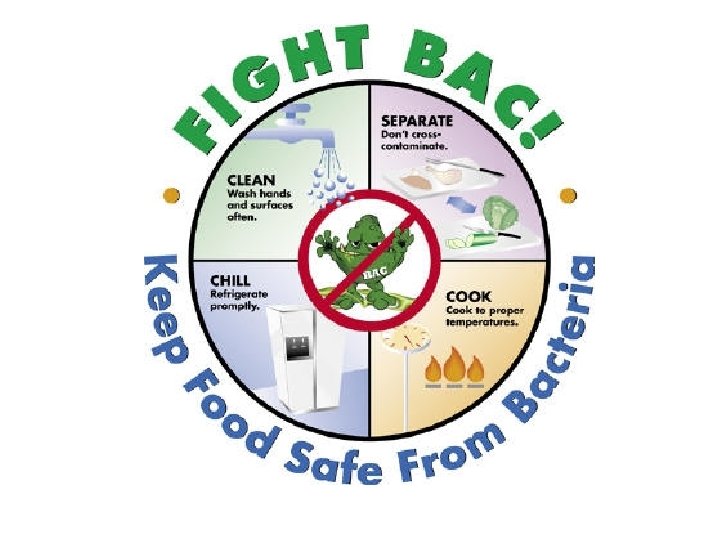
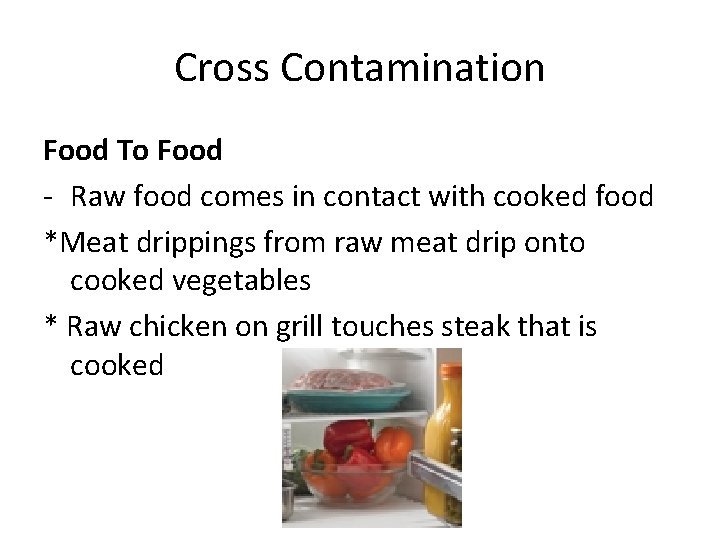
Cross Contamination Food To Food - Raw food comes in contact with cooked food *Meat drippings from raw meat drip onto cooked vegetables * Raw chicken on grill touches steak that is cooked
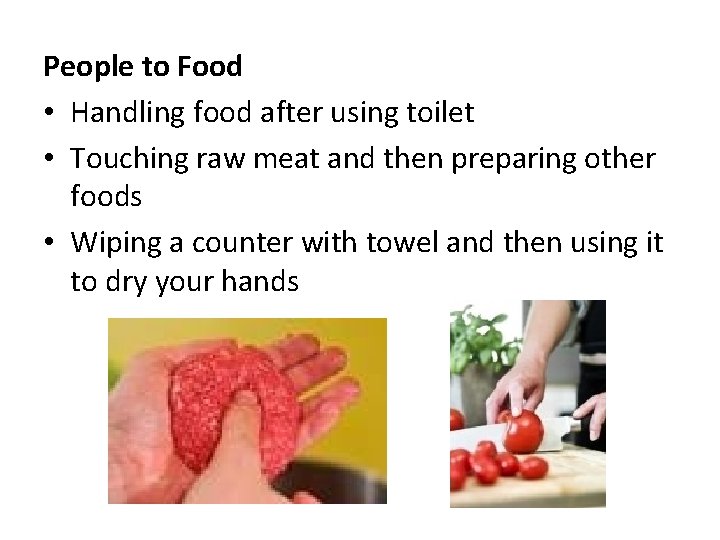
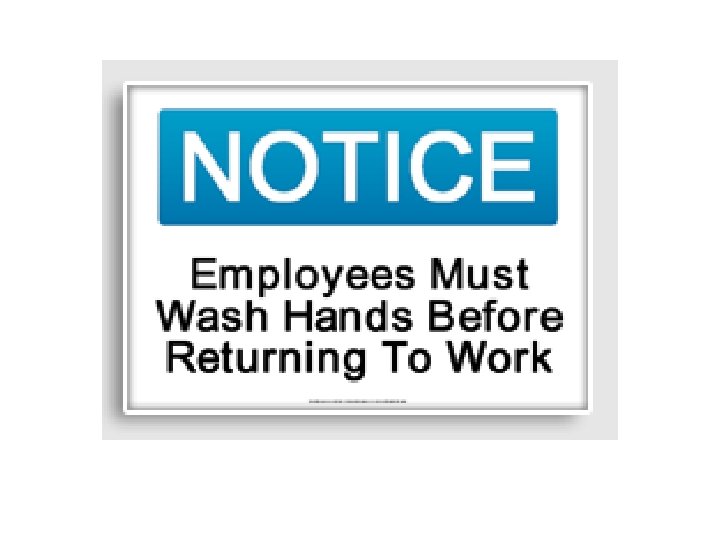
People to Food • Handling food after using toilet • Touching raw meat and then preparing other foods • Wiping a counter with towel and then using it to dry your hands
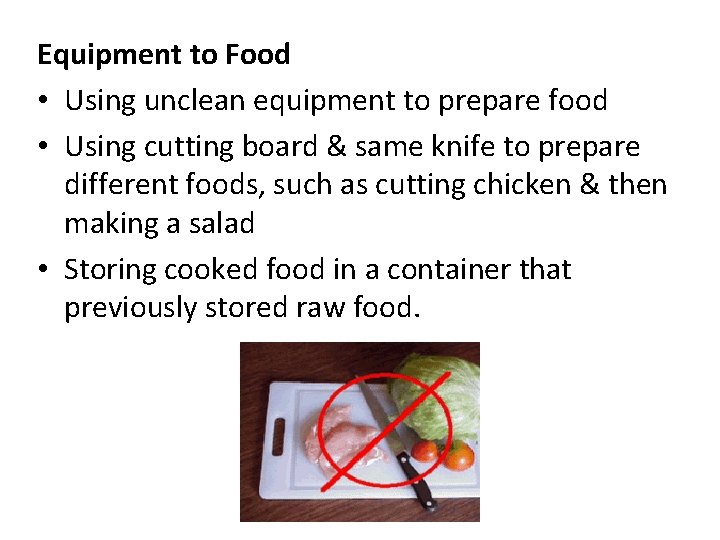
Equipment to Food • Using unclean equipment to prepare food • Using cutting board & same knife to prepare different foods, such as cutting chicken & then making a salad • Storing cooked food in a container that previously stored raw food.
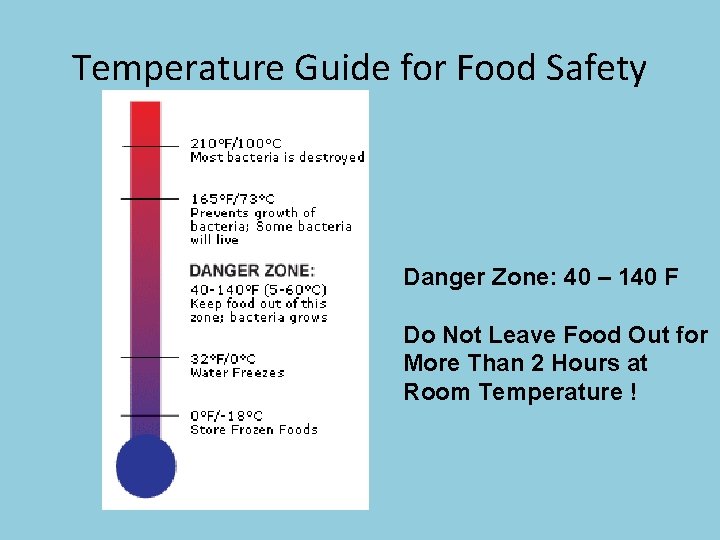
Temperature Guide for Food Safety Danger Zone: 40 – 140 F Do Not Leave Food Out for More Than 2 Hours at Room Temperature !
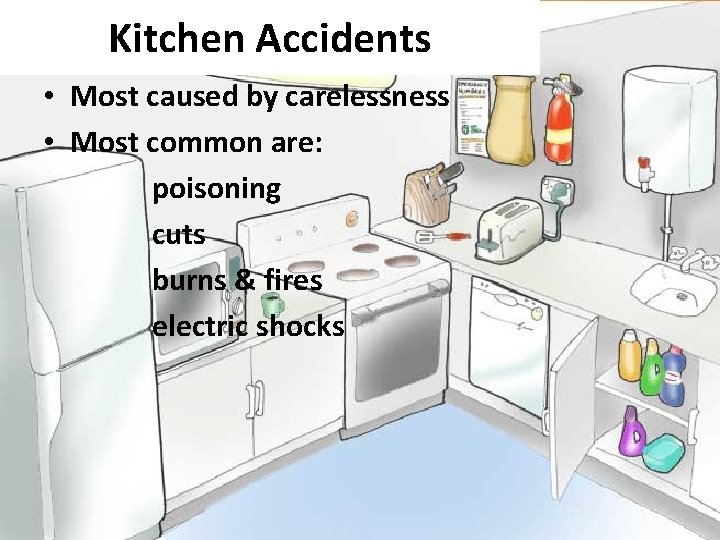
Kitchen Accidents • Most caused by carelessness • Most common are: poisoning cuts burns & fires electric shocks
- Slides: 21