
SAFETY Safety is too expensive to learn by

SAFETY
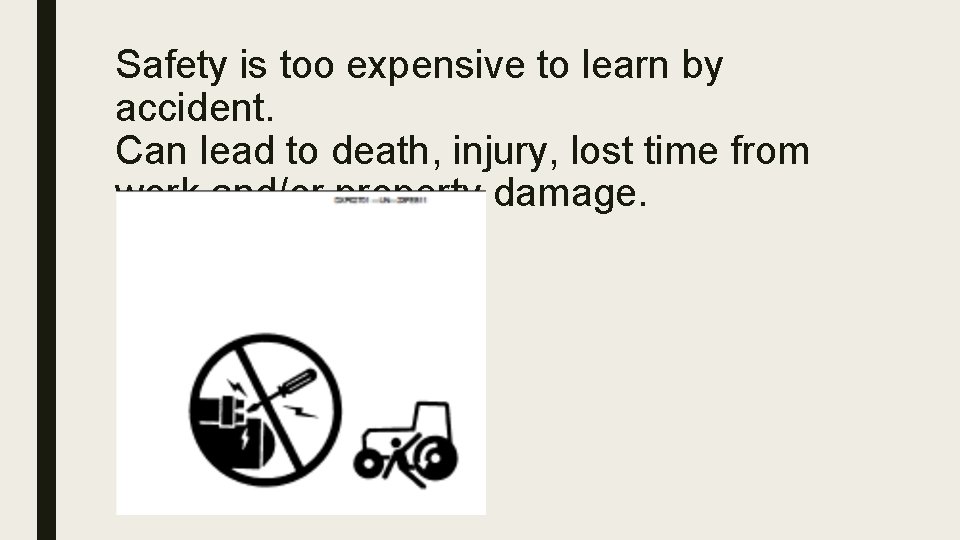
Safety is too expensive to learn by accident. Can lead to death, injury, lost time from work and/or property damage.
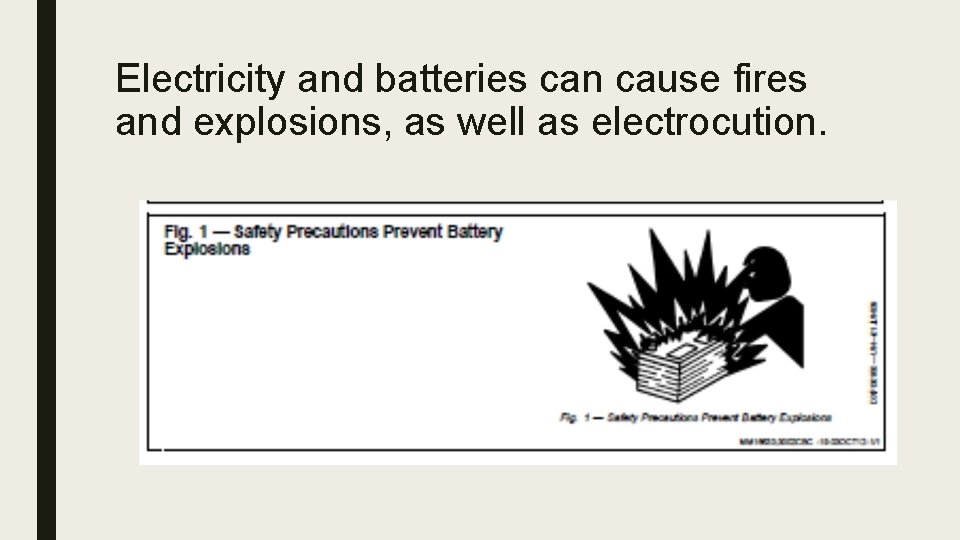
Electricity and batteries can cause fires and explosions, as well as electrocution.
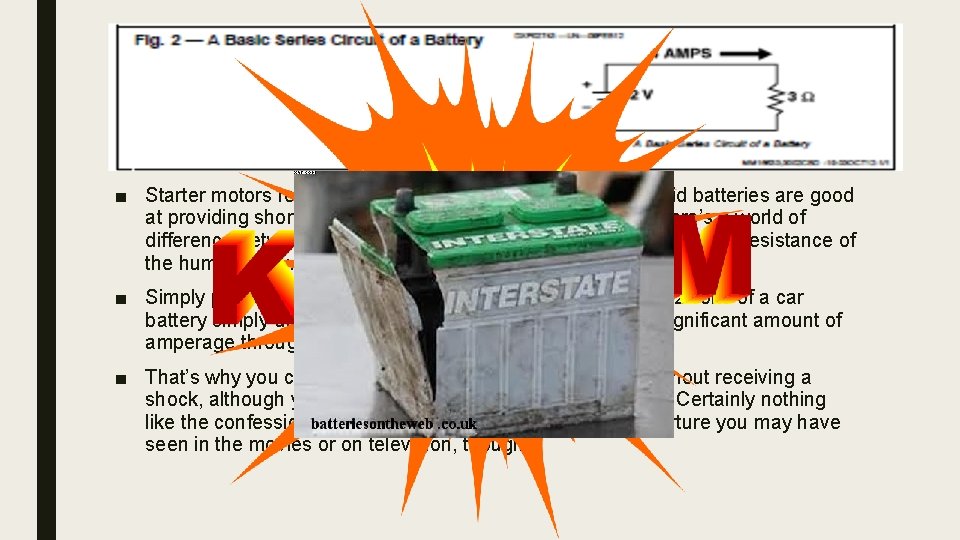
■ Starter motors require a lot of amperage to run, and lead acid batteries are good at providing short, intense bursts of amperage. However, there’s a world of difference between the coils of a starter motor and the high contact resistance of the human body. ■ Simply put, voltage can be thought of as pressure and the 12 volts of a car battery simply don’t provide enough pressure to push any significant amount of amperage through the contact resistance of your skin. ■ That’s why you can touch both terminals of a car battery without receiving a shock, although you may feel a tingle if your hands are wet. Certainly nothing like the confession-inducing, potentially-deadly, electrical torture you may have seen in the movies or on television, though.

Electrical systems can cause fires if not properly maintained Fire Extinguishers are classifications Class A- Ordinary combustibles paper, wood cloth… CLASS B- liquid, greases and gasses CLASS C- energized electrical equipment CLASS D- metals, such as magnesium,
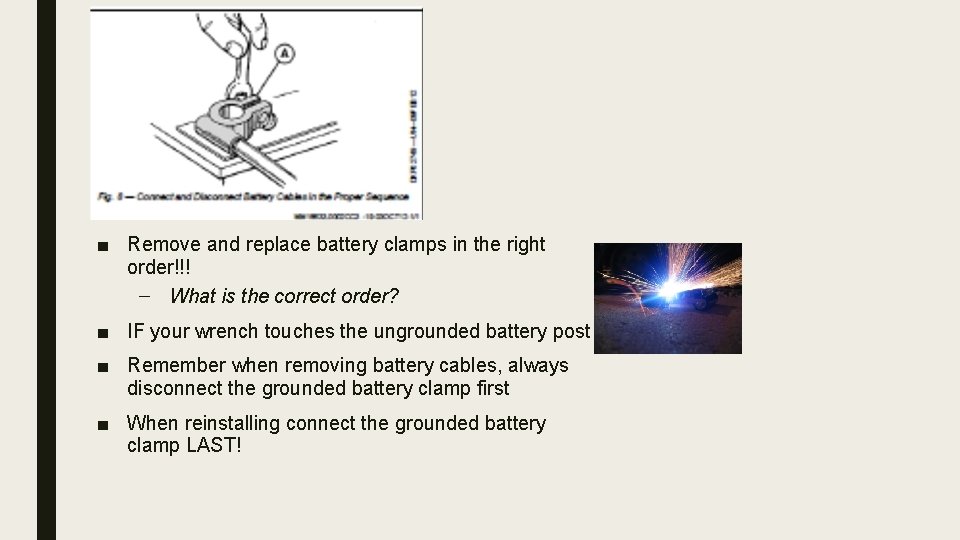
■ Remove and replace battery clamps in the right order!!! – What is the correct order? ■ IF your wrench touches the ungrounded battery post ■ Remember when removing battery cables, always disconnect the grounded battery clamp first ■ When reinstalling connect the grounded battery clamp LAST!
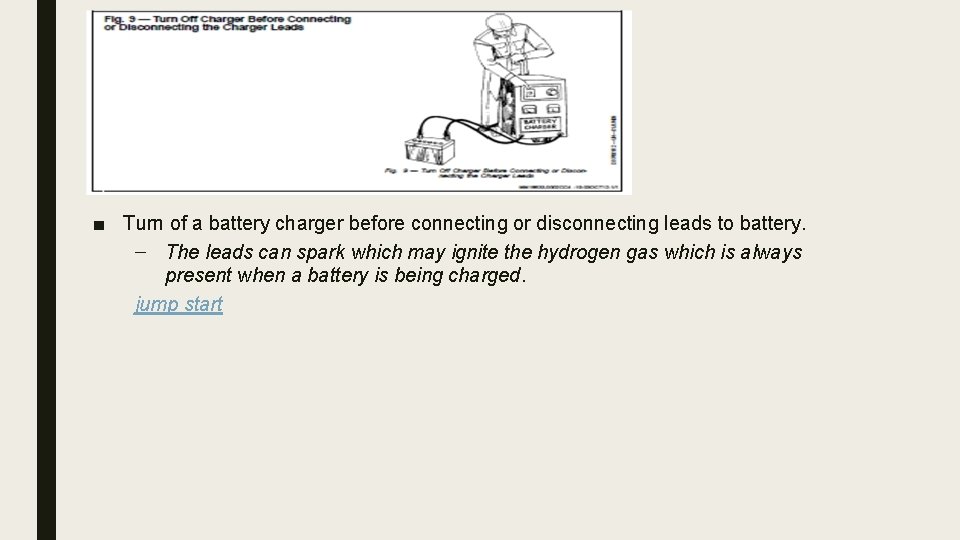
■ Turn of a battery charger before connecting or disconnecting leads to battery. – The leads can spark which may ignite the hydrogen gas which is always present when a battery is being charged. jump start

Jump Starting ■ jump start
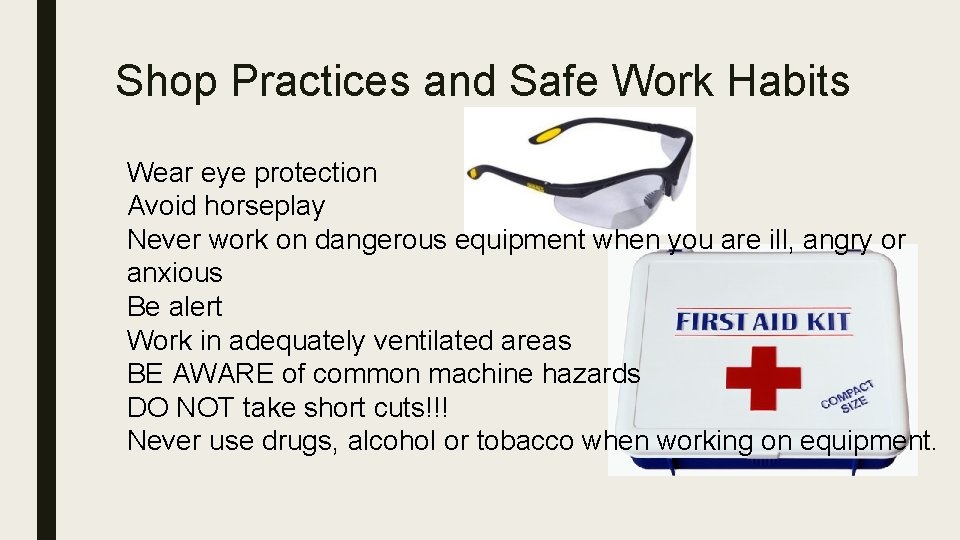
Shop Practices and Safe Work Habits Wear eye protection Avoid horseplay Never work on dangerous equipment when you are ill, angry or anxious Be alert Work in adequately ventilated areas BE AWARE of common machine hazards DO NOT take short cuts!!! Never use drugs, alcohol or tobacco when working on equipment.
Always read and follow Manufacturer’s Recommendations
■ Never work alone ■ Do not wear jewelry or metallic objects when work on equipment ■ Always select the right tool for the job ■ Properly store and dispose of hazardous materials ■ Wear hearing protection when exposed to noises over 85 decibels – Standard tractor is around 90 – H: CLASS FOLDERSSPRINGMECH 32decibel chart. pdf
Working with Hydraulic Oils ■ Avoid prolonged breathing of its vapour, mist, and fumes. ■ Avoid prolonged or repeated skin contact. ■ Use chemical-resistant gloves, splash goggles and a chemical-resistant apron ■ Elevated processing temperatures may cause release of toxic vapours which are harmful if inhaled. ■ Before working with hydraulic oil, know the location of the nearest emergency shower and eyewash station.
■ Wash off affected skin, eyes, and protective clothing immediately. Remove contaminated clothing, and launder or dry-clean it before reuse. ■ After contact with hydraulic oil (and especially before breaks and meals, and at the end of shifts), always cleanse skin with a waterless hand cleanser, and then wash with soap and water.
Working with Hydraulic Systems • Never begin work on a hydraulic system until fully trained. ■ Never begin work on a hydraulic system without a Risk Assessment. • Carefully review the manuals on equipment before beginning work. Ask questions about anything you do not fully understand. ■ Review all Material Safety Data Sheets (MSDS) for all chemicals used. ■ Maintain a clean work area free of slipping hazards and debris. • Use all required safety equipment.
• Block, secure or lower to the ground components that may move, rotate or fall. ■ Use test equipment designed for higher pressures than the system being repaired. Use of gauges, lines, connectors, etc. , designed for lower pressures can result in bursting or equipment damage. Start with high pressure gauges and work down. (A good rule is to use equipment rated at twice what is expected. Example: For a 2500 psi system, use a 5000 psi gauge. ) ■ Relieve system pressures. ■ DO NOT USE FINGERS OR HANDS to find leaks. Check for leaks using a piece of cardboard or wood.
• Always use safety glasses. ■ Use extreme caution when disconnecting hydraulic lines. Severe burns from hot fluid can result. ■ Clean up spills immediately. Hydraulic fluid can cause slips, falls and resulting injuries. ■ Do not work under equipment / apparatus being supported by hydraulics. Stops, safety pins, etc, must be in place before repairs begin. ■ AVOID HEATING NEAR PRESSURISED FLUID LINES.
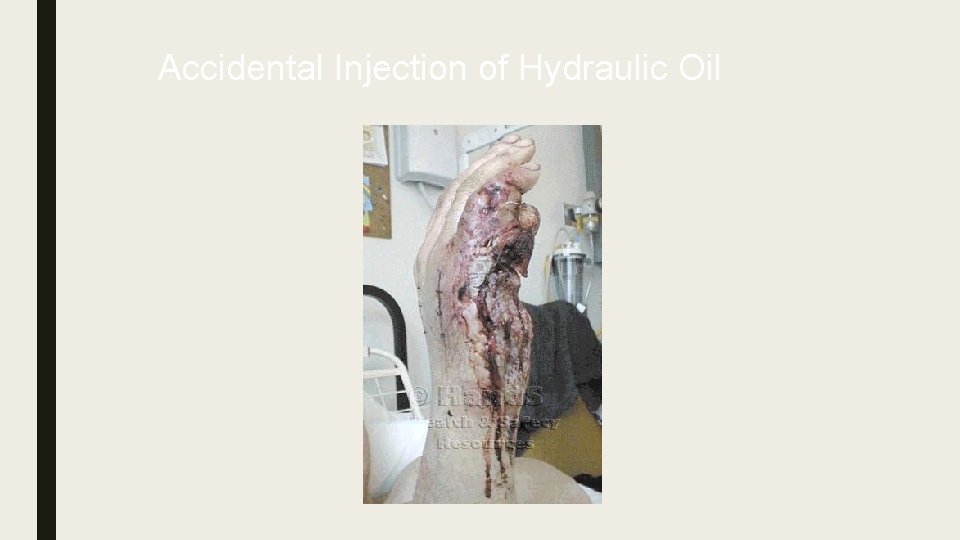
Accidental Injection of Hydraulic Oil

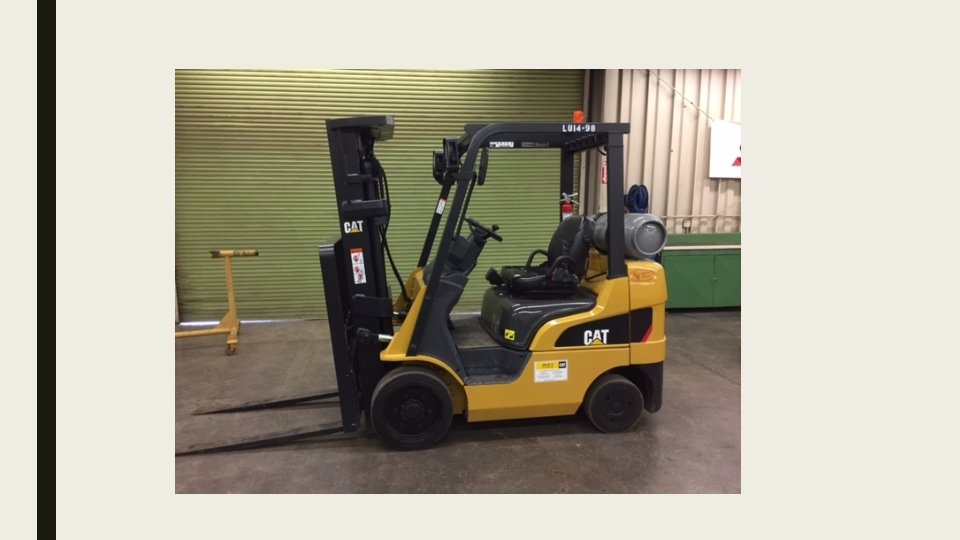
■ Safety ■ forklift

- Slides: 22