
SAFETY PRACTICES AND REPORTING IN CLINICAL RESEARCH Acknowledgement
![Determination of Causality � Standard determinations include: • Is there [Drug Exposure] and [Temporal](https://slidetodoc.com/presentation_image_h/fcd4f53e71b75d5b7a254f83a2f8ae2b/image-17.jpg "Determination of Causality � Standard determinations include: • Is there [Drug Exposure] and [Temporal")


- Slides: 33
SAFETY PRACTICES AND REPORTING IN CLINICAL RESEARCH
Acknowledgement Acknowledgment to Ms Chun Geok Ying for preparation of the core contents of this presentation
Outline � Why is safety practices important? � What is safety monitoring? � Safety Reporting �What is safety reporting? �What are the requirements of report? �Define and categorisation of AEs based on causality, seriousness and relatedness
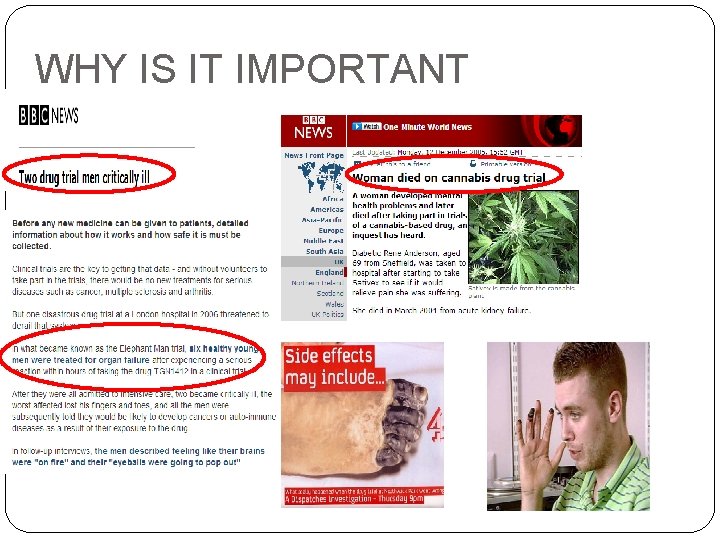
WHY IS IT IMPORTANT
WHY IS IT IMPORTANT � Rights, SAFETY and Well-being of trial subjects are protected (ICH GCP E 6: 2. 3) � Safety of human subject should prevail over interest of science and society (ICH GCP 2. 3) � ICH GCP 4. 11 on safety reporting states that � “All Serious adverse events (SAE) should be reported immediately to sponsor except for those SAEs that the protocol or other document identifies as not needing immediate reporting. The immediate reports should be followed promptly by detailed, written reports. The immediate and follow up reports should identify subjects by unique code numbers assigned to the trial subjects rather than by the subjects’ names, personal identification numbers, and/or addresses. The investigator should also comply with the applicable regulatory requirement related to the reporting of unexpected serious adverse drug reactions to the regulatory authorities and the IRB/IEC. ” � In Investigator Initiated research (IIR): � investigators are also sponsor and plays both sponsors and investigator’s role � Also known as sponsor-investigator
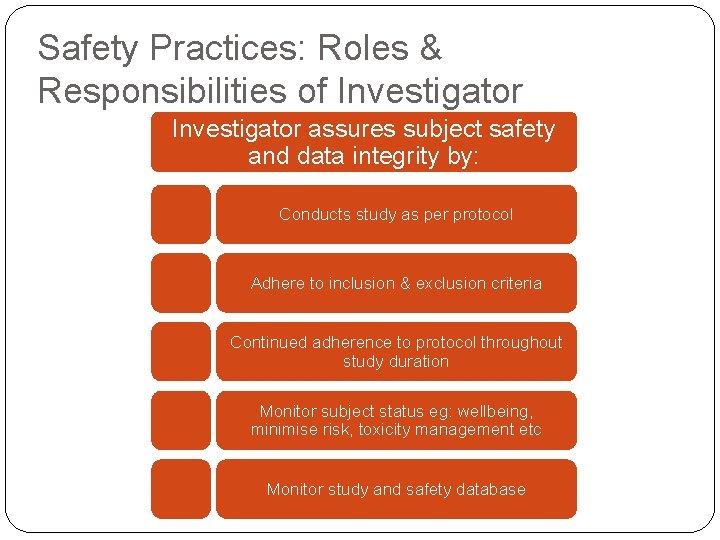
Safety Practices: Roles & Responsibilities of Investigator assures subject safety and data integrity by: Conducts study as per protocol Adhere to inclusion & exclusion criteria Continued adherence to protocol throughout study duration Monitor subject status eg: wellbeing, minimise risk, toxicity management etc Monitor study and safety database
Safety Practices and Monitoring � Study design that complies with Good Clinical Practice � Have a plan for safety monitoring during protocol development phase � Have a data safety monitoring board (DSMB)/data management centers (DMC) : � Comprise of staff (who are familiar with study product and procedure) independent of the study � to ensure continued vigilance in safety useful for large, multicentre, randomised control trials � Trend analysis � Training plans for staffs involved in research � QC/QA in place to ensure protocol is adhered to � Monitor and review Safety reports and follow up plans � Have rescue therapy � Risk management plan
Safety Practices and Monitoring � Safety monitoring and pharmacovigilance is a dynamic process to: � protect trial volunteers from harm � Gain understanding of safety profile of drug during drug development phase � Ensure timely detection of adverse events because: � Safety data influence clinical care of subjects � For drug already in market: data may affect clinical use of the investigational product � Challenges: � requires coordination between observant investigators, � analysis by investigator, � prompt reporting to regulators, ethics committee (EC).
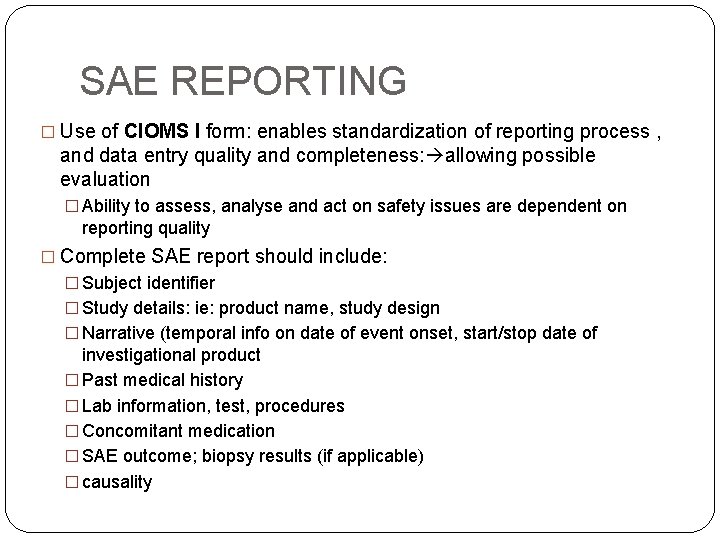
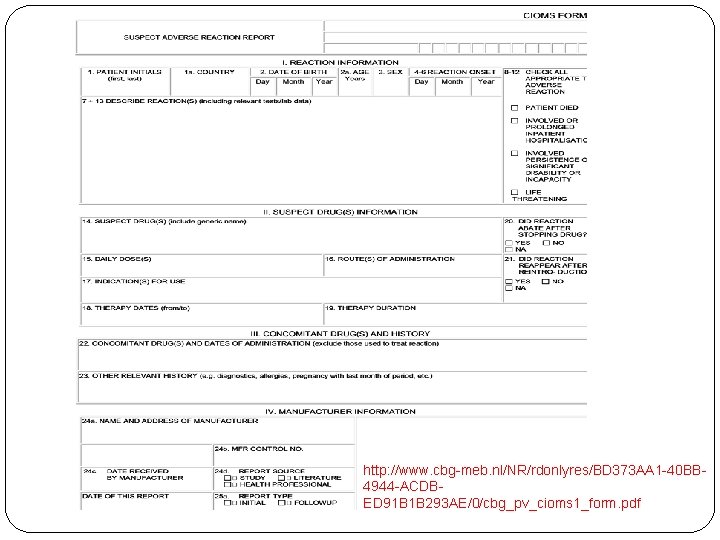
SAE REPORTING � Use of CIOMS I form: enables standardization of reporting process , and data entry quality and completeness: allowing possible evaluation � Ability to assess, analyse and act on safety issues are dependent on reporting quality � Complete SAE report should include: � Subject identifier � Study details: ie: product name, study design � Narrative (temporal info on date of event onset, start/stop date of investigational product � Past medical history � Lab information, test, procedures � Concomitant medication � SAE outcome; biopsy results (if applicable) � causality
http: //www. cbg-meb. nl/NR/rdonlyres/BD 373 AA 1 -40 BB 4944 -ACDBED 91 B 1 B 293 AE/0/cbg_pv_cioms 1_form. pdf
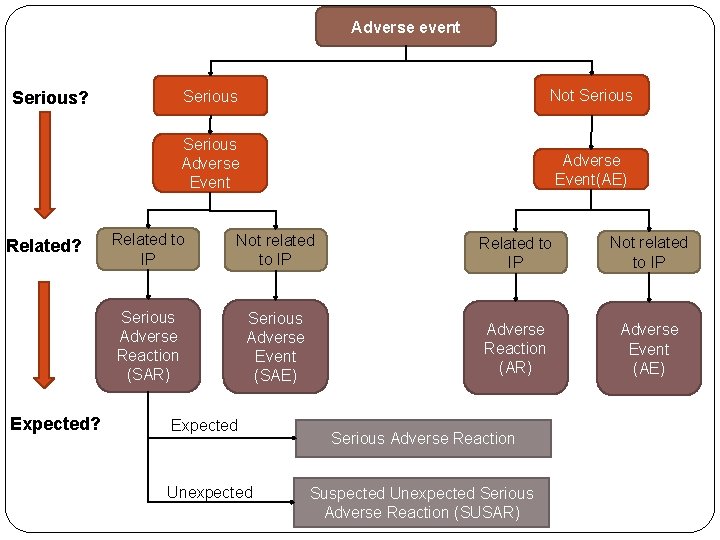
Adverse event Serious? Related? Expected? Serious Not Serious Adverse Event(AE) Related to IP Not related to IP Serious Adverse Reaction (SAR) Serious Adverse Event (SAE) Adverse Reaction (AR) Adverse Event (AE) Expected Unexpected Serious Adverse Reaction Suspected Unexpected Serious Adverse Reaction (SUSAR)
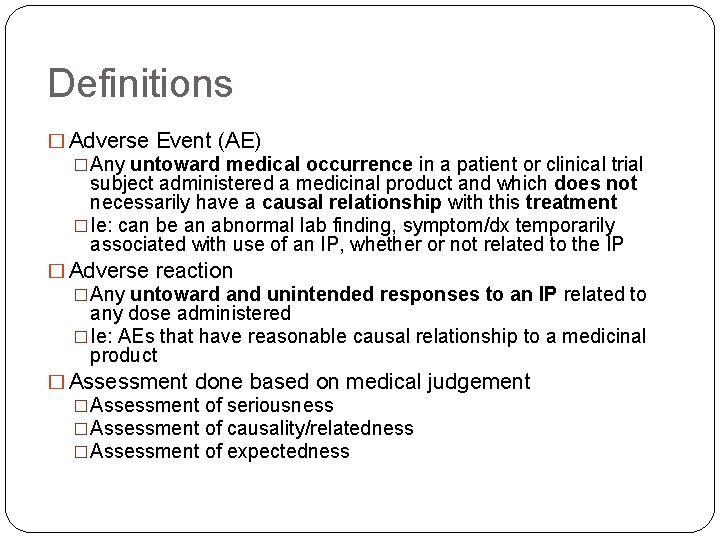
Definitions � Adverse Event (AE) �Any untoward medical occurrence in a patient or clinical trial subject administered a medicinal product and which does not necessarily have a causal relationship with this treatment �Ie: can be an abnormal lab finding, symptom/dx temporarily associated with use of an IP, whether or not related to the IP � Adverse reaction �Any untoward and unintended responses to an IP related to any dose administered �Ie: AEs that have reasonable causal relationship to a medicinal product � Assessment done based on medical judgement �Assessment of seriousness �Assessment of causality/relatedness �Assessment of expectedness
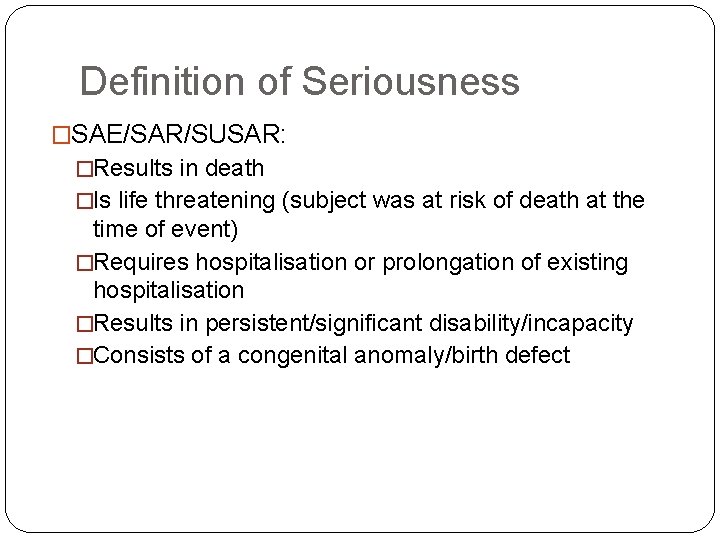
Definition of Seriousness �SAE/SAR/SUSAR: �Results in death �Is life threatening (subject was at risk of death at the time of event) �Requires hospitalisation or prolongation of existing hospitalisation �Results in persistent/significant disability/incapacity �Consists of a congenital anomaly/birth defect
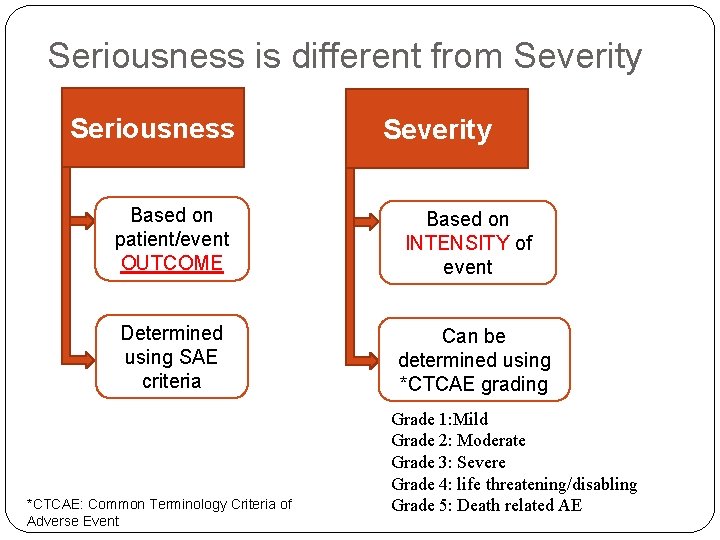
Seriousness is different from Severity Seriousness Based on patient/event OUTCOME Determined using SAE criteria *CTCAE: Common Terminology Criteria of Adverse Event Severity Based on INTENSITY of event Can be determined using *CTCAE grading Grade 1: Mild Grade 2: Moderate Grade 3: Severe Grade 4: life threatening/disabling Grade 5: Death related AE
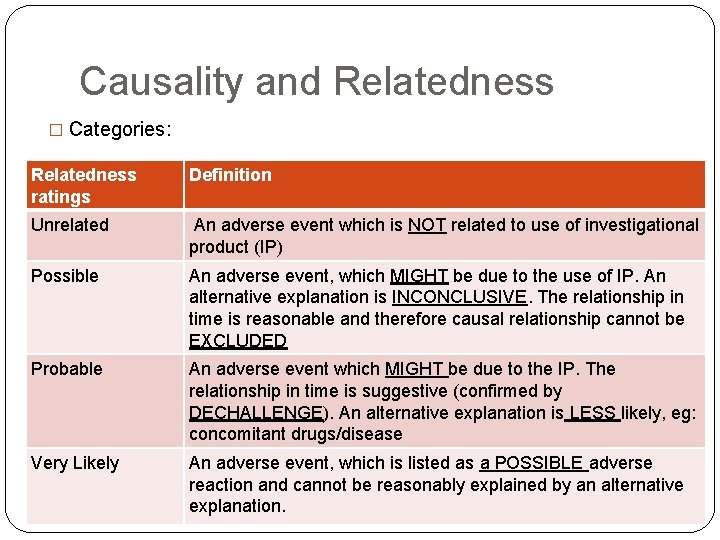
Causality and Relatedness � Categories: Relatedness ratings Definition Unrelated An adverse event which is NOT related to use of investigational product (IP) Possible An adverse event, which MIGHT be due to the use of IP. An alternative explanation is INCONCLUSIVE. The relationship in time is reasonable and therefore causal relationship cannot be EXCLUDED Probable An adverse event which MIGHT be due to the IP. The relationship in time is suggestive (confirmed by DECHALLENGE). An alternative explanation is LESS likely, eg: concomitant drugs/disease Very Likely An adverse event, which is listed as a POSSIBLE adverse reaction and cannot be reasonably explained by an alternative explanation.
Determination of Causality � Standard determinations include: • Is there [Drug Exposure] and [Temporal Association] ? • Is there [Dechallenge/Rechallenge] or [Dose Adjustments] ? • Any known association per [Investigator’s Brochure] or [Package Insert] ? • Any other possible [Etiology] ?
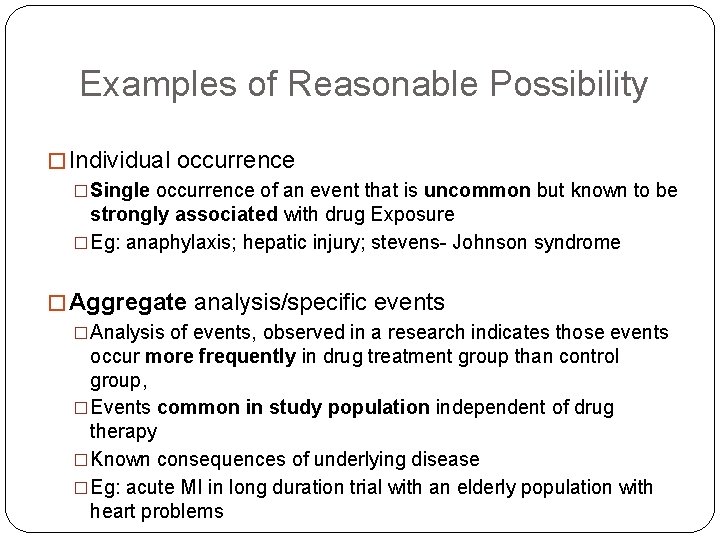
Examples of Reasonable Possibility � Individual occurrence �Single occurrence of an event that is uncommon but known to be strongly associated with drug Exposure �Eg: anaphylaxis; hepatic injury; stevens- Johnson syndrome � Aggregate analysis/specific events �Analysis of events, observed in a research indicates those events occur more frequently in drug treatment group than control group, �Events common in study population independent of drug therapy �Known consequences of underlying disease �Eg: acute MI in long duration trial with an elderly population with heart problems
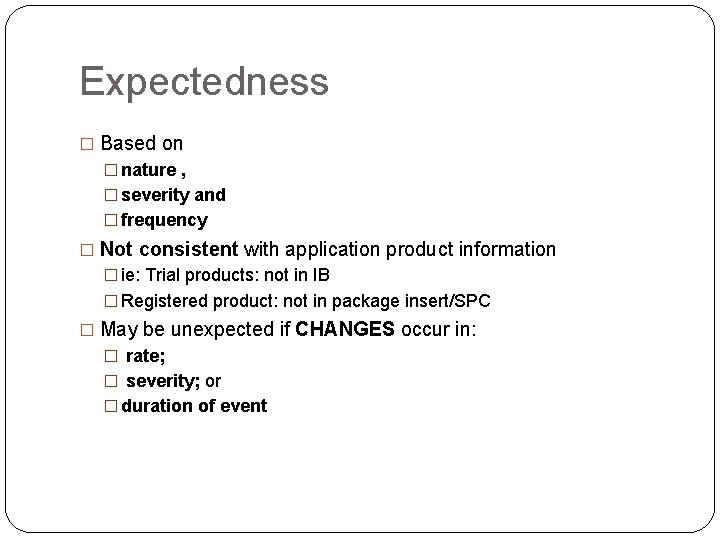
Expectedness � Based on � nature , � severity and � frequency � Not consistent with application product information � ie: Trial products: not in IB � Registered product: not in package insert/SPC � May be unexpected if CHANGES occur in: � rate; � severity; or � duration of event
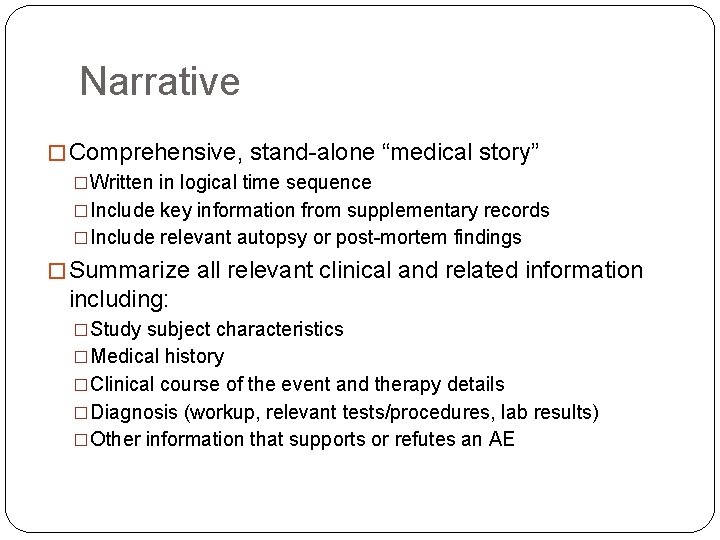
Narrative � Comprehensive, stand-alone “medical story” �Written in logical time sequence �Include key information from supplementary records �Include relevant autopsy or post-mortem findings � Summarize all relevant clinical and related information including: �Study subject characteristics �Medical history �Clinical course of the event and therapy details �Diagnosis (workup, relevant tests/procedures, lab results) �Other information that supports or refutes an AE
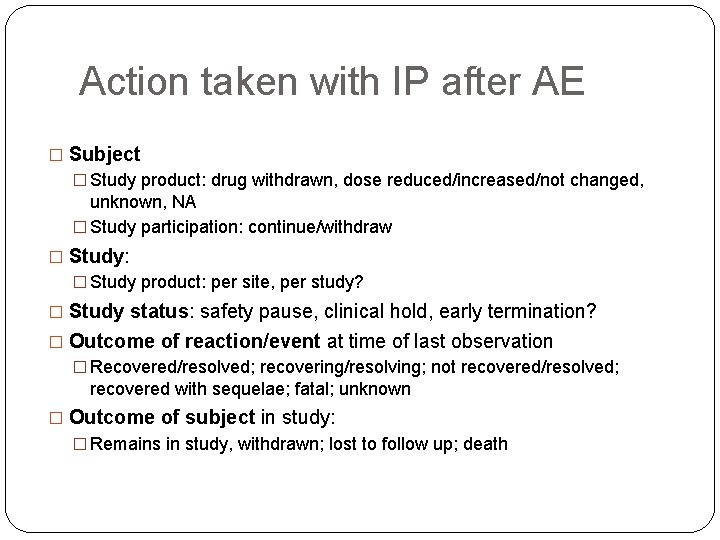
Action taken with IP after AE � Subject � Study product: drug withdrawn, dose reduced/increased/not changed, unknown, NA � Study participation: continue/withdraw � Study: � Study product: per site, per study? � Study status: safety pause, clinical hold, early termination? � Outcome of reaction/event at time of last observation � Recovered/resolved; recovering/resolving; not recovered/resolved; recovered with sequelae; fatal; unknown � Outcome of subject in study: � Remains in study, withdrawn; lost to follow up; death
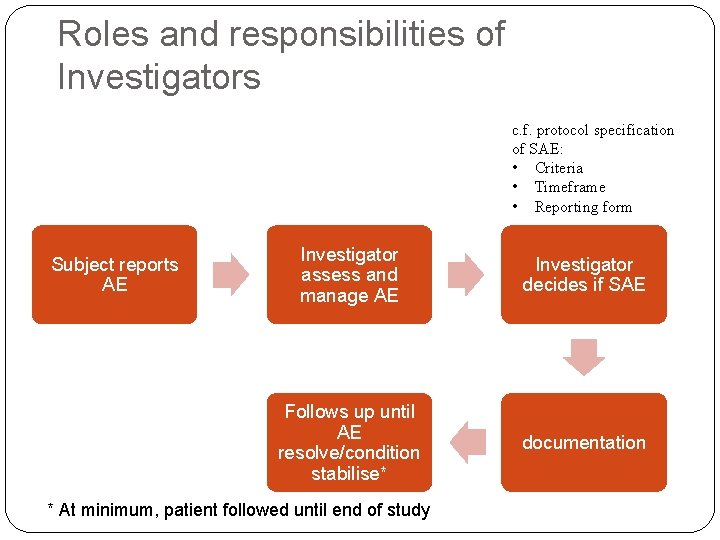
Roles and responsibilities of Investigators c. f. protocol specification of SAE: • Criteria • Timeframe • Reporting form Subject reports AE Investigator assess and manage AE Investigator decides if SAE Follows up until AE resolve/condition stabilise* documentation * At minimum, patient followed until end of study
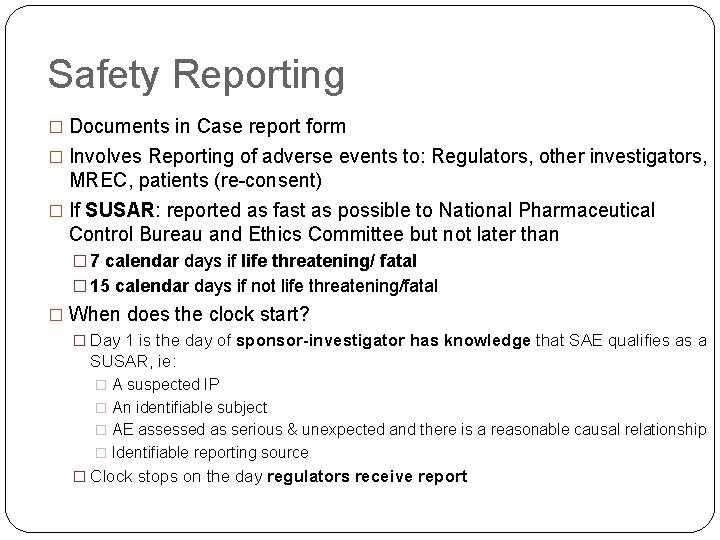
Safety Reporting � Documents in Case report form � Involves Reporting of adverse events to: Regulators, other investigators, MREC, patients (re-consent) � If SUSAR: reported as fast as possible to National Pharmaceutical Control Bureau and Ethics Committee but not later than � 7 calendar days if life threatening/ fatal � 15 calendar days if not life threatening/fatal � When does the clock start? � Day 1 is the day of sponsor-investigator has knowledge that SAE qualifies as a SUSAR, ie: � A suspected IP � An identifiable subject � AE assessed as serious & unexpected and there is a reasonable causal relationship � Identifiable reporting source � Clock stops on the day regulators receive report
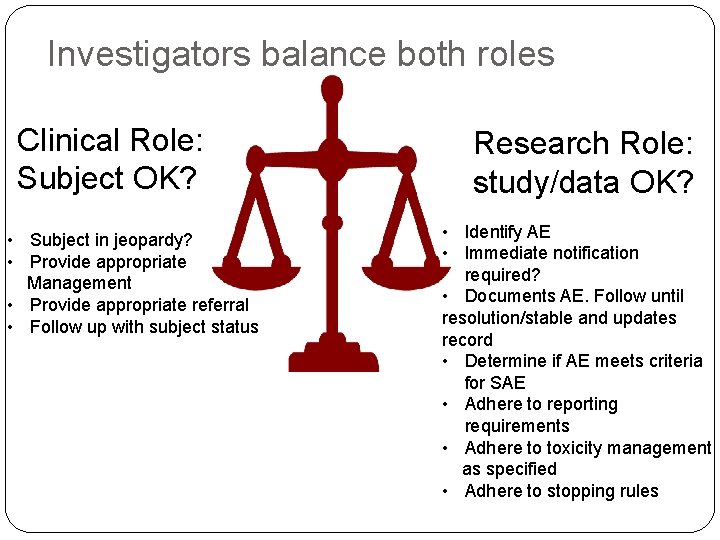
Investigators balance both roles Clinical Role: Subject OK? • Subject in jeopardy? • Provide appropriate Management • Provide appropriate referral • Follow up with subject status Research Role: study/data OK? • Identify AE • Immediate notification required? • Documents AE. Follow until resolution/stable and updates record • Determine if AE meets criteria for SAE • Adhere to reporting requirements • Adhere to toxicity management as specified • Adhere to stopping rules
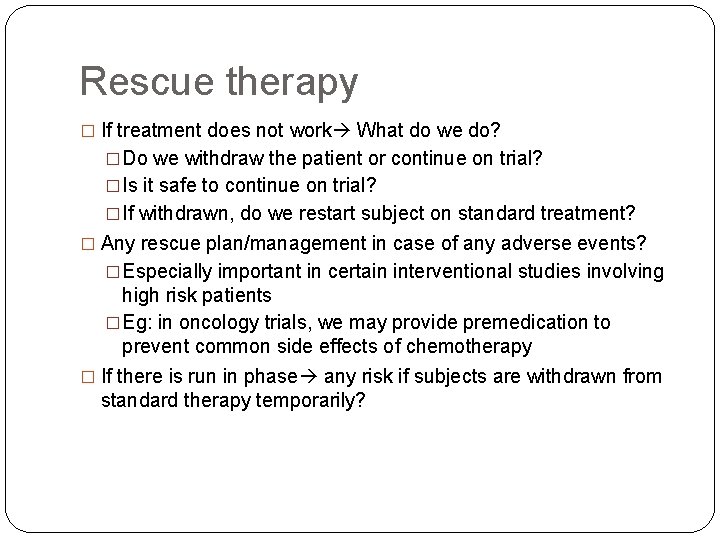
Rescue therapy � If treatment does not work What do we do? �Do we withdraw the patient or continue on trial? �Is it safe to continue on trial? �If withdrawn, do we restart subject on standard treatment? � Any rescue plan/management in case of any adverse events? �Especially important in certain interventional studies involving high risk patients �Eg: in oncology trials, we may provide premedication to prevent common side effects of chemotherapy � If there is run in phase any risk if subjects are withdrawn from standard therapy temporarily?
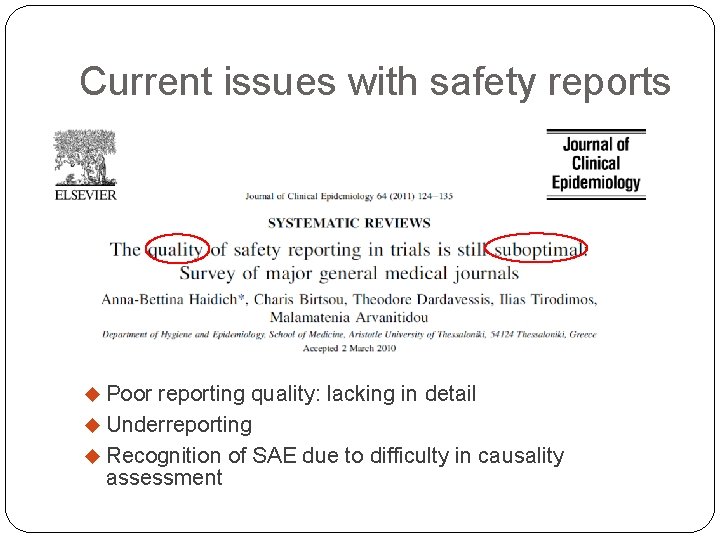
Current issues with safety reports Poor reporting quality: lacking in detail Underreporting Recognition of SAE due to difficulty in causality assessment
CASE STUDIES
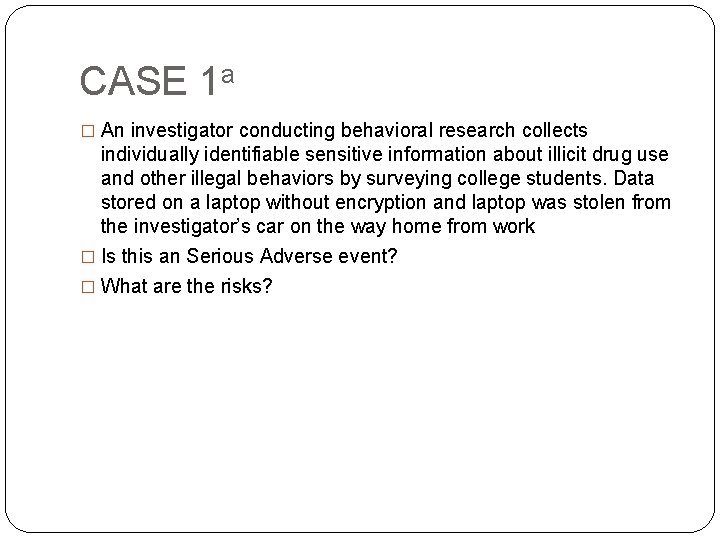
CASE 1 a � An investigator conducting behavioral research collects individually identifiable sensitive information about illicit drug use and other illegal behaviors by surveying college students. Data stored on a laptop without encryption and laptop was stolen from the investigator’s car on the way home from work � Is this an Serious Adverse event? � What are the risks?
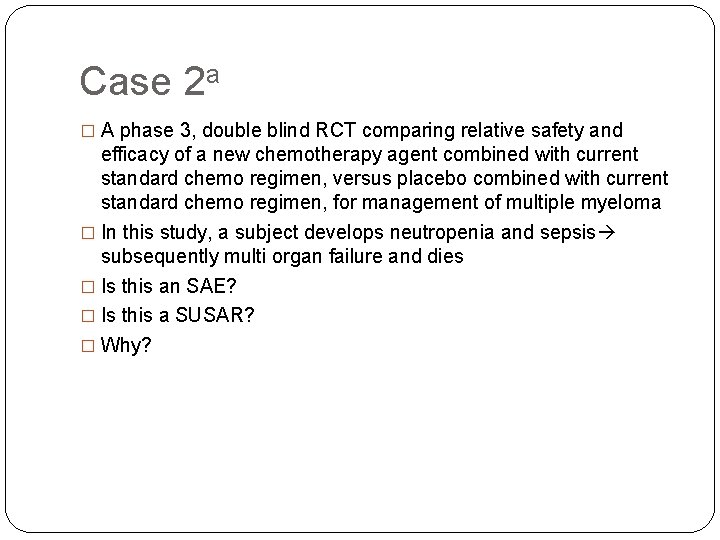
Case 2 a � A phase 3, double blind RCT comparing relative safety and efficacy of a new chemotherapy agent combined with current standard chemo regimen, versus placebo combined with current standard chemo regimen, for management of multiple myeloma � In this study, a subject develops neutropenia and sepsis subsequently multi organ failure and dies � Is this an SAE? � Is this a SUSAR? � Why?
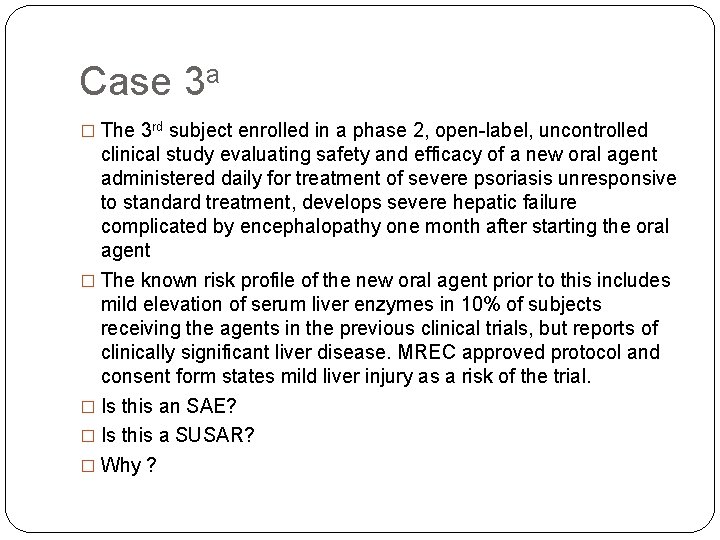
Case 3 a � The 3 rd subject enrolled in a phase 2, open-label, uncontrolled clinical study evaluating safety and efficacy of a new oral agent administered daily for treatment of severe psoriasis unresponsive to standard treatment, develops severe hepatic failure complicated by encephalopathy one month after starting the oral agent � The known risk profile of the new oral agent prior to this includes mild elevation of serum liver enzymes in 10% of subjects receiving the agents in the previous clinical trials, but reports of clinically significant liver disease. MREC approved protocol and consent form states mild liver injury as a risk of the trial. � Is this an SAE? � Is this a SUSAR? � Why ?
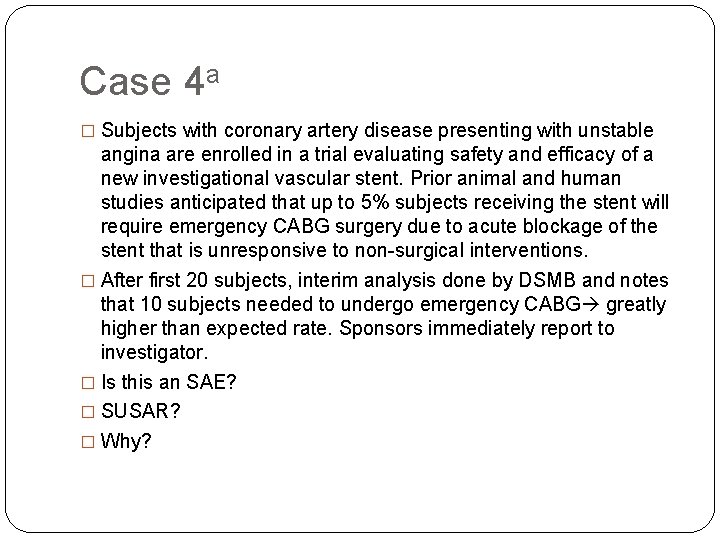
Case 4 a � Subjects with coronary artery disease presenting with unstable angina are enrolled in a trial evaluating safety and efficacy of a new investigational vascular stent. Prior animal and human studies anticipated that up to 5% subjects receiving the stent will require emergency CABG surgery due to acute blockage of the stent that is unresponsive to non-surgical interventions. � After first 20 subjects, interim analysis done by DSMB and notes that 10 subjects needed to undergo emergency CABG greatly higher than expected rate. Sponsors immediately report to investigator. � Is this an SAE? � SUSAR? � Why?
Thank You
References a. U. S. Department of Health & Human Services. Guidance on reviewing and reporting unanticipated problems involving risks to subjects or others and adverse events. 2007. b. Northwick Park drug trial disaster-could it happen again? http: //www. bbc. com/news/health-22556736. Accessed on 20/8/14 c. The Clinical Impact of Adverse Event Reporting. http: //www. fda. gov/downloads/safety/medwatch/ucm 1 68505. pdf Accessed on 20/8/14