
Safety in the Laboratory Clothing Protection A lab
Safety in the Laboratory
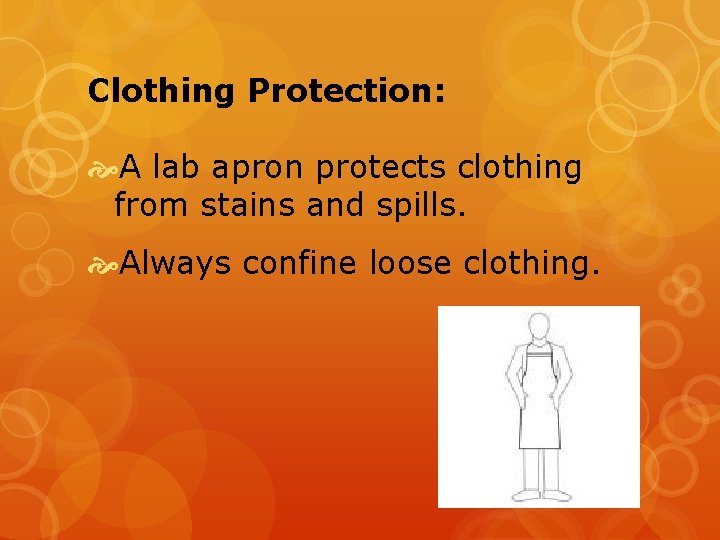
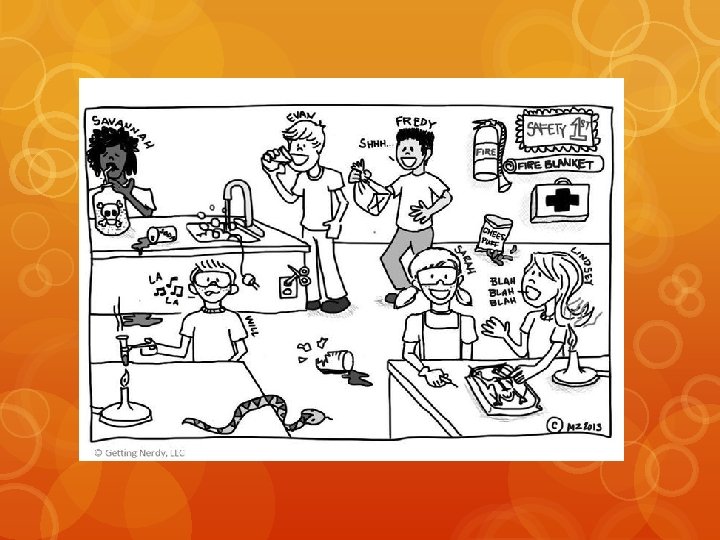
Clothing Protection: A lab apron protects clothing from stains and spills. Always confine loose clothing.
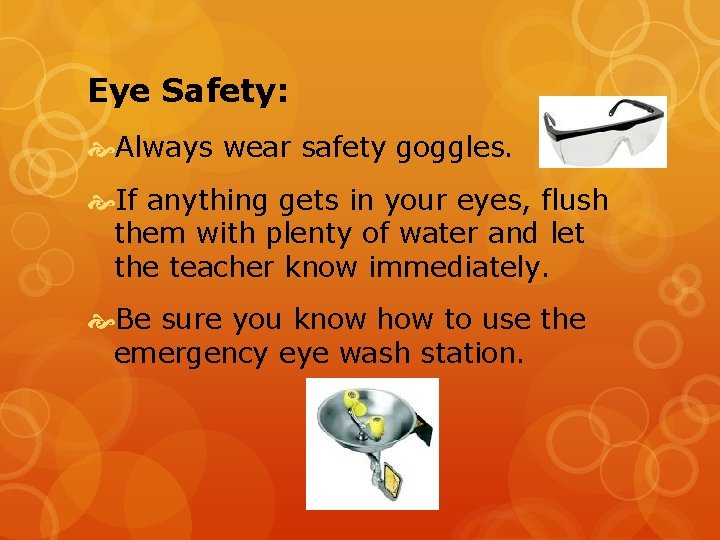
Eye Safety: Always wear safety goggles. If anything gets in your eyes, flush them with plenty of water and let the teacher know immediately. Be sure you know how to use the emergency eye wash station.
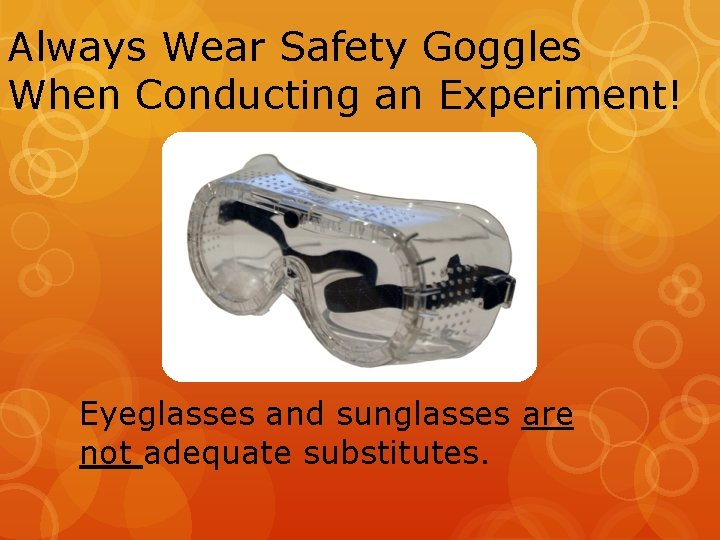
Always Wear Safety Goggles When Conducting an Experiment! Eyeglasses and sunglasses are not adequate substitutes.
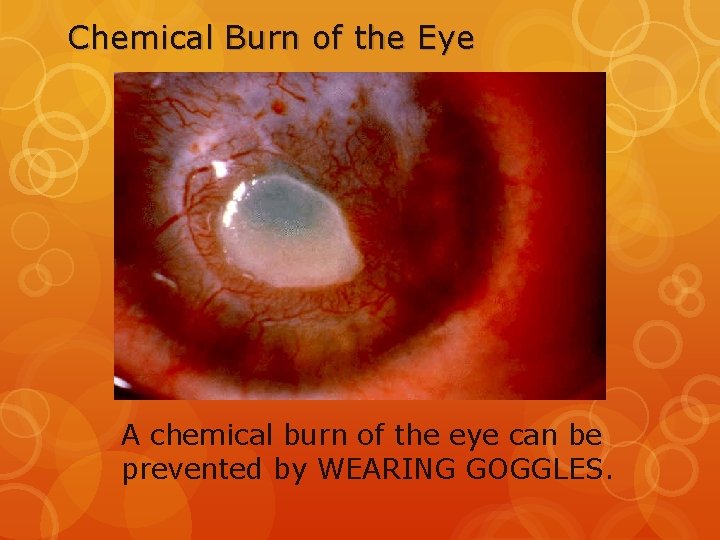
Chemical Burn of the Eye A chemical burn of the eye can be prevented by WEARING GOGGLES.
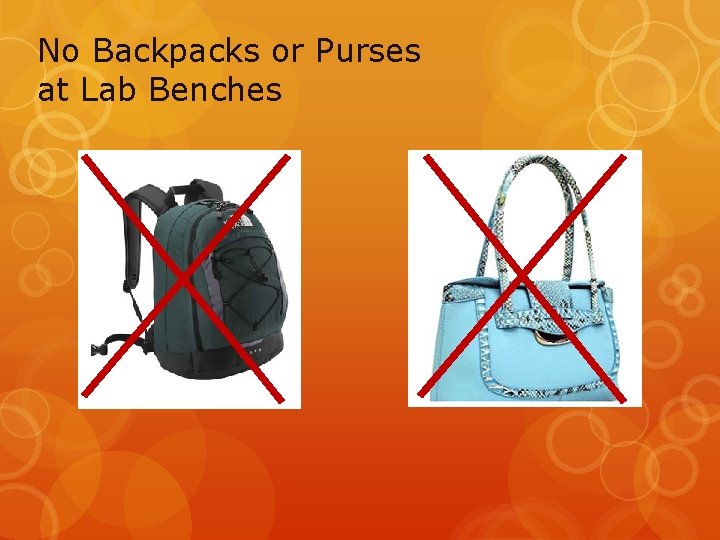
No Backpacks or Purses at Lab Benches
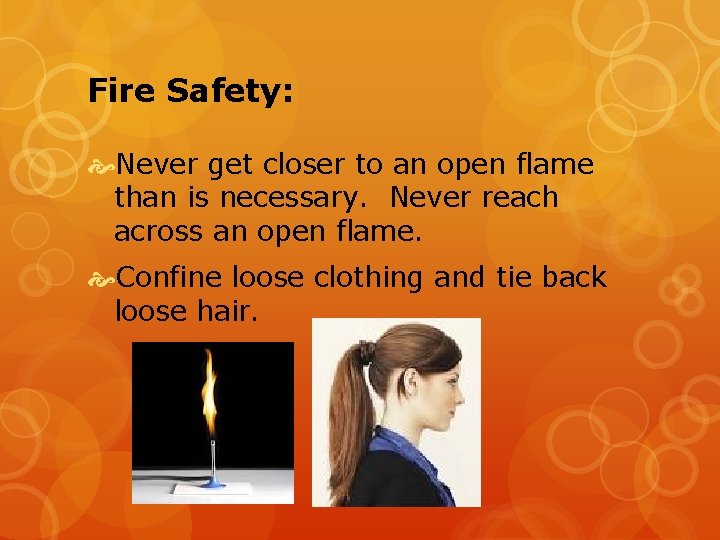
Fire Safety: Never get closer to an open flame than is necessary. Never reach across an open flame. Confine loose clothing and tie back loose hair.
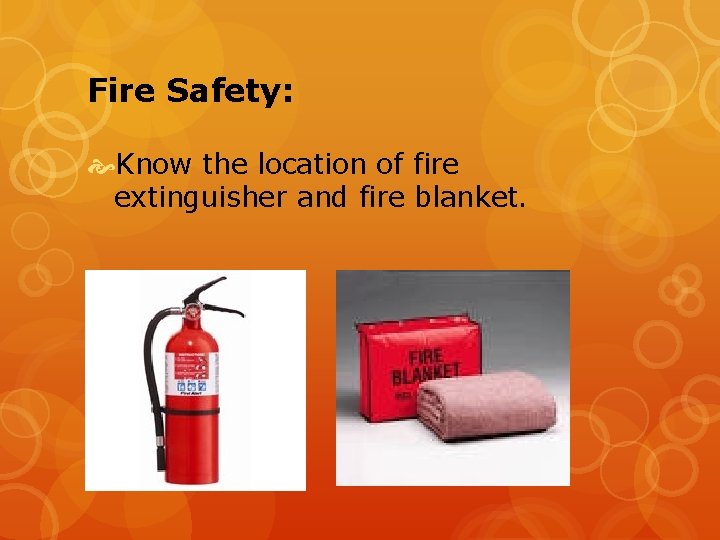
Fire Safety: Know the location of fire extinguisher and fire blanket.
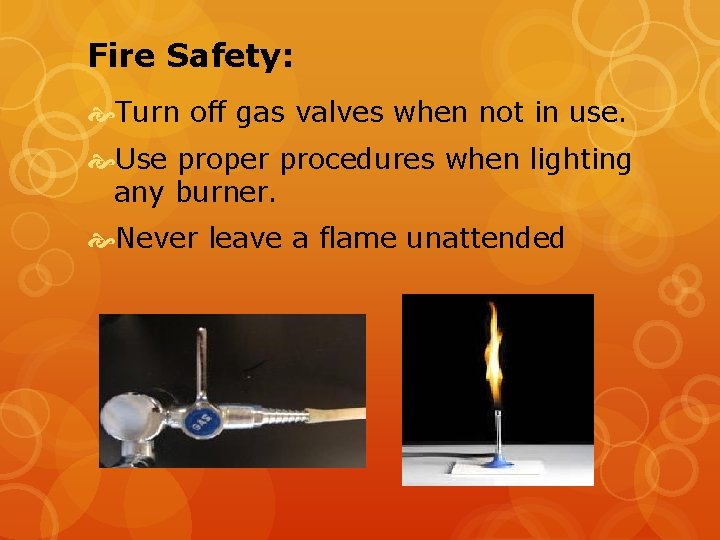
Fire Safety: Turn off gas valves when not in use. Use proper procedures when lighting any burner. Never leave a flame unattended
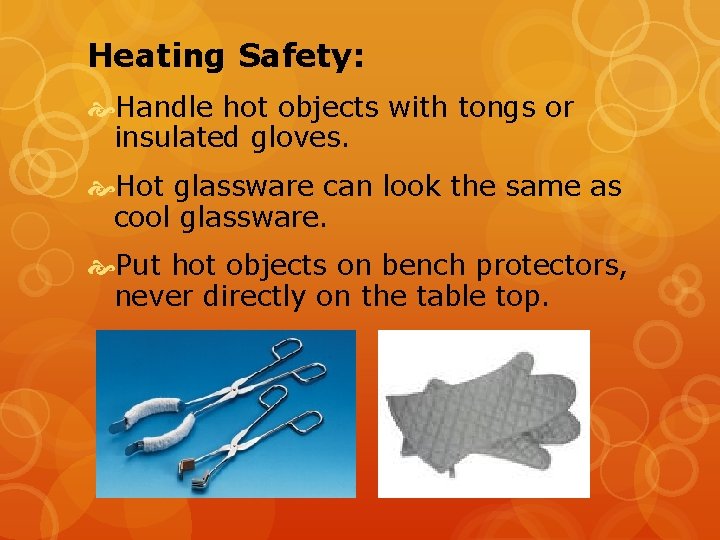
Heating Safety: Handle hot objects with tongs or insulated gloves. Hot glassware can look the same as cool glassware. Put hot objects on bench protectors, never directly on the table top.
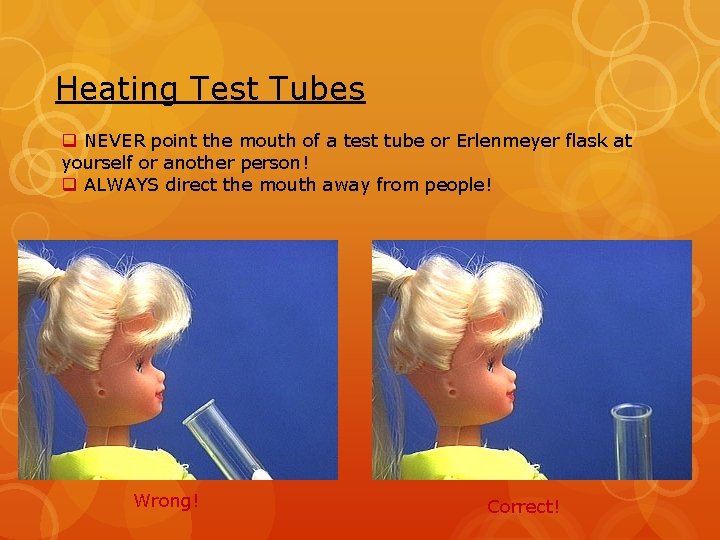
Heating Test Tubes q NEVER point the mouth of a test tube or Erlenmeyer flask at yourself or another person! q ALWAYS direct the mouth away from people! Wrong! Correct!
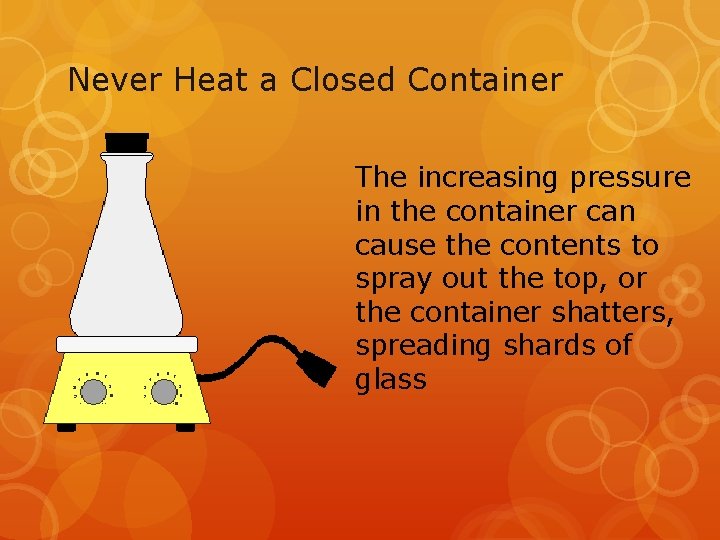
Never Heat a Closed Container The increasing pressure in the container can cause the contents to spray out the top, or the container shatters, spreading shards of glass
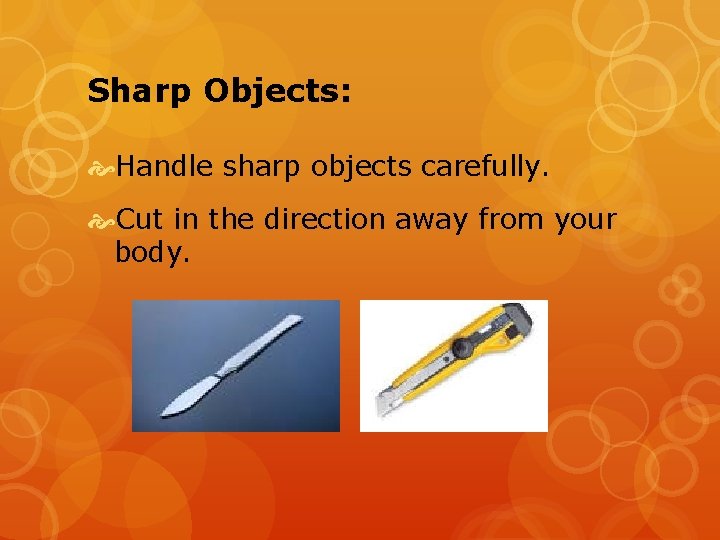
Sharp Objects: Handle sharp objects carefully. Cut in the direction away from your body.
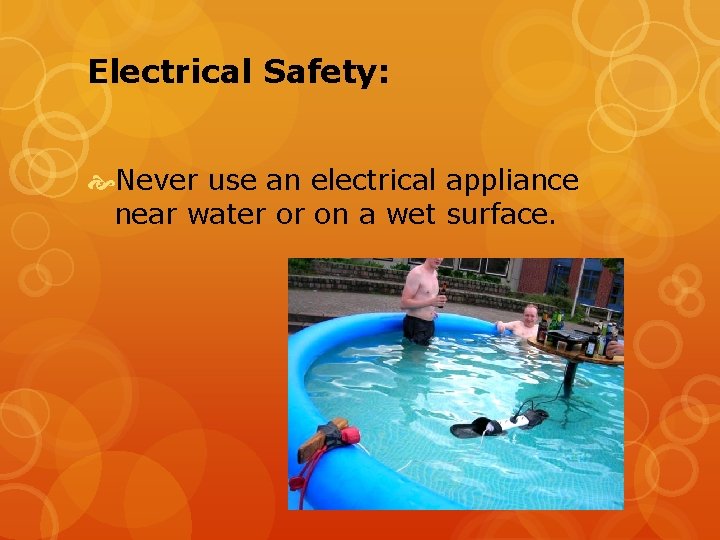
Electrical Safety: Never use an electrical appliance near water or on a wet surface.
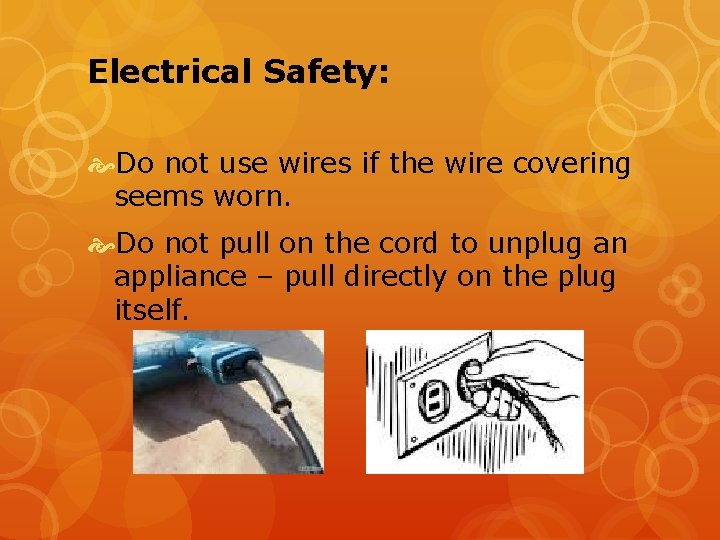
Electrical Safety: Do not use wires if the wire covering seems worn. Do not pull on the cord to unplug an appliance – pull directly on the plug itself.
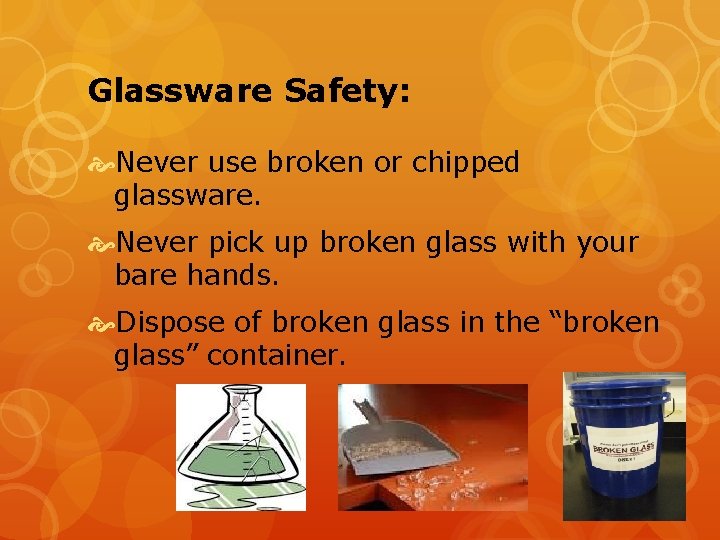
Glassware Safety: Never use broken or chipped glassware. Never pick up broken glass with your bare hands. Dispose of broken glass in the “broken glass” container.
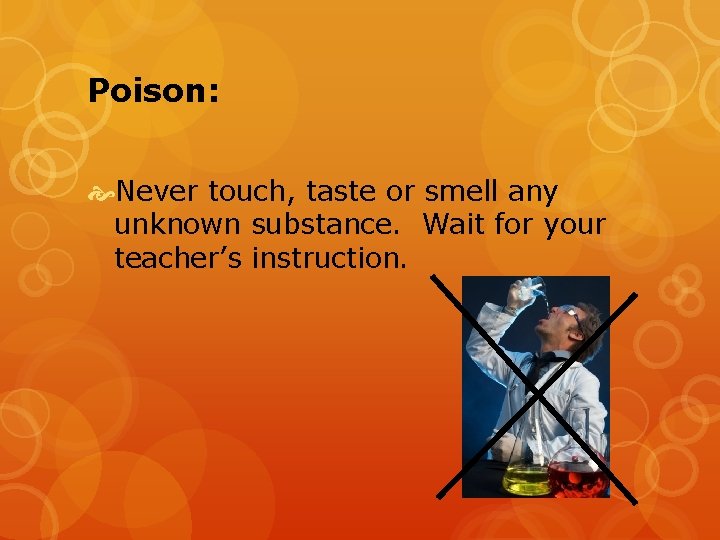
Poison: Never touch, taste or smell any unknown substance. Wait for your teacher’s instruction.
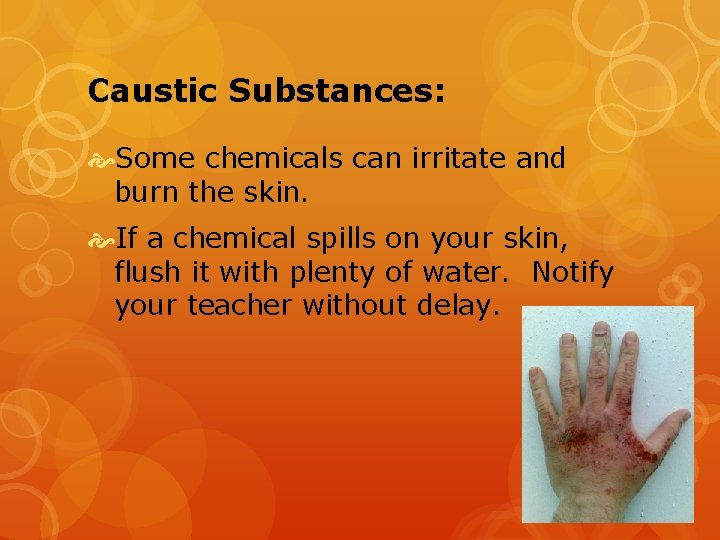
Caustic Substances: Some chemicals can irritate and burn the skin. If a chemical spills on your skin, flush it with plenty of water. Notify your teacher without delay.
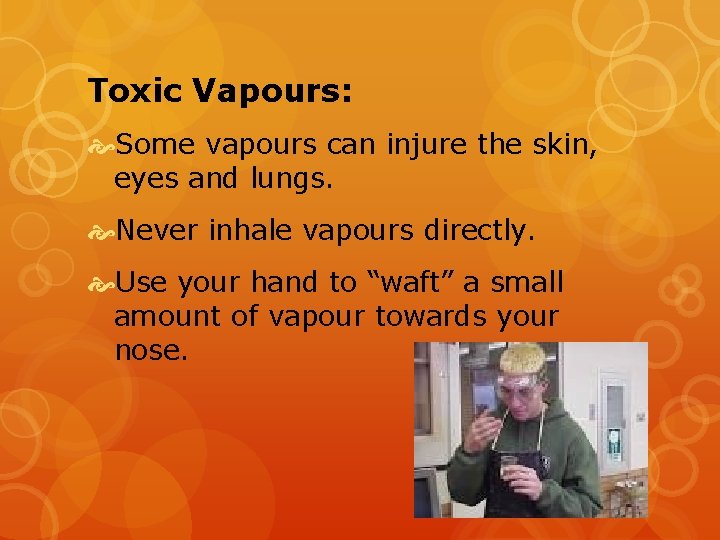
Toxic Vapours: Some vapours can injure the skin, eyes and lungs. Never inhale vapours directly. Use your hand to “waft” a small amount of vapour towards your nose.
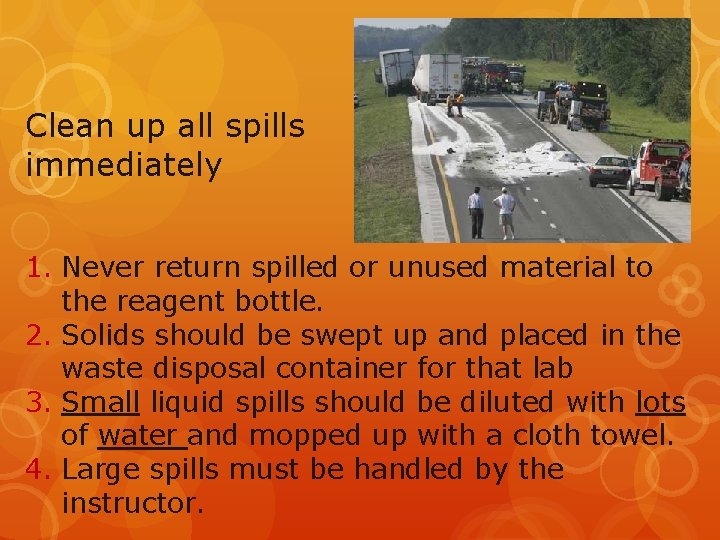
Clean up all spills immediately 1. Never return spilled or unused material to the reagent bottle. 2. Solids should be swept up and placed in the waste disposal container for that lab 3. Small liquid spills should be diluted with lots of water and mopped up with a cloth towel. 4. Large spills must be handled by the instructor.
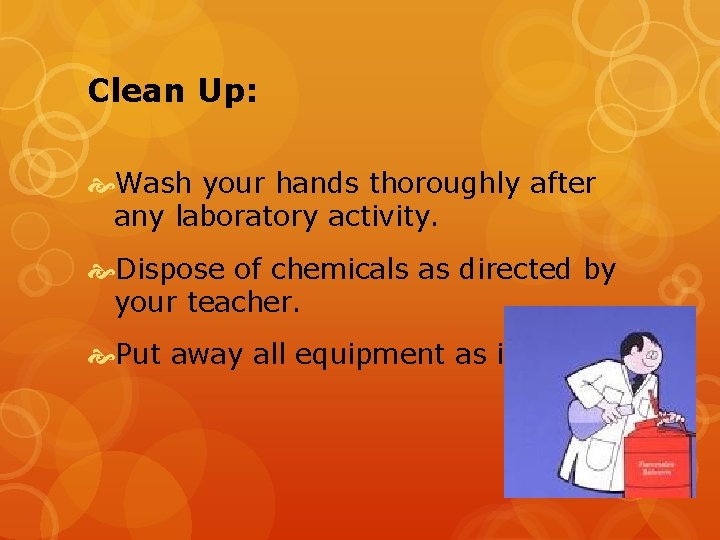
Clean Up: Wash your hands thoroughly after any laboratory activity. Dispose of chemicals as directed by your teacher. Put away all equipment as instructed.
Review General lab rules Always wash your hands before a lab Always wear safety goggles during a lab Never run or push Do not used broken glassware Always clean up your station Wear safety equipment during labs Keep hair tied back during labs
Rules for chemicals Never mix chemicals without permission Keep lid on bottles/containers Do not put your eyes close to any chemicals Don’t smell any chemicals directly Never taste any chemicals Listen to instructions on proper disposal
Other rules Always read through ALL instructions before starting an experiment Tell the teacher if you get any chemical on your skin (wash with water) Never reach over a flame/open fire Keep all materials away from any flame Never point a test tube at a person when heating
https: //www. youtube. com/watch? v=MEIXRLc. C 6 RA&vl=en
Labels on Hazardous Products HHPS and WHMIS Symbols
Household Hazardous Product Symbols (HHPS) Many products used in our homes may be dangerous if used incorrectly. For this reason, household products are marked with symbols that allow us to recognize and interpret potential hazards
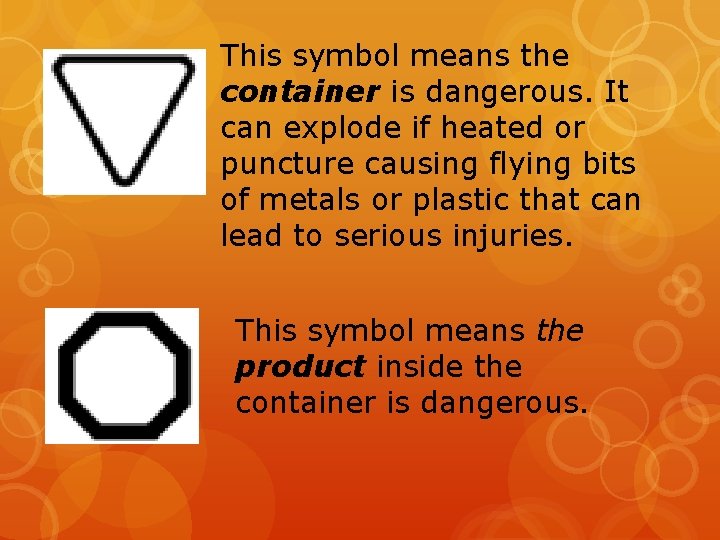
This symbol means the container is dangerous. It can explode if heated or puncture causing flying bits of metals or plastic that can lead to serious injuries. This symbol means the product inside the container is dangerous.
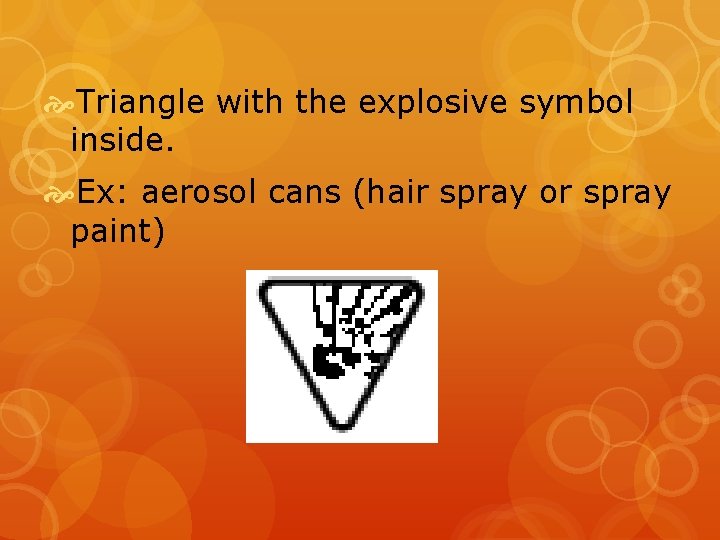
Triangle with the explosive symbol inside. Ex: aerosol cans (hair spray or spray paint)
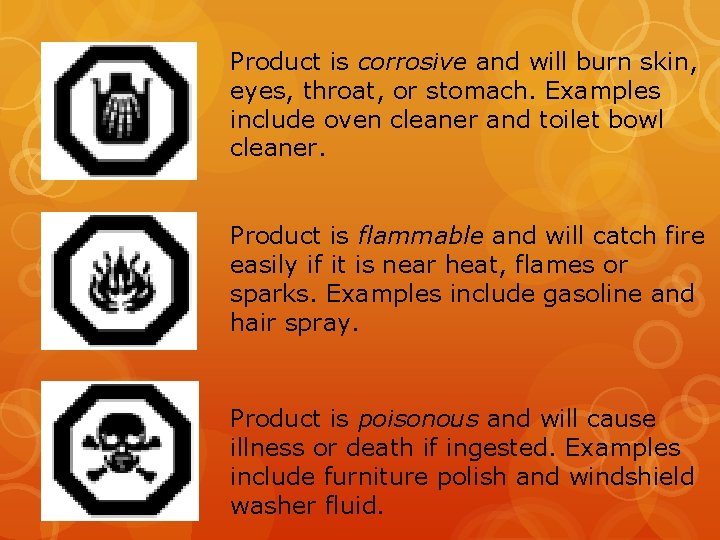
Product is corrosive and will burn skin, eyes, throat, or stomach. Examples include oven cleaner and toilet bowl cleaner. Product is flammable and will catch fire easily if it is near heat, flames or sparks. Examples include gasoline and hair spray. Product is poisonous and will cause illness or death if ingested. Examples include furniture polish and windshield washer fluid.
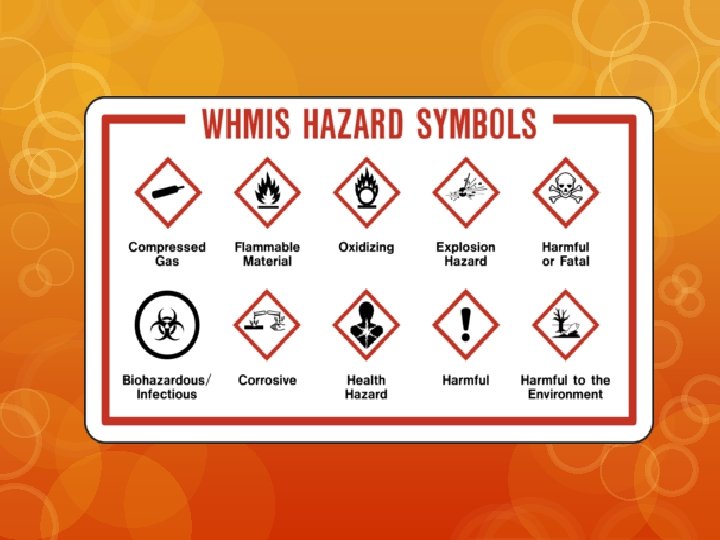
WHMIS SYMBOLS The Workplace Hazardous Materials Information System (WHMIS) has produced symbols for hazardous products found in the workplace. WHMIS symbols are similar to HHPS symbols, but are always in a diamond (except biohazard) WHMIS symbols identify a wider range of hazards than HHPS symbols
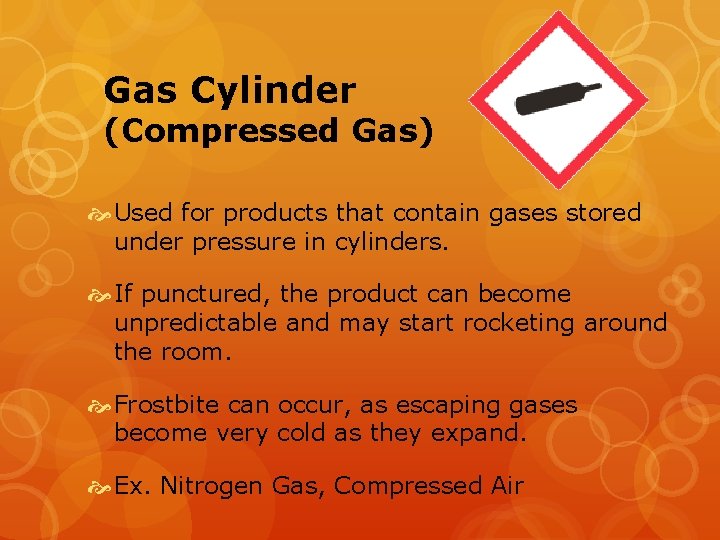
Gas Cylinder (Compressed Gas) Used for products that contain gases stored under pressure in cylinders. If punctured, the product can become unpredictable and may start rocketing around the room. Frostbite can occur, as escaping gases become very cold as they expand. Ex. Nitrogen Gas, Compressed Air
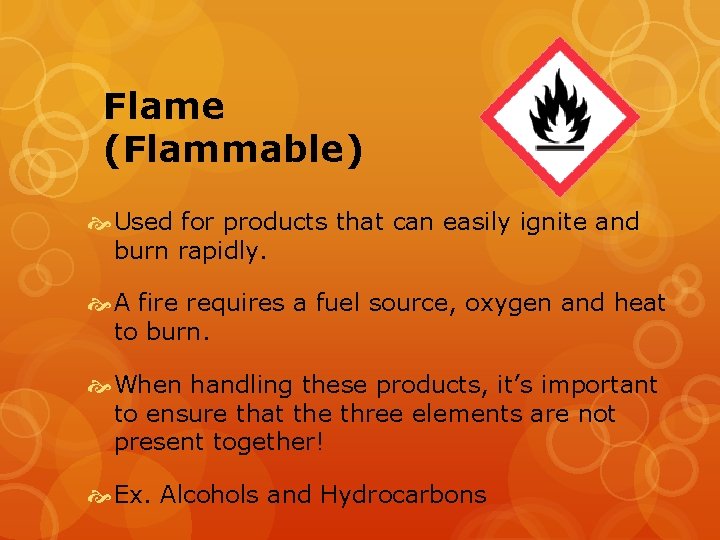
Flame (Flammable) Used for products that can easily ignite and burn rapidly. A fire requires a fuel source, oxygen and heat to burn. When handling these products, it’s important to ensure that the three elements are not present together! Ex. Alcohols and Hydrocarbons
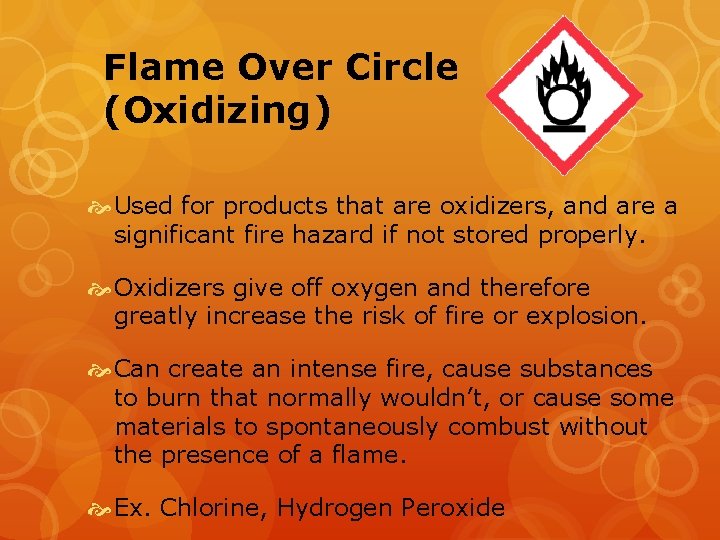
Flame Over Circle (Oxidizing) Used for products that are oxidizers, and are a significant fire hazard if not stored properly. Oxidizers give off oxygen and therefore greatly increase the risk of fire or explosion. Can create an intense fire, cause substances to burn that normally wouldn’t, or cause some materials to spontaneously combust without the presence of a flame. Ex. Chlorine, Hydrogen Peroxide
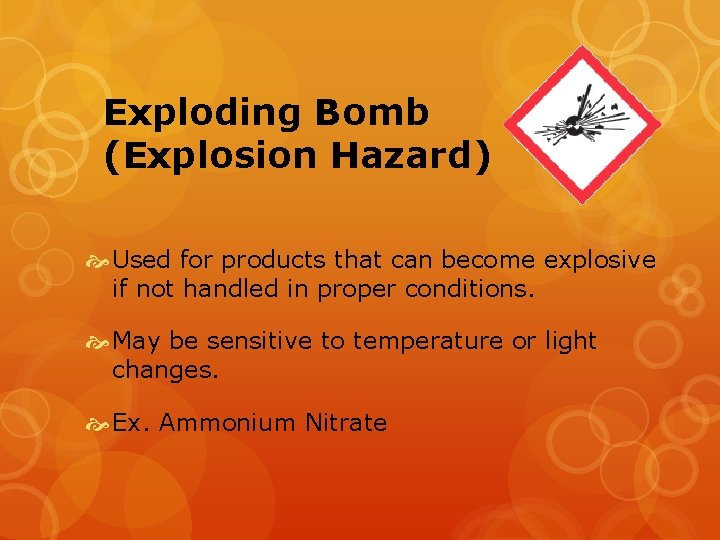
Exploding Bomb (Explosion Hazard) Used for products that can become explosive if not handled in proper conditions. May be sensitive to temperature or light changes. Ex. Ammonium Nitrate
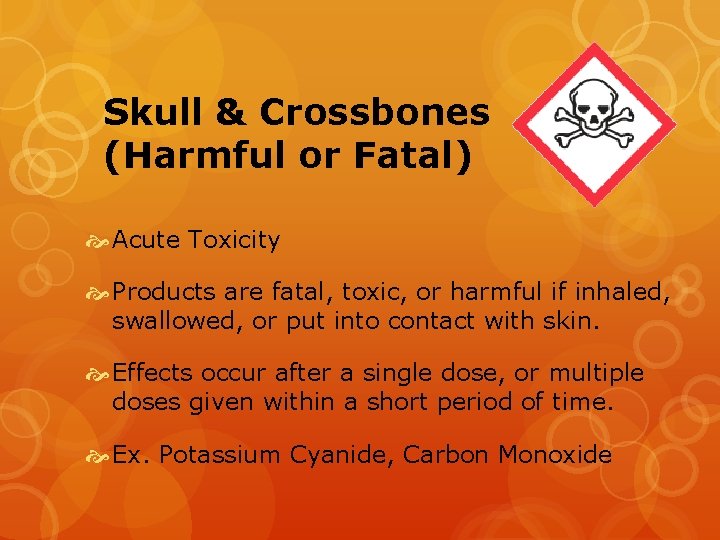
Skull & Crossbones (Harmful or Fatal) Acute Toxicity Products are fatal, toxic, or harmful if inhaled, swallowed, or put into contact with skin. Effects occur after a single dose, or multiple doses given within a short period of time. Ex. Potassium Cyanide, Carbon Monoxide
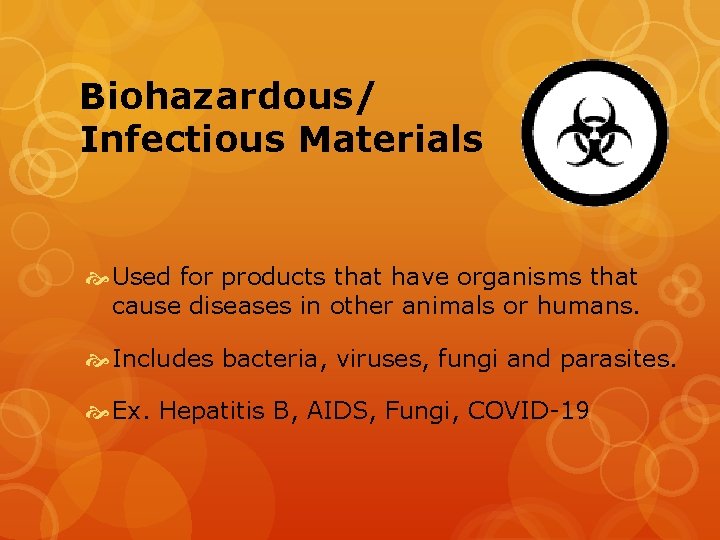
Biohazardous/ Infectious Materials Used for products that have organisms that cause diseases in other animals or humans. Includes bacteria, viruses, fungi and parasites. Ex. Hepatitis B, AIDS, Fungi, COVID-19
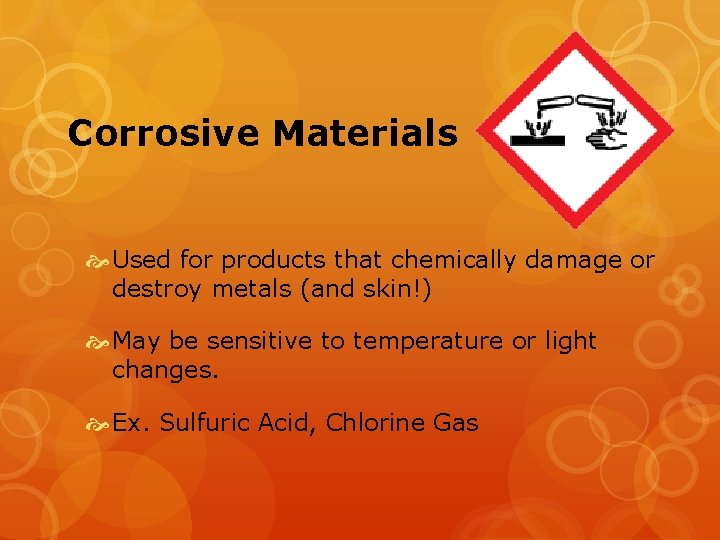
Corrosive Materials Used for products that chemically damage or destroy metals (and skin!) May be sensitive to temperature or light changes. Ex. Sulfuric Acid, Chlorine Gas
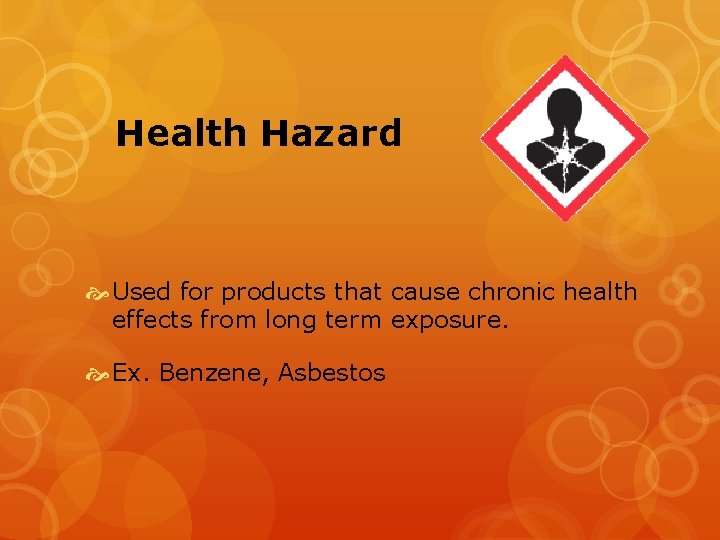
Health Hazard Used for products that cause chronic health effects from long term exposure. Ex. Benzene, Asbestos
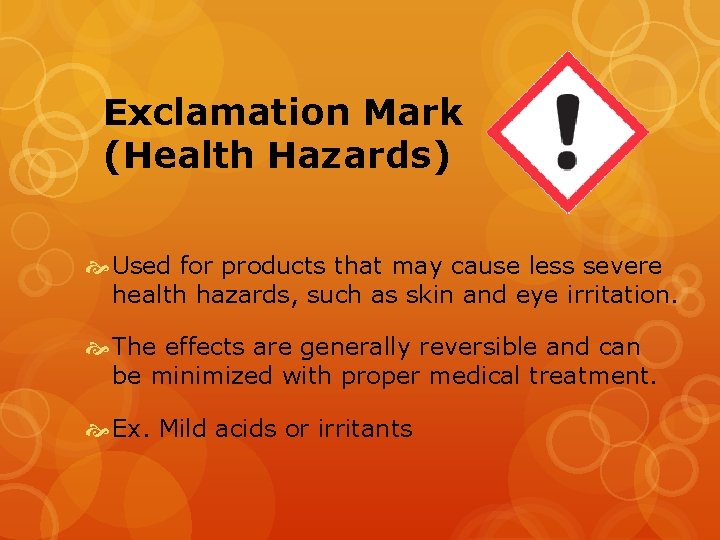
Exclamation Mark (Health Hazards) Used for products that may cause less severe health hazards, such as skin and eye irritation. The effects are generally reversible and can be minimized with proper medical treatment. Ex. Mild acids or irritants
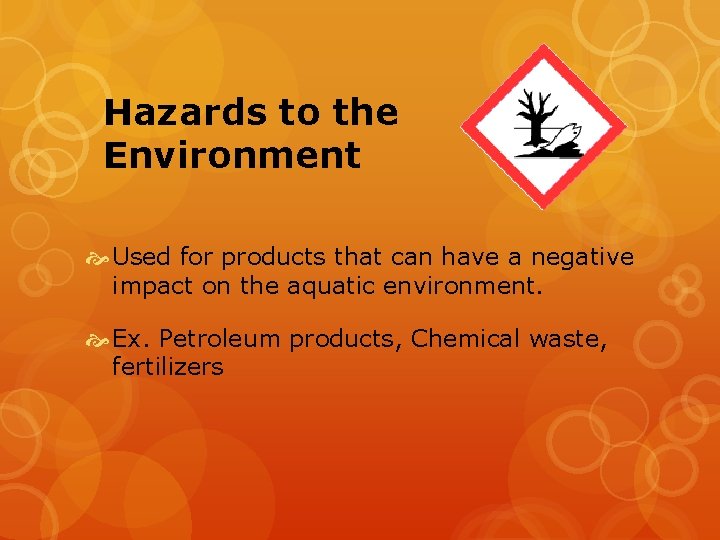
Hazards to the Environment Used for products that can have a negative impact on the aquatic environment. Ex. Petroleum products, Chemical waste, fertilizers
- Slides: 43