
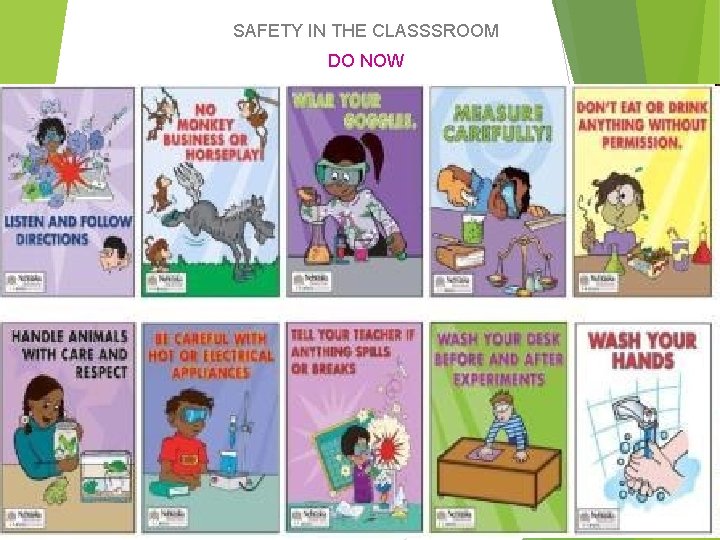
SAFETY IN THE CLASSSROOM DO NOW 1 NAME
- Slides: 33
SAFETY IN THE CLASSSROOM DO NOW
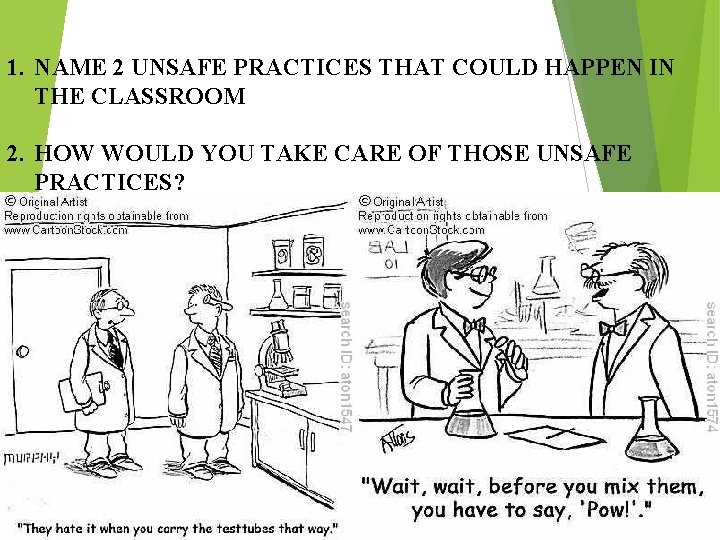
1. NAME 2 UNSAFE PRACTICES THAT COULD HAPPEN IN THE CLASSROOM 2. HOW WOULD YOU TAKE CARE OF THOSE UNSAFE PRACTICES?
LAB SAFETY /CHEM Hazardous Chemicals found in the Science Classroom. Studying symbology use as a topical approach.
LAB SAFETY /CHEM Lesson Objective: • Introduce students to the range chemicals found in the classroom that they maybe handling this year. • Explore symbology in doing so. • Develop (some) classification skills for the range of hazardous chemicals
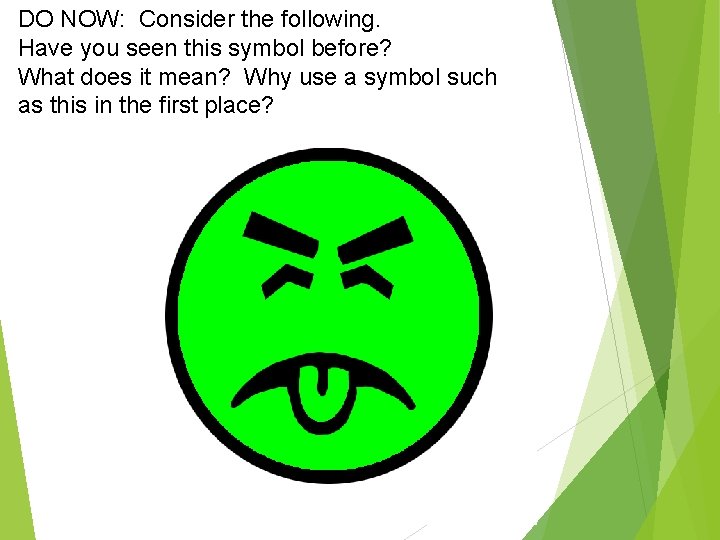
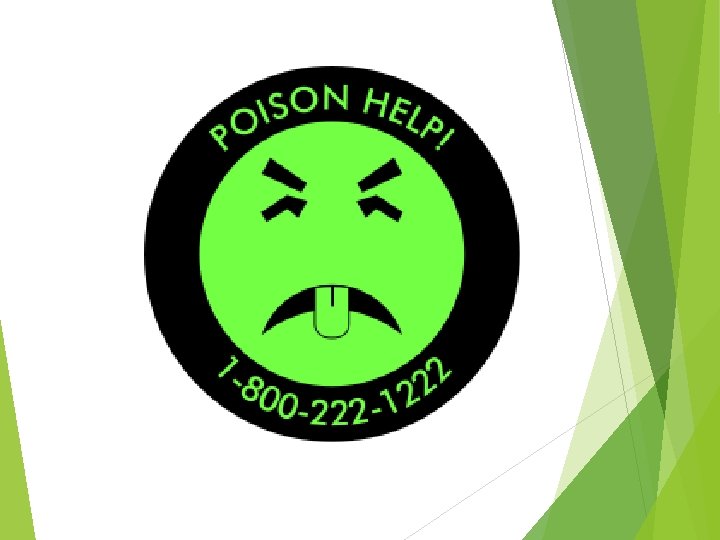
DO NOW: Consider the following. Have you seen this symbol before? What does it mean? Why use a symbol such as this in the first place?
WHAT IS REQUIRED IN BUILDINGS LIKE SCHOOLS? School or any employer must have a written HAZCOM Program They must provide you with annual training & information about hazardous chemicals They must maintain a hazardous materials inventory They must maintain Material Safety Data Sheets (MSDS) for hazardous chemicals
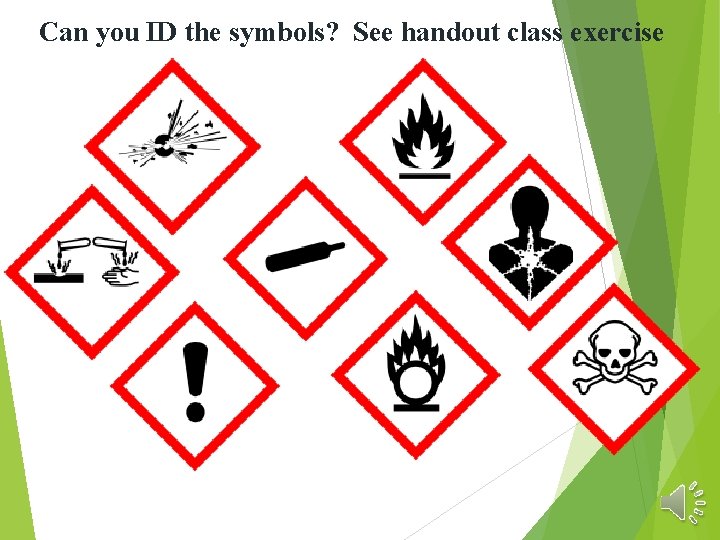
Can you ID the symbols? See handout class exercise
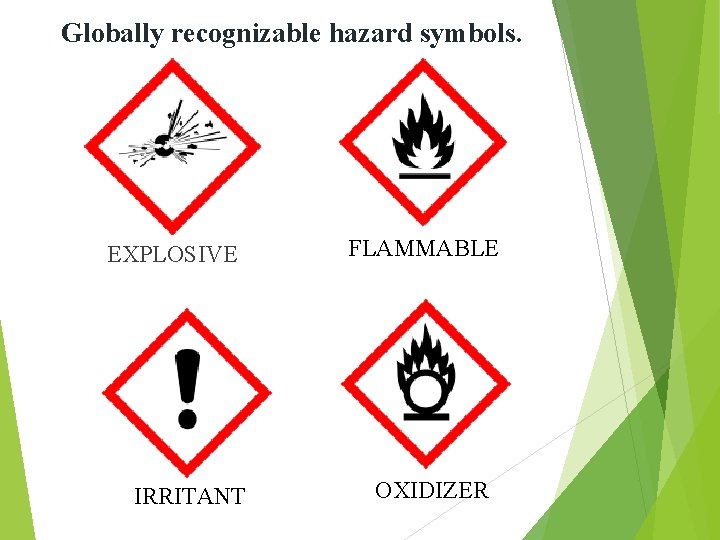
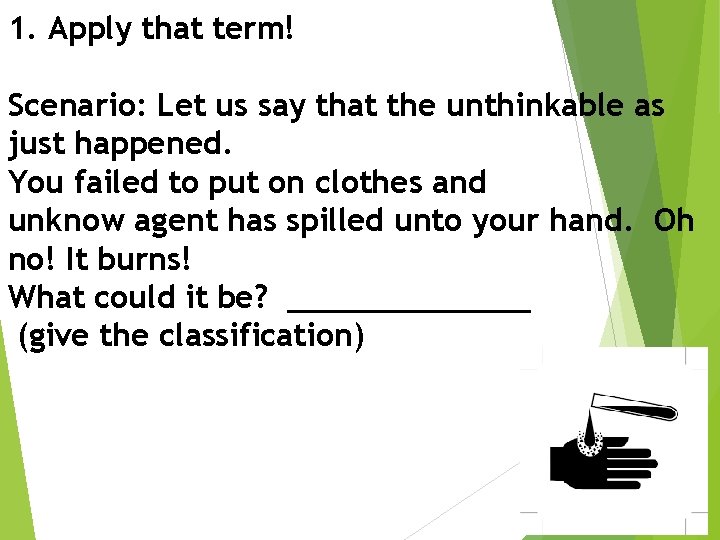
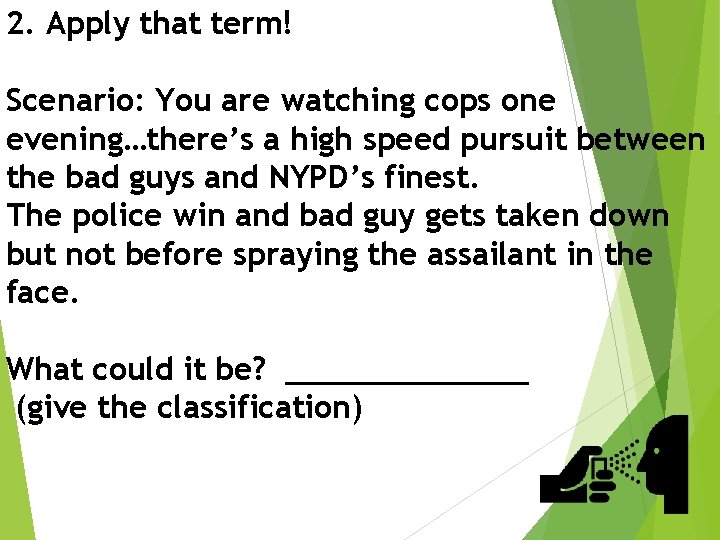
Globally recognizable hazard symbols. EXPLOSIVE IRRITANT FLAMMABLE OXIDIZER
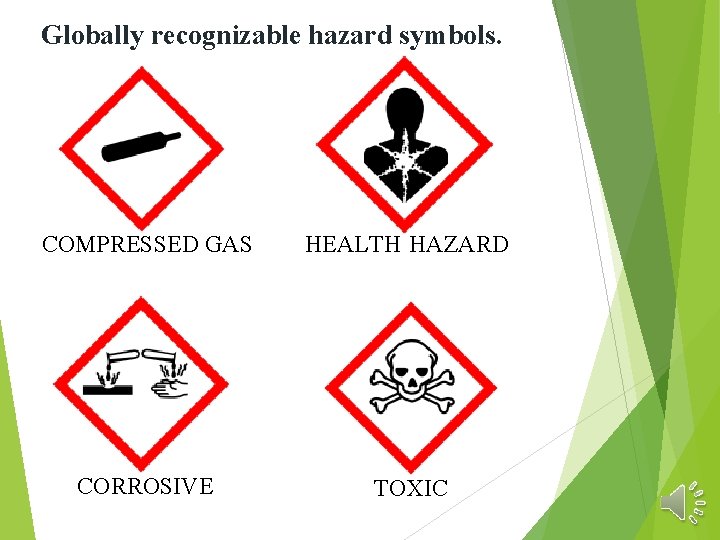
Globally recognizable hazard symbols. COMPRESSED GAS HEALTH HAZARD CORROSIVE TOXIC
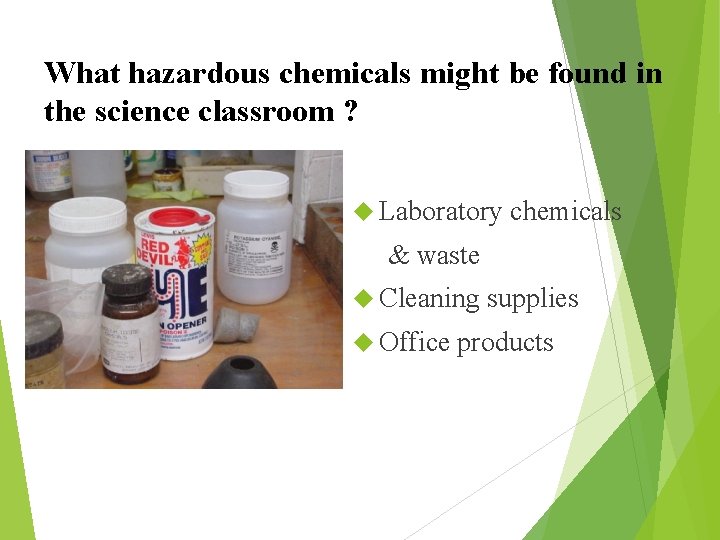
What hazardous chemicals might be found in the science classroom ? Laboratory chemicals & waste Cleaning Office supplies products
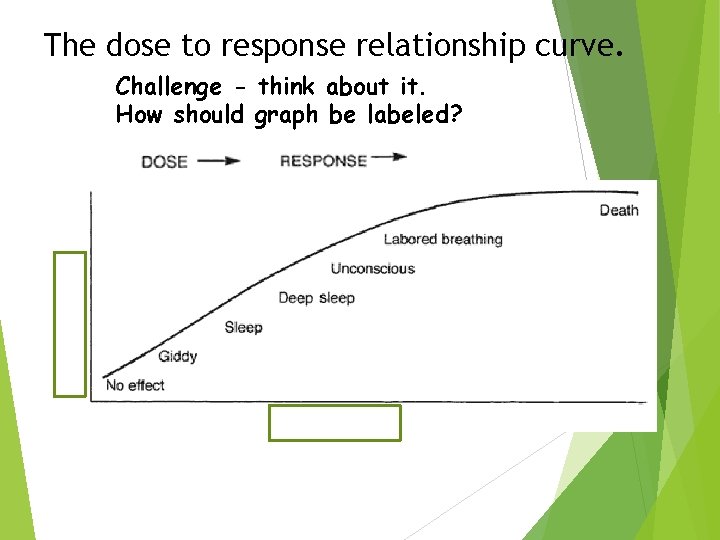
RELATED VOCABULARY If it is toxic is it always a hazard? TOXICITY - The ability of a substance to harm living cells, tissue, or tissue systems HAZARD - The likelihood harm will occur if certain conditions are met. Factors that influence the hazardous factor are - (dose or susceptibility)
The dose to response relationship curve. Challenge - think about it. How should graph be labeled?
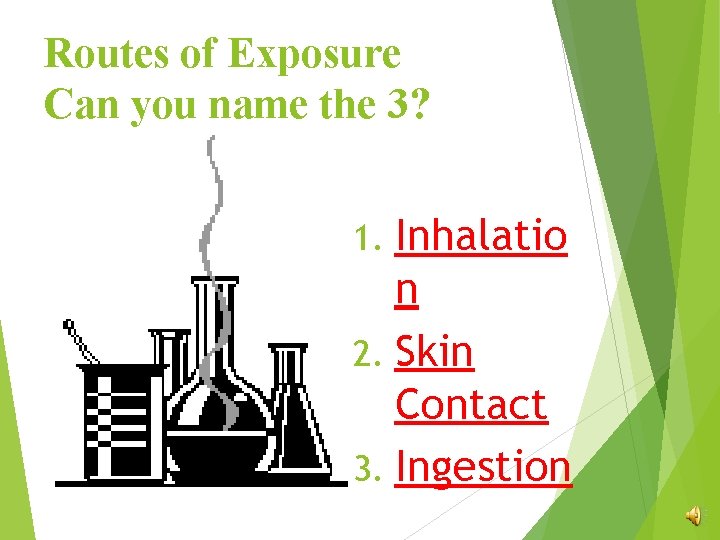
Routes of Exposure Can you name the 3? 1. Inhalatio n 2. Skin Contact 3. Ingestion
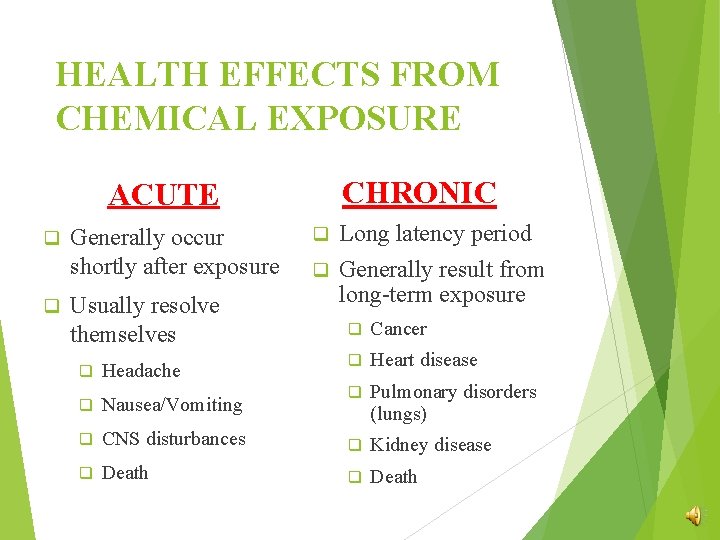
HEALTH EFFECTS FROM CHEMICAL EXPOSURE CHRONIC ACUTE q Generally occur shortly after exposure q Usually resolve themselves Long latency period q Generally result from long-term exposure q q Cancer q Heart disease q Pulmonary disorders (lungs) q Headache q Nausea/Vomiting q CNS disturbances q Kidney disease q Death
CHEMICAL HAZARDS 1 Carcinogens Substances capable of producing cancer (abnormal cell growth). Asbestos Benzene Benzo(a)pyrene Arsenic Formaldehyde Alcohol
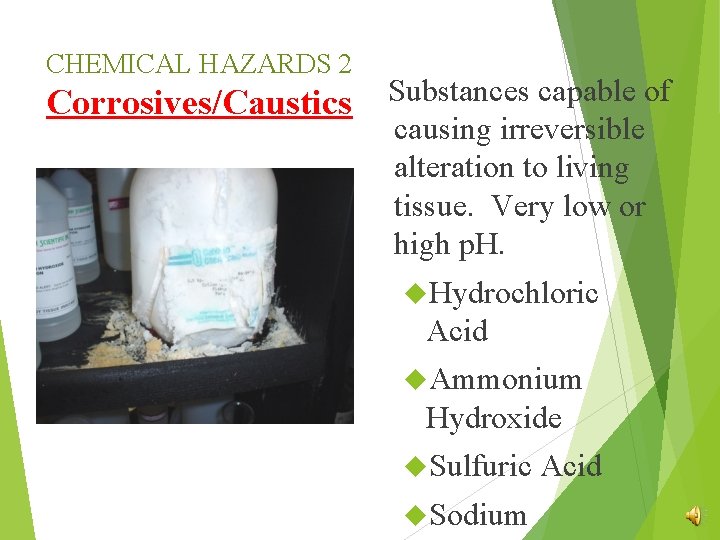
CHEMICAL HAZARDS 2 Corrosives/Caustics Substances capable of causing irreversible alteration to living tissue. Very low or high p. H. Hydrochloric Acid Ammonium Hydroxide Sulfuric Sodium Acid
CHEMICAL HAZARDS 3 Irritants Substances capable of causing reversible inflammation of living tissue. Generally affect skin and upper respiratory tract. Ammonia Pepper Spray Volatile Organic Compounds
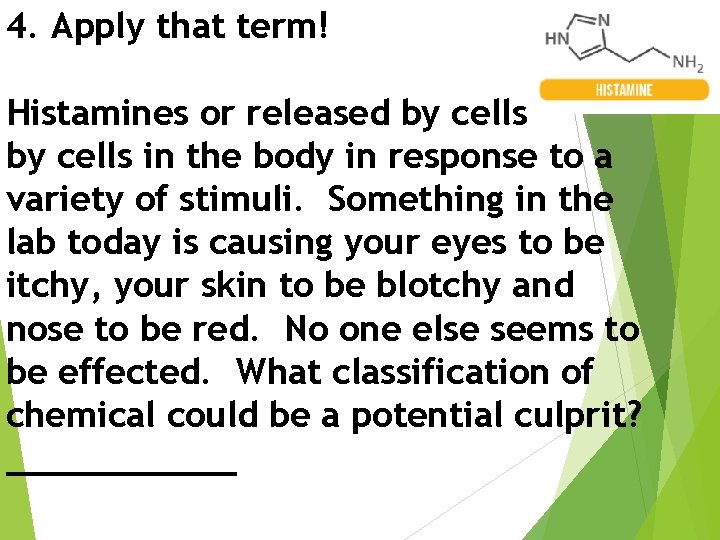
CHEMICAL HAZARDS 4 Sensitizers Substances capable of causing an enhanced immune system response. Reactions become more serious over time. (think allergic reaction) Formaldehyde Isocyanates Metals Vinyl Chloride
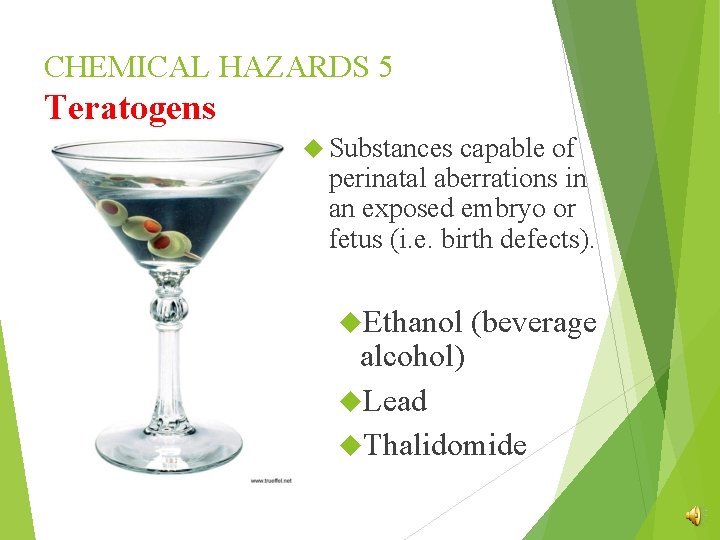
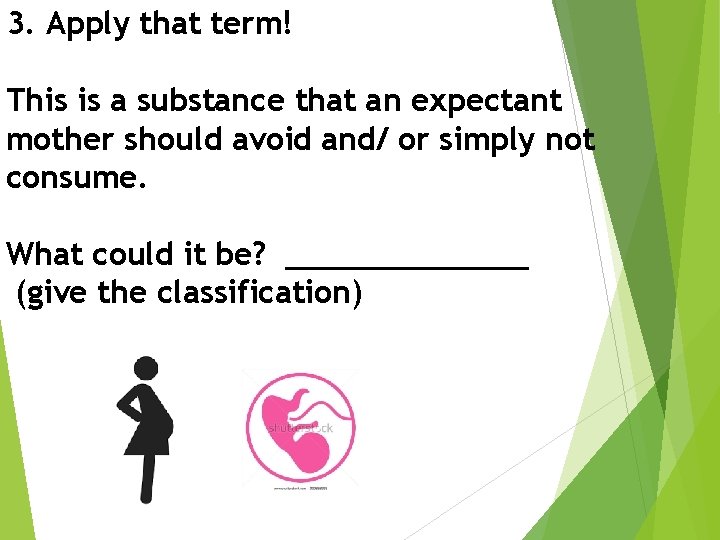
CHEMICAL HAZARDS 5 Teratogens Substances capable of perinatal aberrations in an exposed embryo or fetus (i. e. birth defects). Ethanol (beverage alcohol) Lead Thalidomide
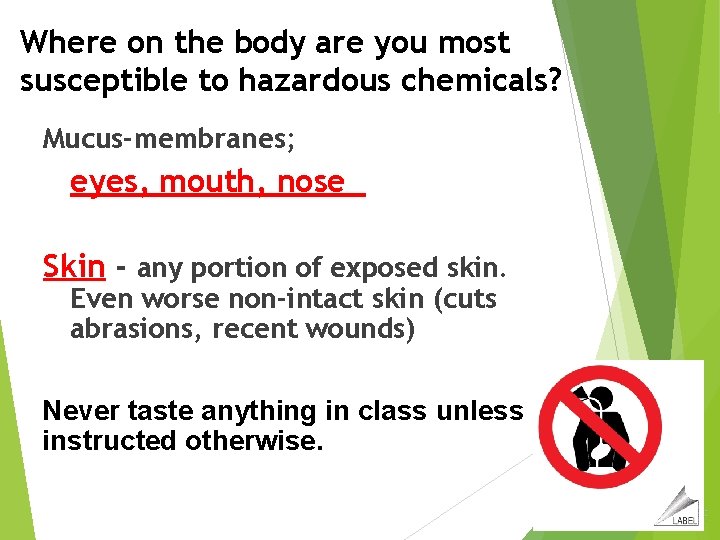
Where on the body are you most susceptible to hazardous chemicals? Mucus-membranes; eyes, mouth, nose Skin - any portion of exposed skin. Even worse non-intact skin (cuts abrasions, recent wounds) Never taste anything in class unless instructed otherwise.
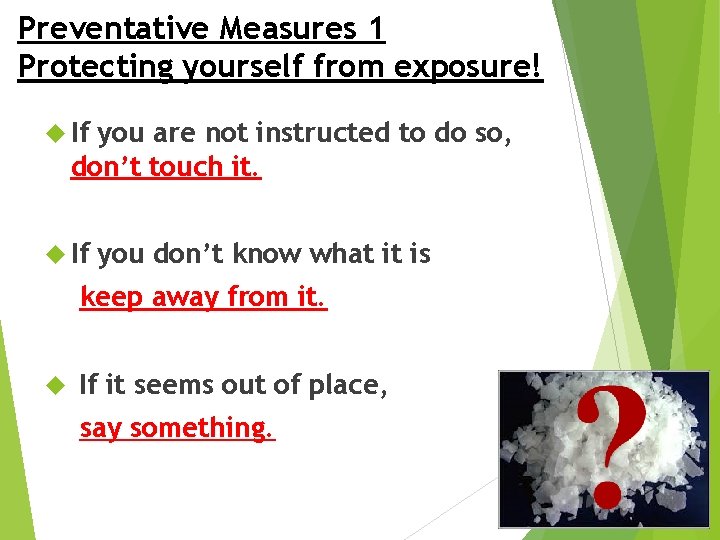
Preventative Measures 1 Protecting yourself from exposure! If you are not instructed to do so, don’t touch it. If you don’t know what it is keep away from it. If it seems out of place, say something.
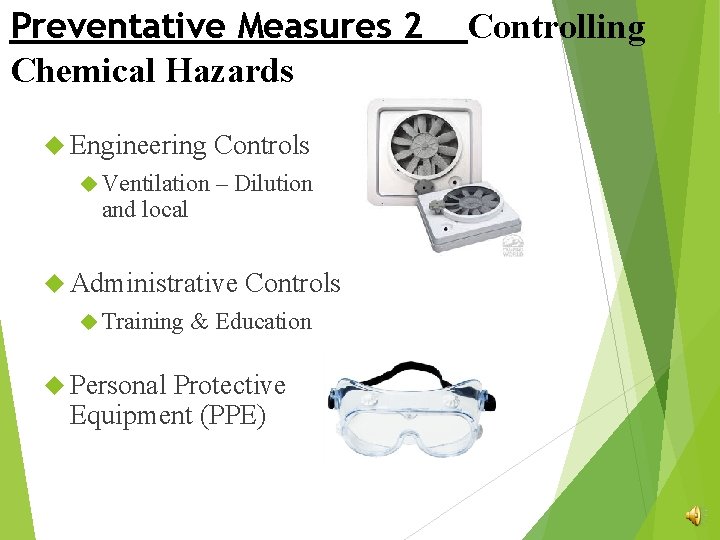
Preventative Measures 2 Chemical Hazards Engineering Controls Ventilation – Dilution and local Administrative Training Personal Controls & Education Protective Equipment (PPE) Controlling
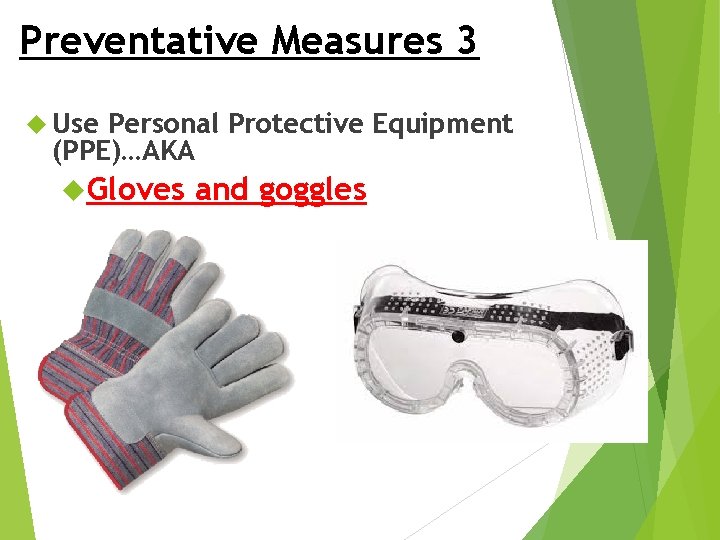
Preventative Measures 3 Use Personal Protective Equipment (PPE)…AKA Gloves and goggles
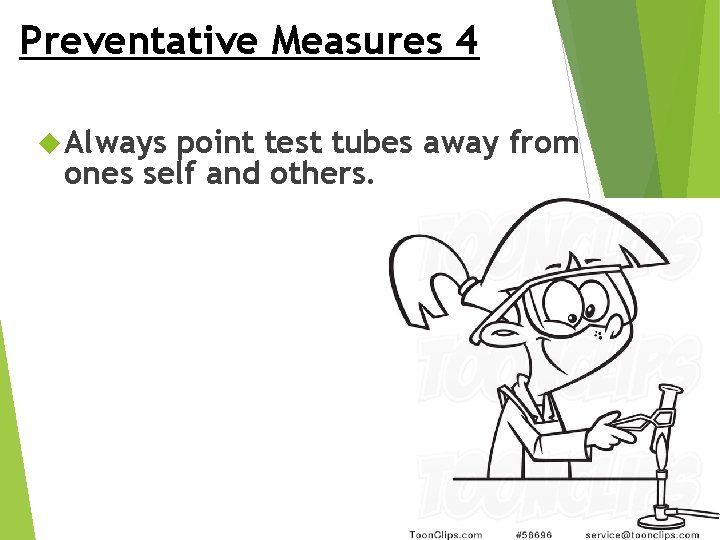
Preventative Measures 4 Always point test tubes away from ones self and others.
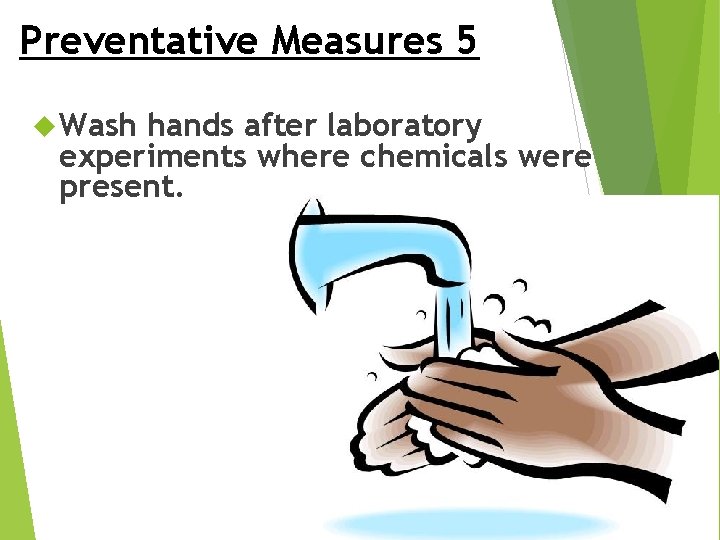
Preventative Measures 5 Wash hands after laboratory experiments where chemicals were present.
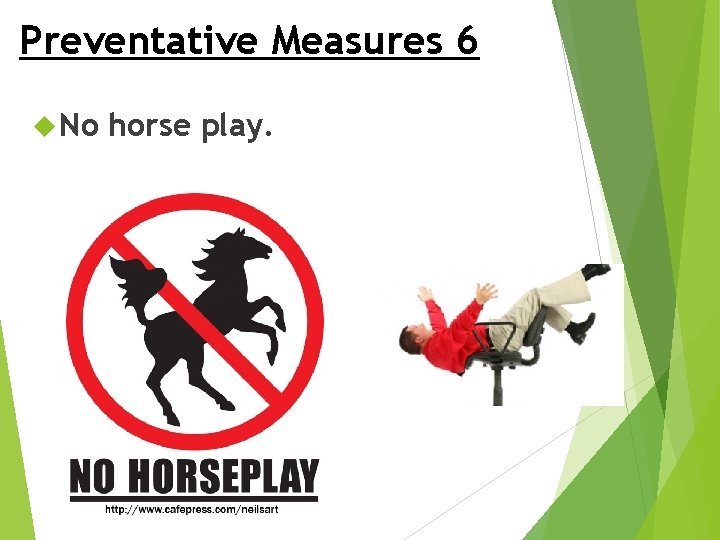
Preventative Measures 6 No horse play.
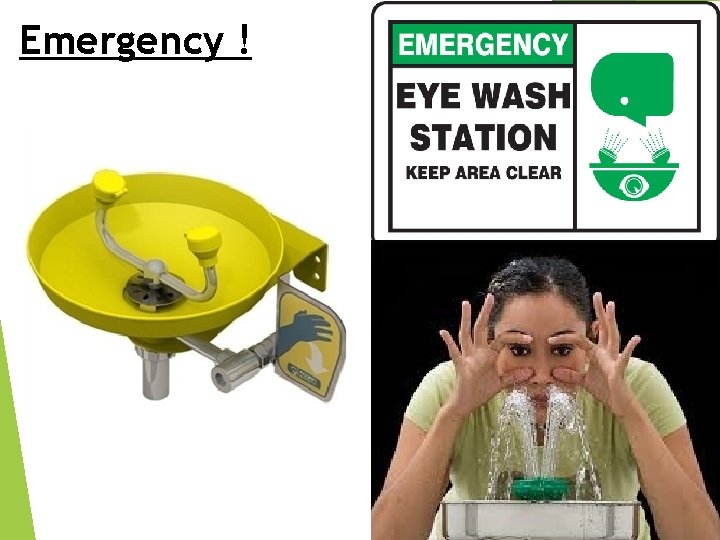
Emergency !
1. Apply that term! Scenario: Let us say that the unthinkable as just happened. You failed to put on clothes and unknow agent has spilled unto your hand. Oh no! It burns! What could it be? _______ (give the classification)
2. Apply that term! Scenario: You are watching cops one evening…there’s a high speed pursuit between the bad guys and NYPD’s finest. The police win and bad guy gets taken down but not before spraying the assailant in the face. What could it be? _______ (give the classification)
3. Apply that term! This is a substance that an expectant mother should avoid and/ or simply not consume. What could it be? _______ (give the classification)
4. Apply that term! Histamines or released by cells in the body in response to a variety of stimuli. Something in the lab today is causing your eyes to be itchy, your skin to be blotchy and nose to be red. No one else seems to be effected. What classification of chemical could be a potential culprit? ______
5. Apply that term! It is a know fact that smoking cigarettes are dangerous and bad for your health, because they contain many chemicals from this classification group. ______