
Safety Excavations l Introduction to Industrial Technology l
- Slides: 19
Safety : Excavations l Introduction to Industrial Technology l Spring 2014 Mr. Shubert l 1
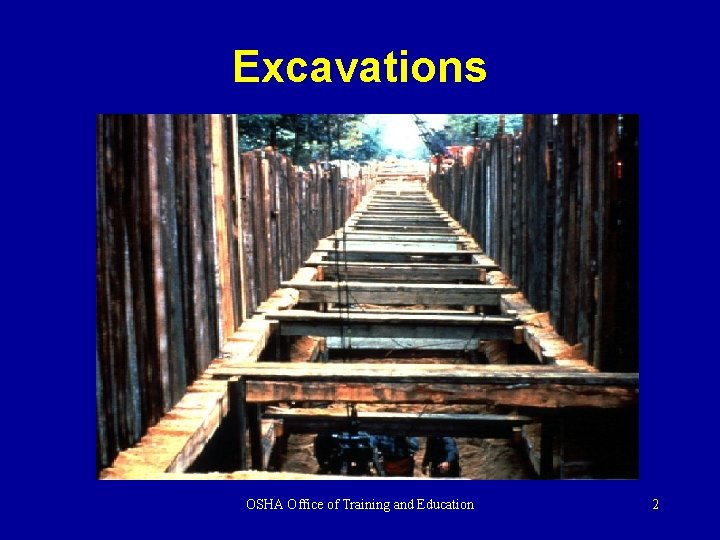
Excavations OSHA Office of Training and Education 2
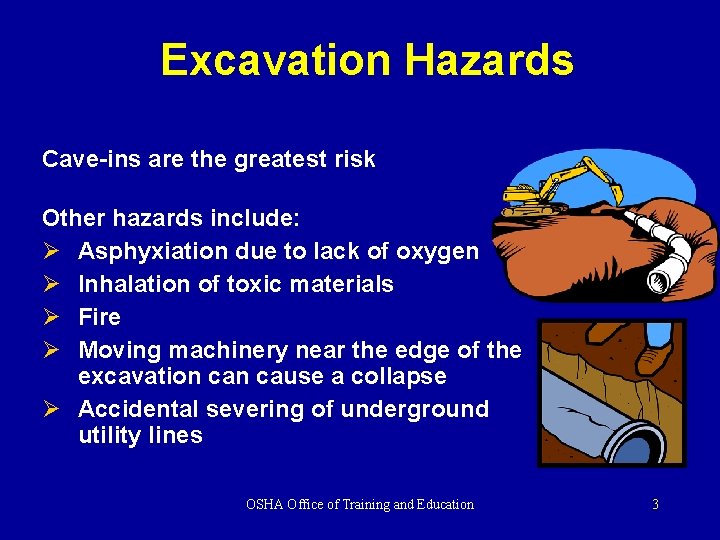
Excavation Hazards Cave-ins are the greatest risk Other hazards include: Ø Asphyxiation due to lack of oxygen Ø Inhalation of toxic materials Ø Fire Ø Moving machinery near the edge of the excavation cause a collapse Ø Accidental severing of underground utility lines OSHA Office of Training and Education 3
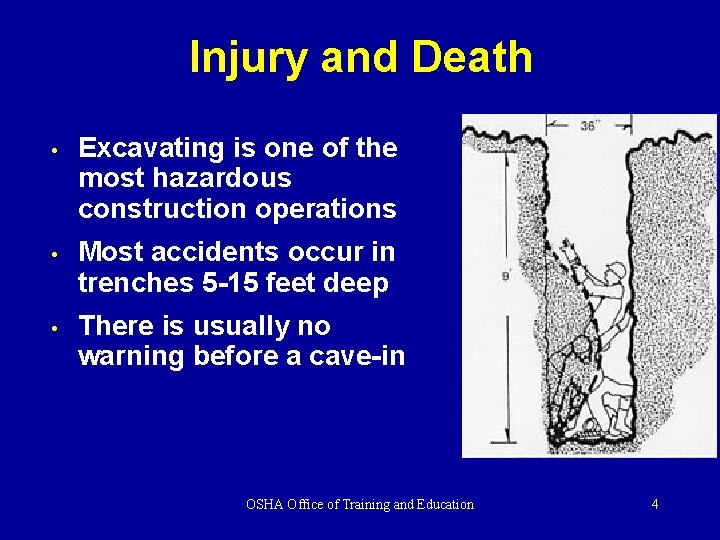
Injury and Death • Excavating is one of the most hazardous construction operations • Most accidents occur in trenches 5 -15 feet deep • There is usually no warning before a cave-in OSHA Office of Training and Education 4
Definitions • • • Excavation – a man-made cut, cavity, trench, or depression formed by earth removal. Trench – a narrow excavation. The depth is greater than the width, but not wider than 15 feet. Shield - a structure able to withstand a cave-in and protect employees Shoring - a structure that supports the sides of an excavation and protects against cave-ins Sloping - a technique that employs a specific angle of incline on the sides of the excavation. The angle varies based on assessment of impacting site factors. OSHA Office of Training and Education 5
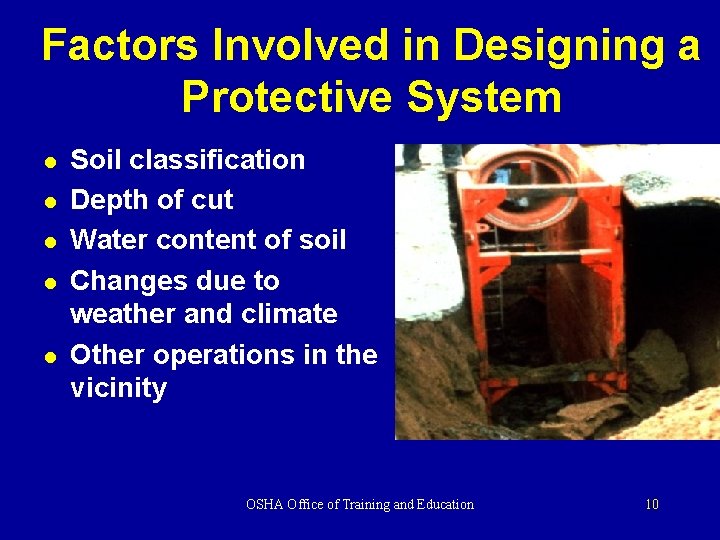
Design of Protective Systems The employer shall select and construct : Ø slopes and configurations of sloping and benching systems Ø support systems, shield systems, and other protective systems • Shield - can be permanent or portable. Also known as trench box or trench shield. • Shoring - such as metal hydraulic, mechanical or timber shoring system that supports the sides • Sloping - form sides of an excavation that are inclined away from the excavation OSHA Office of Training and Education 6
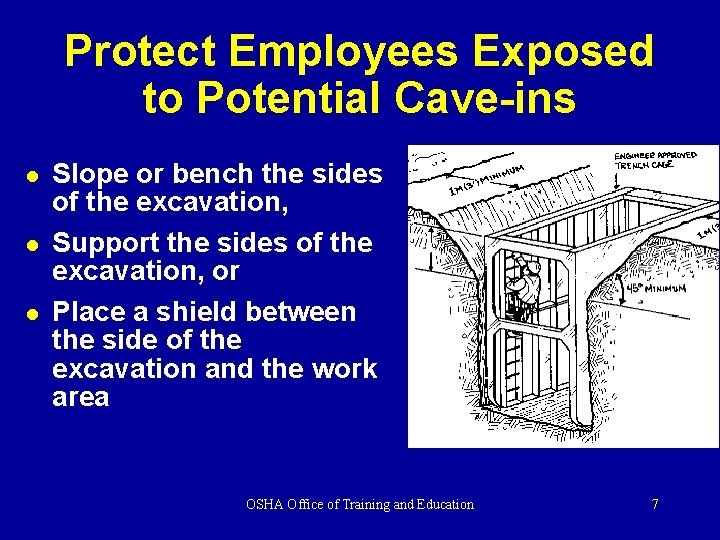
Protect Employees Exposed to Potential Cave-ins l l l Slope or bench the sides of the excavation, Support the sides of the excavation, or Place a shield between the side of the excavation and the work area OSHA Office of Training and Education 7
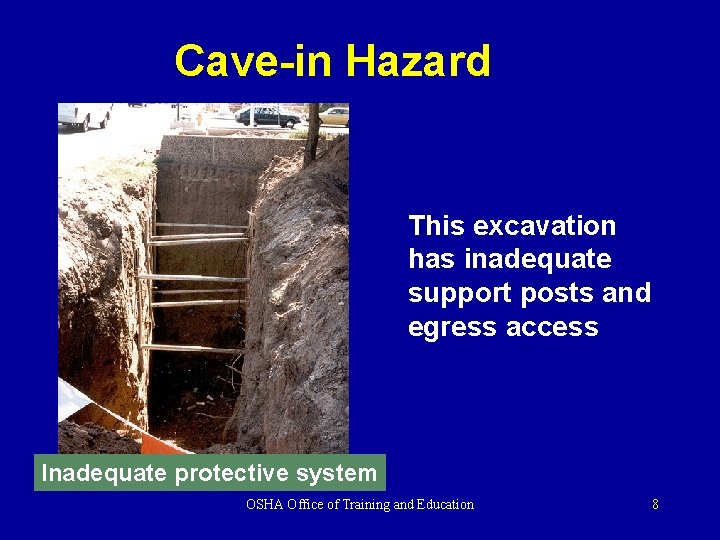
Cave-in Hazard This excavation has inadequate support posts and egress access Inadequate protective system OSHA Office of Training and Education 8
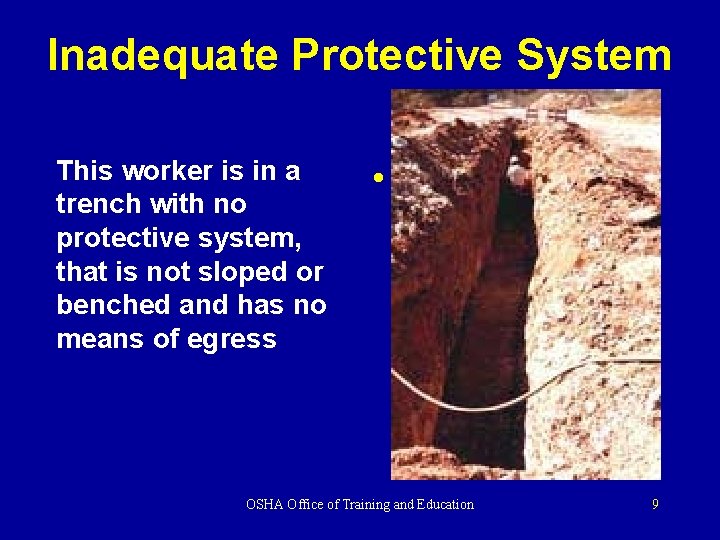
Inadequate Protective System This worker is in a trench with no protective system, that is not sloped or benched and has no means of egress l OSHA Office of Training and Education 9
Factors Involved in Designing a Protective System l l l Soil classification Depth of cut Water content of soil Changes due to weather and climate Other operations in the vicinity OSHA Office of Training and Education 10
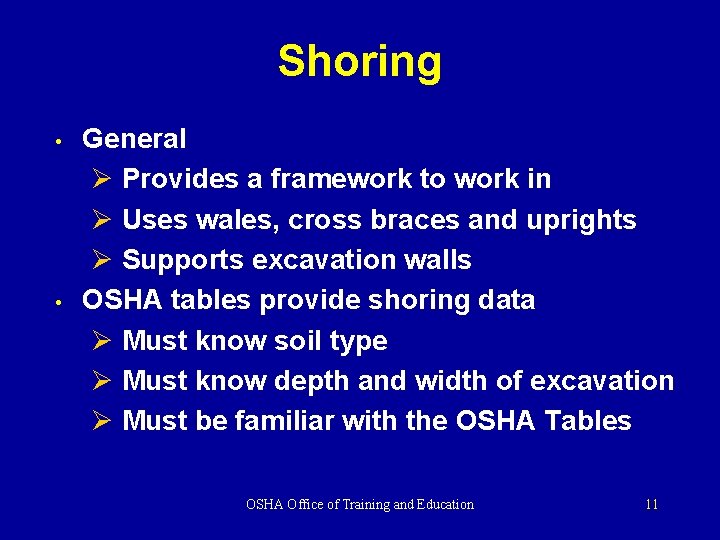
Shoring • • General Ø Provides a framework to work in Ø Uses wales, cross braces and uprights Ø Supports excavation walls OSHA tables provide shoring data Ø Must know soil type Ø Must know depth and width of excavation Ø Must be familiar with the OSHA Tables OSHA Office of Training and Education 11
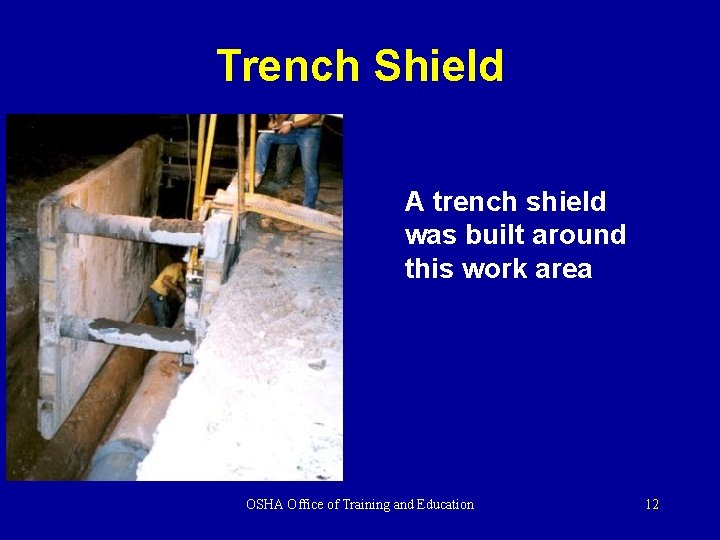
Trench Shield A trench shield was built around this work area OSHA Office of Training and Education 12
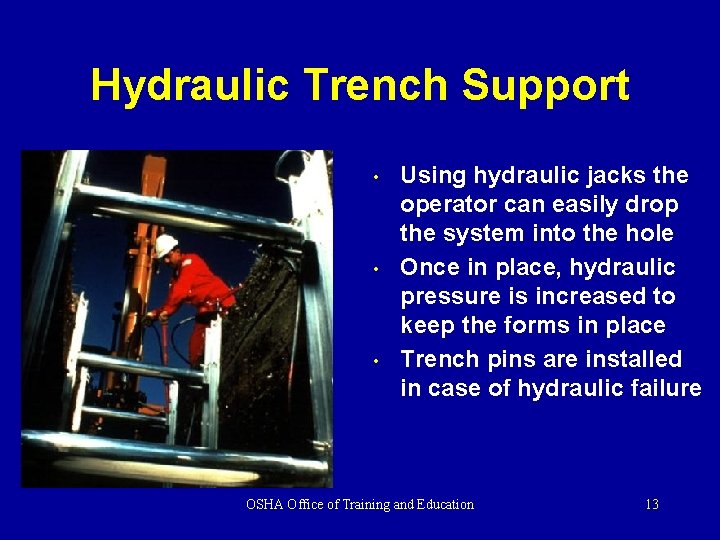
Hydraulic Trench Support • • • Using hydraulic jacks the operator can easily drop the system into the hole Once in place, hydraulic pressure is increased to keep the forms in place Trench pins are installed in case of hydraulic failure OSHA Office of Training and Education 13
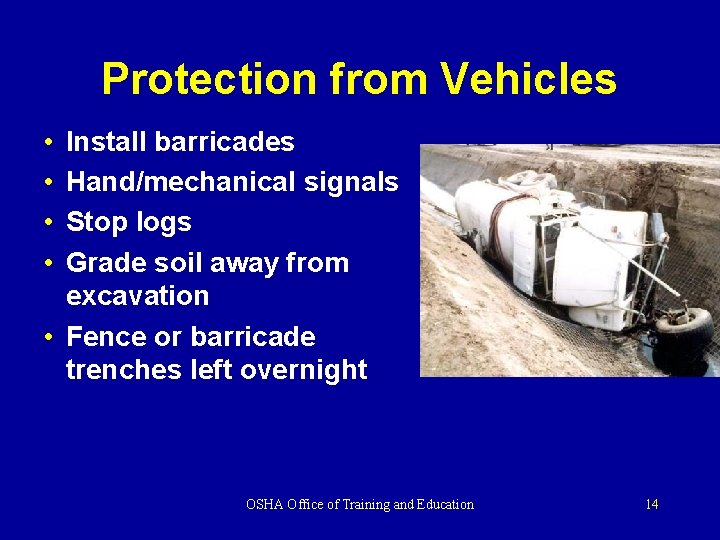
Protection from Vehicles • • Install barricades Hand/mechanical signals Stop logs Grade soil away from excavation • Fence or barricade trenches left overnight OSHA Office of Training and Education 14
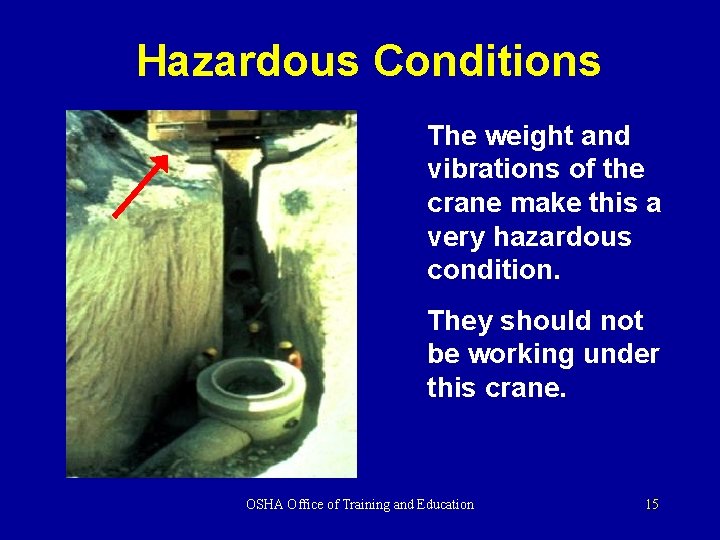
Hazardous Conditions The weight and vibrations of the crane make this a very hazardous condition. They should not be working under this crane. OSHA Office of Training and Education 15
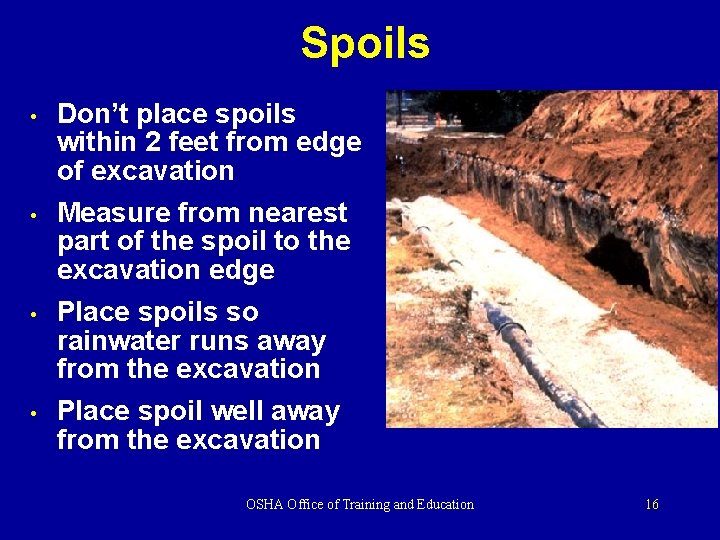
Spoils • Don’t place spoils within 2 feet from edge of excavation • Measure from nearest part of the spoil to the excavation edge • Place spoils so rainwater runs away from the excavation Place spoil well away from the excavation • OSHA Office of Training and Education 16
Other Excavation Hazards Water accumulation Oxygen deficiency Toxic fumes Access/Egress Falls Mobile equipment OSHA Office of Training and Education 17
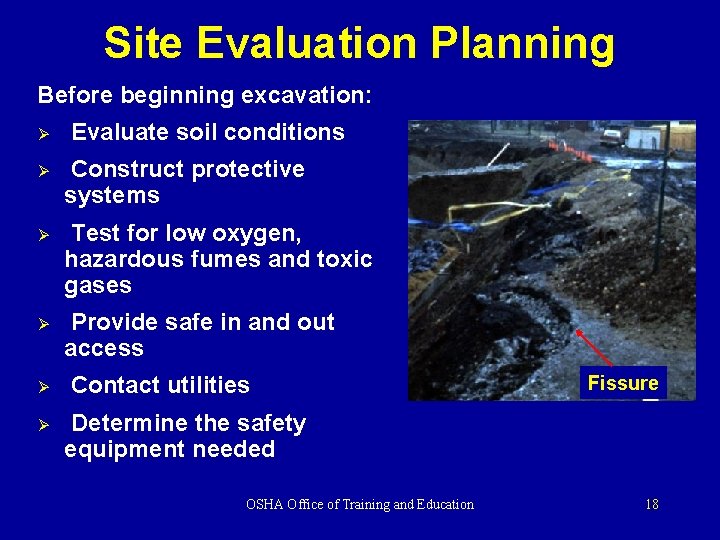
Site Evaluation Planning Before beginning excavation: Ø Evaluate soil conditions Ø Construct protective systems Ø Test for low oxygen, hazardous fumes and toxic gases Ø Provide safe in and out access Ø Ø Contact utilities Fissure Determine the safety equipment needed OSHA Office of Training and Education 18
Summary • The greatest risk in an excavation is a cave-in. • Employees can be protected through sloping, shielding, and shoring the excavation. • A competent person is responsible to inspect the excavation. • Other excavation hazards include water accumulation, oxygen deficiency, toxic fumes, falls, and mobile equipment. OSHA Office of Training and Education 19