
Safety Data Sheets Globally Harmonized System GHS Defining
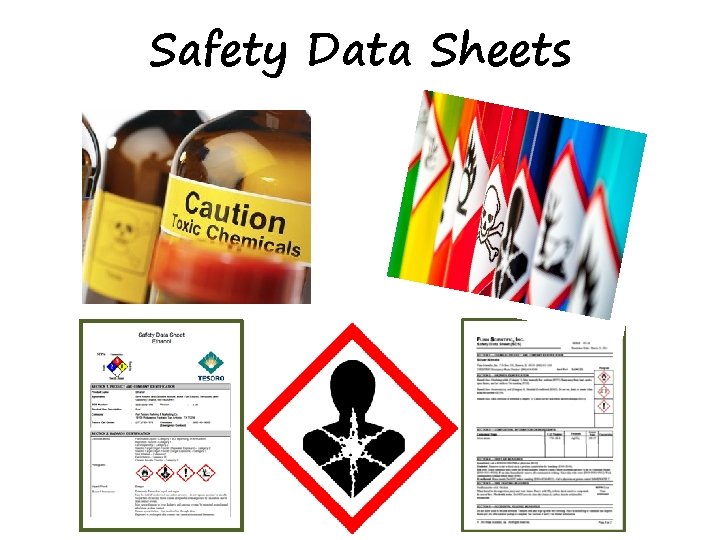
Safety Data Sheets
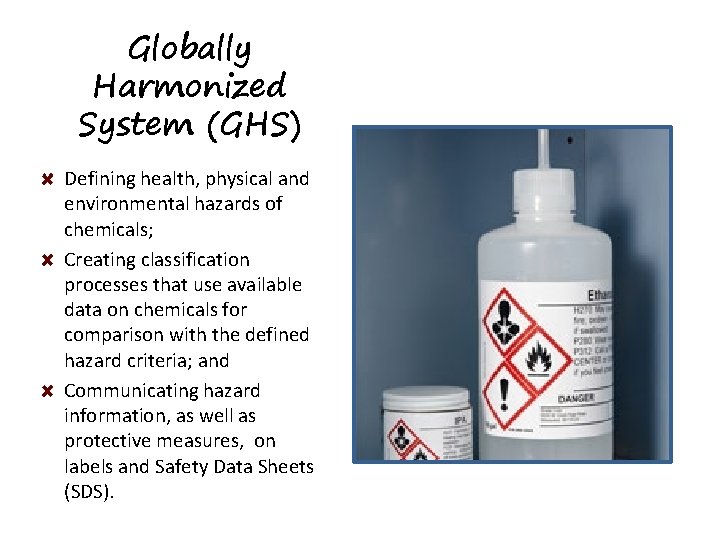
Globally Harmonized System (GHS) Defining health, physical and environmental hazards of chemicals; Creating classification processes that use available data on chemicals for comparison with the defined hazard criteria; and Communicating hazard information, as well as protective measures, on labels and Safety Data Sheets (SDS).
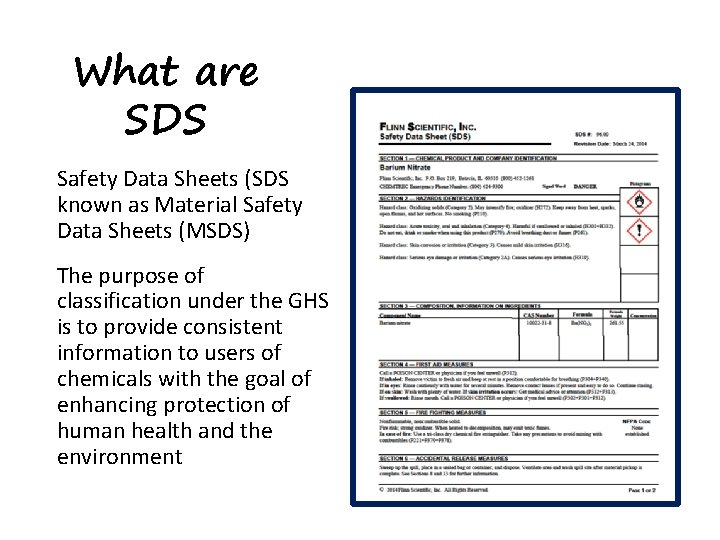
What are SDS Safety Data Sheets (SDS known as Material Safety Data Sheets (MSDS) The purpose of classification under the GHS is to provide consistent information to users of chemicals with the goal of enhancing protection of human health and the environment
Safety Data Sheets Old & New Yes MSDS are still valid All manufacturers were required and should have updated Safety Data Sheets by now (SDS)
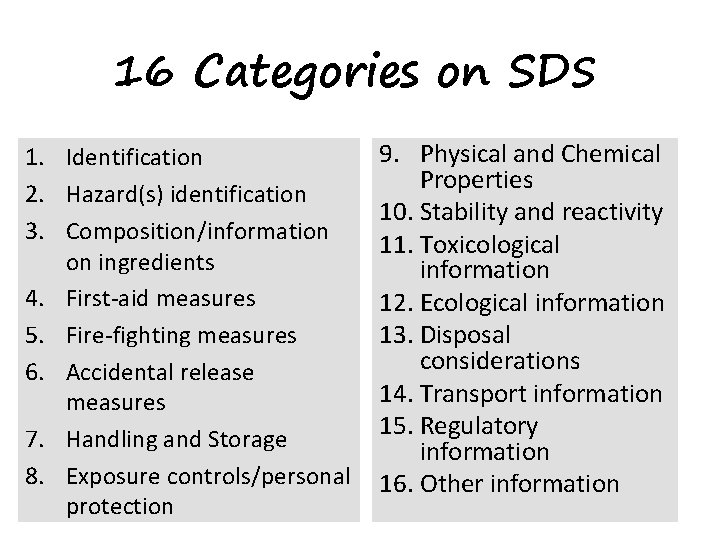
16 Categories on SDS 1. Identification 2. Hazard(s) identification 3. Composition/information on ingredients 4. First-aid measures 5. Fire-fighting measures 6. Accidental release measures 7. Handling and Storage 8. Exposure controls/personal protection 9. Physical and Chemical Properties 10. Stability and reactivity 11. Toxicological information 12. Ecological information 13. Disposal considerations 14. Transport information 15. Regulatory information 16. Other information
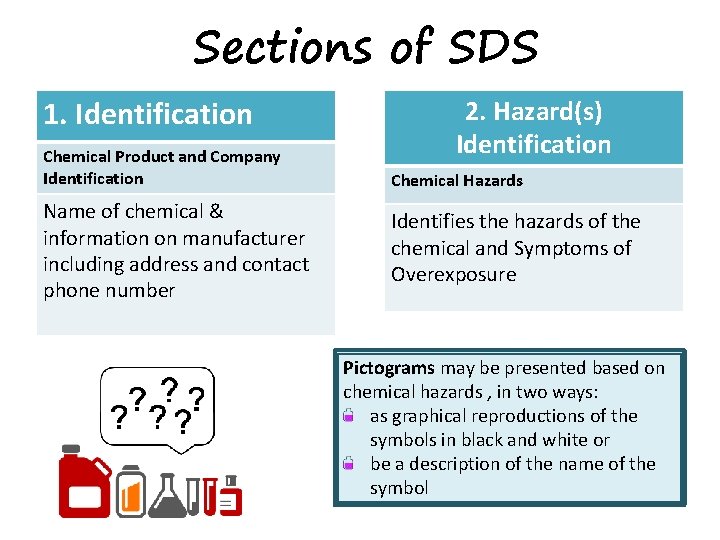
Sections of SDS 1. Identification Chemical Product and Company Identification Name of chemical & information on manufacturer including address and contact phone number 2. Hazard(s) Identification Chemical Hazards Identifies the hazards of the chemical and Symptoms of Overexposure Pictograms may be presented based on chemical hazards , in two ways: as graphical reproductions of the symbols in black and white or be a description of the name of the symbol
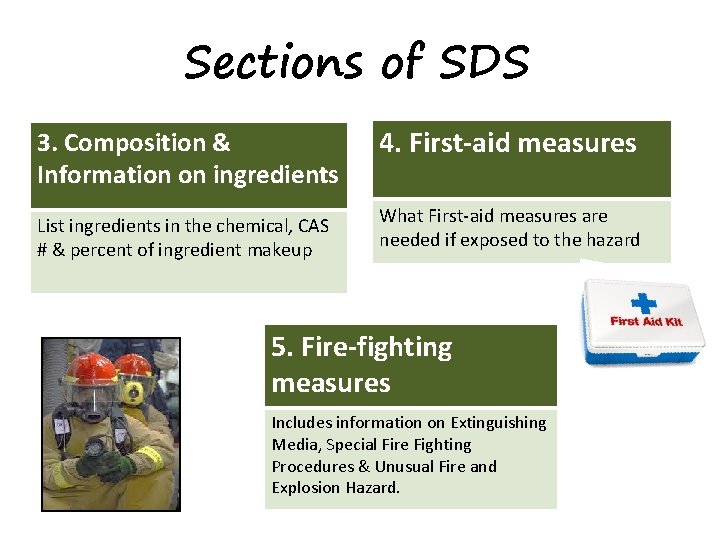
Sections of SDS 3. Composition & Information on ingredients List ingredients in the chemical, CAS # & percent of ingredient makeup 4. First-aid measures What First-aid measures are needed if exposed to the hazard 5. Fire-fighting measures Includes information on Extinguishing Media, Special Fire Fighting Procedures & Unusual Fire and Explosion Hazard.
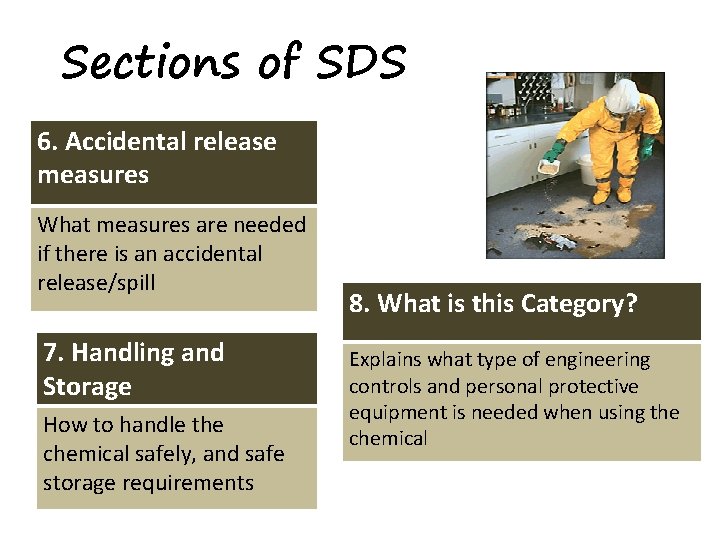
Sections of SDS 6. Accidental release measures What measures are needed if there is an accidental release/spill 7. Handling and Storage How to handle the chemical safely, and safe storage requirements 8. What is this Category? Explains what type of engineering controls and personal protective equipment is needed when using the chemical
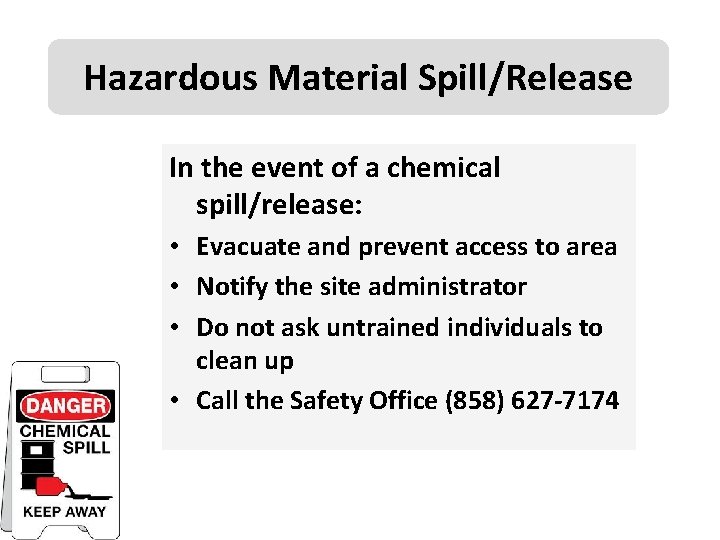
Hazardous Material Spill/Release In the event of a chemical spill/release: • Evacuate and prevent access to area • Notify the site administrator • Do not ask untrained individuals to clean up • Call the Safety Office (858) 627 -7174
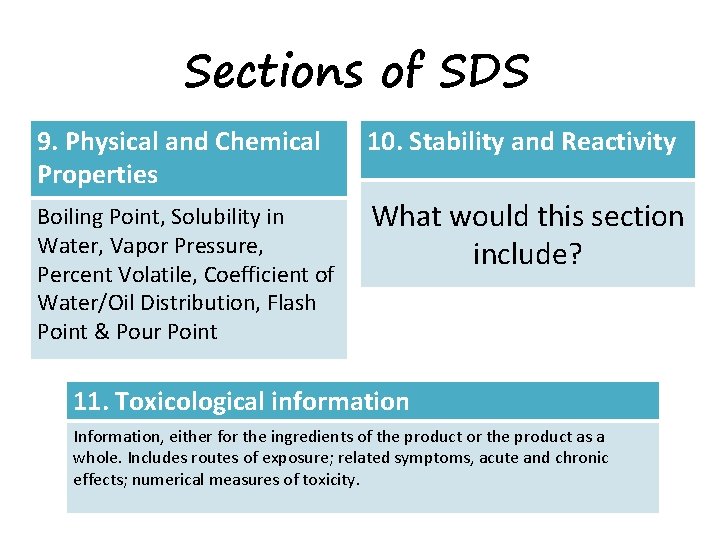
Sections of SDS 9. Physical and Chemical Properties 10. Stability and Reactivity Boiling Point, Solubility in Water, Vapor Pressure, Percent Volatile, Coefficient of Water/Oil Distribution, Flash Point & Pour Point What would this section include? 11. Toxicological information Information, either for the ingredients of the product or the product as a whole. Includes routes of exposure; related symptoms, acute and chronic effects; numerical measures of toxicity.
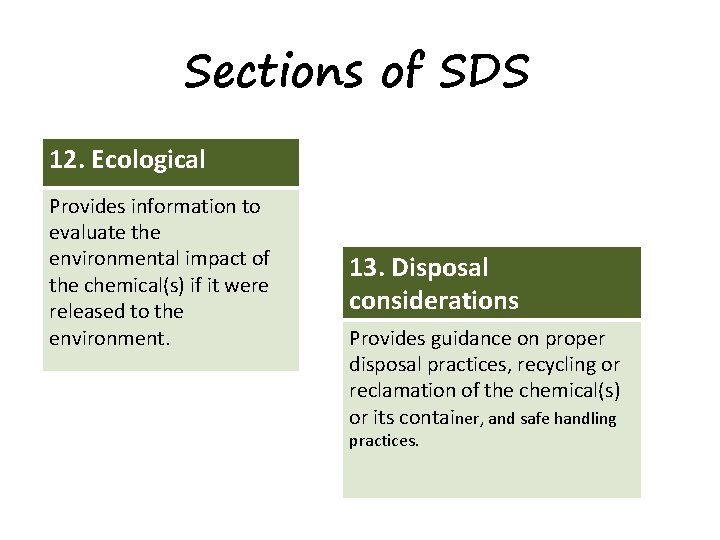
Sections of SDS 12. Ecological Provides information to evaluate the environmental impact of the chemical(s) if it were released to the environment. 13. Disposal considerations Provides guidance on proper disposal practices, recycling or reclamation of the chemical(s) or its container, and safe handling practices.
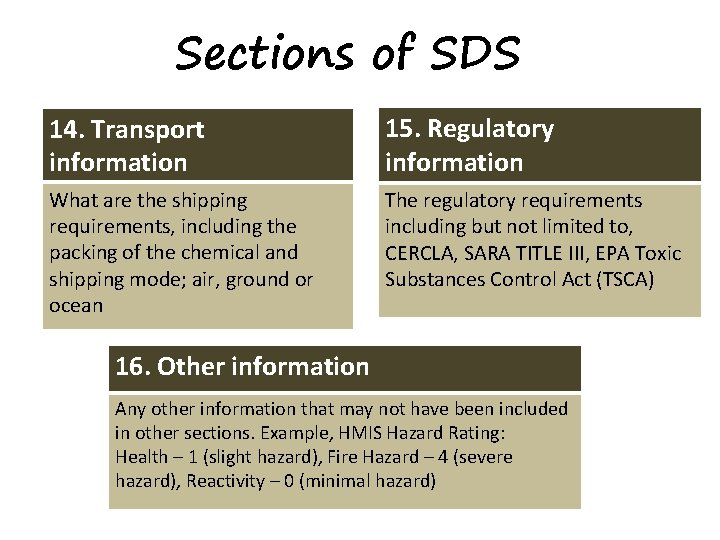
Sections of SDS 14. Transport information 15. Regulatory information What are the shipping requirements, including the packing of the chemical and shipping mode; air, ground or ocean The regulatory requirements including but not limited to, CERCLA, SARA TITLE III, EPA Toxic Substances Control Act (TSCA) 16. Other information Any other information that may not have been included in other sections. Example, HMIS Hazard Rating: Health – 1 (slight hazard), Fire Hazard – 4 (severe hazard), Reactivity – 0 (minimal hazard)
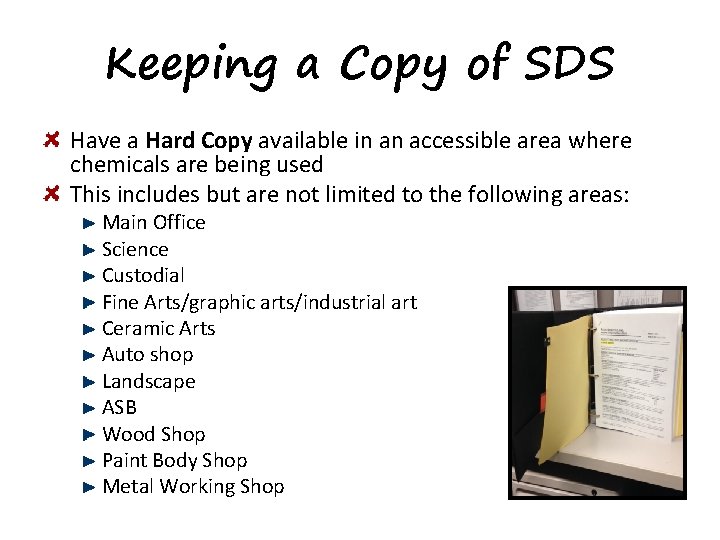
Keeping a Copy of SDS Have a Hard Copy available in an accessible area where chemicals are being used This includes but are not limited to the following areas: Main Office Science Custodial Fine Arts/graphic arts/industrial art Ceramic Arts Auto shop Landscape ASB Wood Shop Paint Body Shop Metal Working Shop
Helpful Links CA-OSHA Hazard Communication Standard 5194 http: //www. dir. ca. gov/title 8/5194 -May-62013. html Fed-OSHA detailed description on sections of Safety Data Sheets https: //www. osha. gov/Publications/OSHA 3514. html
Environmental Health & Safety Questions Visit our website https: //www. sandi. net/sta ff/safetymanagement Safety Office 858 -627 -7174
- Slides: 15