
Safety and First Aid 6 th Grade Accident


- Slides: 22
Safety and First Aid 6 th Grade
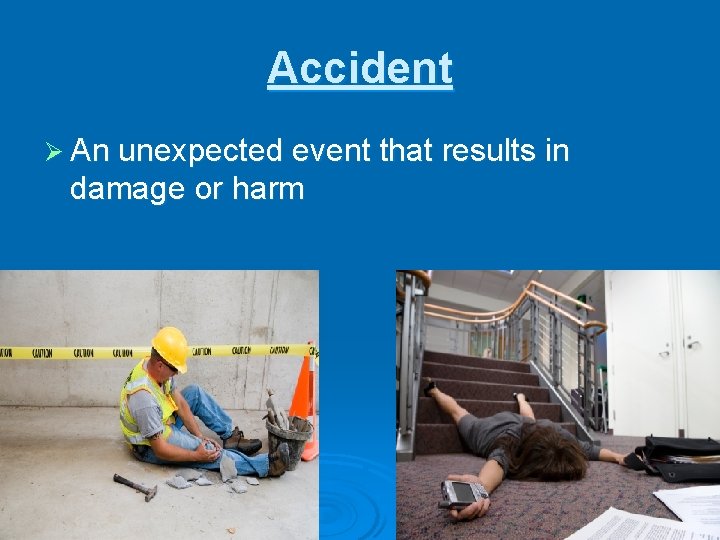
Accident Ø An unexpected event that results in damage or harm
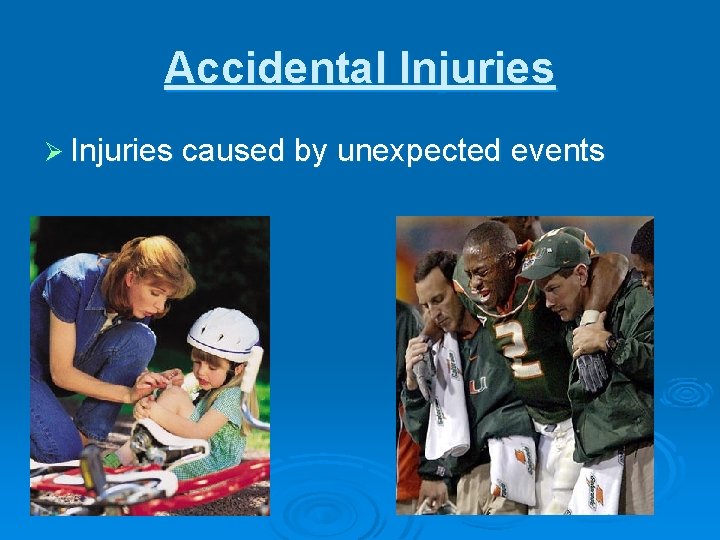
Accidental Injuries Ø Injuries caused by unexpected events
Accident Chain Ø A sequence of events that often leads to an accidental injury
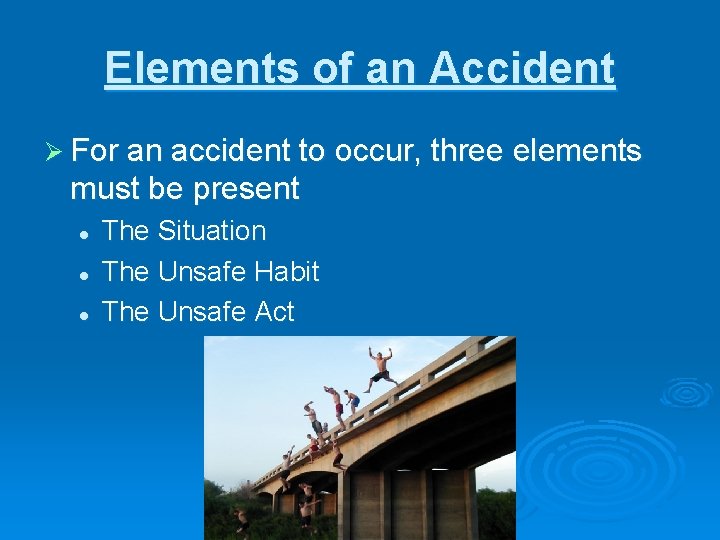
Elements of an Accident Ø For an accident to occur, three elements must be present l l l The Situation The Unsafe Habit The Unsafe Act
First Aid Ø The care given to an injured or ill person until regular medical care can be supplied.
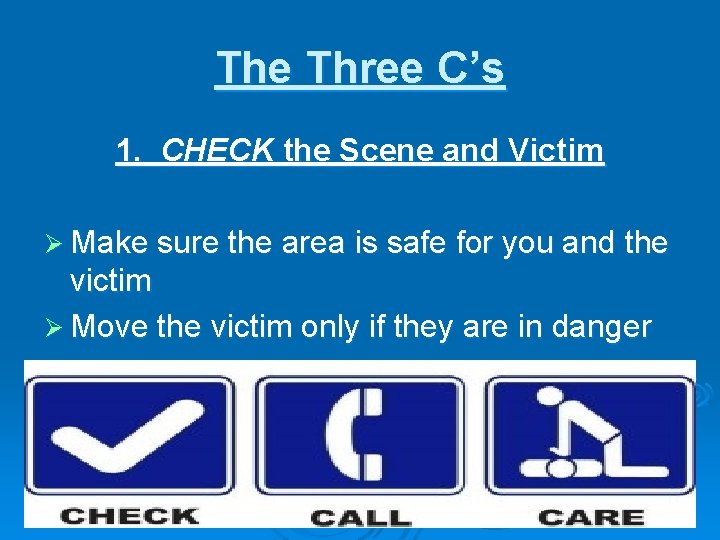
The Three C’s 1. CHECK the Scene and Victim Ø Make sure the area is safe for you and the victim Ø Move the victim only if they are in danger
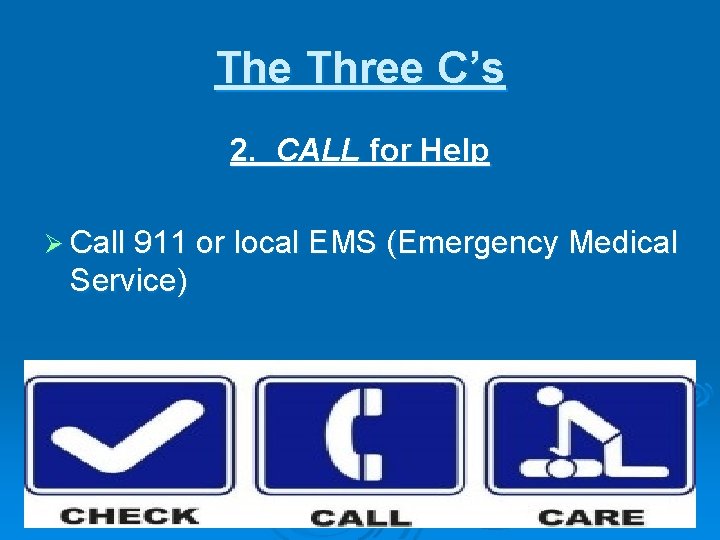
The Three C’s 2. CALL for Help Ø Call 911 or local EMS (Emergency Medical Service)
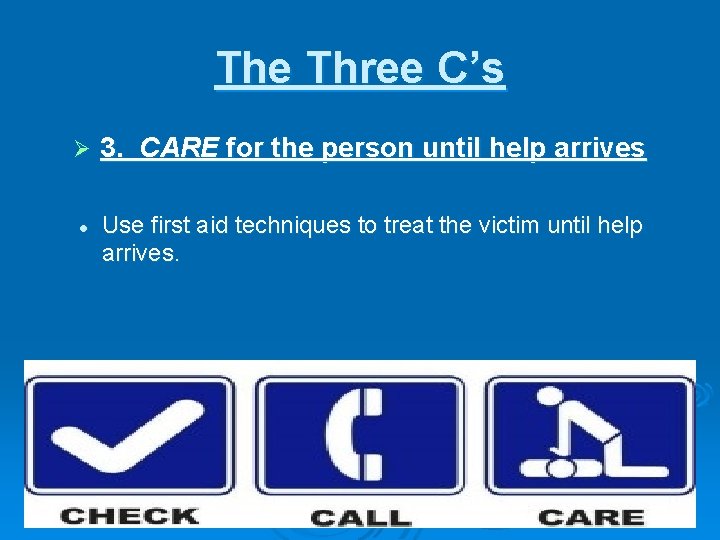
The Three C’s Ø l 3. CARE for the person until help arrives Use first aid techniques to treat the victim until help arrives.
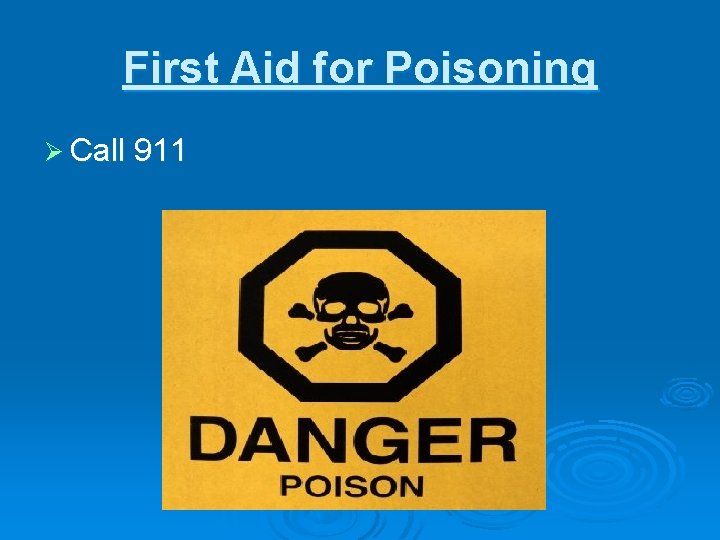
Life-Threatening Emergencies 1. 2. 3. 4. 5. 6. The person has stopped breathing The person has no heartbeat The person is bleeding severely The person is choking The person has swallowed poison The person has been severely burned
First Aid for Severe Bleeding Ø Wear gloves if possible and wash you hands after Ø Sit or lay the victim down Ø Elevate the wound above the heart Ø Apply direct pressure with a clean cloth Ø Wrap the wound Ø Apply pressure to the artery Ø Get them professional treatment
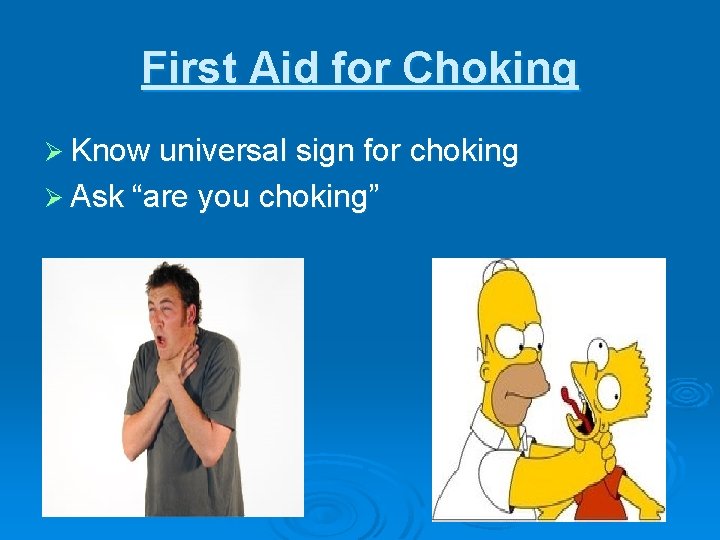
First Aid for Choking Ø Know universal sign for choking Ø Ask “are you choking”
First Aid for Choking Ø Use abdominal thrusts- upward pulls into the diaphragm to force out the object blocking the airway.
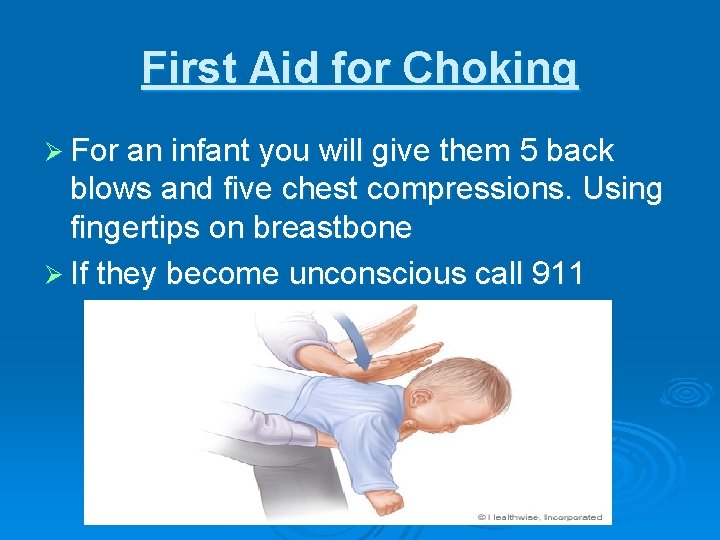
First Aid for Choking Ø For an infant you will give them 5 back blows and five chest compressions. Using fingertips on breastbone Ø If they become unconscious call 911
First Aid for Poisoning Ø Call 911
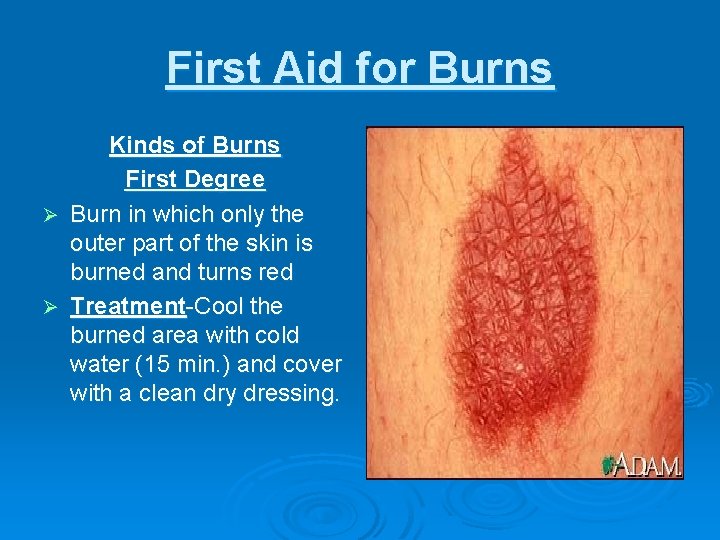
First Aid for Burns Kinds of Burns First Degree Ø Burn in which only the outer part of the skin is burned and turns red Ø Treatment-Cool the burned area with cold water (15 min. ) and cover with a clean dry dressing.
First Aid for Burns Second Degree Ø A serious burn in which the damaged area blisters or peels. Ø Treatment-Cool the burned area with cold water (15 min. ) and elevate. Wrap loosely with clean dry dressing. DO NOT POP BLISTERS!
First Aid for Burns Third Degree Ø A very serious burn in which deep layers of skin and nerve endings are damaged. Ø Treatment-Cool the burned area with cold water as best as you can. Call 911 immediately.
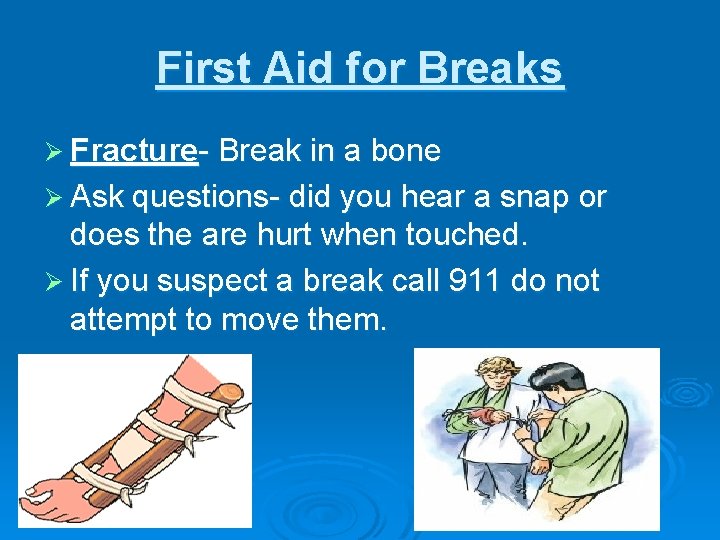
First Aid for Breaks Ø Fracture- Break in a bone Ø Ask questions- did you hear a snap or does the are hurt when touched. Ø If you suspect a break call 911 do not attempt to move them.
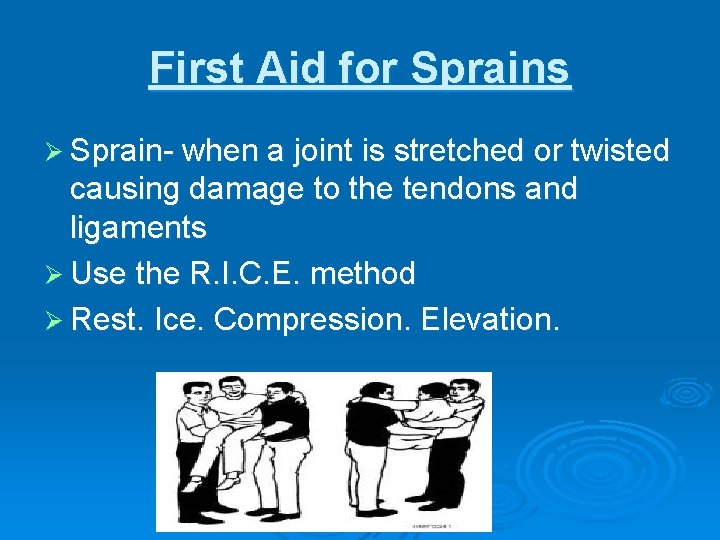
First Aid for Sprains Ø Sprain- when a joint is stretched or twisted causing damage to the tendons and ligaments Ø Use the R. I. C. E. method Ø Rest. Ice. Compression. Elevation.
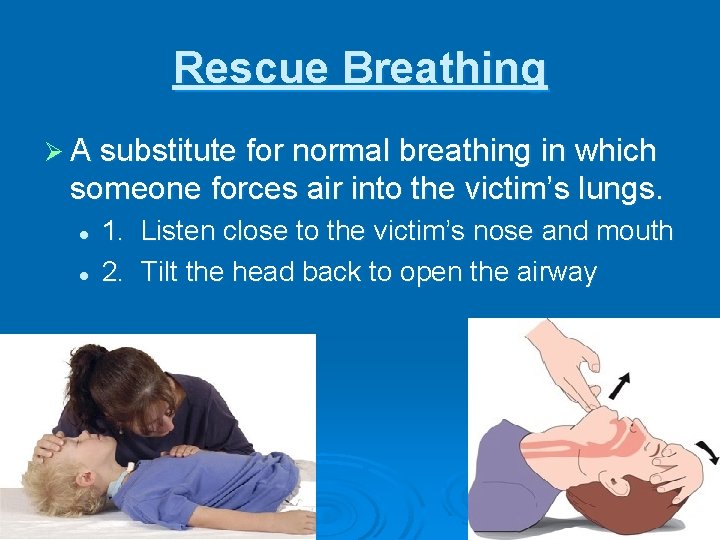
Rescue Breathing Ø A substitute for normal breathing in which someone forces air into the victim’s lungs. l l 1. Listen close to the victim’s nose and mouth 2. Tilt the head back to open the airway
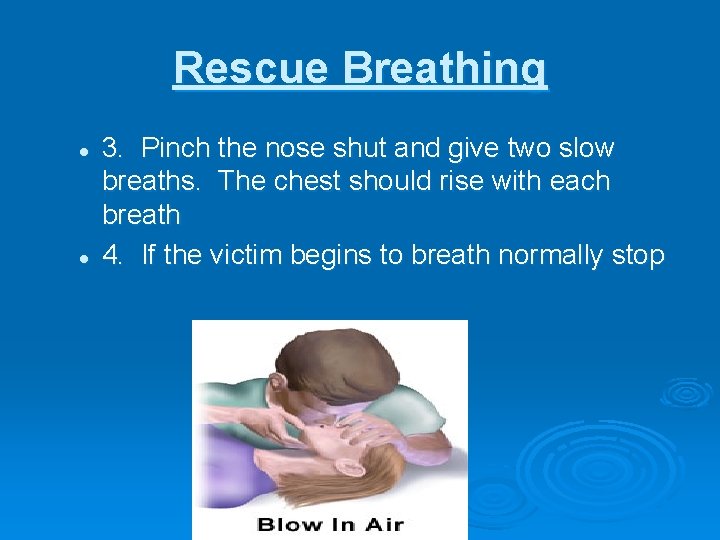
Rescue Breathing l l 3. Pinch the nose shut and give two slow breaths. The chest should rise with each breath 4. If the victim begins to breath normally stop