
Safety Accidents happen because people Lose their concentration
Safety
Accidents happen because people: • Lose their concentration. • Do not practice safe operating procedures. • Feel overconfident and lose their respect for the machine.
General Safety Rules: • Safety glasses/goggles must be worn at all times. • All work must be approved by the teacher. • Restrain long hair and loose items when in the shop. • Do not operate equipment you do not know how to use. • Immediately report accidents and report all accidents no matter how small. • Clean up spills and scrap materials immediately. • Report damaged/malfunctioned tools and equipment to the teacher. • Make sure equipment is adjusted for your body, especially computers. • Always maintain good behavior and judgment while in the lab. • You should always cut away from yourself when using sharp edged tools. • Only one person in the safety zone. The safety zone is the area where only the operator is allowed. • You are too close to someone if you are in the safety zone.
General Safety Rules (continued): • Keep aisles and work area clear of materials and tools. • You should know and practice emergency procedures. • Oily rags should be stored in an metal, lidded container. • All flammable material should be stored in a flammables cabinet. • When moving anything large take care while lifting. • After considering the physical demands of an operation one should use a helper if necessary. • Do not allow tools to overhang the workbench or tool rack. • Report anyone working in a lab who is under the influence of drugs/alcohol. • Avoid lab work if you have taken medication. • Take a break every hour while working on a computer. • Cooperate with classmates.
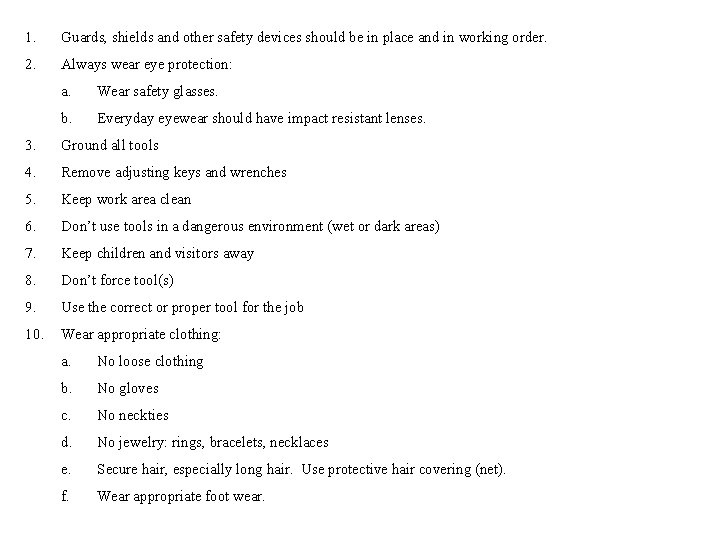
1. Guards, shields and other safety devices should be in place and in working order. 2. Always wear eye protection: a. Wear safety glasses. b. Everyday eyewear should have impact resistant lenses. 3. Ground all tools 4. Remove adjusting keys and wrenches 5. Keep work area clean 6. Don’t use tools in a dangerous environment (wet or dark areas) 7. Keep children and visitors away 8. Don’t force tool(s) 9. Use the correct or proper tool for the job 10. Wear appropriate clothing: a. No loose clothing b. No gloves c. No neckties d. No jewelry: rings, bracelets, necklaces e. Secure hair, especially long hair. Use protective hair covering (net). f. Wear appropriate foot wear.
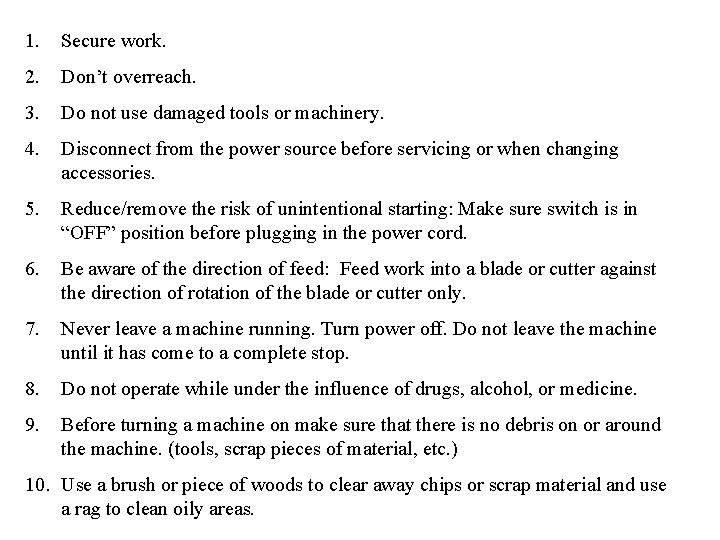
1. Secure work. 2. Don’t overreach. 3. Do not use damaged tools or machinery. 4. Disconnect from the power source before servicing or when changing accessories. 5. Reduce/remove the risk of unintentional starting: Make sure switch is in “OFF” position before plugging in the power cord. 6. Be aware of the direction of feed: Feed work into a blade or cutter against the direction of rotation of the blade or cutter only. 7. Never leave a machine running. Turn power off. Do not leave the machine until it has come to a complete stop. 8. Do not operate while under the influence of drugs, alcohol, or medicine. 9. Before turning a machine on make sure that there is no debris on or around the machine. (tools, scrap pieces of material, etc. ) 10. Use a brush or piece of woods to clear away chips or scrap material and use a rag to clean oily areas.
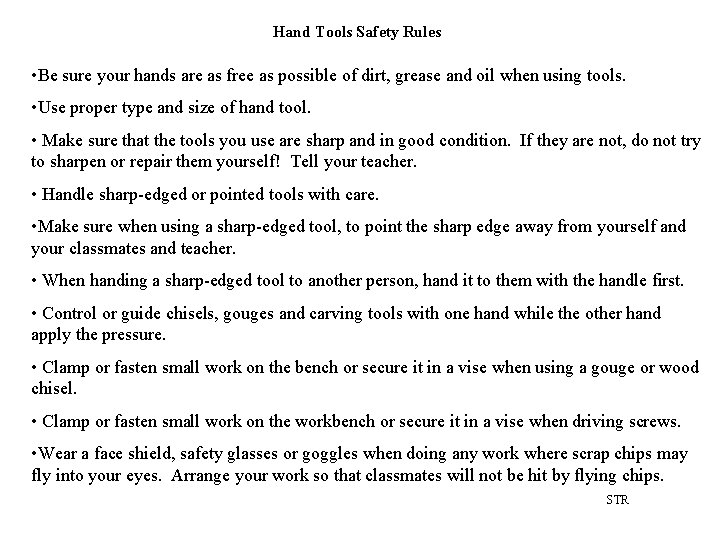
Hand Tools Safety Rules • Be sure your hands are as free as possible of dirt, grease and oil when using tools. • Use proper type and size of hand tool. • Make sure that the tools you use are sharp and in good condition. If they are not, do not try to sharpen or repair them yourself! Tell your teacher. • Handle sharp-edged or pointed tools with care. • Make sure when using a sharp-edged tool, to point the sharp edge away from yourself and your classmates and teacher. • When handing a sharp-edged tool to another person, hand it to them with the handle first. • Control or guide chisels, gouges and carving tools with one hand while the other hand apply the pressure. • Clamp or fasten small work on the bench or secure it in a vise when using a gouge or wood chisel. • Clamp or fasten small work on the workbench or secure it in a vise when driving screws. • Wear a face shield, safety glasses or goggles when doing any work where scrap chips may fly into your eyes. Arrange your work so that classmates will not be hit by flying chips. STR
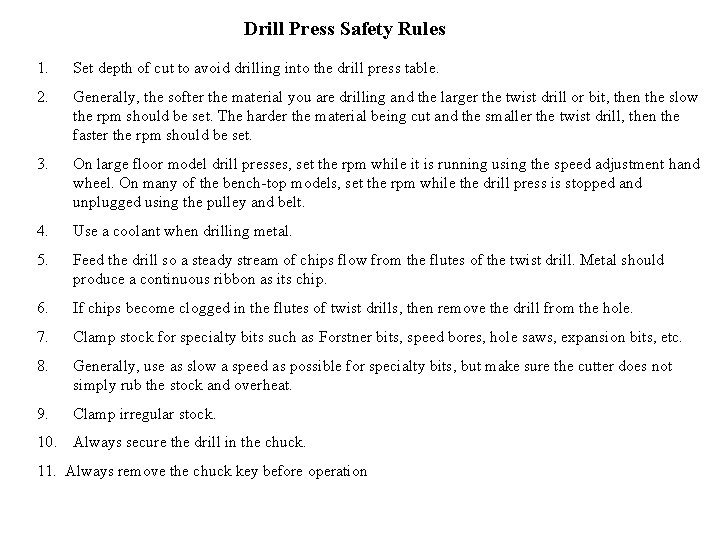
Drill Press Safety Rules 1. Set depth of cut to avoid drilling into the drill press table. 2. Generally, the softer the material you are drilling and the larger the twist drill or bit, then the slow the rpm should be set. The harder the material being cut and the smaller the twist drill, then the faster the rpm should be set. 3. On large floor model drill presses, set the rpm while it is running using the speed adjustment hand wheel. On many of the bench-top models, set the rpm while the drill press is stopped and unplugged using the pulley and belt. 4. Use a coolant when drilling metal. 5. Feed the drill so a steady stream of chips flow from the flutes of the twist drill. Metal should produce a continuous ribbon as its chip. 6. If chips become clogged in the flutes of twist drills, then remove the drill from the hole. 7. Clamp stock for specialty bits such as Forstner bits, speed bores, hole saws, expansion bits, etc. 8. Generally, use as slow a speed as possible for specialty bits, but make sure the cutter does not simply rub the stock and overheat. 9. Clamp irregular stock. 10. Always secure the drill in the chuck. 11. Always remove the chuck key before operation
Band Saw Safety Rules 1. Never get fingers close to the blade. 2. Use a push stick for close cuts. 3. Use relief cuts for long irregular cuts. 4. Always keep the blade guards in place. 5. Use a wood blade for wood and a metal blade for metal. 6. Keep the blade guard that protects the fingers and steadies the blade at a height that will not allow the “pinky” finger to slide under and contact the blade. 7. Check the blade tension with a piece of wood. 8. Check the blade tracking by observing the blade position in the guide blocks and bearing and by finally pulsing the machine. Check the throat plate clearance. 9. Do not reach behind the blade. 10. Never operate the machine without the guards in place. 11. Never stand to the right of the saw where the blade could come out if broken.

Belt and Disk Sander Safety 1. Only use the down side of the disk sander. 2. Only abrade metal on a sander that has been used for sanding wood, then you may create a fire safety hazard because the metal will create sparks that can ignite wood dust. 3. Never dig corners of stock into the belt or disk. 4. Always use the support of the backstops or sanding tables. 5. Do not abrade small stock; you could get your fingers caught by the disk or belt. 6. Do not bear down on the abrasives. This will help you to avoid tearing the belt or disk, and tearing could cause injury. 7. Before using the machine, make sure the belt is tracking properly and the disc is adhered well. 8. No more than one person may use the machine at a time. Often sanding machines have both a belt and disk, but only one person may use the entire machine at a time.
Safety Colors RED • Fire protection equipment and apparatus. Extinguishers. Hose pump locations. Hydrants. • Stop. Emergency stop bars on hazardous machines such as rubber mills, wire blocks, flat work ironers, etc. , shall be red. Stop buttons or electrical switches which letters or other markings appear, used for emergency stopping of machinery shall be red. • Danger. Safety cans or other portable containers of flammable liquids • EXIT SIGNS

Safety Colors Yellow= Caution • Yellow shall be the basic color for designating caution and for marking physical hazards such as: Striking against, stumbling, falling, tripping, and "caught in between. " • Hand rails, guard rails • Exposed edges of platforms and curbs • Pillars and posts, low beams, columns, doorway projections • FORK LIFTS • PULLEY BLOCKS AND CRANES • CONVEYORS • CAUTION SIGNS
Safety Colors Orange ORANGE = DANGEROUS MACHINERY PARTS (WHICH MAY CUT, CRUSH OR SHOCK) • EXPOSED PARTS OF PULLEYS • GEARS • ROLLERS • CUTTING DEVICES • POWER JAWS • SAFETY STARTING BUTTONS • INSIDE OF MOVABLE GUARDS • ELECTRICAL SWITCH BOXES • FUSE BOXES
Safety Colors Blue BLUE = WARNING AGAINST STARTING, OR MOVING EQUIPMENT UNDER REPAIRS • LADDERS • SCAFFOLDING • ELECTRICAL CONTROLS • ELEVATOR STARTING CONTROLS • BOILERS • DRYERS • MACHINERY, ETC.
Safety Colors Green GREEN = SAFETY DESIGNATES LOCATION OF: • FIRST AID DISPENSERS • FIRST AID KITS • GAS MASKS • STRETCHER • SAFETY SHOWERS • OTHER SAFETY EQUIPMENT • SAFETY INSTRUCTION SIGNS
Safety Colors Purple= radiation hazard
Safety Colors Green GREEN = SAFETY DESIGNATES LOCATION OF: • FIRST AID DISPENSERS • FIRST AID KITS • GAS MASKS • STRETCHER • SAFETY SHOWERS • OTHER SAFETY EQUIPMENT • SAFETY INSTRUCTION SIGNS
Safety Colors Yellow or Orange YELLOW OR ORANGE - DANGEROUS MATERIALS • FLAMMABLE LIQUIDS GASOLINE, NAPHTHA, FUEL OIL, ETC. • POISONOUS GASES CHLORINE GAS, AMMONIA, SULPHUR DIOXIDE, ETC. • CORROSIVE LIQUIDS ACIDS, ALKALIS • STEAM, WATER, OR AIR AT HIGH TEMPERATURES AND PRESSURES.
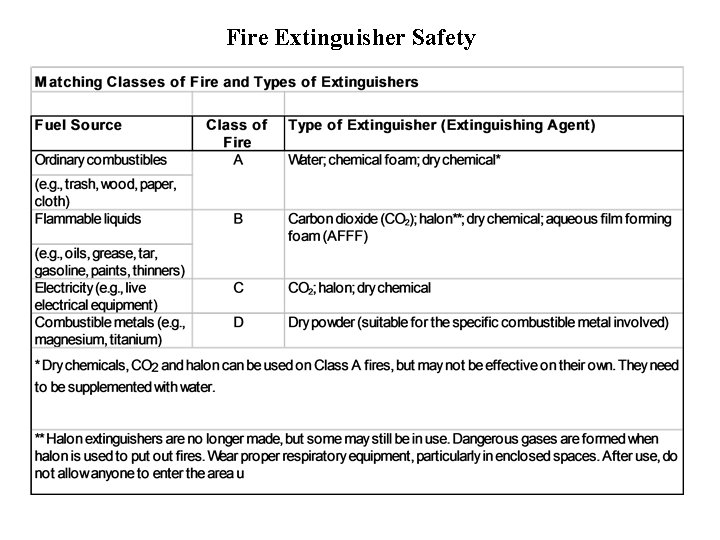
Fire Extinguisher Safety
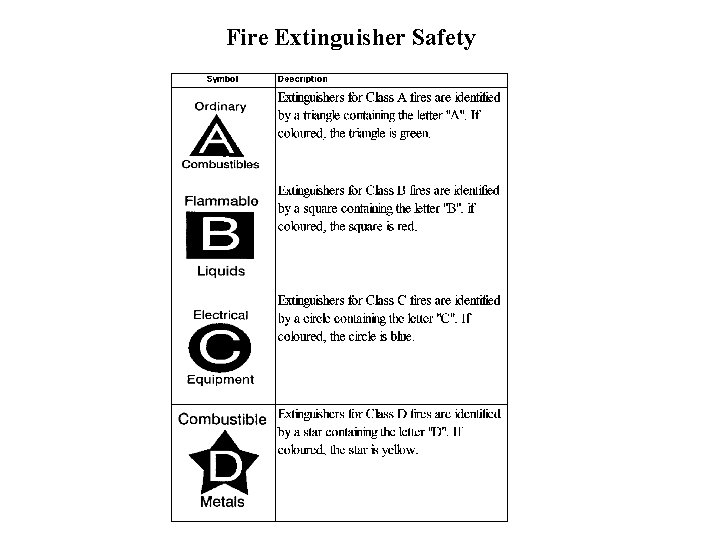
Fire Extinguisher Safety
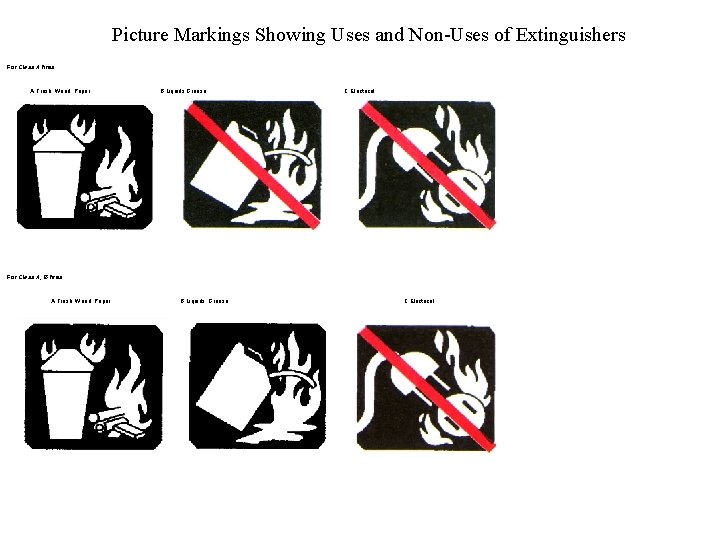
Picture Markings Showing Uses and Non-Uses of Extinguishers For Class A fires A Trash, Wood, Paper B Liquids, Grease C Electrical For Class A, B fires A Trash, Wood, Paper B Liquids, Grease C Electrical
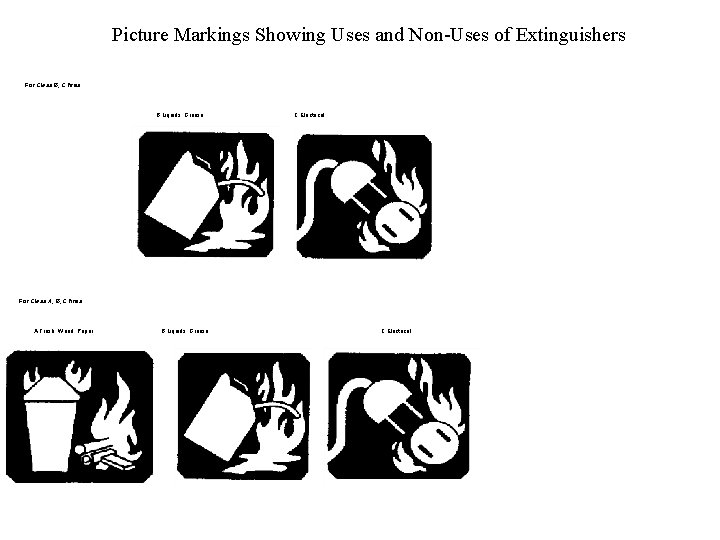
Picture Markings Showing Uses and Non-Uses of Extinguishers For Class B, C fires B Liquids, Grease C Electrical For Class A, B, C fires A Trash, Wood, Paper B Liquids, Grease C Electrical
Safety Organizations • Occupational Safety and Health Administration (OSHA) regulations mandate the kinds of safety that apply to a wide range of workplaces. • The National Institute for Occupational Safety and Health is organizations in which researchers identify causes of and develop programs to prevent injuries and fatalities in the construction industry. Areas cover examples like Asphalt, carbon monoxide electrocutions, lead poisoning and traffic/motor vehicle related injuries. • There a number of other organizations that are related to safety in the workplace like the American Society of Civil Engineers (ASCE), the American Public Works Association (APWA) and the Associated General Contractors of America (AGC). STR
Have the students complete a report on safety in the workplace. Use the links below as starting points. • Occupational Safety & Health Administration, www. osha. gov • National Institute for Occupational Safety and Health, www. cdc. gov/niosh • Electronic Library of construction occupational safety and health, www. cdc. gov/niosh/elcosh Str

Resource/Handouts for students
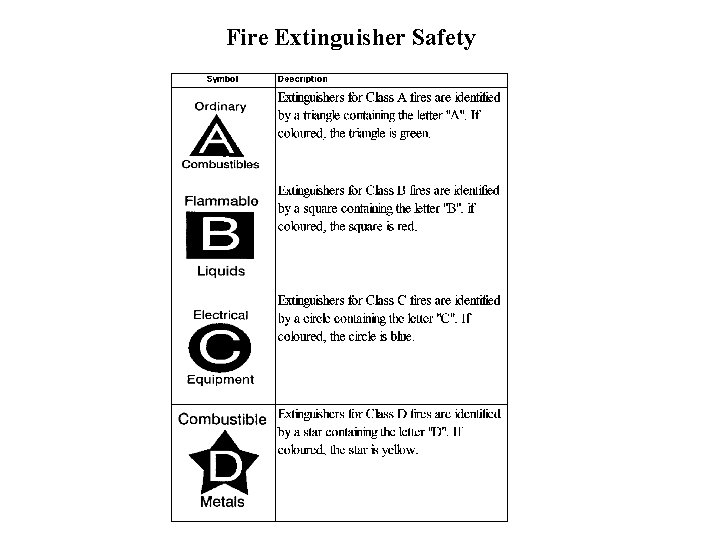
Fire Extinguisher Safety
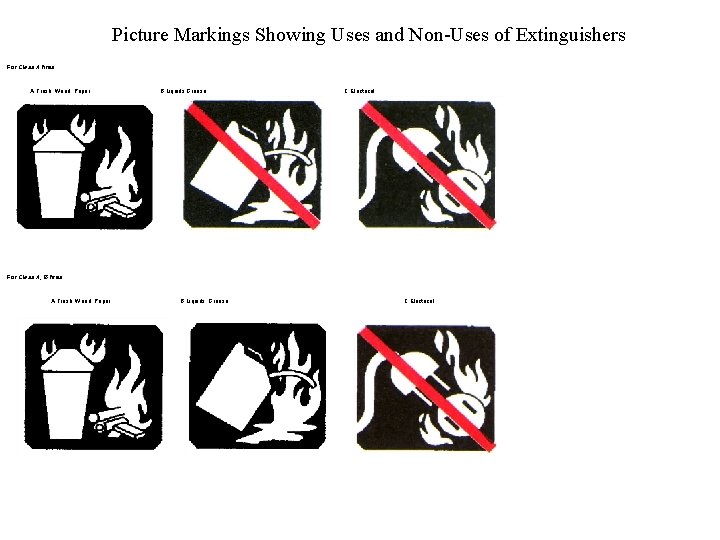
Picture Markings Showing Uses and Non-Uses of Extinguishers For Class A fires A Trash, Wood, Paper B Liquids, Grease C Electrical For Class A, B fires A Trash, Wood, Paper B Liquids, Grease C Electrical
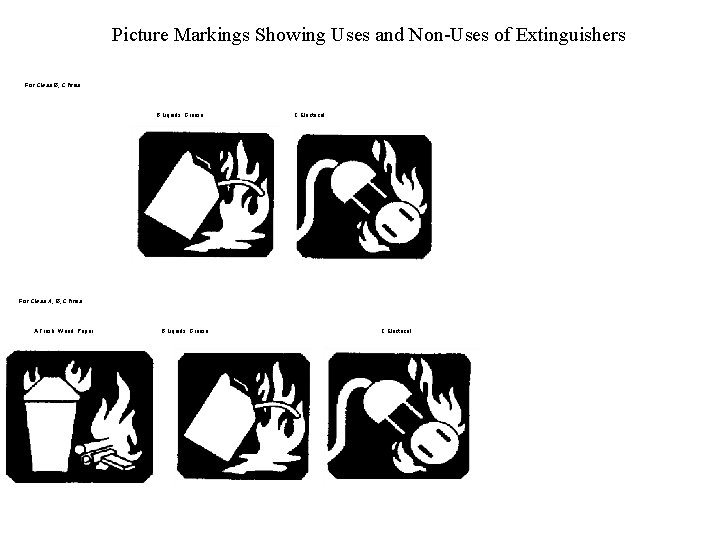
Picture Markings Showing Uses and Non-Uses of Extinguishers For Class B, C fires B Liquids, Grease C Electrical For Class A, B, C fires A Trash, Wood, Paper B Liquids, Grease C Electrical
Fire Extinguisher Safety
- Slides: 29