
Safer Needle Devices Protecting Health Care Workers Purpose
- Slides: 43
Safer Needle Devices: Protecting Health Care Workers
Purpose of this Presentation: • Update statistics • Define and discuss safer needle devices • Examine OSHA’s position on the use of safer needle devices
The Pattern of Needlestick Injuries • • Who? What? Where? When?
800, 000 Needlestick Injuries Occur Each Year in the United States
Needlestick Injuries Are Costly: • Time and money to investigated the source • Post-exposure care • Lost work time and productivity • Treatment of resulting illnesses • Workers’ lives
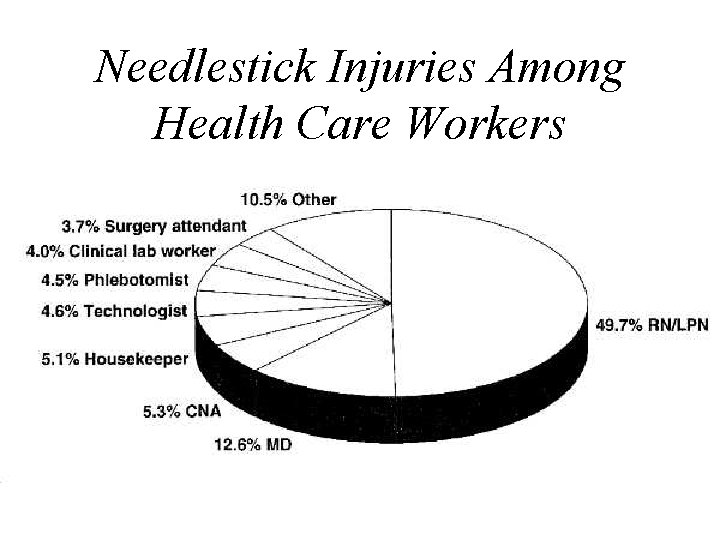
Who Is Injured Most Frequently?
Needlestick Injuries Among Health Care Workers
Underreporting Reasons • Lack of time • Employer response • Concern about HIV status
What Types of Devices Are Most Commonly Involved in Needlestick Injuries?
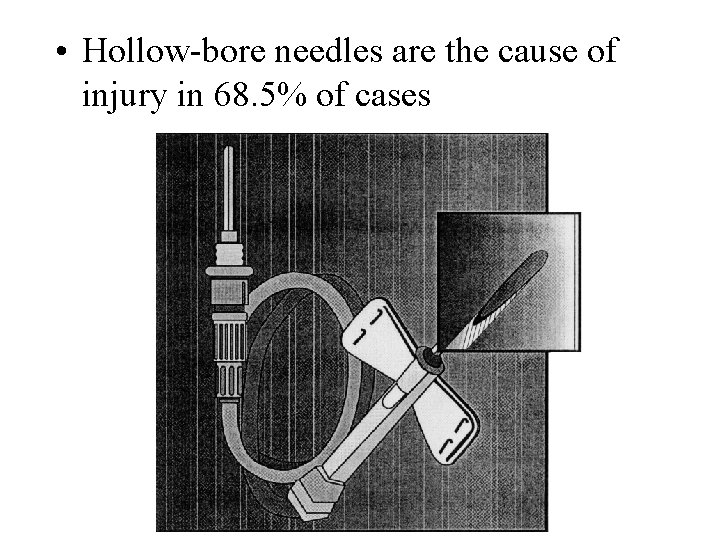
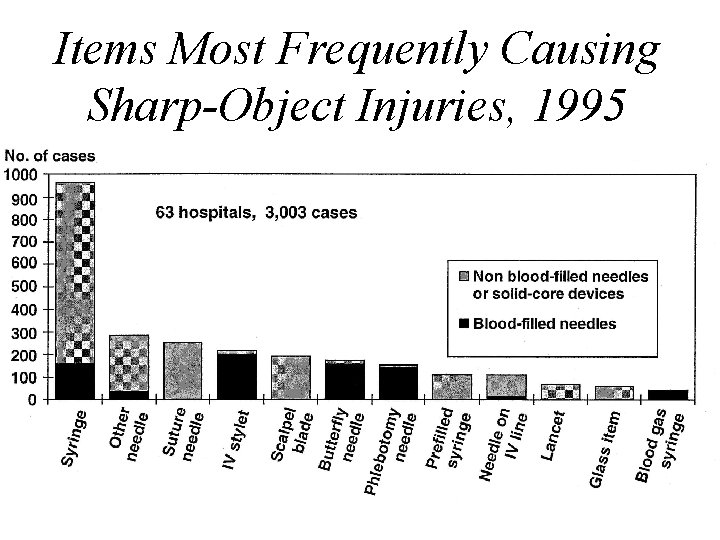
• Hollow-bore needles are the cause of injury in 68. 5% of cases
Items Most Frequently Causing Sharp-Object Injuries, 1995
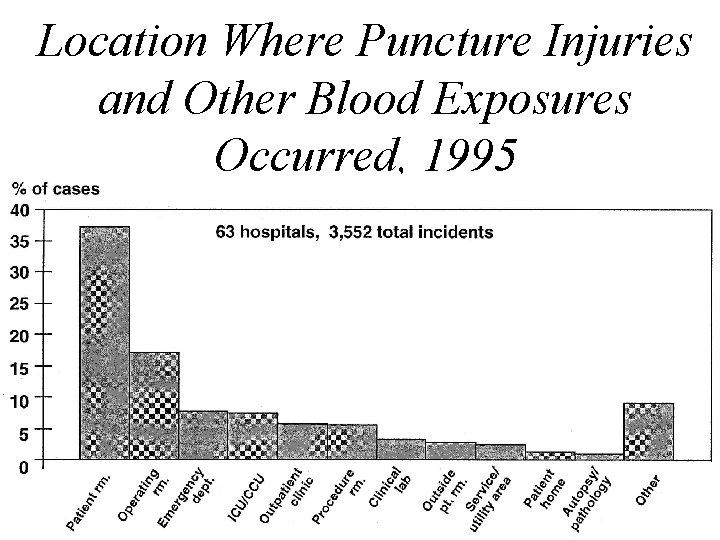
Where Do Most Needlestick Injuries Occur?
Location Where Puncture Injuries and Other Blood Exposures Occurred, 1995
Which Tasks Involve the Most Injuries?
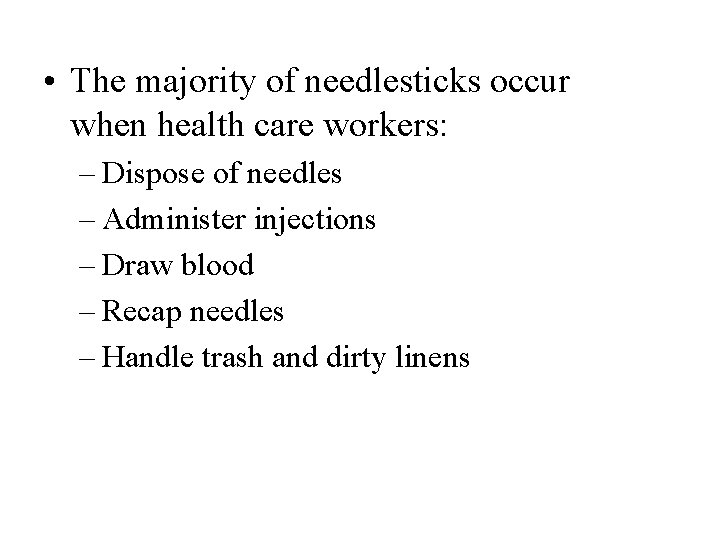
• The majority of needlesticks occur when health care workers: – Dispose of needles – Administer injections – Draw blood – Recap needles – Handle trash and dirty linens
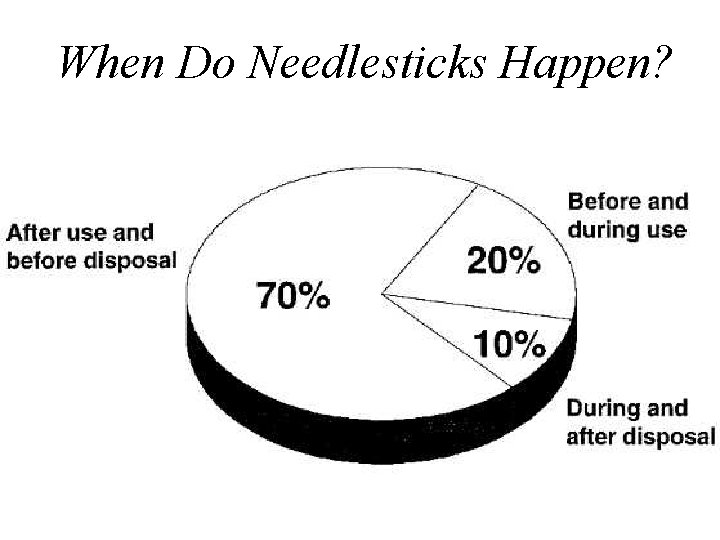
When Do Needlesticks Happen?
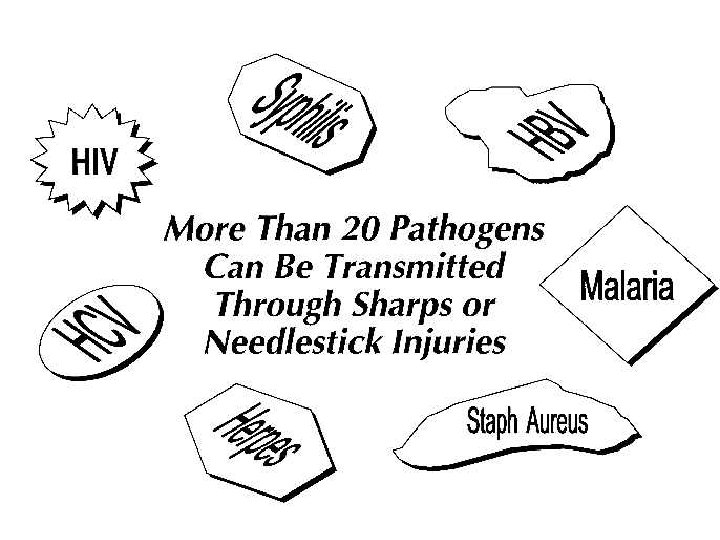
How Serious a Threat Are Needlestick Injuries to Health Care Workers?
800, 000 Needlestick Injuries Occur Each Year in the United States
16, 000 of These Are Likely to Be Contaminated by HIV
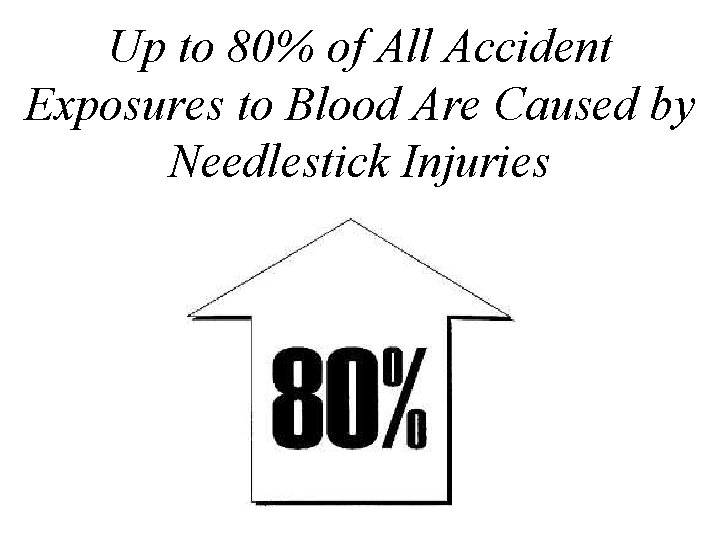
Up to 80% of All Accident Exposures to Blood Are Caused by Needlestick Injuries
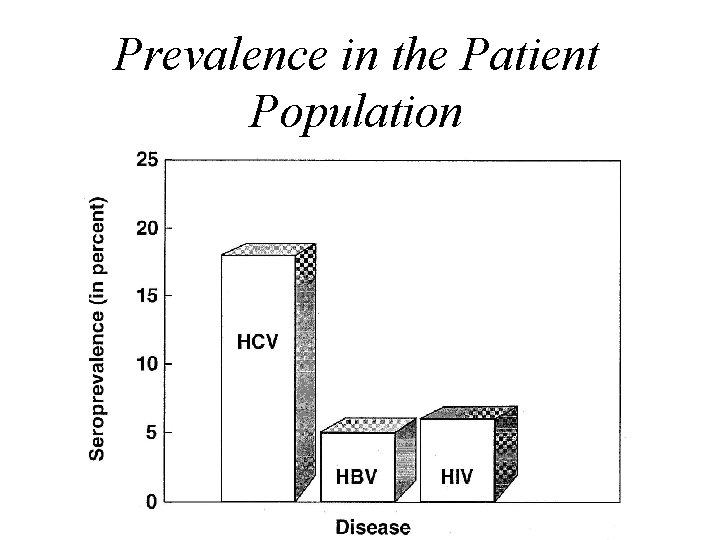
HBV and HCV Pose an Even Greater Risk Then HIV
Prevalence in the Patient Population
Occupational Risk of Hepatitis B: • Much more transmissible than HIV • Risk after needlestick: 2% - 40% • 1994 - 1000 health care workers developed HBV infection • Approximately 200 HCWs die each year
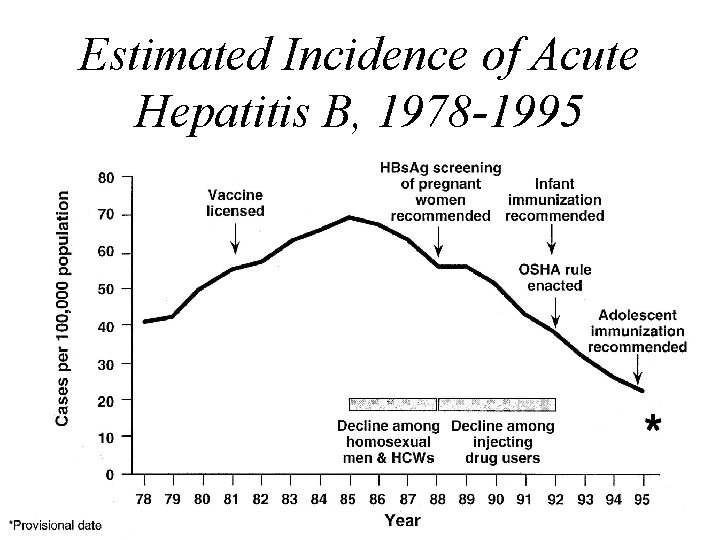
Estimated Incidence of Acute Hepatitis B, 1978 -1995
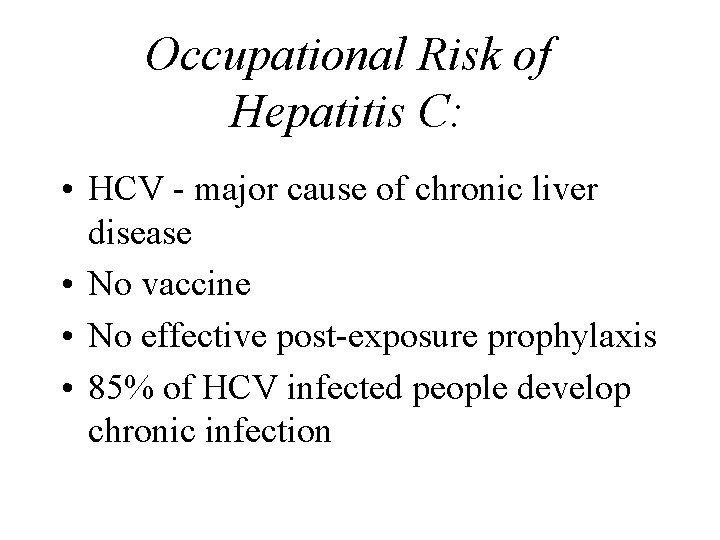
Occupational Risk of Hepatitis C: • HCV - major cause of chronic liver disease • No vaccine • No effective post-exposure prophylaxis • 85% of HCV infected people develop chronic infection
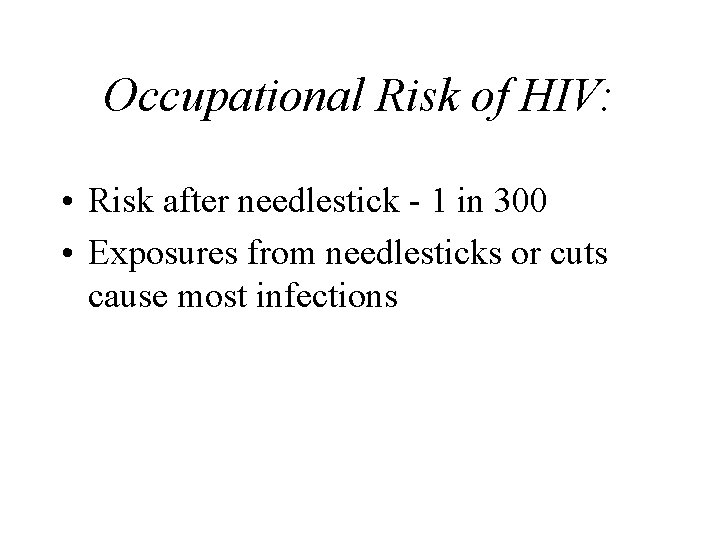
Occupational Risk of HIV: • Risk after needlestick - 1 in 300 • Exposures from needlesticks or cuts cause most infections
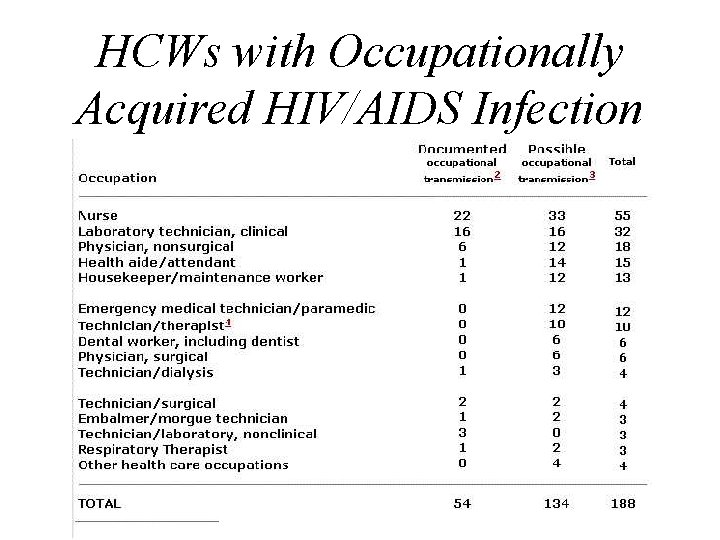
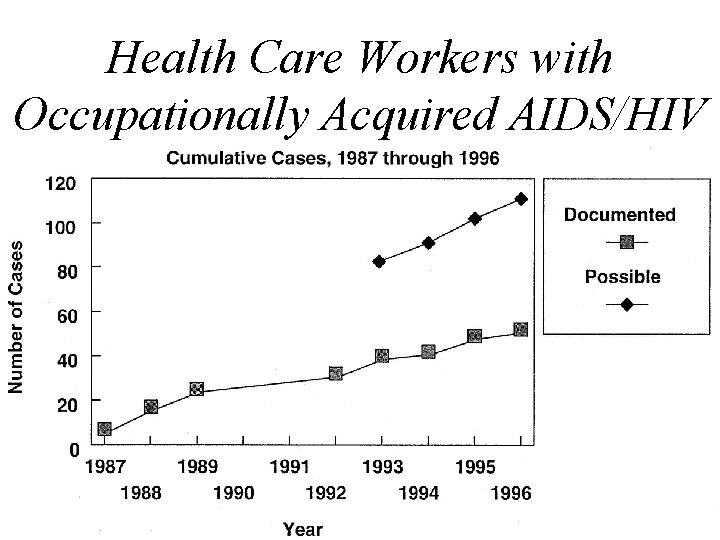
HCWs with Occupationally Acquired HIV/AIDS Infection
Health Care Workers with Occupationally Acquired AIDS/HIV
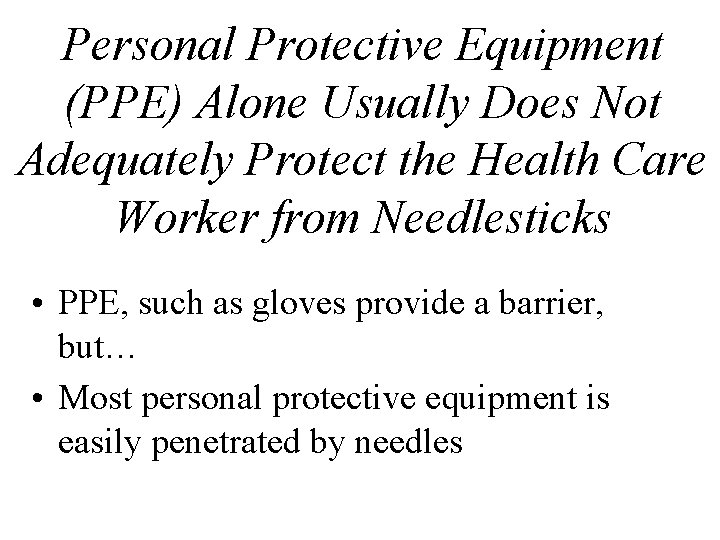
Personal Protective Equipment (PPE) Alone Usually Does Not Adequately Protect the Health Care Worker from Needlesticks • PPE, such as gloves provide a barrier, but… • Most personal protective equipment is easily penetrated by needles
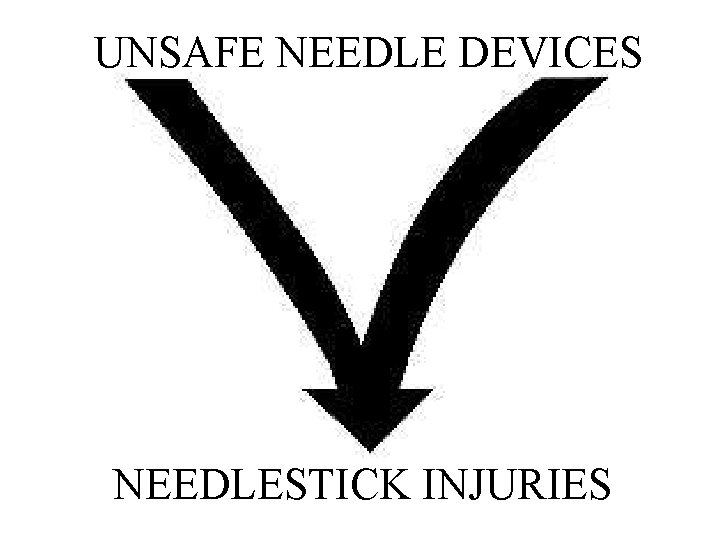
UNSAFE NEEDLE DEVICES NEEDLESTICK INJURIES
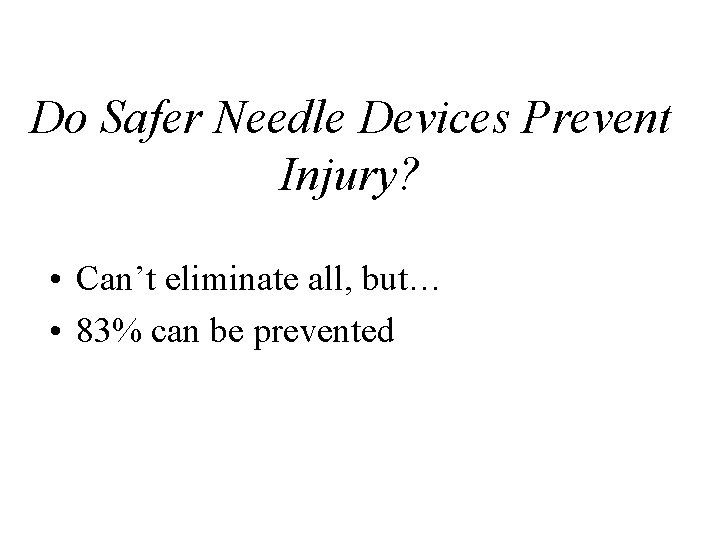
Do Safer Needle Devices Prevent Injury? • Can’t eliminate all, but… • 83% can be prevented
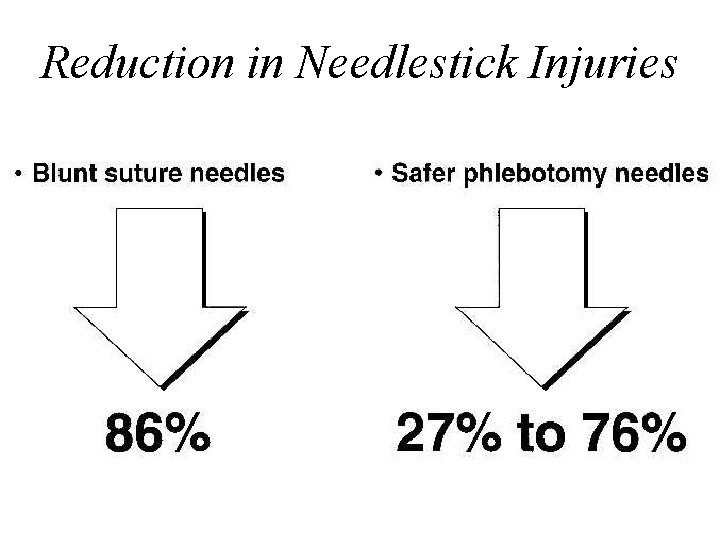
Reduction in Needlestick Injuries
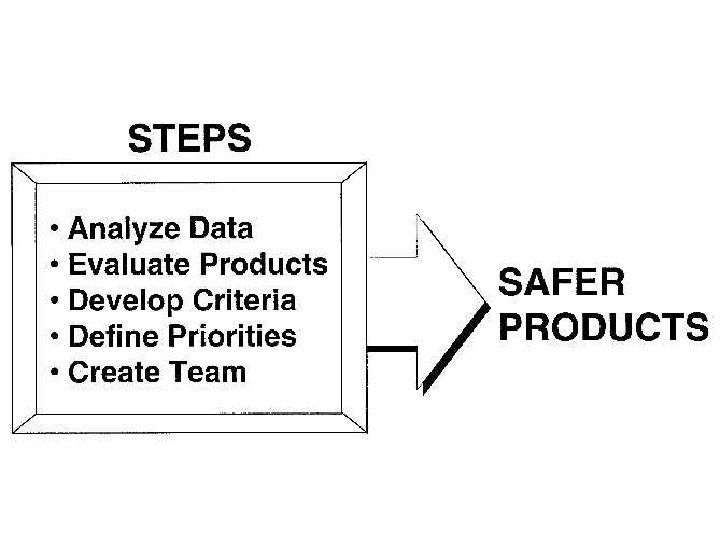
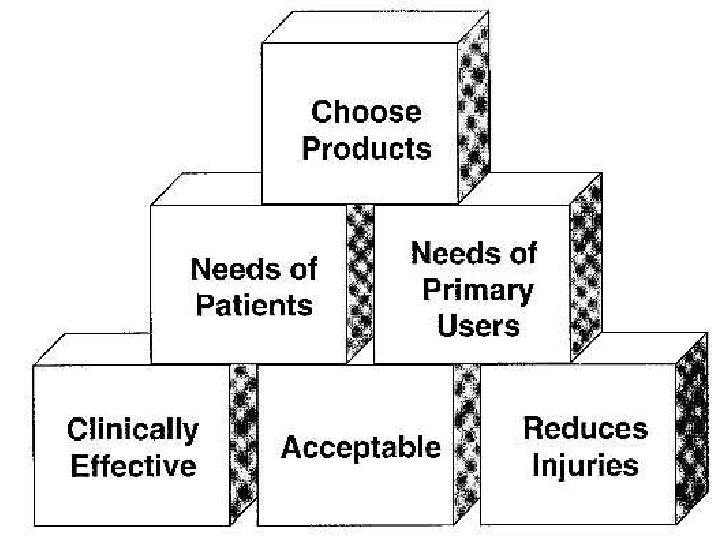
Evaluating and Selecting Safer Needle Devices
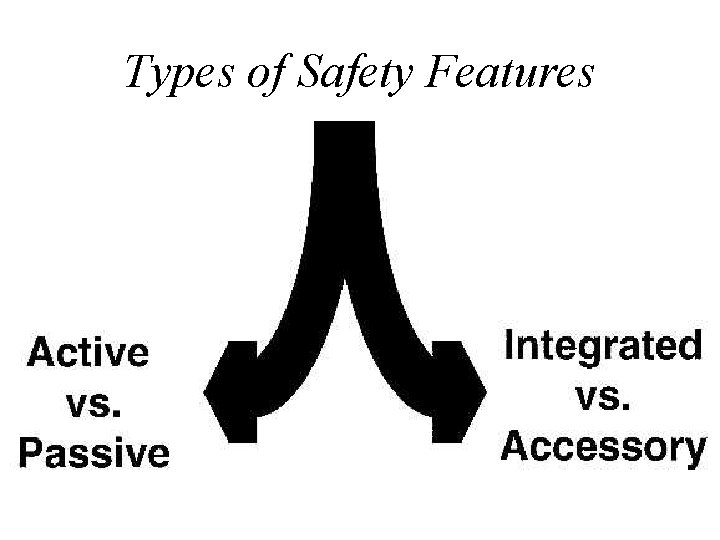
Types of Safety Features
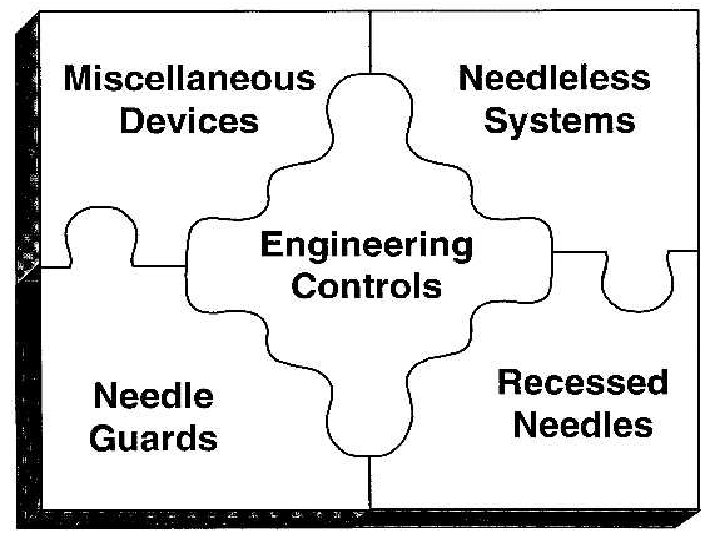
OSHA’s Position on Safer Needle Devices: • Bloodborne Pathogens Standard requires use of engineering and work practice controls • Failure to use engineering/work practice controls could result in a citation • Devices which offer alternatives to needles are preferable
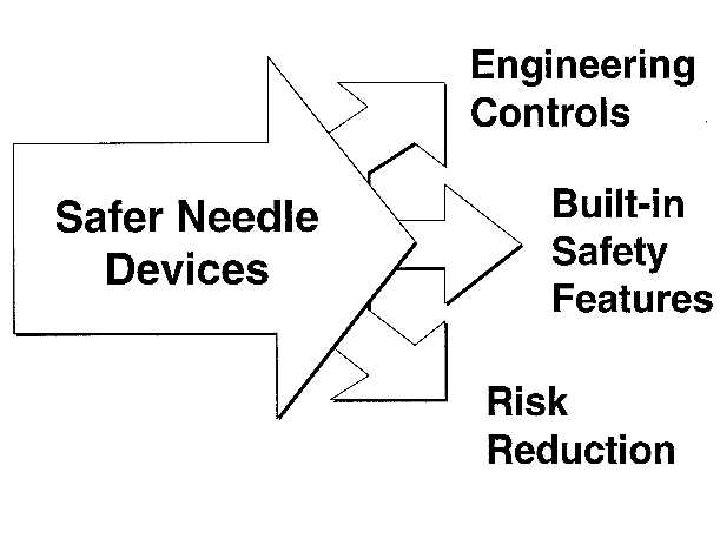
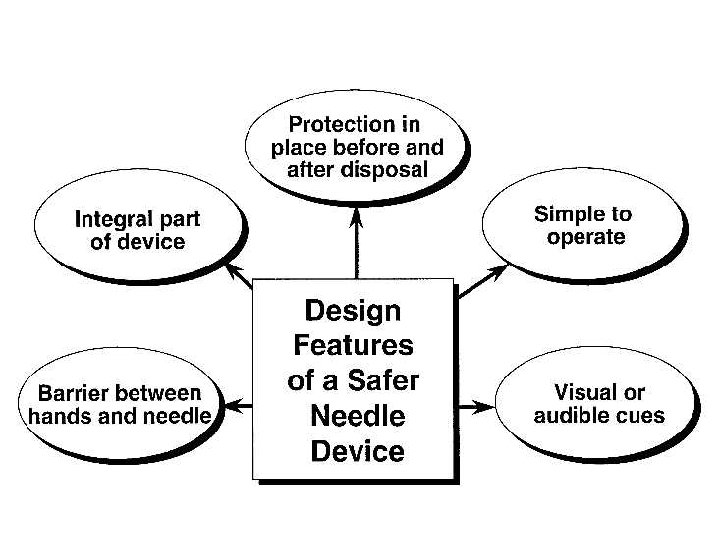
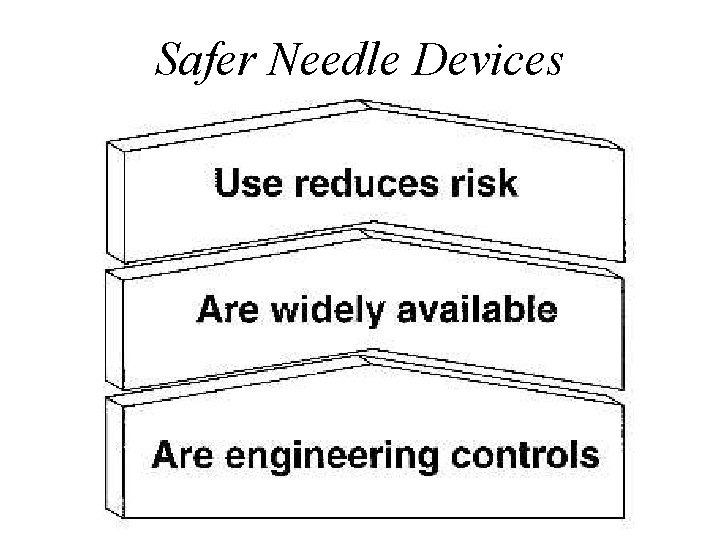
Safer Needle Devices
Safer Needle Devices protect workers from exposure to life-threatening diseases by preventing needlestick injuries