
SafelyManaged Sanitation Monitoring higher levels of service in
- Slides: 5
Safely-Managed Sanitation: Monitoring higher levels of service in SDG Target 6. 2
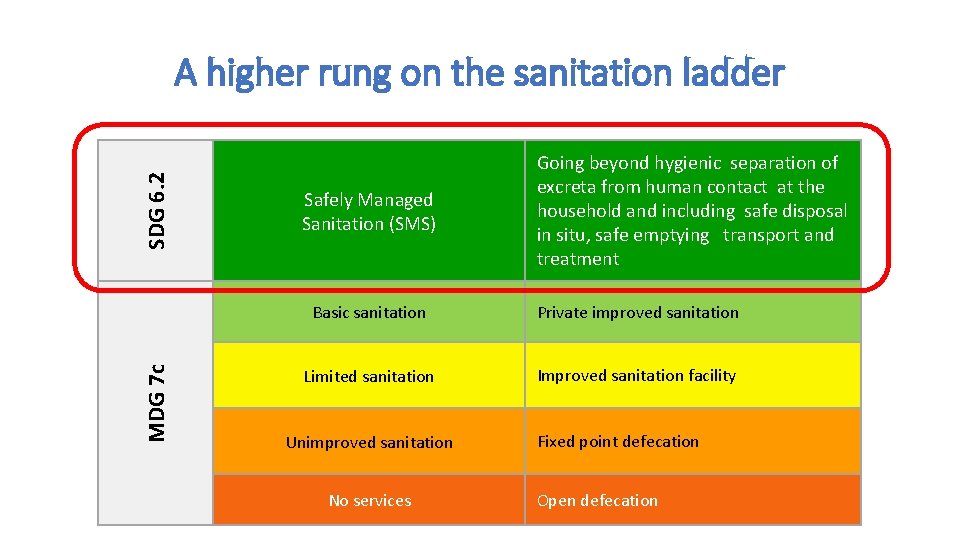
MDG 7 c SDG 6. 2 A higher rung on the sanitation ladder Safely Managed Sanitation (SMS) Going beyond hygienic separation of excreta from human contact at the household and including safe disposal in situ, safe emptying transport and treatment Basic sanitation Private improved sanitation Limited sanitation Improved sanitation facility Unimproved sanitation No services Fixed point defecation Open defecation
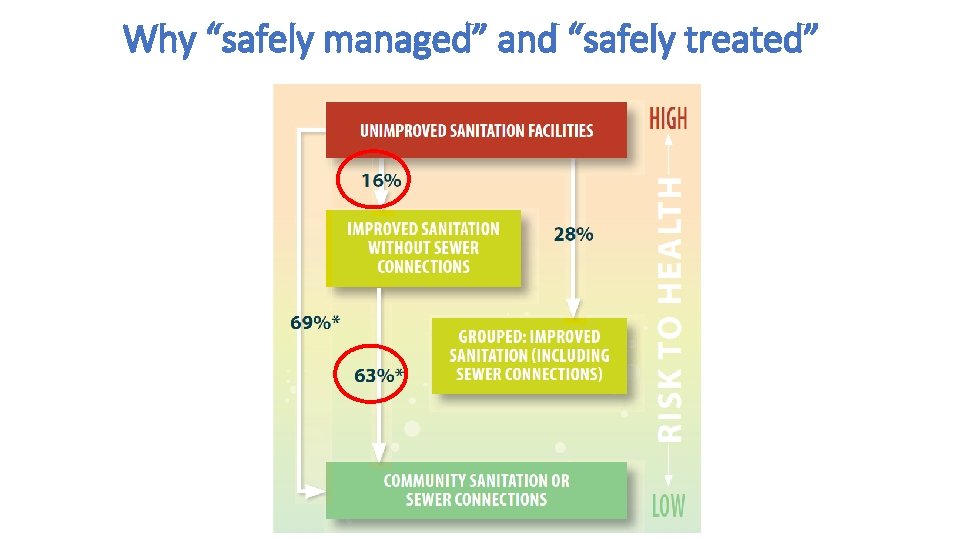
Why “safely managed” and “safely treated”
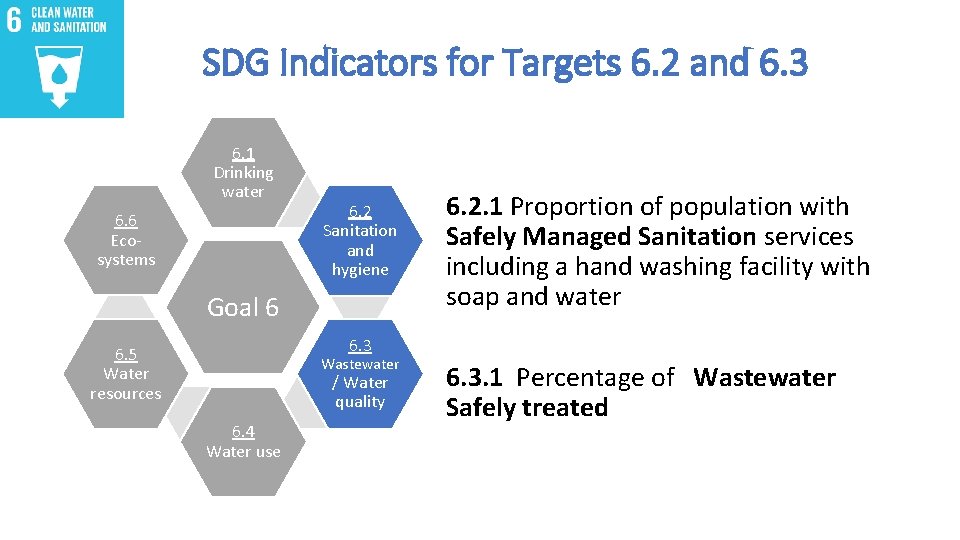
SDG Indicators for Targets 6. 2 and 6. 3 6. 1 Drinking water 6. 6 Ecosystems 6. 2 Sanitation and hygiene Goal 6 6. 2. 1 Proportion of population with Safely Managed Sanitation services including a hand washing facility with soap and water 6. 3 6. 5 Water resources Wastewater / Water quality 6. 4 Water use 6. 3. 1 Percentage of Wastewater Safely treated
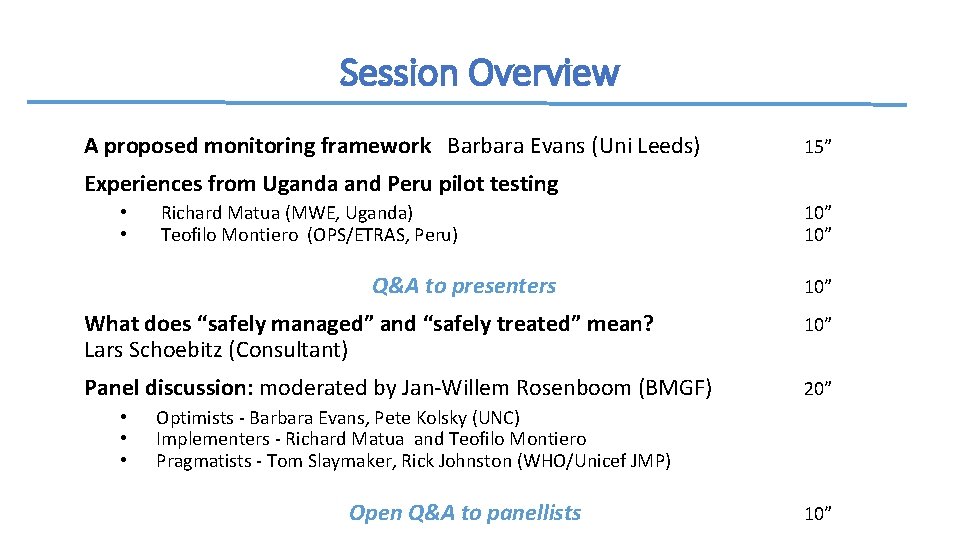
Session Overview A proposed monitoring framework Barbara Evans (Uni Leeds) 15” Experiences from Uganda and Peru pilot testing • • Richard Matua (MWE, Uganda) Teofilo Montiero (OPS/ETRAS, Peru) Q&A to presenters 10” 10” What does “safely managed” and “safely treated” mean? Lars Schoebitz (Consultant) 10” Panel discussion: moderated by Jan-Willem Rosenboom (BMGF) 20” • • • Optimists - Barbara Evans, Pete Kolsky (UNC) Implementers - Richard Matua and Teofilo Montiero Pragmatists - Tom Slaymaker, Rick Johnston (WHO/Unicef JMP) Open Q&A to panellists 10”