
Safeguarding young people from abuse and exploitation Next
Safeguarding young people from abuse and exploitation Next Steps and Implications for Education Providers Dr Carlene Firmin MBE Senior Research Fellow and Head of Ms. Understood Partnership @carlenefirmin @uniofbeds. CSE NOT TO BE REPRODUCED WITHOUT AUTHOR PERMISSION
The International Centre • Committed to increasing understanding of, and improving responses to child sexual exploitation, violence and trafficking in local, national and international context. • Achieved through: - academic rigour and research excellence - collaborative and partnership based approaches to applied social research - meaning and ethical engagement of children and young people
Overview • Contextual and complex nature of abuse and exploitation– a brief overview • Where we have been in terms of response • Towards contextual and holistic responses: examples of promising practice • Discussion – implications for education • Questions

Contextual nature of exploitation and abuse Gang-affected neighbourhoods CSE in parks, shopping centres Neighbourhood Sexual harassment and bullying School Peer Group Peer recruitment Home Peer association to IPV Peer group sexual offending Child Domestic abuse Neglect

Overlaid categories of exploitation Missing Radicalisation Harmful sexual behaviour Sexual Exploitation Teenage relationship abuse Serious Youth Violence
Where we have been: • 1: 1 intervention for young people who have been exploited, and sometimes group intervention • Relocation, care placements (under section 20) and securing on welfare grounds • Child and family assessment • Investigation and prosecution post disclosure • Siloed strategies, action plans, assessment tools, referral pathways and multi-agency groups
Where next
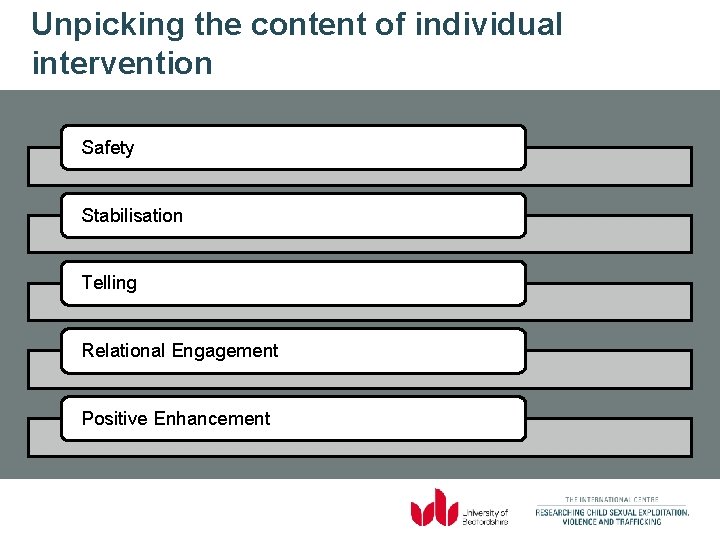
Unpicking the content of individual intervention Safety Stabilisation Telling Relational Engagement Positive Enhancement
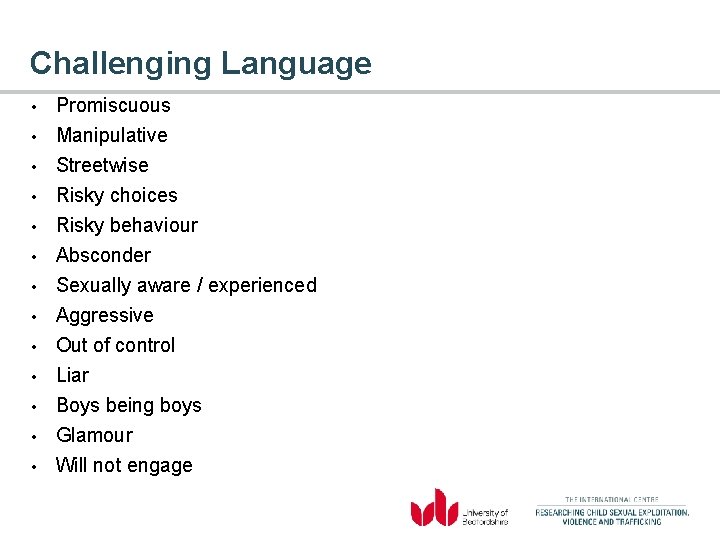
Challenging Language • • • • Promiscuous Manipulative Streetwise Risky choices Risky behaviour Absconder Sexually aware / experienced Aggressive Out of control Liar Boys being boys Glamour Will not engage
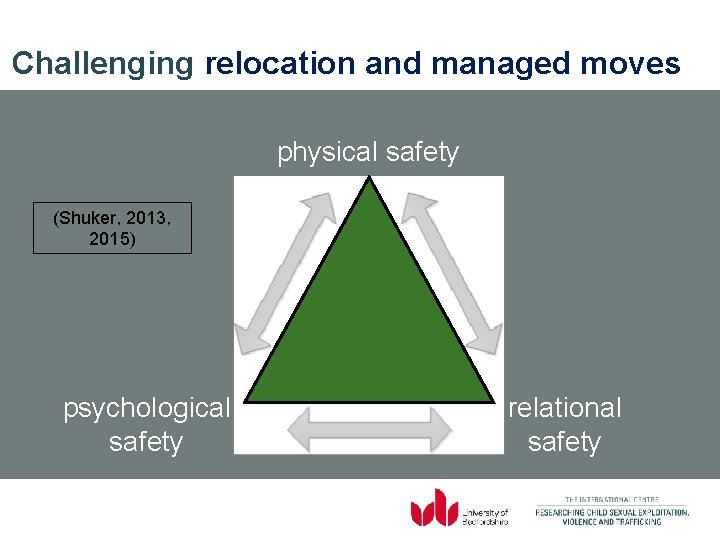
Challenging relocation and managed moves physical safety (Shuker, 2013, 2015) psychological safety relational safety
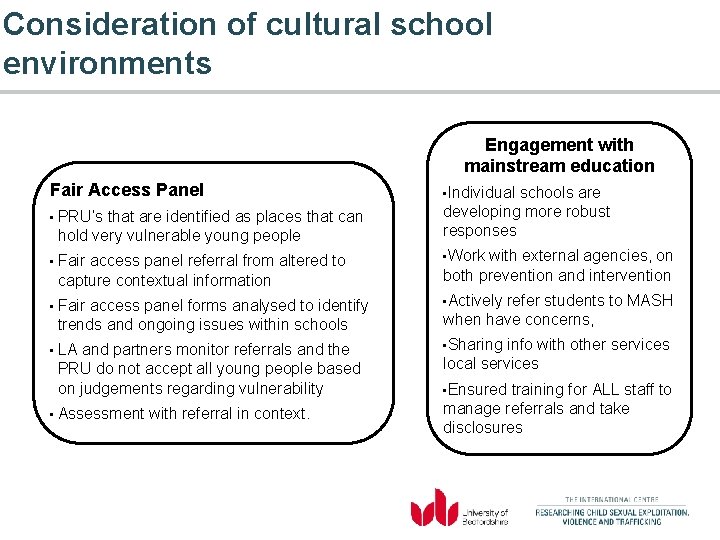
Consideration of cultural school environments Engagement with mainstream education Fair Access Panel • PRU’s schools are developing more robust responses • Fair • Work • Fair • Actively • LA • Sharing that are identified as places that can hold very vulnerable young people access panel referral from altered to capture contextual information access panel forms analysed to identify trends and ongoing issues within schools and partners monitor referrals and the PRU do not accept all young people based on judgements regarding vulnerability • Assessment with referral in context. • Individual with external agencies, on both prevention and intervention refer students to MASH when have concerns, info with other services local services • Ensured training for ALL staff to manage referrals and take disclosures
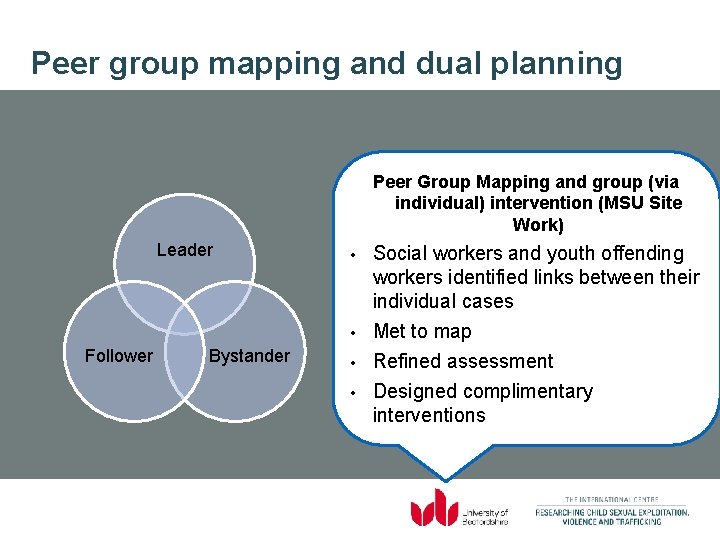
Peer group mapping and dual planning Peer Group Mapping and group (via individual) intervention (MSU Site Work) Leader • • Follower Bystander • • Social workers and youth offending workers identified links between their individual cases Met to map Refined assessment Designed complimentary interventions
Peer Network – (Firmin, 2015)
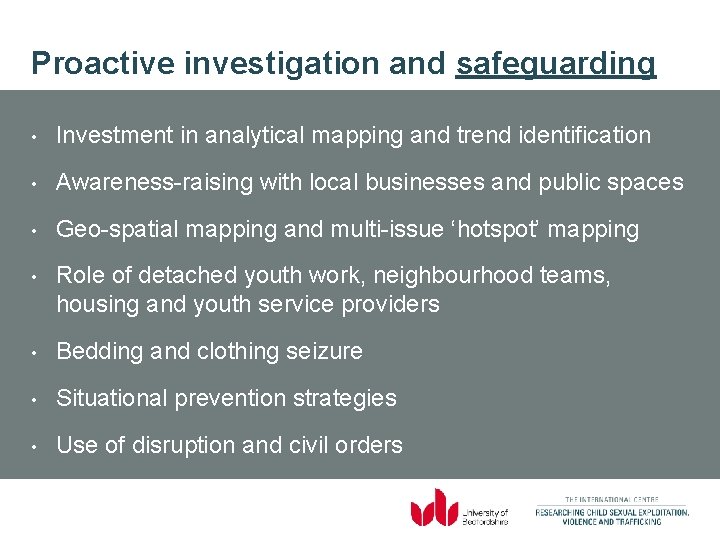
Proactive investigation and safeguarding • Investment in analytical mapping and trend identification • Awareness-raising with local businesses and public spaces • Geo-spatial mapping and multi-issue ‘hotspot’ mapping • Role of detached youth work, neighbourhood teams, housing and youth service providers • Bedding and clothing seizure • Situational prevention strategies • Use of disruption and civil orders
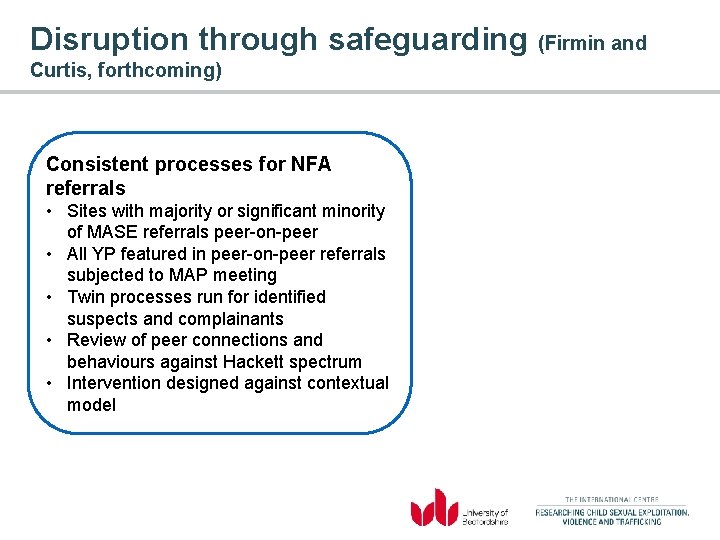
Disruption through safeguarding (Firmin and Curtis, forthcoming) Consistent processes for NFA referrals • Sites with majority or significant minority of MASE referrals peer-on-peer • All YP featured in peer-on-peer referrals subjected to MAP meeting • Twin processes run for identified suspects and complainants • Review of peer connections and behaviours against Hackett spectrum • Intervention designed against contextual model
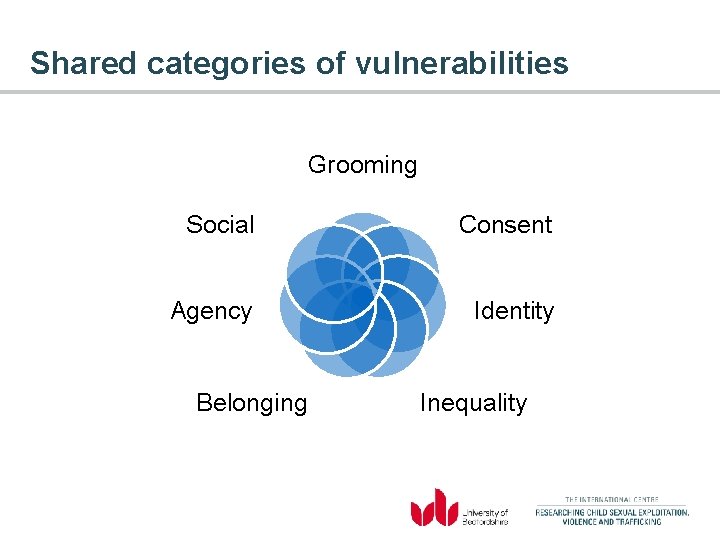
Shared categories of vulnerabilities Grooming Social Consent Agency Identity Belonging Inequality
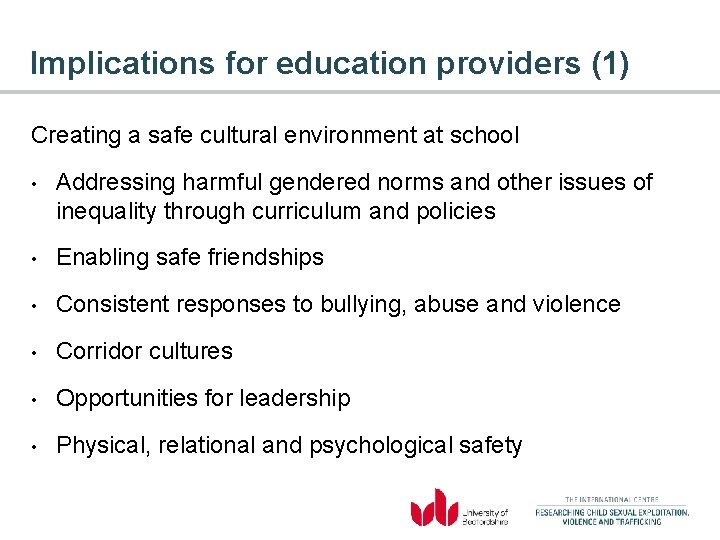
Implications for education providers (1) Creating a safe cultural environment at school • Addressing harmful gendered norms and other issues of inequality through curriculum and policies • Enabling safe friendships • Consistent responses to bullying, abuse and violence • Corridor cultures • Opportunities for leadership • Physical, relational and psychological safety
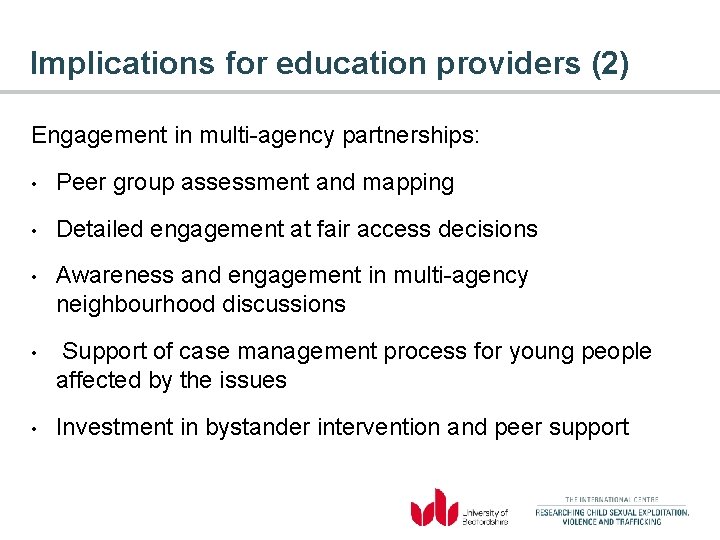
Implications for education providers (2) Engagement in multi-agency partnerships: • Peer group assessment and mapping • Detailed engagement at fair access decisions • Awareness and engagement in multi-agency neighbourhood discussions • Support of case management process for young people affected by the issues • Investment in bystander intervention and peer support
Routes/Levers for implementation • Training • Supervision • Evaluation and monitoring • Recording and periodic review of incident management • Curriculum • Peer support networks • Policies, procedures and strategic documents
On-going questions • Achieving consistency in understanding and approach • The challenge of language and understanding • Capturing, monitoring and sharing impact • Re-emphasising safeguarding • How to achieve holistic approaches that include specialism
For more information and resources visit our website www. beds. ac. uk/ic carlene. firmin@beds. ac. uk @uniofbedscse
- Slides: 21