
Safeguarding Policy and CI Safeguarding Practice SPP Policy

- Slides: 11
Safeguarding Policy and CI Safeguarding Practice (SPP) Policy and Practice 1
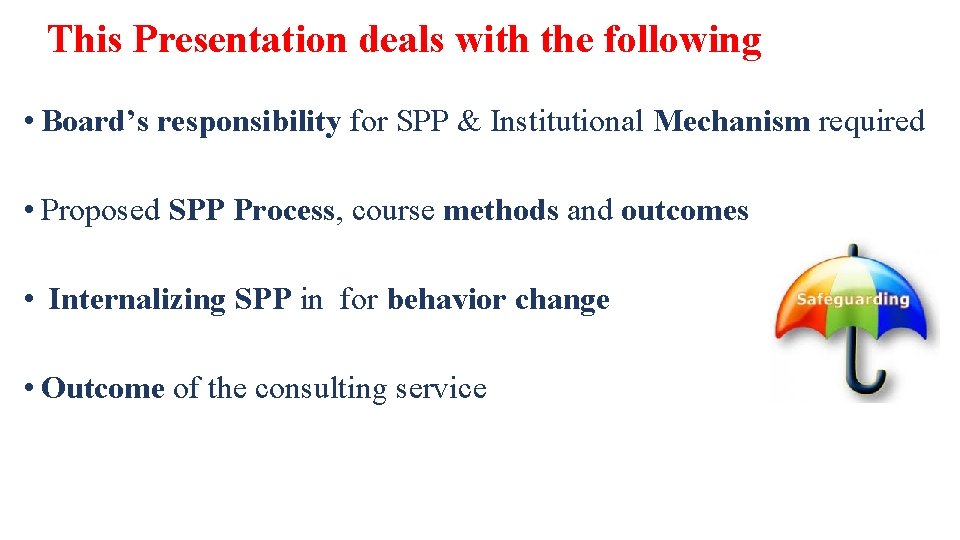
This Presentation deals with the following • Board’s responsibility for SPP & Institutional Mechanism required • Proposed SPP Process, course methods and outcomes • Internalizing SPP in for behavior change • Outcome of the consulting service
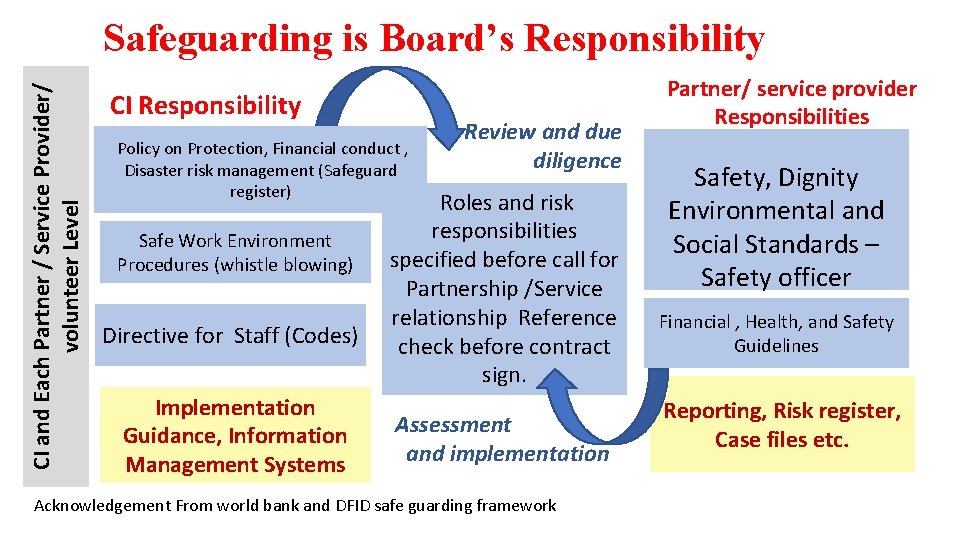
CI and Each Partner / Service Provider/ volunteer Level Safeguarding is Board’s Responsibility CI Responsibility Policy on Protection, Financial conduct , • Acknowledgement : Disaster risk management (Safeguard register) Safe Work Environment Procedures (whistle blowing) Directive for Staff (Codes) Implementation Guidance, Information Management Systems Review and due diligence Roles and risk responsibilities specified before call for Partnership /Service relationship Reference check before contract sign. Assessment and implementation Acknowledgement From world bank and DFID safe guarding framework Partner/ service provider Responsibilities Safety, Dignity Environmental and Social Standards – Safety officer Financial , Health, and Safety Guidelines Reporting, Risk register, Case files etc.
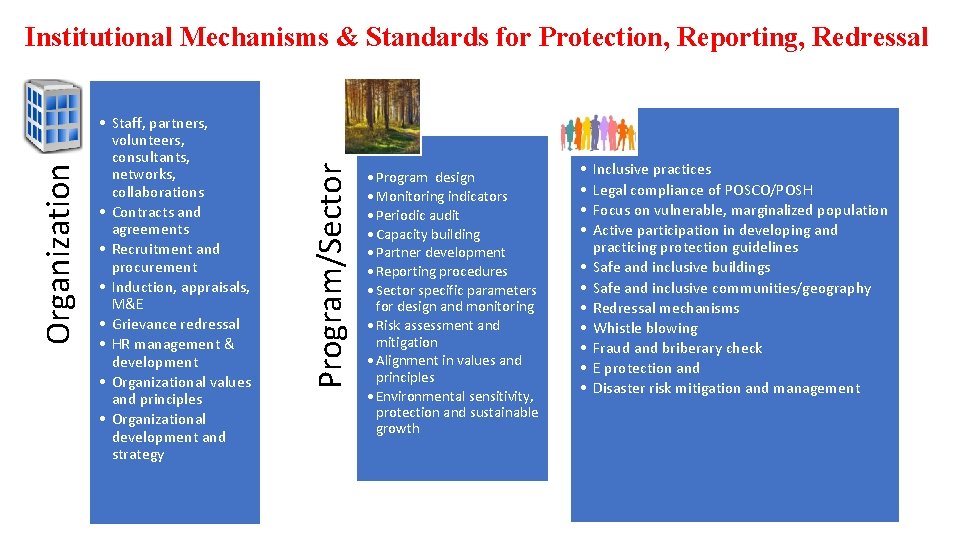
• Program design • Monitoring indicators • Periodic audit • Capacity building • Partner development • Reporting procedures • Sector specific parameters for design and monitoring • Risk assessment and mitigation • Alignment in values and principles • Environmental sensitivity, protection and sustainable growth • • • I Inclusive practices Legal compliance of POSCO/POSH Focus on vulnerable, marginalized population Active participation in developing and practicing protection guidelines Safe and inclusive buildings Safe and inclusive communities/geography Redressal mechanisms Whistle blowing Fraud and briberary check E protection and Disaster risk mitigation and management People • Staff, partners, volunteers, consultants, networks, collaborations • Contracts and agreements • Recruitment and procurement • Induction, appraisals, M&E • Grievance redressal • HR management & development • Organizational values and principles • Organizational development and strategy Program/Sector Organization Institutional Mechanisms & Standards for Protection, Reporting, Redressal
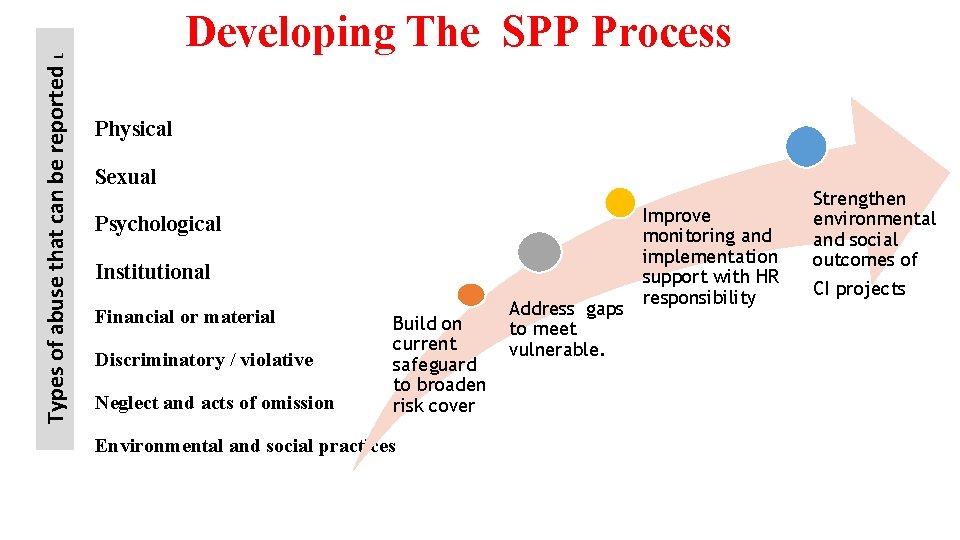
Types of abuse that can be reported L Developing The SPP Process Physical Sexual Psychological Institutional Financial or material Discriminatory / violative Neglect and acts of omission Build on current safeguard to broaden risk cover Environmental and social practices Address gaps to meet vulnerable. Improve monitoring and implementation support with HR responsibility Strengthen environmental and social outcomes of CI projects
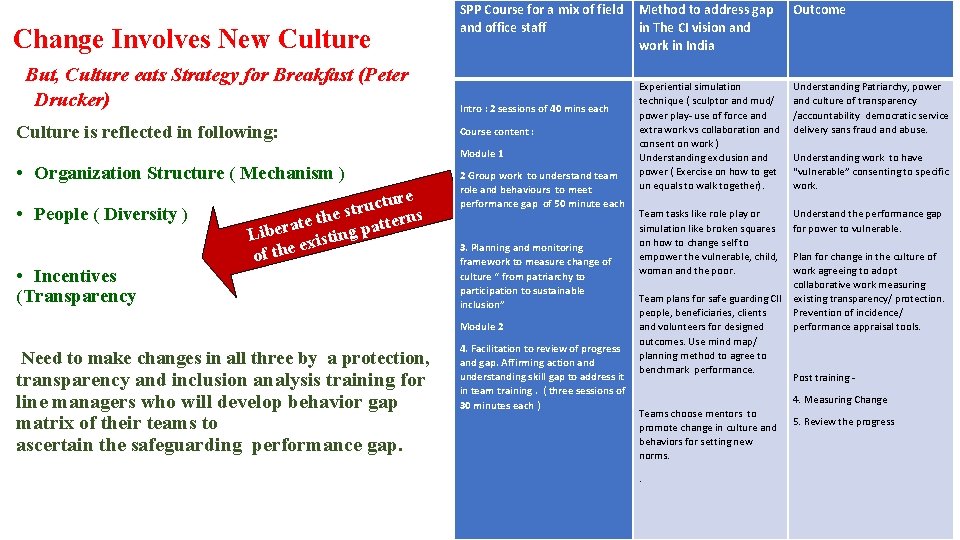
Change Involves New Culture But, Culture eats Strategy for Breakfast (Peter Drucker) Culture is reflected in following: SPP Course for a mix of field Method to address gap and office staff in The CI vision and work in India Intro : 2 sessions of 40 mins each Course content : Module 1 • Organization Structure ( Mechanism ) • People ( Diversity ) • Incentives (Transparency ture c u r t he s t e erns t t t a a r e p Lib ting s i x e of the 2 Group work to understand team role and behaviours to meet performance gap of 50 minute each 3. Planning and monitoring framework to measure change of culture “ from patriarchy to participation to sustainable inclusion” Module 2 Need to make changes in all three by a protection, transparency and inclusion analysis training for line managers who will develop behavior gap matrix of their teams to ascertain the safeguarding performance gap. 4. Facilitation to review of progress and gap. Affirming action and understanding skill gap to address it in team training. ( three sessions of 30 minutes each ) Experiential simulation technique ( sculptor and mud/ power play- use of force and extra work vs collaboration and consent on work ) Understanding exclusion and power ( Exercise on how to get un equals to walk together). Team tasks like role play or simulation like broken squares on how to change self to empower the vulnerable, child, woman and the poor. Team plans for safe guarding CII people, beneficiaries, clients and volunteers for designed outcomes. Use mind map/ planning method to agree to benchmark performance. Outcome Understanding Patriarchy, power and culture of transparency /accountability democratic service delivery sans fraud and abuse. Understanding work to have “vulnerable” consenting to specific work. Understand the performance gap for power to vulnerable. Plan for change in the culture of work agreeing to adopt collaborative work measuring existing transparency/ protection. Prevention of incidence/ performance appraisal tools. Post training - 4. Measuring Change Teams choose mentors to promote change in culture and behaviors for setting new norms. . 5. Review the progress
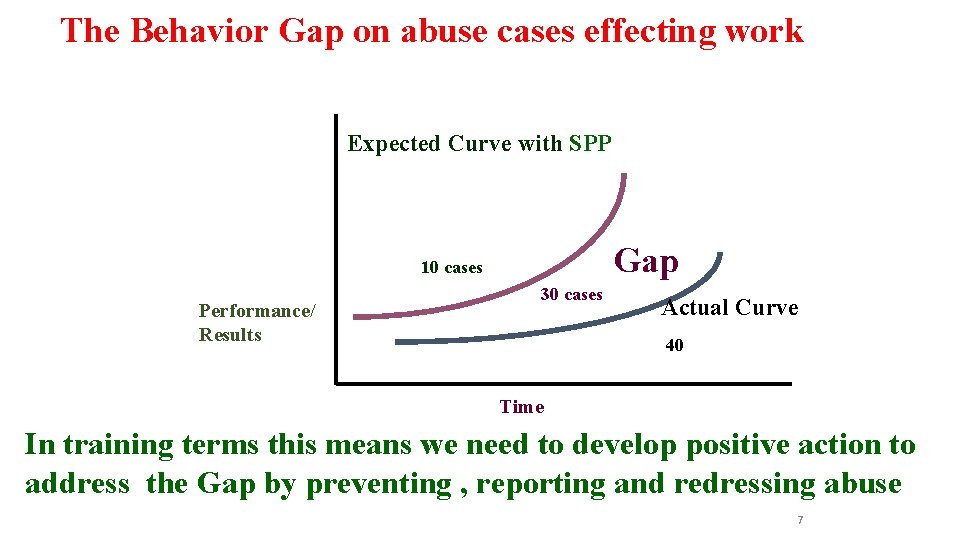
The Behavior Gap on abuse cases effecting work Expected Curve with SPP Gap 10 cases Performance/ Results 30 cases Actual Curve 40 Time In training terms this means we need to develop positive action to address the Gap by preventing , reporting and redressing abuse 7
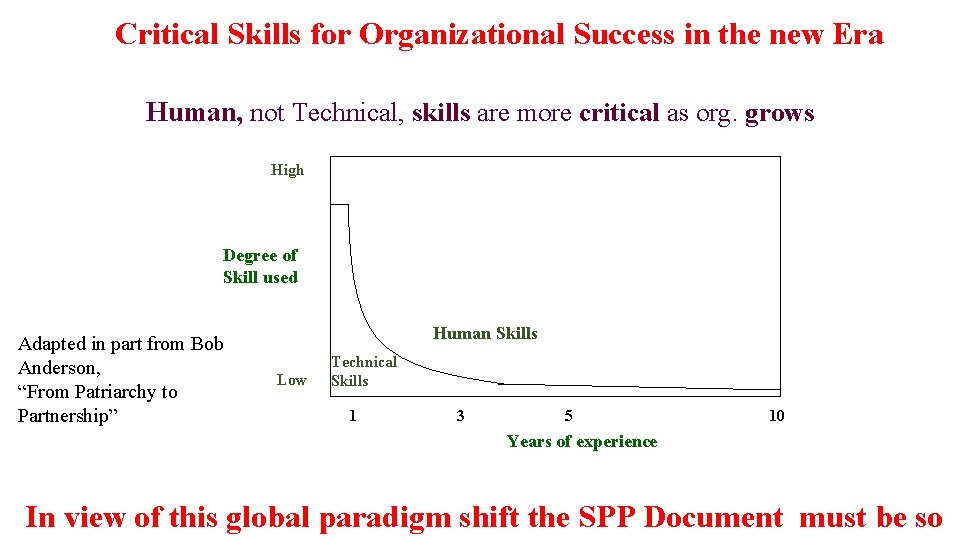
Critical Skills for Organizational Success in the new Era Human, not Technical, skills are more critical as org. grows High Degree of Skill used Adapted in part from Bob Anderson, “From Patriarchy to Partnership” Human Skills Low Technical Skills 1 3 5 10 Years of experience In view of this global paradigm shift the SPP Document must be so
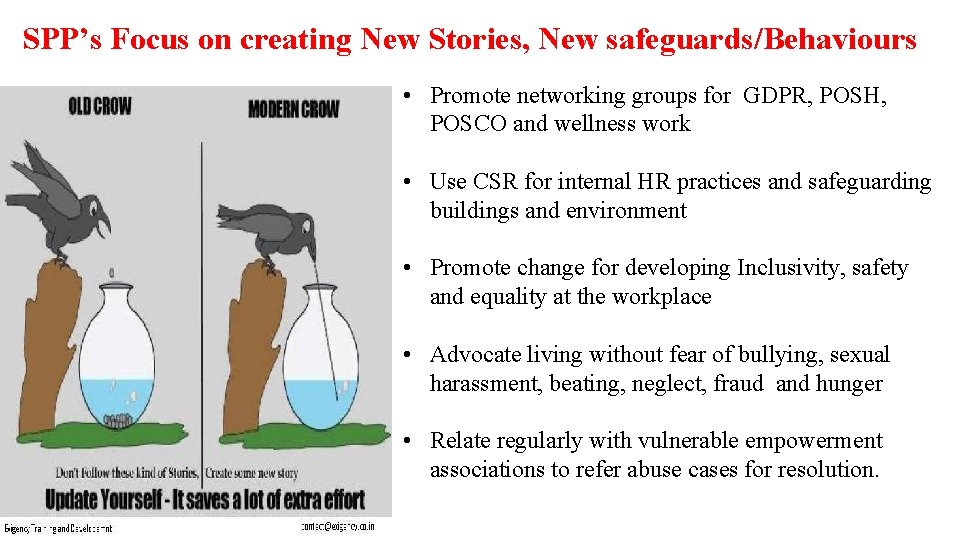
SPP’s Focus on creating New Stories, New safeguards/Behaviours • Promote networking groups for GDPR, POSH, POSCO and wellness work • Use CSR for internal HR practices and safeguarding buildings and environment • Promote change for developing Inclusivity, safety and equality at the workplace • Advocate living without fear of bullying, sexual harassment, beating, neglect, fraud and hunger • Relate regularly with vulnerable empowerment associations to refer abuse cases for resolution. 1 -9
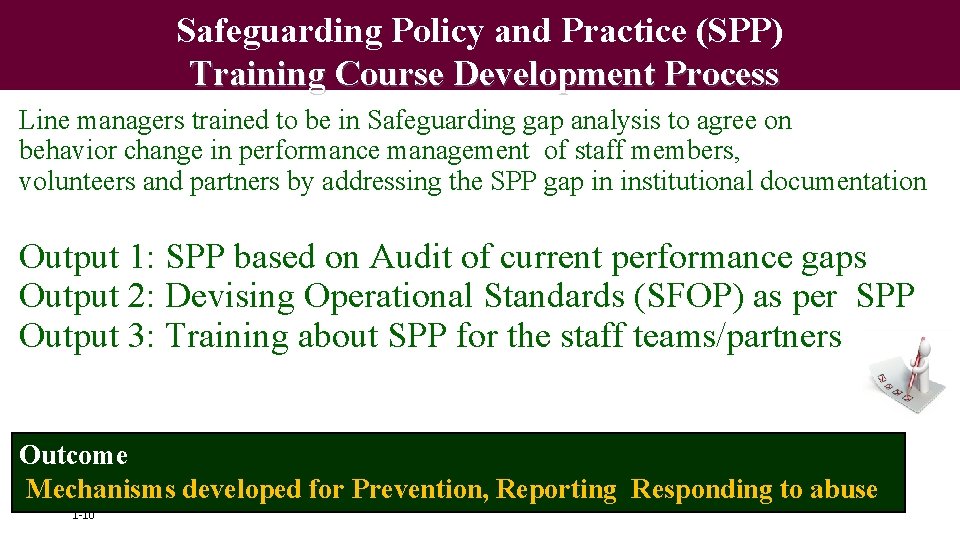
Safeguarding Policy and Practice (SPP) Training Course Development Process Line managers trained to be in Safeguarding gap analysis to agree on behavior change in performance management of staff members, volunteers and partners by addressing the SPP gap in institutional documentation Output 1: SPP based on Audit of current performance gaps Output 2: Devising Operational Standards (SFOP) as per SPP Output 3: Training about SPP for the staff teams/partners Outcome Mechanisms developed for Prevention, Reporting Responding to abuse 1 -10
Thank You 11