
Safeguarding Children Level 3 Elaine Wyllie Designated Nurse

- Slides: 41
Safeguarding Children (Level 3) Elaine Wyllie Designated Nurse Safeguarding Children North Yorkshire & York CCGs
Aims: q q To give participants the opportunity to identify areas of concern which may impact on the welfare and safety of children and young people. To give participants an increased understanding of the Child Protection process and their role within that process.
Learning Objectives: q Recognise what constitutes a concern and what your responsibilities are; q Identify adult behaviours which may have a negative effect on the welfare of children; q Maintain a child focused approach; q Have an awareness of holistic assessment and good documentation; 3
Learning Objectives ctd: q Identify those professionals to be consulted for support and advice; q Identify the roles and responsibilities of other agencies; q Recognise the role of health staff in multi-agency information sharing and decision making at all stages in the child protection process; q Have a clear understanding of the child protection conference system. 4
Programme 1. Introduction 2. Legal context and thresholds for intervention 3. Information sharing – consent and confidentiality 4. Identifying vulnerability 5. Defining and recognising abuse and neglect 6. Managing disclosures 7. Case Scenarios 8. The Child Protection Process 9. And finally….
1. Introduction What do you want to get out of today?
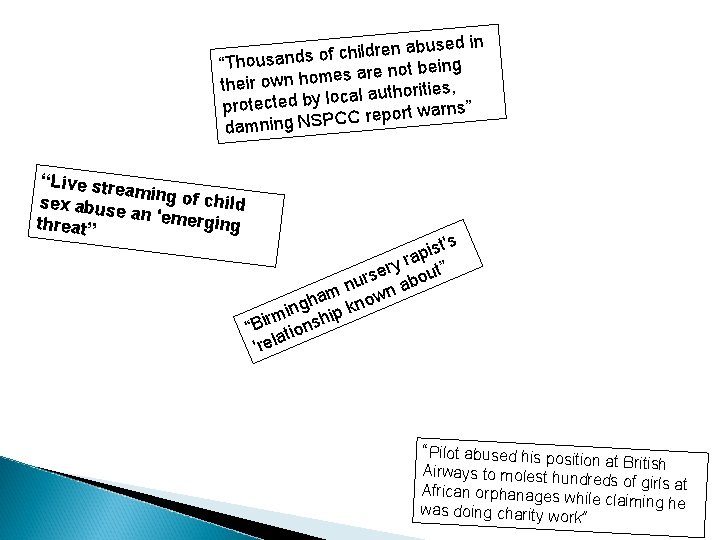
sed in u b a n e r d il h c f “Thousands o t being o n e r a s e m o their own h uthorities, a l a c lo y b d protecte ort warns” p e r C C P S N damning “Live stre aming of child sex abus e an 'eme rging threat” 's t s i rap ” y r t e urs abou n am nown h g in hip k m r i “B tions a 'rel “Pilot abused his positio n at British Airways to molest hund reds of girls at African orphanages w hile claiming he was doing charity wor k”
Size of the Problem UK On average at least two children die each week at the hands of their parents/ carers. About eight per year are killed by strangers. Between 350, 000 and 400, 000 children live in an environment which is consistently low in warmth and high in criticism. At least 150, 000 children annually suffer severe physical punishment. Up to 100, 000 children annually have a potentially harmful sexual experience.
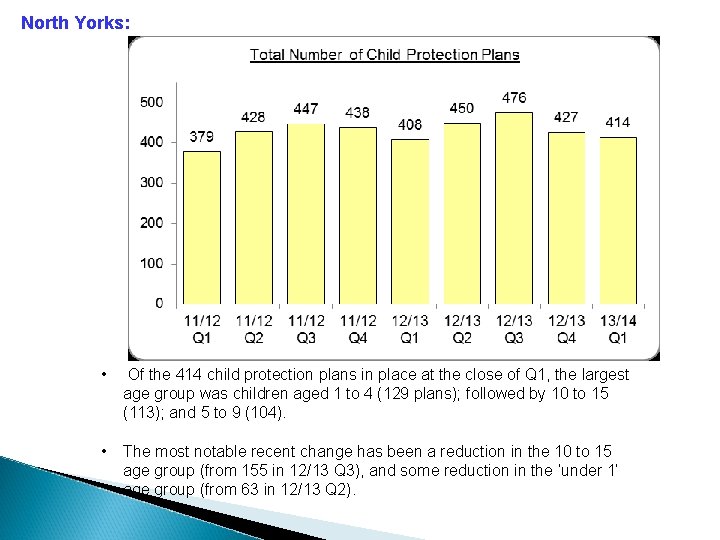
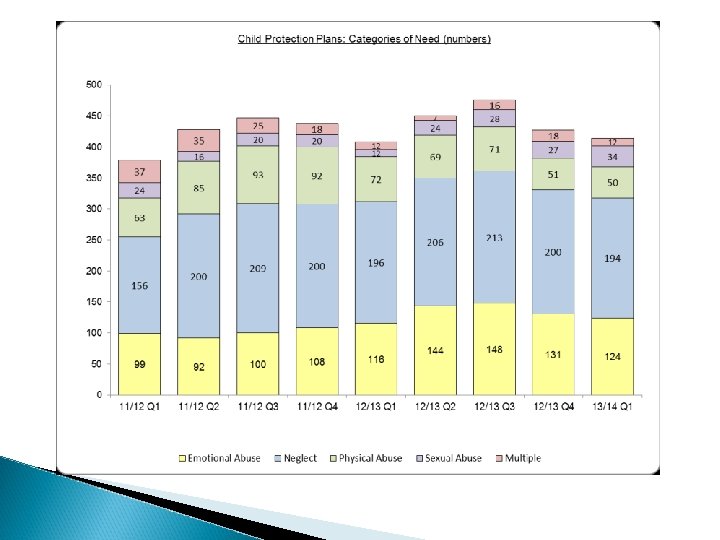
North Yorks: • Of the 414 child protection plans in place at the close of Q 1, the largest age group was children aged 1 to 4 (129 plans); followed by 10 to 15 (113); and 5 to 9 (104). • The most notable recent change has been a reduction in the 10 to 15 age group (from 155 in 12/13 Q 3), and some reduction in the ‘under 1’ age group (from 63 in 12/13 Q 2).
Local Context Across North Yorkshire & York there approximately 447 + 150 = 597 children with a child protection plan 49% of child protection plans are under the category of neglect
2. The Legal Context & thresholds for intervention
Child Protection: Key Legislation and Guidance Children Act (1989 and 2004) Working Together To Safeguard Children (2006, 2010, 2013) Framework for the Assessment of Children (2000) Sexual Offences Act 2003 NICE Guidance: “When to suspect child maltreatment” (2009)
The Children Act 1989/2004 14
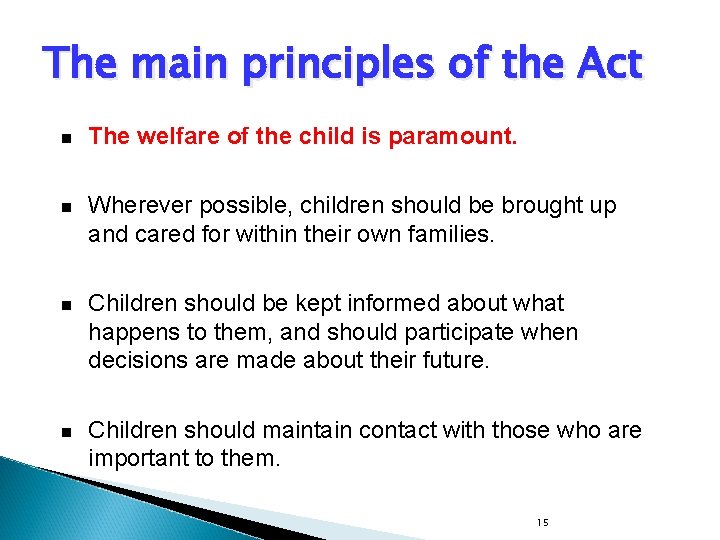
The main principles of the Act n n The welfare of the child is paramount. Wherever possible, children should be brought up and cared for within their own families. Children should be kept informed about what happens to them, and should participate when decisions are made about their future. Children should maintain contact with those who are important to them. 15
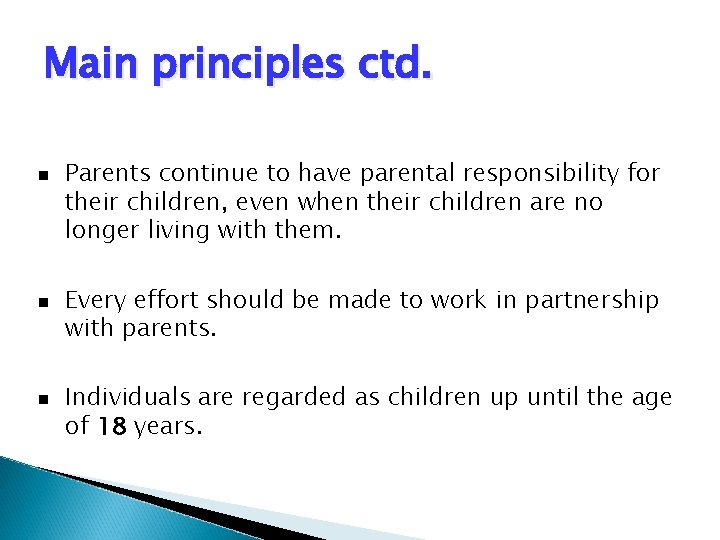
Main principles ctd. n n n Parents continue to have parental responsibility for their children, even when their children are no longer living with them. Every effort should be made to work in partnership with parents. Individuals are regarded as children up until the age of 18 years.
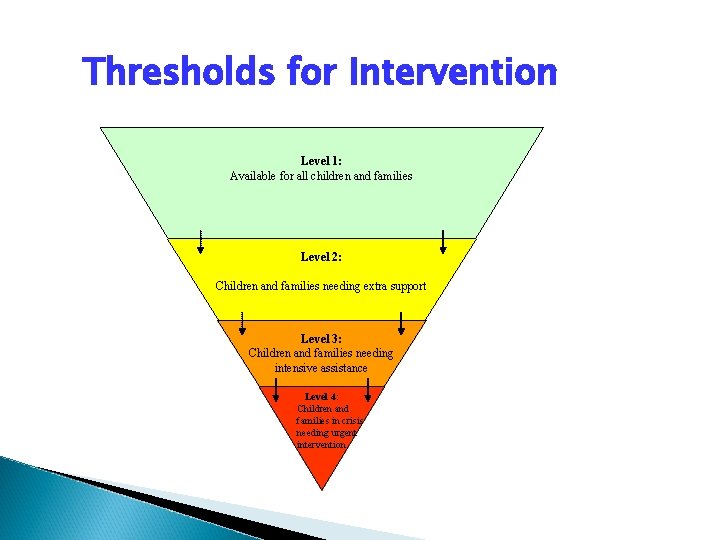
Thresholds for Intervention Level 1: Available for all children and families Level 2: Children and families needing extra support Level 3: Children and families needing intensive assistance Level 4: Children and families in crisis needing urgent intervention
Level 2 – consider Common Assessment Framework (CAF) A process for undertaking a common assessment to help practitioners gather and understand information about the needs and strengths of the child based on discussions with the child, their family and other practitioners as appropriate. Parental consent for the disclosure of information to refer this child is essential. .
The Children Act 1989 places two specific duties on agencies to co-operate in the interests of vulnerable children: 19
Section 17 Children Act 1989 Child in Need if…. He is unlikely to achieve or maintain, or have the opportunity of achieving or maintaining, a reasonable standard of health or development without the provision for him of services by a local authority under this part. His health or development is likely to be significantly impaired, or further impaired, without the provision of such services. He is disabled. Parental consent for the disclosure of information to refer this child is essential.
Section 47 Children Act 1989 Definition of ‘Significant Harm’ ‘The ill treatment or impairment of the health or development of a child which is serious, considerable, noteworthy or important. ’ The concept of ‘significant harm’ is the threshold that justifies compulsory intervention in family life in the best interests of the child. You MUST refer to Children’s Social Care if you have reason to suspect that a child may be suffering significant harm Parental consent for the disclosure of information is not necessary, although you should (generally) inform parents that you will be making a referral.
“The support and protection of children cannot be achieved by a single agency. Every Service has to play its part. All staff must have placed upon them the clear expectation that their primary responsibility is to the child and his or her family. ” Lord Laming in the Victoria Climbié Inquiry Report, Paragraphs 17. 92 -17. 93
Making A Referral to Children’s Social Care If you need to make a formal referral, you should work openly with parents and tell them you are making a referral unless: You suspect sexual abuse or Factitious or Induced illness, Or This may put the child or yourself in danger, Or This may hinder future investigations.
3. Information Sharing – consent & confidentiality
Sharing Information Children Acts (1989 & 2004) – Paramountcy Principle Data Protection Act (1998) – relating to the handling of personal data Human Rights Act (1998) – right to respect for private and family Common law duty of confidentiality Code of Conduct (GMC, RCGP)
What if consent is refused? The law recognises that disclosure of confidential information without consent or a court order may be justified in the public interest to prevent harm to others – s 47 referrals. The key factor in deciding whether or not to disclose confidential information is PROPORTIONALITY Is the proposed disclosure a proportionate response to the need to protect the welfare of the child?
GMC Guidance – “Protecting children and young people”
GMC guidance Para. 47: You can disclose, without consent, information that identifies a child or young person, if it is in the public interest to do so. A disclosure is in the public interest if the benefits that are likely to arise from the release of the information outweigh the child’s interest in keeping the Information confidential. Public Interest: A serious crime Drug trafficking Child abuse Or other activities which would place others at serious risk.
GMC guidance Para. 62: You should participate fully in child protection procedures, attend meetings when practical to do so and cooperate with requests for information about child abuse and neglect.
GMC guidance Para. 67 l: You should usually share information about sexual activity involving children less than 13, who are considered in law to be unable to consent (statutory rape). You should ALWAYS discuss decisions not to disclose information with a Named or Designated Doctor/Nurse for Child Protection/Safeguarding Children.
Issues of confidentiality must be secondary to the protection of children, however all information shared should be relevant and practitioners need to be able to justify disclosing that information. (Common Law Duty of Confidence; the Data Protection Act; Article 8 ‘The European Convention on Human Rights’).
4. Identifying vulnerability
Exercise: n n n Factors influencing parenting Factors that increase the vulnerability of a child Factors that contribute to an insecure environment 33
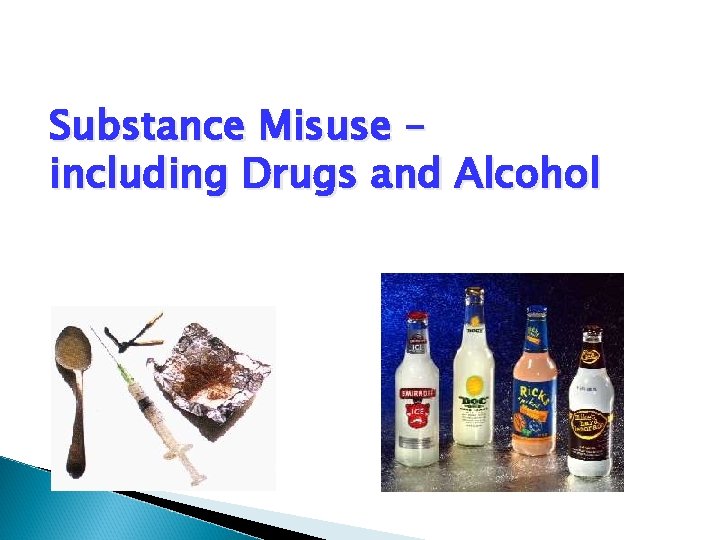
Substance Misuse – including Drugs and Alcohol
Assessing Risk - 1 n n Parental substance use: Is there a drug free parent, supportive partner or relative? Accommodation and the home environment: Are the family living in a drug using community? Provision of basic needs: Are the children attending school regularly? Procurement of drugs: Is this causing financial difficulties?
Assessing Risk - 2 n n Health risks: Safety and storage. Family social network and support systems: Will parents accept help/support from family/professionals? Parents perception of the situation: Do the parents place their own needs before the needs of the children? Pregnancy: Increases risk of having a premature baby, low birth weight baby, death of a baby before or shortly after birth and increased risk of SIDS
Domestic Abuse
How may children be affected? § It can pose a threat to an unborn child – domestic abuse often begins or intensifies during pregnancy § Children may get hurt in the crossfire § Children’s carer is injured § Domestic violence is emotionally damaging for children
Parental Mental Illness
Assessing Risk 1 n n n When did you last see the children: Are levels of child care different during periods of illness? Child/adult relationships: What does the adult say about their relationship with the child? Social networks: Are there extended family support networks?
Assessing Risk 2 n n n Provision of basic needs: Is there adequate food, clothing and warmth for the children? Safety within the home: Is all medication kept securely? Other: Does the family remain in one area, or move frequently? If the latter, why?