
Safeguarding children and vulnerable adults Ann Marie Cresham
Safeguarding children and vulnerable adults Ann Marie Cresham & Julie Eaton 1
Aim The aim of today’s workshop is to develop your confidence, knowledge and skills to be able to deal professionally with a safeguarding issue should one arise in the course of your practice. 2
Learning objectives • Summarise the background and policy surrounding the safeguarding of children and vulnerable adults and the issues this raises for pharmacy professionals • Convey the importance of pharmacy professionals increasing their awareness of abuse, neglect child sexual exploitation (CSE), criminal exploitation and developing ways of working with other health professionals to promote best practice to deal with situations involving suspected abuse, neglect or CSE 3
Learning objectives continued • Highlight situations in which you are best placed to observe signs of abuse, neglect and CSE and the legal issues to consider when making a referral • Identify sources of useful information and contacts for the development of local procedures for dealing with suspected abuse, neglect or CSE observed in the pharmacy setting • Confidently make a referral to the appropriate local contacts should the need ever arise 4

Intercollegiate Document 2014 : Level 2 Staff Group Pharmacist Knowledge: • Know about child maltreatment in its different forms (physical including Fabricated and induced illness, emotional and sexual abuse, and neglect) including child trafficking, FGM and radicalisation including prevalence and impact • Know about relevance of parental, family and carer factors such as domestic abuse, mental and physical ill-health, substance and alcohol misuse • Know what to do if there are concerns about child maltreatment, including local policies and procedures around who to contact, where to obtain further advice and support, and have awareness of the referral process • Know about the importance of sharing information (including the consequences of failing to do so) • Know what to do if they feel that their concerns are not being taken seriously or they experience any other barriers to referring a child/family • Know the risks associated with the internet and online social networking • Know what the term ‘Looked after child’ means 5
Standards for Registered Pharmacists All 5 principles refer to arrangements being made to safeguard the health, safety and wellbeing of patients and the public 1) Governance arrangements • 1. 8 Children and vulnerable adults are safeguarded 2) Staff empowered and competent 3) Environment and premises 4) Pharmaceutical services, including management of medicines and medical devices 5) Equipment and facilities (General Pharmaceutical Council 2012) 6
Practice requirements (NHS Standard Contracts– service conditions) SC 32 – Safeguarding policies: updated “from time to time” Provide evidence on request that safeguarding concerns raised through multiagency systems are being addressed Have a safeguarding lead and a Prevent Lead SC 33 – Incident reporting as per NHS Serious Incident Framework 7
Types of child abuse • • • 8 Physical abuse Sexual abuse Emotional or psychological abuse Neglect Child sexual exploitation (CSE) Female genital mutilation (FGM) Fabricated or induced illness Radicalisation Institutional or organisational abuse Modern slavery Forced marriage
Abuse of adults In addition, abuse of adults can include: • Financial abuse • Discriminatory abuse • Domestic abuse • Honour-based violence (HBV) • Self neglect 9
Significant harm is any abuse or neglect, accident or injury attributable to lack of adequate parental care or control, that is sufficiently serious to adversely affect progress and enjoyment of life. There are no absolute criteria on which to rely when judging what constitutes significant harm. Sometimes a single violent episode may constitute significant harm but more often it is an accumulation of significant events, both acute and longstanding, which interrupt, damage or change development. 10
Serious risk of immediate harm Where you have a reasonable belief that a child is at serious risk of immediate harm, you should act immediately to protect the interests of the child by making contact with the following: • named or designated nurse/other local authority contact • out-of-hours contact • police. 11
12
Information sharing ‘the amount of confidential information disclosed, and the number of people to whom it is disclosed, should be no more than is strictly necessary to meet public interest in protecting the health and well-being of a child’ ‘What do if you are worried a child is being abused’ 13
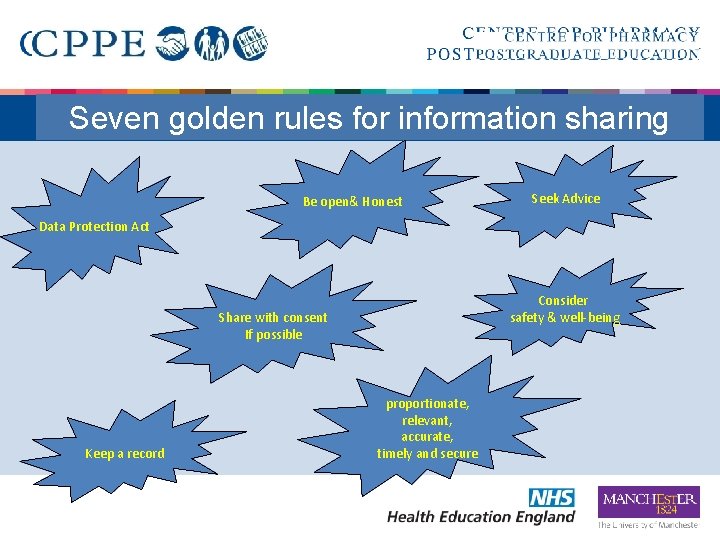
Seven golden rules for information sharing. Be open& Honest Seek Advice Data Protection Act Consider safety & well-being Share with consent If possible Keep a record proportionate, relevant, accurate, timely and secure
Points to consider when sharing information • Can the person be identified from the information? • Is it confidential? • Do you have consent? • Do you have a statutory obligation or court order requiring you to share the information? • Is there sufficient public interest to override the above: would they or others be at risk of significant harm if you did not share? 15
Confidentiality As a healthcare professional you have a responsibility to maintain patient confidentiality; however, you can breach this if you would be putting the victim or other vulnerable people at risk by not sharing information. Don’t let confidentiality issues put you off reporting – if you are sure you are acting in the best interests of the victim and they are at risk of significant harm, then you should be prepared to share confidential information. 16
Consent In a case of possible child abuse, you should seek parental consent to share information, unless they are the alleged perpetrator and therefore you would be putting the child at increased risk. In the case of adults, as long as they have mental capacity they can give consent to you sharing information. If they decide not to give consent the only time you can choose to share is if by not doing so you would be putting them or others at risk of significant harm. 17
Local procedures • Each clinical commissioning group (CCG) and NHS trust has a designated and/or named professional who has been trained to provide support and advice to any healthcare professional who has concerns about a child • They are your first point of contact with any concern you may have 18
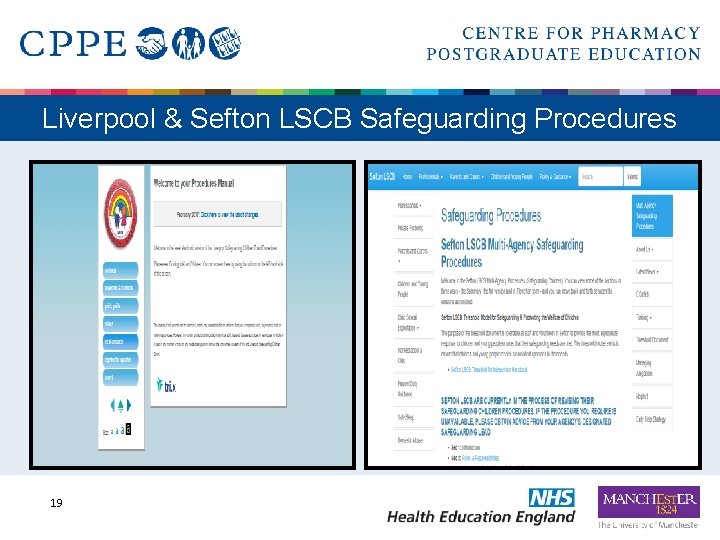
Liverpool & Sefton LSCB Safeguarding Procedures 19
Children Social Care contact details Halton (covering Widnes & Runcorn): Tel: 0151 907 8305 Out of Hours: 0345 050 0148 Knowsley – Tel: 0151 443 2600 Out of Hours: 01942 828 777 Liverpool - Tel: 0151 233 3700 / 3029 St Helens – Tel: 01744 675 600 Out of Hours: 0845 050 0148 Warrington – Tel: 01925 443400 Out of Hours: 01925 444400 Wigan - Tel: 01942 828300 Out of Hours: 01942 828 777 Manchester - Tel: 0161 234 5001 Lancashire- Tel: 0845 053 0009 20
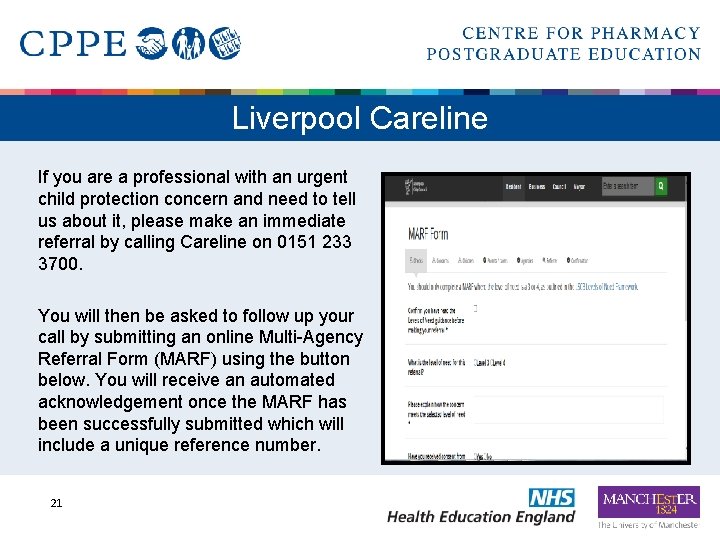
Liverpool Careline If you are a professional with an urgent child protection concern and need to tell us about it, please make an immediate referral by calling Careline on 0151 233 3700. You will then be asked to follow up your call by submitting an online Multi-Agency Referral Form (MARF) using the button below. You will receive an automated acknowledgement once the MARF has been successfully submitted which will include a unique reference number. 21
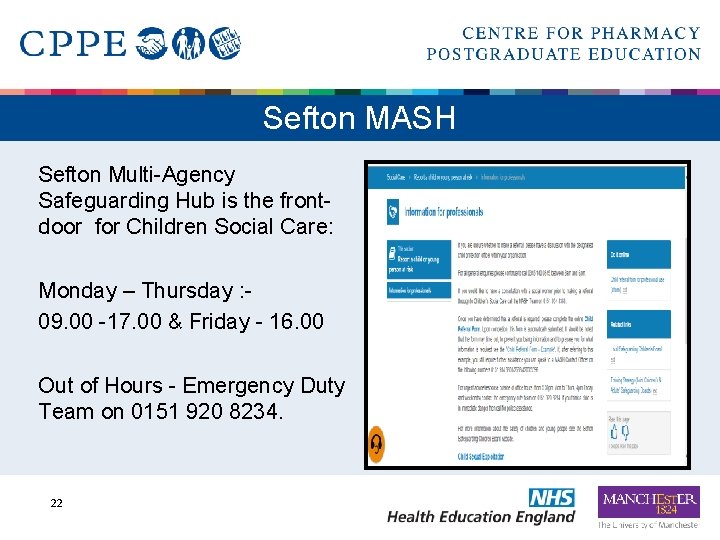
Sefton MASH Sefton Multi-Agency Safeguarding Hub is the frontdoor for Children Social Care: Monday – Thursday : 09. 00 -17. 00 & Friday - 16. 00 Out of Hours - Emergency Duty Team on 0151 920 8234. 22
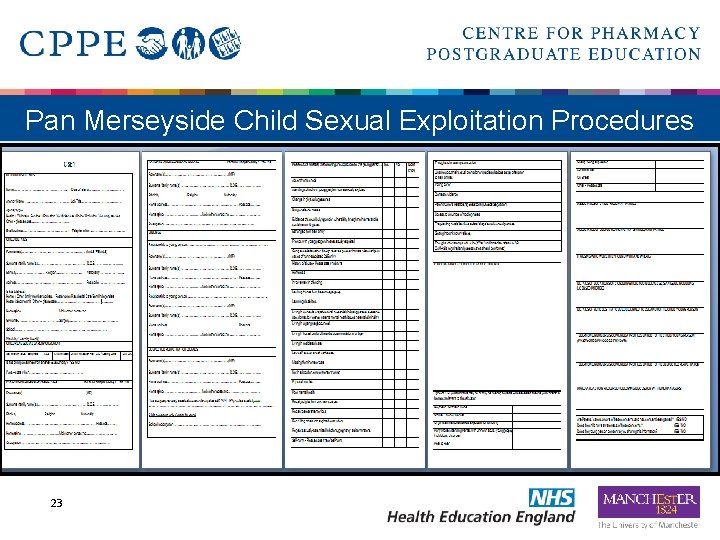
Pan Merseyside Child Sexual Exploitation Procedures 23
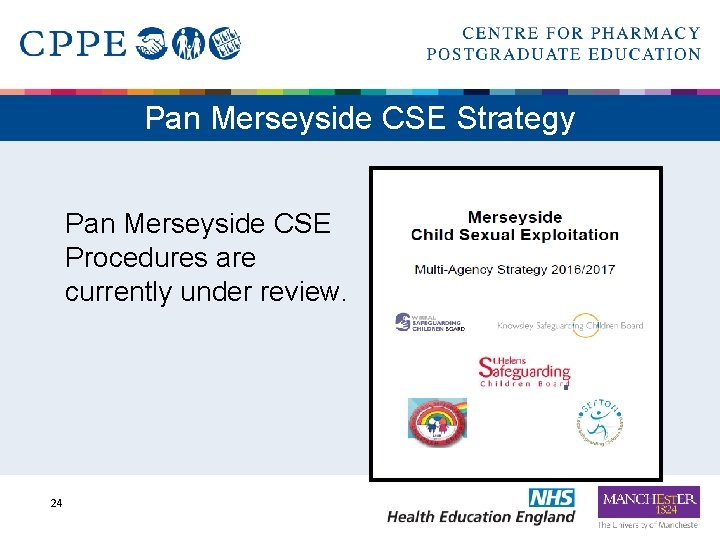
Pan Merseyside CSE Strategy Pan Merseyside CSE Procedures are currently under review. 24
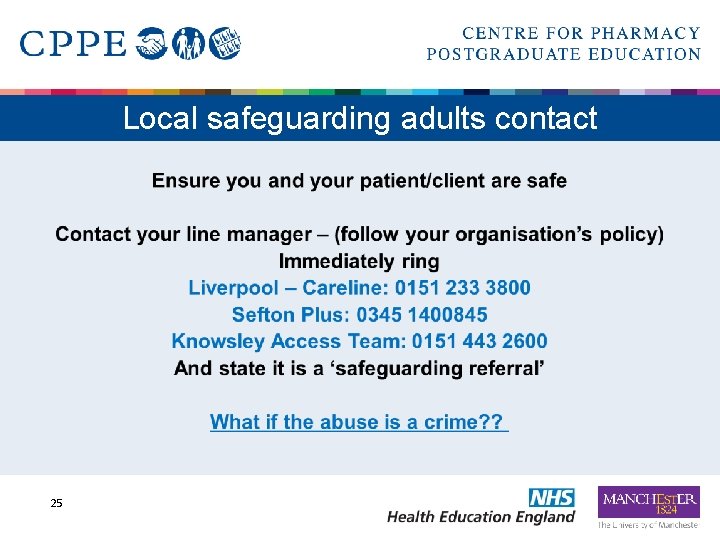
Local safeguarding adults contact 25
Recording your concerns • Listen and communicate in a way the victim can understand • Do not ask leading questions • Reassure, do not promise confidentiality • Record as much factual information as you have • Record all your concerns, actions and discussions 26
Referral • Discuss your concerns with a colleague or contact your local named nurse for advice then decide whether to refer • Seek agreement from the victim to refer or in the case of a child, their parents, unless this would put them at risk of significant harm • If referring by phone, you must provide a written report within the locally agreed time 27
In any case of suspected abuse DO NOT: • Ignore your concerns • Attempt to investigate suspicions or allegations of abuse • Ask probing questions • Discuss your concerns with the suspected/alleged perpetrator • Assume someone else will recognise and report it 28
Next steps in the process Once you have made the decision to refer, your concerns will be investigated and will result in one of the following outcomes: Adults, depending on the local authority you may receive notification that your concern is being looked into and information in relation to the outcome. 29
Local sources of support • NSPCC • Action on Elder Abuse • LCH Safeguarding Adults Duty Line 9 am - 4. 45 pm 07717576890 Children's Safeguarding Duty Line 0151 285 4660 30
In summary • Seek advice from your local safeguarding experts • Follow local procedures and report your concerns appropriately • Keep accurate records of your concerns and any actions you take 31
A final thought • If you ever have cause for concern, doing nothing is not an option • Never assume that someone else will recognise and report what you have seen or heard • It takes many pieces of a jigsaw before you can see the full picture 32

www. cppe. ac. uk info@cppe. ac. uk 0161 778 4000 Follow us on Twitter, Facebook, Linked. In and You. Tube: www. twitter. com/cppeengland www. facebook. com/cppeengland www. linkedin. com/company/centre-for-pharmacy-postgraduate-education www. cppe. ac. uk/youtube 33
- Slides: 33