
Safeguarding and Child Protection Training for School Staff
- Slides: 18
Safeguarding and Child Protection Training for School Staff (NAME of trainer) (DATE of training)
2. Learning outcomes All staff should receive appropriate safeguarding and child protection training which is regularly updated. (KCSi. E 2020 para 14) • Concepts of promoting welfare, safeguarding and child protection • Personal and organisational responsibility • Defining/recognising abuse • Identifying the child at risk and the child in need • Taking action to report concerns.
3. Safe learning environment Give others time to speak Respect differences Engage with the content Ask questions if need be Try to keep to timings
4. Key documents • Keeping Children Safe in Education 2020 – Part 1 – Annex A • What to do if you’re worried a child is being abused 2015 • School Safeguarding and CP policy • School Staff Behaviour Policy
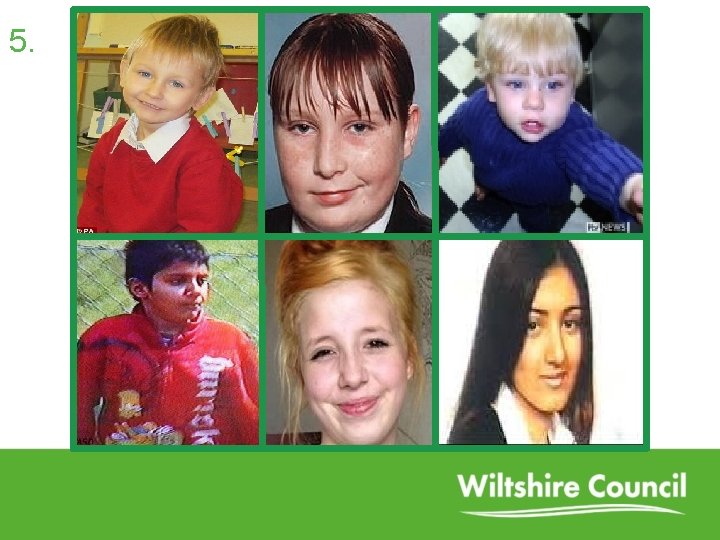
5.
5. Safeguarding Read KCSi. E 2020 paragraph 4 • Discuss - what is it in school? • Collate ideas on Post-its
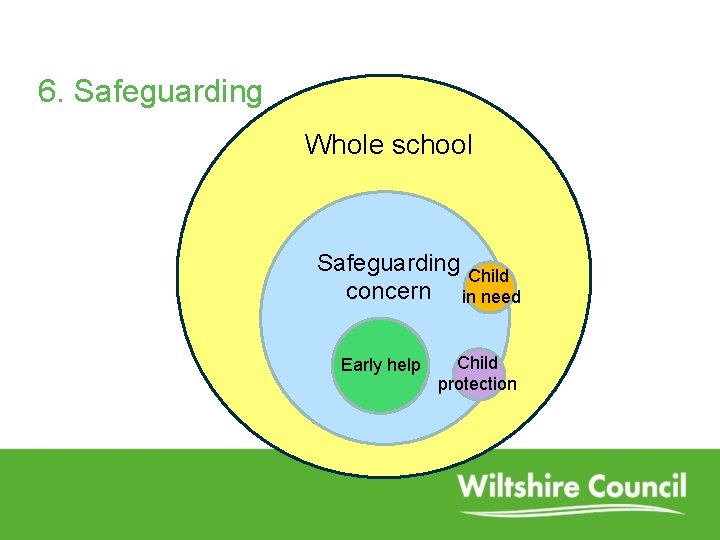
6. Safeguarding Whole school Safeguarding Child concern in need Early help Child protection
7. What is abuse Read the definitions in KCSi. E • Physical Abuse • Sexual Abuse • Emotional Abuse • Neglect
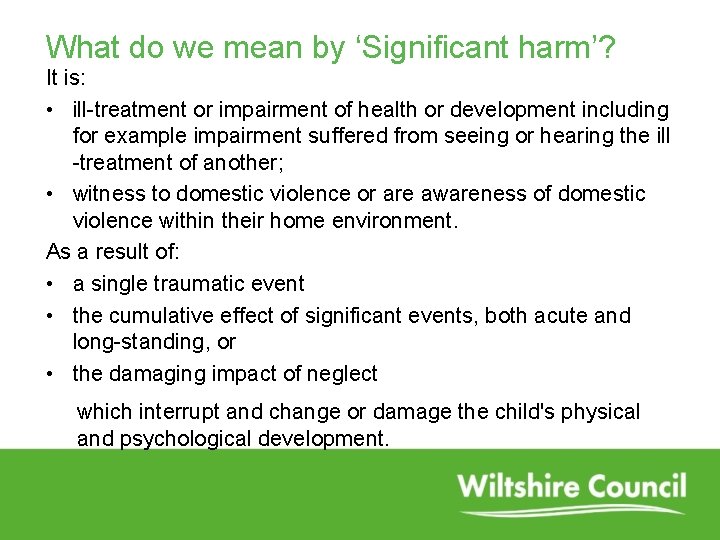
What do we mean by ‘Significant harm’? It is: • ill-treatment or impairment of health or development including for example impairment suffered from seeing or hearing the ill -treatment of another; • witness to domestic violence or are awareness of domestic violence within their home environment. As a result of: • a single traumatic event • the cumulative effect of significant events, both acute and long-standing, or • the damaging impact of neglect which interrupt and change or damage the child's physical and psychological development.
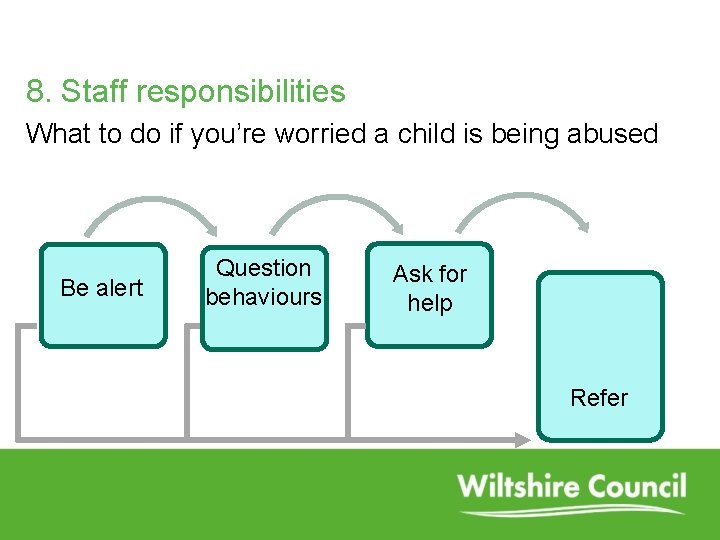
8. Staff responsibilities What to do if you’re worried a child is being abused Be alert Question behaviours Ask for help Refer
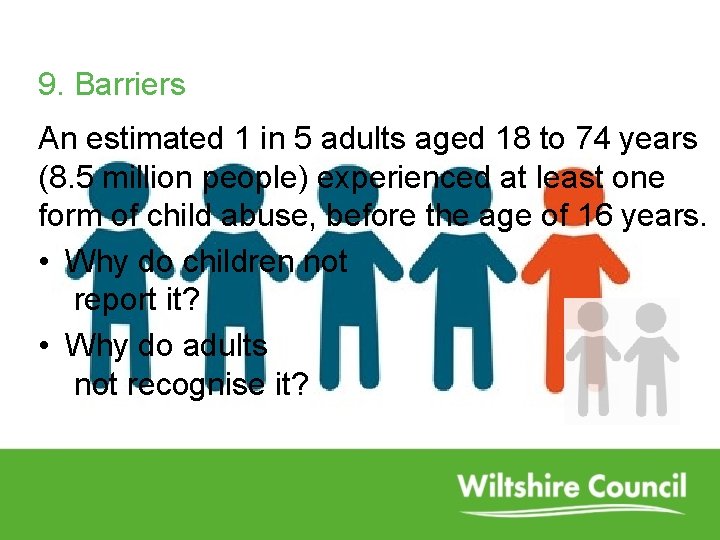
9. Barriers An estimated 1 in 5 adults aged 18 to 74 years (8. 5 million people) experienced at least one form of child abuse, before the age of 16 years. • Why do children not report it? • Why do adults not recognise it?
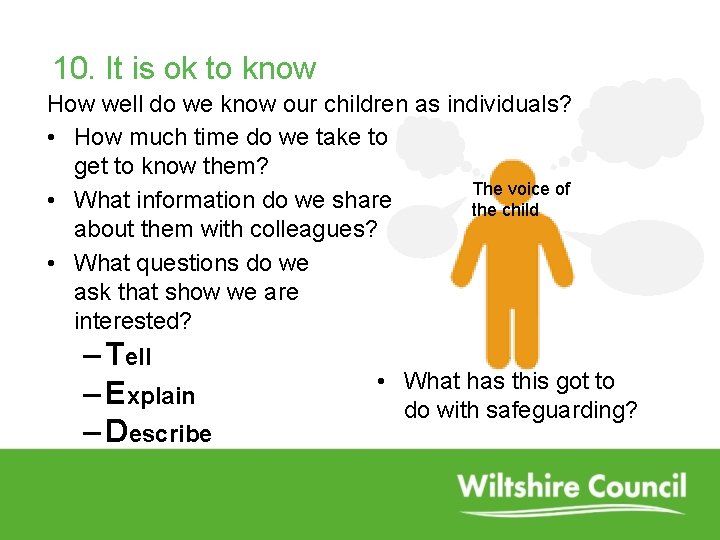
10. It is ok to know How well do we know our children as individuals? • How much time do we take to get to know them? The voice of • What information do we share the child about them with colleagues? • What questions do we ask that show we are interested? – Tell – Explain – Describe • What has this got to do with safeguarding?
11. It is ok to know Do we know the external factors influencing our children? • Their friends/peers in school • Their peers/peers outside school • Their family • The wider community Contextual safeguarding • Protective factors • Risks • Support • Interventions
12. It is not ok to assume • Someone else has already recorded this. • It’s not my business • Someone else is more able to deal with this. • I probably don’t know enough to say anything.
Reporting • What to write: – Facts or fuzzies – Opinions – Hearsay – Speculations • Actions • Follow-up
Allegations of abuse against adults Staff behaviour policy Flowcharts • Behaviour – Rule breaking • Not doing • Too much • Attitudes – Views shared in school or online
Whistleblowing Staff must feel confident to raise a concern about potential failures in the school’s safeguarding regime and know that such concerns will be taken seriously. • Whistleblowing policy – school process Where a staff member feels unable to raise an issue with their employer, or feels that their genuine concerns are not being addressed, other whistleblowing channels may be open to them: • NSPCC Whistleblowing hotline – external process
Questions What is safeguarding and child protection? What is abuse and significant harm? How do I report concerns?