
Safeguarding Aims and learning outcomes This training explores
- Slides: 41
Safeguarding
Aims and learning outcomes • This training explores Part 7 of the Act and how safeguarding fits with other Parts of the Act • By the end of the training you will: – Understand how safeguarding fits within the context of the whole Act – Be aware of the duties and powers and accountabilities under the Act relating to safeguarding – Have identified practice opportunities to prevent harm and promote safeguarding – Have explored key changes related to safeguarding – Reflect on the implications of the Act 1
Contents • • • Introduction Adults’ pathway Children’s pathway Safeguarding boards The National Independent Safeguarding Board Summary 2
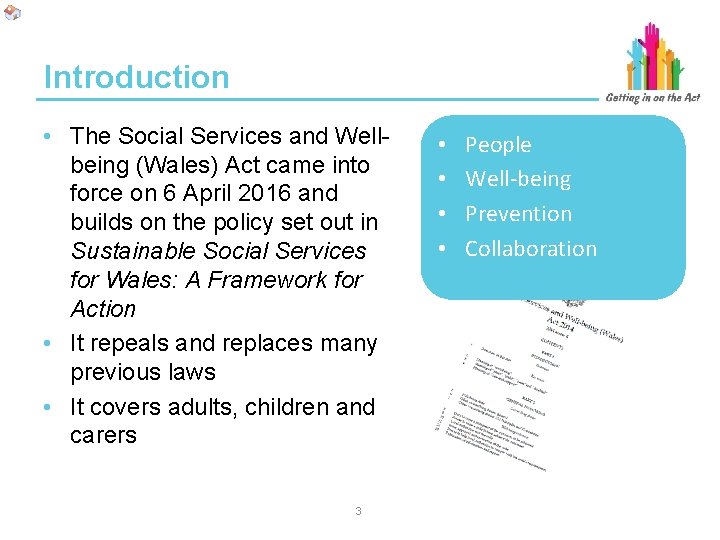
Introduction • The Social Services and Wellbeing (Wales) Act came into force on 6 April 2016 and builds on the policy set out in Sustainable Social Services for Wales: A Framework for Action • It repeals and replaces many previous laws • It covers adults, children and carers 3 • • People Well-being Prevention Collaboration
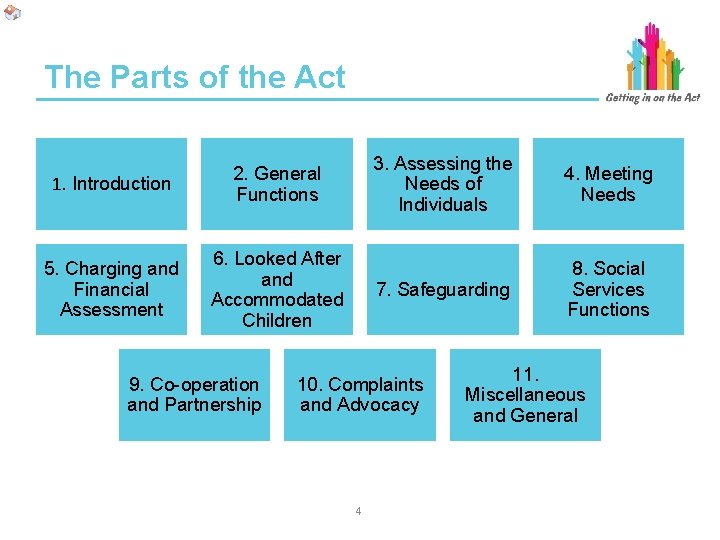
The Parts of the Act 1. Introduction 2. General Functions 5. Charging and Financial Assessment 6. Looked After and Accommodated Children 9. Co-operation and Partnership 3. Assessing the Needs of Individuals 4. Meeting Needs 7. Safeguarding 8. Social Services Functions 10. Complaints and Advocacy 4 11. Miscellaneous and General
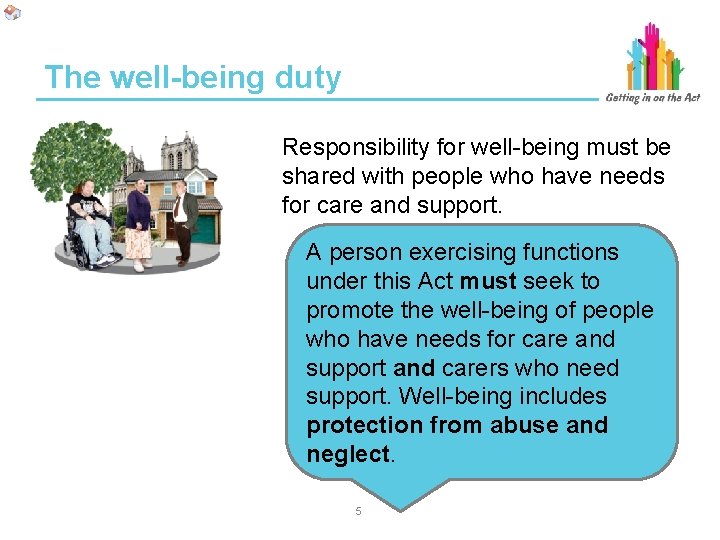
The well-being duty Responsibility for well-being must be shared with people who have needs for care and support. A person exercising functions under this Act must seek to promote the well-being of people who have needs for care and support and carers who need support. Well-being includes protection from abuse and neglect. 5
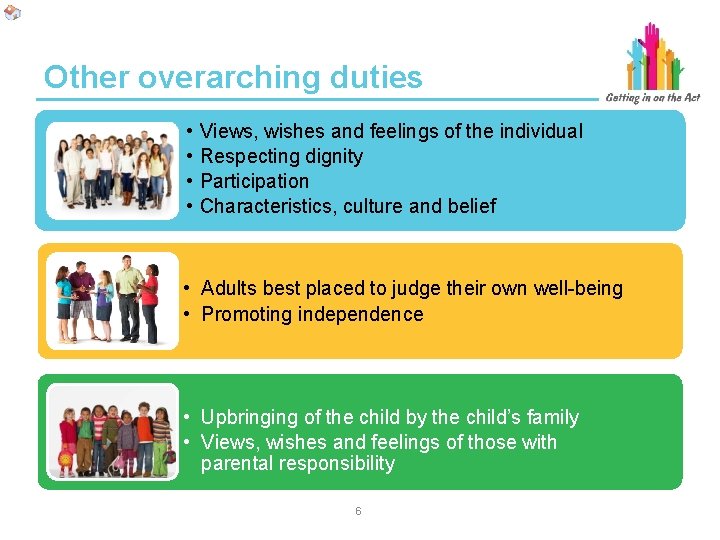
Other overarching duties • • Views, wishes and feelings of the individual Respecting dignity Participation Characteristics, culture and belief • Adults best placed to judge their own well-being • Promoting independence • Upbringing of the child by the child’s family • Views, wishes and feelings of those with parental responsibility 6
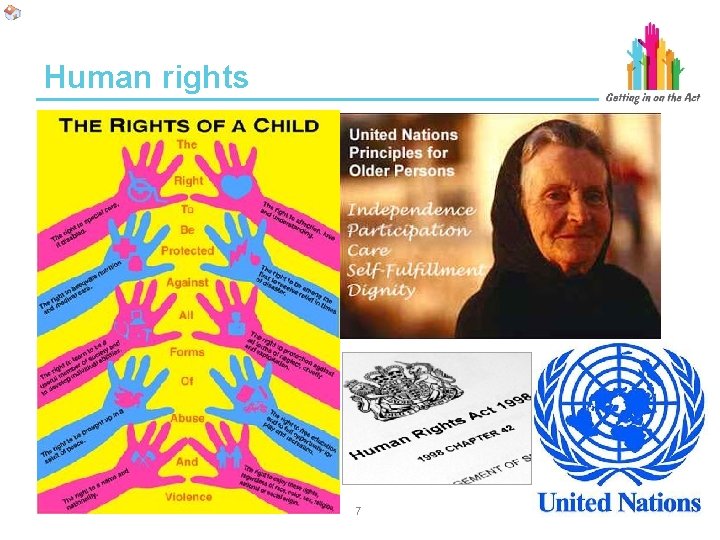
Human rights 7
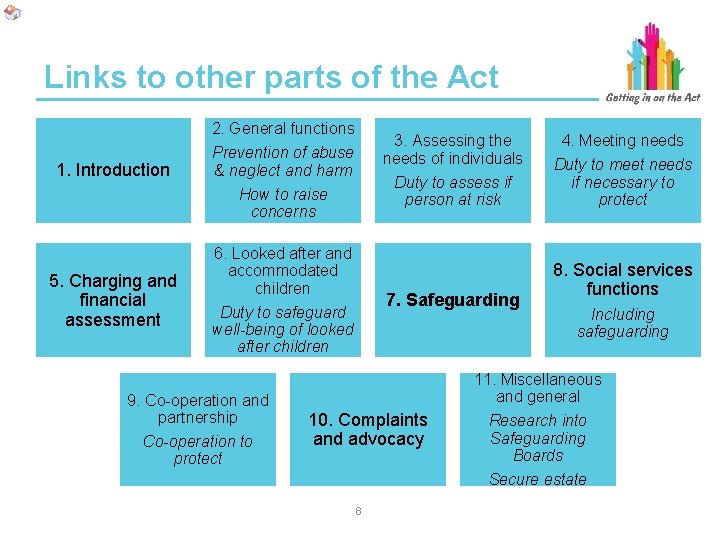
Links to other parts of the Act 2. General functions 1. Introduction 5. Charging and financial assessment 3. Assessing the needs of individuals Prevention of abuse & neglect and harm How to raise concerns Duty to assess if person at risk 6. Looked after and accommodated children Duty to safeguard well-being of looked after children 9. Co-operation and partnership Co-operation to protect 7. Safeguarding 4. Meeting needs Duty to meet needs if necessary to protect 8. Social services functions Including safeguarding 11. Miscellaneous and general 10. Complaints and advocacy 8 Research into Safeguarding Boards Secure estate
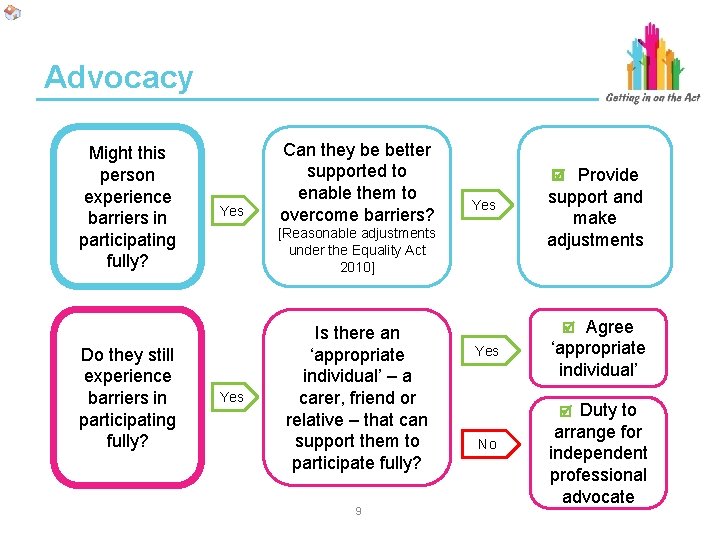
Advocacy Might this person experience barriers in participating fully? Do they still experience barriers in participating fully? Yes Can they be better supported to enable them to overcome barriers? Provide Yes [Reasonable adjustments under the Equality Act 2010] Yes Is there an ‘appropriate individual’ – a carer, friend or relative – that can support them to participate fully? 9 support and make adjustments Agree Yes ‘appropriate individual’ Duty to No arrange for independent professional advocate
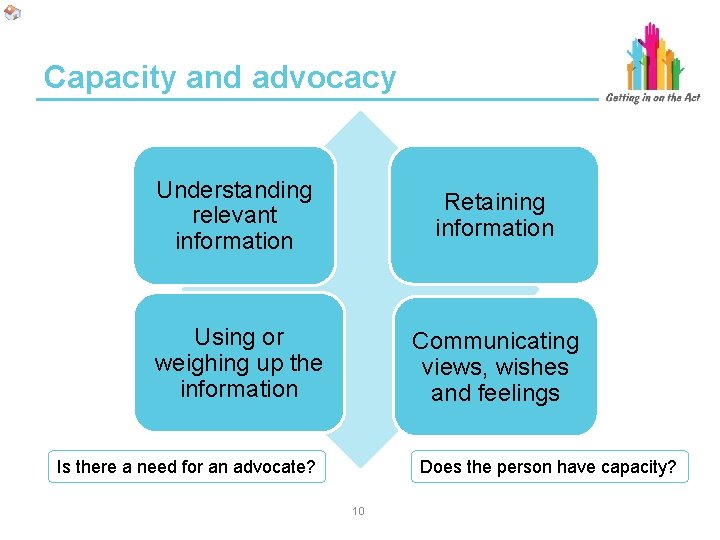
Capacity and advocacy Understanding relevant information Retaining information Using or weighing up the information Communicating views, wishes and feelings Is there a need for an advocate? Does the person have capacity? 10
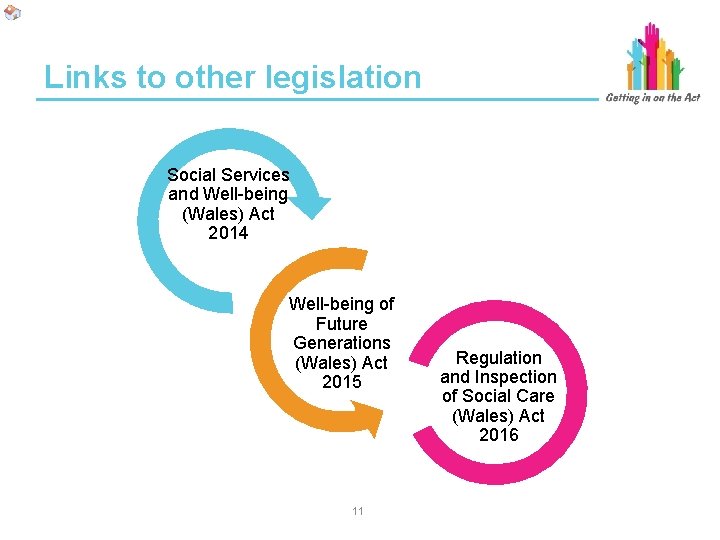
Links to other legislation Social Services and Well-being (Wales) Act 2014 Well-being of Future Generations (Wales) Act 2015 11 Regulation and Inspection of Social Care (Wales) Act 2016
Violence against Women, Domestic Abuse and Sexual Violence (Wales) Act 2015 “The provisions of the Violence against Women, Domestic Abuse and Sexual Violence (Wales) Act 2015 are intended to ensure a focus across the public sector on the prevention of these issues, the protection of victims and the support for those affected by such issues. ” (Explanatory Memorandum, April 2015) 12
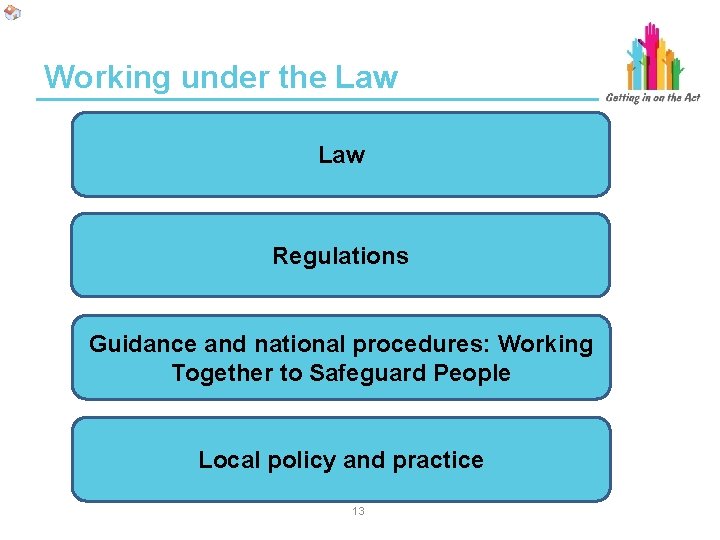
Working under the Law Regulations Guidance and national procedures: Working Together to Safeguard People Local policy and practice 13
Adults’ pathway
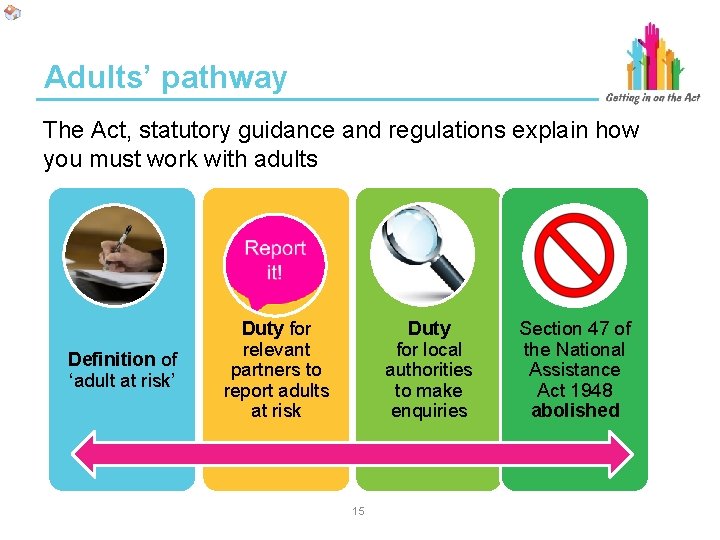
Adults’ pathway The Act, statutory guidance and regulations explain how you must work with adults Definition of ‘adult at risk’ Duty for relevant partners to report adults at risk Duty for local authorities to make enquiries 15 Section 47 of the National Assistance Act 1948 abolished
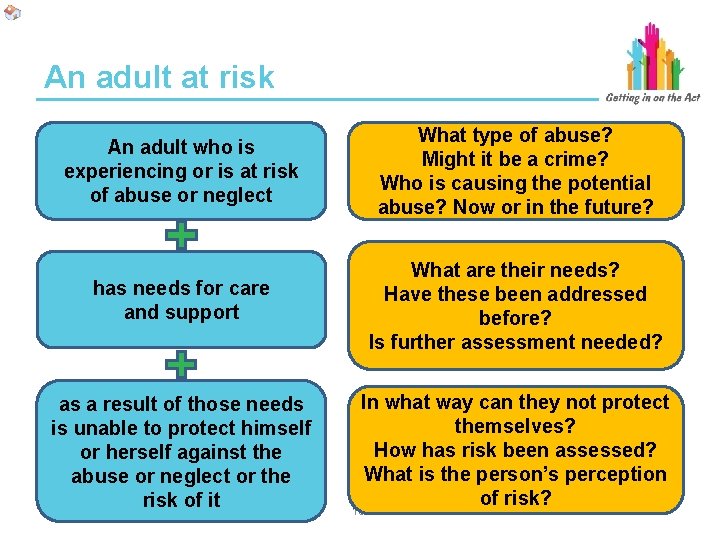
An adult at risk An adult who is experiencing or is at risk of abuse or neglect What type of abuse? Might it be a crime? Who is causing the potential abuse? Now or in the future? has needs for care and support What are their needs? Have these been addressed before? Is further assessment needed? as a result of those needs is unable to protect himself or herself against the abuse or neglect or the risk of it In what way can they not protect themselves? How has risk been assessed? What is the person’s perception of risk? 16
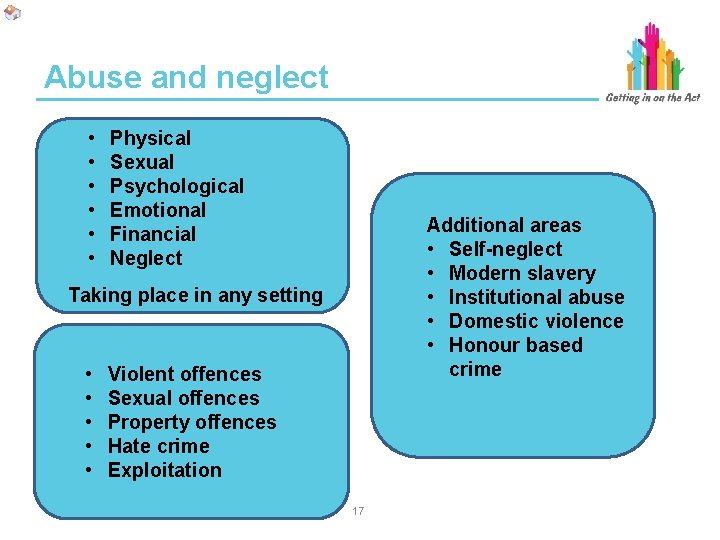
Abuse and neglect • • • Physical Sexual Psychological Emotional Financial Neglect Additional areas • Self-neglect • Modern slavery • Institutional abuse • Domestic violence • Honour based crime Taking place in any setting • • • Violent offences Sexual offences Property offences Hate crime Exploitation 17
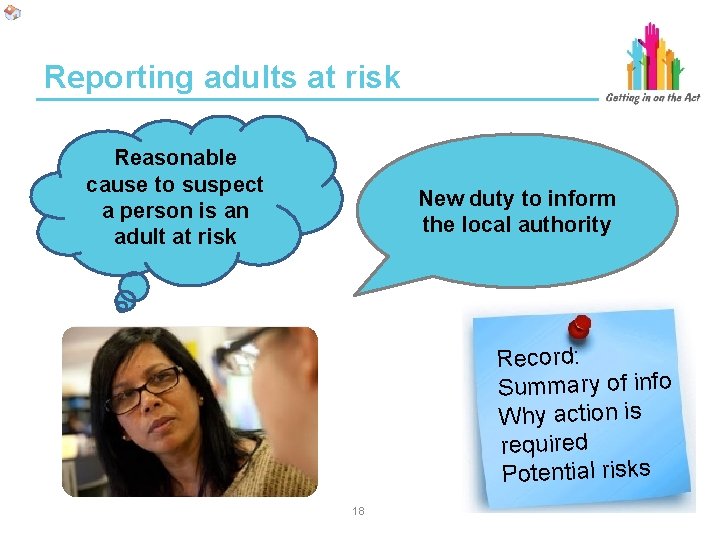
Reporting adults at risk Reasonable cause to suspect a person is an adult at risk New duty to inform the local authority Record: Summary of info Why action is required Potential risks 18
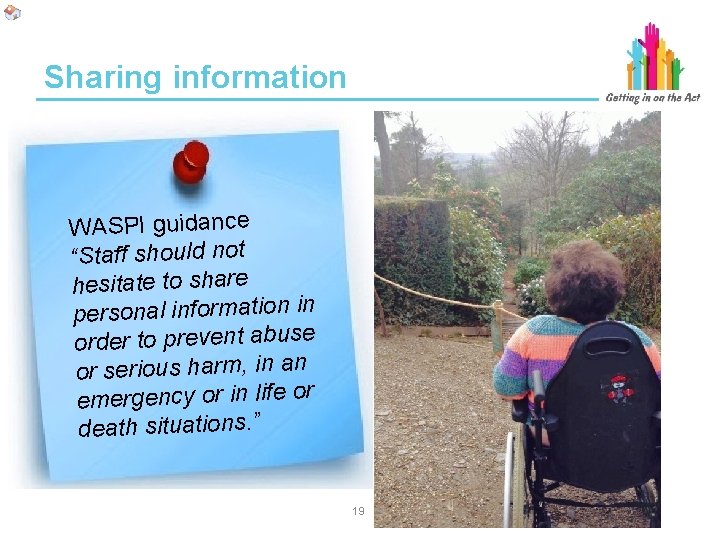
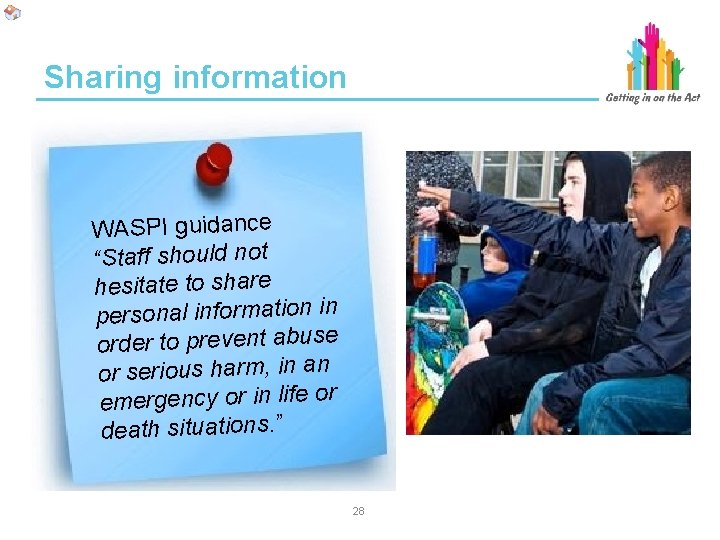
Sharing information WASPI guidance “Staff should not hesitate to share personal information in order to prevent abuse or serious harm, in an emergency or in life or death situations. ” 19
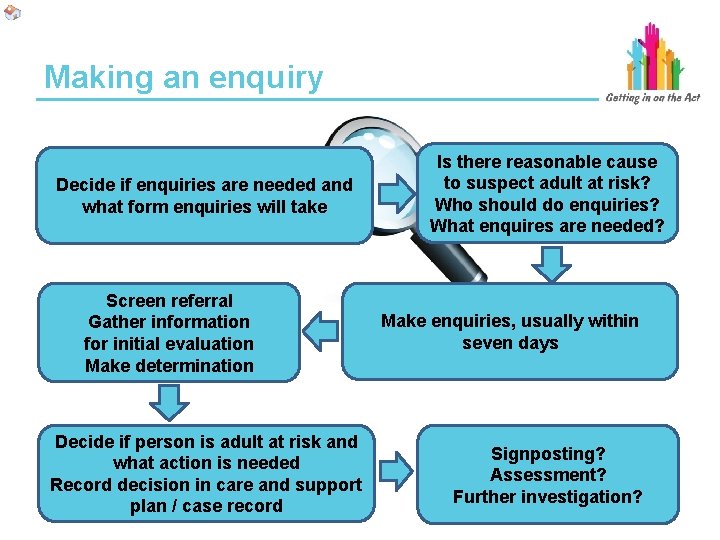
Making an enquiry Decide if enquiries are needed and what form enquiries will take Screen referral Gather information for initial evaluation Make determination Decide if person is adult at risk and what action is needed Record decision in care and support plan / case record 20 Is there reasonable cause to suspect adult at risk? Who should do enquiries? What enquires are needed? Make enquiries, usually within seven days Signposting? Assessment? Further investigation?
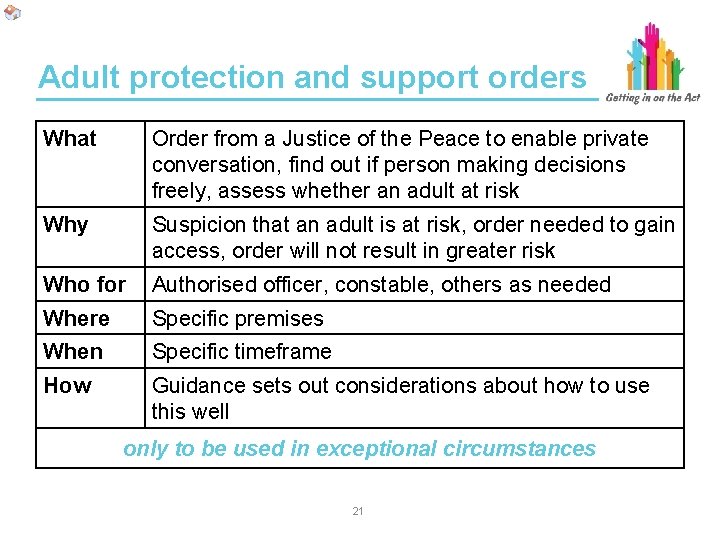
Adult protection and support orders What Order from a Justice of the Peace to enable private conversation, find out if person making decisions freely, assess whether an adult at risk Why Suspicion that an adult is at risk, order needed to gain access, order will not result in greater risk Who for Authorised officer, constable, others as needed Where Specific premises When Specific timeframe How Guidance sets out considerations about how to use this well only to be used in exceptional circumstances 21
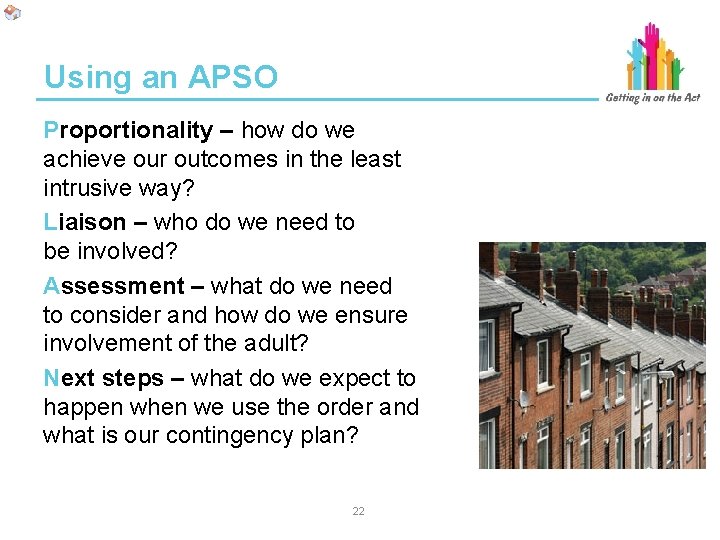
Using an APSO Proportionality – how do we achieve our outcomes in the least intrusive way? Liaison – who do we need to be involved? Assessment – what do we need to consider and how do we ensure involvement of the adult? Next steps – what do we expect to happen when we use the order and what is our contingency plan? 22
Children’s pathway
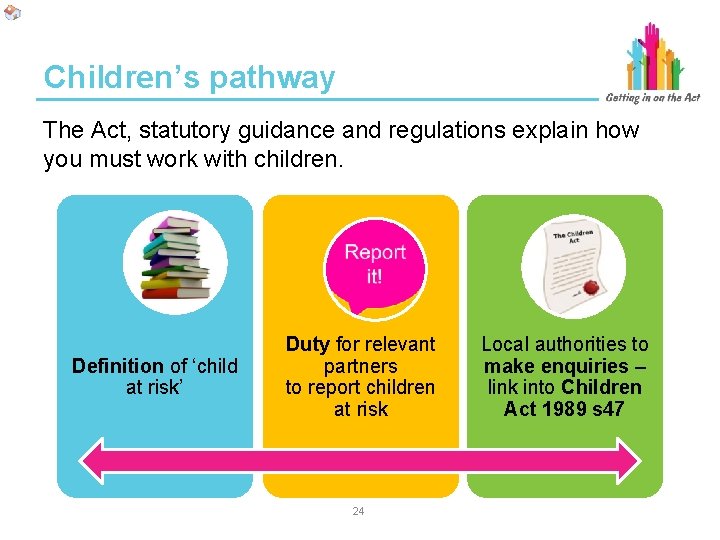
Children’s pathway The Act, statutory guidance and regulations explain how you must work with children. Definition of ‘child at risk’ Duty for relevant partners to report children at risk 24 Local authorities to make enquiries – link into Children Act 1989 s 47
A child at risk A child who is experiencing or is at risk of abuse, neglect or other kinds of harm has needs for care and support (whether or not the needs are being met) 25
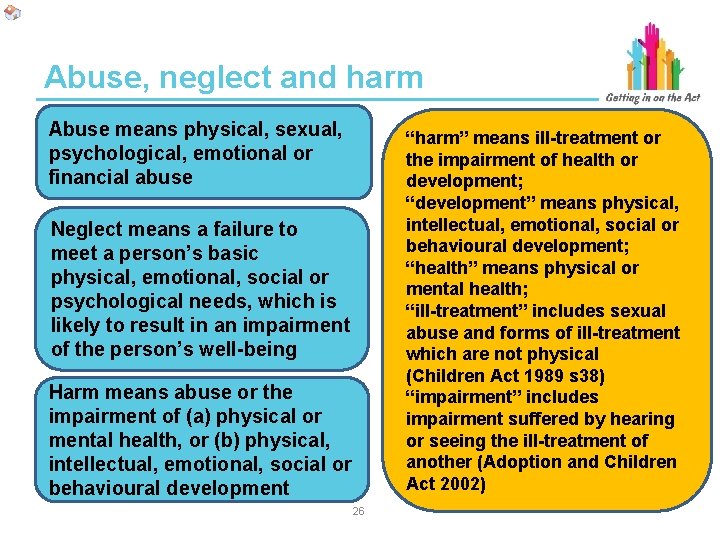
Abuse, neglect and harm Abuse means physical, sexual, psychological, emotional or financial abuse “harm” means ill-treatment or the impairment of health or development; “development” means physical, intellectual, emotional, social or behavioural development; “health” means physical or mental health; “ill-treatment” includes sexual abuse and forms of ill-treatment which are not physical (Children Act 1989 s 38) “impairment” includes impairment suffered by hearing or seeing the ill-treatment of another (Adoption and Children Act 2002) Neglect means a failure to meet a person’s basic physical, emotional, social or psychological needs, which is likely to result in an impairment of the person’s well-being Harm means abuse or the impairment of (a) physical or mental health, or (b) physical, intellectual, emotional, social or behavioural development 26
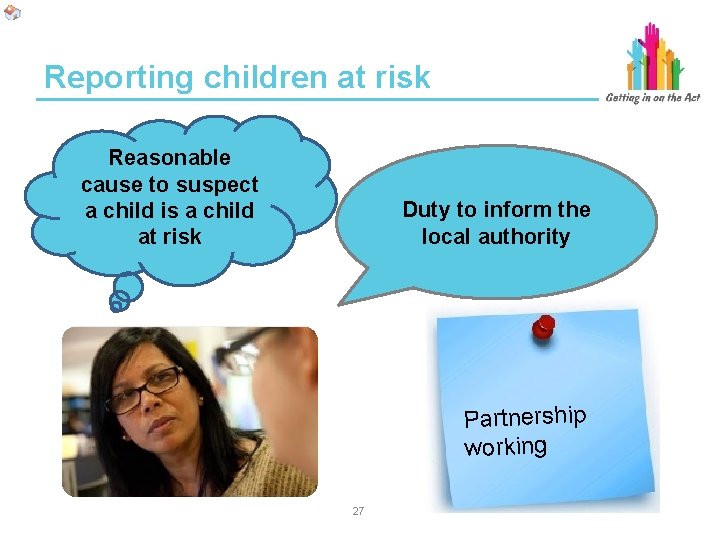
Reporting children at risk Reasonable cause to suspect a child is a child at risk Duty to inform the local authority Partnership working 27
Sharing information WASPI guidance “Staff should not hesitate to share personal information in order to prevent abuse or serious harm, in an emergency or in life or death situations. ” 28
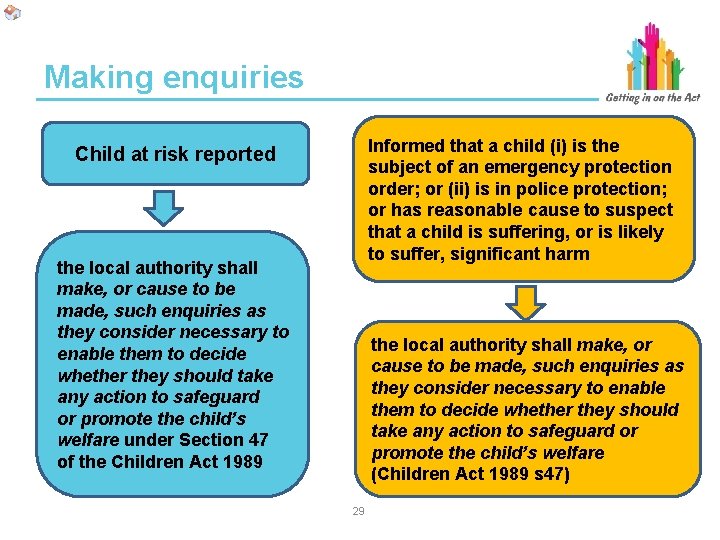
Making enquiries Informed that a child (i) is the subject of an emergency protection order; or (ii) is in police protection; or has reasonable cause to suspect that a child is suffering, or is likely to suffer, significant harm Child at risk reported the local authority shall make, or cause to be made, such enquiries as they consider necessary to enable them to decide whether they should take any action to safeguard or promote the child’s welfare under Section 47 of the Children Act 1989 the local authority shall make, or cause to be made, such enquiries as they consider necessary to enable them to decide whether they should take any action to safeguard or promote the child’s welfare (Children Act 1989 s 47) 29
Safeguarding Boards
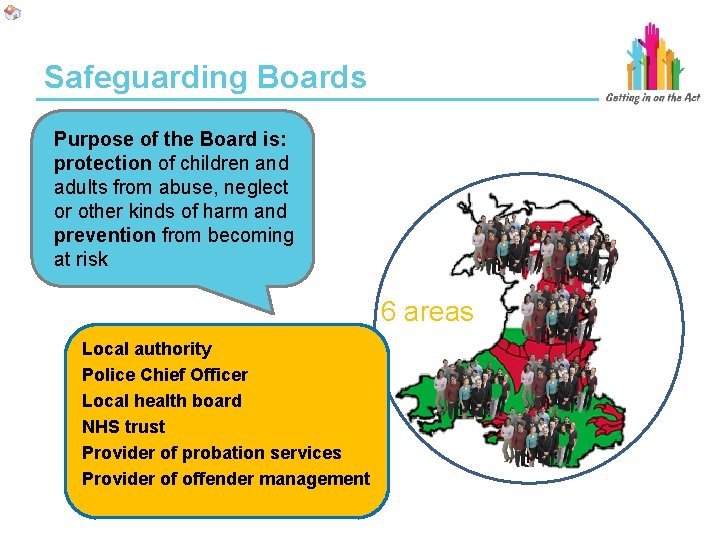
Safeguarding Boards Purpose of the Board is: protection of children and adults from abuse, neglect or other kinds of harm and prevention from becoming at risk 6 areas Local authority Police Chief Officer Local health board NHS trust Provider of probation services Provider of offender management 31
Functions of Safeguarding Boards Prevention Protection Service recipient participation is a requirement • Contribute to national policies / procedures • Raise awareness • Review efficacy of measures • Undertake practice reviews and audits, and make and monitor any recommendations • Disseminate information on best practice, facilitate research and review training needs • Cooperate with other boards and seek specialist advice or information when appropriate 32
Board arrangements • • Senior membership from partners Other members as needed Links with regulators and inspection bodies Wider engagement Leadership from Chair Participation from children and adults Partners contribute to expenses 33
Service recipient participation Expert input to increase effectiveness Service participant participation is a requirement • Involve in service delivery and design • Be creative • Be aware of power • Understand each others’ needs • Create time and resource • Review and evaluate • See what changes have been achieved • Be purposeful 34
Improving safeguarding • Practice reviews – Concise – Extended • Multi-agency Forums – Case learning – Dissemination of new knowledge and findings 35
National Independent Safeguarding Board
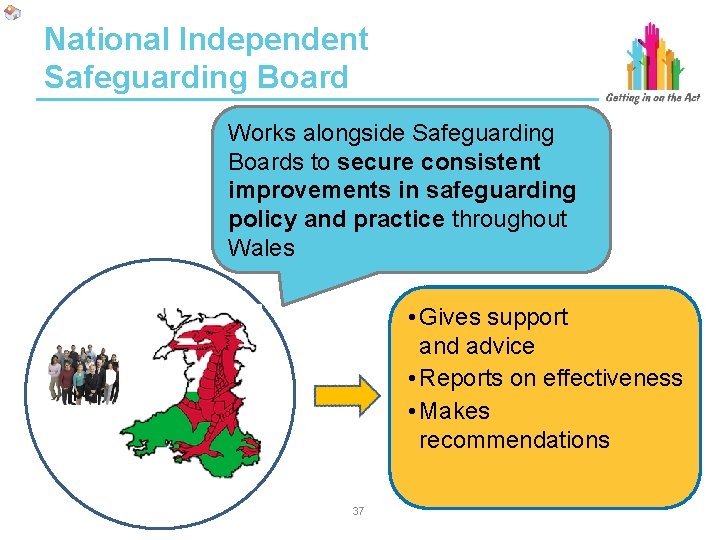
National Independent Safeguarding Board Works alongside Safeguarding Boards to secure consistent improvements in safeguarding policy and practice throughout Wales • Gives support and advice • Reports on effectiveness • Makes recommendations 37
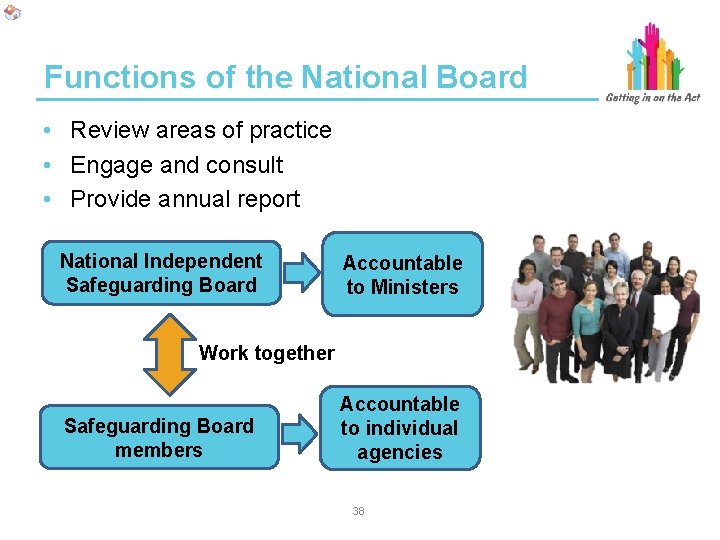
Functions of the National Board • Review areas of practice • Engage and consult • Provide annual report National Independent Safeguarding Board Accountable to Ministers Work together Safeguarding Board members Accountable to individual agencies 38
Summary
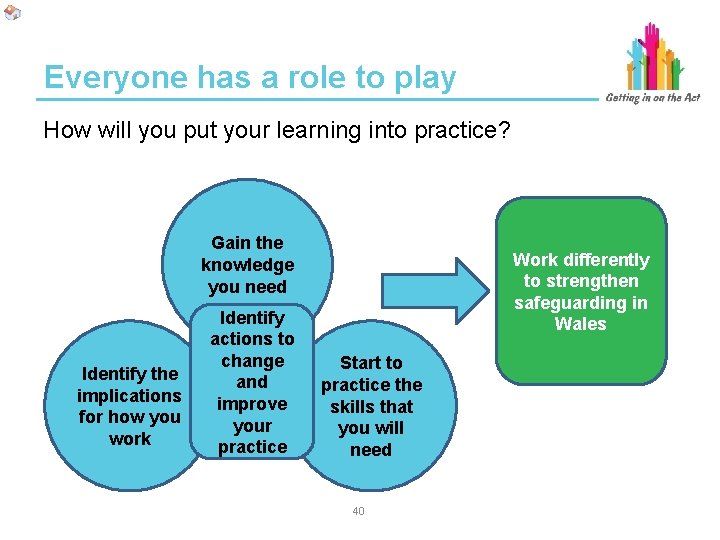
Everyone has a role to play How will you put your learning into practice? Gain the knowledge you need Identify the implications for how you work Identify actions to change and improve your practice Work differently to strengthen safeguarding in Wales Start to practice the skills that you will need 40