
SAFEGUARDING ADULTS POLICY AND PROCEDURES REVIEW Mike Williamson
- Slides: 34
SAFEGUARDING ADULTS POLICY AND PROCEDURES REVIEW Mike Williamson – Principal Social Worker, Access and Safeguarding Adults Date 8/10/2105
Safeguarding- What it is and Why it matters q Safeguarding means protecting an adult's right to live in safety, free from abuse and neglect. It is about people and organisations working together to prevent and stop both the risks and experience of abuse or neglect, while at the same time making sure that the adult's wellbeing is promoted including, where appropriate , having regard to their views, wishes, feelings and beliefs in deciding on any action. This must recognise that adults sometimes have complex interpersonal relationships and may be ambivalent, unclear or unrealistic about their personal circumstances. (Care Act 2014)
Safeguarding- What it is and Why it matters q Organisations should always promote the adult 's wellbeing in their safeguarding arrangements. People have complex lives and being safe is only one of the things they want for themselves. Professionals should work with the adult to establish what being safe means to them and how that can be best achieved. Professionals and other staff should not be advocating "safety" measures that do not take account of individual wellbeing q (Care Act 2014)
The aims of adult safeguarding are to q stop abuse or neglect wherever possible; q prevent harm and reduce the risk of abuse or neglect to adults with care and support needs; q safeguard adults in a way that supports them in making choices and having control about how they want to live;
The aims of adult safeguarding are to q promote an approach that concentrates on improving life for the adults concerned; q raise public awareness so that communities as a whole, alongside professionals, play their part in preventing, identifying and responding to abuse and neglect; q provide information and support in accessible ways to help people understand the different types of abuse, how to stay safe and what to do to raise a concern about the safety or well-being of an adult; and q address what has caused the abuse or neglect.
Safeguarding is not a substitute for: q providers' responsibilities to provide safe and high quality care and support; q commissioners regularly assuring themselves of the safety and effectiveness of commissioned services; q Registrations and Inspections ensuring that regulated providers comply with the fundamental standards of care or by taking enforcement action; and q the core duties of the police to prevent and detect crime and protect life and property. (Adapted from Care Act 2014)
Process of Review q The recent review of the existing Policy and Procedures was approached from two directions. q 1) Consultation with other agencies via their representatives on the Vulnerable Adults Group and the Adult Protection Operational Group. In addition agreement from the SAP Board regarding some of the proposed changes /additions. q 2) Consideration of changes in UK Legislation and practice with regard to Safeguarding Adults.
Issues from Consultation q Existing Policy is too long and inclusive of too much detail regarding procedures for most front line staff, who it was felt, only require information regarding what to be concerned about and how to report. i. e. up to the raising Alert stage. q The remainder of the policy is essentially operating procedures for the Safeguarding Adults team and those involved in Adult Protection investigations
Issues from Consultation (cont. ) q Concern regarding the use of the terms ‘Abused’ and ‘Perpetrator’ as many people don’t identify themselves with these terms. q Historically a lack of direct involvement of the person who is subject of the AP alert in the process. q Some difficulties engaging some agencies / areas in the process.
Issues from Consultation (cont. ) q Lack of awareness that Safeguarding Adults is everyone’s responsibility. q A belief that all Safeguarding issues should be dealt with by Adult Social Care q A lack of understanding from some Health staff that the existing Policy and Procedures applies to them. q Lack of clarity regarding decision making process once AP alert is raised
Consideration of developments in UK legislation and Practice q The Care Act in England has introduced a more robust legal footing for Safeguarding Adults. q It has enshrined the view that Safeguarding is everyone's business q Highlighted the importance of making Safeguarding Personal. q Required LA’s to have Safeguarding Adults Boards. q Introduced six principles of Safeguarding as follows.
SIX PRINCIPLES q Empowerment People being supported and encouraged to make their own decisions and informed consent. q Prevention It is better to take action before harm occurs. q Proportionality The least intrusive response appropriate to the risk presented.
Six Principles q Protection Support and representation for those in greatest need. q Partnership Local solutions through services working with their communities. Communities have a part to play in preventing, detecting and reporting neglect and abuse. q Accountability and transparency in safeguarding practice.
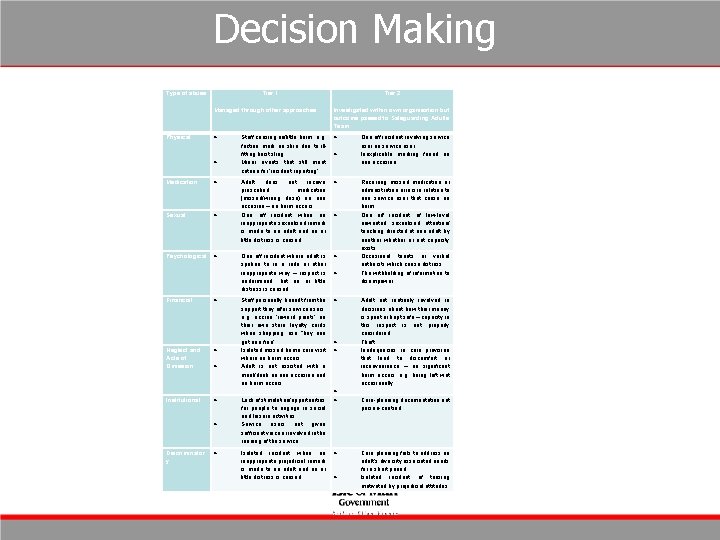
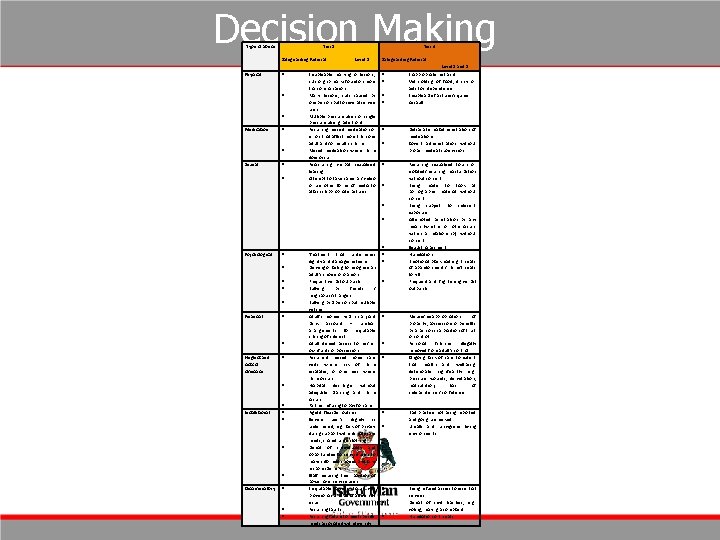
How Policy has been revised to address these issues q We have introduced the following into the policy. q Making Safeguarding Personal. q Safeguarding is Everyone's Business. q Six Principles of Safeguarding as outlined above. q Made explicit the need for Health staff to consider Safeguarding issues. q A decision making matrix incorporated into procedures to give greater clarity to this process
Making Safeguarding Personal Making safeguarding personal means the process should be person-led and outcome-focused. It engages the person in a conversation about how best to respond to their safeguarding situation in a way that enhances involvement, choice and control as well as improving quality of life, wellbeing and safety. Nevertheless, there are key issues that local authorities and their partners should consider if they suspect or are made aware of abuse or neglect. q (Care Act 2014)
Safeguarding is Everyone’s Business q ensure that everyone, both individuals and organisations, are clear about their roles and responsibilities; q create strong multi-agency partnerships that provide timely and effective prevention of and responses to abuse or neglect; q support the development of a positive learning environment across these partnerships and at all levels within them to help break down cultures that are riskaverse and seek to scapegoat or blame practitioners ;
Safeguarding is Everyone’s Business q enable access to mainstream community resources such as accessible leisure facilities, safe town centre’s and community groups that can reduce the social and physical isolation which in itself may increase the risk of abuse or neglect; and q clarify how responses to safeguarding concerns deriving from the poor quality and inadequacy of service provision, including patient safety in the health sector, should be responded to.
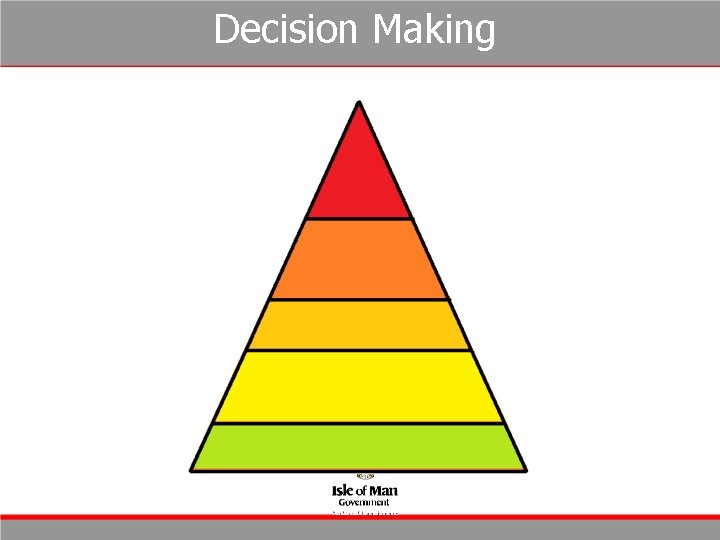
Decision Making
Decision Making Type of abuse Tier 1 Managed through other approaches Tier 2 Investigated within own organisation but outcome passed to Safeguarding Adults Team Physical Staff causing no/little harm, e. g. friction mark on skin due to illfitting hoist sling Minor events that still meet criteria for ‘incident reporting’ Adult does not receive prescribed medication (missed/wrong dose) on one occasion – no harm occurs One off incident when an inappropriate sexualised remark is made to an adult and no or little distress is caused One off incident where adult is spoken to in a rude or other inappropriate way – respect is undermined, but no or little distress is caused Staff personally benefit from the support they offer service users, e. g. accrue ‘reward points’ on their own store loyalty cards when shopping, use “buy one get one free’ Isolated missed home care visit where no harm occurs Adult is not assisted with a meal/drink on one occasion and no harm occurs Medication Sexual Psychological Financial Neglect and Acts of Omission Institutional Discriminator y Lack of stimulation/opportunities for people to engage in social and leisure activities Service users not given sufficient voice or involved in the running of the service Isolated incident when an inappropriate prejudicial remark is made to an adult and no or little distress is caused One off incident involving service user on service user Inexplicable marking found on one occasion Recurring missed medication or administration errors in relation to one service user that cause no harm One off incident of low-level unwanted sexualised attention/ touching directed at one adult by another whether or not capacity exists Occasional taunts or verbal outbursts which cause distress The withholding of information to disempower Adult not routinely involved in decisions about how their money is spent or kept safe – capacity in this respect is not properly considered Theft Inadequacies in care provision that lead to discomfort or inconvenience – no significant harm occurs, e. g. being left wet occasionally Care-planning documentation not person-centred Care planning fails to address an adult’s diversity associated needs for a short period Isolated incident of teasing motivated by prejudicial attitudes
Decision Making Type of abuse Physical Tier 3 Safeguarding Referral Level 1 Tier 4 Safeguarding Referral Level 2 and 3 Medication Sexual Inexplicable marking or lesions, cuts or grip marks found on more than one occasion. Marks lesions, cuts caused by one person but to several service users Multiple pressure ulcers or single pressure ulcer grade 3 or 4 Recurring missed medication or errors that affect more than one adult and/or result in harm Missed medication where harm does occur Reoccurring verbal sexualised teasing Attempt to take camera / video or use other forms of media to attain inappropriate pictures Psychological Financial Neglect and Acts of Omission Institutional Discriminatory Treatment that undermines dignity and damages esteem Denying or failing to recognise an adult’s choice or opinion Frequent verbal outbursts Bullying by friends / neighbours/strangers Bullying by 1 person but multiple victims Adult’s monies kept in a joint bank account – unclear arrangements for equitable sharing of interest Adult denied access to his/her own funds or possessions Recurrent missed home care visits where risk of harm escalates, or one miss where harm occurs Hospital discharge without adequate planning and harm occurs Partner refusing to pay for care Rigid/inflexible routines Service user’s dignity is undermined, e. g. lack of privacy during support with intimate care needs, shared underclothing Denial of individuality and opportunities for service users to make informed choices and take responsible risks Staff misusing their position of power over service users Inequitable access to service provision as a result of a diversity issue Recurring taunts Recurring failure to meet specific needs associated with diversity Inappropriate restraint Withholding of food, drinks or aids to independence Inexplicable fractures/injuries Assault Deliberate maladministration of medications Covert administration without proper medical supervision Recurring sexualised touch or isolated/recurring masturbation without consent Being made to look at pornographic material without consent Being subject to indecent exposure Attempted penetration by any means (whether or not is occurs within a relationship) without consent Sexual harassment Humiliation Emotional blackmail e. g. threats of abandonment / harm/threats to kill Frequent and frightening verbal outbursts Misuse/misappropriation of property, possessions or benefits by a person in a position of trust or control Personal finances illegally removed from adult’s control Ongoing lack of care to extent that health and wellbeing deteriorate significantly e. g. pressure wounds, dehydration, malnutrition, loss of independence / confidence Bad practice not being reported and going unchecked Unsafe and unhygienic living environments Being refused access to essential services Denial of civil liberties, e. g. voting, making a complaint Humiliation or threats
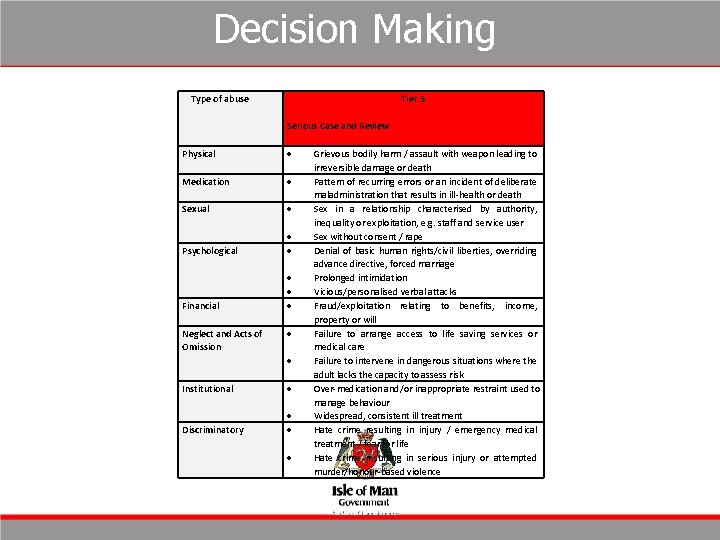
Decision Making Type of abuse Physical Medication Sexual Psychological Financial Neglect and Acts of Omission Institutional Discriminatory Tier 5 Serious Case and Review Grievous bodily harm / assault with weapon leading to irreversible damage or death Pattern of recurring errors or an incident of deliberate maladministration that results in ill-health or death Sex in a relationship characterised by authority, inequality or exploitation, e. g. staff and service user Sex without consent / rape Denial of basic human rights/civil liberties, overriding advance directive, forced marriage Prolonged intimidation Vicious/personalised verbal attacks Fraud/exploitation relating to benefits, income, property or will Failure to arrange access to life saving services or medical care Failure to intervene in dangerous situations where the adult lacks the capacity to assess risk Over-medication and/or inappropriate restraint used to manage behaviour Widespread, consistent ill treatment Hate crime resulting in injury / emergency medical treatment / fear for life Hate crime resulting in serious injury or attempted murder/honour-based violence
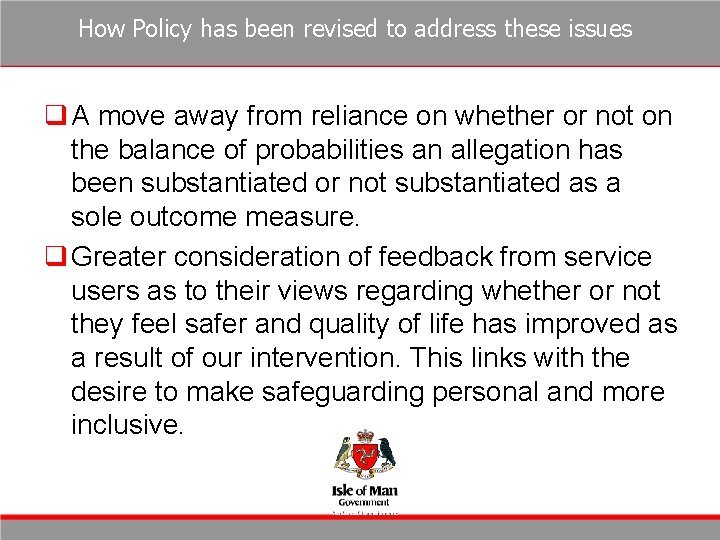
How Policy has been revised to address these issues q A move away from reliance on whether or not on the balance of probabilities an allegation has been substantiated or not substantiated as a sole outcome measure. q Greater consideration of feedback from service users as to their views regarding whether or not they feel safer and quality of life has improved as a result of our intervention. This links with the desire to make safeguarding personal and more inclusive.
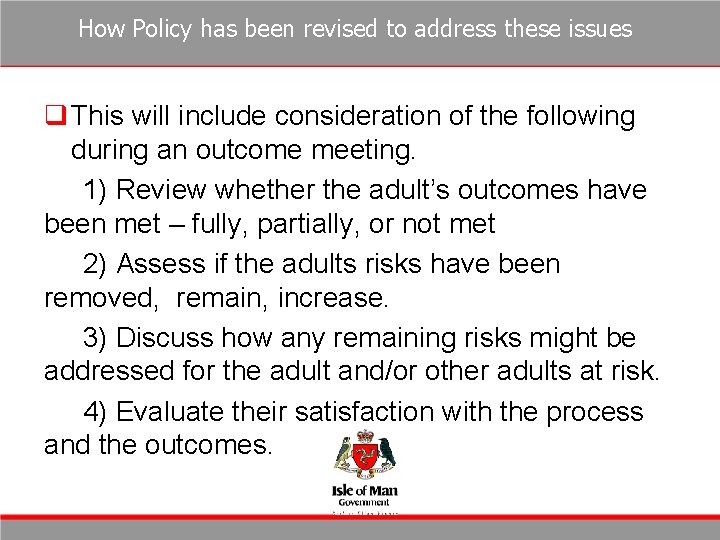
How Policy has been revised to address these issues q This will include consideration of the following during an outcome meeting. 1) Review whether the adult’s outcomes have been met – fully, partially, or not met 2) Assess if the adults risks have been removed, remain, increase. 3) Discuss how any remaining risks might be addressed for the adult and/or other adults at risk. 4) Evaluate their satisfaction with the process and the outcomes.
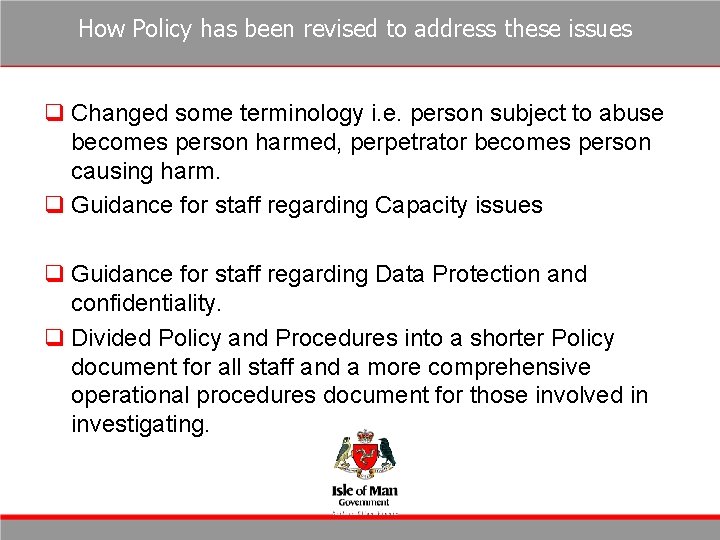
How Policy has been revised to address these issues q Changed some terminology i. e. person subject to abuse becomes person harmed, perpetrator becomes person causing harm. q Guidance for staff regarding Capacity issues q Guidance for staff regarding Data Protection and confidentiality. q Divided Policy and Procedures into a shorter Policy document for all staff and a more comprehensive operational procedures document for those involved in investigating.
Other Developments q Some other developments intended to support Safeguarding and the changes to the Policy and Procedures
Other Developments q We are currently developing separate guidance regarding institutional / large scale investigations which recognises the different requirements and timescales required in such investigations. These will be available in the near future. q In addition guidance is being developed regarding in what circumstances concerns regarding pressure sores should be raised as an Adult Protection Alert. Again following further consultation with health colleagues this will be circulated.
Other Developments q At present we are working with Registrations and Inspections in order to introduce a suitability check process for those working with vulnerable adults, similar to that already in place for those working with children. q The Care Standards will be amended to reflect this initially and subsequently the regulations that underpin the Regulation of Care Act will also be amended.
Other Developments q We have recently provided multidisciplinary training for 25 + staff regarding; q Managing Alerts q Meetings q Investigations q Reports q The aim being to support the work of the Safeguarding Adults team and enable access to additional expertise
Other Developments q In addition to the above training we are planning some specific training regarding Self Neglect Issues. q Further Training with regard to Hoarding to further support a multi-disciplinary approach in this area. q In addition a separate area of work is being developed to provide a larger group of trainers to provide Capacity Training. This will enable more staff to be trained each year.
Other Developments q Quality Assurance q We are working on developing a comprehensive QA Framework which will assist all agencies in ensuring that issues regarding Safeguarding of Adults is fully embedded in all aspects of their Business Plans, Operations and staff training and development. q This will assist all agencies in identifying areas in which further work and development is a priority
Safeguarding Leaflet
Draft Policy q Draft version of new policy and draft of operating procedures. As mentioned previously we wanted to use this forum as an opportunity for wider consultation regarding changes / additions to our procedures. The following is the current draft which we will briefly run through. q Please feel free to ask questions / comments
Overview of new Policy and Procedure documents q Following this Forum we will circulate the draft policy and procedures to those present for any comment. We will also circulate these slides for information q Any suggestions you have once you have received electronic draft should also be emailed to wendy. wynne@gov. im q Or you can contact me directly on 656061. q Any comments / suggestions should be returned to us by Friday 6 th November
Questions / Comments q Useful information http: //socialsolihull. org. uk/ssab/wpcontent/uploads/2014/10/Care-Act-Chapter-14 Safeguarding. pdf