
Safe Working in the Water and Waste Water
- Slides: 24
Safe Working in the Water and Waste Water Sector Good Practice Briefing Notes Derran Williams Senior Health and Safety Adviser May 2021
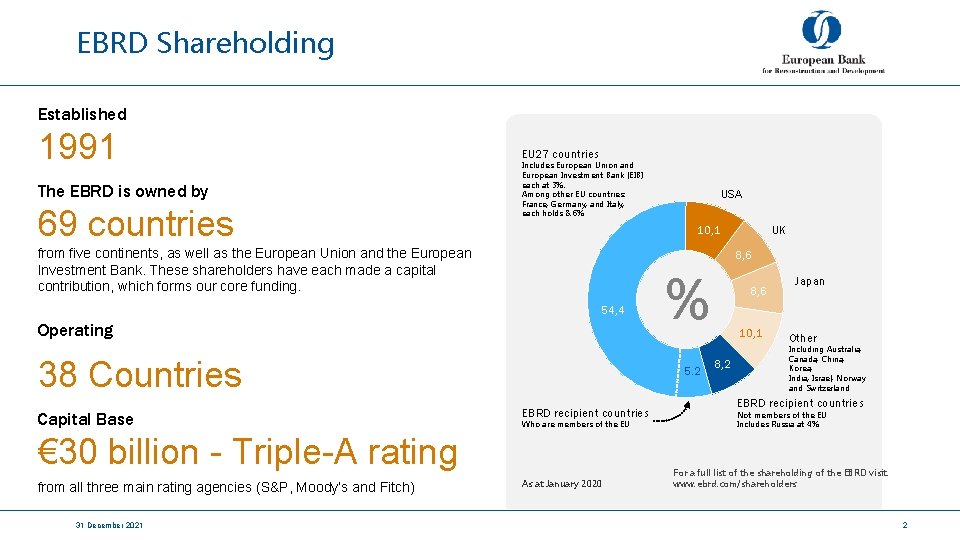
EBRD Shareholding Established 1991 The EBRD is owned by 69 countries EU 27 countries Includes European Union and European Investment Bank (EIB) each at 3%. Among other EU countries: France, Germany, and Italy, each holds 8. 6% 10, 1 from five continents, as well as the European Union and the European Investment Bank. These shareholders have each made a capital contribution, which forms our core funding. Operating 38 Countries 31 December 2021 % 5. 2 EBRD recipient countries Who are members of the EU € 30 billion - Triple-A rating from all three main rating agencies (S&P, Moody’s and Fitch) UK 8, 6 54, 4 Capital Base USA As at January 2020 8, 6 10, 1 8, 2 Japan Other Including Australia, Canada, China, Korea, India, Israel, Norway and Switzerland EBRD recipient countries Not members of the EU Includes Russia at 4% For a full list of the shareholding of the EBRD visit: www. ebrd. com/shareholders 2
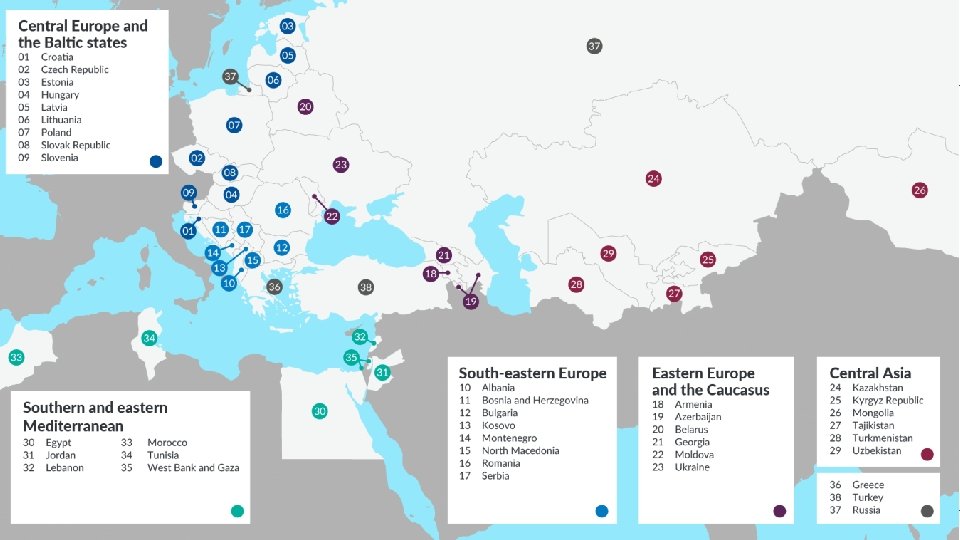
Where we are 31 December 2021 3
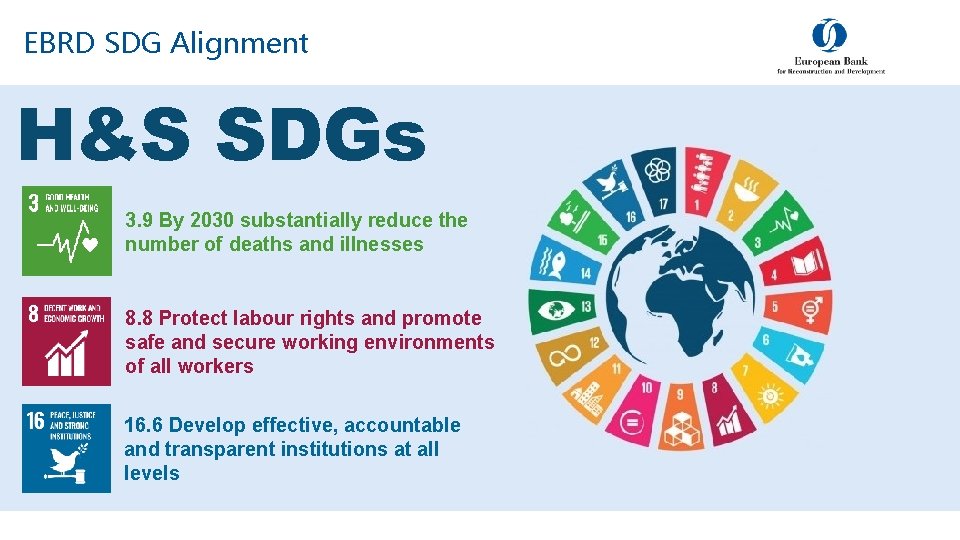
EBRD SDG Alignment H&S SDGs 3. 9 By 2030 substantially reduce the number of deaths and illnesses 8. 8 Protect labour rights and promote safe and secure working environments of all workers 16. 6 Develop effective, accountable and transparent institutions at all levels
EBRD SDG Alignment – Impact! COVID-19 3. 9 By 2030 substantially reduce the number of deaths and illnesses 8. 8 Protect labour rights and promote safe and secure working environments of all workers 16. 6 Develop effective, accountable and transparent institutions at all levels
Who we are § XXXX Safe?
Who we are Safe? § XXXX
Safe?
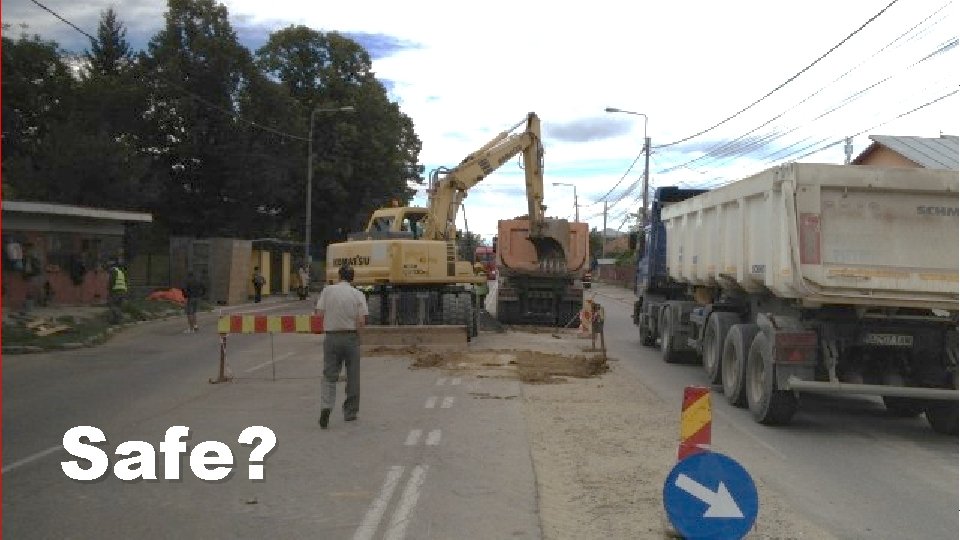
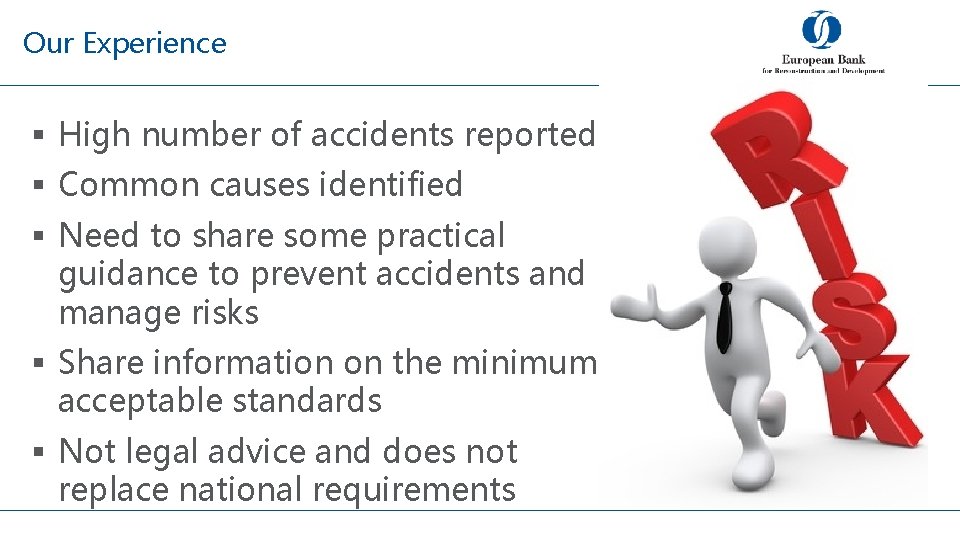
Our Experience § High number of accidents reported § Common causes identified § Need to share some practical guidance to prevent accidents and manage risks § Share information on the minimum acceptable standards § Not legal advice and does not replace national requirements
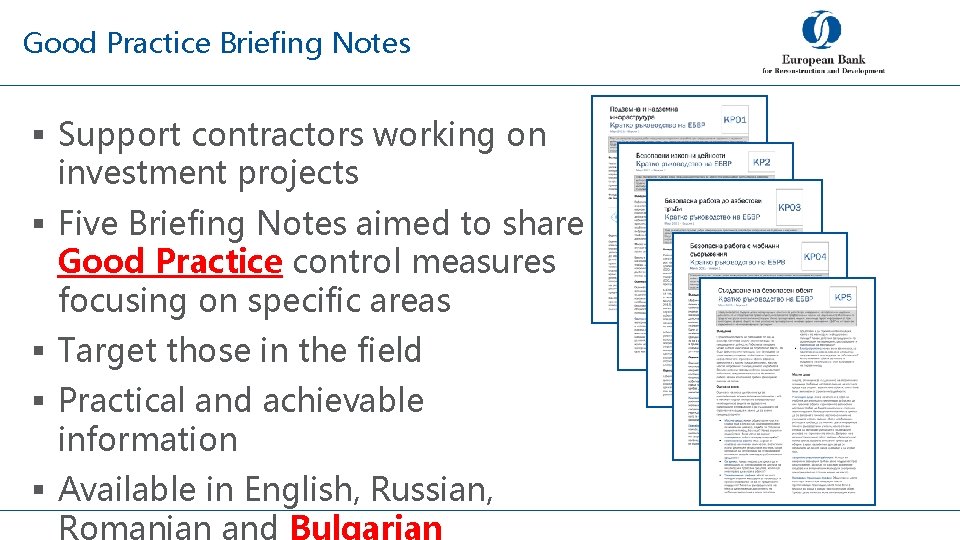
Good Practice Briefing Notes § Support contractors working on investment projects § Five Briefing Notes aimed to share Good Practice control measures focusing on specific areas § Target those in the field § Practical and achievable information § Available in English, Russian, Romanian and Bulgarian
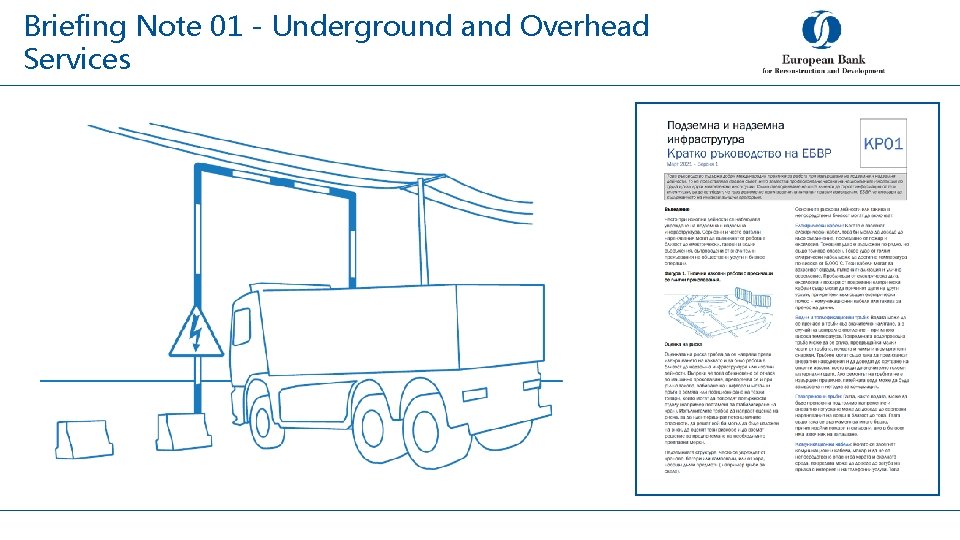
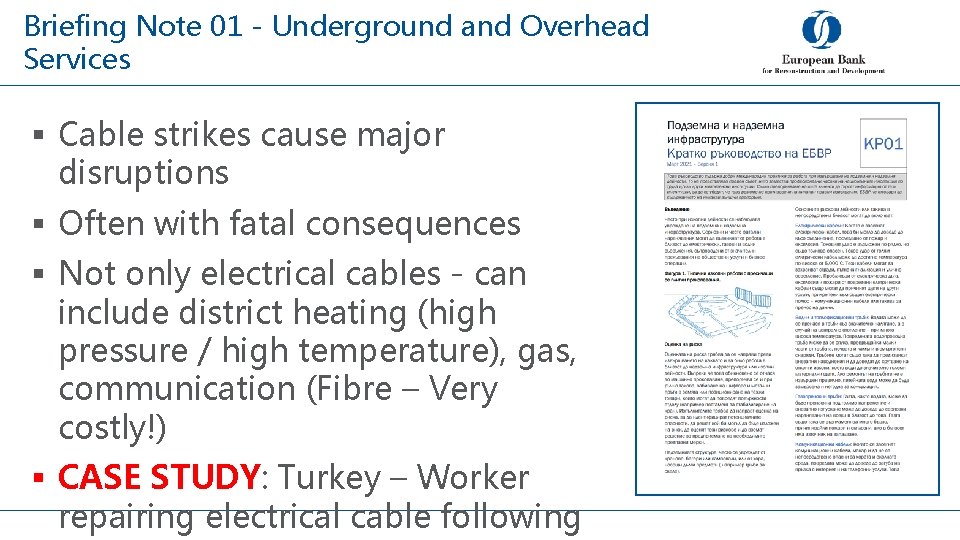
Briefing Note 01 - Underground and Overhead Services
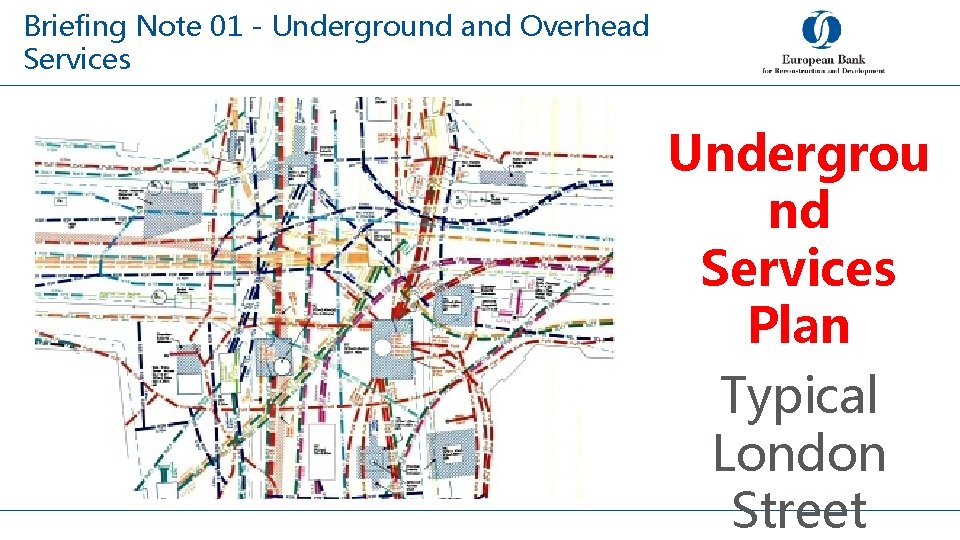
Briefing Note 01 - Underground and Overhead Services Undergrou nd Services Plan Typical London Street
Briefing Note 01 - Underground and Overhead Services § Cable strikes cause major disruptions § Often with fatal consequences § Not only electrical cables - can include district heating (high pressure / high temperature), gas, communication (Fibre – Very costly!) § CASE STUDY: Turkey – Worker repairing electrical cable following
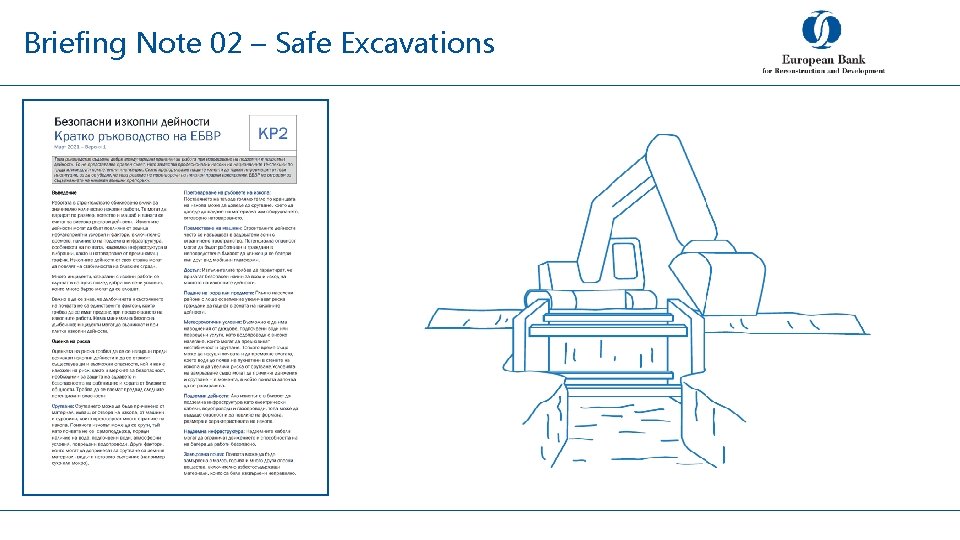
Briefing Note 02 – Safe Excavations
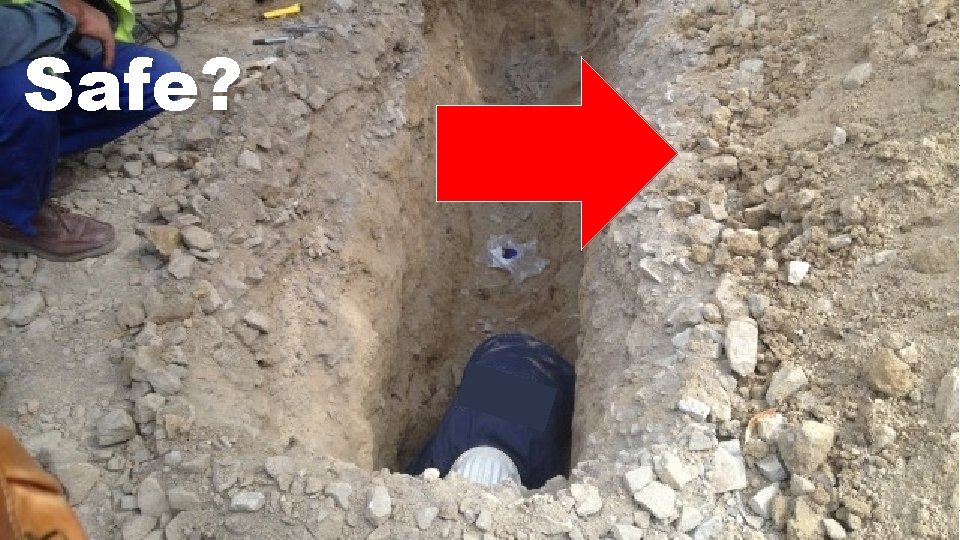
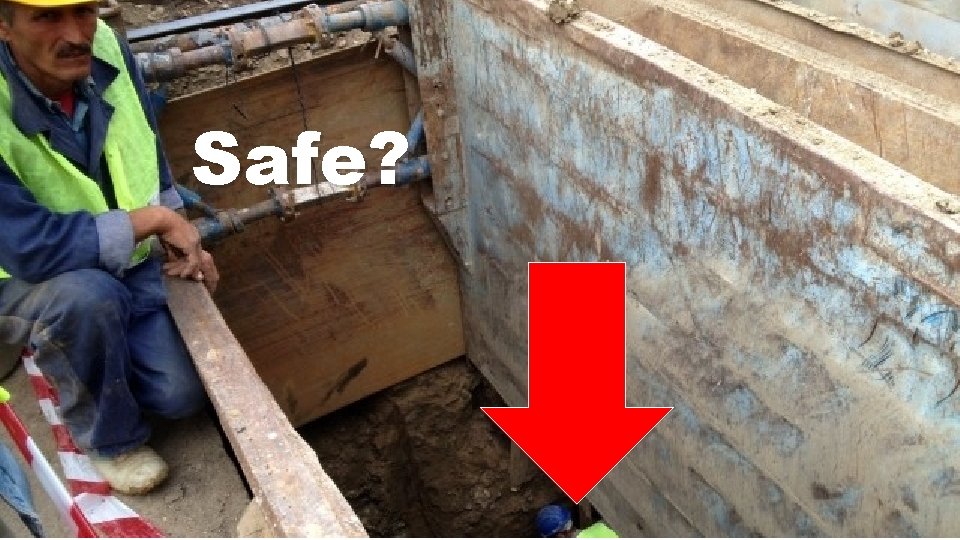
Briefing Note 02 – Safe Excavations § Workers crushed by collapsing excavation high cause of fatal injuries § Lack of supports common cause – Why? § Often due to installing supports being too much time and trouble § CASE STUDY: Worker in Romania rescued from collapse, but……
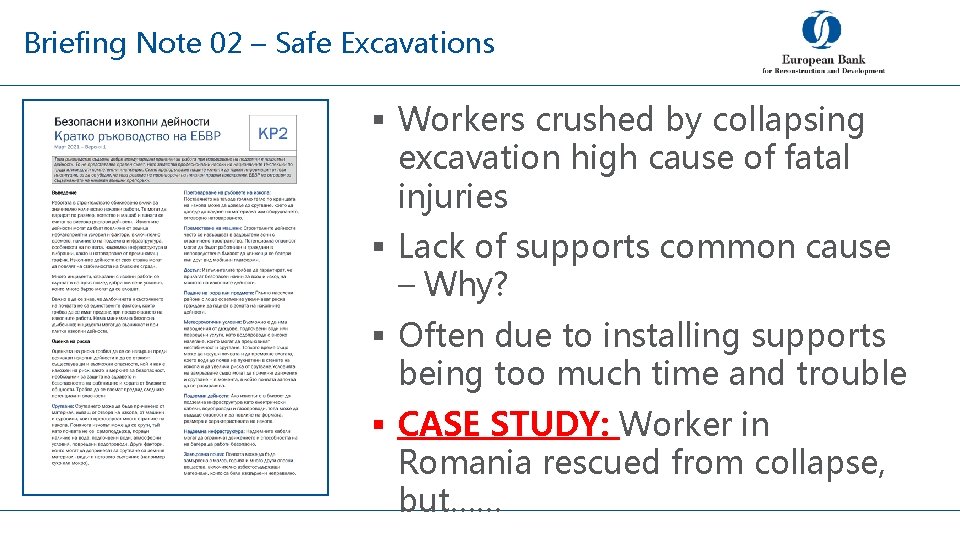
Briefing Note 03 – Working Safely around Asbestos Pipe
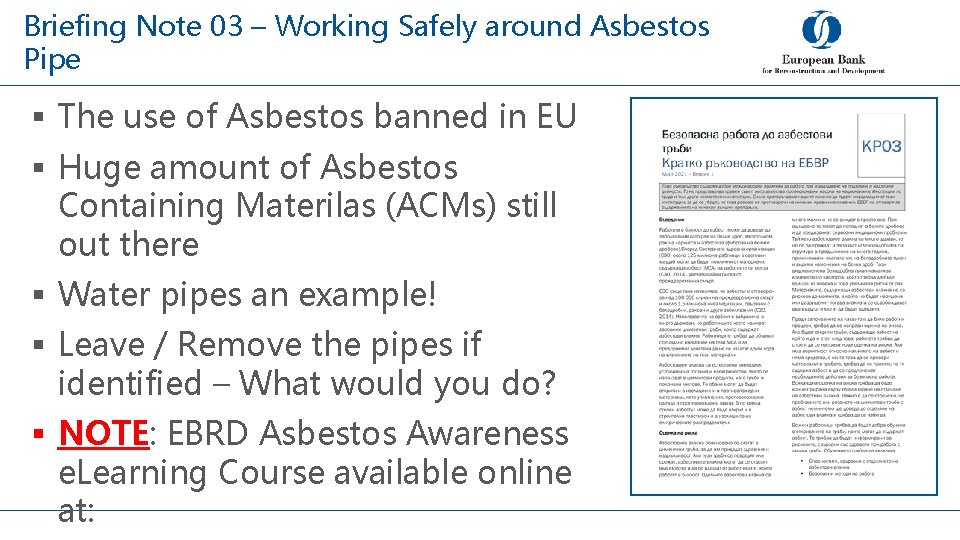
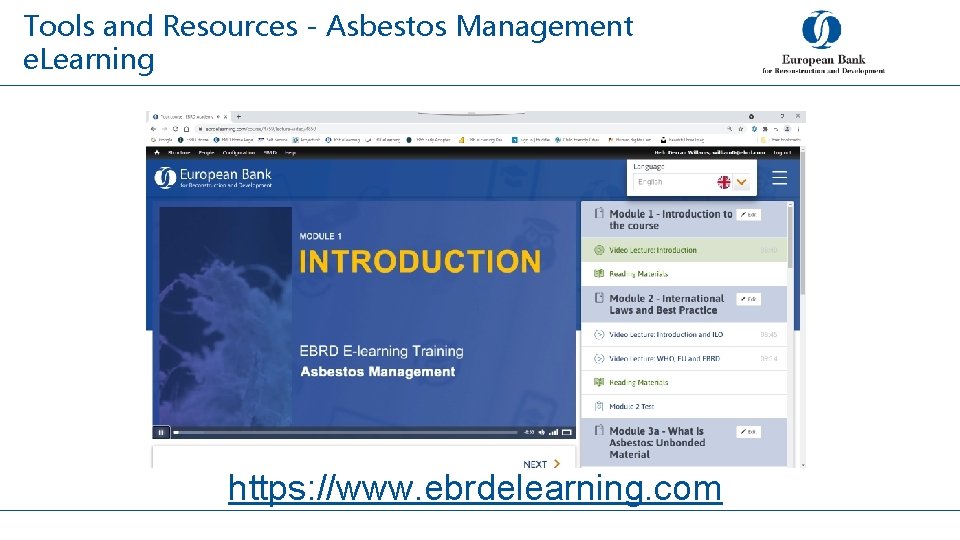
Briefing Note 03 – Working Safely around Asbestos Pipe § The use of Asbestos banned in EU § Huge amount of Asbestos Containing Materilas (ACMs) still out there § Water pipes an example! § Leave / Remove the pipes if identified – What would you do? § NOTE: EBRD Asbestos Awareness e. Learning Course available online at:
Briefing Note 04 – Safe Working with Mobile Plant
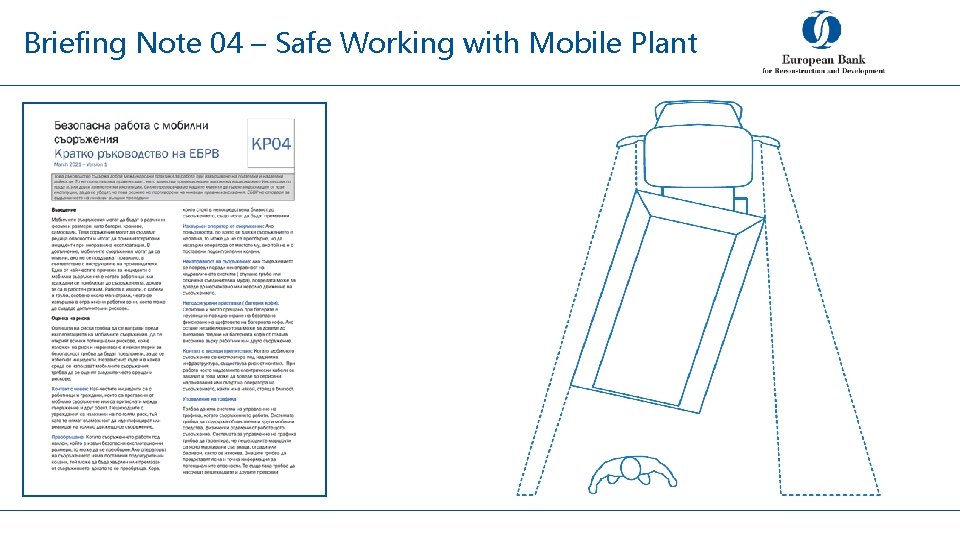
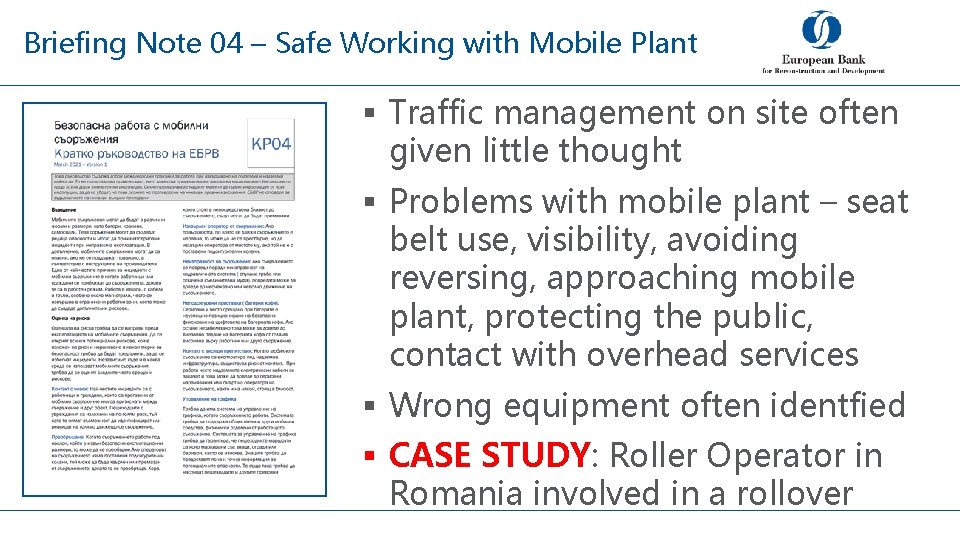
Briefing Note 04 – Safe Working with Mobile Plant § Traffic management on site often given little thought § Problems with mobile plant – seat belt use, visibility, avoiding reversing, approaching mobile plant, protecting the public, contact with overhead services § Wrong equipment often identfied § CASE STUDY: Roller Operator in Romania involved in a rollover
Briefing Note 05 – Setting up a Safe Site
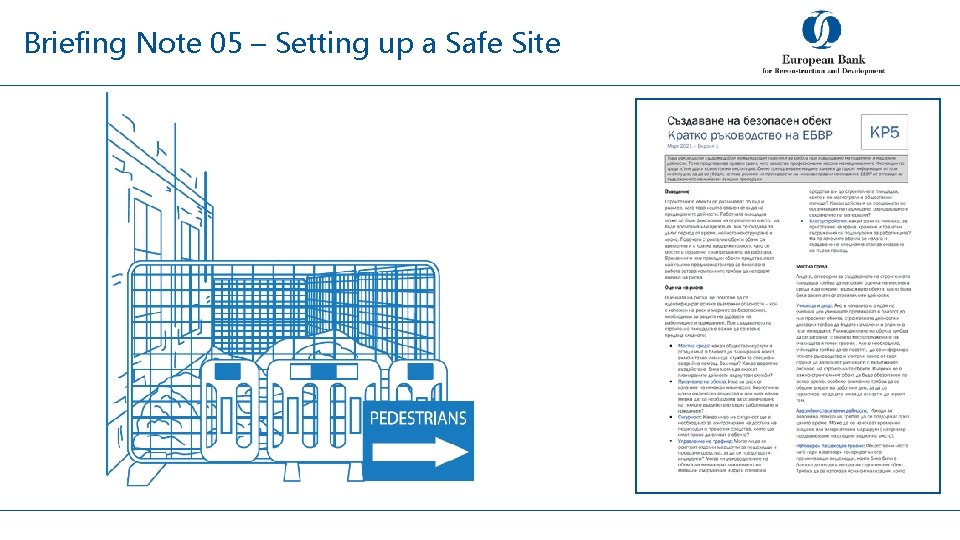
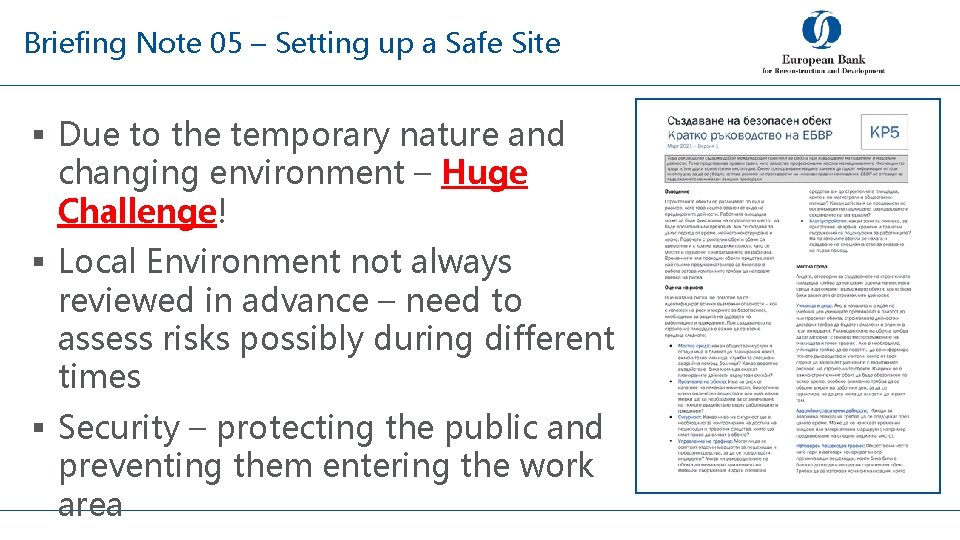
Briefing Note 05 – Setting up a Safe Site § Due to the temporary nature and changing environment – Huge Challenge! § Local Environment not always reviewed in advance – need to assess risks possibly during different times § Security – protecting the public and preventing them entering the work area
Tools and Resources - Asbestos Management e. Learning https: //www. ebrdelearning. com
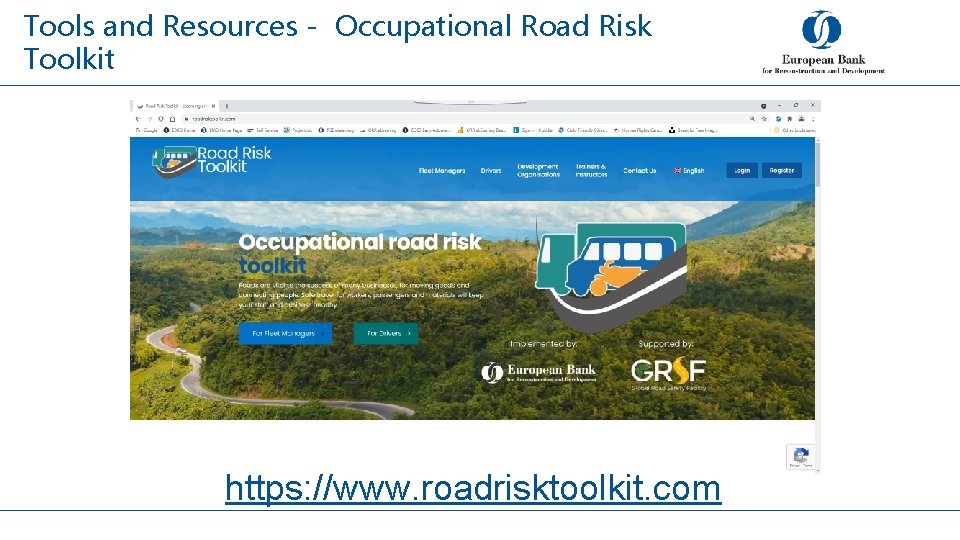
Tools and Resources - Occupational Road Risk Toolkit https: //www. roadrisktoolkit. com
Thank you 31 December 2021