
Safe Use of Gas Cylinder 2 Main Causes
- Slides: 28
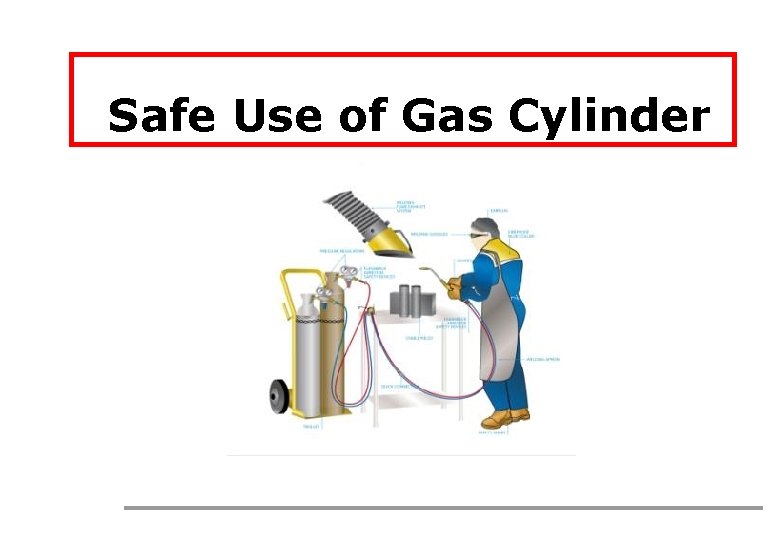
Safe Use of Gas Cylinder
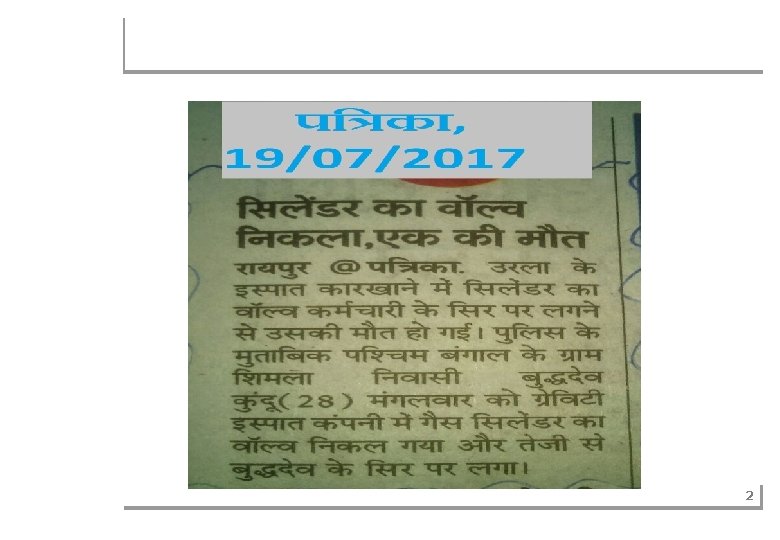
2
Main Causes of Accidents Ø Inadequate training and supervision Ø Poor installation Ø Poor maintenance Ø Faulty equipment and/or design(e. g badly fitting valves or regulators) Ø Poor handling Ø Poor storage Ø Inadequately ventilated 3
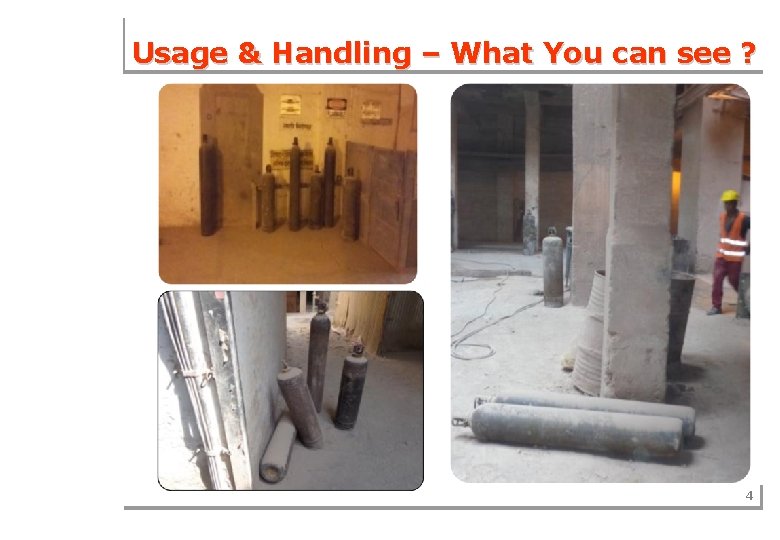
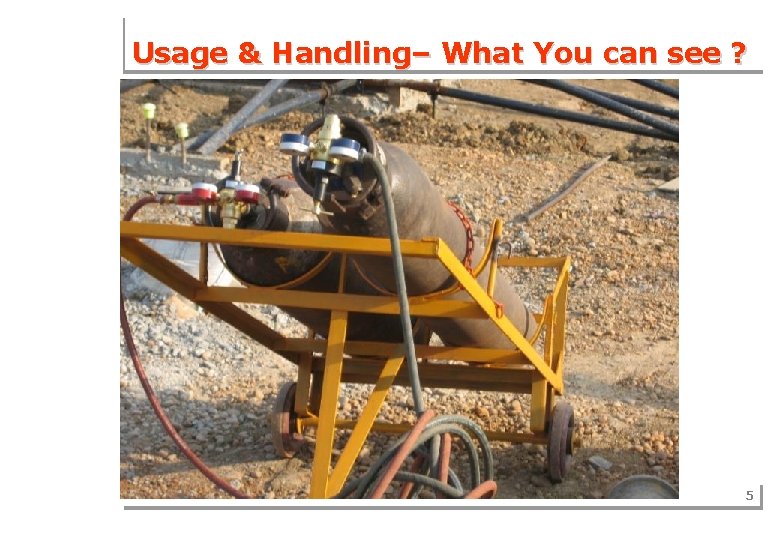
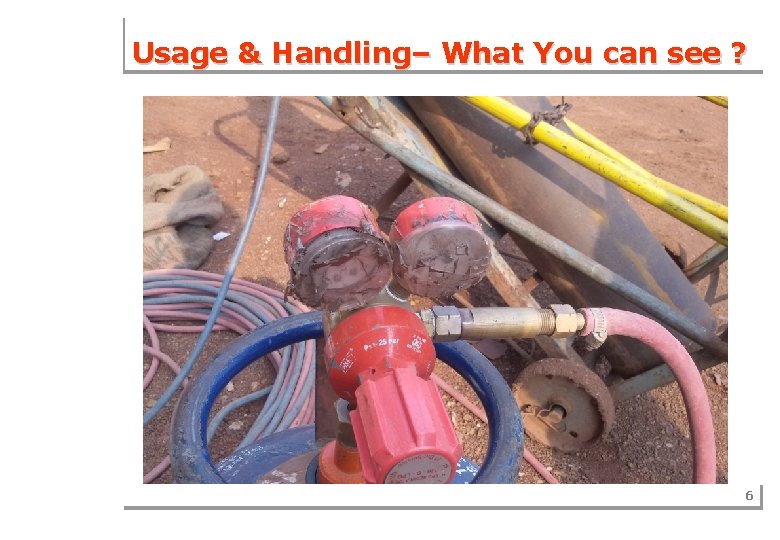
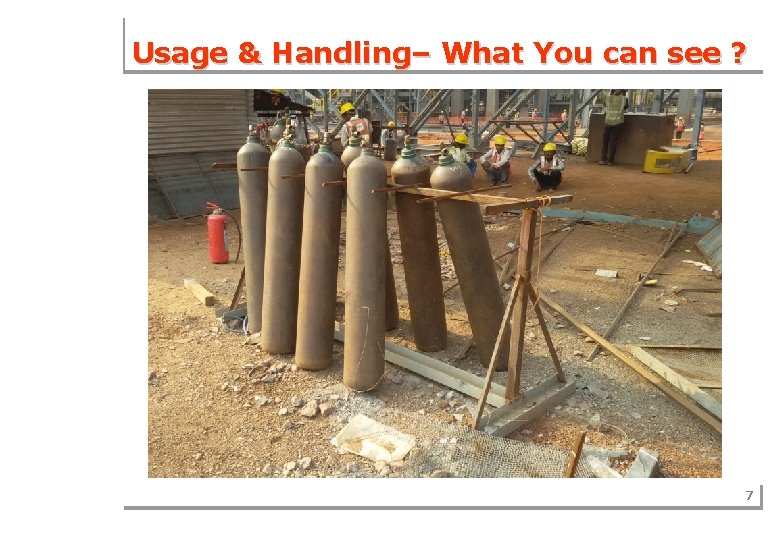
Usage & Handling – What You can see ? 4
Usage & Handling– What You can see ? 5
Usage & Handling– What You can see ? 6
Usage & Handling– What You can see ? 7
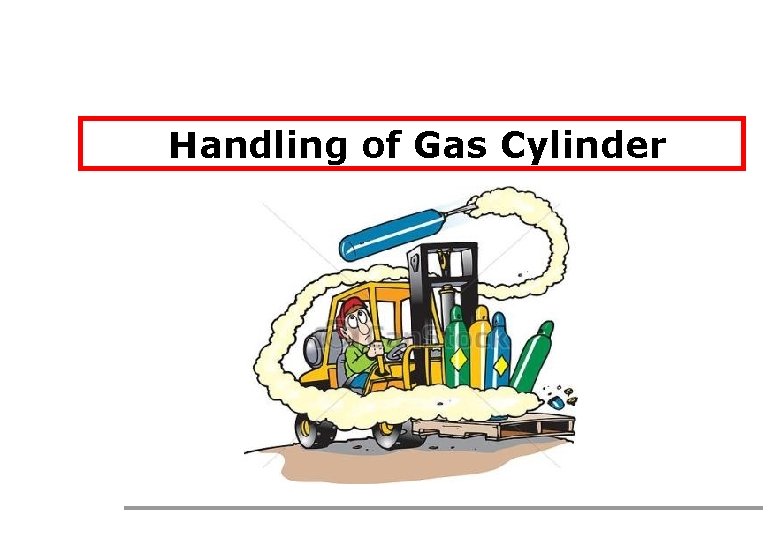
Handling of Gas Cylinder
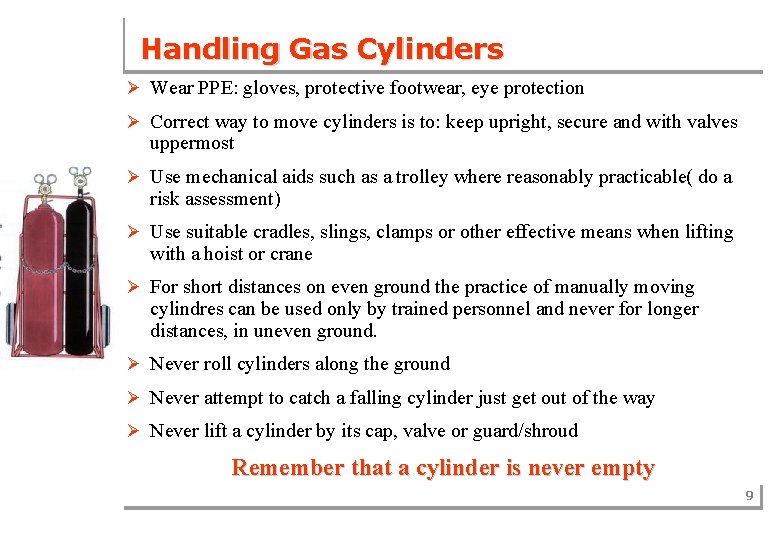
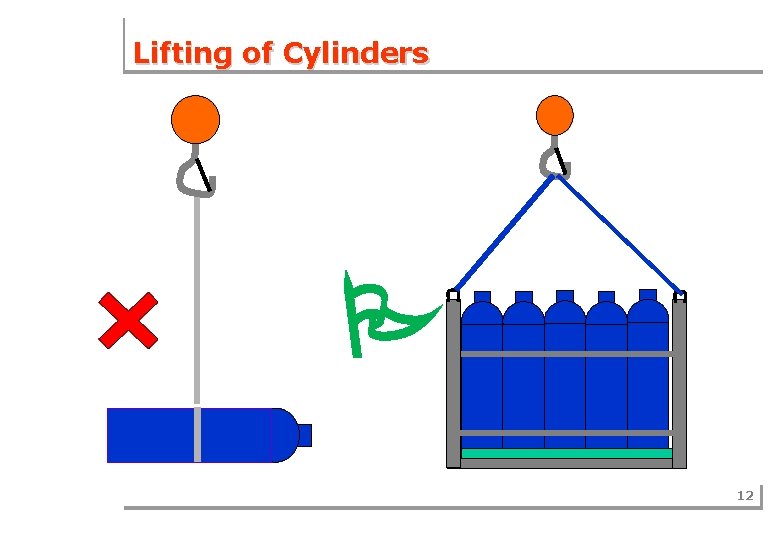
Handling Gas Cylinders Ø Wear PPE: gloves, protective footwear, eye protection Ø Correct way to move cylinders is to: keep upright, secure and with valves uppermost Ø Use mechanical aids such as a trolley where reasonably practicable( do a risk assessment) Ø Use suitable cradles, slings, clamps or other effective means when lifting with a hoist or crane Ø For short distances on even ground the practice of manually moving cylindres can be used only by trained personnel and never for longer distances, in uneven ground. Ø Never roll cylinders along the ground Ø Never attempt to catch a falling cylinder just get out of the way Ø Never lift a cylinder by its cap, valve or guard/shroud Remember that a cylinder is never empty 9
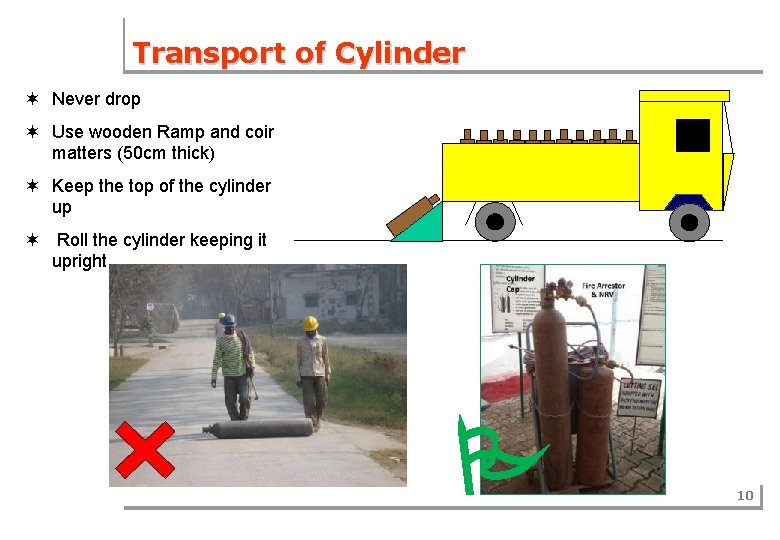
Transport of Cylinder ¬ Never drop ¬ Use wooden Ramp and coir matters (50 cm thick) ¬ Keep the top of the cylinder up ¬ Roll the cylinder keeping it upright 10
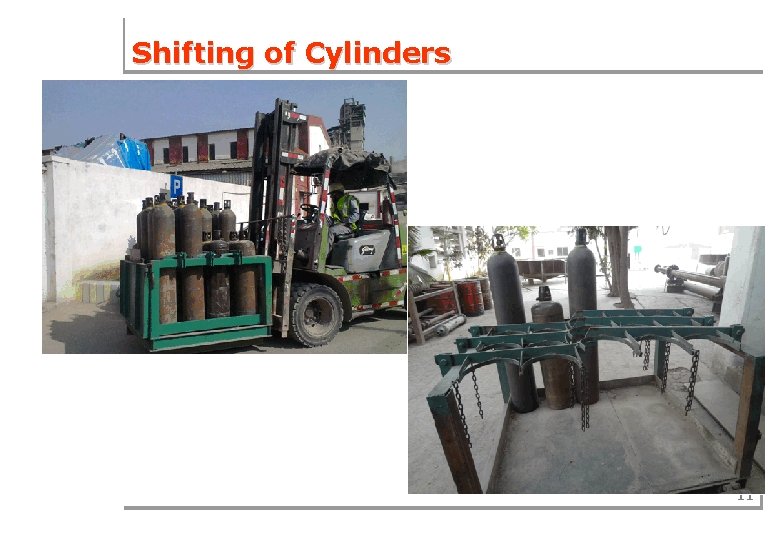
Shifting of Cylinders 11
Lifting of Cylinders 12
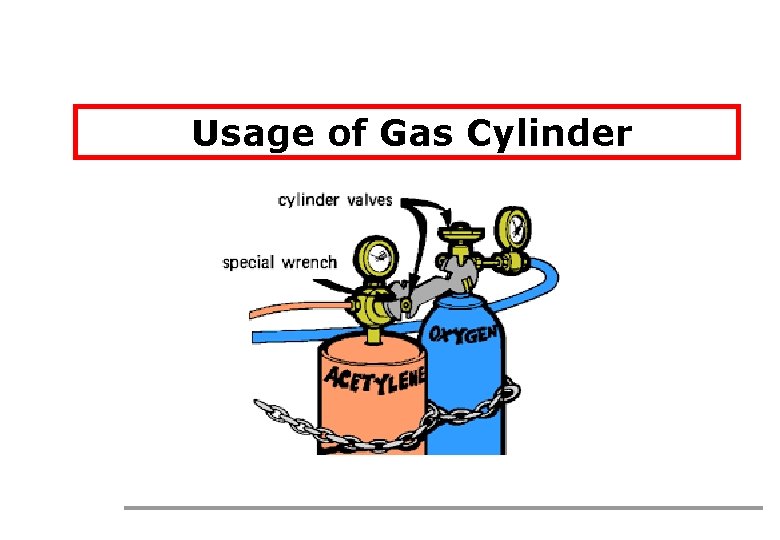
Usage of Gas Cylinder
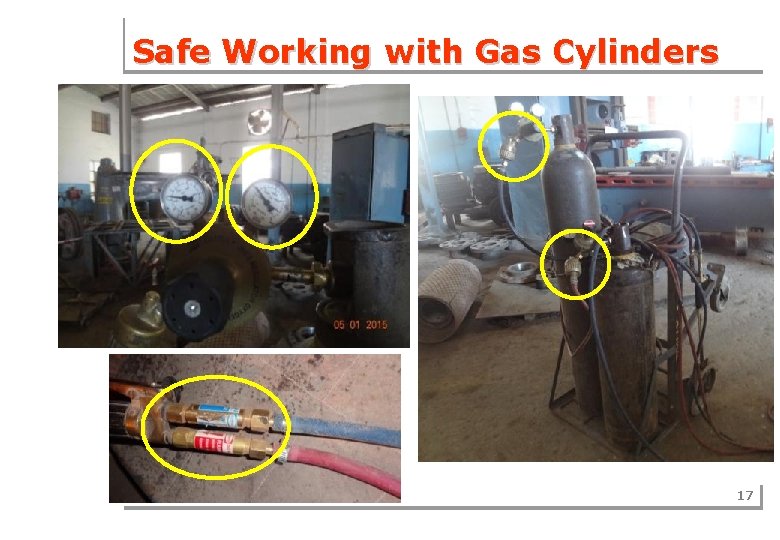
Safe Working with Gas Cylinders Work Practices Ø Securely restrain cylinders to prevent them falling over Ø Close the cylinder valve and replace dust caps when cylinder not in use Ø Before connecting a gas cylinder to equipment or pipework make sure regulator and pipework are suitable for the gas and pressure being used Ø Never drop a gas cylinder Ø Never tamper with cylinders or subject them to abnormal mechanical shocks which could damage the valve or safety device Ø Never re-paint, change markings or identification or interfere with threads 14
Safe Working with Gas Cylinders Work Practices Ø Never attempt to repair a cylinder Ø Never subject cylinders to abnormally high or low temperatures Ø Never mix gases in a cylinder Ø Never try to refill a cylinder unless properly trained to do so Ø Never transport by rolling them on the ground or use them as rollers or supports Ø Never pick them up by magnetic lifting Ø Never subject to abnormal mechanical shocks which could damage the valve or safety device 15
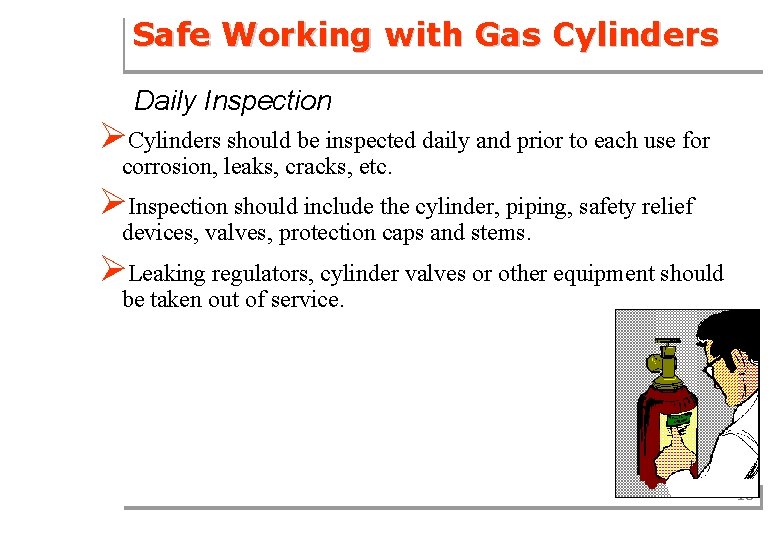
Safe Working with Gas Cylinders Daily Inspection ØCylinders should be inspected daily and prior to each use for corrosion, leaks, cracks, etc. ØInspection should include the cylinder, piping, safety relief devices, valves, protection caps and stems. ØLeaking regulators, cylinder valves or other equipment should be taken out of service. 16
Safe Working with Gas Cylinders 17
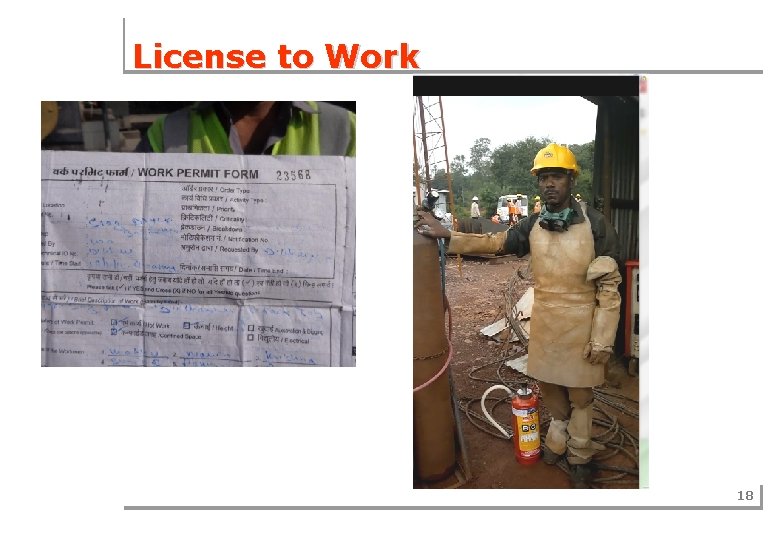
License to Work 18
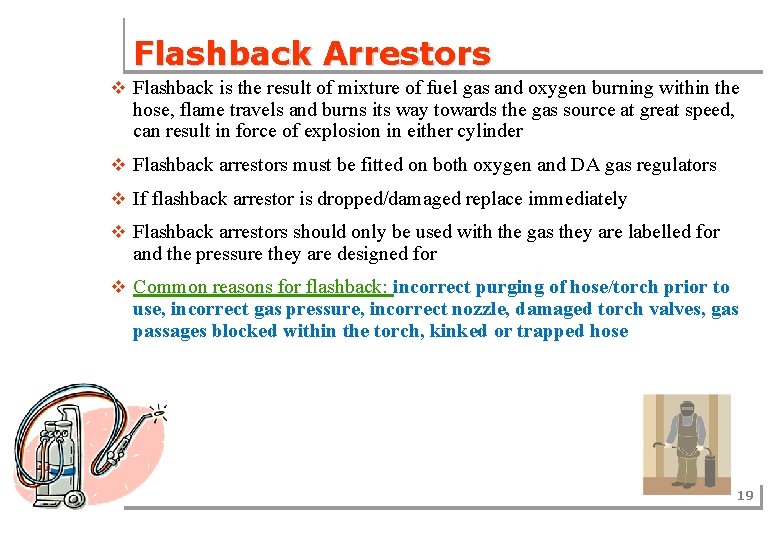
Flashback Arrestors v Flashback is the result of mixture of fuel gas and oxygen burning within the hose, flame travels and burns its way towards the gas source at great speed, can result in force of explosion in either cylinder v Flashback arrestors must be fitted on both oxygen and DA gas regulators v If flashback arrestor is dropped/damaged replace immediately v Flashback arrestors should only be used with the gas they are labelled for and the pressure they are designed for v Common reasons for flashback: incorrect purging of hose/torch prior to use, incorrect gas pressure, incorrect nozzle, damaged torch valves, gas passages blocked within the torch, kinked or trapped hose 19
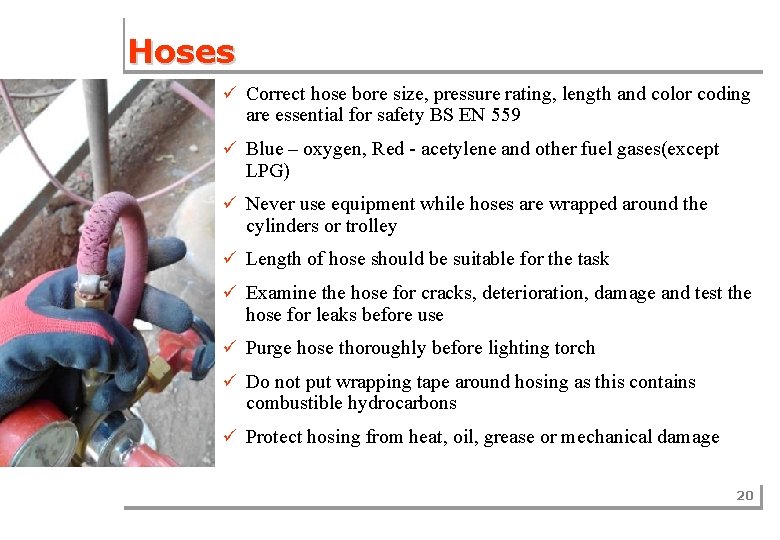
Hoses ü Correct hose bore size, pressure rating, length and color coding are essential for safety BS EN 559 ü Blue – oxygen, Red - acetylene and other fuel gases(except LPG) ü Never use equipment while hoses are wrapped around the cylinders or trolley ü Length of hose should be suitable for the task ü Examine the hose for cracks, deterioration, damage and test the hose for leaks before use ü Purge hose thoroughly before lighting torch ü Do not put wrapping tape around hosing as this contains combustible hydrocarbons ü Protect hosing from heat, oil, grease or mechanical damage 20
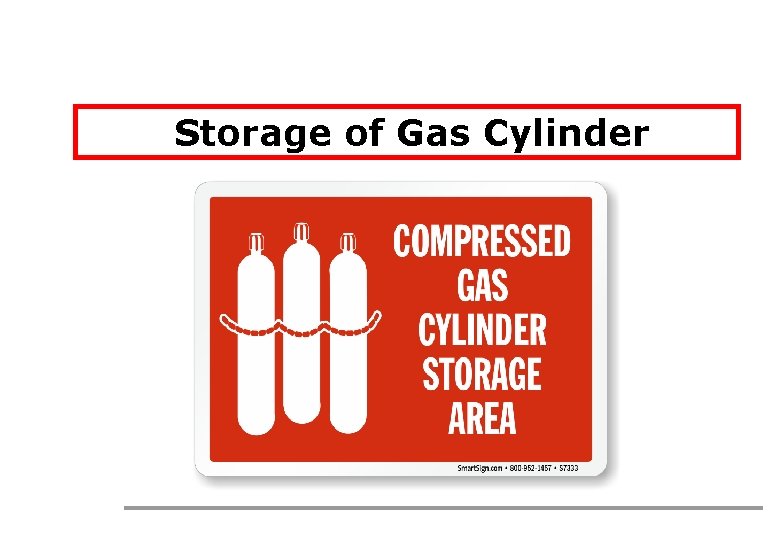
Storage of Gas Cylinder
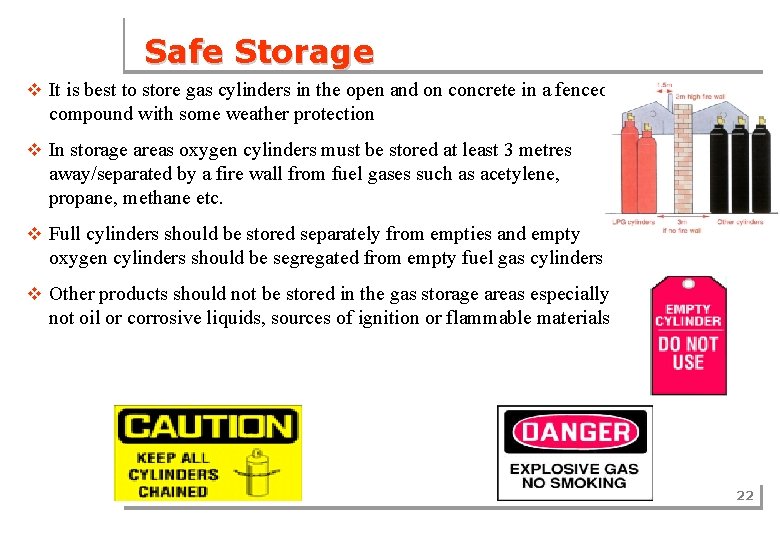
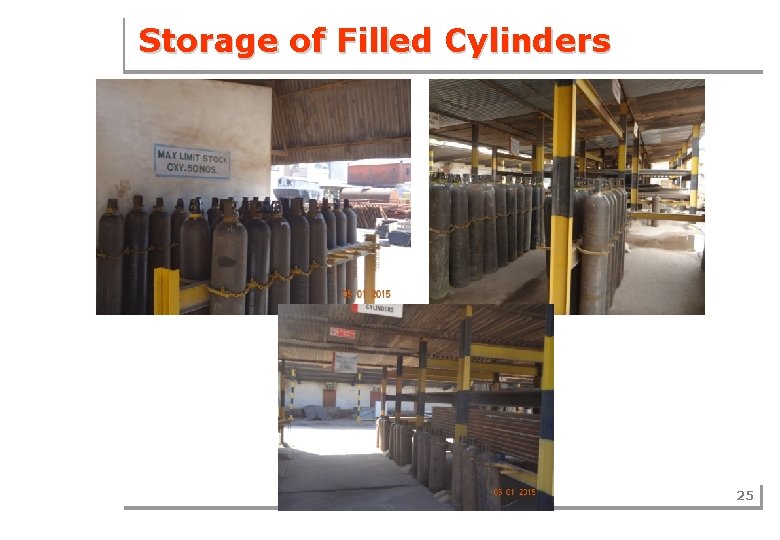
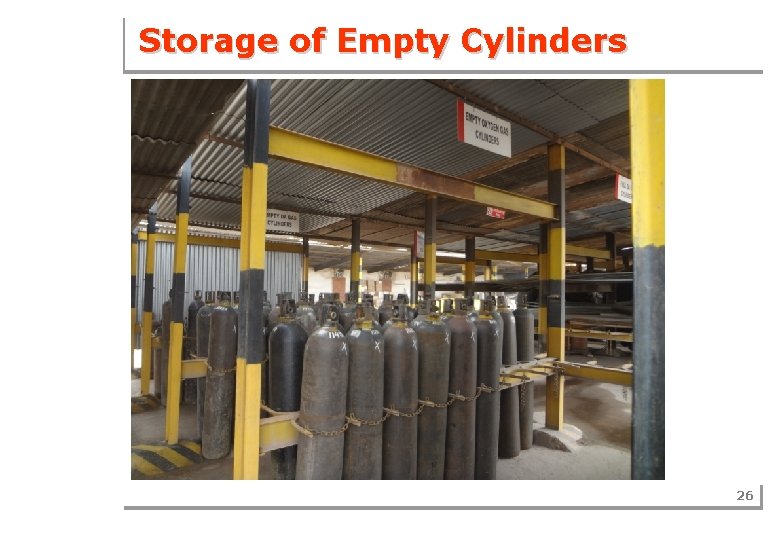
Safe Storage v It is best to store gas cylinders in the open and on concrete in a fenced compound with some weather protection v In storage areas oxygen cylinders must be stored at least 3 metres away/separated by a fire wall from fuel gases such as acetylene, propane, methane etc. v Full cylinders should be stored separately from empties and empty oxygen cylinders should be segregated from empty fuel gas cylinders v Other products should not be stored in the gas storage areas especially not oil or corrosive liquids, sources of ignition or flammable materials 22
Safe Storage v Store all cylinders upright and secure on a level surface to prevent them from falling v Storage areas with gas cylinders must have more than one exit v Storage area must have good housekeeping and adequate warning signs with fire fighting equipment as necessary v Ease of access into and around storage area, such as provision of aisle >0. 6 m to prevent domino effect v LPG cylinders have special requirements including storage 3 m away from other gases v Protect gas cylinders from external heat sources which may adversely affect their mechanical integrity v Cylinders should be secured and properly restrained, secure with straps or chains connected to a wall bracket or other fixed surface, or by use of a cylinder stand 23
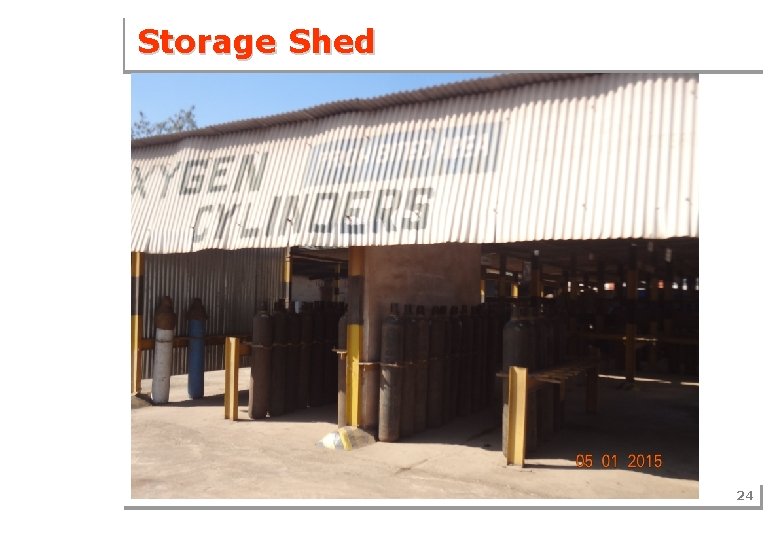
Storage Shed 24
Storage of Filled Cylinders 25
Storage of Empty Cylinders 26
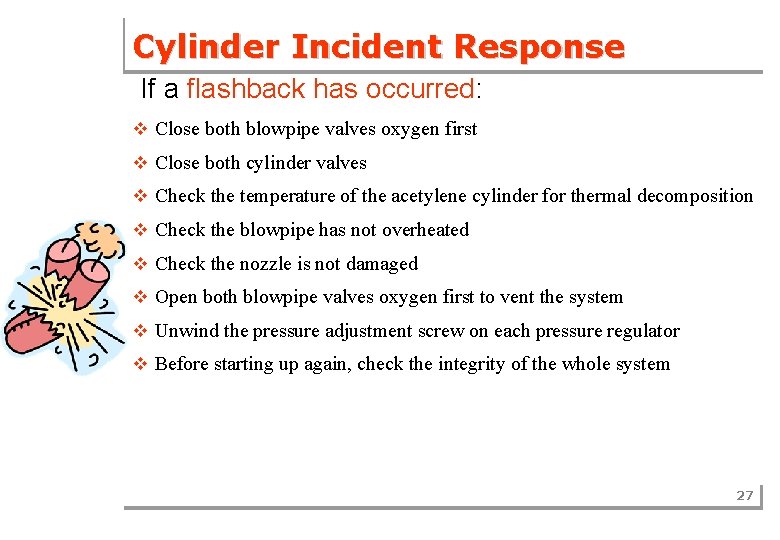
Cylinder Incident Response If a flashback has occurred: v Close both blowpipe valves oxygen first v Close both cylinder valves v Check the temperature of the acetylene cylinder for thermal decomposition v Check the blowpipe has not overheated v Check the nozzle is not damaged v Open both blowpipe valves oxygen first to vent the system v Unwind the pressure adjustment screw on each pressure regulator v Before starting up again, check the integrity of the whole system 27
Thanks 28