
Safe transfusion For junior medical officers Safe transfusion









- Slides: 48
Safe transfusion For junior medical officers
Safe transfusion Blood components and products How, what, when, why? For more information refer to transfusion. com. au or the Blood Component Information booklet at transfusion. com. au/bci The transfusion process The decision to transfuse, consent, documentation, sample collection, administration, monitor and response. For more information refer to transfusion. com. au or download the i. Transfuse App Adverse transfusion reactions Recognise, react and report For more information refer to transfusion. com. au or download the i. Transfuse App
Blood components and products
Blood components and products Want more information?
Blood components and products
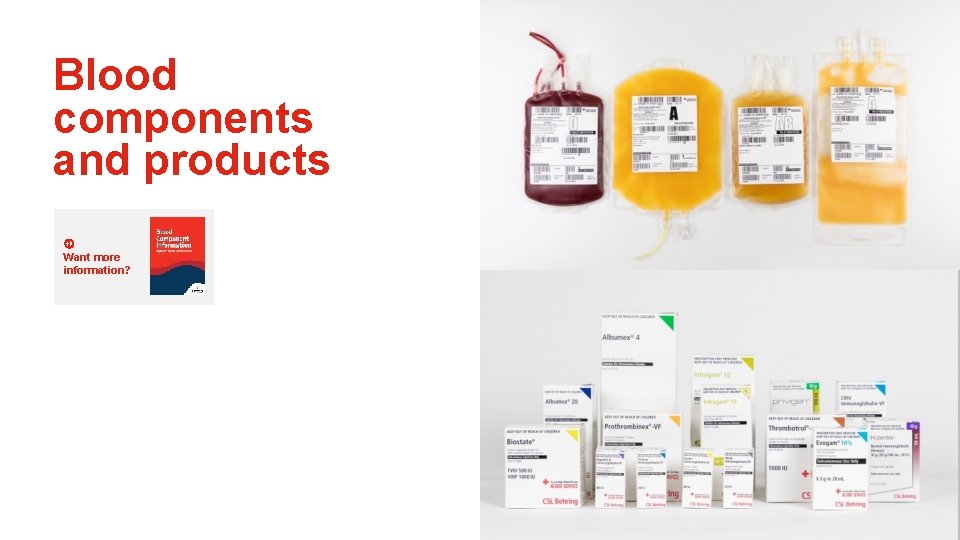
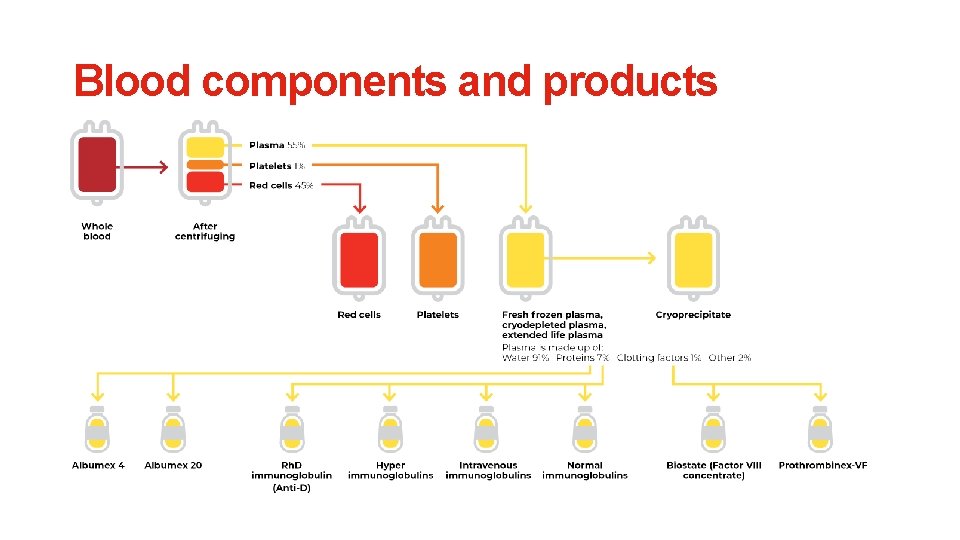
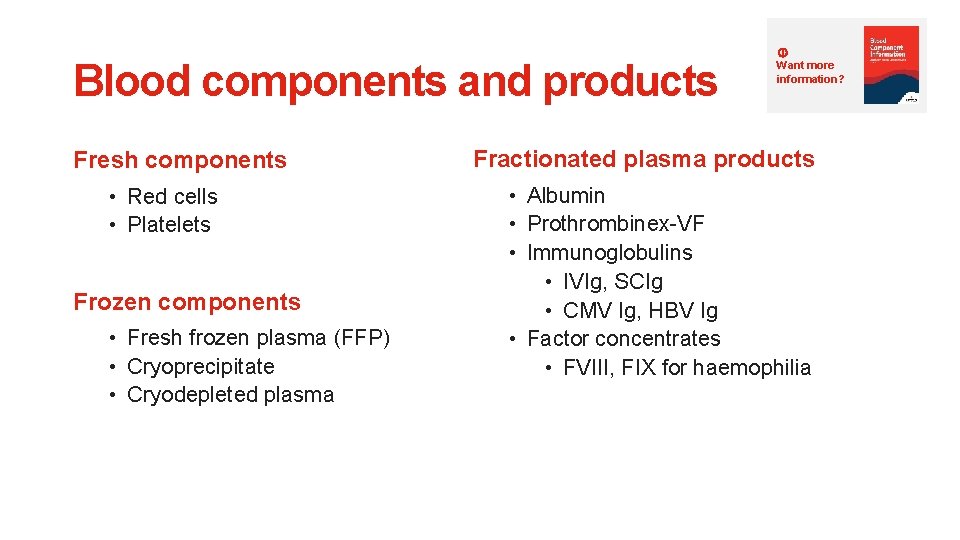
Blood components and products Fresh components • Red cells • Platelets Frozen components • Fresh frozen plasma (FFP) • Cryoprecipitate • Cryodepleted plasma Want more information? Fractionated plasma products • Albumin • Prothrombinex-VF • Immunoglobulins • IVIg, SCIg • CMV Ig, HBV Ig • Factor concentrates • FVIII, FIX for haemophilia
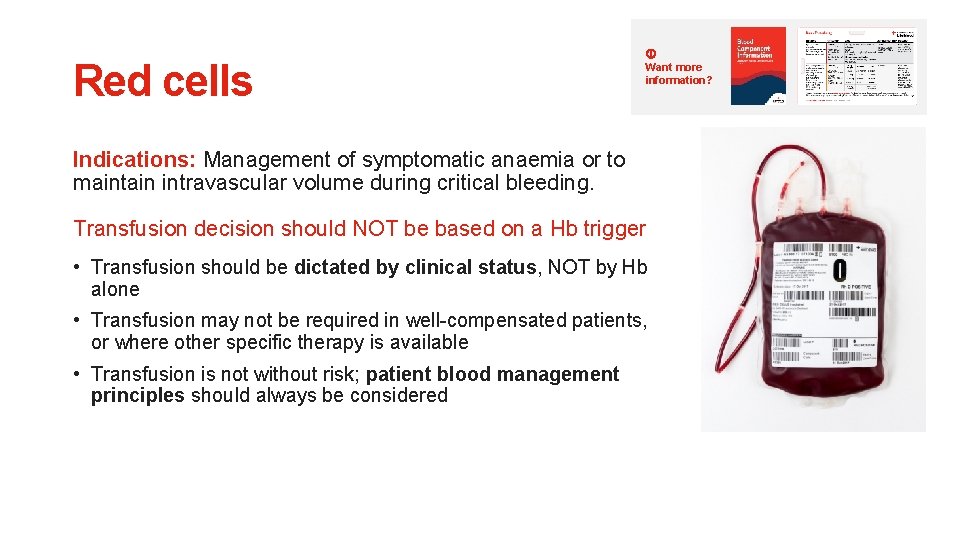
Red cells Want more information? Indications: Management of symptomatic anaemia or to maintain intravascular volume during critical bleeding. Transfusion decision should NOT be based on a Hb trigger • Transfusion should be dictated by clinical status, NOT by Hb alone • Transfusion may not be required in well-compensated patients, or where other specific therapy is available • Transfusion is not without risk; patient blood management principles should always be considered
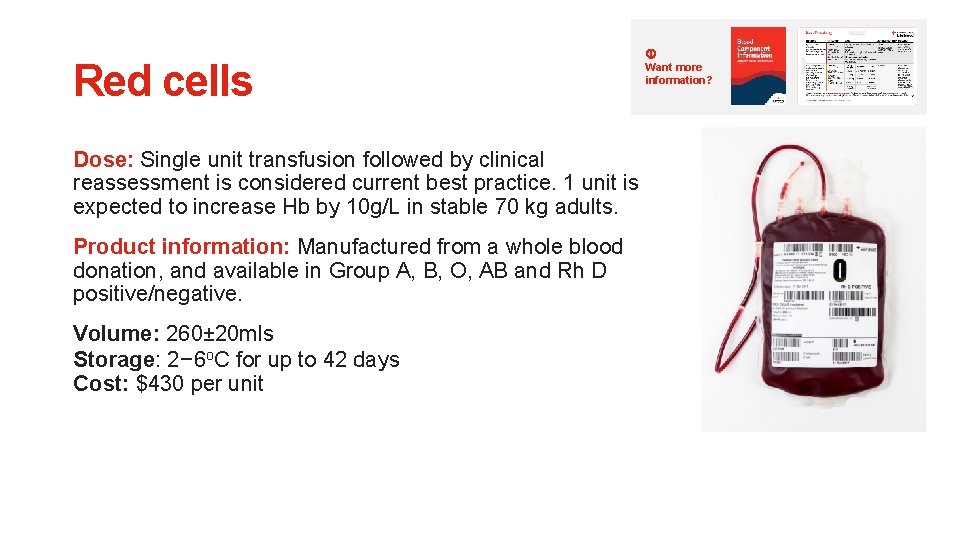
Red cells Dose: Single unit transfusion followed by clinical reassessment is considered current best practice. 1 unit is expected to increase Hb by 10 g/L in stable 70 kg adults. Product information: Manufactured from a whole blood donation, and available in Group A, B, O, AB and Rh D positive/negative. Volume: 260± 20 mls Storage: 2− 6 o. C for up to 42 days Cost: $430 per unit Want more information?
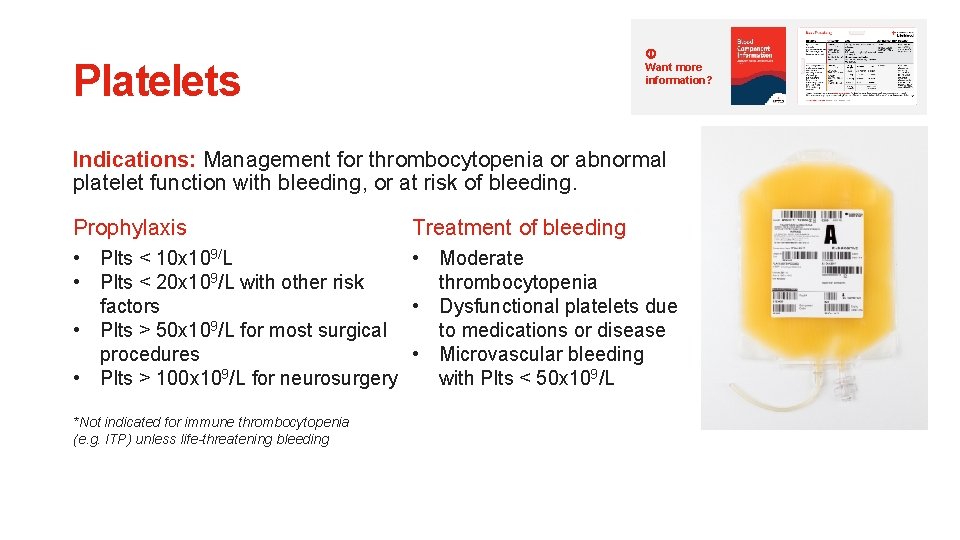
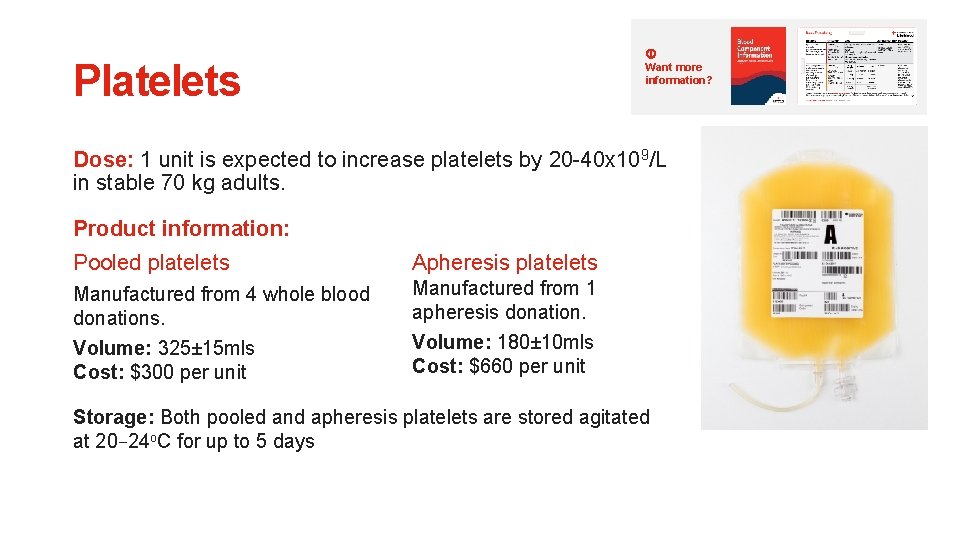
Want more information? Platelets Indications: Management for thrombocytopenia or abnormal platelet function with bleeding, or at risk of bleeding. Prophylaxis Treatment of bleeding • Moderate • Plts < 10 x 109/L thrombocytopenia • Plts < 20 x 109/L with other risk • Dysfunctional platelets due factors to medications or disease • Plts > 50 x 109/L for most surgical • Microvascular bleeding procedures with Plts < 50 x 109/L • Plts > 100 x 109/L for neurosurgery *Not indicated for immune thrombocytopenia (e. g. ITP) unless life-threatening bleeding
Want more information? Platelets Dose: 1 unit is expected to increase platelets by 20 -40 x 109/L in stable 70 kg adults. Product information: Pooled platelets Apheresis platelets Manufactured from 4 whole blood donations. Volume: 325± 15 mls Cost: $300 per unit Manufactured from 1 apheresis donation. Volume: 180± 10 mls Cost: $660 per unit Storage: Both pooled and apheresis platelets are stored agitated at 20− 24 o. C for up to 5 days
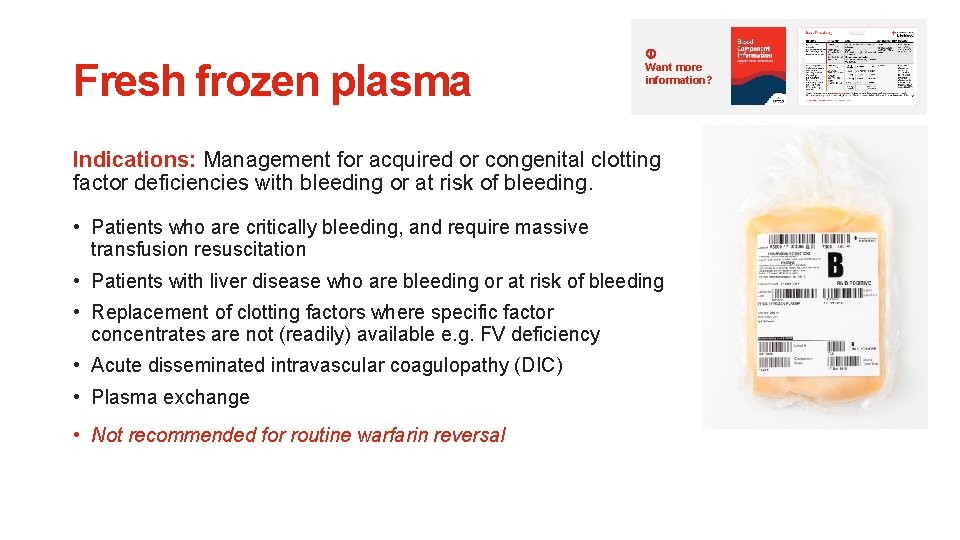
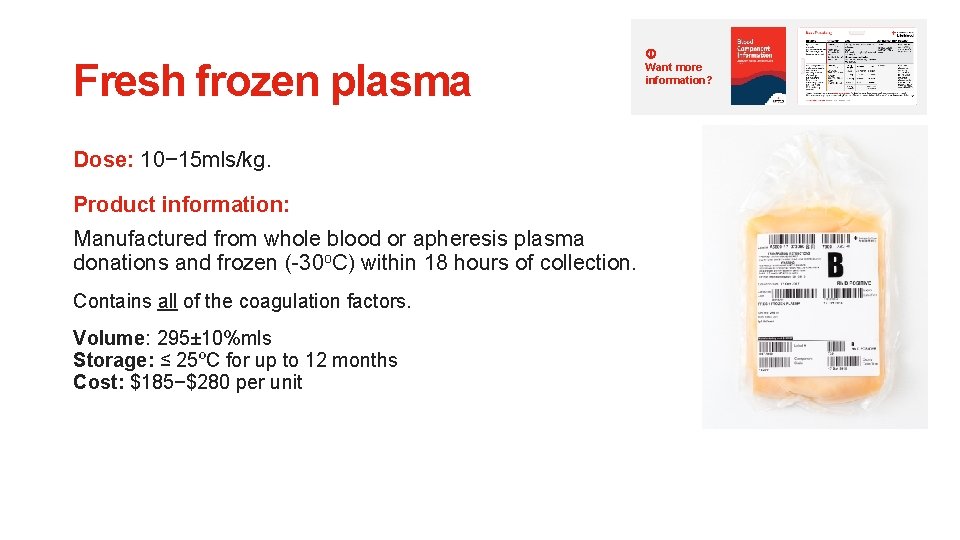
Fresh frozen plasma Want more information? Indications: Management for acquired or congenital clotting factor deficiencies with bleeding or at risk of bleeding. • Patients who are critically bleeding, and require massive transfusion resuscitation • Patients with liver disease who are bleeding or at risk of bleeding • Replacement of clotting factors where specific factor concentrates are not (readily) available e. g. FV deficiency • Acute disseminated intravascular coagulopathy (DIC) • Plasma exchange • Not recommended for routine warfarin reversal
Fresh frozen plasma Dose: 10− 15 mls/kg. Product information: Manufactured from whole blood or apheresis plasma donations and frozen (-30 o. C) within 18 hours of collection. Contains all of the coagulation factors. Volume: 295± 10%mls Storage: ≤ 25ºC for up to 12 months Cost: $185−$280 per unit Want more information?
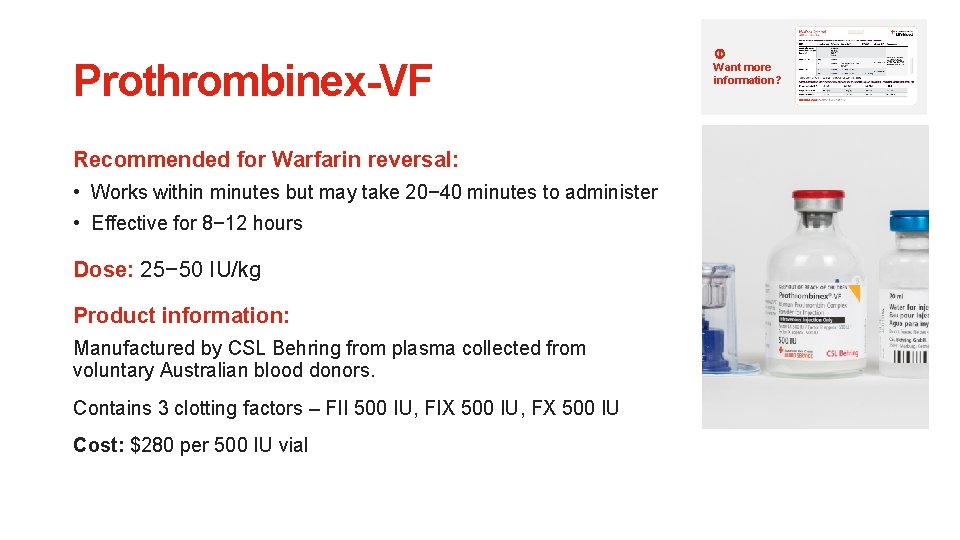
Prothrombinex-VF Recommended for Warfarin reversal: • Works within minutes but may take 20− 40 minutes to administer • Effective for 8− 12 hours Dose: 25− 50 IU/kg Product information: Manufactured by CSL Behring from plasma collected from voluntary Australian blood donors. Contains 3 clotting factors – FII 500 IU, FIX 500 IU, FX 500 IU Cost: $280 per 500 IU vial Want more information?
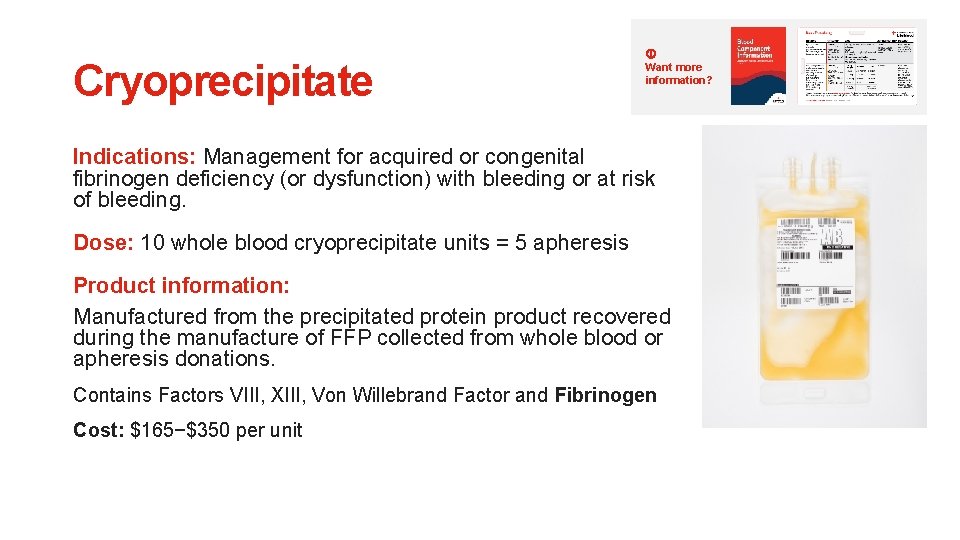
Cryoprecipitate Want more information? Indications: Management for acquired or congenital fibrinogen deficiency (or dysfunction) with bleeding or at risk of bleeding. Dose: 10 whole blood cryoprecipitate units = 5 apheresis Product information: Manufactured from the precipitated protein product recovered during the manufacture of FFP collected from whole blood or apheresis donations. Contains Factors VIII, XIII, Von Willebrand Factor and Fibrinogen Cost: $165−$350 per unit
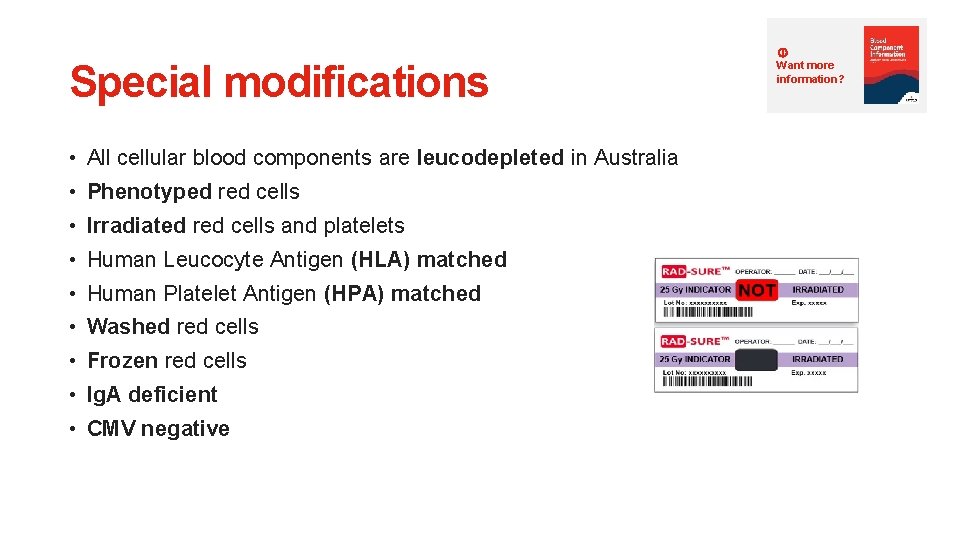
Special modifications • All cellular blood components are leucodepleted in Australia • Phenotyped red cells • Irradiated red cells and platelets • Human Leucocyte Antigen (HLA) matched • Human Platelet Antigen (HPA) matched • Washed red cells • Frozen red cells • Ig. A deficient • CMV negative Want more information?
The transfusion process
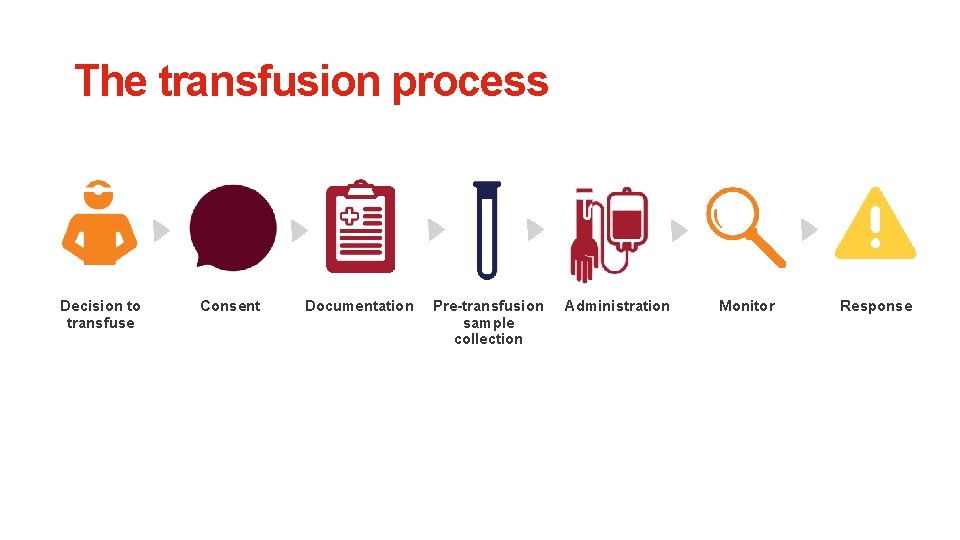
The transfusion process Decision to transfuse Consent Documentation Pre-transfusion sample collection Administration Monitor Response
Decision to transfuse Question: Does the patient really need transfusion? Considerations: • Transfusion should be dictated by clinical status, NOT by Hb alone • Transfusion may not be required in well-compensated patients, or where other specific therapy is available • Single unit transfusion followed by clinical reassessment is considered current best practice • Transfusion is not without risk; patient blood management principles should always be considered
Decision to transfuse Question: Does the patient really need transfusion? Action: • Assess patient • Document transfusion decision • Document any special requirements e. g. irradiated, CMV negative
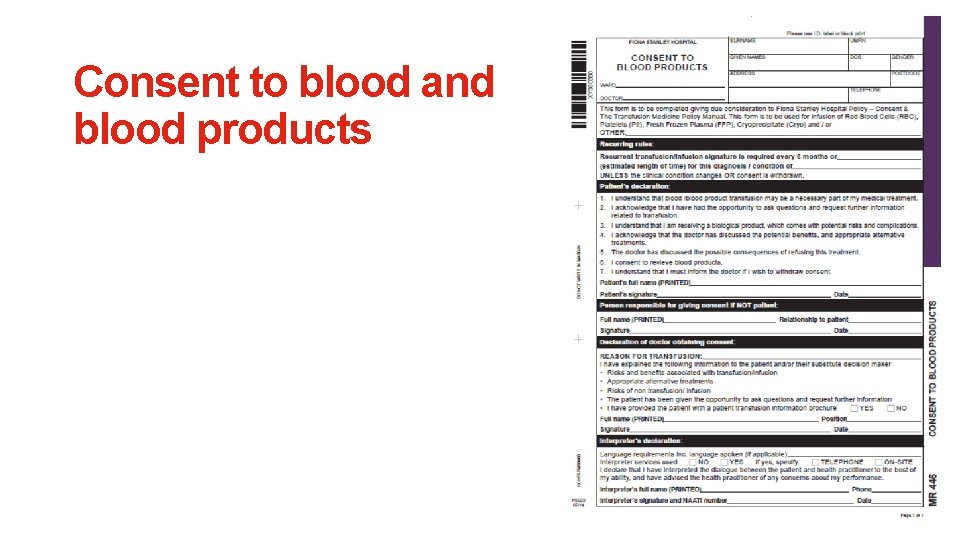
Consent and documentation Consent: • Obtain informed consent Documentation: • Complete prescription for blood product transfusion including clinical indication, transfusion history and date and time the blood product is required Communication: • Inform ward and clinical staff
Consent to blood and blood products
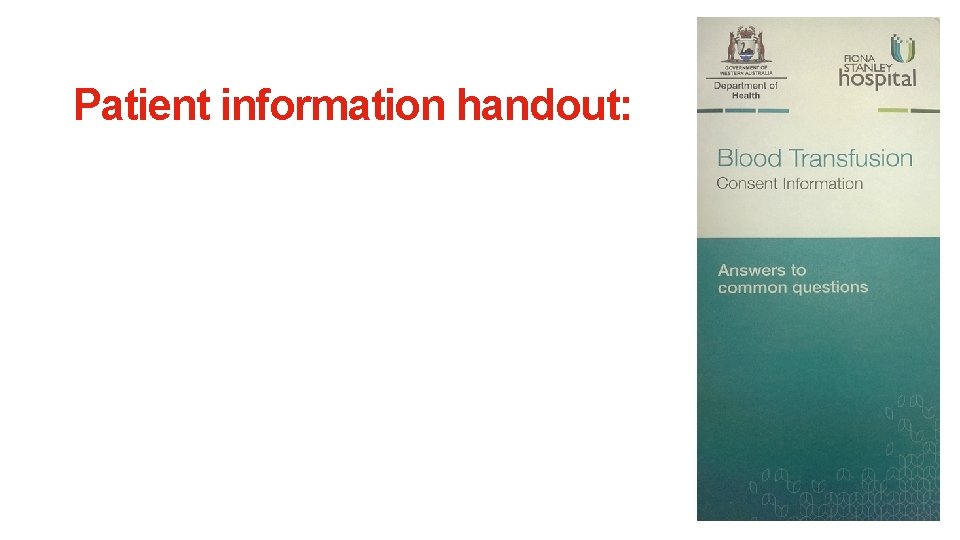
Patient information handout:
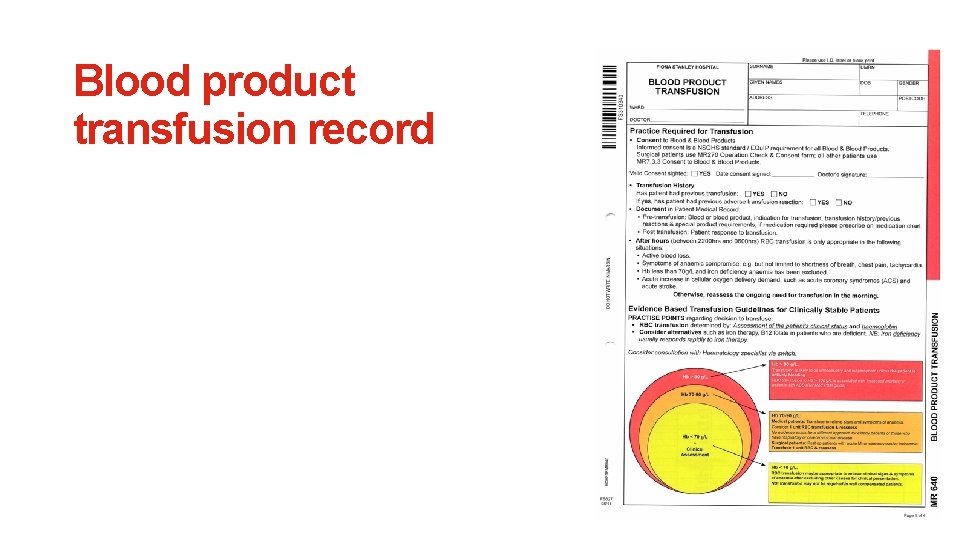
Blood product transfusion record
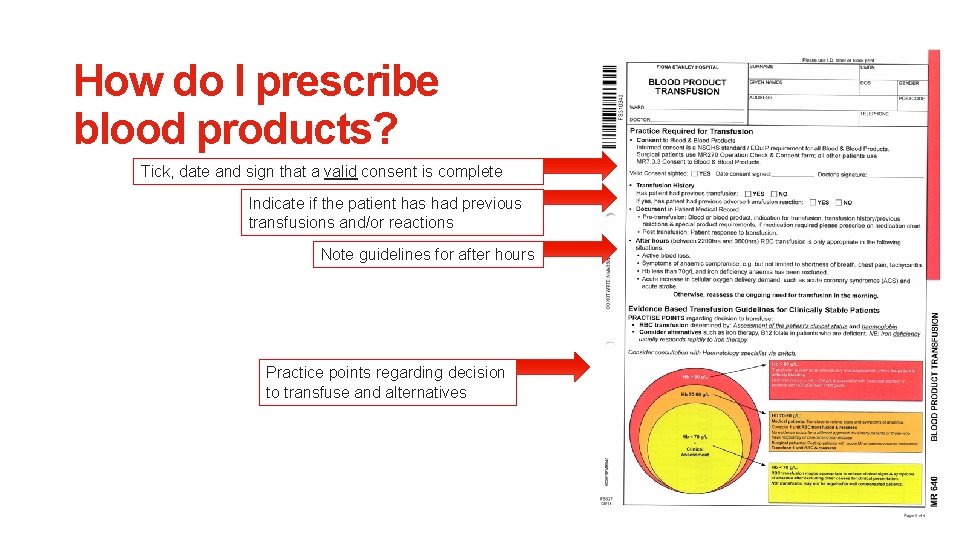
How do I prescribe blood products? Tick, date and sign that a valid consent is complete Indicate if the patient has had previous transfusions and/or reactions Note guidelines for after hours Practice points regarding decision to transfuse and alternatives
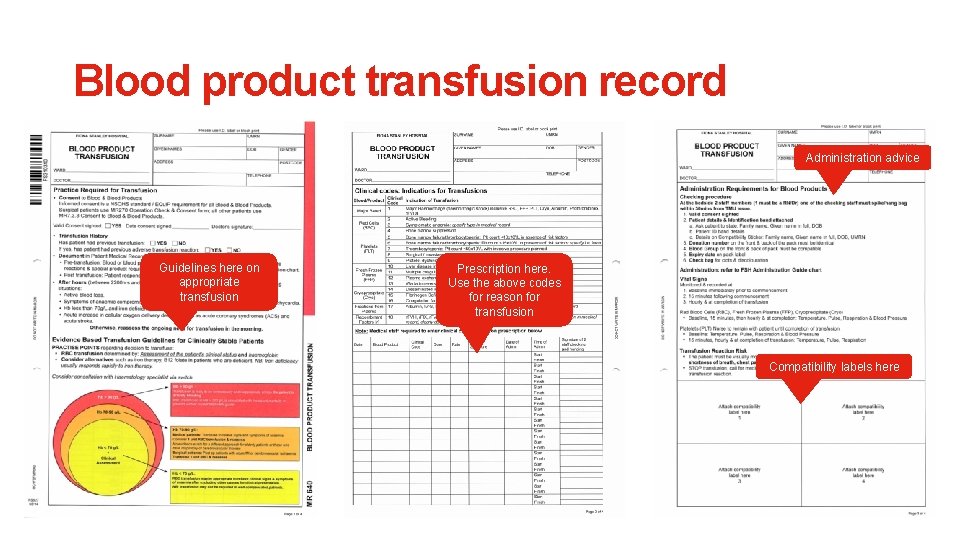
Blood product transfusion record Administration advice Guidelines here on appropriate transfusion Prescription here. Use the above codes for reason for transfusion Compatibility labels here
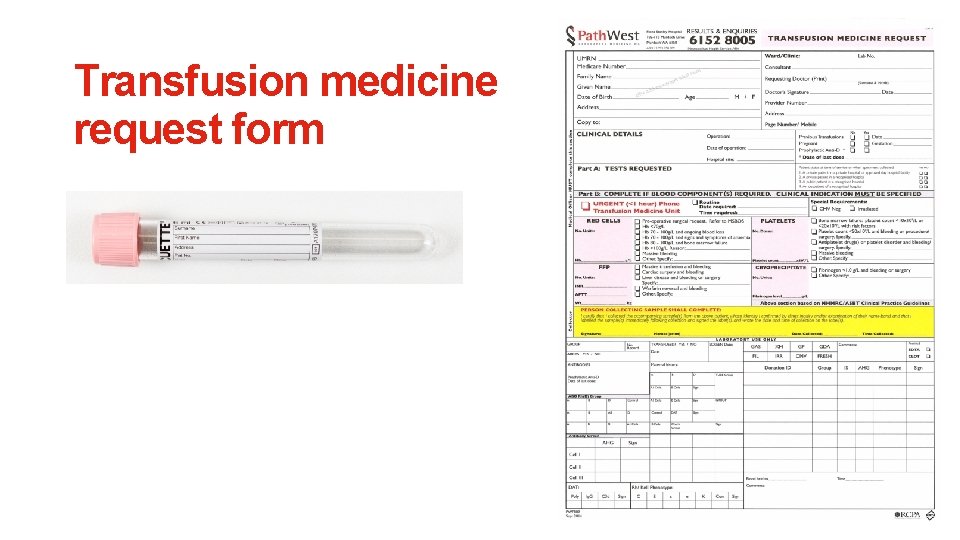
Pretransfusion sample collection If a pretransfusion sample (or group and screen) is required: • Confirm patient’s identity • Collect sample • Label sample immediately after collection, at the patient’s bedside with: • Full name • Date of birth • Unique hospital ID number • Record date and time of collection • Sign both the pretransfusion sample AND the collector’s declaration on request form
Transfusion medicine request form
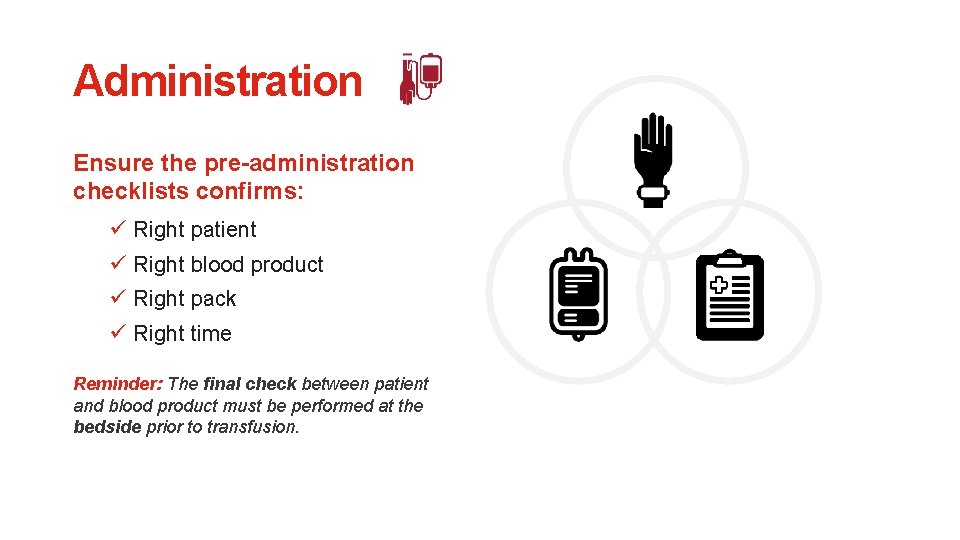
Administration Ensure the pre-administration checklists confirms: ü Right patient ü Right blood product ü Right pack ü Right time Reminder: The final check between patient and blood product must be performed at the bedside prior to transfusion.
Monitor and response Monitor: If suspected transfusion reaction occurs: • STOP the transfusion and follow local transfusion reaction protocols • Activate emergency procedures, if required Response: • Assess to determine if desired outcome of transfusion has been achieved • Assess patient for further blood product transfusion/s as necessary • Document assessment
Transfusion reactions
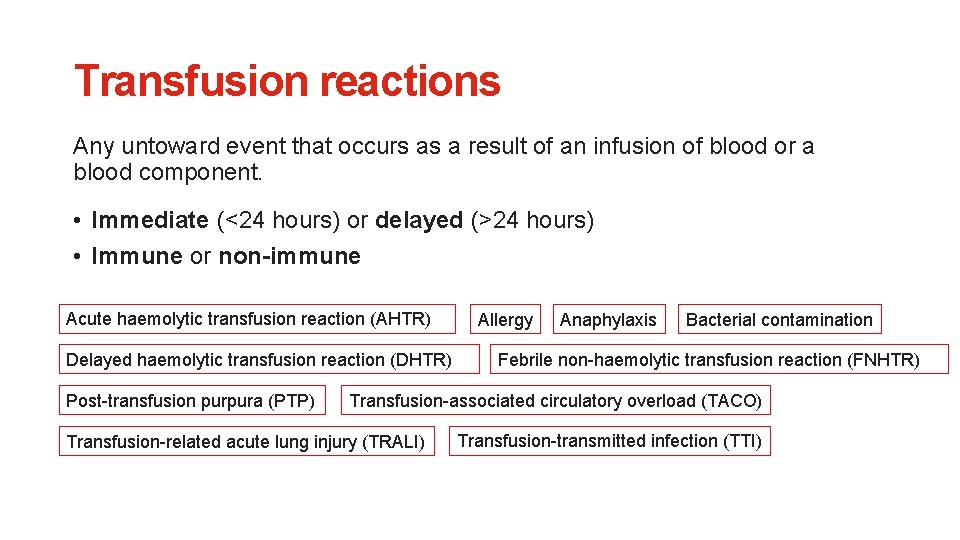
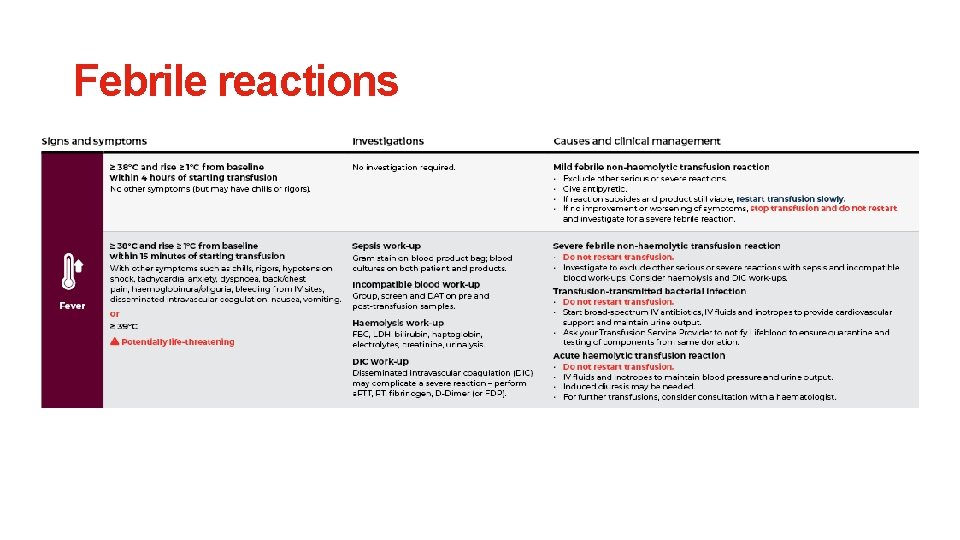
Transfusion reactions Any untoward event that occurs as a result of an infusion of blood or a blood component. • Immediate (<24 hours) or delayed (>24 hours) • Immune or non-immune Acute haemolytic transfusion reaction (AHTR) Delayed haemolytic transfusion reaction (DHTR) Post-transfusion purpura (PTP) Allergy Anaphylaxis Bacterial contamination Febrile non-haemolytic transfusion reaction (FNHTR) Transfusion-associated circulatory overload (TACO) Transfusion-related acute lung injury (TRALI) Transfusion-transmitted infection (TTI)
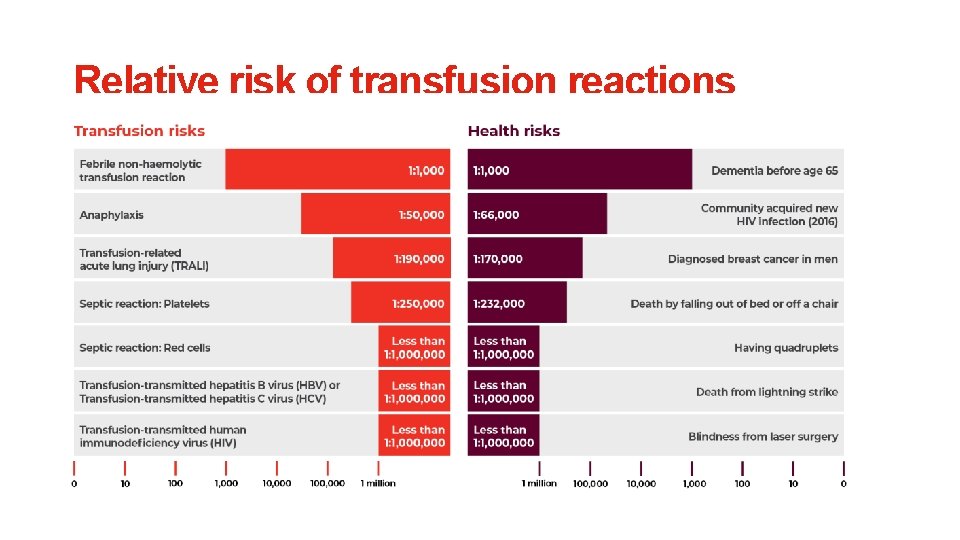
Relative risk of transfusion reactions
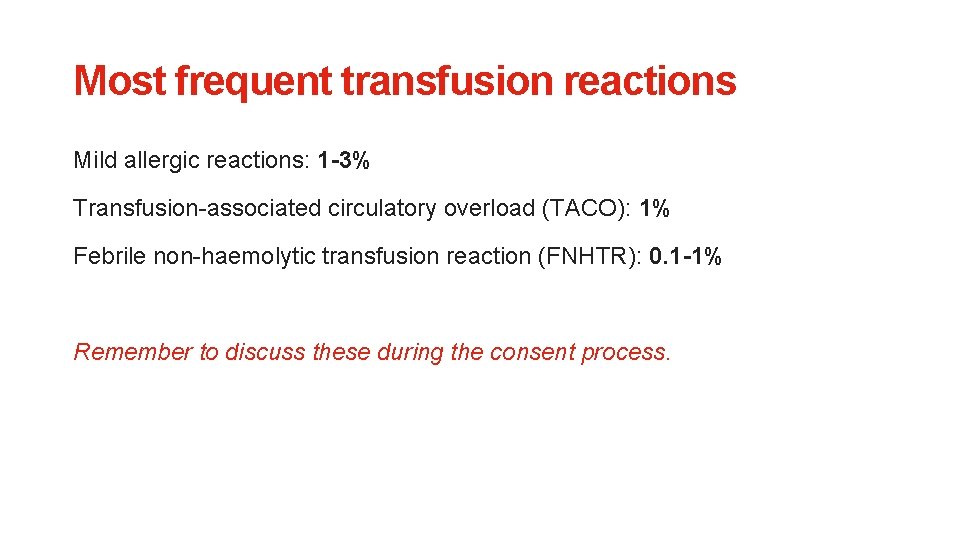
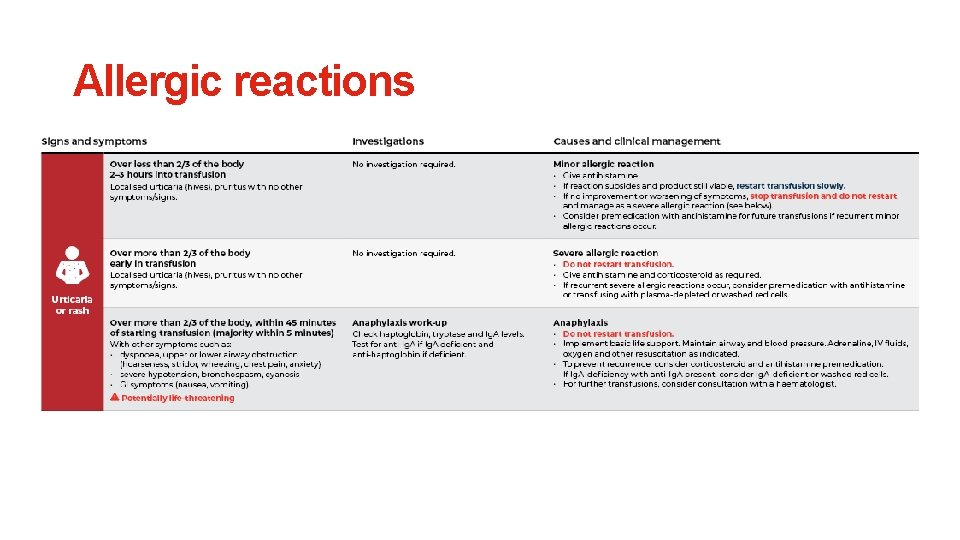
Most frequent transfusion reactions Mild allergic reactions: 1 -3% Transfusion-associated circulatory overload (TACO): 1% Febrile non-haemolytic transfusion reaction (FNHTR): 0. 1 -1% Remember to discuss these during the consent process.
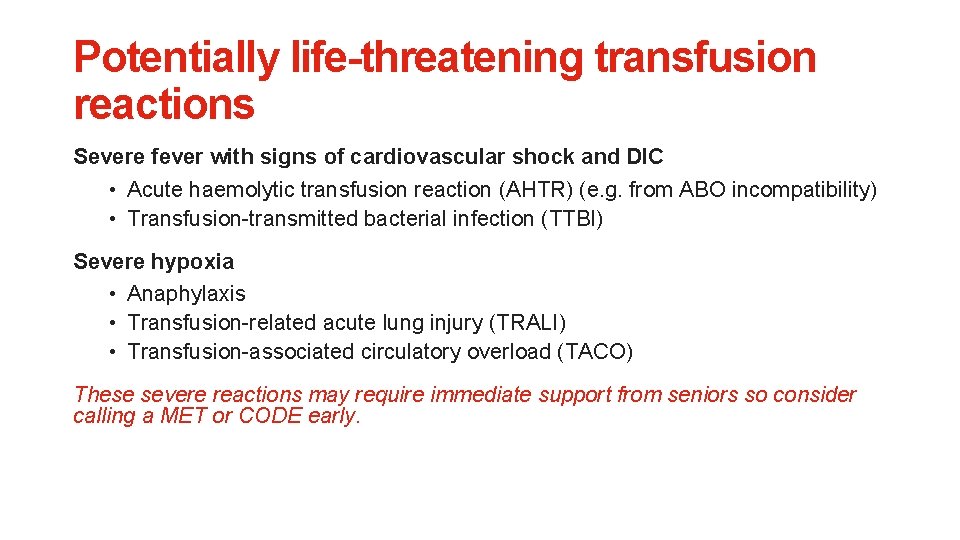
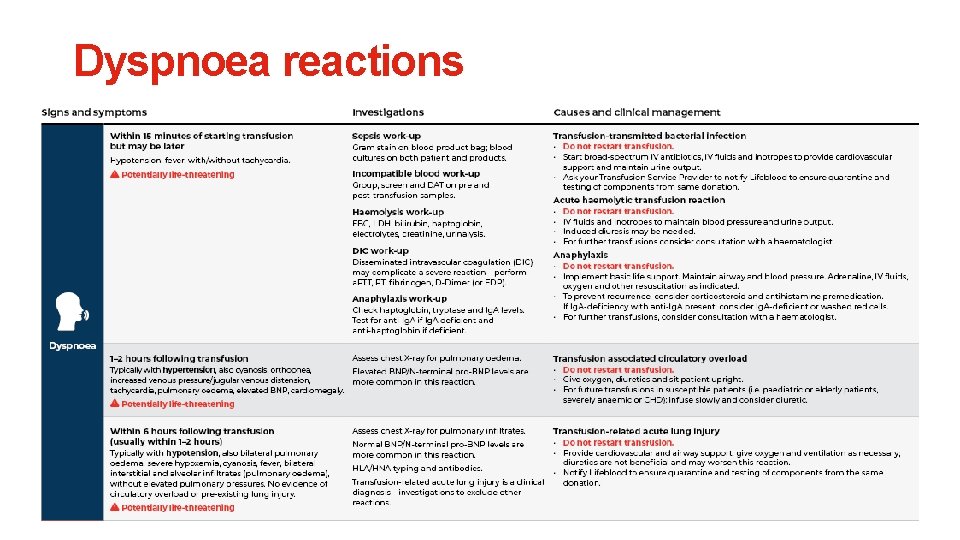
Potentially life-threatening transfusion reactions Severe fever with signs of cardiovascular shock and DIC • Acute haemolytic transfusion reaction (AHTR) (e. g. from ABO incompatibility) • Transfusion-transmitted bacterial infection (TTBI) Severe hypoxia • Anaphylaxis • Transfusion-related acute lung injury (TRALI) • Transfusion-associated circulatory overload (TACO) These severe reactions may require immediate support from seniors so consider calling a MET or CODE early.
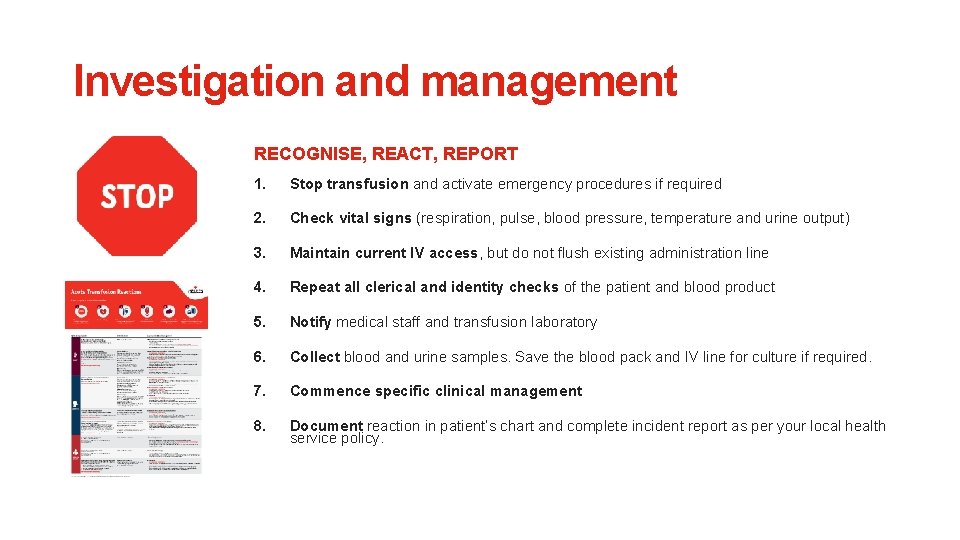
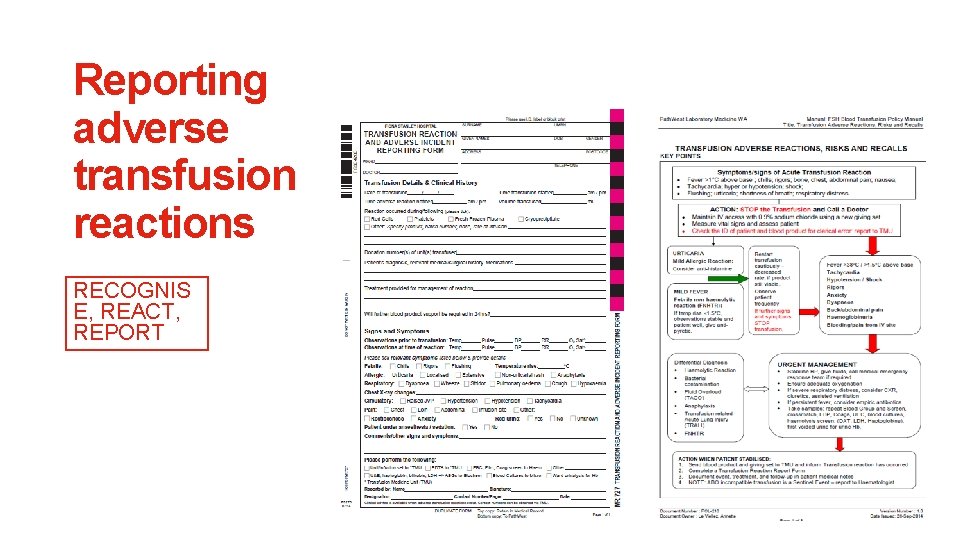
Investigation and management RECOGNISE, REACT, REPORT 1. Stop transfusion and activate emergency procedures if required 2. Check vital signs (respiration, pulse, blood pressure, temperature and urine output) 3. Maintain current IV access, but do not flush existing administration line 4. Repeat all clerical and identity checks of the patient and blood product 5. Notify medical staff and transfusion laboratory 6. Collect blood and urine samples. Save the blood pack and IV line for culture if required. 7. Commence specific clinical management 8. Document reaction in patient’s chart and complete incident report as per your local health service policy.
Febrile reactions
Dyspnoea reactions
Allergic reactions
Reporting adverse transfusion reactions RECOGNIS E, REACT, REPORT
Transfusion resources
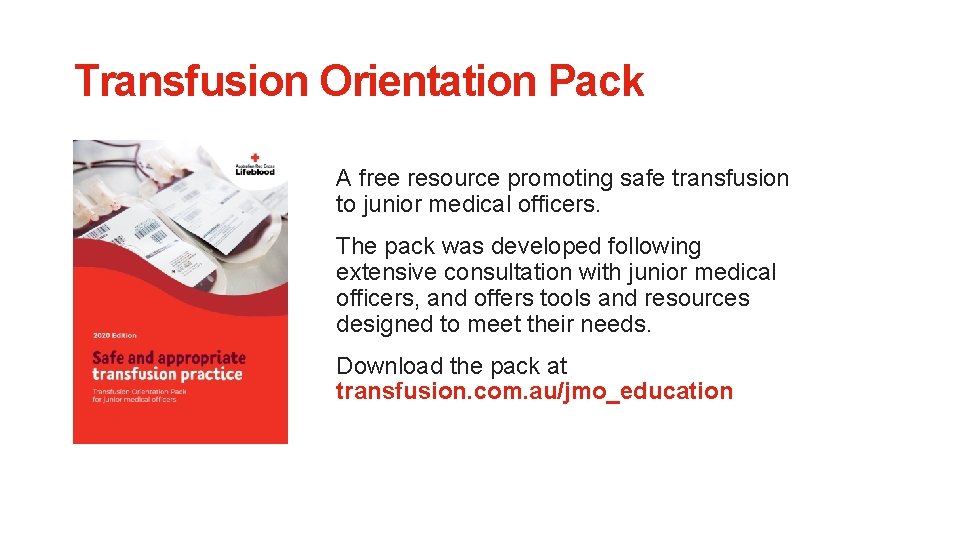
Transfusion Orientation Pack A free resource promoting safe transfusion to junior medical officers. The pack was developed following extensive consultation with junior medical officers, and offers tools and resources designed to meet their needs. Download the pack at transfusion. com. au/jmo_education
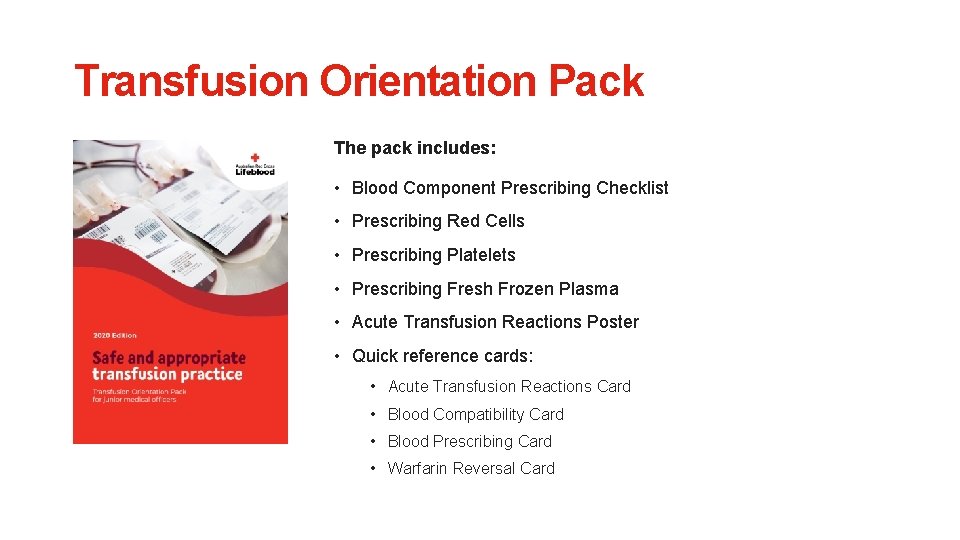
Transfusion Orientation Pack The pack includes: • Blood Component Prescribing Checklist • Prescribing Red Cells • Prescribing Platelets • Prescribing Fresh Frozen Plasma • Acute Transfusion Reactions Poster • Quick reference cards: • Acute Transfusion Reactions Card • Blood Compatibility Card • Blood Prescribing Card • Warfarin Reversal Card
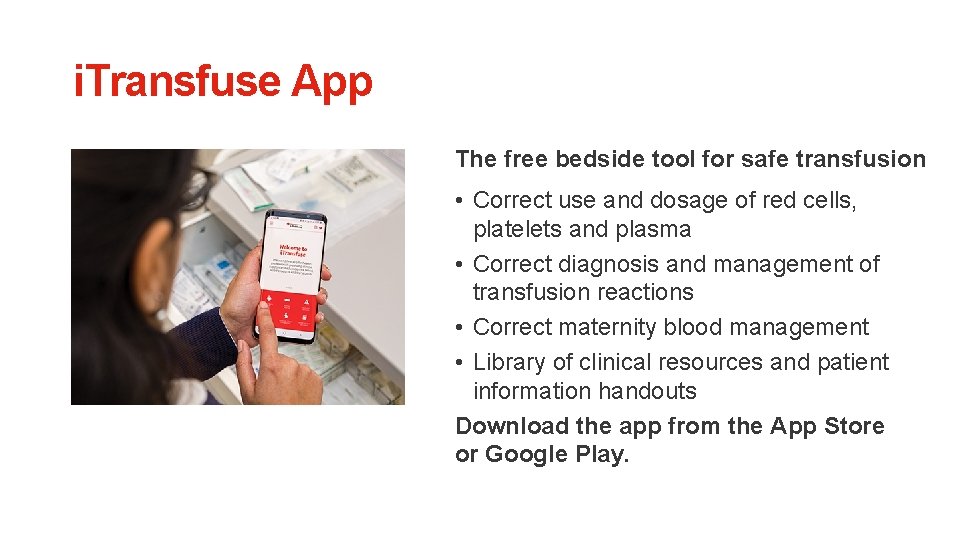
i. Transfuse App The free bedside tool for safe transfusion • Correct use and dosage of red cells, platelets and plasma • Correct diagnosis and management of transfusion reactions • Correct maternity blood management • Library of clinical resources and patient information handouts Download the app from the App Store or Google Play.