
Safe production and processing of food www foodafactoflife
- Slides: 25
Safe production and processing of food www. foodafactoflife. org. uk © Food – a fact of life 2019
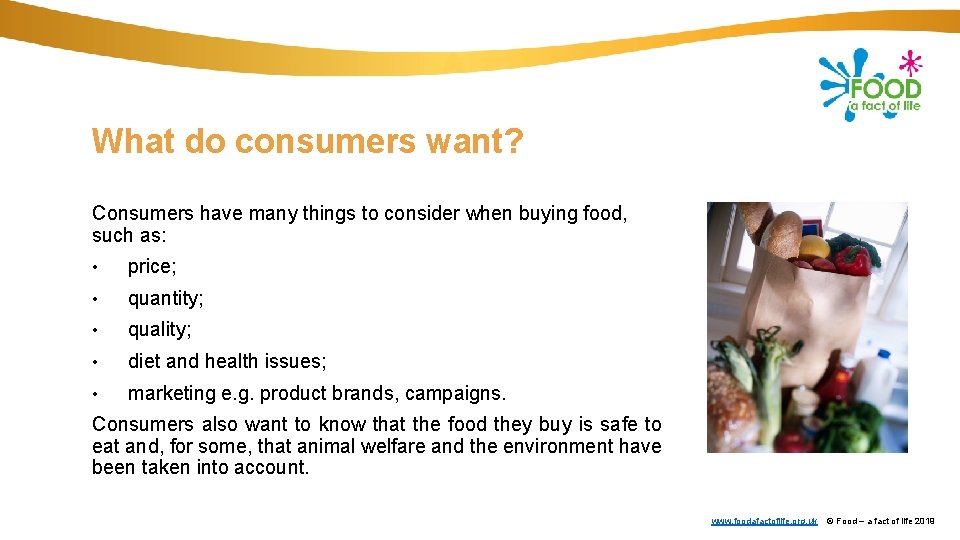
What do consumers want? Consumers have many things to consider when buying food, such as: • price; • quantity; • quality; • diet and health issues; • marketing e. g. product brands, campaigns. Consumers also want to know that the food they buy is safe to eat and, for some, that animal welfare and the environment have been taken into account. www. foodafactoflife. org. uk © Food – a fact of life 2019
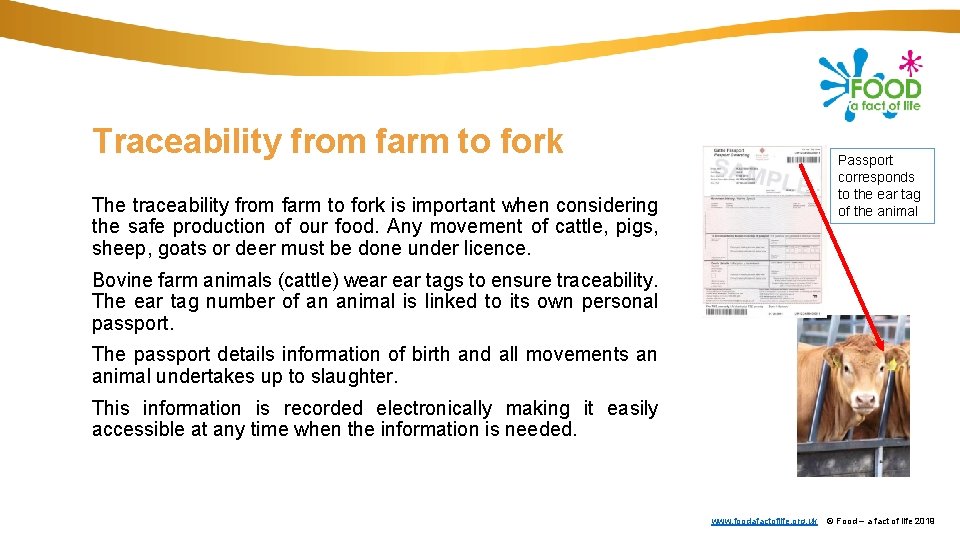
Traceability from farm to fork The traceability from farm to fork is important when considering the safe production of our food. Any movement of cattle, pigs, sheep, goats or deer must be done under licence. Passport corresponds to the ear tag of the animal Bovine farm animals (cattle) wear tags to ensure traceability. The ear tag number of an animal is linked to its own personal passport. The passport details information of birth and all movements an animal undertakes up to slaughter. This information is recorded electronically making it easily accessible at any time when the information is needed. www. foodafactoflife. org. uk © Food – a fact of life 2019
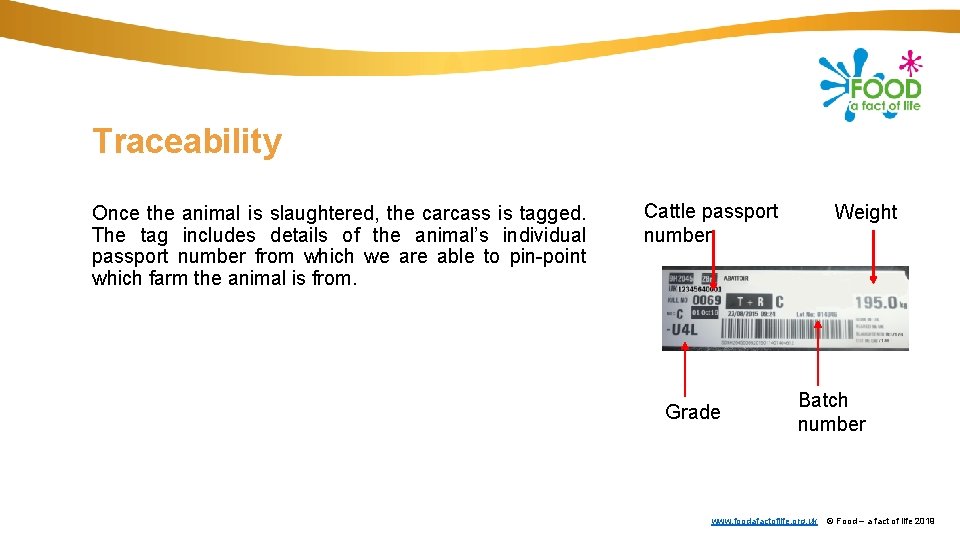
Traceability Once the animal is slaughtered, the carcass is tagged. The tag includes details of the animal’s individual passport number from which we are able to pin-point which farm the animal is from. Cattle passport number Grade Weight Batch number www. foodafactoflife. org. uk © Food – a fact of life 2019
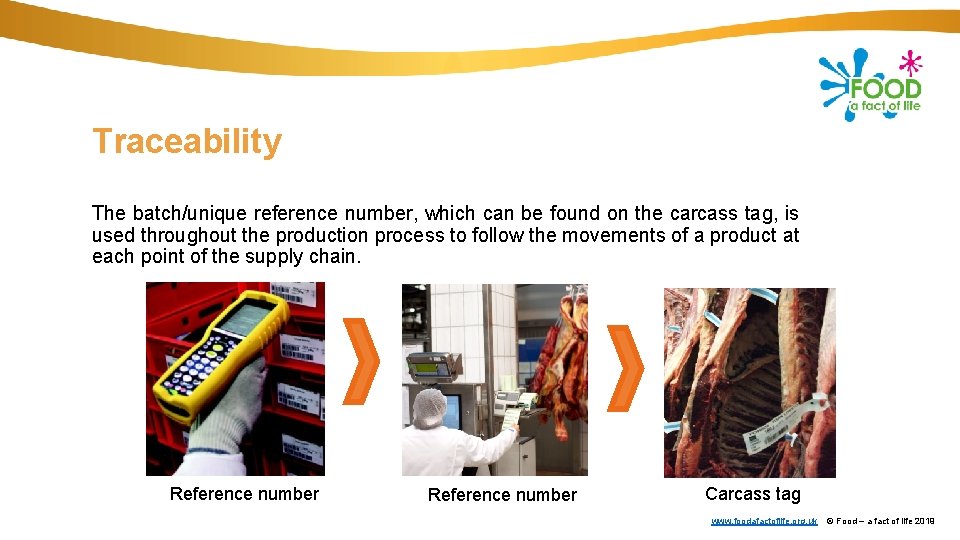
Traceability The batch/unique reference number, which can be found on the carcass tag, is used throughout the production process to follow the movements of a product at each point of the supply chain. Reference number Carcass tag www. foodafactoflife. org. uk © Food – a fact of life 2019
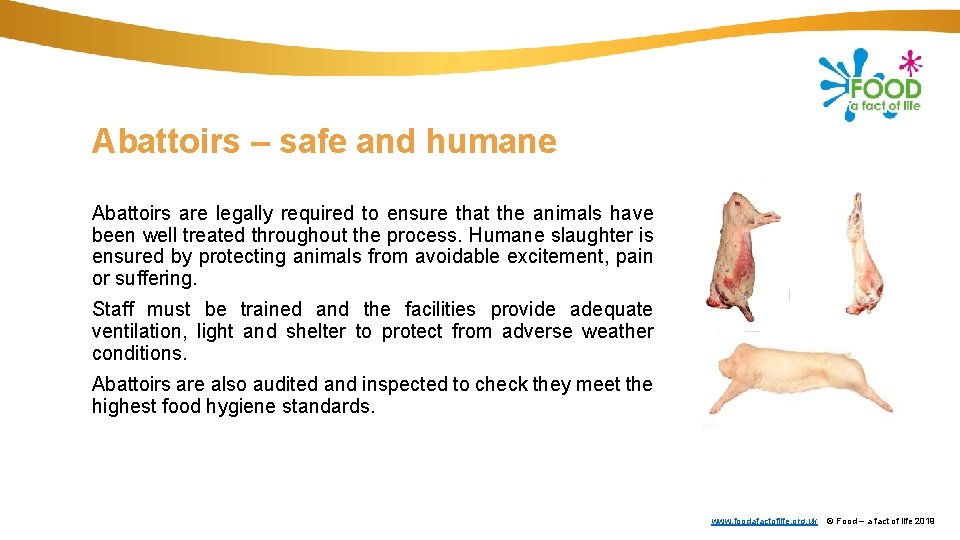
Abattoirs – safe and humane Abattoirs are legally required to ensure that the animals have been well treated throughout the process. Humane slaughter is ensured by protecting animals from avoidable excitement, pain or suffering. Staff must be trained and the facilities provide adequate ventilation, light and shelter to protect from adverse weather conditions. Abattoirs are also audited and inspected to check they meet the highest food hygiene standards. www. foodafactoflife. org. uk © Food – a fact of life 2019
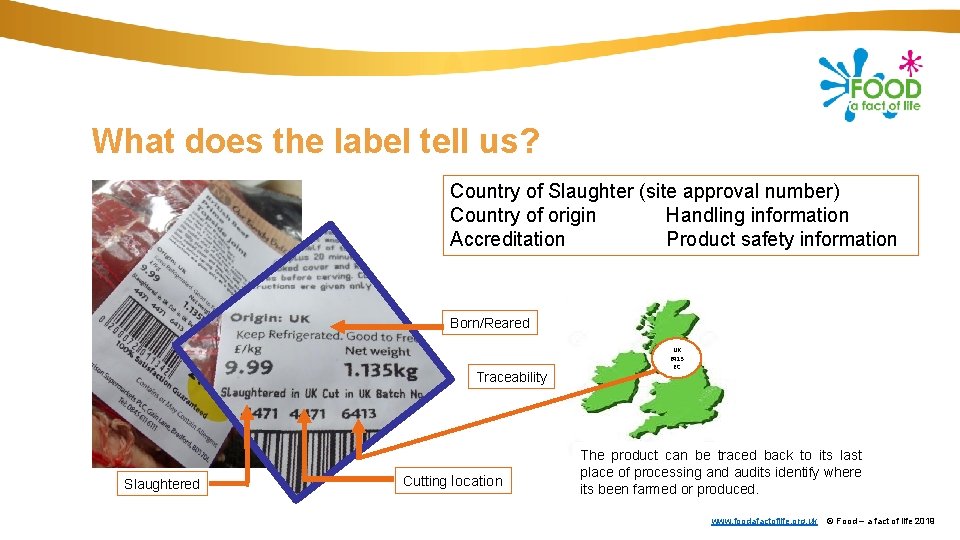
What does the label tell us? Country of Slaughter (site approval number) Country of origin Handling information Accreditation Product safety information Born/Reared Traceability Slaughtered Cutting location UK 6413 EC The product can be traced back to its last place of processing and audits identify where its been farmed or produced. www. foodafactoflife. org. uk © Food – a fact of life 2019
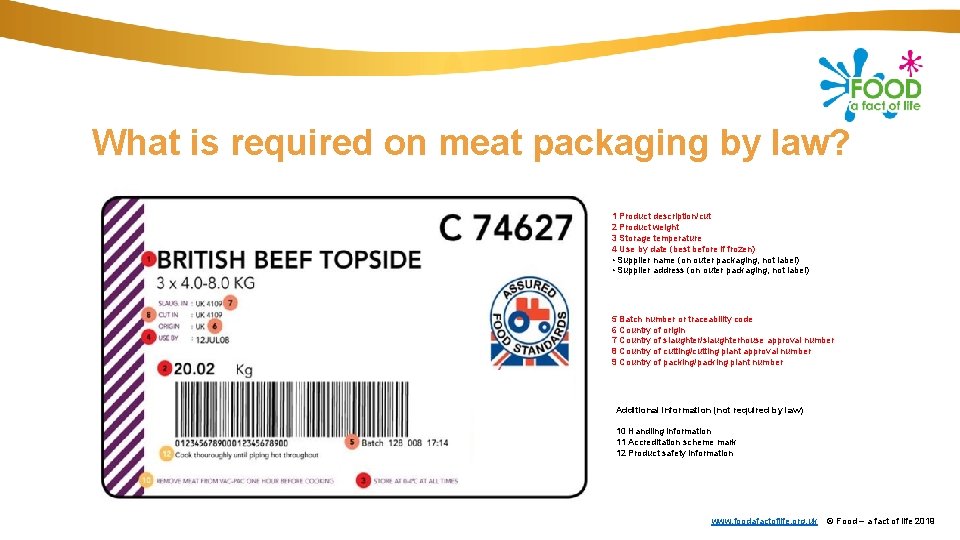
What is required on meat packaging by law? 1 Product description/cut 2 Product weight 3 Storage temperature 4 Use by date (best before if frozen) • Supplier name (on outer packaging, not label) • Supplier address (on outer packaging, not label) 5 Batch number or traceability code 6 Country of origin 7 Country of slaughter/slaughterhouse approval number 8 Country of cutting/cutting plant approval number 9 Country of packing/packing plant number Additional information (not required by law) 10 Handling information 11 Accreditation scheme mark 12 Product safety information www. foodafactoflife. org. uk © Food – a fact of life 2019
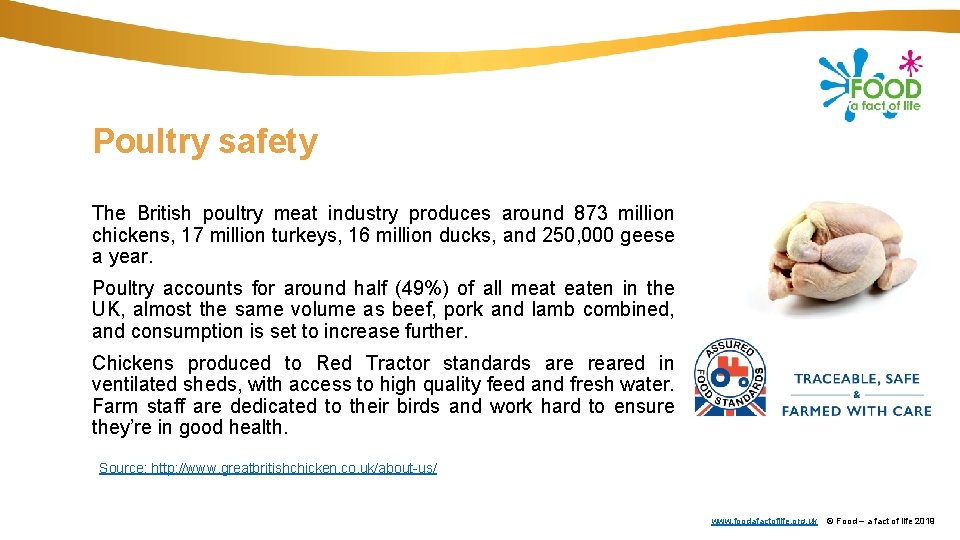
Poultry safety The British poultry meat industry produces around 873 million chickens, 17 million turkeys, 16 million ducks, and 250, 000 geese a year. Poultry accounts for around half (49%) of all meat eaten in the UK, almost the same volume as beef, pork and lamb combined, and consumption is set to increase further. Chickens produced to Red Tractor standards are reared in ventilated sheds, with access to high quality feed and fresh water. Farm staff are dedicated to their birds and work hard to ensure they’re in good health. Source: http: //www. greatbritishchicken. co. uk/about-us/ www. foodafactoflife. org. uk © Food – a fact of life 2019
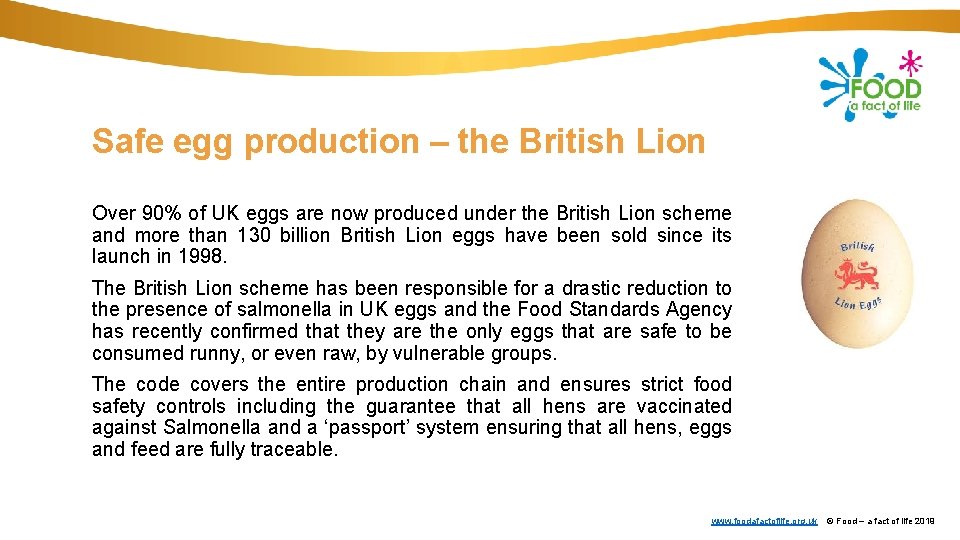
Safe egg production – the British Lion Over 90% of UK eggs are now produced under the British Lion scheme and more than 130 billion British Lion eggs have been sold since its launch in 1998. The British Lion scheme has been responsible for a drastic reduction to the presence of salmonella in UK eggs and the Food Standards Agency has recently confirmed that they are the only eggs that are safe to be consumed runny, or even raw, by vulnerable groups. The code covers the entire production chain and ensures strict food safety controls including the guarantee that all hens are vaccinated against Salmonella and a ‘passport’ system ensuring that all hens, eggs and feed are fully traceable. www. foodafactoflife. org. uk © Food – a fact of life 2019
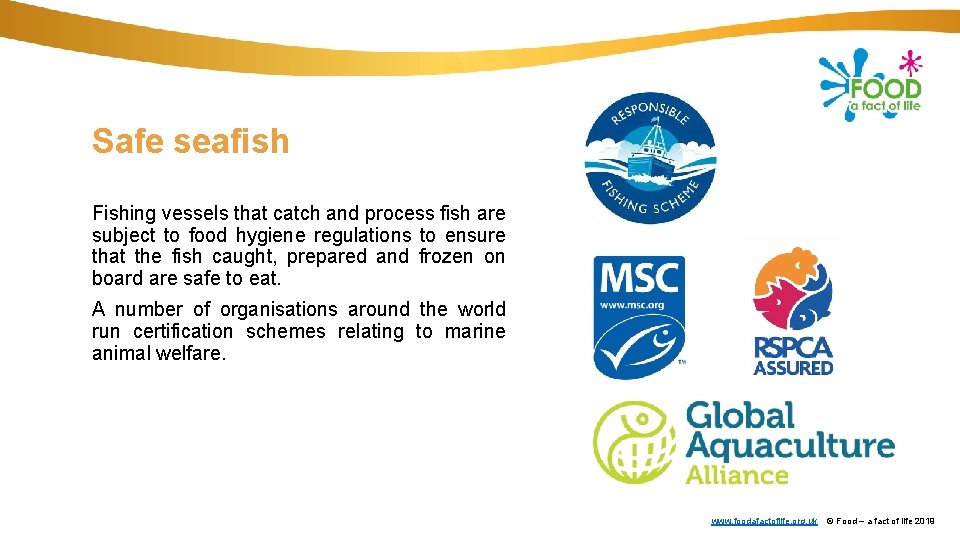
Safe seafish Fishing vessels that catch and process fish are subject to food hygiene regulations to ensure that the fish caught, prepared and frozen on board are safe to eat. A number of organisations around the world run certification schemes relating to marine animal welfare. www. foodafactoflife. org. uk © Food – a fact of life 2019
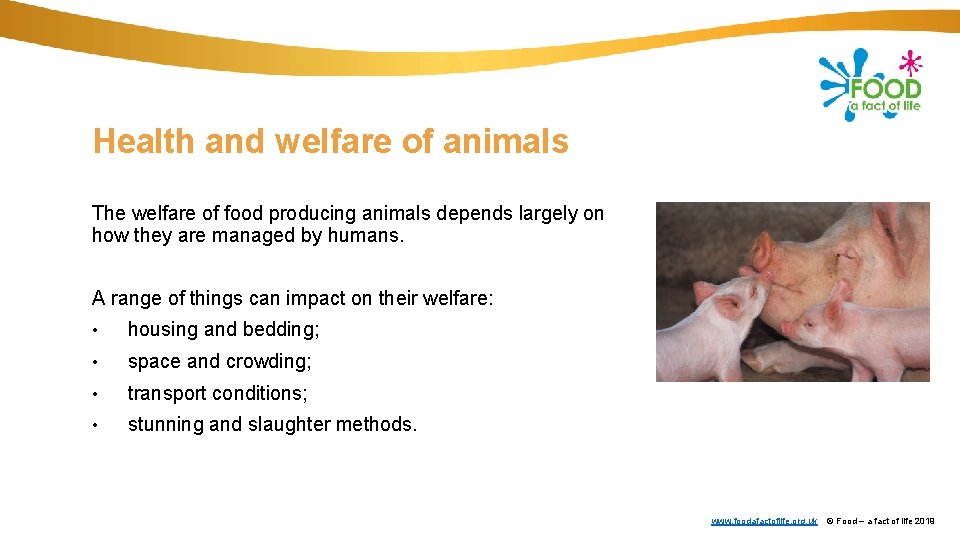
Health and welfare of animals The welfare of food producing animals depends largely on how they are managed by humans. A range of things can impact on their welfare: • housing and bedding; • space and crowding; • transport conditions; • stunning and slaughter methods. www. foodafactoflife. org. uk © Food – a fact of life 2019
Health and welfare of the animals Farmers spend a lot of time with their livestock monitoring their health and welfare and producing feed, such as silage. Farmers will also maintain fences, farming equipment and other areas of the farm. Veterinarians and animal nutritionists will often work with farmers to provide expert advice on improving and maintaining animal health. www. foodafactoflife. org. uk © Food – a fact of life 2019
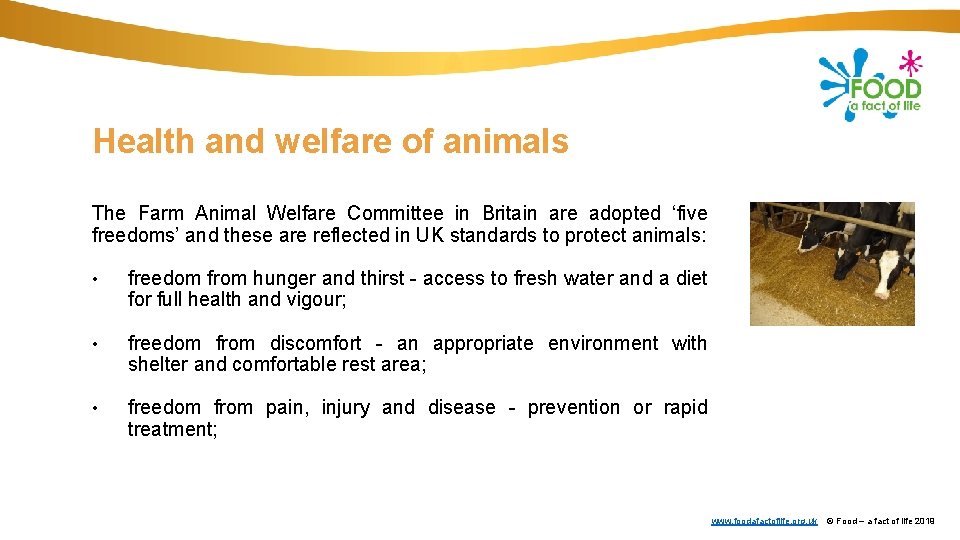
Health and welfare of animals The Farm Animal Welfare Committee in Britain are adopted ‘five freedoms’ and these are reflected in UK standards to protect animals: • freedom from hunger and thirst - access to fresh water and a diet for full health and vigour; • freedom from discomfort - an appropriate environment with shelter and comfortable rest area; • freedom from pain, injury and disease - prevention or rapid treatment; www. foodafactoflife. org. uk © Food – a fact of life 2019
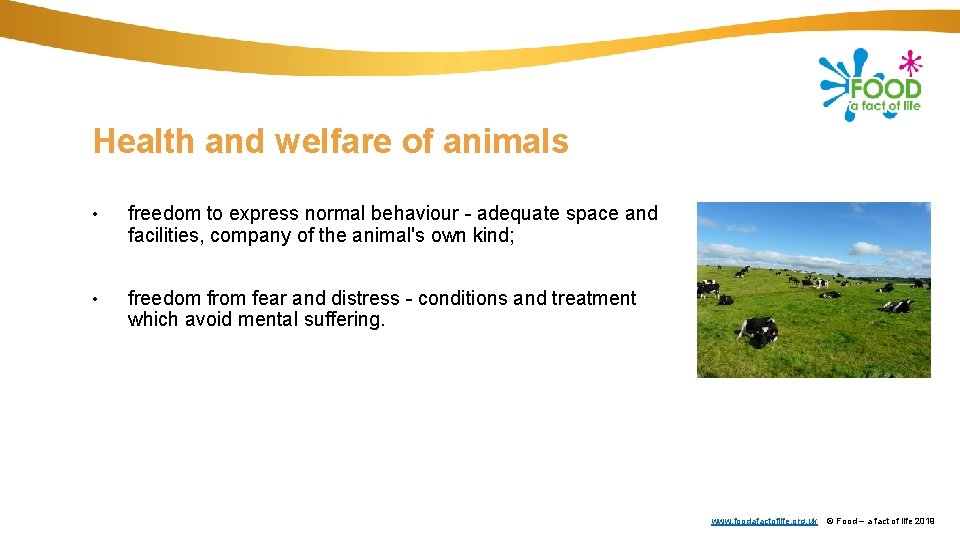
Health and welfare of animals • freedom to express normal behaviour - adequate space and facilities, company of the animal's own kind; • freedom from fear and distress - conditions and treatment which avoid mental suffering. www. foodafactoflife. org. uk © Food – a fact of life 2019
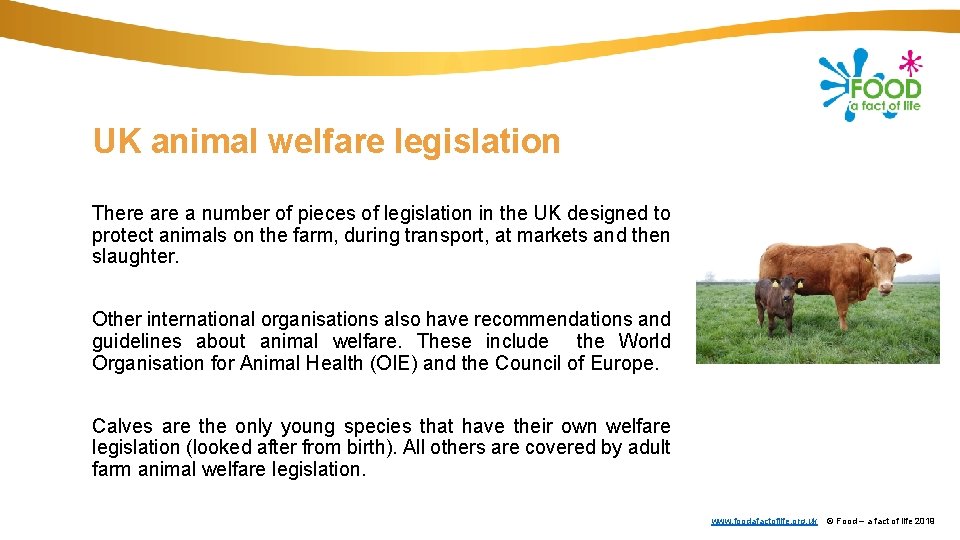
UK animal welfare legislation There a number of pieces of legislation in the UK designed to protect animals on the farm, during transport, at markets and then slaughter. Other international organisations also have recommendations and guidelines about animal welfare. These include the World Organisation for Animal Health (OIE) and the Council of Europe. Calves are the only young species that have their own welfare legislation (looked after from birth). All others are covered by adult farm animal welfare legislation. www. foodafactoflife. org. uk © Food – a fact of life 2019
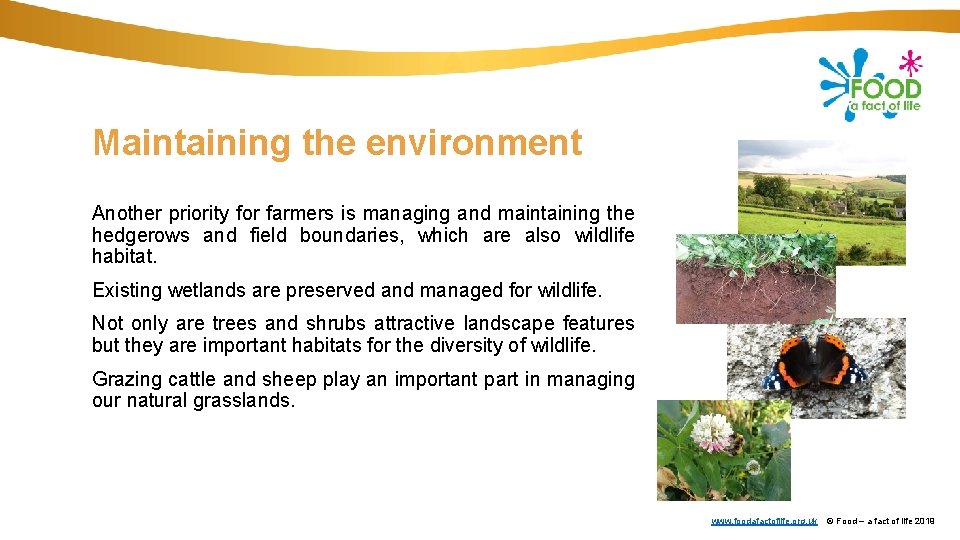
Maintaining the environment Another priority for farmers is managing and maintaining the hedgerows and field boundaries, which are also wildlife habitat. Existing wetlands are preserved and managed for wildlife. Not only are trees and shrubs attractive landscape features but they are important habitats for the diversity of wildlife. Grazing cattle and sheep play an important part in managing our natural grasslands. www. foodafactoflife. org. uk © Food – a fact of life 2019
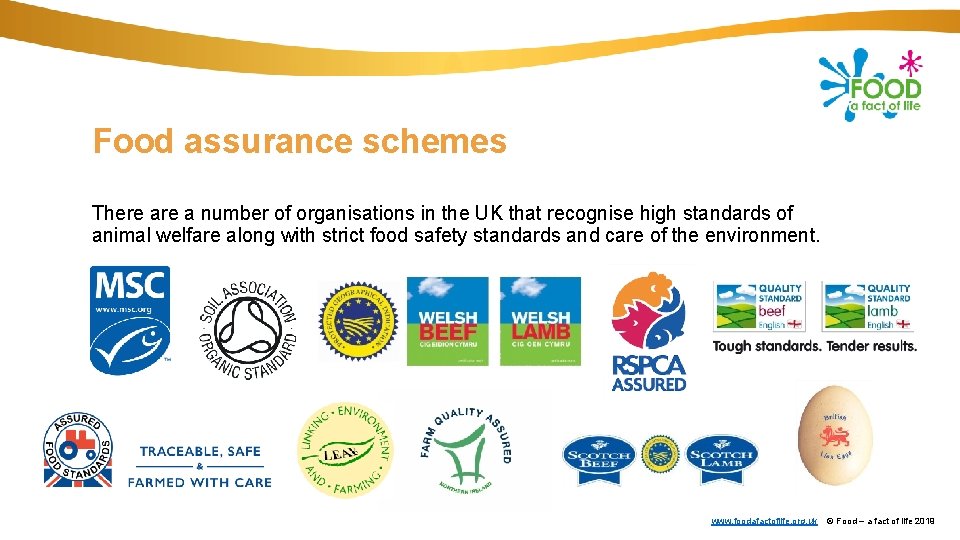
Food assurance schemes There a number of organisations in the UK that recognise high standards of animal welfare along with strict food safety standards and care of the environment. www. foodafactoflife. org. uk © Food – a fact of life 2019
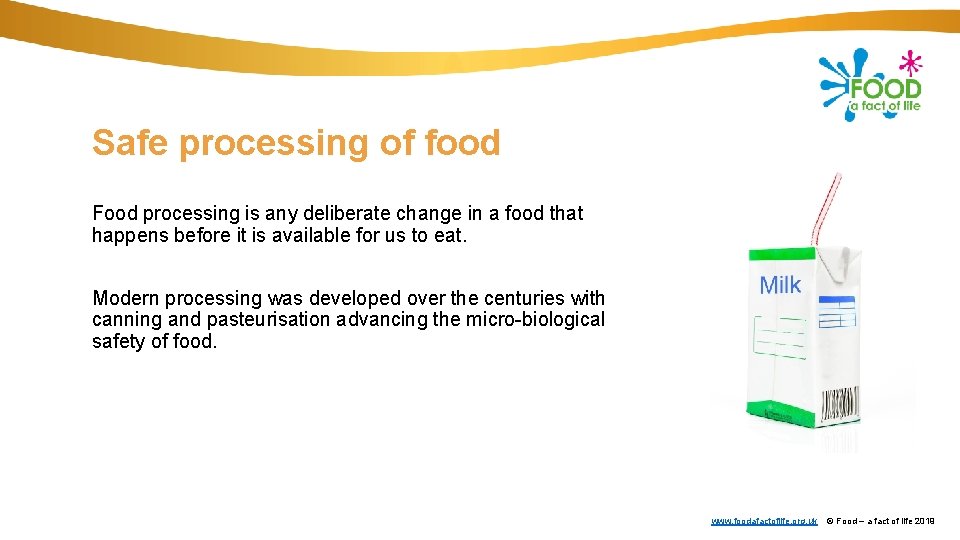
Safe processing of food Food processing is any deliberate change in a food that happens before it is available for us to eat. Modern processing was developed over the centuries with canning and pasteurisation advancing the micro-biological safety of food. www. foodafactoflife. org. uk © Food – a fact of life 2019
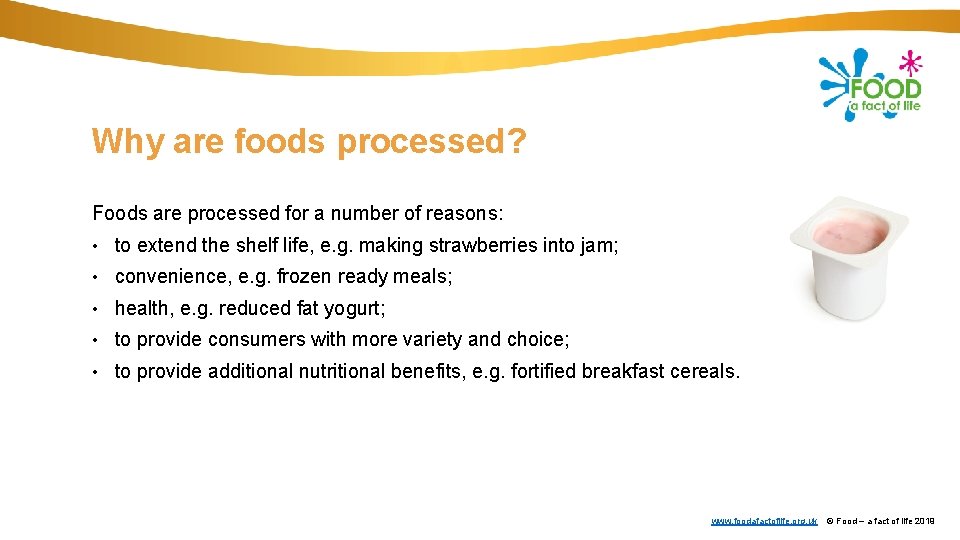
Why are foods processed? Foods are processed for a number of reasons: • to extend the shelf life, e. g. making strawberries into jam; • convenience, e. g. frozen ready meals; • health, e. g. reduced fat yogurt; • to provide consumers with more variety and choice; • to provide additional nutritional benefits, e. g. fortified breakfast cereals. www. foodafactoflife. org. uk © Food – a fact of life 2019
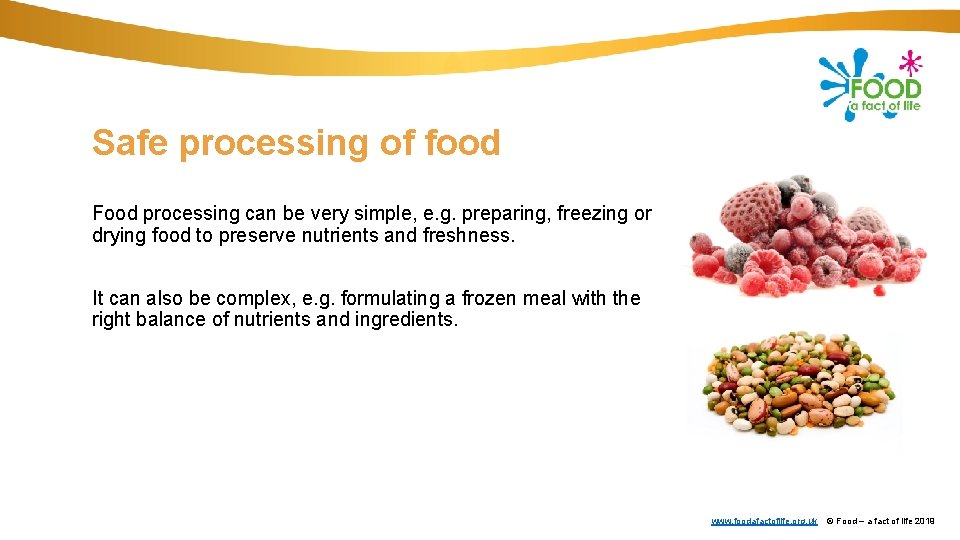
Safe processing of food Food processing can be very simple, e. g. preparing, freezing or drying food to preserve nutrients and freshness. It can also be complex, e. g. formulating a frozen meal with the right balance of nutrients and ingredients. www. foodafactoflife. org. uk © Food – a fact of life 2019
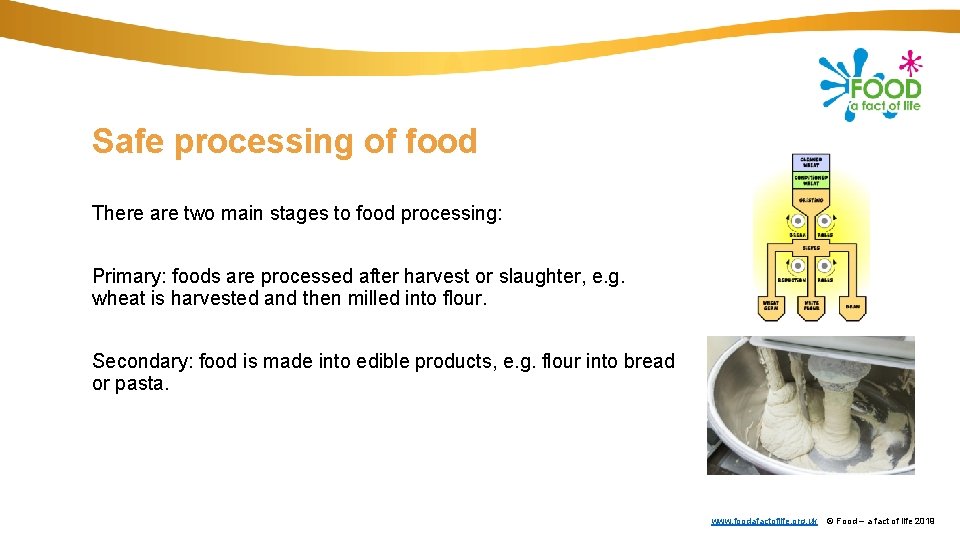
Safe processing of food There are two main stages to food processing: Primary: foods are processed after harvest or slaughter, e. g. wheat is harvested and then milled into flour. Secondary: food is made into edible products, e. g. flour into bread or pasta. www. foodafactoflife. org. uk © Food – a fact of life 2019
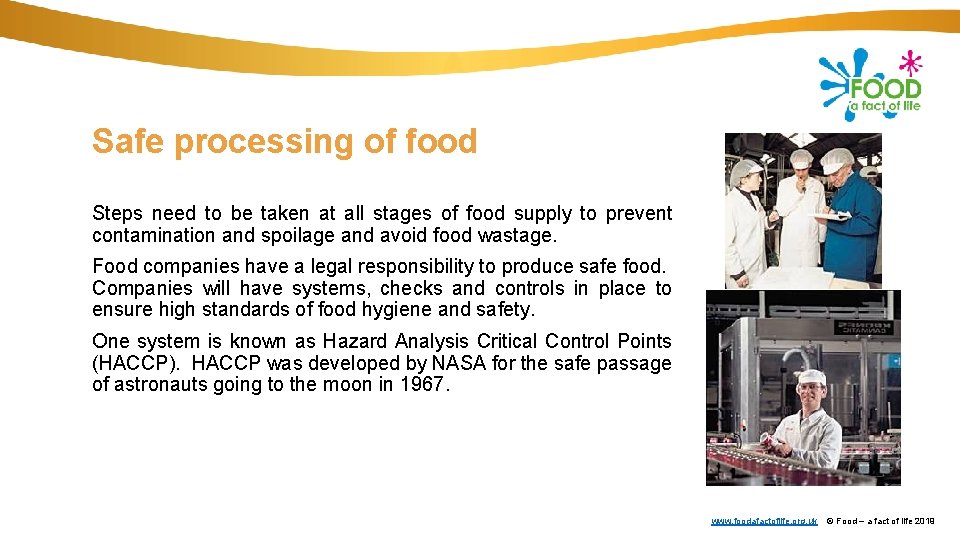
Safe processing of food Steps need to be taken at all stages of food supply to prevent contamination and spoilage and avoid food wastage. Food companies have a legal responsibility to produce safe food. Companies will have systems, checks and controls in place to ensure high standards of food hygiene and safety. One system is known as Hazard Analysis Critical Control Points (HACCP). HACCP was developed by NASA for the safe passage of astronauts going to the moon in 1967. www. foodafactoflife. org. uk © Food – a fact of life 2019
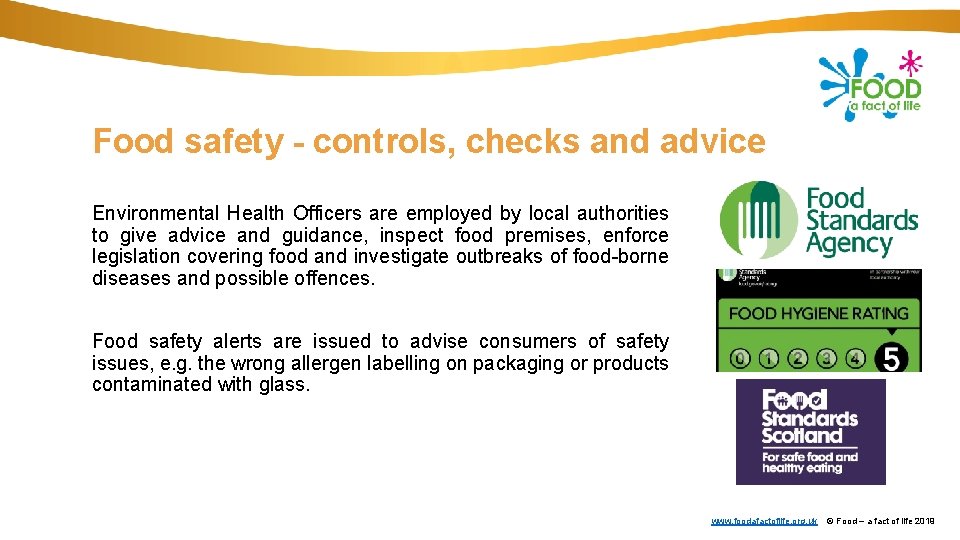
Food safety - controls, checks and advice Environmental Health Officers are employed by local authorities to give advice and guidance, inspect food premises, enforce legislation covering food and investigate outbreaks of food-borne diseases and possible offences. Food safety alerts are issued to advise consumers of safety issues, e. g. the wrong allergen labelling on packaging or products contaminated with glass. www. foodafactoflife. org. uk © Food – a fact of life 2019
Safe production and processing of food For further information, go to: www. foodafactoflife. org. uk © Food – a fact of life 2019