
Safe Management Healthcare Waste Guidance 2006 Sue Berry
‘Safe Management Healthcare Waste Guidance 2006 Sue Berry – RGN, Dip I. C, MPH
Why re-write the regs/guidance ? Ø Changes in waste management regulation, notably Landfill Waste Regulations 2002, & Hazardous Waste Regulation 2005 Ø Changes in carriage regulations, notably amendments to CDGTPE 2004 Regulations (ADR 2005) Ø Changes in waste segregation – the need to segregate and identify waste destined for different disposal routes.
tical r Colou g Codin aceu Pharm Waste n EWC KKeeyy s nggees a h n C a Ch tio Defini Waste s Stream logy do Metho In Summary
How do you Interpret the HWR 2005 & List Waste (England) 2005?
Interpretation of Hazardous Waste Regulations Guidance on the interpretation and classification of hazardous waste available in one document: WM 2 Available to download from: http: //www. environment-agency. gov. uk
How Does WM 2 Work?
WM 2 is Based on the EWC • 20 Chapters relating to ‘industry sectors’ For example: Chapter 1 Wastes Resulting from Exploration, Mining, Quarrying, and Physical and Chemical Treatment of Minerals Chapter 2 Wastes from Agriculture, Horticulture, Aquaculture, Forestry, Hunting and Fishing, Food Preparation and Processing. Chapter 20 Municipal Wastes (Household waste and similar commercial, industrial and institutional wastes) including separately collected fractions. (Chapter 16 Wastes not Otherwise Specified on the List)
EWC Chapters The ‘List’ consists of 20 chapters. Ø They do not have equal priority. Ø Chapters 1 -12 and 17 -20 are source activity related. Ø Chapters 13 -15 are waste type related Ø Chapter 16 - wastes not otherwise specified Ø ‘ 99’ codes. Ø

EWC The EWC is colour coded to aid the identification of hazardous waste. Non-hazardous entries are shown in BLACK text. ‘Absolute’ entries are shown in RED text. ‘Mirror’ (or threshold entries) are shown in BLUE text.
What Makes Waste Hazardous?
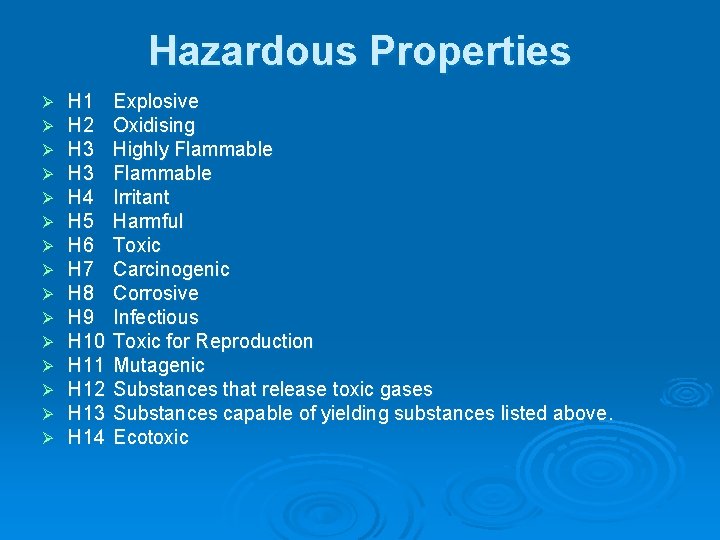
Hazardous Properties Ø Ø Ø Ø H 1 H 2 H 3 H 4 H 5 H 6 H 7 H 8 H 9 H 10 H 11 H 12 H 13 H 14 Explosive Oxidising Highly Flammable Irritant Harmful Toxic Carcinogenic Corrosive Infectious Toxic for Reproduction Mutagenic Substances that release toxic gases Substances capable of yielding substances listed above. Ecotoxic
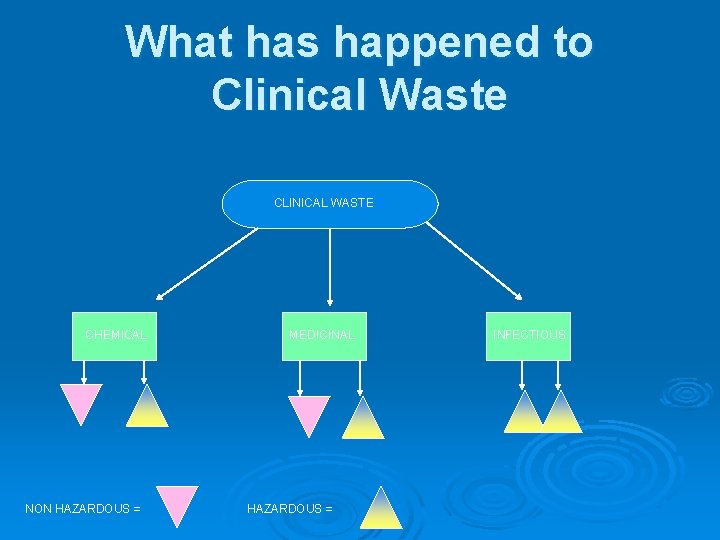
What has happened to Clinical Waste CLINICAL WASTE CHEMICAL NON HAZARDOUS = MEDICINAL HAZARDOUS = INFECTIOUS
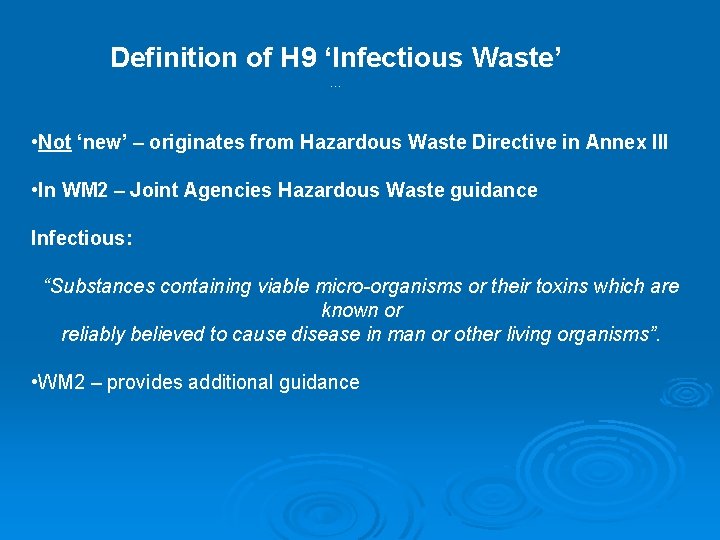
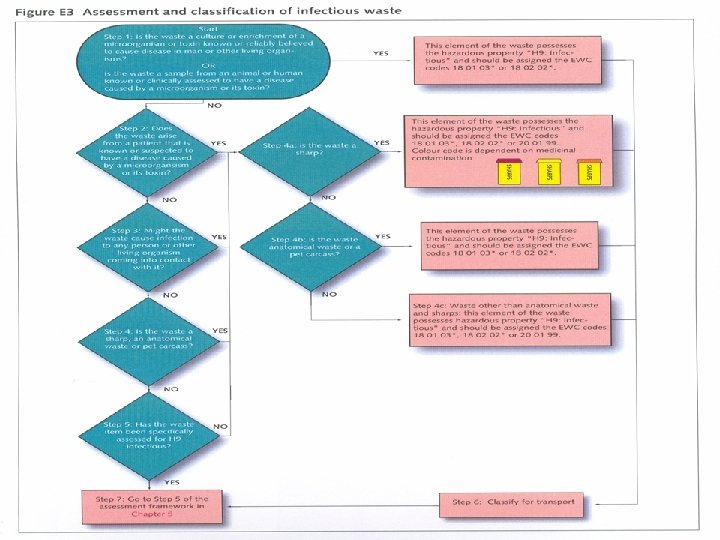
Definition of H 9 ‘Infectious Waste’ … • Not ‘new’ – originates from Hazardous Waste Directive in Annex III • In WM 2 – Joint Agencies Hazardous Waste guidance Infectious: “Substances containing viable micro-organisms or their toxins which are known or reliably believed to cause disease in man or other living organisms”. • WM 2 – provides additional guidance
Conflict with Segregation: Waste Manager vs Clinician
Universal/Standard Precautions Ø “Universal precautions are not intended to change waste management programs previously recommended by CDC for health-care settings (1). Policies for defining, collecting, storing, decontaminating, and disposing of infective waste are generally determined by institutions in accordance with state and local regulations. Ø Information regarding waste management regulations in health-care settings may be obtained from state or local health departments or agencies responsible for waste management”. Perspectives in Disease Prevention and Health Promotion Update: Universal Precautions for Prevention of Transmission of Human Immunodeficiency Virus, Hepatitis B Virus, and Other Bloodborne Pathogens in Health-Care Settings (CDC MMWR Weekly June 24, 1988 / 37(24); 377 -388 )
How do we know when waste is infectious?
Risk Assessment
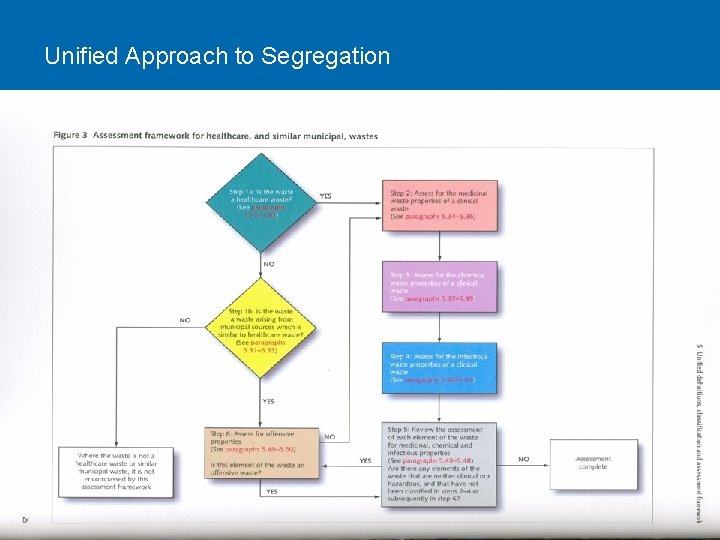
Unified Approach to Segregation
Cyto…What? !
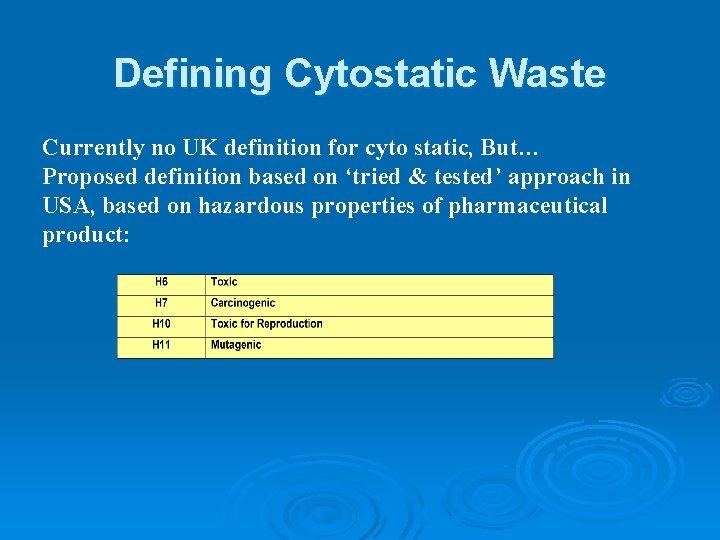
Defining Cytostatic Waste Currently no UK definition for cyto static, But… Proposed definition based on ‘tried & tested’ approach in USA, based on hazardous properties of pharmaceutical product:
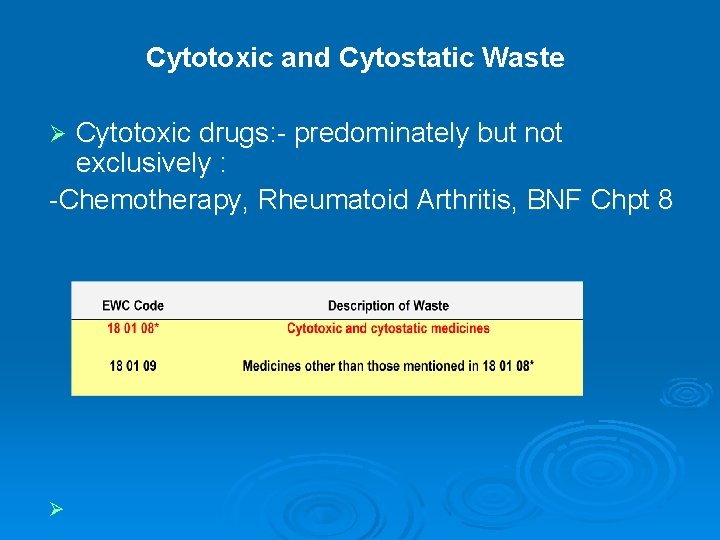
Cytotoxic and Cytostatic Waste Cytotoxic drugs: - predominately but not exclusively : -Chemotherapy, Rheumatoid Arthritis, BNF Chpt 8 Ø Ø
Why Segregate Our Waste? Ø Legislation Ø Guidance Ø Best Practice Ø Environmental Ø Financial
Mixing of Hazardous Waste An establishment which produces hazardous waste cannot mix Ø hazardous and non-hazardous waste Ø different categories of hazardous waste Ø hazardous waste with any other substance or material Ø (does not apply if mixing is part of a ‘suitable authorisation’ for a disposal or recovery operation) Ø
Duty to Separate Mixed Waste Ø The holder of the waste has a duty to separate mixed waste where… Ø technically and economically feasible AND Ø necessary to comply with the Waste Directive conditions. Ø Must be carried out in accordance with a waste permit or exemption.
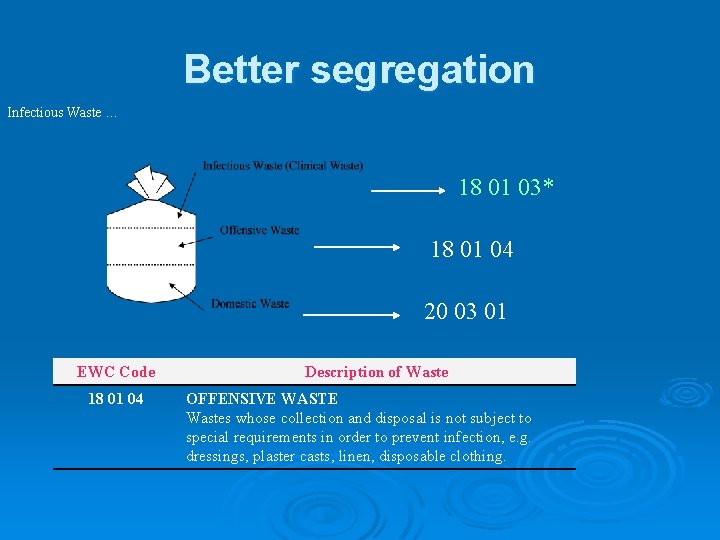
Better segregation Infectious Waste … 18 01 03* 18 01 04 20 03 01 EWC Code 18 01 04 Description of Waste OFFENSIVE WASTE Wastes whose collection and disposal is not subject to special requirements in order to prevent infection, e. g. dressings, plaster casts, linen, disposable clothing.
Types of Segregation Ø Recycling Ø Confidential Ø Hazardous Waste Ø WEEE
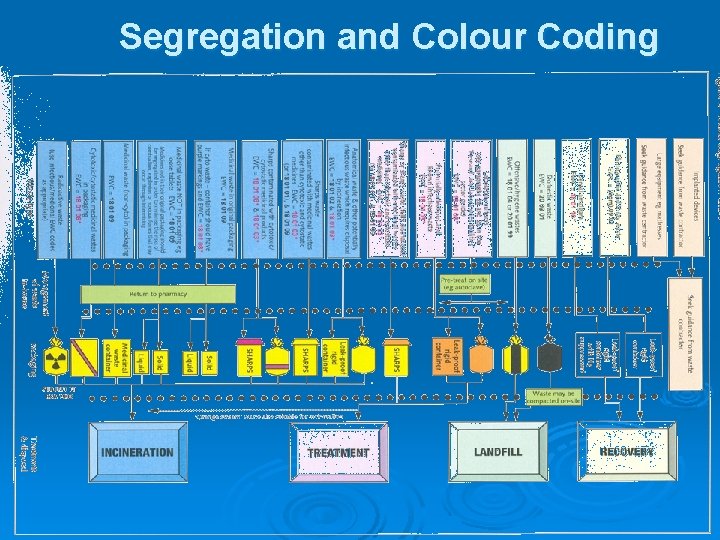
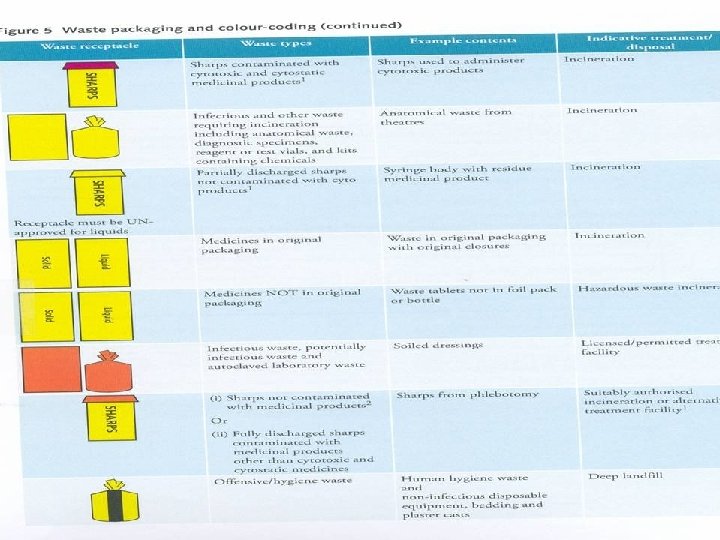
Segregation and Colour Coding
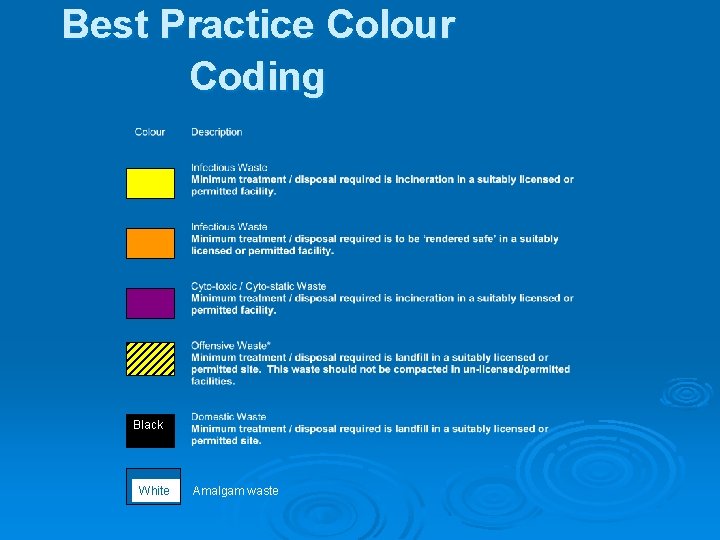
Best Practice Colour Coding Black White Amalgam waste
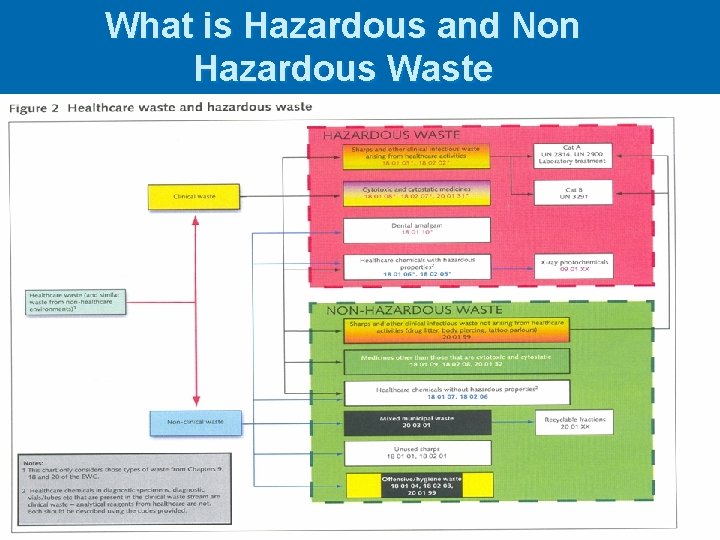
What is Hazardous and Non Hazardous Waste
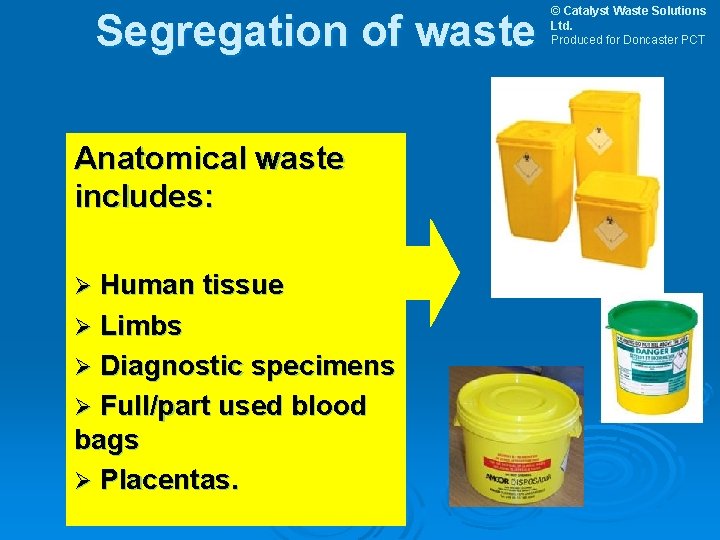
Segregation of waste Anatomical waste includes: Ø Human tissue Ø Limbs Ø Diagnostic specimens Ø Full/part used blood bags Ø Placentas. © Catalyst Waste Solutions Ltd. Produced for Doncaster PCT
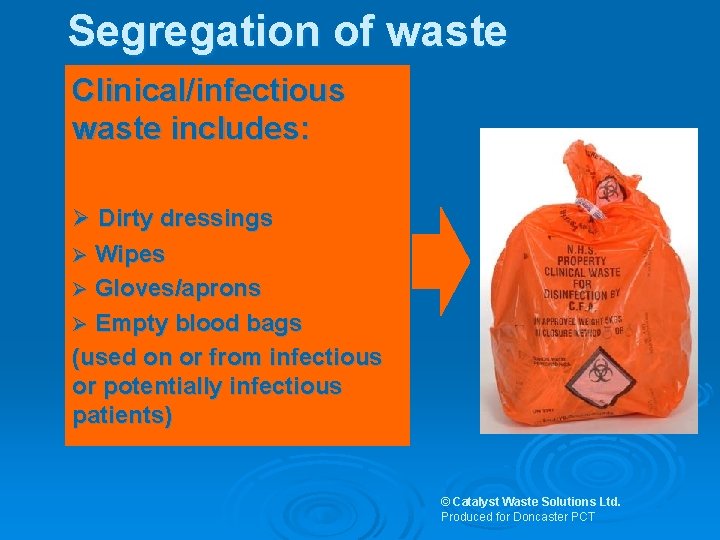
Segregation of waste Clinical/infectious waste includes: Ø Dirty dressings Ø Wipes Ø Gloves/aprons Ø Empty blood bags (used on or from infectious or potentially infectious patients) © Catalyst Waste Solutions Ltd. Produced for Doncaster PCT
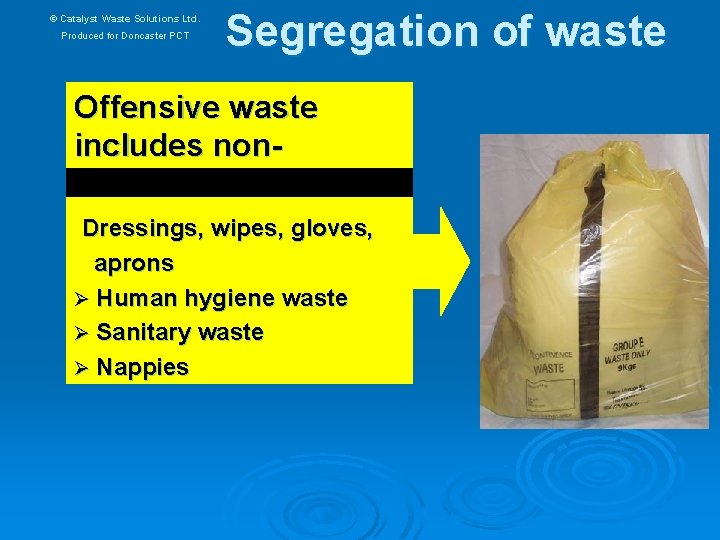
© Catalyst Waste Solutions Ltd. Produced for Doncaster PCT Segregation of waste Offensive waste includes noninfectious: Dressings, wipes, gloves, aprons Ø Human hygiene waste Ø Sanitary waste Ø Nappies
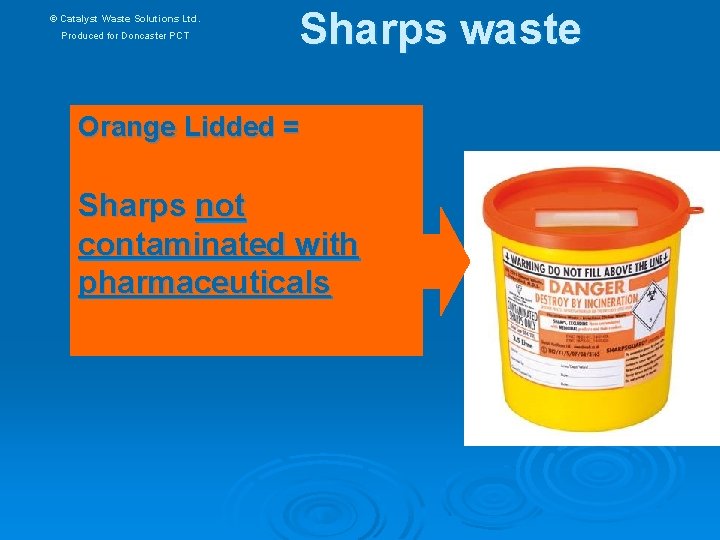
© Catalyst Waste Solutions Ltd. Produced for Doncaster PCT Sharps waste Orange Lidded = Sharps not contaminated with pharmaceuticals
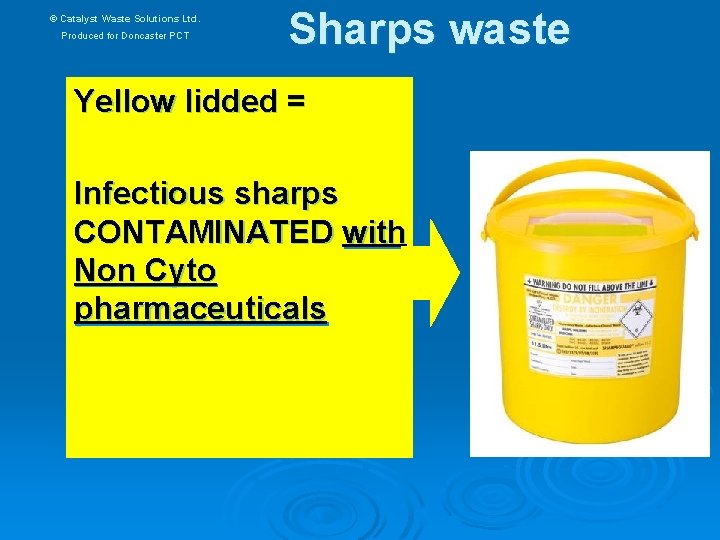
© Catalyst Waste Solutions Ltd. Produced for Doncaster PCT Sharps waste Yellow lidded = Infectious sharps CONTAMINATED with Non Cyto pharmaceuticals
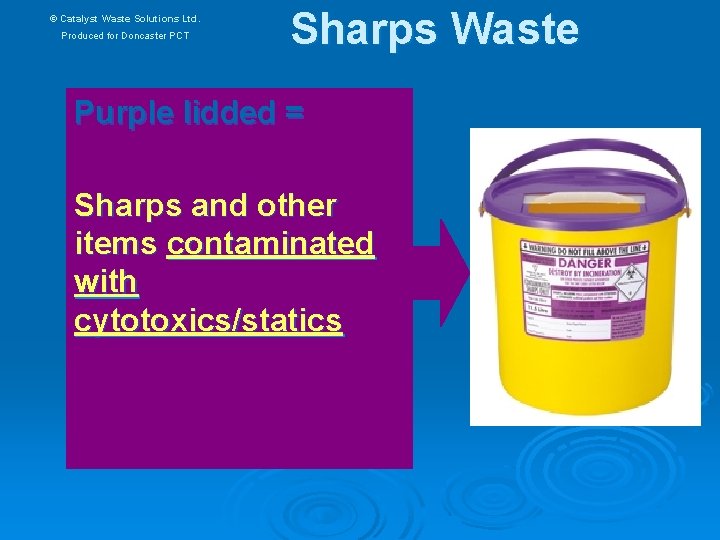
© Catalyst Waste Solutions Ltd. Produced for Doncaster PCT Sharps Waste Purple lidded = Sharps and other items contaminated with cytotoxics/statics
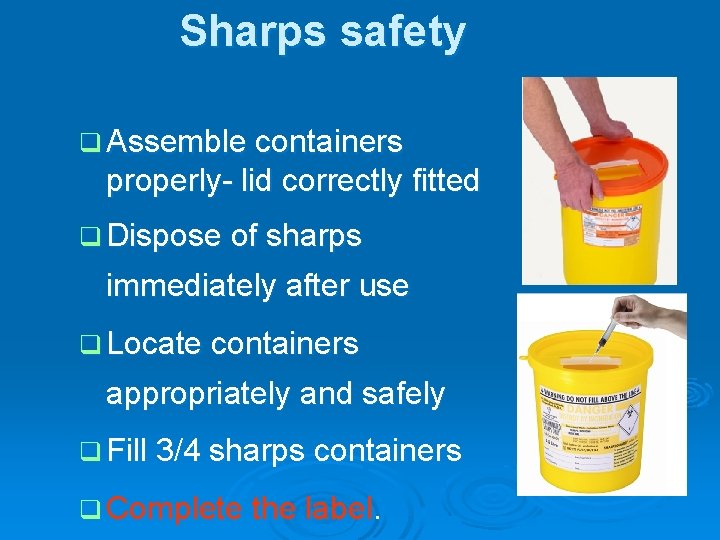
Sharps safety q Assemble containers properly- lid correctly fitted q Dispose of sharps immediately after use q Locate containers appropriately and safely q Fill 3/4 sharps containers q Complete the label.
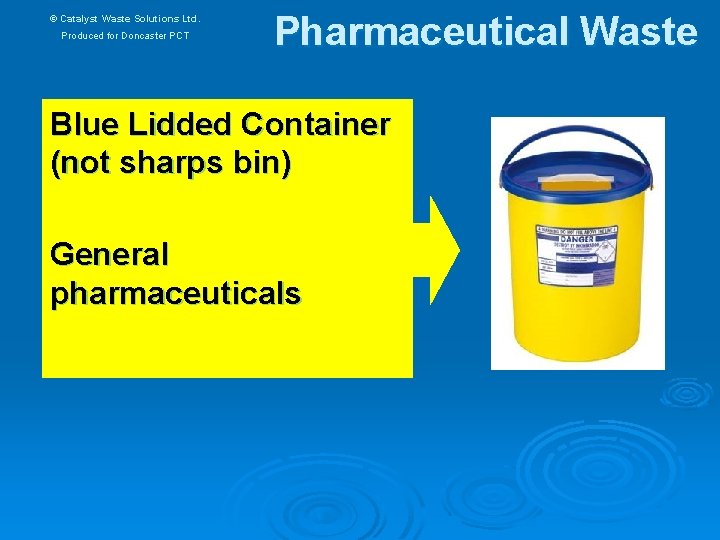
© Catalyst Waste Solutions Ltd. Produced for Doncaster PCT Pharmaceutical Waste Blue Lidded Container (not sharps bin) General pharmaceuticals
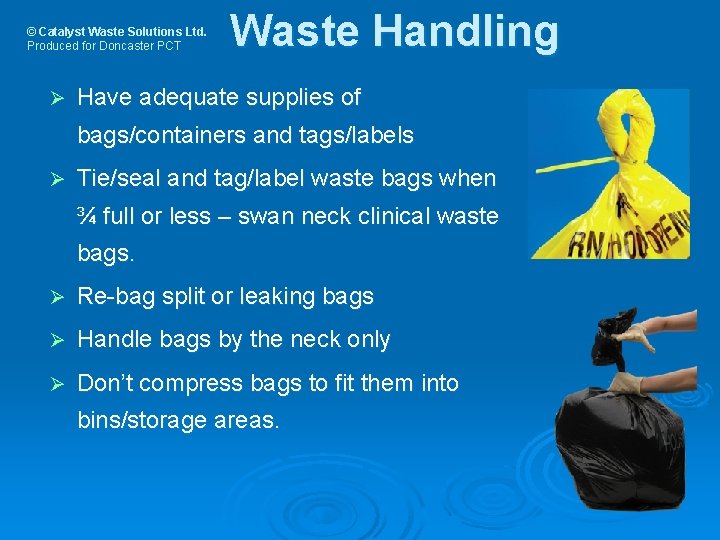
© Catalyst Waste Solutions Ltd. Produced for Doncaster PCT Ø Waste Handling Have adequate supplies of bags/containers and tags/labels Ø Tie/seal and tag/label waste bags when ¾ full or less – swan neck clinical waste bags. Ø Re-bag split or leaking bags Ø Handle bags by the neck only Ø Don’t compress bags to fit them into bins/storage areas.
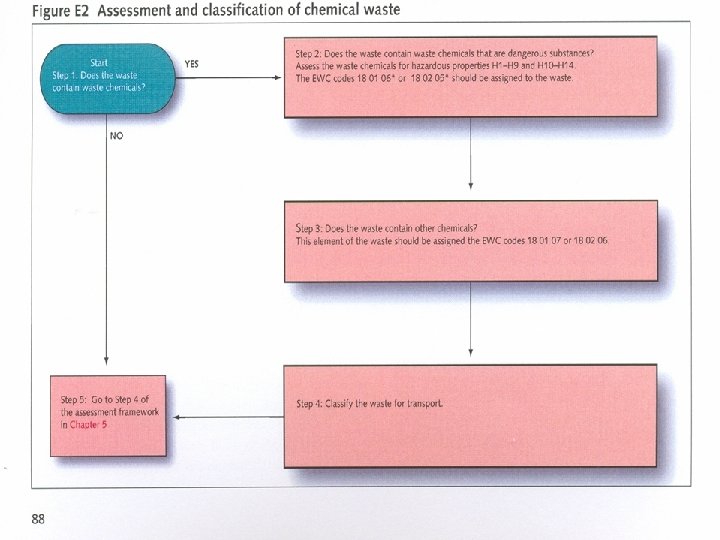
In House Policy and Guidance Ø The Unified Approach can help formulate the framework of the Trust policy, training programmes and audits.
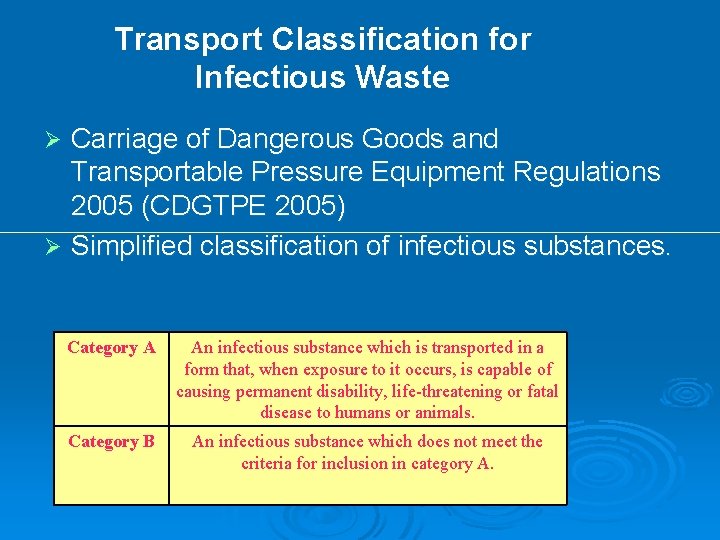
Transport Classification for Infectious Waste Carriage of Dangerous Goods and Transportable Pressure Equipment Regulations 2005 (CDGTPE 2005) Ø Simplified classification of infectious substances. Ø Category A An infectious substance which is transported in a form that, when exposure to it occurs, is capable of causing permanent disability, life-threatening or fatal disease to humans or animals. Category B An infectious substance which does not meet the criteria for inclusion in category A.
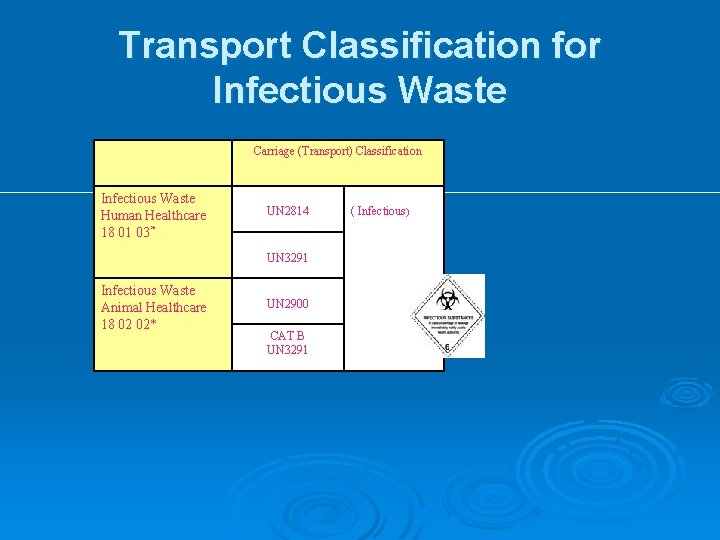
Transport Classification for Infectious Waste Carriage (Transport) Classification Infectious Waste Human Healthcare 18 01 03* CAT A UN 2814 Infectious Waste Animal Healthcare 18 02 02* CAT A UN 2900 CAT B UN 3291 Class 6. 2 ( Infectious)
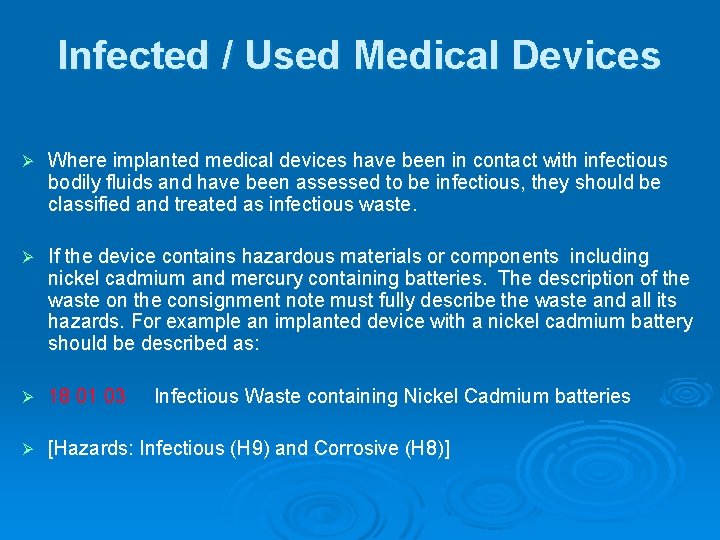
Infected / Used Medical Devices Ø Where implanted medical devices have been in contact with infectious bodily fluids and have been assessed to be infectious, they should be classified and treated as infectious waste. Ø If the device contains hazardous materials or components including nickel cadmium and mercury containing batteries. The description of the waste on the consignment note must fully describe the waste and all its hazards. For example an implanted device with a nickel cadmium battery should be described as: Ø 18 01 03 Ø [Hazards: Infectious (H 9) and Corrosive (H 8)] Infectious Waste containing Nickel Cadmium batteries
Notification of Premises Ø Central notification point in Rotherham By Paper from the 18 th April Ø £ 28 by cheque or BACS Ø By Phone from the 3 rd May Ø £ 23 by credit or debit card. Ø By Internet from the 3 rd May Ø By Batch File from the 9 th June Ø £ 18 for electronic registration Ø
Site Notifications to the - EA Where hazardous waste is produced at, or removed from, any premises…the premises must be be notified to the Agency. Exceptions Domestic Fly premises (except asbestos) tipped waste Mobile Service Operators ‘Exempt’ premises Notification lasts for 12 months. The Agency will issue a premises code
Considerations Ø If you intend to, or do, produce more than 200 kg of hazardous waste on a premises in any 12 month period you must notify the premises
‘if you’re not confused Ø you’ve not been paying attention!’ Ø Ø Tom Peters
- Slides: 49