
Safe Handling and Use of Liquid Nitrogen Safety
- Slides: 12
Safe Handling and Use of Liquid Nitrogen Safety and Compliance
Nitrogen gas can cause asphyxiation In closed areas excessive amounts of nitrogen gas reduce the concentration of oxygen l Nitrogen gas is colorless, odorless, and tasteless l It can’t be detected by human senses and will be breathed as if it were air l The cloudy vapor that appears when liquid nitrogen is exposed to the air is condensed moisture, not the gas itself. l
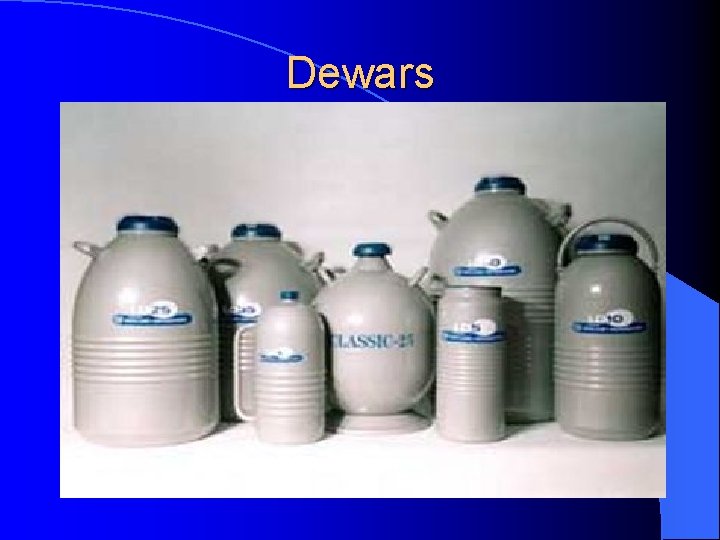
Handling Liquid Nitrogen l Avoid prolonged breathing of cryogenic liquid vapors l Avoid rough handling of liquid containers l Use only containers specially designed to hold liquid nitrogen (example Dewars)
Dewars
Precautions Nitrogen can spatter (possibly in eyes or to exposed skin) while poured l Flying chunks of frozen objects could cause eye injury l Wear goggles or face shields (Not safety glasses) whenever pouring or dumping nitrogen l Use a cryogenic glove and/ or tongs to handle any objects going into or out of a liquid nitrogen container l
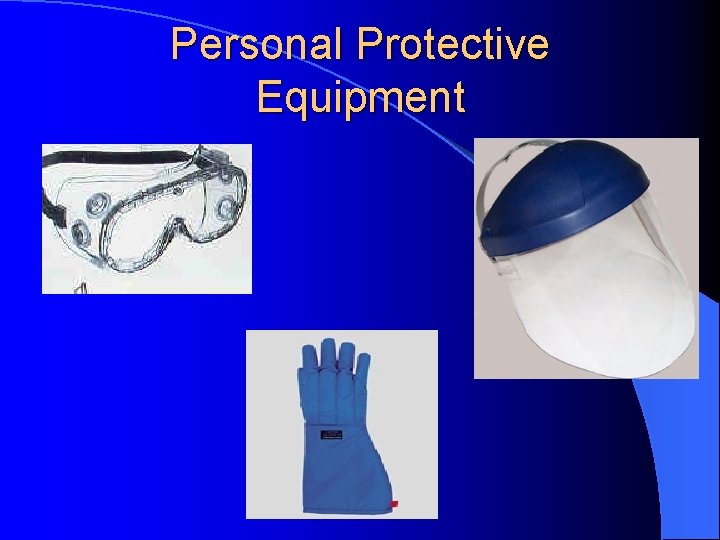
Personal Protective Equipment
Emergencies If liquid is splashed into eyes, flush with water for 15 minutes and seek immediate medical attention l Skin contact may cause frostbite and burns. Soak affected part in tepid water and seek immediate medical attention l Skin or eye contact is a medical emergency l Extremely low temperature can freeze skin rapidly l
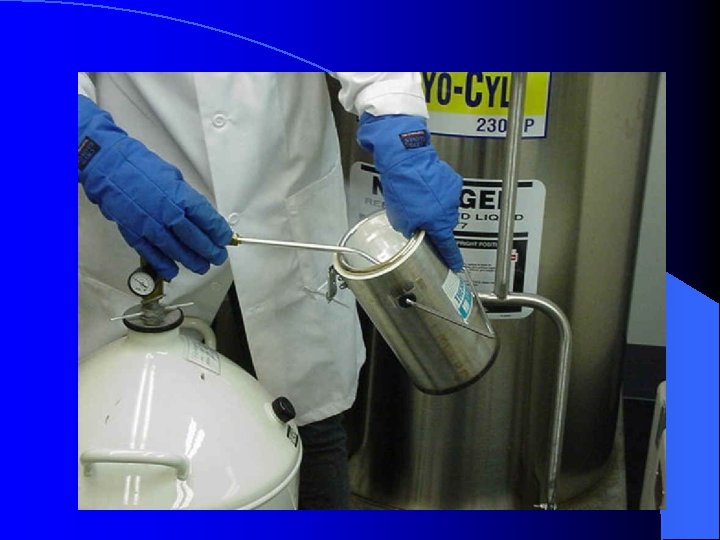
Refilling Dewars in Laboratories Make sure there is good ventilation (open a door if you are in a small room) l Use Dewars that are rated for liquid nitrogen l Wear required personal protective equipment l Lab coat with sleeves pulled over cuffs of cryogenic gloves l Closed toe shoes l Chemical splash goggles or full face shield l
Refilling Dewars in Laboratories l Do not overfill containers l Filling above the bottom of the neck tube or specified maximum level can result in overflow l If liquid nitrogen spills onto the floor it will damage the surface and cause the floor to crack
Dispensing Liquid Nitrogen from Storage Tanks l Container must be rated for liquid nitrogen l Dewars must have handles or wheels l Person filling Dewar must be in constant attendance during filling (Never leave unattended) l To prevent splashing, place filling hose at or below mouth of the receiving Dewar
Transporting Liquid Nitrogen between Labs l l l Never transport in a open container Wear or carry required PPE Do not use carts or Dewars with unstable wheels If carrying Dewar make sure it is your only load Carry Dewar far away from your face and body using good ergonomics Watch your surroundings for other people who may run into or bump you