
Safe Effective Stretching Guide for Athletes By Christopher

Safe & Effective Stretching Guide for Athletes By, Christopher Treacy

Why is it Important to Stretch? Stretching keeps the muscles flexible, strong, and healthy We need that flexibility to maintain a range of motion in the joints Without it, the muscles become short and tight When you do physical activity without stretching, your muscles will be weak and unable to extend all the way which puts you at risk for joint pains, strains, and muscle damage
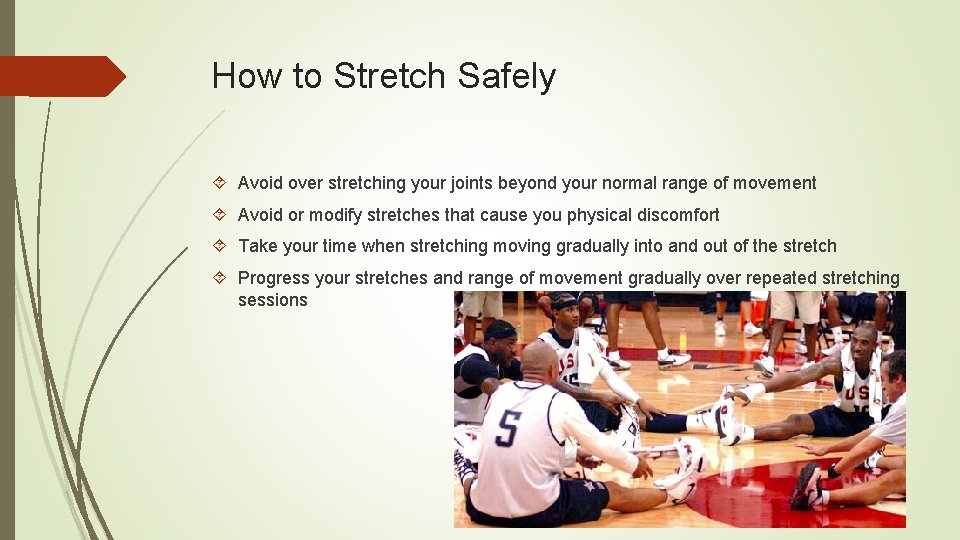
How to Stretch Safely Avoid over stretching your joints beyond your normal range of movement Avoid or modify stretches that cause you physical discomfort Take your time when stretching moving gradually into and out of the stretch Progress your stretches and range of movement gradually over repeated stretching sessions
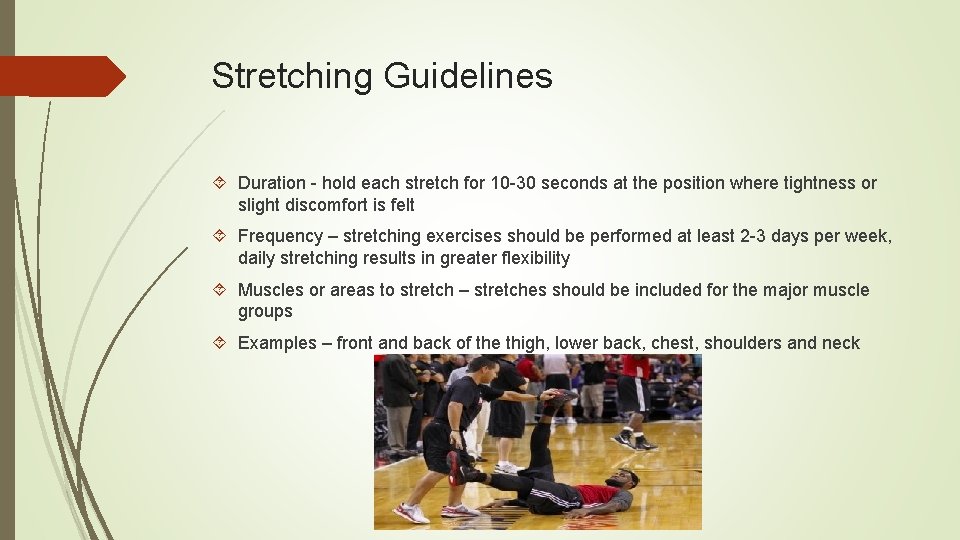
Stretching Guidelines Duration - hold each stretch for 10 -30 seconds at the position where tightness or slight discomfort is felt Frequency – stretching exercises should be performed at least 2 -3 days per week, daily stretching results in greater flexibility Muscles or areas to stretch – stretches should be included for the major muscle groups Examples – front and back of the thigh, lower back, chest, shoulders and neck
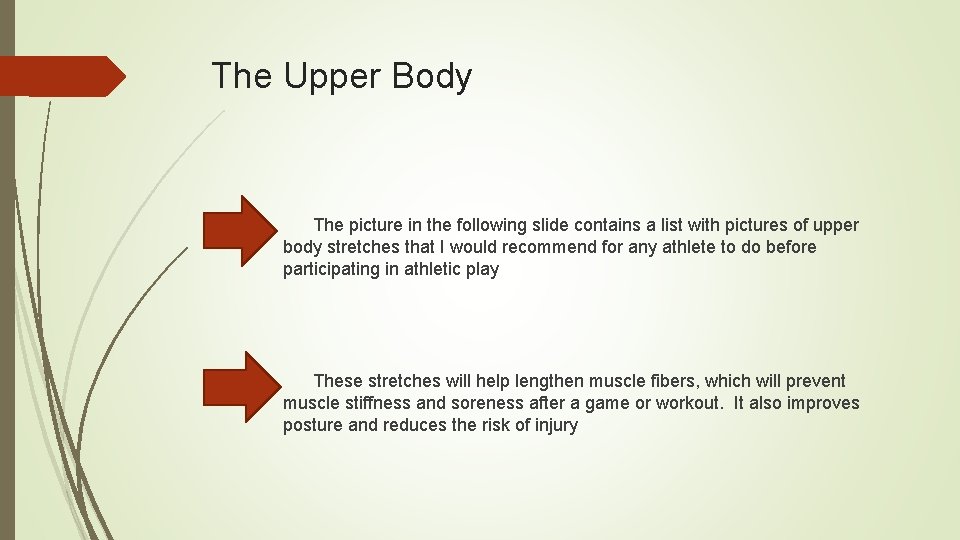
The Upper Body The picture in the following slide contains a list with pictures of upper body stretches that I would recommend for any athlete to do before participating in athletic play These stretches will help lengthen muscle fibers, which will prevent muscle stiffness and soreness after a game or workout. It also improves posture and reduces the risk of injury
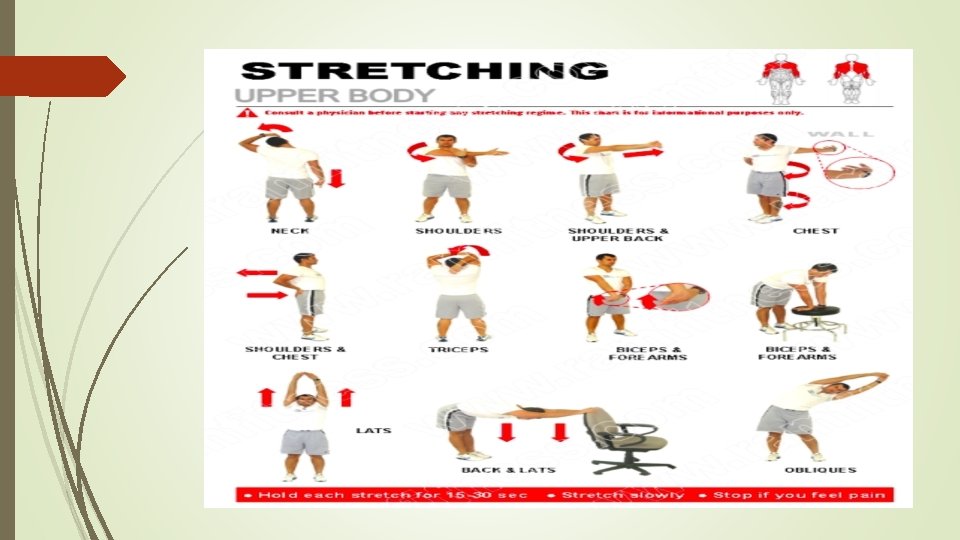
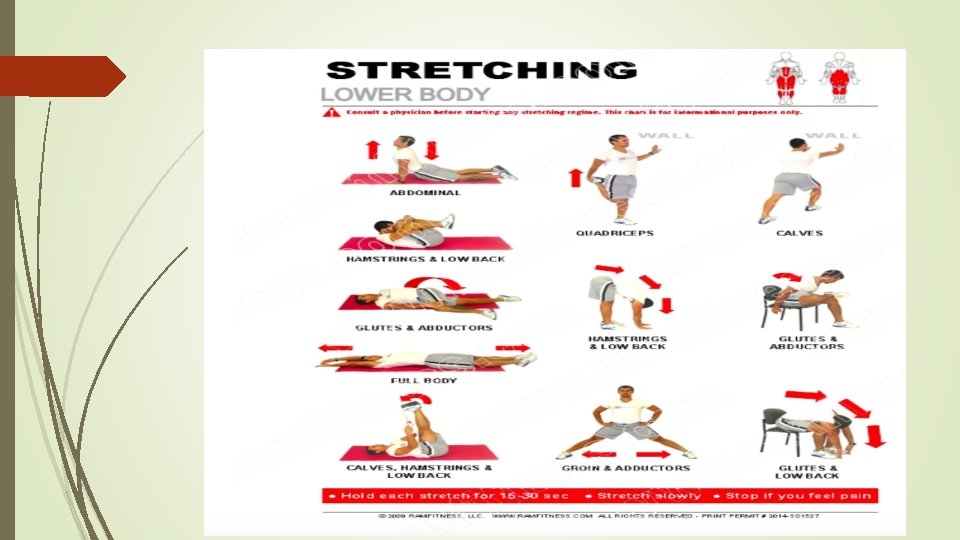
The Lower Body The picture in the next slide consists of a list of lower body stretches that I would recommend for any athlete to do before participating in athletic play especially sports that involve nonstop running with a lot of change of speed and direction (For example Basketball) Lower body stretching is vital to any athlete because our lower bodies act as the base of our support as we walk, run, and jump. Our largest muscles are located in our lower body and they are essential in movements we perform during day to day activities or in sports
Why Stretch After Physical Activity? Stretching after physical activity is just as important as stretching before Research shows that runners who do leg stretches after a long run increase endurance and muscle strength. Muscles that haven’t been properly stretched remain constricted, making it hard for you to use them to their full capacity Start your workout with dynamic (active) stretches and finish it with static stretching If you regularly feel sore after a workout or game, stretching can minimize your pain Post workout stretching also helps your muscles recover faster and over time you’ll notice that your muscles look more slender, toned, and supple
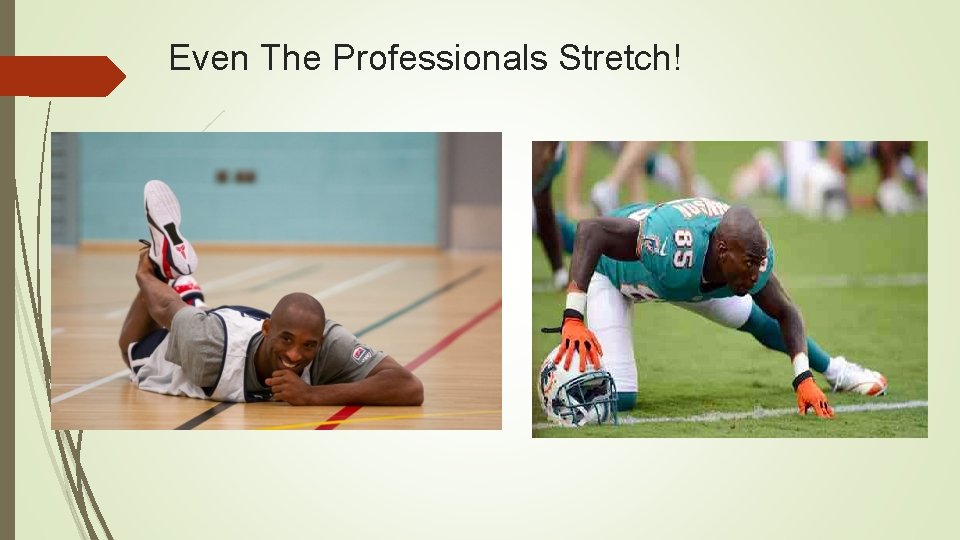
Even The Professionals Stretch!
- Slides: 10