
Safe Drug Preparation Two ways to calculate doses

- Slides: 13
Safe Drug Preparation
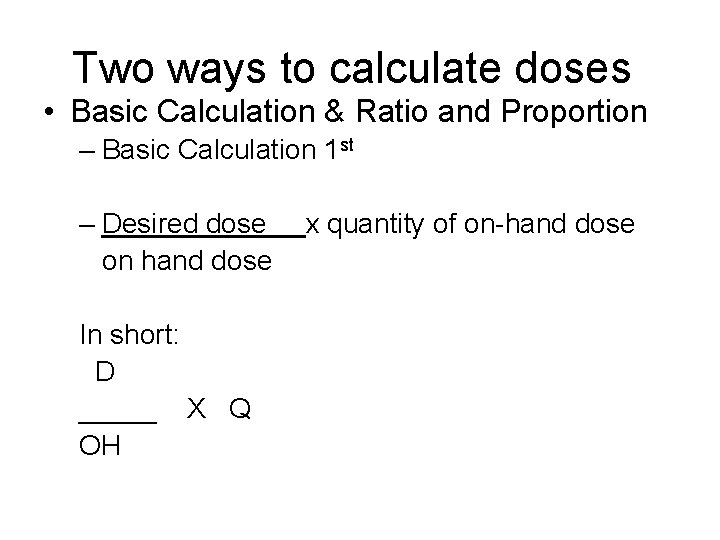
Two ways to calculate doses • Basic Calculation & Ratio and Proportion – Basic Calculation 1 st – Desired dose on hand dose In short: D _____ X Q OH x quantity of on-hand dose
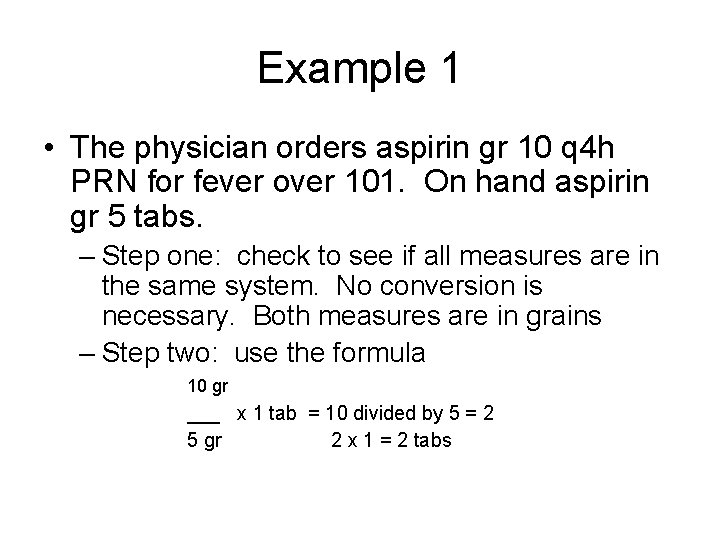
Example 1 • The physician orders aspirin gr 10 q 4 h PRN for fever over 101. On hand aspirin gr 5 tabs. – Step one: check to see if all measures are in the same system. No conversion is necessary. Both measures are in grains – Step two: use the formula 10 gr ___ x 1 tab = 10 divided by 5 = 2 5 gr 2 x 1 = 2 tabs
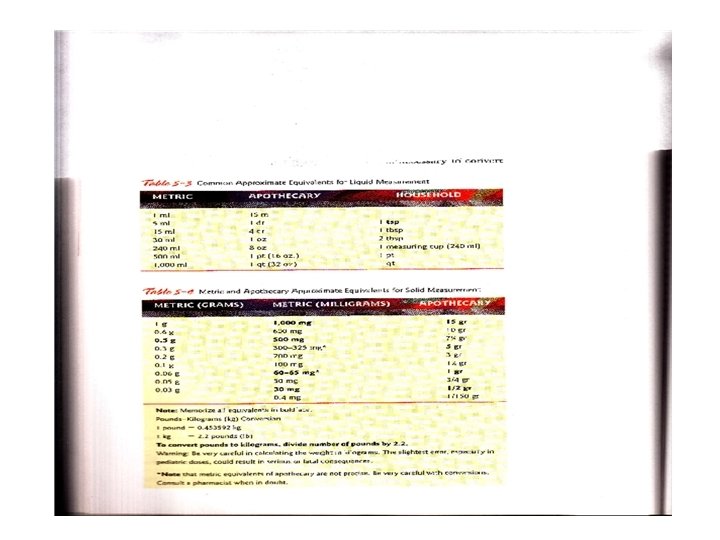
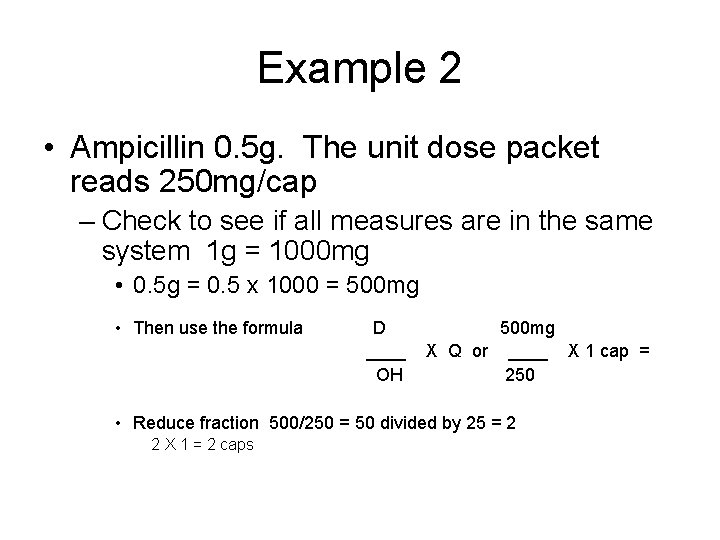
Example 2 • Ampicillin 0. 5 g. The unit dose packet reads 250 mg/cap – Check to see if all measures are in the same system 1 g = 1000 mg • 0. 5 g = 0. 5 x 1000 = 500 mg • Then use the formula D ____ OH 500 mg X Q or ____ X 1 cap = 250 • Reduce fraction 500/250 = 50 divided by 25 = 2 2 X 1 = 2 caps
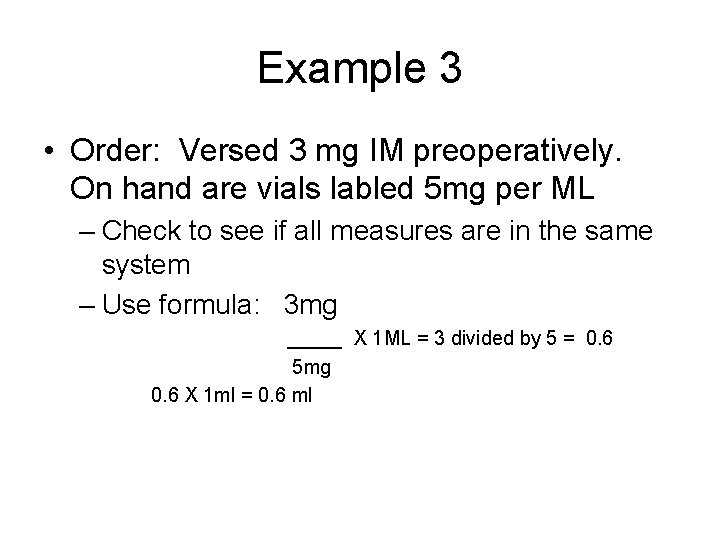
Example 3 • Order: Versed 3 mg IM preoperatively. On hand are vials labled 5 mg per ML – Check to see if all measures are in the same system – Use formula: 3 mg _____ X 1 ML = 3 divided by 5 = 0. 6 5 mg 0. 6 X 1 ml = 0. 6 ml
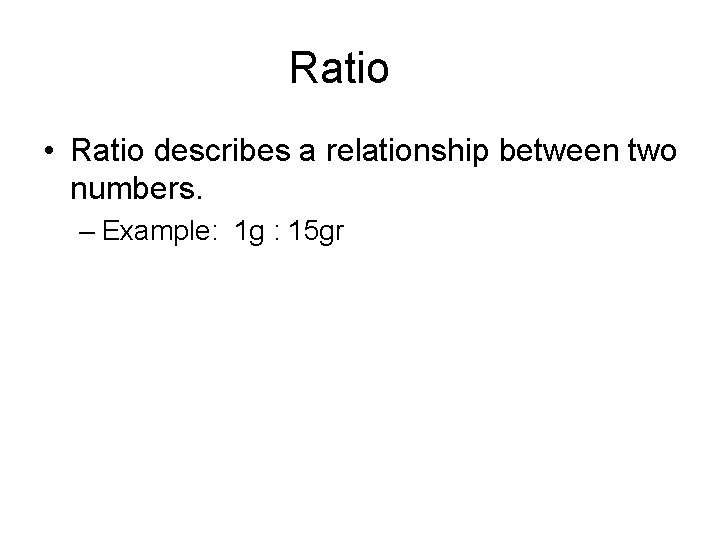
Ratio • Ratio describes a relationship between two numbers. – Example: 1 g : 15 gr
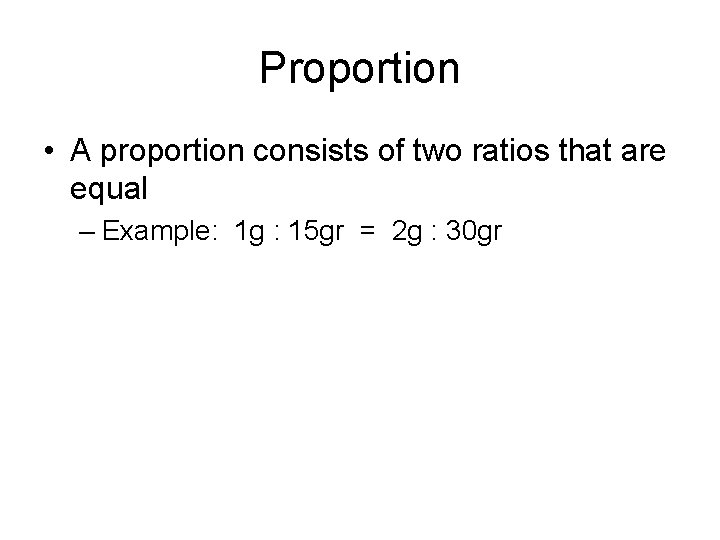
Proportion • A proportion consists of two ratios that are equal – Example: 1 g : 15 gr = 2 g : 30 gr
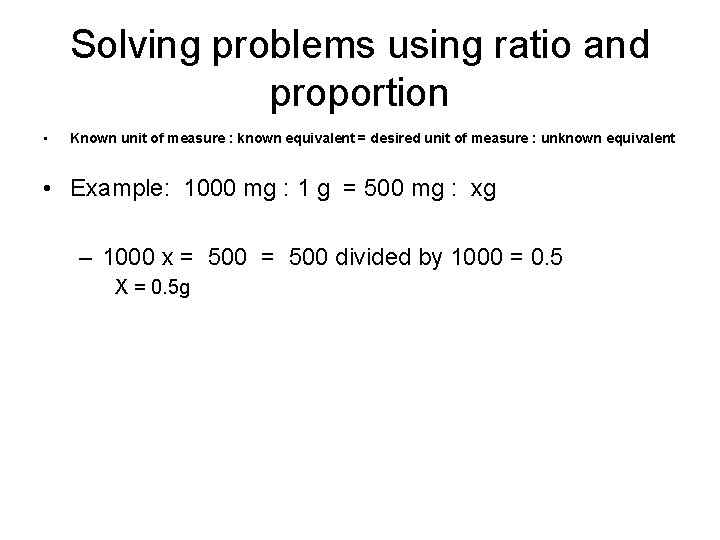
Solving problems using ratio and proportion • Known unit of measure : known equivalent = desired unit of measure : unknown equivalent • Example: 1000 mg : 1 g = 500 mg : xg – 1000 x = 500 divided by 1000 = 0. 5 X = 0. 5 g
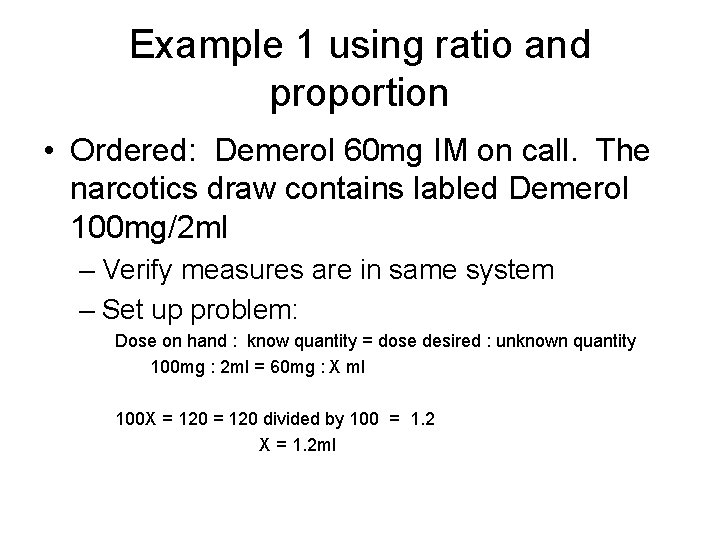
Example 1 using ratio and proportion • Ordered: Demerol 60 mg IM on call. The narcotics draw contains labled Demerol 100 mg/2 ml – Verify measures are in same system – Set up problem: Dose on hand : know quantity = dose desired : unknown quantity 100 mg : 2 ml = 60 mg : X ml 100 X = 120 divided by 100 = 1. 2 X = 1. 2 ml
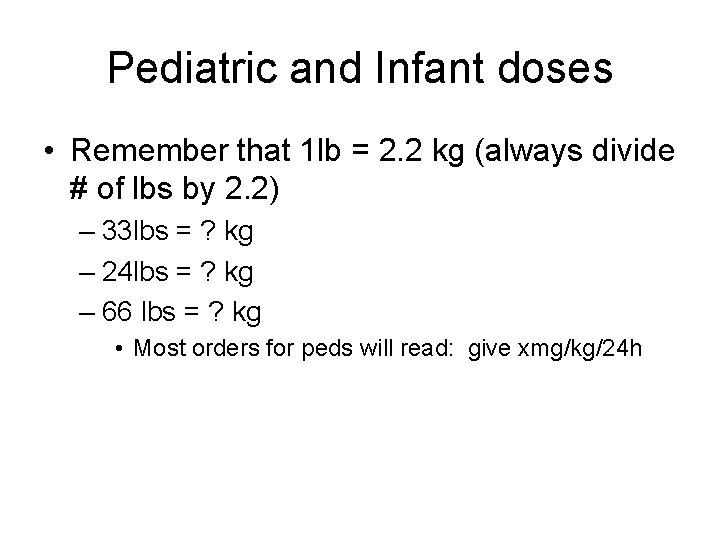
Pediatric and Infant doses • Remember that 1 lb = 2. 2 kg (always divide # of lbs by 2. 2) – 33 lbs = ? kg – 24 lbs = ? kg – 66 lbs = ? kg • Most orders for peds will read: give xmg/kg/24 h
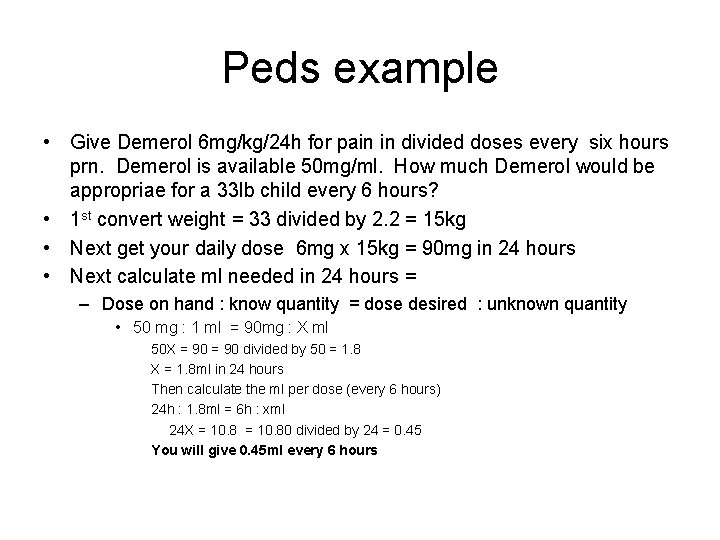
Peds example • Give Demerol 6 mg/kg/24 h for pain in divided doses every six hours prn. Demerol is available 50 mg/ml. How much Demerol would be appropriae for a 33 lb child every 6 hours? • 1 st convert weight = 33 divided by 2. 2 = 15 kg • Next get your daily dose 6 mg x 15 kg = 90 mg in 24 hours • Next calculate ml needed in 24 hours = – Dose on hand : know quantity = dose desired : unknown quantity • 50 mg : 1 ml = 90 mg : X ml 50 X = 90 divided by 50 = 1. 8 X = 1. 8 ml in 24 hours Then calculate the ml per dose (every 6 hours) 24 h : 1. 8 ml = 6 h : xml 24 X = 10. 80 divided by 24 = 0. 45 You will give 0. 45 ml every 6 hours