
Sacraments of Healing CCC 1420 Through the sacraments



- Slides: 22
Sacraments of Healing CCC 1420 Through the sacraments of Christian initiation, man receives the new life of Christ. Now we carry this life "in earthen vessels, " and it remains "hidden with Christ in God. “ We are still in our "earthly tent, " subject to suffering, illness, and death. This new life as a child of God can be weakened and even lost by sin.
Sin and Sickness • Before The Fall good-no problems. – Gen 3 - ‘Pain in childbirth’, ‘thorns and thistles’, ‘by the sweat of your brow’, ‘to dust you shall return’ are all signs that sin has opened the door to all this misery. • Sin causes suffering, pain, sickness, blindness, deafness, paralysis, disease, depression, emptiness, separation and death. • Reversal of the effects shows reversal of the cause. – Jesus healed the blind, deaf, sick, leper, paralyzed, and the dead demonstrating his power over sin. • Sin is the unseen cause, sickness is the seen effect. • Direct or Indirect?
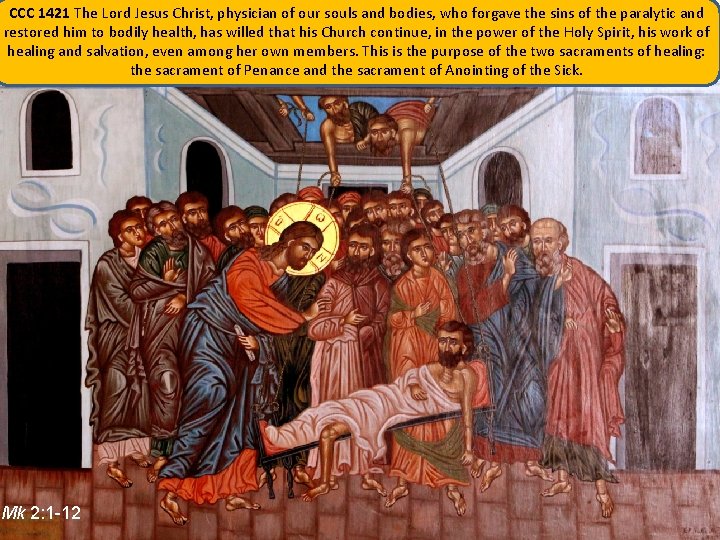
CCC 1421 The Lord Jesus Christ, physician of our souls and bodies, who forgave the sins of the paralytic and restored him to bodily health, has willed that his Church continue, in the power of the Holy Spirit, his work of healing and salvation, even among her own members. This is the purpose of the two sacraments of healing: the sacrament of Penance and the sacrament of Anointing of the Sick. Mk 2: 1 -12
Literal ● ● People brought a paralytic (a man who could not walk) to him and he said, “Your sins are forgiven”. The Scribes said that he was blaspheming by claiming to forgive sins. Jesus demonstrates his power to forgive sins by healing the man. The crowds were afraid and glorified God.
Allegorical ● ● ● ● His own city = Capernaum (Peter's house) Blasphemy = From the scribe's perspective only God can forgive sins. Forgiveness of sins was only possible through sacrifice at the Temple Since forgiveness can not be verified by the observers he demonstrates his power by healing the man. Paralysis = Power of Sin His power over paralysis is due to the fact that he has power over sin. In the OT(Psalm 107: 17) sin is the direct cause of the man's paralysis. If he claims to have power over the cause then he would also have power over the effect.
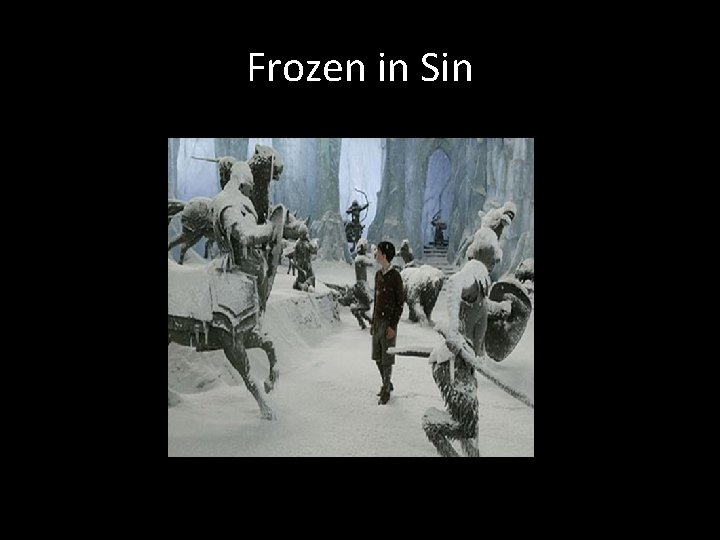
Frozen in Sin
Moral ● ● ● The faith of the people encouraged and led to the miracle. There is a link between sickness and sin-It's an indirect link. When we are sick we should have faith and we should seek forgiveness of sins—Anointing of sick includes reconciliation. Jesus power to forgive is as great as his power to heal. Jesus invests the Apostles with the same power to forgive sins (Jn 20: 23) : Sacrament of Reconciliation.
Anagogical ● ● Rise, take up your bed(his Body) and go home(heaven) The healing of the paralytic signifies the future resurrection of the faithful. ● ● And he rose = Resurrection And went home = Heaven The paralytic is the Christian whose sins are forgiven and who stands before God as son. “He will wipe away every tear from their eyes, and there will be no more death or mourning or crying or pain, for the former things have passed away. ” Rev 21: 4
Jesus’ Power to forgive • Jesus had authority over sin. • When faced with a denial of his authority he demonstrated it by the cause and effect dynamic. • By doing this he is showing divine power of forgiveness vs human power to forgive. – What forgiveness is and what forgiveness is not. • It’s a claim and proof of divinity.
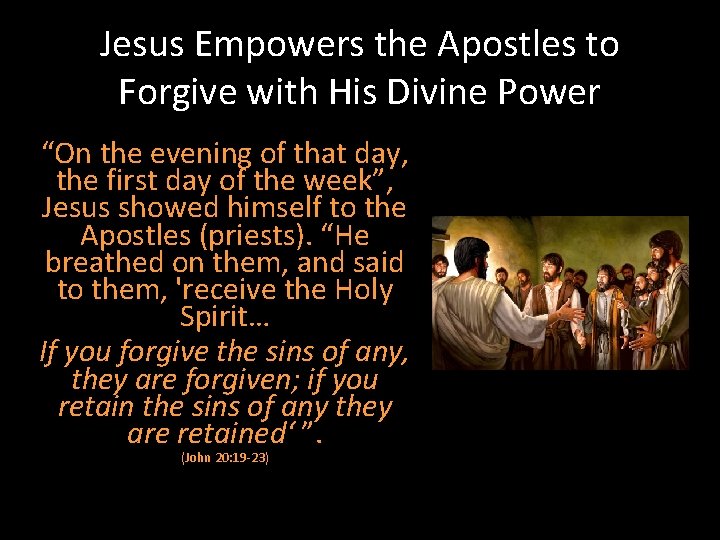
Jesus Empowers the Apostles to Forgive with His Divine Power “On the evening of that day, the first day of the week”, Jesus showed himself to the Apostles (priests). “He breathed on them, and said to them, 'receive the Holy Spirit… If you forgive the sins of any, they are forgiven; if you retain the sins of any they are retained‘ ”. (John 20: 19 -23)
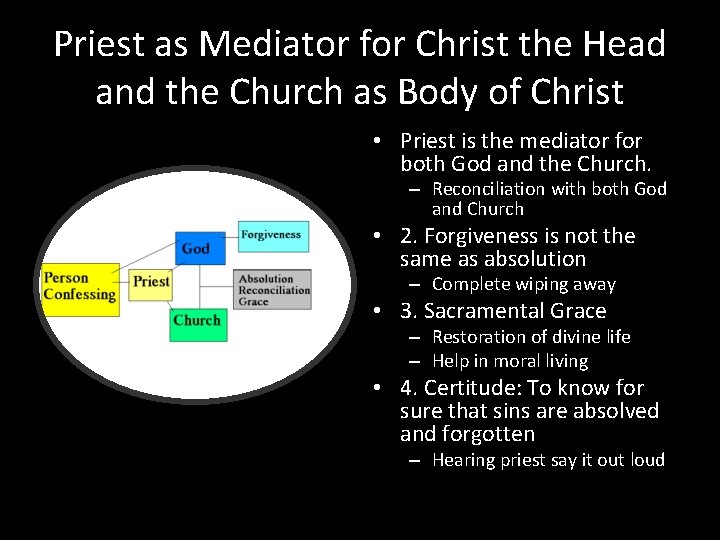
Priest as Mediator for Christ the Head and the Church as Body of Christ • Priest is the mediator for both God and the Church. – Reconciliation with both God and Church • 2. Forgiveness is not the same as absolution – Complete wiping away • 3. Sacramental Grace – Restoration of divine life – Help in moral living • 4. Certitude: To know for sure that sins are absolved and forgotten – Hearing priest say it out loud
Sacrament of Reconciliation Parts • Minister: Priest • Matter: sin and verbal confession • Form: Words of Absolution spoken by priest • Effect: Reconciliation, Restoration of God's life in us (sanctifying grace), Actual Grace: God's help to resolve and avoid temptation, resist temptation, Absolution: complete wiping away of sin and it's spiritual consequences. • Proper disposition: – 1. Examination of conscience – 2. True sorrow (Contrition) – 3. Resolve to not sin again The Words of Absolution “God, the Father of mercies, through the death and the resurrection of his Son has reconciled the world to himself and sent the Holy Spirit among us for the forgiveness of sins; through the ministry of the Church may God give you pardon and peace, and I absolve you from your sins in the name of the Father, and of the Son and of the Holy Spirit. ”
You will need to click FILE->SAVE AS to save to your My Documents the first time you save this file.
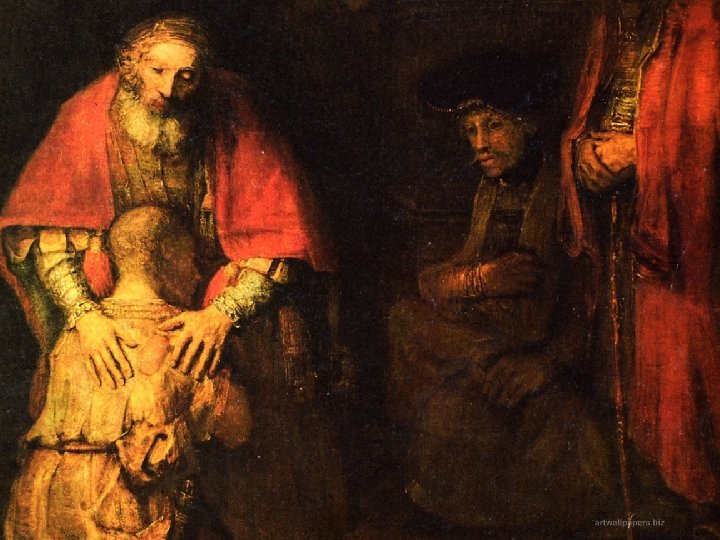
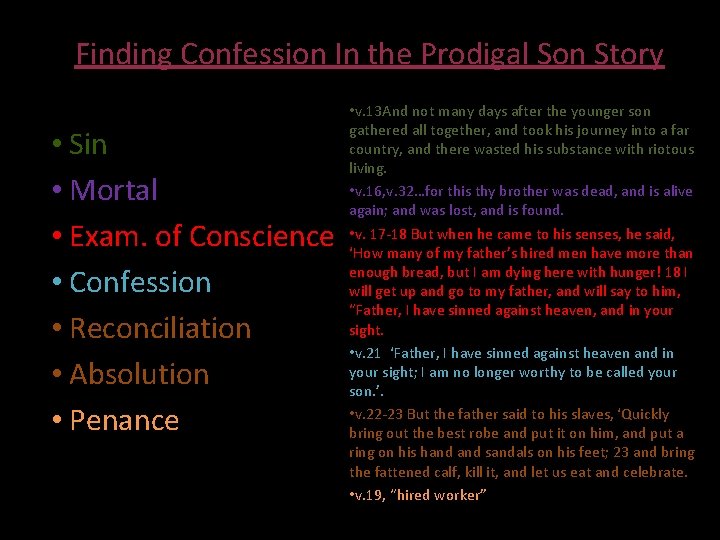
Finding Confession In the Prodigal Son Story • Sin • Mortal • Exam. of Conscience • Confession • Reconciliation • Absolution • Penance • v. 13 And not many days after the younger son gathered all together, and took his journey into a far country, and there wasted his substance with riotous living. • v. 16, v. 32…for this thy brother was dead, and is alive again; and was lost, and is found. • v. 17 -18 But when he came to his senses, he said, ‘How many of my father’s hired men have more than enough bread, but I am dying here with hunger! 18 I will get up and go to my father, and will say to him, “Father, I have sinned against heaven, and in your sight. • v. 21 ‘Father, I have sinned against heaven and in your sight; I am no longer worthy to be called your son. ’. • v. 22 -23 But the father said to his slaves, ‘Quickly bring out the best robe and put it on him, and put a ring on his hand sandals on his feet; 23 and bring the fattened calf, kill it, and let us eat and celebrate. • v. 19, “hired worker”
How our culture views suffering… Secular view: It is meaningless. We should avoid it, escape it, and medicate it. • Spiritual desperation: Some view the avoidance of suffering as more important than life… 1. Euthanasia a. k. a. ‘physician assisted suicide’ 2. Abortion of babies with defects, handicaps to eliminate perceived life of suffering
Anointing of The Sick: Catholic view of Suffering… • Caused by Sin in general. • Jesus did not banish suffering he gave it redemptive, supernatural power. • Suffering leads to redemption, purifies us and helps us become like Jesus. • Anointing of the Sick gives us grace which helps us to offer our suffering, pain, sickness. • We can offer our suffering in union with his for the sake of redemption(ours and others). – At Mass, in prayer, As a spiritual sacrifice. • We don't seek suffering but. We should unite any suffering we have to Jesus' suffering. • We don’t euthanize the dying we anoint them, pray with them and help them turn their suffering into a powerful prayer.
Redemptive Suffering • “. . . if only we suffer with him so that we may also be glorified with him. ” Romans 8: 16 -17 • “Now I rejoice in my sufferings for your sake, and in my flesh I am filling up what is lacking in the afflictions of Christ on behalf of his body, which is the church. ” Colossians 1: 24
Anointing of the Sick in the Bible “Is anyone among you sick? He should summon the priests of the church, and they should pray over him and anoint him with oil in the name of the Lord. And the prayer of faith will save the sick person, and the Lord will raise him up. If he has committed any sins, he will be forgiven. ” James 5: 14 -15
Matter and Form • Oil of the Sick on both Head and Hands. • “Through this holy anointing may the Lord in his love and mercy help you with the grace of the Holy Spirit. Amen” or “May the Lord who frees you from sin save you and raise you up Amen. ”
Minister and Recipients • Minister: Ordained Priests and Bishops • Recipients: One that is in serious need – emotionally or physically • No age restrictions • One may receive the Sacrament: As often as necessary • Often accompanied by: Reconciliation and Eucharist (although forgiveness of sin is a part of the Sacrament)
Spiritual Effect 1. the uniting of the sick person to the passion of Christ, for his own good and that of the whole Church; 2. the strengthening, peace, and courage to endure in a Christian manner the suffering of illness or old age; 3. the forgiveness of sins, if the sick person was not able to obtain it through the sacrament of Penance; 4. the restoration of health, if it is conducive to the salvation of his soul; 5. the preparation for passing over to eternal life.
True Stories