
SACRAMENTALS As human beings body and soul tangible
SACRAMENTALS
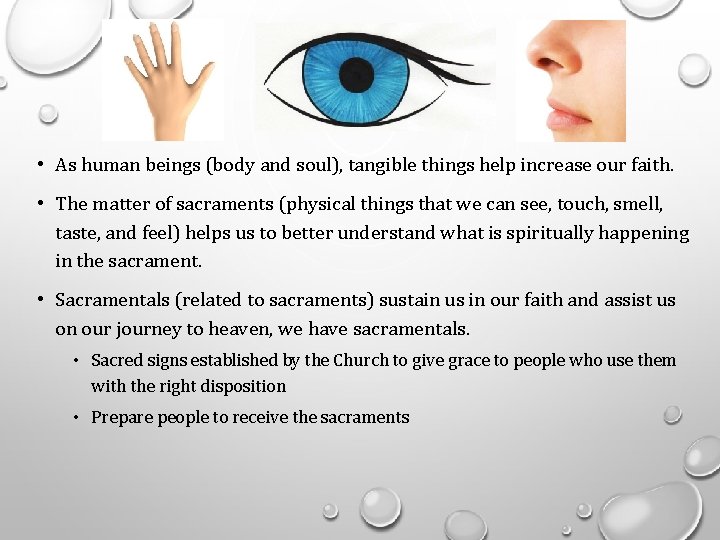
• As human beings (body and soul), tangible things help increase our faith. • The matter of sacraments (physical things that we can see, touch, smell, taste, and feel) helps us to better understand what is spiritually happening in the sacrament. • Sacramentals (related to sacraments) sustain us in our faith and assist us on our journey to heaven, we have sacramentals. • Sacred signs established by the Church to give grace to people who use them with the right disposition • Prepare people to receive the sacraments
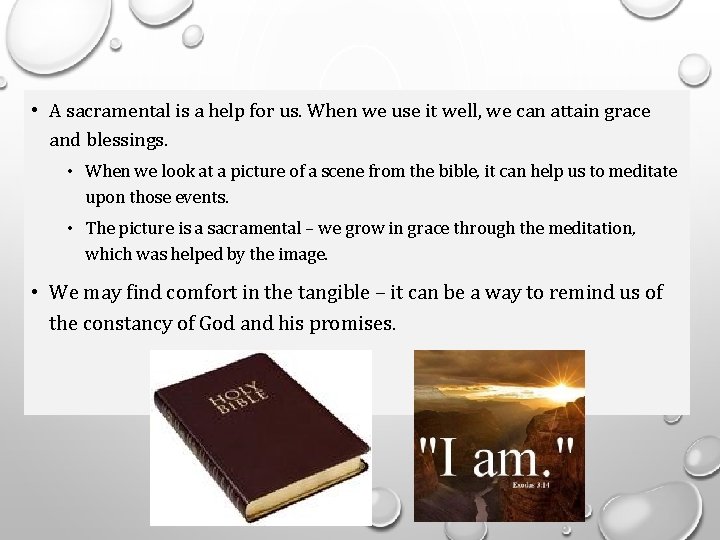
• A sacramental is a help for us. When we use it well, we can attain grace and blessings. • When we look at a picture of a scene from the bible, it can help us to meditate upon those events. • The picture is a sacramental – we grow in grace through the meditation, which was helped by the image. • We may find comfort in the tangible – it can be a way to remind us of the constancy of God and his promises.
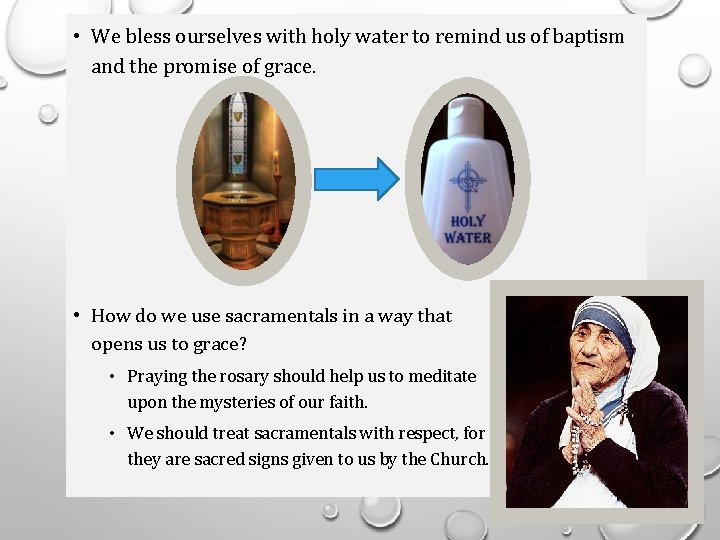
• We bless ourselves with holy water to remind us of baptism and the promise of grace. • How do we use sacramentals in a way that opens us to grace? • Praying the rosary should help us to meditate upon the mysteries of our faith. • We should treat sacramentals with respect, for they are sacred signs given to us by the Church.
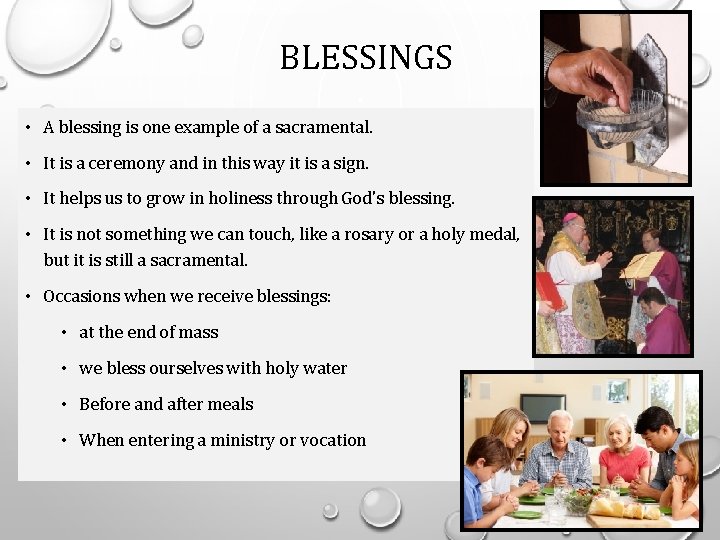
BLESSINGS • A blessing is one example of a sacramental. • It is a ceremony and in this way it is a sign. • It helps us to grow in holiness through God's blessing. • It is not something we can touch, like a rosary or a holy medal, but it is still a sacramental. • Occasions when we receive blessings: • at the end of mass • we bless ourselves with holy water • Before and after meals • When entering a ministry or vocation
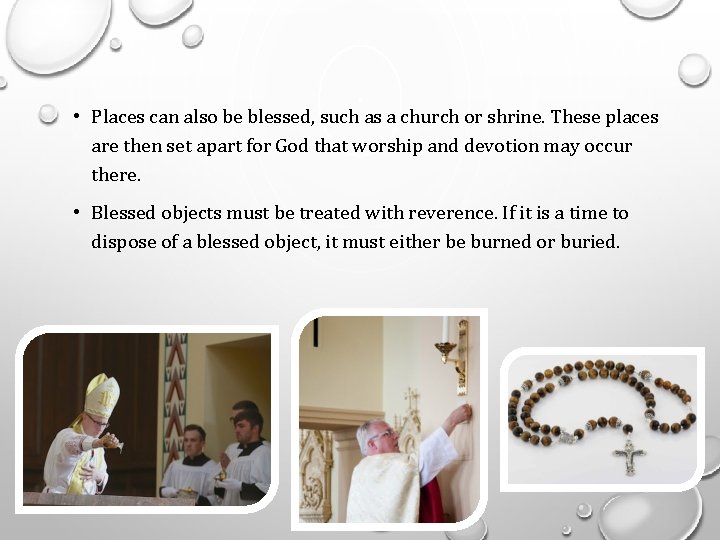
• Places can also be blessed, such as a church or shrine. These places are then set apart for God that worship and devotion may occur there. • Blessed objects must be treated with reverence. If it is a time to dispose of a blessed object, it must either be burned or buried.
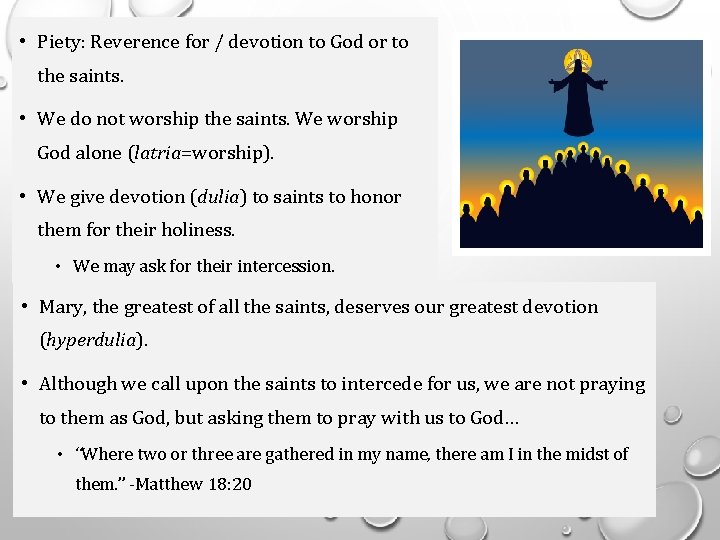
• Piety: Reverence for / devotion to God or to the saints. • We do not worship the saints. We worship God alone (latria=worship). • We give devotion (dulia) to saints to honor them for their holiness. • We may ask for their intercession. • Mary, the greatest of all the saints, deserves our greatest devotion (hyperdulia). • Although we call upon the saints to intercede for us, we are not praying to them as God, but asking them to pray with us to God… • “Where two or three are gathered in my name, there am I in the midst of them. ” -Matthew 18: 20
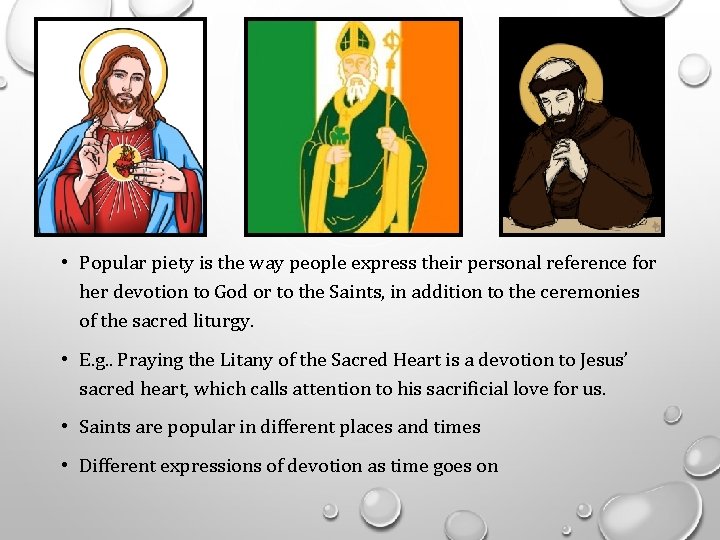
• Popular piety is the way people express their personal reference for her devotion to God or to the Saints, in addition to the ceremonies of the sacred liturgy. • E. g. . Praying the Litany of the Sacred Heart is a devotion to Jesus’ sacred heart, which calls attention to his sacrificial love for us. • Saints are popular in different places and times • Different expressions of devotion as time goes on
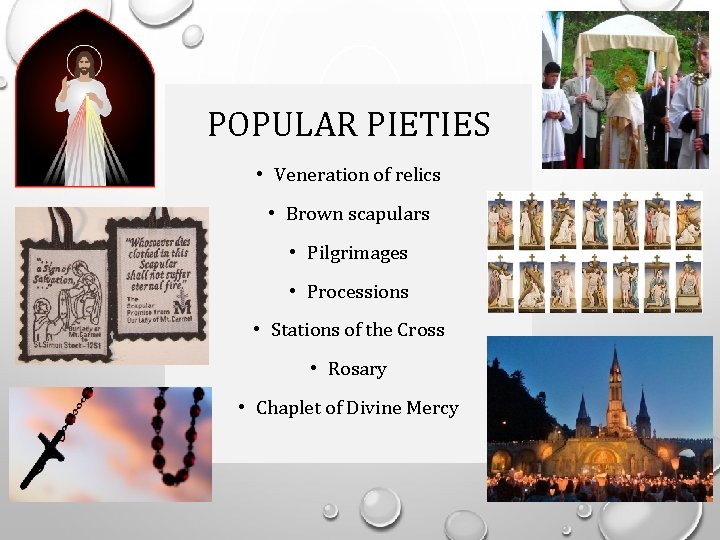
POPULAR PIETIES • Veneration of relics • Brown scapulars • Pilgrimages • Processions • Stations of the Cross • Rosary • Chaplet of Divine Mercy
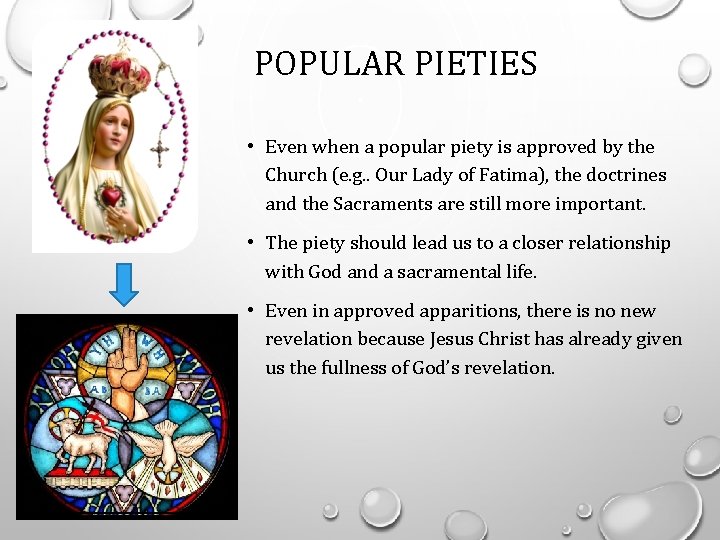
POPULAR PIETIES • Even when a popular piety is approved by the Church (e. g. . Our Lady of Fatima), the doctrines and the Sacraments are still more important. • The piety should lead us to a closer relationship with God and a sacramental life. • Even in approved apparitions, there is no new revelation because Jesus Christ has already given us the fullness of God’s revelation.
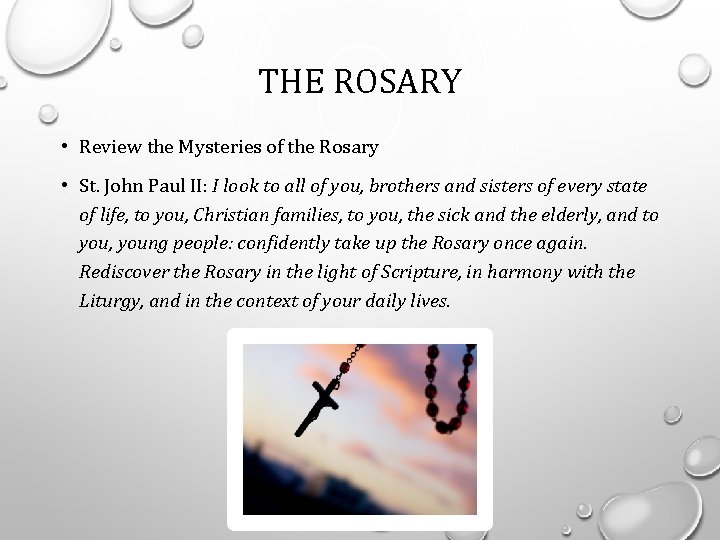
THE ROSARY • Review the Mysteries of the Rosary • St. John Paul II: I look to all of you, brothers and sisters of every state of life, to you, Christian families, to you, the sick and the elderly, and to you, young people: confidently take up the Rosary once again. Rediscover the Rosary in the light of Scripture, in harmony with the Liturgy, and in the context of your daily lives.
ACTIVITIES • HAVE FATHER SHOW THE CHURCH’S RELICS AND EXPLAIN THEM. • TELL A STORY OF A TIME YOU PERSONALLY FELT GOD’S LOVE THROUGH SOMEONE’S ACTIONS AND EXPLAIN HOW GOD SHOWS HIS LOVE IN LITTLE WAYS THROUGH SACRAMENTAL.
- Slides: 12