
Sackler Institute for Developmental Psychobiology Weill Medical College

Sackler Institute for Developmental Psychobiology Weill Medical College of Cornell University

Insights into the Adolescent Brain from Functional Neuroimaging Studies BJ Casey, Ph. D. , Sackler Professor and Director Sackler Institute for Developmental Psychobiology Weill Medical College of Cornell University
Key Points 1) Examine developmental progressions in terms of transitions into and out of adolescence rather than single snap shot in time; 2) Examine individual differences within a developmental stage in terms of potential risk and/or resilience factors.
Sackler Institute For Developmental Psychobiology Weill Medical College of Cornell University Sackler Fellows *Adriana Galvan (now at UCLA) *Todd Hare Rebecca Jones *Conor Liston Fatima Soloman Liat Levita Staff Sarah Getz and Alex Millner *Julie Spicer (now at Columbia) Faculty Dima Amso Nim Tottenham Henning Voss *Sarah Durston (Utrecht) *Inge-Marie Eigsti (U Conn) Gary Glover (Stanford) Walter Mischel (Columbia) Funded in part by R 01 MH 63255, P 50 MH 62196, R 21 DA 15882, R 01 DA 018879, NSF 06509, the Mortimer D. Sackler family and Dewitt-Wallace Reader’s Digest.
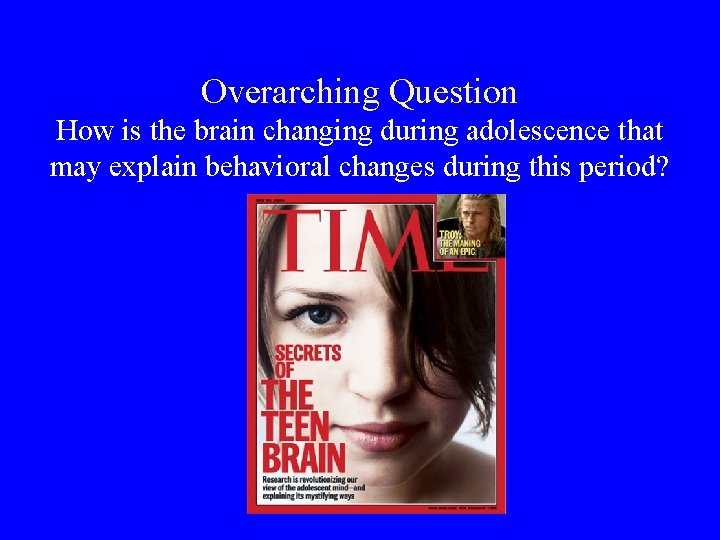
Overarching Question How is the brain changing during adolescence that may explain behavioral changes during this period?
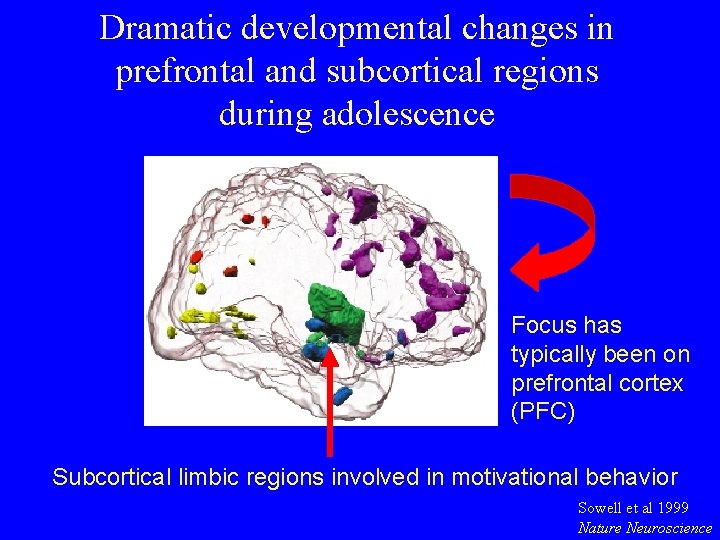
Dramatic developmental changes in prefrontal and subcortical regions during adolescence Focus has typically been on prefrontal cortex (PFC) (Sowell et al, 1999) Subcortical limbic regions involved in motivational behavior Sowell et al 1999 Nature Neuroscience
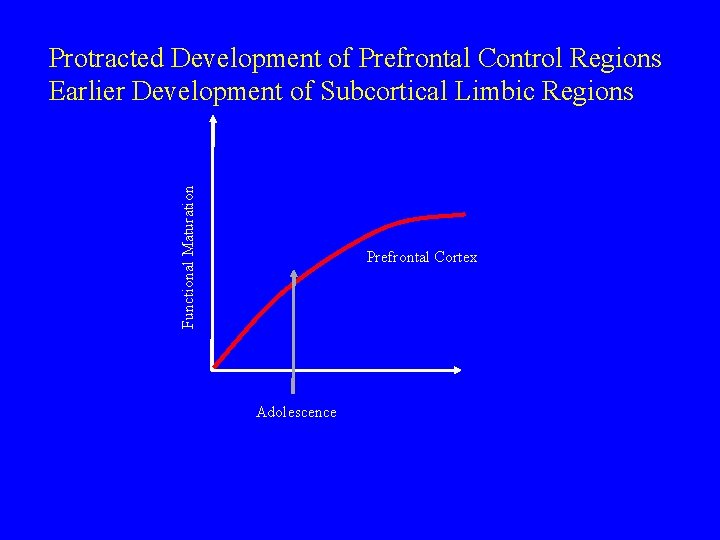
Functional Maturation Protracted Development of Prefrontal Control Regions Earlier Development of Subcortical Limbic Regions Prefrontal Cortex Adolescence
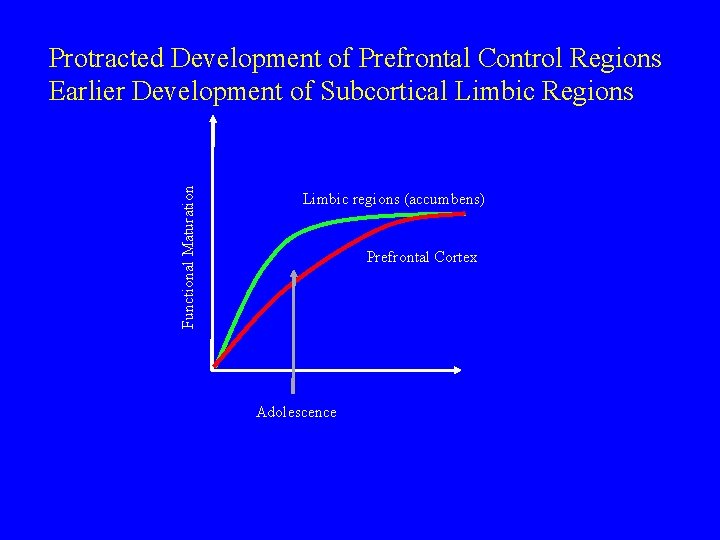
Functional Maturation Protracted Development of Prefrontal Control Regions Earlier Development of Subcortical Limbic Regions Limbic regions (accumbens) Prefrontal Cortex Adolescence
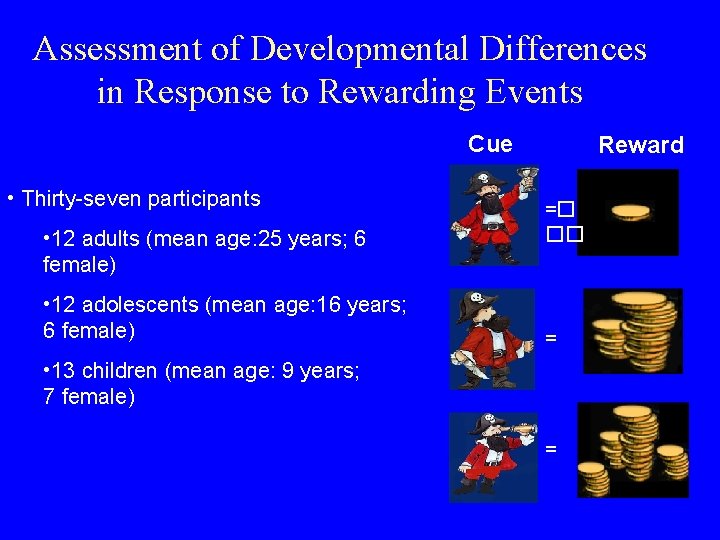
Assessment of Developmental Differences in Response to Rewarding Events Cue • Thirty-seven participants • 12 adults (mean age: 25 years; 6 female) • 12 adolescents (mean age: 16 years; 6 female) Reward =� �� = • 13 children (mean age: 9 years; 7 female) =





Participants are faster on trials that give the largest reward.
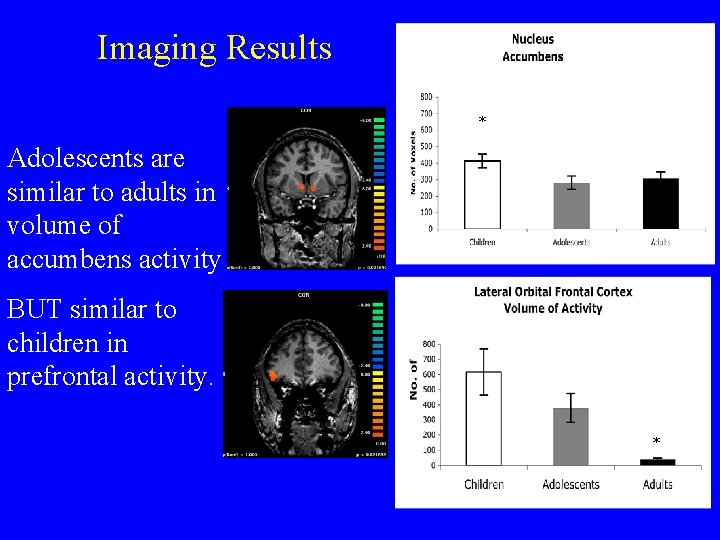
Imaging Results * Adolescents are similar to adults in volume of accumbens activity BUT similar to children in prefrontal activity. *
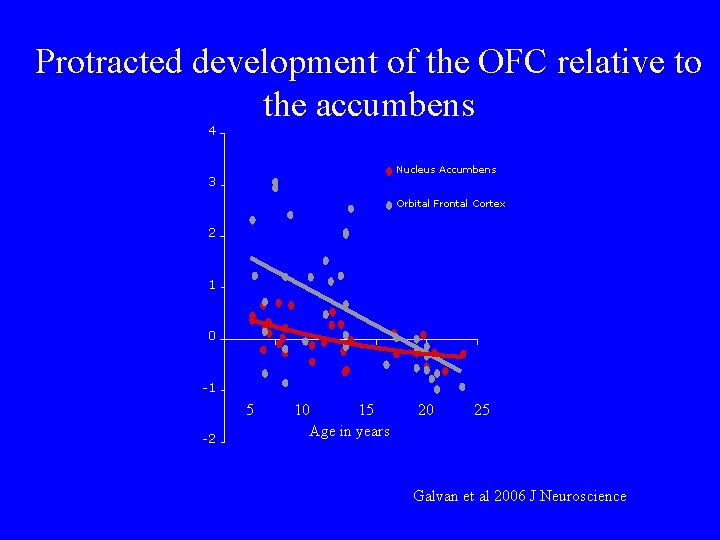
Protracted development of the OFC relative to the accumbens Normalized Extent of Activity 4 Nucleus Accumbens 3 Orbital Frontal Cortex 2 1 0 -1 5 -2 10 15 Age in years 20 25 Age (years) Galvan et al 2006 J Neuroscience
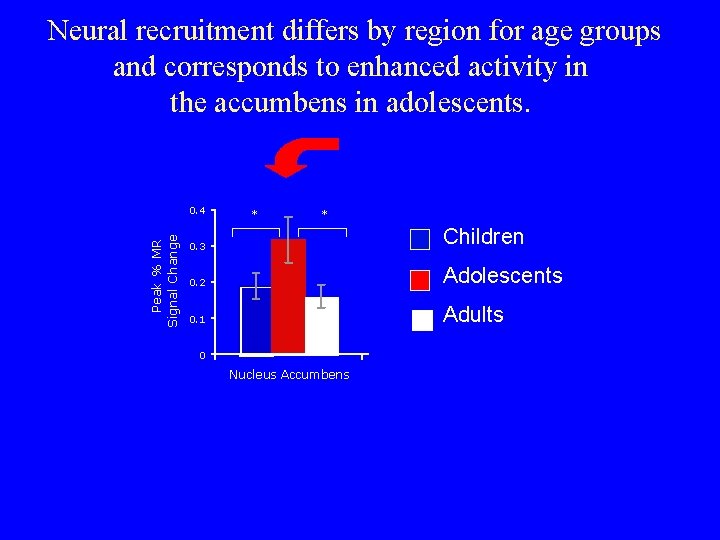
Neural recruitment differs by region for age groups and corresponds to enhanced activity in the accumbens in adolescents. * * 0. 3 Children 0. 2 Adolescents 0. 1 Adults 0 Nucleus Accumbens 1000 terpolated Voxels (mm 3) Peak % MR Signal Change 0. 4 800 600 400 200 Orbital Frontal Cortex Volume of Activity * * *
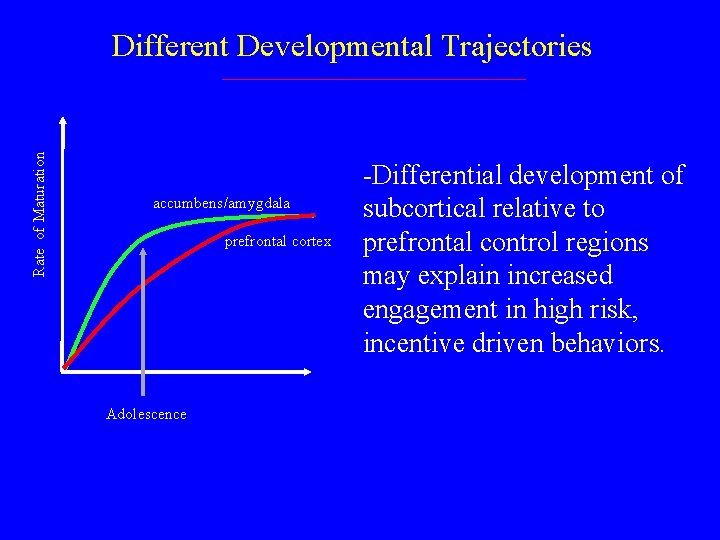
Rate of Maturation Different Developmental Trajectories accumbens/amygdala prefrontal cortex Adolescence -Differential development of subcortical relative to prefrontal control regions may explain increased engagement in high risk, incentive driven behaviors.
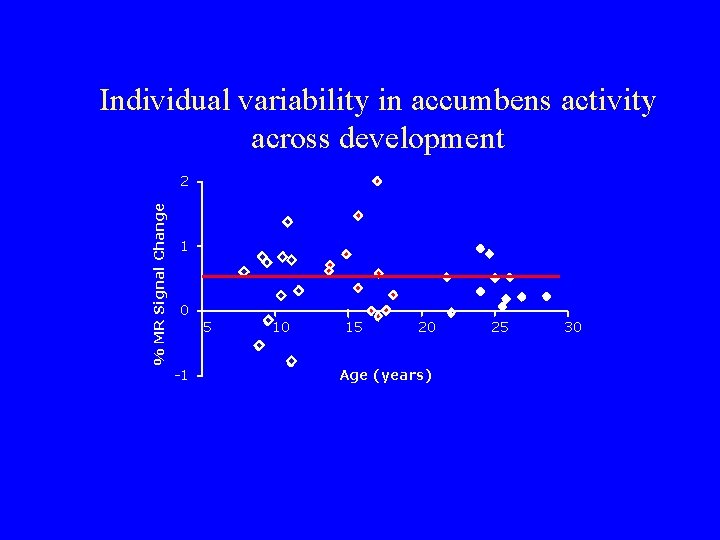
Individual variability in accumbens activity across development % MR Signal Change 2 1 0 -1 5 10 15 20 Age (years) 25 30
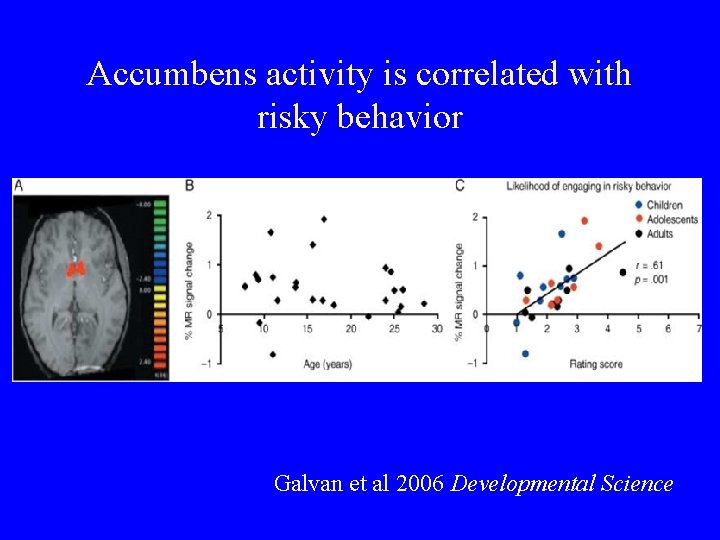
Accumbens activity is correlated with risky behavior Galvan et al 2006 Developmental Science
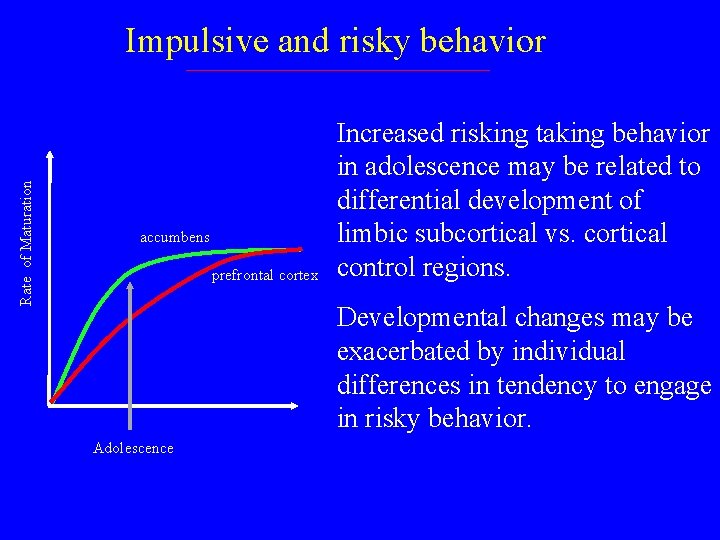
Rate of Maturation Impulsive and risky behavior accumbens prefrontal cortex Increased risking taking behavior in adolescence may be related to differential development of limbic subcortical vs. cortical control regions. Developmental changes may be exacerbated by individual differences in tendency to engage in risky behavior. Adolescence
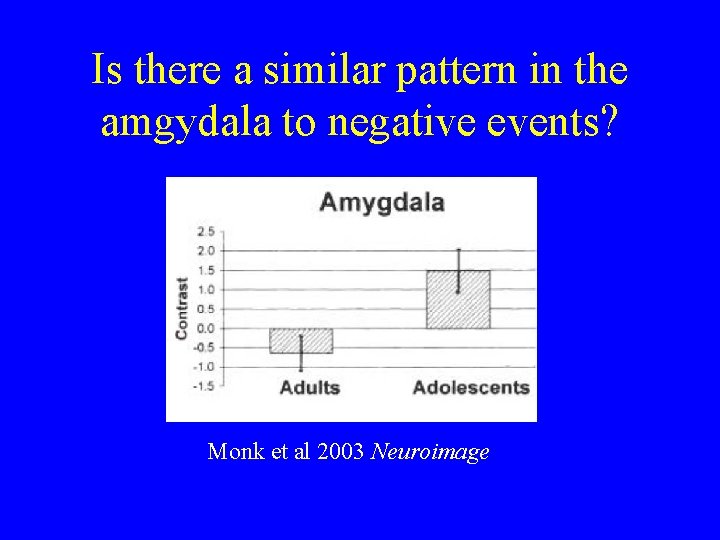
Is there a similar pattern in the amgydala to negative events? Monk et al 2003 Neuroimage
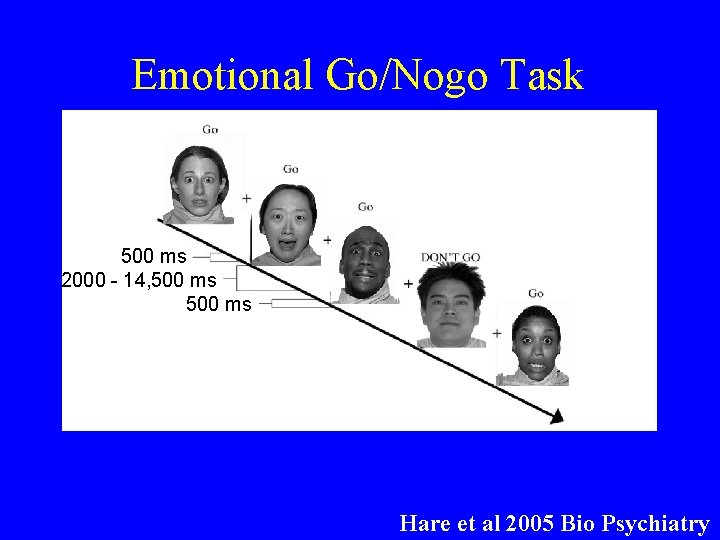
Emotional Go/Nogo Task 500 ms 2000 - 14, 500 ms Hare et al 2005 Bio Psychiatry
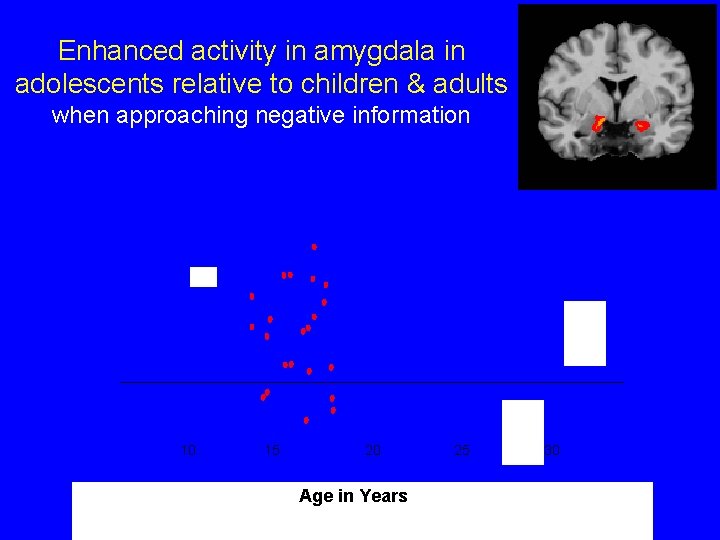
Enhanced activity in amygdala in adolescents relative to children & adults when approaching negative information 10 15 20 Age in Years 25 30
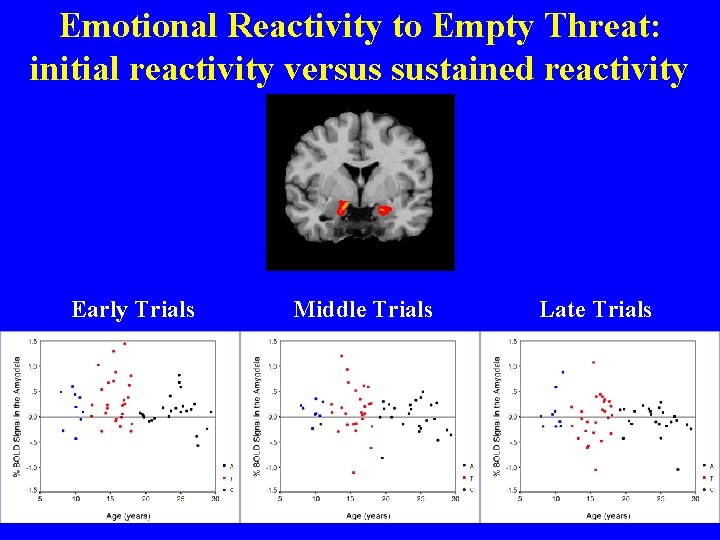
Emotional Reactivity to Empty Threat: initial reactivity versus sustained reactivity Early Trials early Middle Trials middle Late Trials late
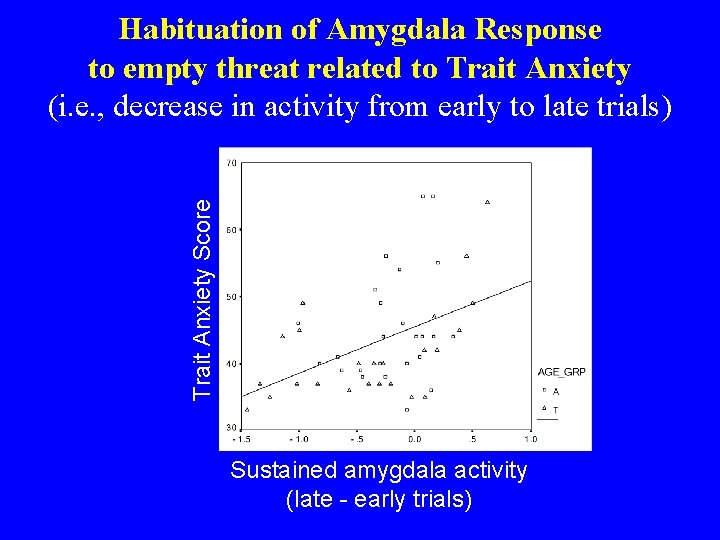
Trait Anxiety Score Habituation of Amygdala Response to empty threat related to Trait Anxiety (i. e. , decrease in activity from early to late trials) Sustained amygdala activity (late - early trials)
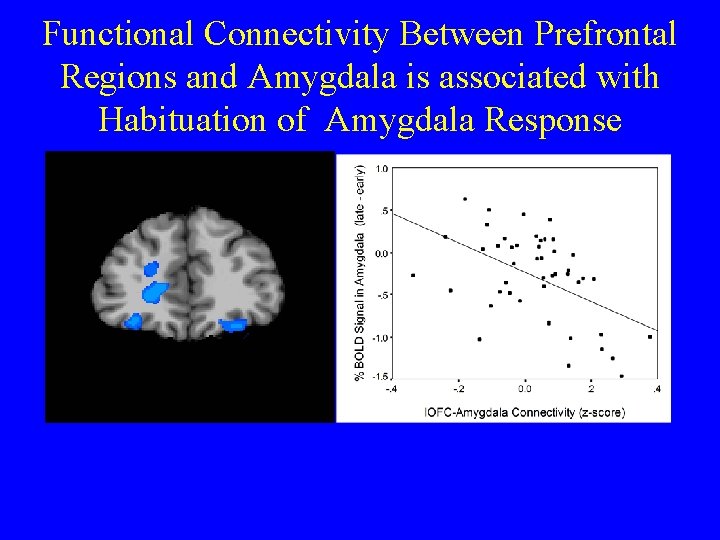
Functional Connectivity Between Prefrontal Regions and Amygdala is associated with Habituation of Amygdala Response
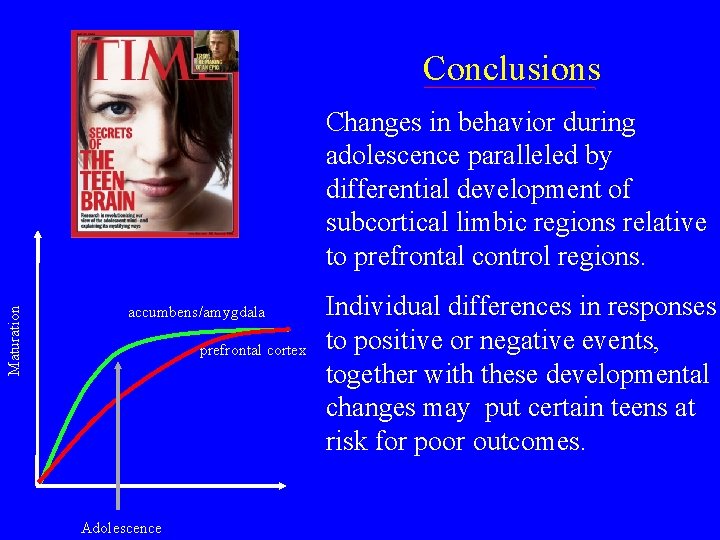
Conclusions Maturation Changes in behavior during adolescence paralleled by differential development of subcortical limbic regions relative to prefrontal control regions. accumbens/amygdala prefrontal cortex Adolescence Individual differences in responses to positive or negative events, together with these developmental changes may put certain teens at risk for poor outcomes.
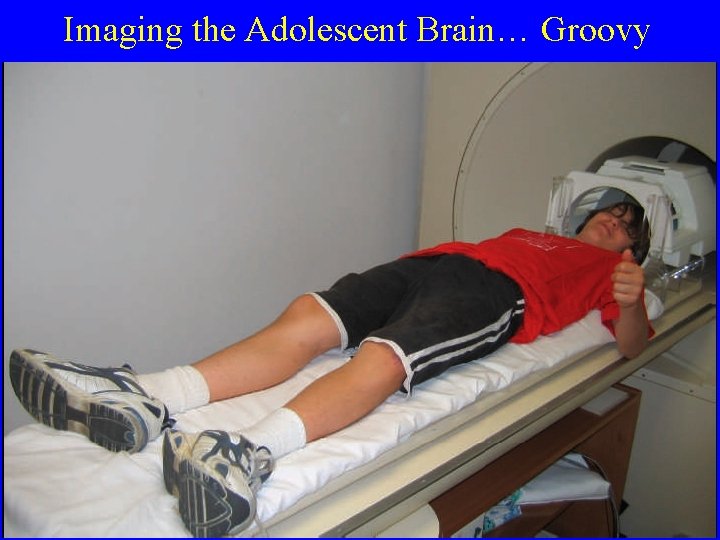
Imaging the Adolescent Brain… Groovy

Sackler Institute for Developmental Psychobiology Weill Medical College of Cornell University
- Slides: 31