
SABIS Teaching Methods Upper School Mathematics Presented by
SABIS® Teaching Methods Upper School Mathematics Presented by: Jennifer Digue
SABIS® Teaching Methods Upper School Mathematics I. SABIS Point System® The Model
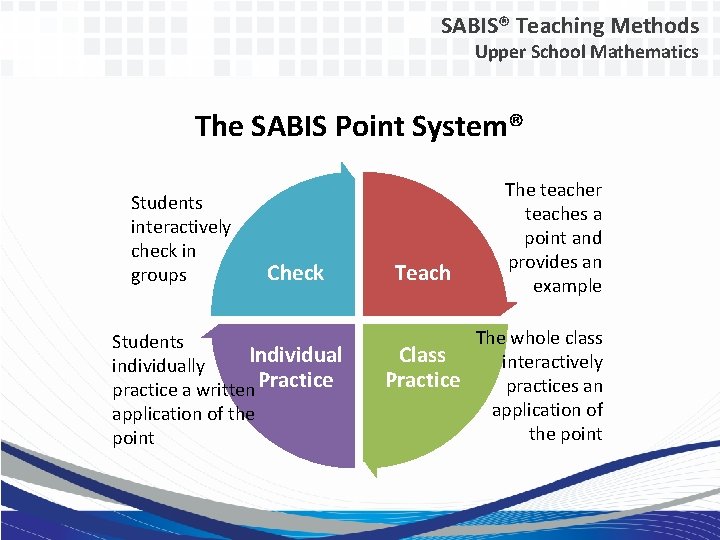
SABIS® Teaching Methods Upper School Mathematics The SABIS Point System® Students interactively check in groups Check Students Individual individually practice a written Practice application of the point Teach The teacher teaches a point and provides an example The whole class Class interactively Practice practices an application of the point
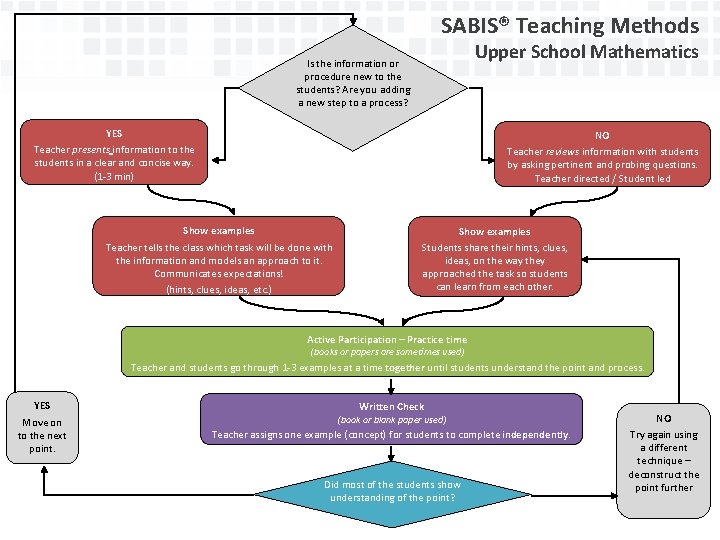
SABIS® Teaching Methods Upper School Mathematics Is the information or procedure new to the students? Are you adding a new step to a process? YES Teacher presents information to the students in a clear and concise way. (1 -3 min) NO Teacher reviews information with students by asking pertinent and probing questions. Teacher directed / Student led Show examples Teacher tells the class which task will be done with the information and models an approach to it. Communicates expectations! (hints, clues, ideas, etc. ) Show examples Students share their hints, clues, ideas, on the way they approached the task so students can learn from each other. Active Participation – Practice time (books or papers are sometimes used) Teacher and students go through 1 -3 examples at a time together until students understand the point and process. YES Move on to the next point. Written Check (book or blank paper used) Teacher assigns one example (concept) for students to complete independently. Did most of the students show understanding of the point? NO Try again using a different technique – deconstruct the point further
SABIS® Teaching Methods Upper School Mathematics II. Pre-planning

SABIS® Teaching Methods Upper School Mathematics To be able to plan your lessons, you will need: SABIS® homework policy More details in appendix The books you will teach from SABIS® pacing chart with state standards/alignment Lesson plans or other information available specifically for teachers
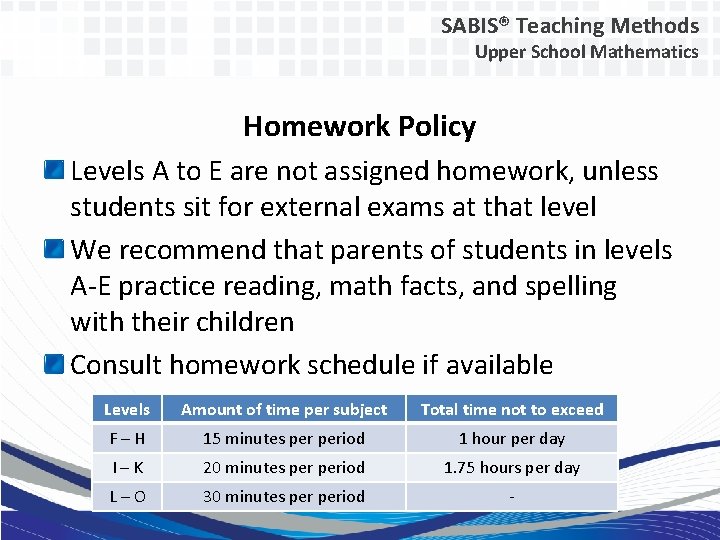
SABIS® Teaching Methods Upper School Mathematics Homework Policy Levels A to E are not assigned homework, unless students sit for external exams at that level We recommend that parents of students in levels A-E practice reading, math facts, and spelling with their children Consult homework schedule if available Levels Amount of time per subject Total time not to exceed F–H 15 minutes period 1 hour per day I–K 20 minutes period 1. 75 hours per day L–O 30 minutes period -
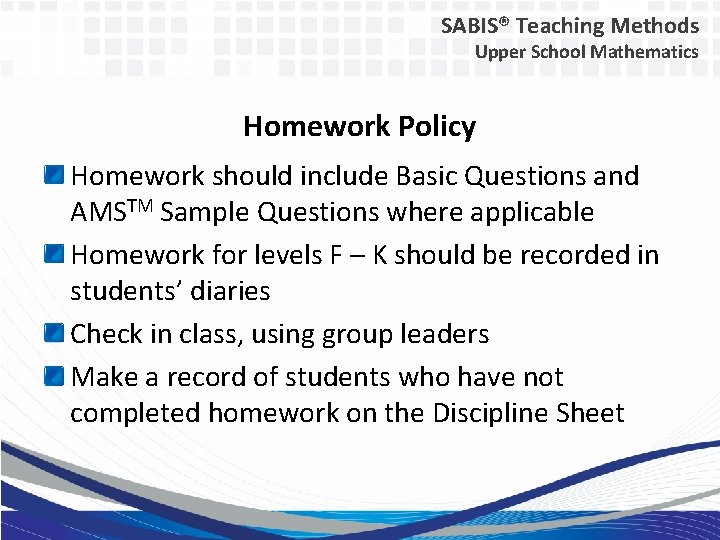
SABIS® Teaching Methods Upper School Mathematics Homework Policy Homework should include Basic Questions and AMSTM Sample Questions where applicable Homework for levels F – K should be recorded in students’ diaries Check in class, using group leaders Make a record of students who have not completed homework on the Discipline Sheet
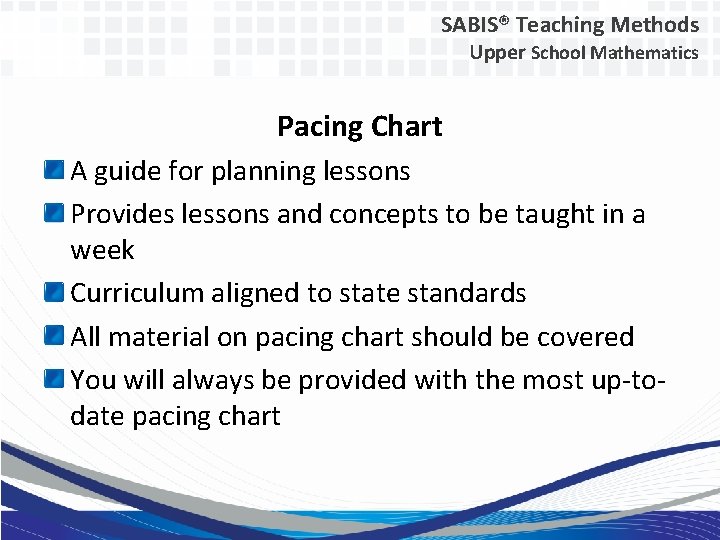
SABIS® Teaching Methods Upper School Mathematics Pacing Chart A guide for planning lessons Provides lessons and concepts to be taught in a week Curriculum aligned to state standards All material on pacing chart should be covered You will always be provided with the most up-todate pacing chart

SABIS® Teaching Methods Upper School Mathematics III. Preparing Lessons
SABIS® Teaching Methods Upper School Mathematics A Teaching Point It contains an ACTION VERB and finishes the sentence: The students will be able to …. The students will learn how to… A substitute teacher or tutor should be able to read your point and know exactly what to teach. The more specific your point the better.
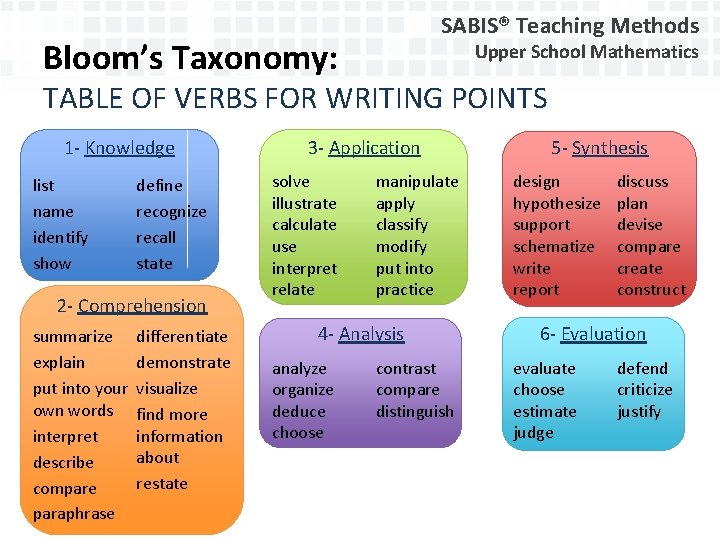
SABIS® Teaching Methods Bloom’s Taxonomy: Upper School Mathematics TABLE OF VERBS FOR WRITING POINTS 1 - Knowledge list name identify show define recognize recall state 2 - Comprehension summarize explain put into your own words interpret describe compare paraphrase differentiate demonstrate visualize find more information about restate 3 - Application solve illustrate calculate use interpret relate manipulate apply classify modify put into practice 4 - Analysis analyze organize deduce choose contrast compare distinguish 5 - Synthesis design hypothesize support schematize write report discuss plan devise compare create construct 6 - Evaluation evaluate choose estimate judge defend criticize justify
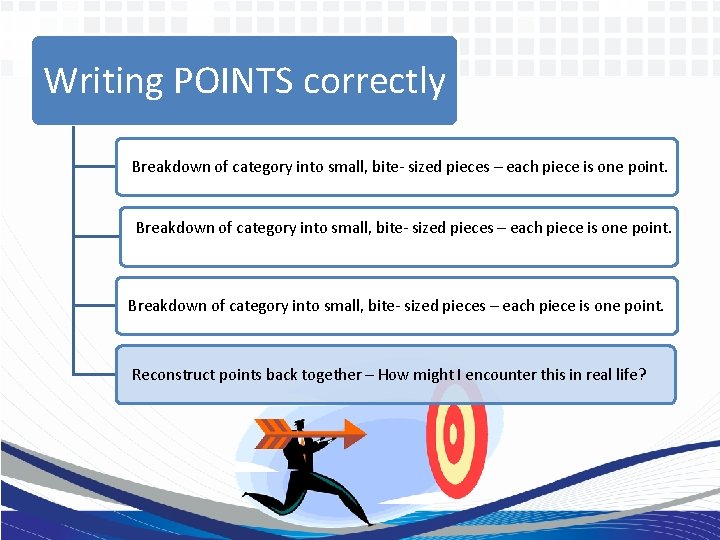
Writing POINTS correctly Breakdown of category into small, bite- sized pieces – each piece is one point. Reconstruct points back together – How might I encounter this in real life?
- Slides: 13