
S390 Unit 6 Lesson A Plotting Fire Size
- Slides: 20
S-390 Unit 6 – Lesson A Plotting Fire Size and Shape 6 A-1 -S 390 -EP
Objective • Given an active wildland fire situation, plot on a map the predicted perimeter, shape, and area of a fire originating from the point source. 6 A-2 -S 390 -EP 2
Area and Perimeter Predictions and Shape Patterns • Fire perimeter, area, and shape may be calculated from a point source using effective wind speed and spread distance 6 A-3 -S 390 -EP 3
Information Needed for Fire Perimeter and Area Calculations • Effective mid-flame wind speed and spread distance. 6 A-4 -S 390 -EP 4
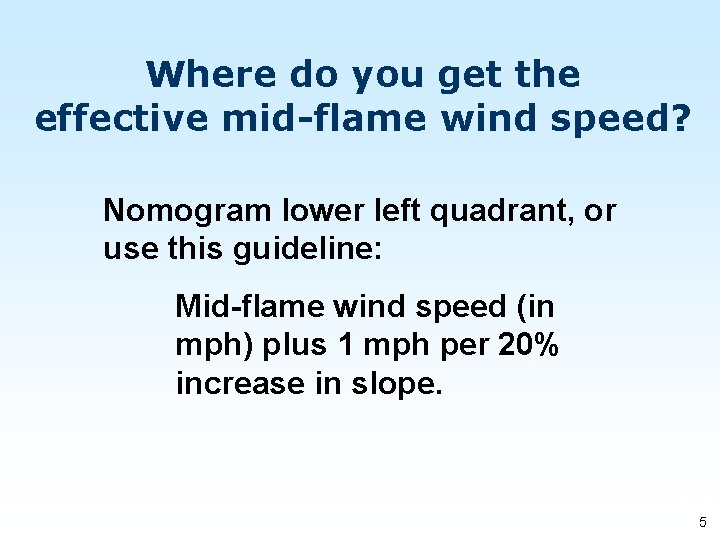
Where do you get the effective mid-flame wind speed? Nomogram lower left quadrant, or use this guideline: Mid-flame wind speed (in mph) plus 1 mph per 20% increase in slope. 6 A-5 -S 390 -EP 5
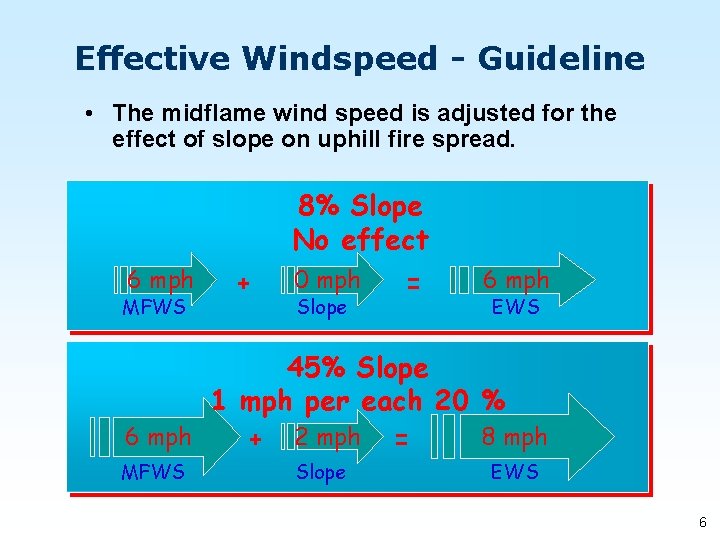
Effective Windspeed - Guideline • The midflame wind speed is adjusted for the effect of slope on uphill fire spread. 8% Slope No effect 6 mph MFWS + 0 mph Slope = 6 mph EWS 45% Slope 1 mph per each 20 % 8 mph 6 mph + 2 mph = MFWS Slope EWS 6
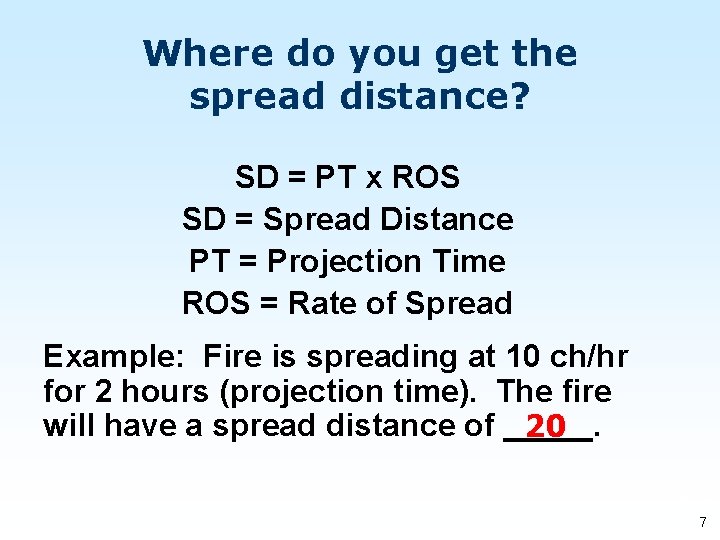
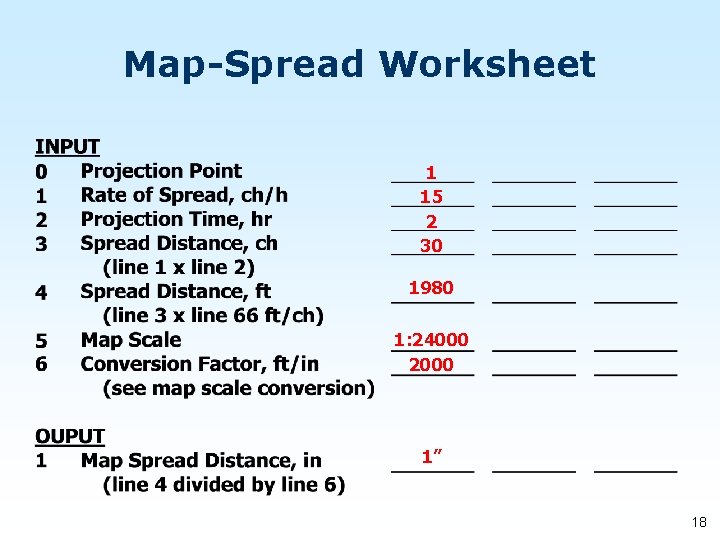
Where do you get the spread distance? SD = PT x ROS SD = Spread Distance PT = Projection Time ROS = Rate of Spread Example: Fire is spreading at 10 ch/hr for 2 hours (projection time). The fire will have a spread distance of _____. 20 6 A-7 -S 390 -EP 7
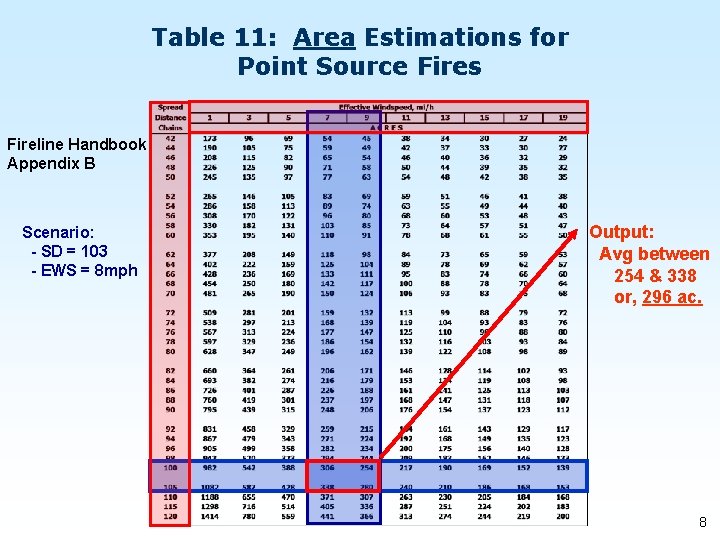
Table 11: Area Estimations for Point Source Fires Fireline Handbook Appendix B Scenario: - SD = 103 - EWS = 8 mph Output: Avg between 254 & 338 or, 296 ac. 8
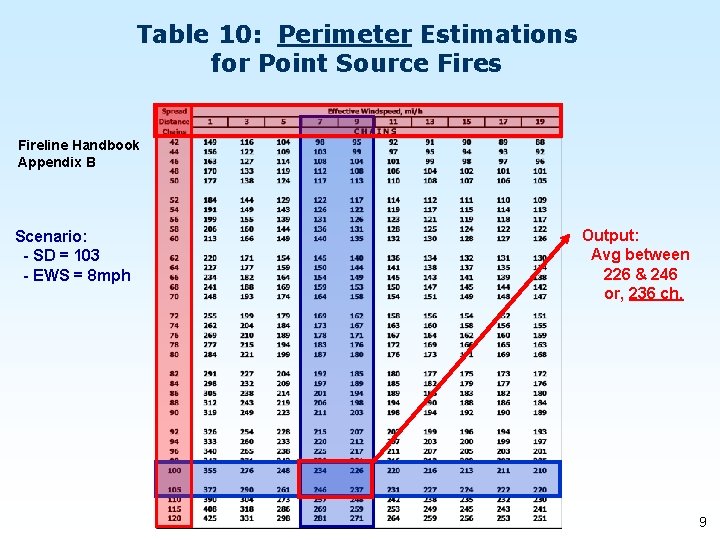
Table 10: Perimeter Estimations for Point Source Fires Fireline Handbook Appendix B Scenario: - SD = 103 - EWS = 8 mph Output: Avg between 226 & 246 or, 236 ch. 9
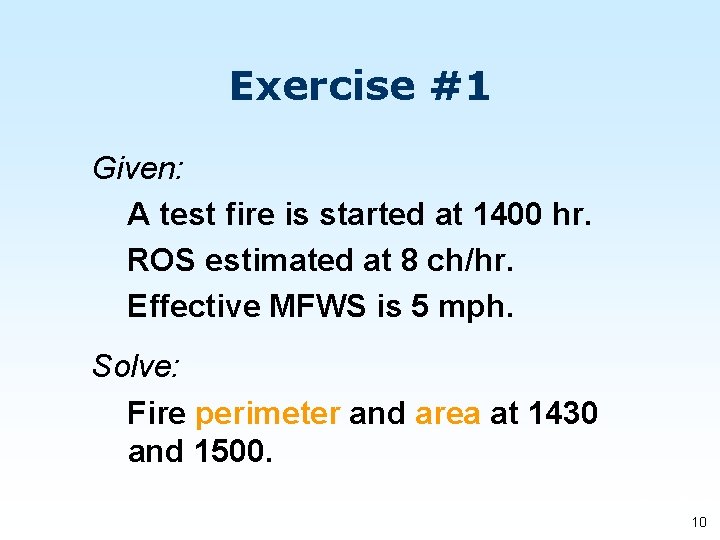
Exercise #1 Given: A test fire is started at 1400 hr. ROS estimated at 8 ch/hr. Effective MFWS is 5 mph. Solve: Fire perimeter and area at 1430 and 1500. 6 A-10 -S 390 -EP 10
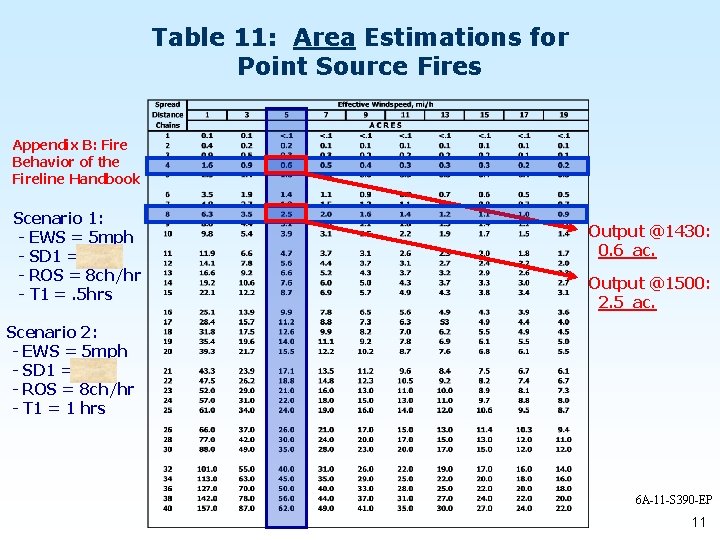
Table 11: Area Estimations for Point Source Fires Appendix B: Fire Behavior of the Fireline Handbook Scenario 1: - EWS = 5 mph - SD 1 = 4 ch - ROS = 8 ch/hr - T 1 =. 5 hrs Output @1430: 0. 6 ac. Output @1500: 2. 5 ac. Scenario 2: - EWS = 5 mph - SD 1 = 8 ch - ROS = 8 ch/hr - T 1 = 1 hrs 6 A-11 -S 390 -EP 11
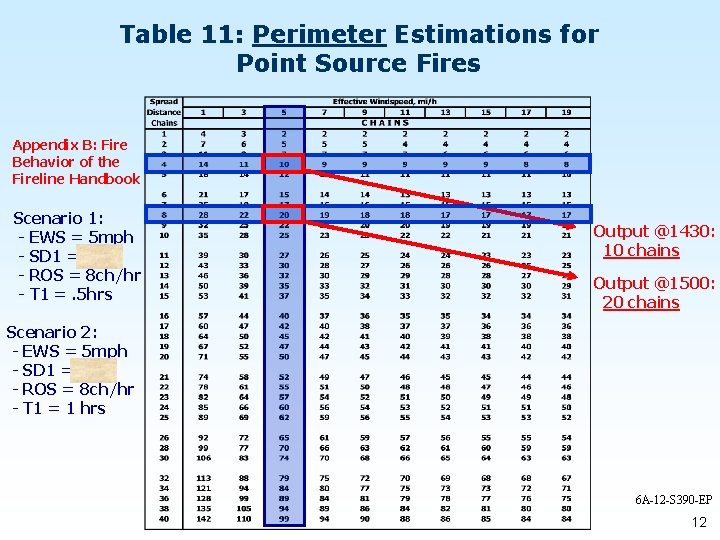
Table 11: Perimeter Estimations for Point Source Fires Appendix B: Fire Behavior of the Fireline Handbook Scenario 1: - EWS = 5 mph - SD 1 = 4 ch - ROS = 8 ch/hr - T 1 =. 5 hrs Output @1430: 10 chains Output @1500: 20 chains Scenario 2: - EWS = 5 mph - SD 1 = 8 ch - ROS = 8 ch/hr - T 1 = 1 hrs 6 A-12 -S 390 -EP 12
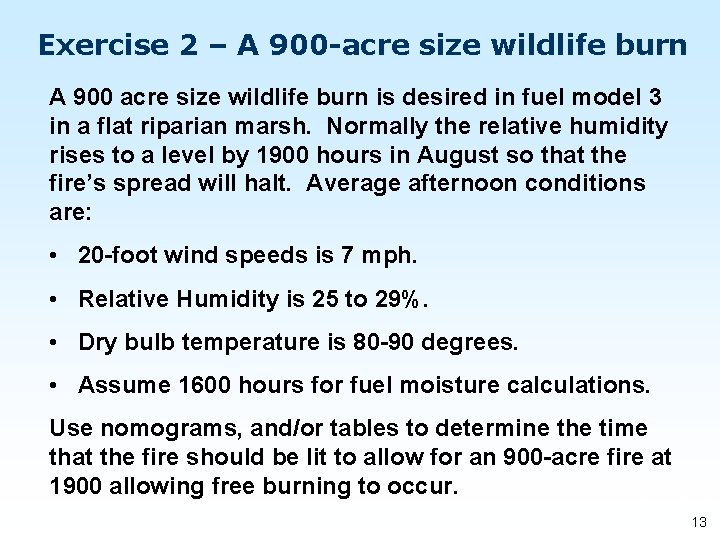
Exercise 2 – A 900 -acre size wildlife burn A 900 acre size wildlife burn is desired in fuel model 3 in a flat riparian marsh. Normally the relative humidity rises to a level by 1900 hours in August so that the fire’s spread will halt. Average afternoon conditions are: • 20 -foot wind speeds is 7 mph. • Relative Humidity is 25 to 29%. • Dry bulb temperature is 80 -90 degrees. • Assume 1600 hours for fuel moisture calculations. Use nomograms, and/or tables to determine the time that the fire should be lit to allow for an 900 -acre fire at 1900 allowing free burning to occur. 6 A-13 -S 390 -EP 13
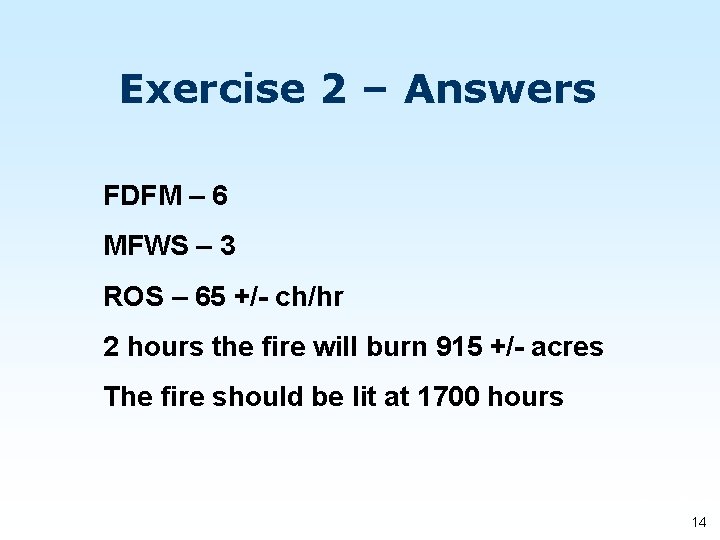
Exercise 2 – Answers FDFM – 6 MFWS – 3 ROS – 65 +/- ch/hr 2 hours the fire will burn 915 +/- acres The fire should be lit at 1700 hours 6 A-14 -S 390 -EP 14
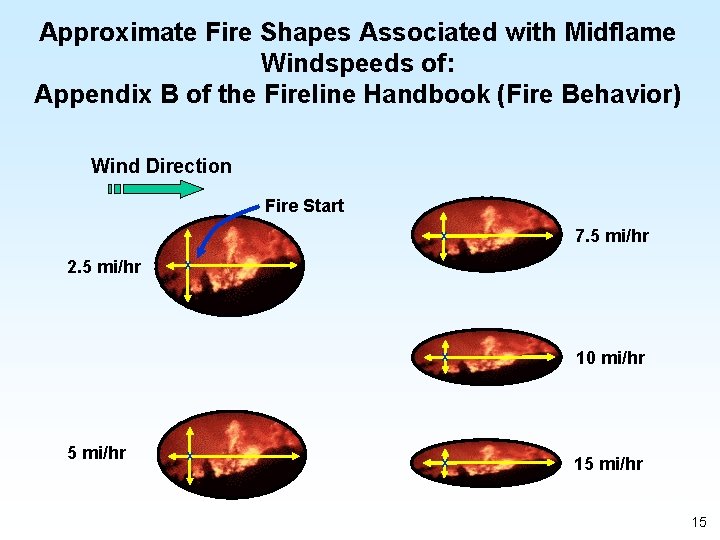
Approximate Fire Shapes Associated with Midflame Windspeeds of: Appendix B of the Fireline Handbook (Fire Behavior) Wind Direction Fire Start 2. 5 mi/hr x 7. 5 mi/hr x 10 mi/hr x 15 mi/hr x x 6 A-15 -S 390 -EP 15
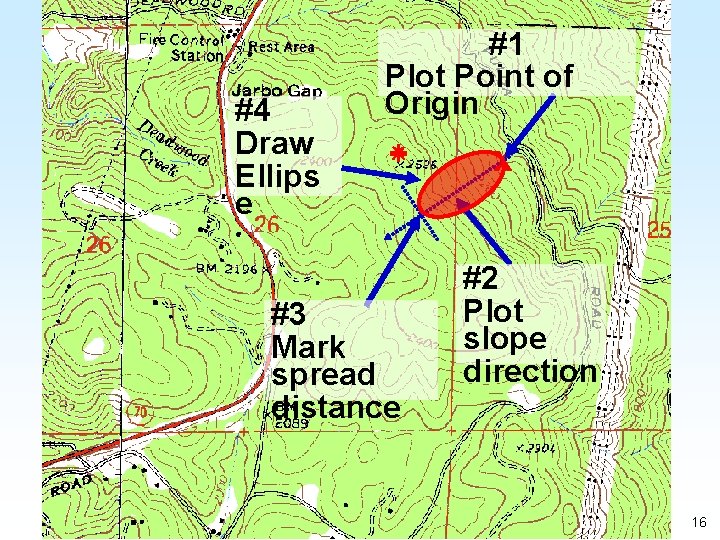
#4 Draw Ellips e #1 Plot Point of Origin #3 Mark spread distance x #2 Plot slope direction 16
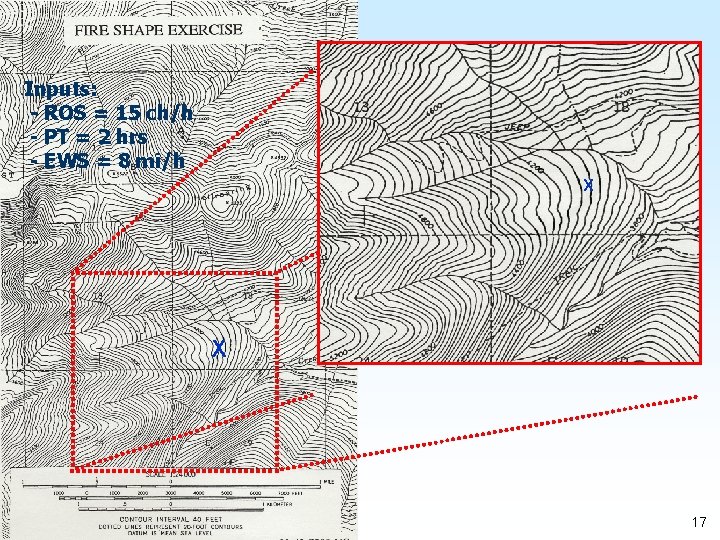
Inputs: - ROS = 15 ch/h - PT = 2 hrs - EWS = 8 mi/h X X 17
Map-Spread Worksheet 1 15 2 30 1980 1: 24000 2000 1” 18
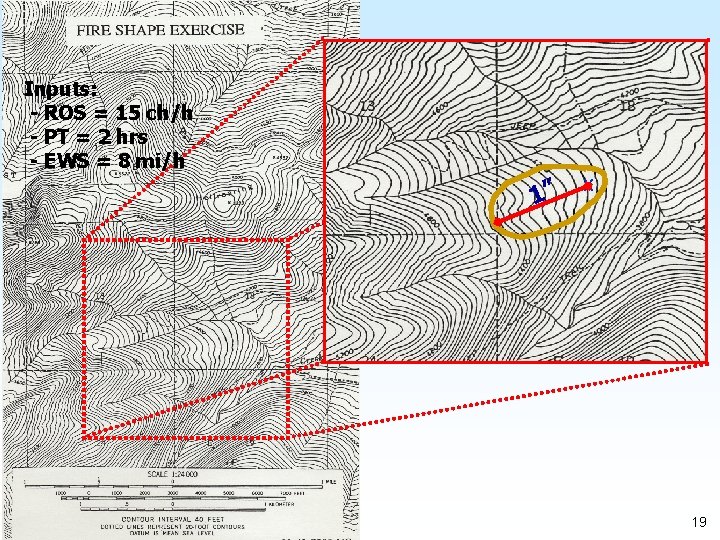
Inputs: - ROS = 15 ch/h - PT = 2 hrs - EWS = 8 mi/h 1” X 19
Objective • Given an active wildland fire situation, plot on a map the predicted perimeter, shape, and area of a fire originating from the point source. 6 A-2 -S 390 -EP 20