
S M Joshi College Hadapsar Department of Physics


- Slides: 17
S. M. Joshi College, Hadapsar Department of Physics Sub: Optics Dr. S. H. Pisal
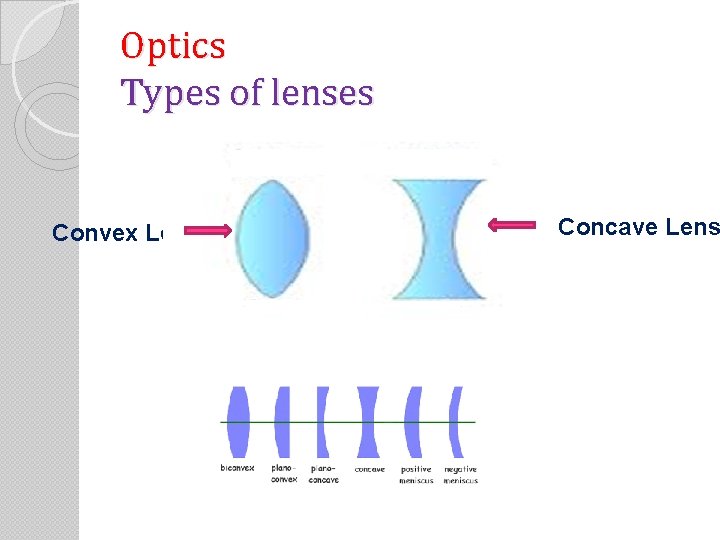
Optics Types of lenses Convex Lens Concave Lens
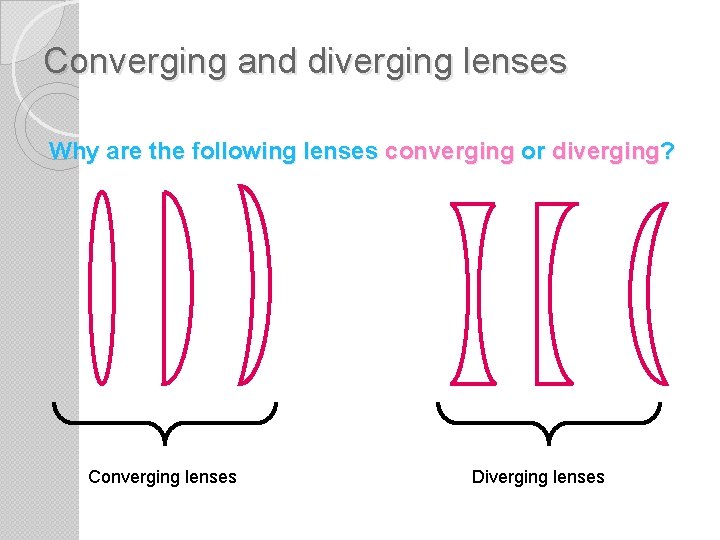
Converging and diverging lenses Why are the following lenses converging or diverging? Converging lenses Diverging lenses
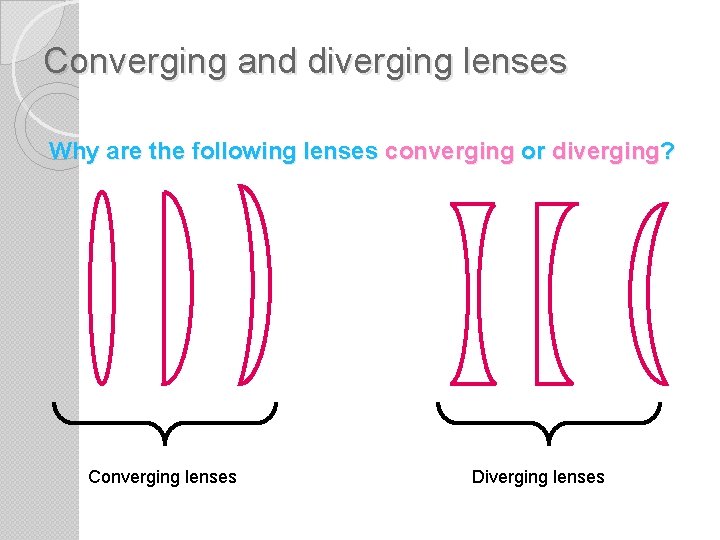
Converging and diverging lenses Why are the following lenses converging or diverging? Converging lenses Diverging lenses
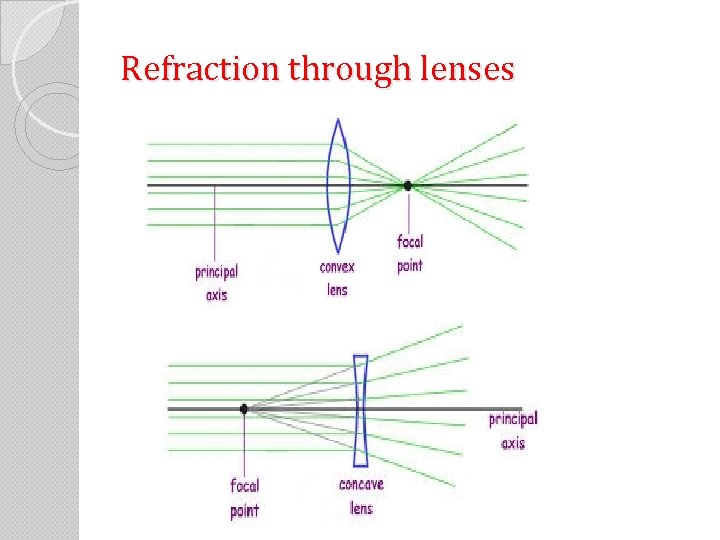
Refraction through lenses
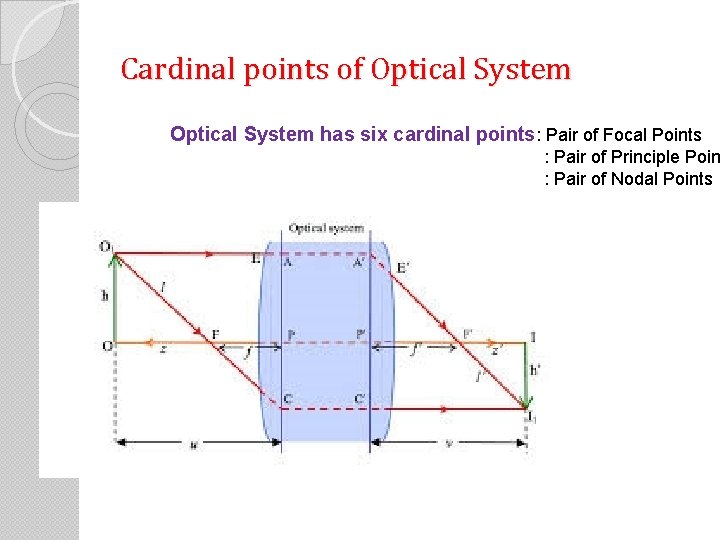
Cardinal points of Optical System has six cardinal points: Pair of Focal Points : Pair of Principle Poin : Pair of Nodal Points
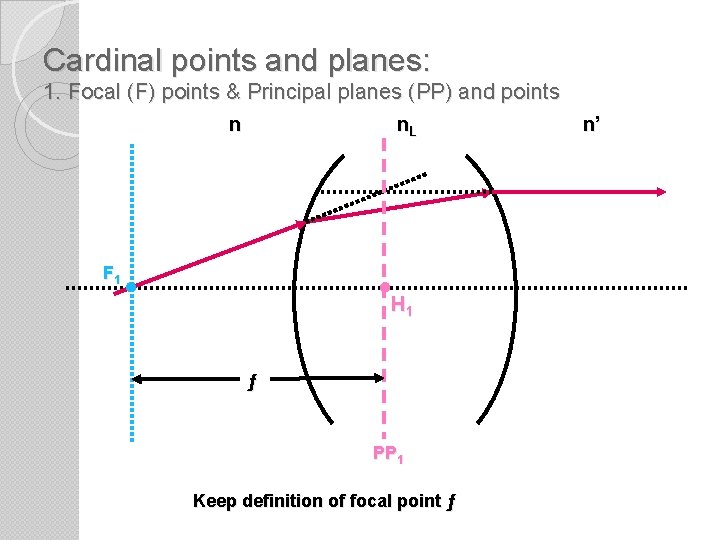
Cardinal points and planes: 1. Focal (F) points & Principal planes (PP) and points n n. L F 1 H 1 ƒ PP 1 Keep definition of focal point ƒ n’
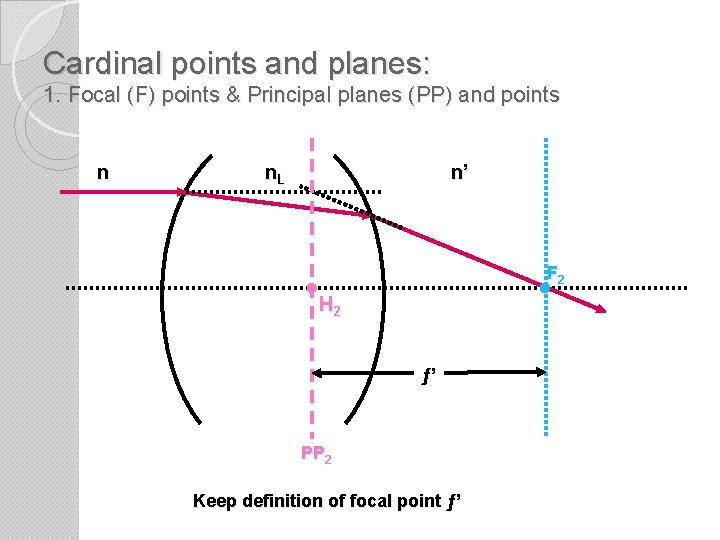
Cardinal points and planes: 1. Focal (F) points & Principal planes (PP) and points n n. L n’ F 2 H 2 ƒ’ PP 2 Keep definition of focal point ƒ’
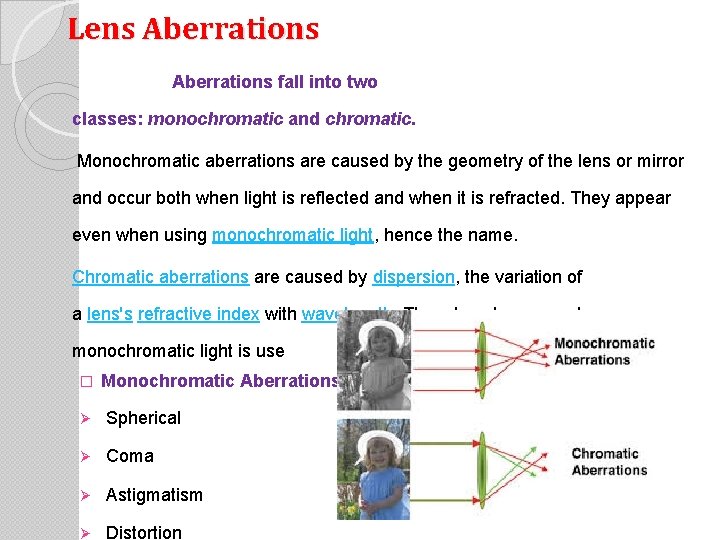
Lens Aberrations fall into two classes: monochromatic and chromatic. Monochromatic aberrations are caused by the geometry of the lens or mirror and occur both when light is reflected and when it is refracted. They appear even when using monochromatic light, hence the name. Chromatic aberrations are caused by dispersion, the variation of a lens's refractive index with wavelength. They do not appear when monochromatic light is use � Monochromatic Aberrations Ø Spherical Ø Coma Ø Astigmatism Ø Distortion
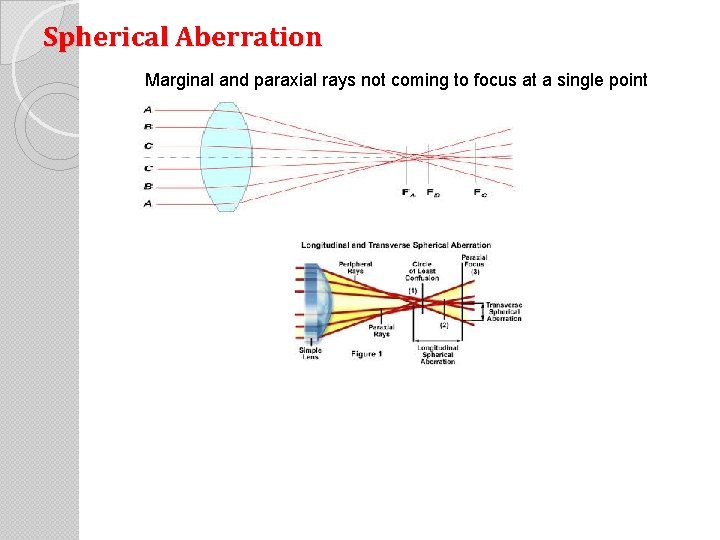
Spherical Aberration Marginal and paraxial rays not coming to focus at a single point
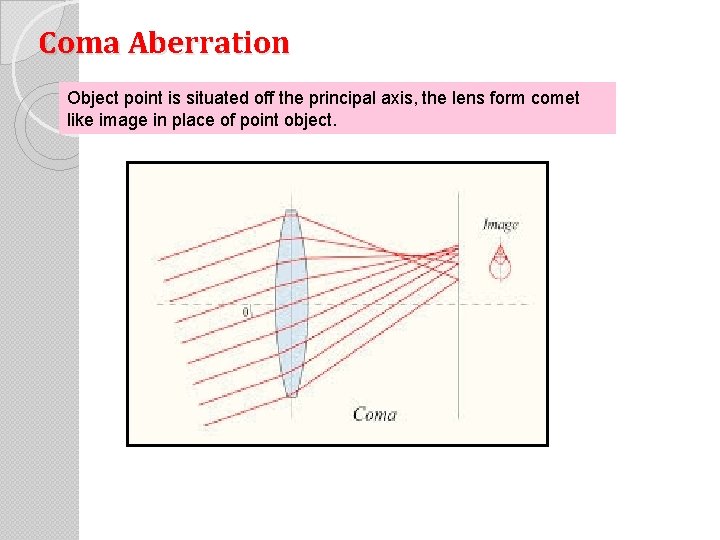
Coma Aberration Object point is situated off the principal axis, the lens form comet like image in place of point object.
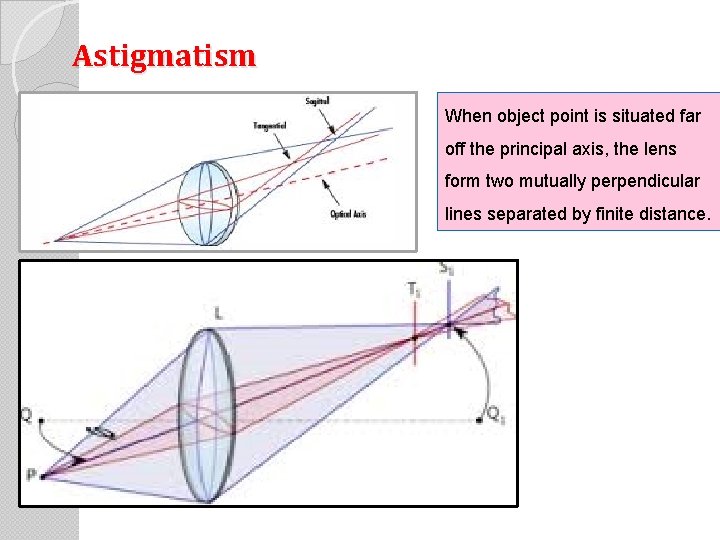
Astigmatism When object point is situated far off the principal axis, the lens form two mutually perpendicular lines separated by finite distance.
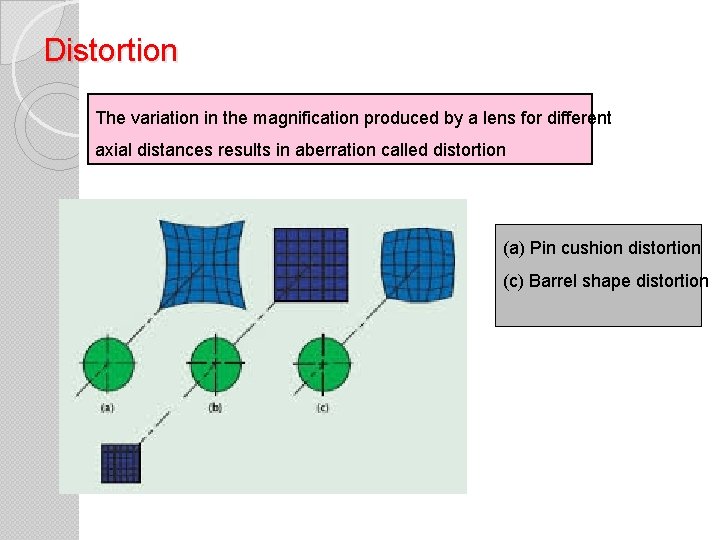
Distortion The variation in the magnification produced by a lens for different axial distances results in aberration called distortion (a) Pin cushion distortion (c) Barrel shape distortion
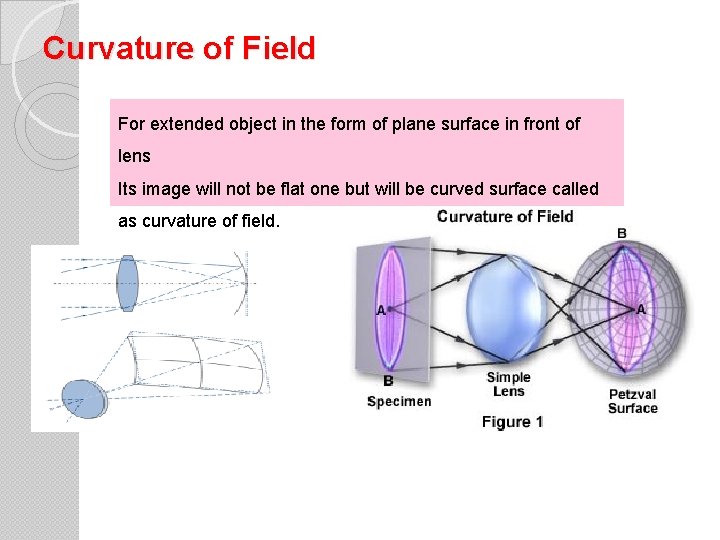
Curvature of Field For extended object in the form of plane surface in front of lens Its image will not be flat one but will be curved surface called as curvature of field.
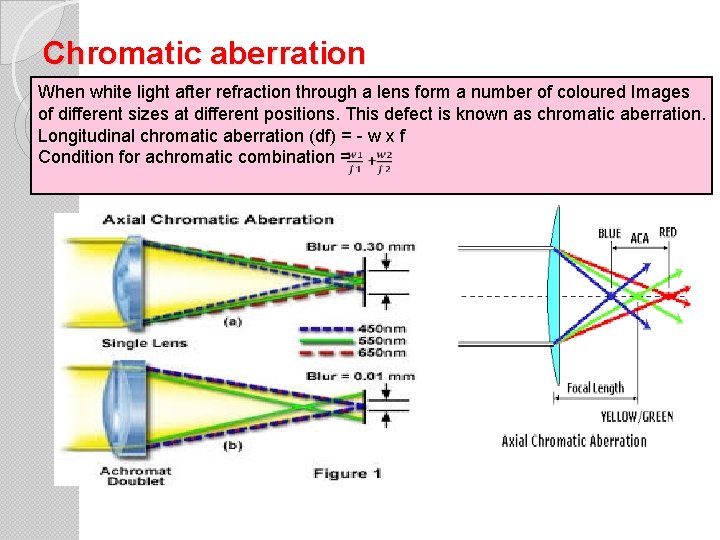
Chromatic aberration When white light after refraction through a lens form a number of coloured Images of different sizes at different positions. This defect is known as chromatic aberration. Longitudinal chromatic aberration (df) = - w x f Condition for achromatic combination =
Thank You