
S M E T S U B F

S M E T S U B F F R E Y S
Introduction � Acid-base regulation �Regulation of hydrogen ion Buffer system Respiratory regulation Renal regulation

Why To Regulate � To maintain homeostasis � Regulates enzymatic functions
Acids And Bases � Acids �Release protons (H) ; Eg-H 2 CO 3 , HCL � Bases �Accept protons (H) ; Eg-HCO 3
Types of acids and bases � Strong acids �Release large amount of Hydrogen ions � Weak acids �Release small amount of Hydrogen ions � Strong bases �Accept large amount of Hydrogen ions � Weak bases �Accept small amount of Hydrogen ions
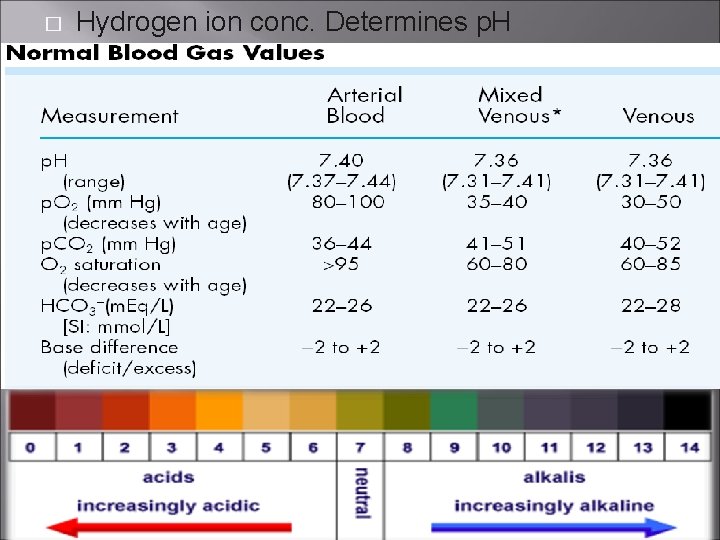
� Hydrogen ion conc. Determines p. H

What Is Buffer ? ? ? � A buffer is a solution (or a substance) that has the ability to maintain p. H and bring it back to its optimal value by addition or removal of hydrogen ions Buffer + H H buffer
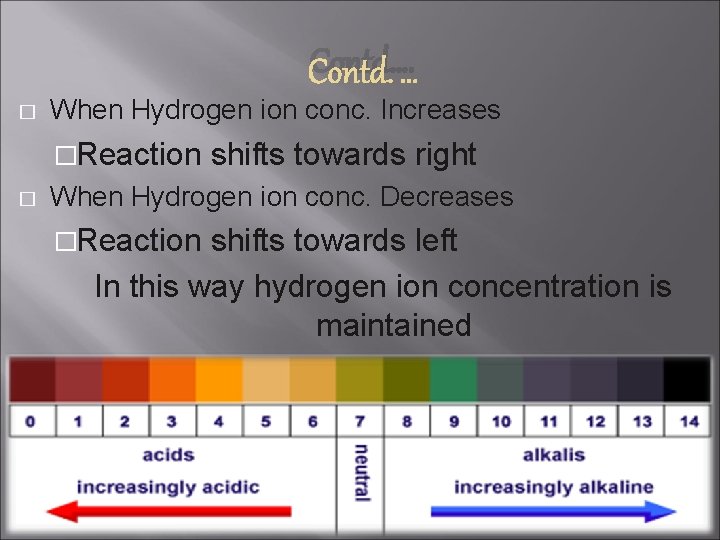
Contd…. � When Hydrogen ion conc. Increases �Reaction shifts towards right � When Hydrogen ion conc. Decreases �Reaction shifts towards left In this way hydrogen ion concentration is maintained
Types of chemical buffer �Carbonic acid-bicarbonate – �Buffering changes caused by organic and fixed acids �Protein �Minor buffer system-Amino acids buffering system- �Phosphate –Buffer p. H in the ICF
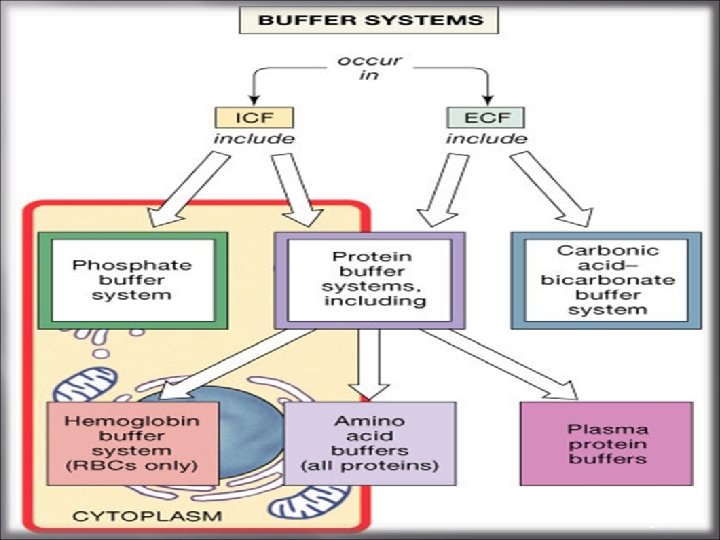
Figure 27. 7
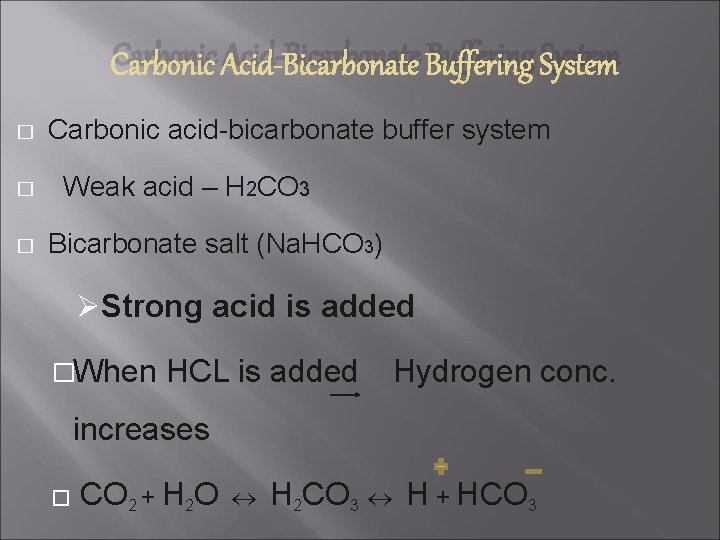
Carbonic Acid-Bicarbonate Buffering System � Carbonic acid-bicarbonate buffer system � Weak acid – H 2 CO 3 � Bicarbonate salt (Na. HCO 3) ØStrong acid is added �When HCL is added Hydrogen conc. increases � CO 2 + H 2 O H 2 CO 3 H + HCO 3
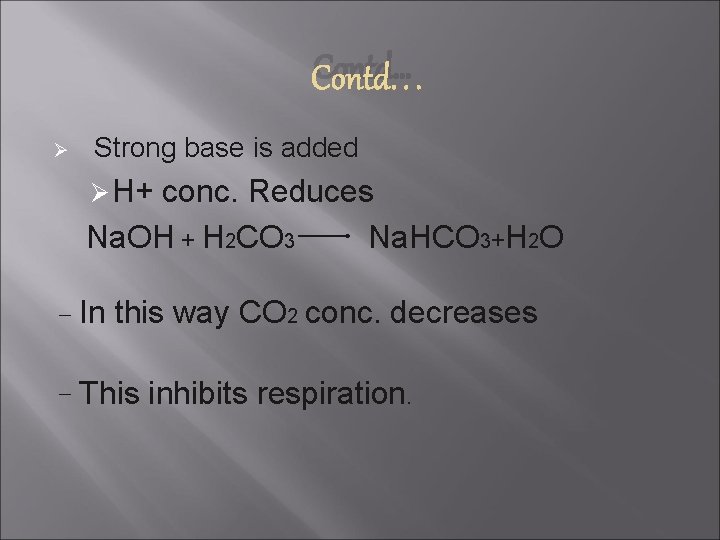
Contd… Ø Strong base is added Ø H+ conc. Reduces Na. OH + H 2 CO 3 Na. HCO 3+H 2 O In this way CO 2 conc. decreases This inhibits respiration.
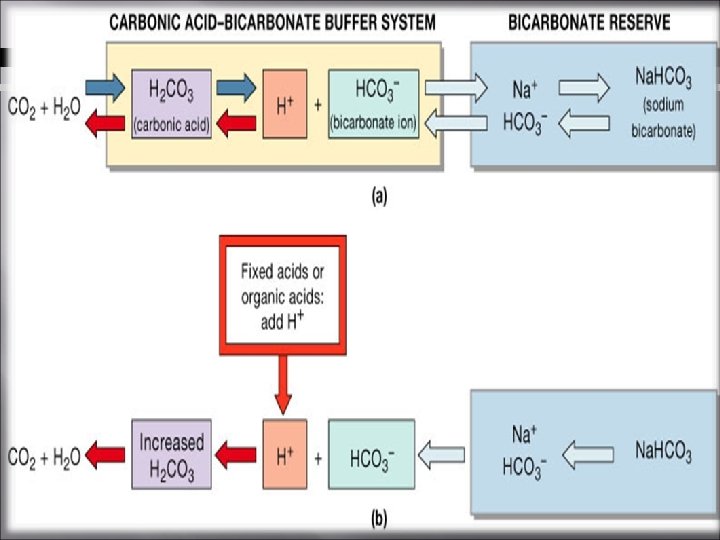
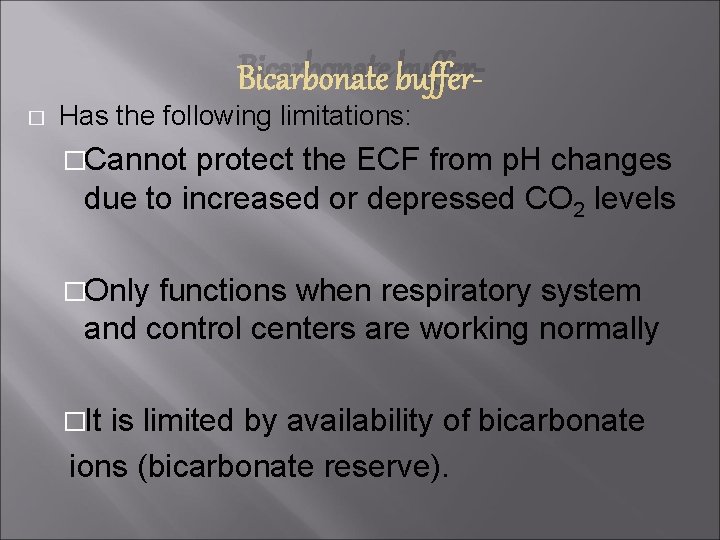
Bicarbonate buffer� Has the following limitations: �Cannot protect the ECF from p. H changes due to increased or depressed CO 2 levels �Only functions when respiratory system and control centers are working normally �It is limited by availability of bicarbonate ions (bicarbonate reserve).
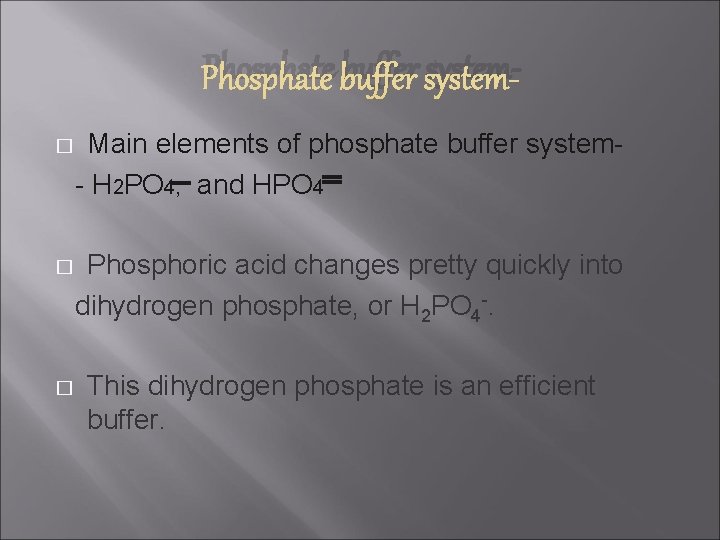
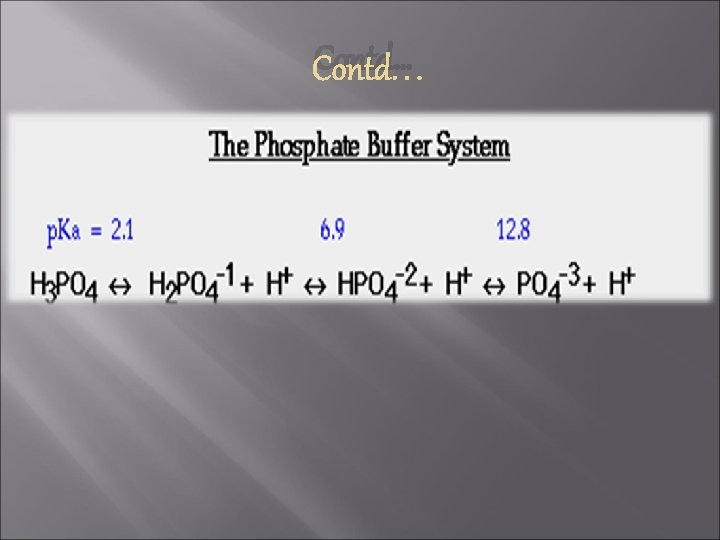
Phosphate buffer system. Main elements of phosphate buffer system - H 2 PO 4, and HPO 4 � Phosphoric acid changes pretty quickly into dihydrogen phosphate, or H 2 PO 4 -. � � This dihydrogen phosphate is an efficient buffer.
Contd…
Contd…. � Phosphate buffer system in the ECF is low compared to the bicarbonate buffer. Its buffering power is less compared to the bicarbonate buffer. � It has its importance in the renal tubules of kidneys for two reasons. . �
Contd � 1. Conc. of phosphate is more in tubules. � 2. Tubular fluid has lower p. H. � Conc. of phosphate is more in ICF compared to ECF.
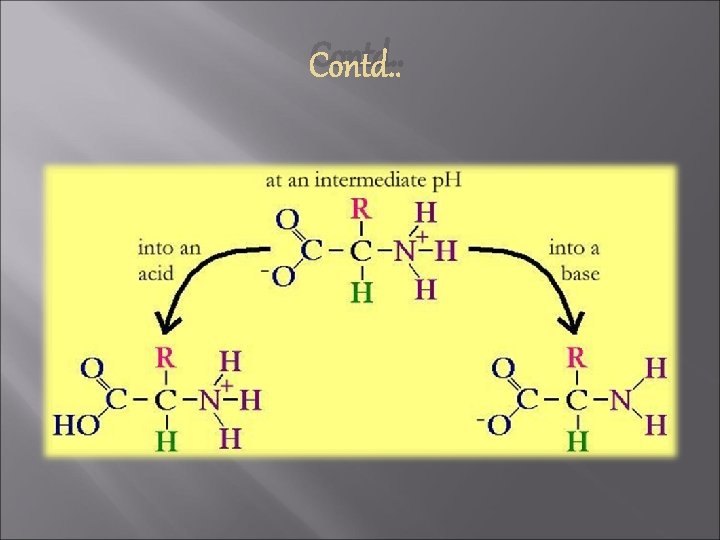
Protein buffer system Proteins are made up of amino acids � Amino acids have a central carbon with four groups off of it: 1. a carboxyl group (COOH) 2. an amino group (NH 2) 3. a hydrogen atom 4. an R group. �
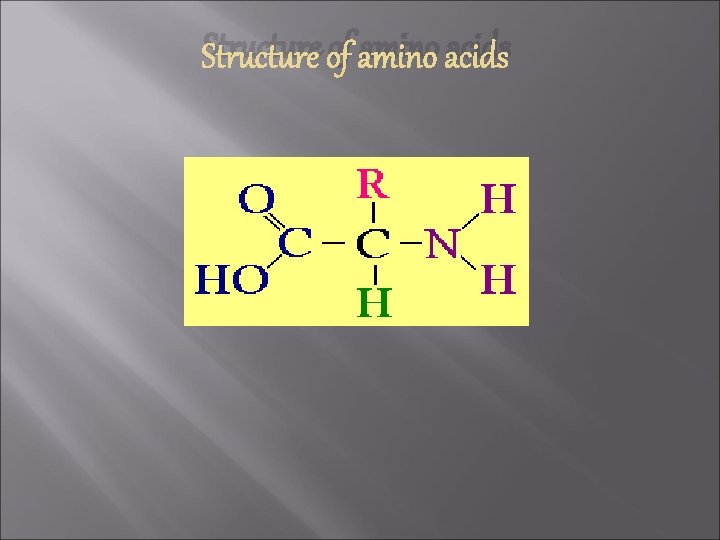
Structure of amino acids
Contd… � The carboxyl and amino groups are what enable proteins to act as buffers. � Carboxyl group is attached to the amino acid central carbon: C - COOH Carboxyl group consists of a double bond to one of the oxygens and a single bond to the hydroxyl group. �
Contd. . . � At neutral p. H the carboxyl ion is present as COO instead of COOH. � Acidic medium – becomes COOH � Basic medium – becomes COO.
Contd… � Amino group is attached to the amino acid central carbon: C - NH 2. � Neutral p. H, the amino group is actually- NH 3+ rather than just NH 2. � Acidic medium – becomes NH 3+ � Basic medium- becomes NH 2
Contd. .
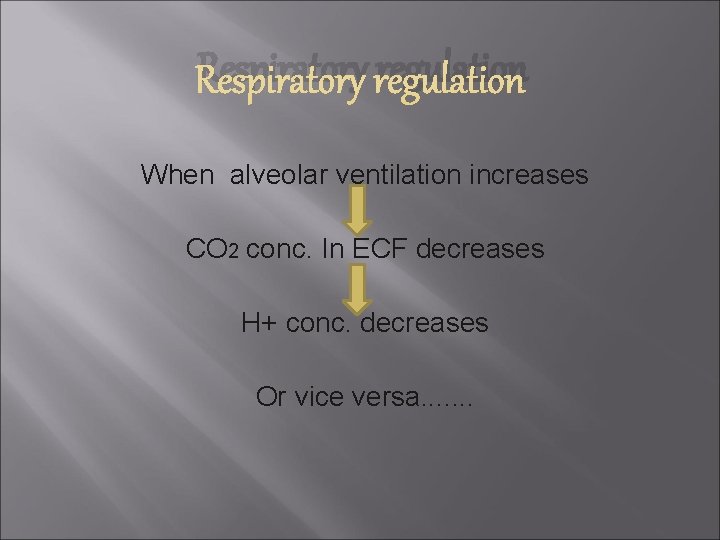
Respiratory regulation When alveolar ventilation increases CO 2 conc. In ECF decreases H+ conc. decreases Or vice versa. . . .
Respiratory regulation Contd… � Pulmonary expiration of CO 2 balances metabolic formation of CO 2 � 1. 2 mol/L of dissolved CO 2 is present in the ECF corresponding to p. CO 2 of 40 mm/hg �Rate of pulmonary ventilation is inversely proportional to CO 2 & p. CO 2 �So either pulmonary ventilation rate of CO 2 � or its formation by tissues can change p. CO 2 in ECF.
� Contd… Increasing alveolar ventilation decreases ECF hydrogen ion conc. And raises p. H �If alveolar ventilation increases the p. CO 2 decreases. �If alveolar ventilation decreases the p. CO 2 increases. �Twice rise of AV--rises p. H of ECF by about 0. 23 �Decrease of AV to ¼ -- decreases p. H by 0. 45
Contd… � Increased Hydrogen ion conc. Stimulates alveolar ventilation � Change in alveolar ventilation rate is much greater in reduced levels of p. H than in increased levels of p. H
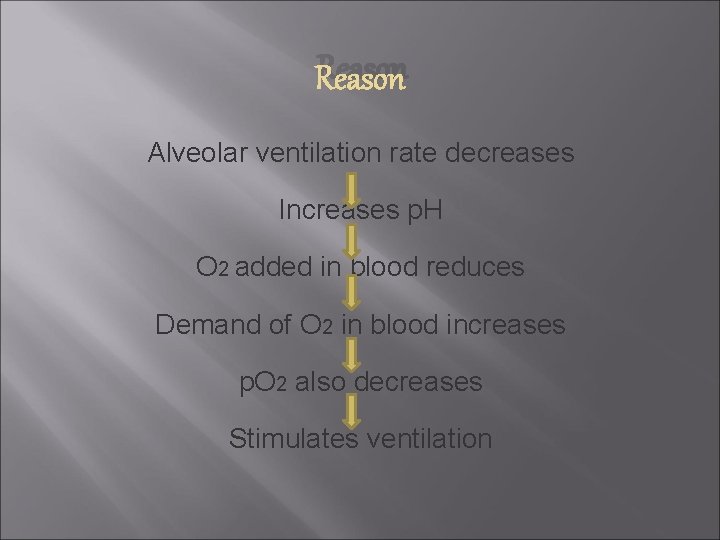
Reason Alveolar ventilation rate decreases Increases p. H O 2 added in blood reduces Demand of O 2 in blood increases p. O 2 also decreases Stimulates ventilation
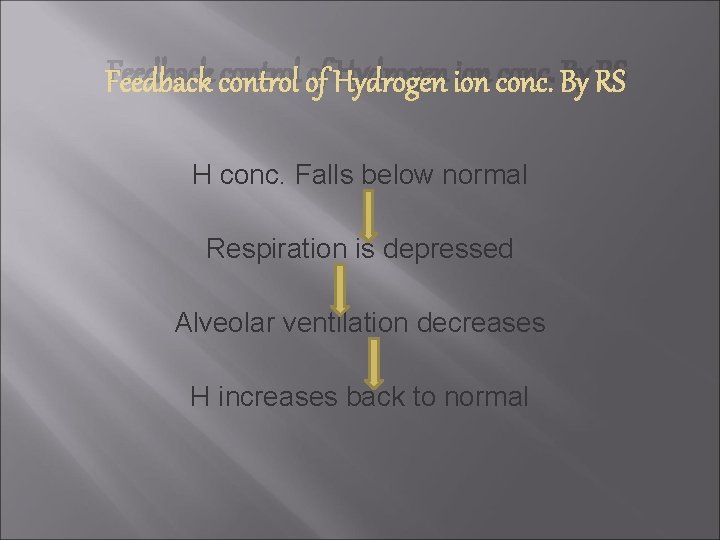
Feedback control of Hydrogen ion conc. By RS H conc. Falls below normal Respiration is depressed Alveolar ventilation decreases H increases back to normal
Bufffering power of RS � The kidneys work in elimination of hydrogen ion conc. and control imbalance. � Its capacity is 1 -2 times as much as other chemical buffers.
Impairment of lungs function: � Impairment of lung function leads to emphysema and respiratory disorders. � Kidneys play a major physiologic mechanism for returning p. H to normal
Renal mechanism of acid-base regulation � Kidneys regulate the blood p. H by � 1. maintaining alkali reserves � 2. excreting / reabsorbing acid/base. � Urine p. H is lower than blood p. H � Kidneys- Acidification of urine.
Contd… � Excretion of hydrogen ions � Reabsorption of bicarbonate ion � Excretion of ammonium ions
Disorders of acid-base regulation cont… � Respiratory acidosis � Respiratory alkalosis � Metabolic acidosis � Metabolic alkalosis
Contd… � Respiratory acid-base disorders are initiated by an increase or decrease in partial pressure of carbondioxide whereas metabolic disorders are initiated by an increase or decrease in bicarbonate ion.
Contd… � Alkalosis - Partial pressure of oxygen increases. � Acidosis – Partial pressure of carbondioxide increases.
Contd… Respiratory acidosis� Decrease in rate of pulmonary ventilation� Increased p. CO 2 of ECF. Respiratory alkalosis� Increased rate of ventilation� Decrease the p. CO 2
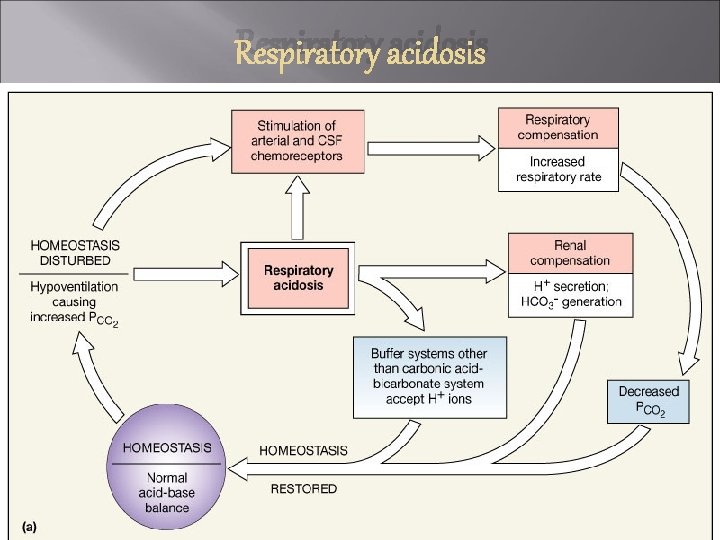
Respiratory acidosis Figure 27. 12 a
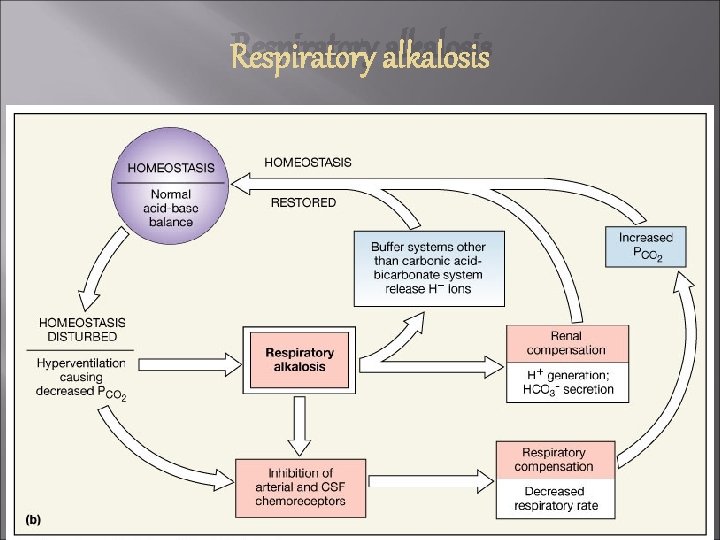
Respiratory alkalosis Figure 27. 12 b
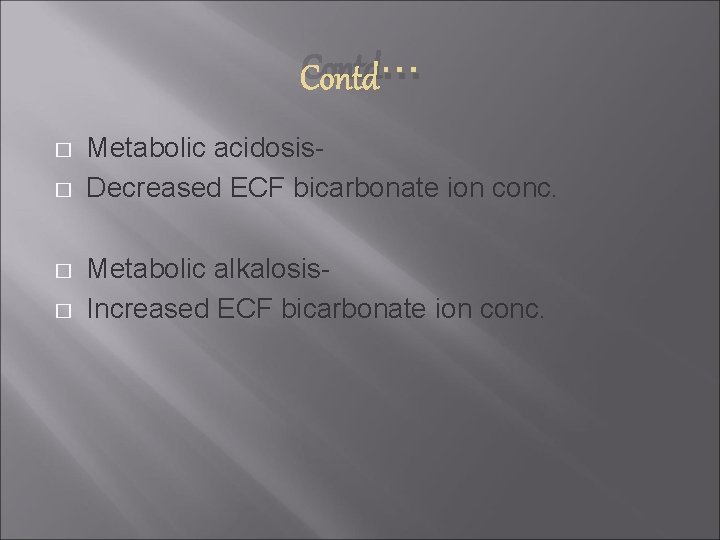
Contd… � � Metabolic acidosis. Decreased ECF bicarbonate ion conc. Metabolic alkalosis. Increased ECF bicarbonate ion conc.
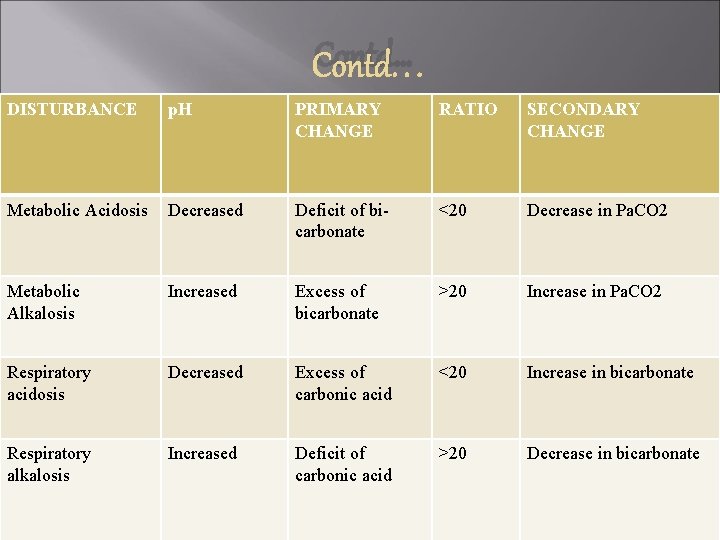
Contd… DISTURBANCE p. H PRIMARY CHANGE RATIO SECONDARY CHANGE Metabolic Acidosis Decreased Deficit of bicarbonate <20 Decrease in Pa. CO 2 Metabolic Alkalosis Increased Excess of bicarbonate >20 Increase in Pa. CO 2 Respiratory acidosis Decreased Excess of carbonic acid <20 Increase in bicarbonate Respiratory alkalosis Increased Deficit of carbonic acid >20 Decrease in bicarbonate
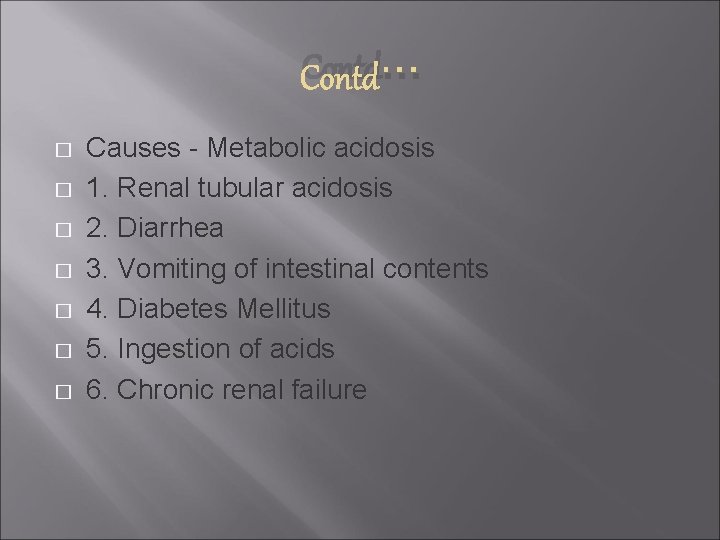
Contd… � � � � Causes - Metabolic acidosis 1. Renal tubular acidosis 2. Diarrhea 3. Vomiting of intestinal contents 4. Diabetes Mellitus 5. Ingestion of acids 6. Chronic renal failure
Contd… � � � Causes- Metabolic alkalosis 1. Vomiting of gastric contents 2. Ingestion of alkaline drugs etc.
Correction by renal for… � � Acidosis- Increased excretion of hydrogen ions and addition of bicarbonate ions to the ECF. Alkalosis. Decreased tubular secretion of hydrogen ions and increased excretion of HCO 3_
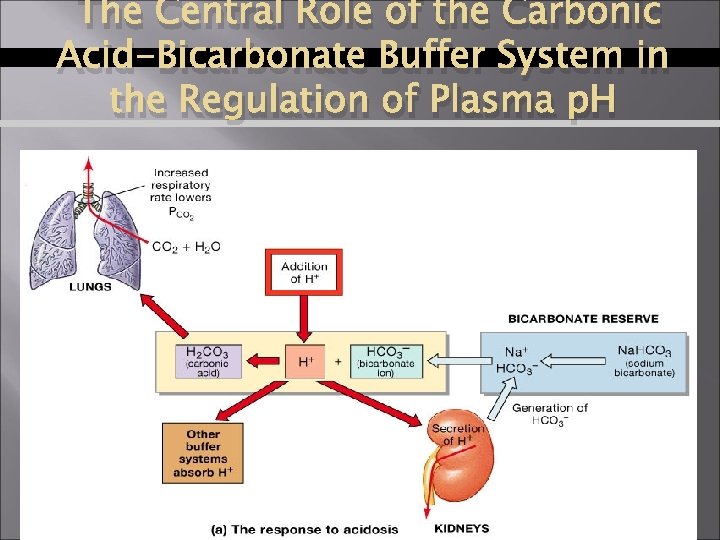
The Central Role of the Carbonic Acid-Bicarbonate Buffer System in the Regulation of Plasma p. H Figure 27. 11 a
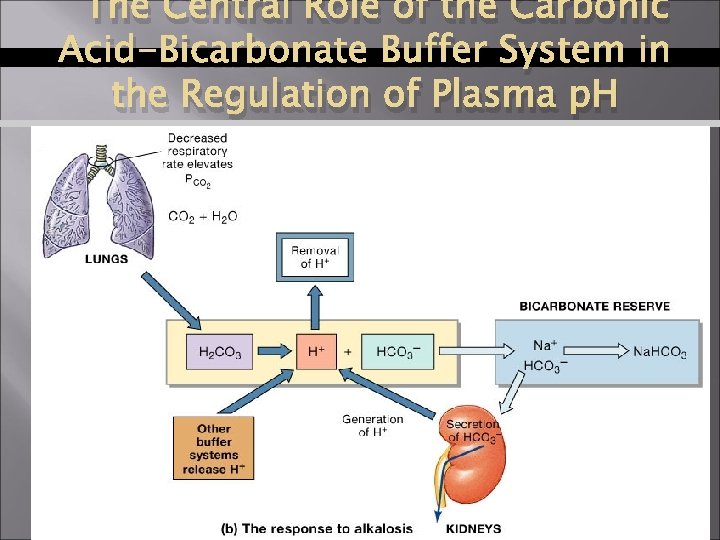
The Central Role of the Carbonic Acid-Bicarbonate Buffer System in the Regulation of Plasma p. H Figure 27. 11 b
Acid-Base Disorders � Respiratory acid base disorders � Result when abnormal respiratory function causes rise or fall in CO 2 in ECF � Metabolic acid-base disorders � Generation of organic or fixed acids � Anything affecting concentration of bicarbonate ions in ECF
Respiratory acidosis � Results from excessive levels of CO 2 in body fluids
Respiratory alkalosis � � Relatively rare condition Associated with hyperventilation
Metabolic acidosis � Major causes are: � Depletion of bicarbonate reserve � Inability to excrete hydrogen ions at kidneys � Production of large numbers of fixed / organic acids � Bicarbonate loss due to chronic diarrhea
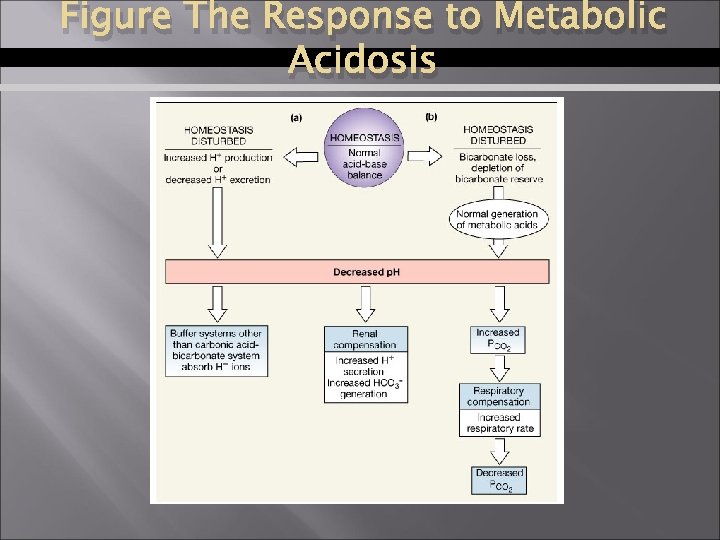
Figure The Response to Metabolic Acidosis
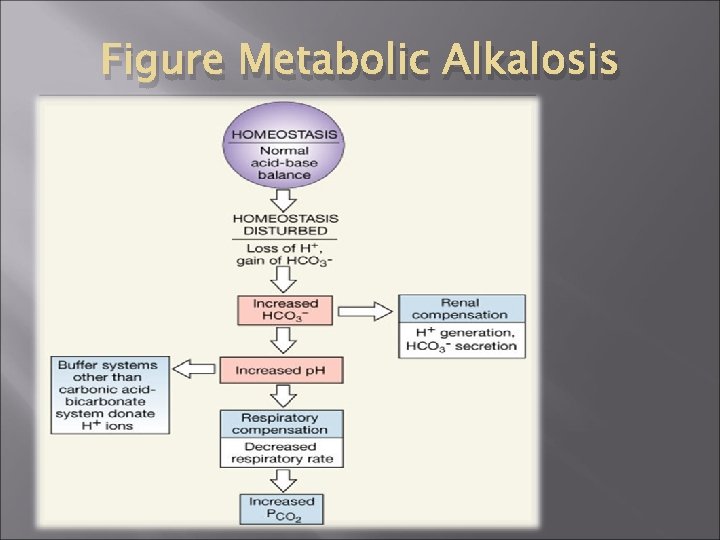
Figure Metabolic Alkalosis
- Slides: 53