
S 3 Biology Cells Cell Transport Learning Intentions
S 3 Biology Cells & Cell Transport
Learning Intentions 1. What is the difference between a unicellular & a multi-cellular organism? 2. What is the function of the different structures within a cell? 3. What is the difference in structure between an animal cell, a plant cell, a bacterial cell and a fungus? 4. What are specialised cells?
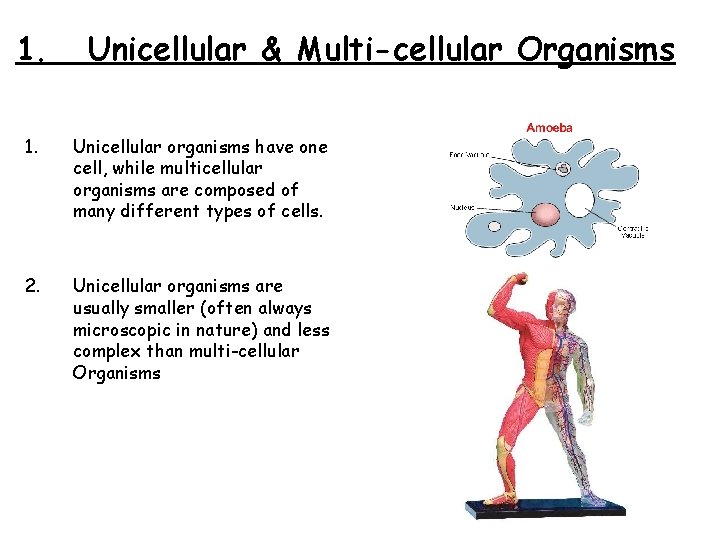
1. Unicellular & Multi-cellular Organisms 1. Unicellular organisms have one cell, while multicellular organisms are composed of many different types of cells. 2. Unicellular organisms are usually smaller (often always microscopic in nature) and less complex than multi-cellular Organisms

2 a) Why do cells need different structures? S 1 Revision! Can you remember the job of each of the parts of an animal & plant cell? Ribosome Activity 1 Cells Matching Cards Activity 2 Label Diagrams Activity 3 Complete structure & function table Mitochondria
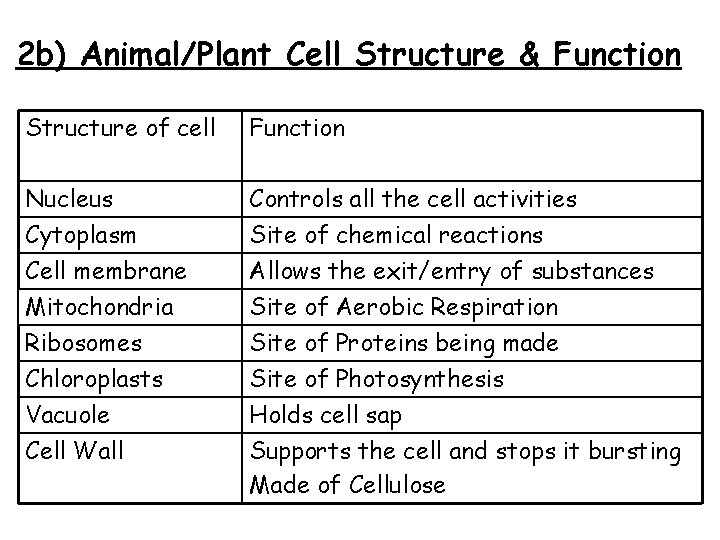
2 b) Animal/Plant Cell Structure & Function Structure of cell Function Nucleus Controls all the cell activities Cytoplasm Site of chemical reactions Cell membrane Allows the exit/entry of substances Mitochondria Site of Aerobic Respiration Ribosomes Site of Proteins being made Chloroplasts Site of Photosynthesis Vacuole Holds cell sap Cell Wall Supports the cell and stops it bursting Made of Cellulose
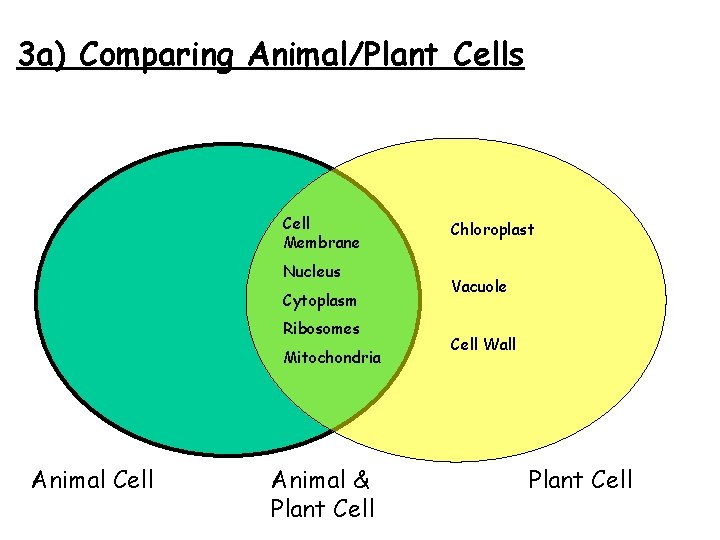
3 a) Comparing Animal/Plant Cells Cell Membrane Nucleus Cytoplasm Ribosomes Mitochondria Animal Cell Animal & Plant Cell Chloroplast Vacuole Cell Wall Plant Cell
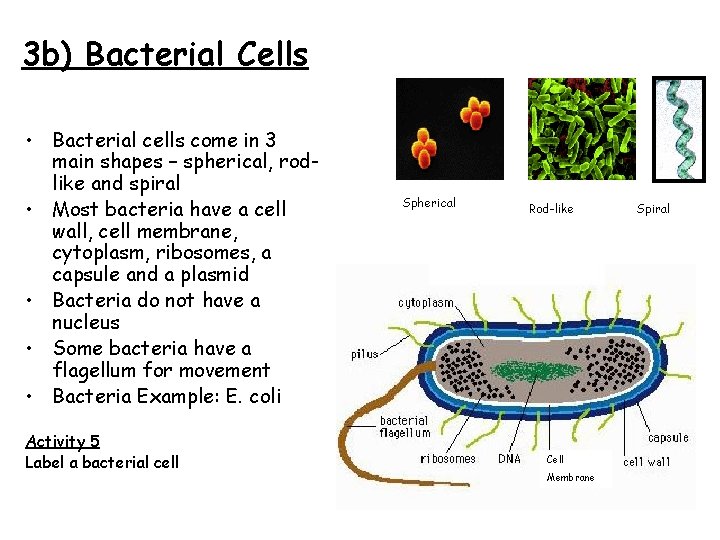
3 b) Bacterial Cells • Bacterial cells come in 3 main shapes – spherical, rodlike and spiral • Most bacteria have a cell wall, cell membrane, cytoplasm, ribosomes, a capsule and a plasmid • Bacteria do not have a nucleus • Some bacteria have a flagellum for movement • Bacteria Example: E. coli Activity 5 Label a bacterial cell Spherical Rod-like Cell Membrane Spiral
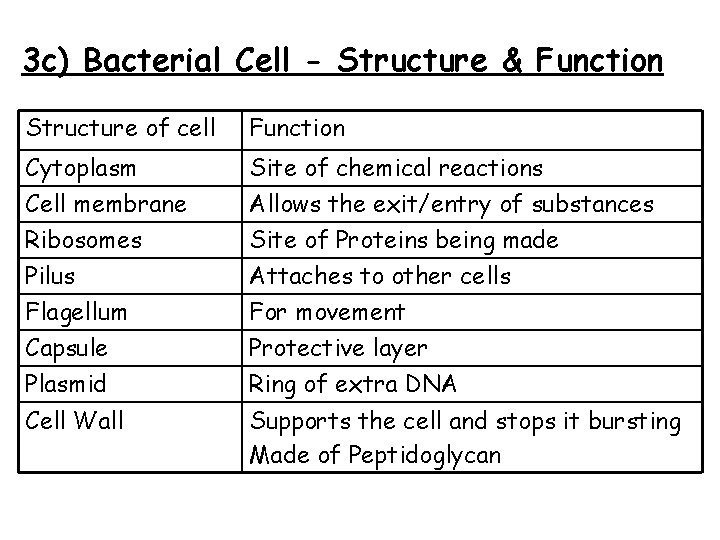
3 c) Bacterial Cell - Structure & Function Structure of cell Function Cytoplasm Cell membrane Ribosomes Pilus Flagellum Capsule Site of chemical reactions Allows the exit/entry of substances Site of Proteins being made Attaches to other cells For movement Protective layer Plasmid Ring of extra DNA Cell Wall Supports the cell and stops it bursting Made of Peptidoglycan

3 d) Comparing Animal/Bacterial Cells Nucleus Mitochondria Cell Membrane Plasmid Pilus Cytoplasm Flagellum Ribosomes Capsule Cell Wall Animal Cell Animal & Bacterial Cell

3 e) Fungal Cells • Have cell walls made of chitin • Fungi grow long branching structures called Hyphae • Fungus example: Yeast Activity 6 Draw & label a Fungus Yeast cells budding
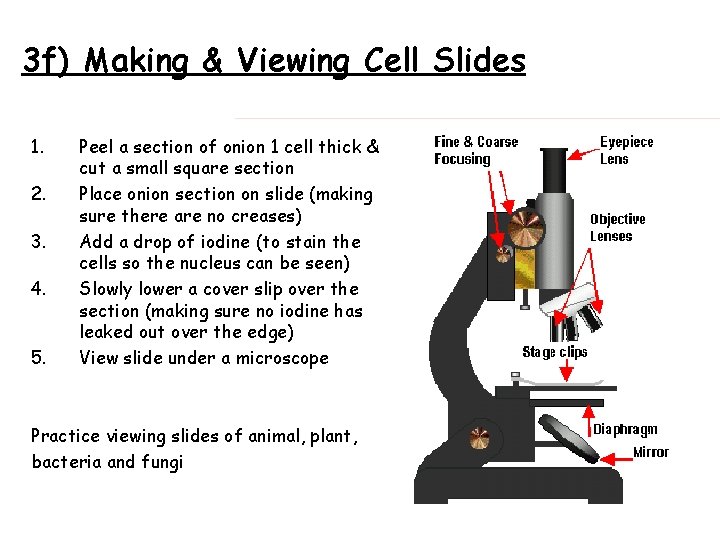
3 f) Making & Viewing Cell Slides 1. 2. 3. 4. 5. Peel a section of onion 1 cell thick & cut a small square section Place onion section on slide (making sure there are no creases) Add a drop of iodine (to stain the cells so the nucleus can be seen) Slowly lower a cover slip over the section (making sure no iodine has leaked out over the edge) View slide under a microscope Practice viewing slides of animal, plant, bacteria and fungi
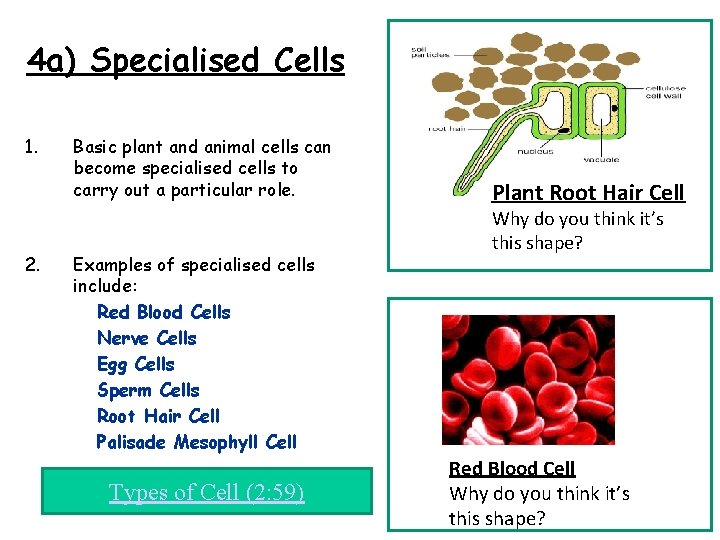
4 a) Specialised Cells 1. 2. Basic plant and animal cells can become specialised cells to carry out a particular role. Examples of specialised cells include: Red Blood Cells Nerve Cells Egg Cells Sperm Cells Root Hair Cell Palisade Mesophyll Cell Types of Cell (2: 59) Plant Root Hair Cell Why do you think it’s this shape? Red Blood Cell Why do you think it’s this shape?

Animal Cell Red blood cells Cell Diagram Function To carry oxygen Specialisation Nerve cell To carry nervous impulses to different parts of the body Egg Cell Sperm Cell To fuse with a sperm cell during fertilisation, and then to provide food for the new cell that has formed To reach the egg cell in order to fuse with it during fertilisation Large surface area for oxygen Contains Haemoglobin which binds the oxygen Long Connections at each end Can carry electrical signals Large Contains a food store Long tail for swimming Head which is able to penetrate the egg cell

Plant Cell Root Hair Cell Guard Cell Diagram Function Specialisation To absorb water from the soil Hairs give the cell a large surface area to absorb water To open and close stoma pore The guard cells are curved to create the stoma pore so oxygen and water can leave the cell, and carbon dioxide enters When guard cells are turgid, the stoma pore is open When guard cells are flaccid, the stoma pore is closed Palisade Mesophyll Cell The main site of photosynthesis Lots of chloroplasts present for photosynthesis
Learning Intentions 1. How do substances enter and leave a cell? 2. What substances enter or leave a cell by diffusion, osmosis & active transport? 3. What happens to cells in a hypotonic, isotonic and hypertonic solution?

5 a) Substances moving into/out of cells Oxygen & Glucose Carbon Dioxide
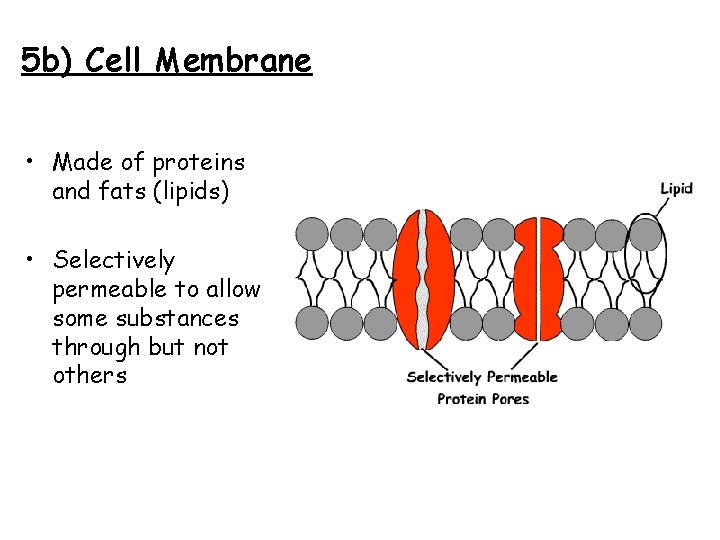
5 b) Cell Membrane • Made of proteins and fats (lipids) • Selectively permeable to allow some substances through but not others
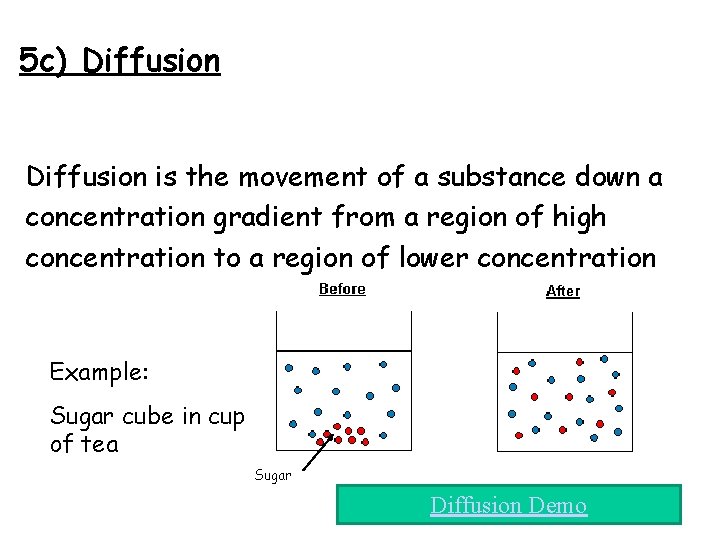
5 c) Diffusion is the movement of a substance down a concentration gradient from a region of high concentration to a region of lower concentration Example: Sugar cube in cup of tea Sugar Diffusion Demo
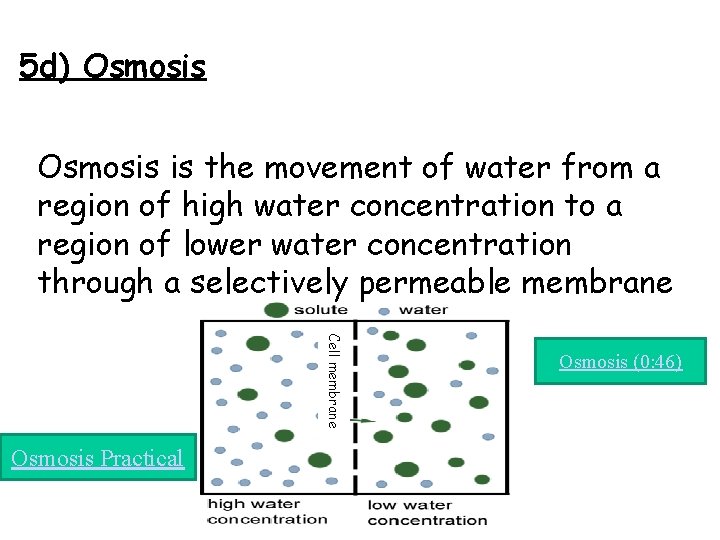
5 d) Osmosis is the movement of water from a region of high water concentration to a region of lower water concentration through a selectively permeable membrane Cell membrane Osmosis Practical Osmosis (0: 46)
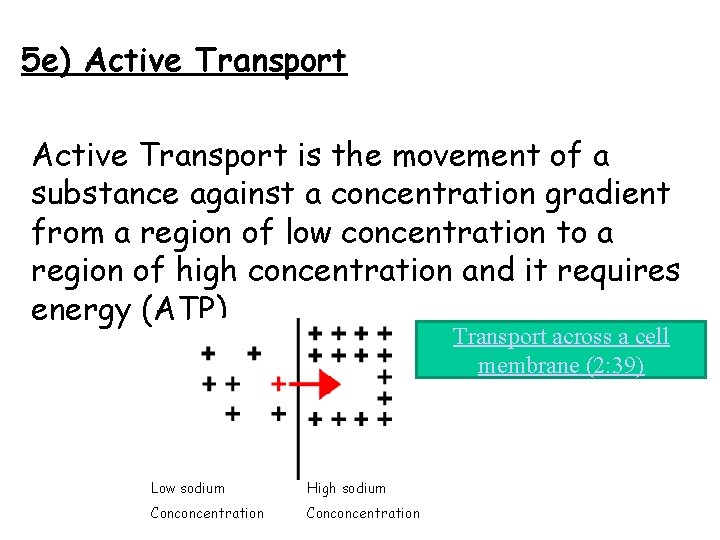
5 e) Active Transport is the movement of a substance against a concentration gradient from a region of low concentration to a region of high concentration and it requires energy (ATP) Transport across a cell membrane (2: 39) Low sodium High sodium Conconcentration
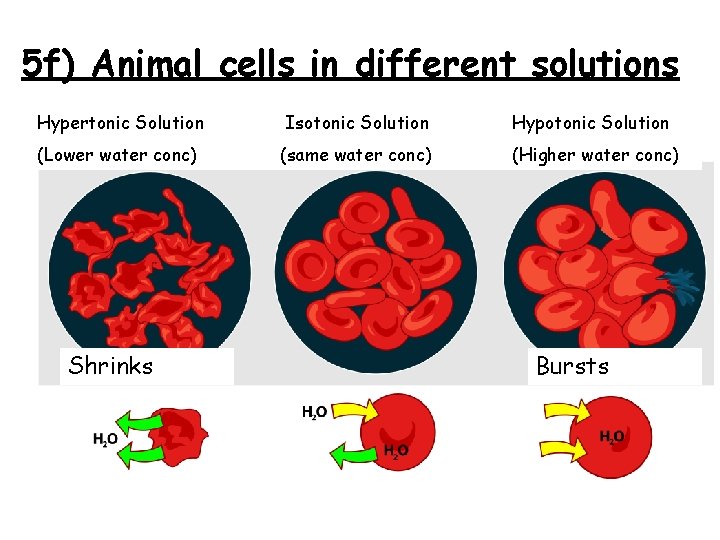
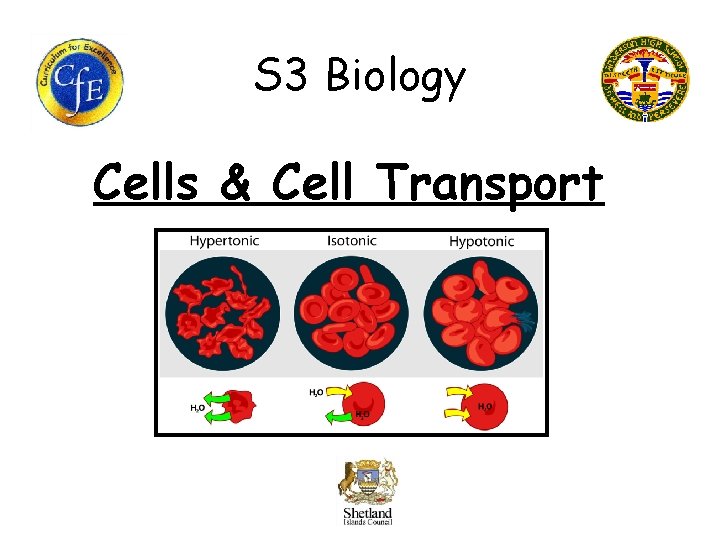
5 f) Animal cells in different solutions Hypertonic Solution Isotonic Solution Hypotonic Solution (Lower water conc) (same water conc) (Higher water conc) Shrinks Bursts

5 g) Plant cells in different solutions Turgid Normal Flaccid (Plasmolysed)
- Slides: 22