
Rwanda Background Information Ethnic Conflict Hutus and Tutsis
Rwanda: Background Information
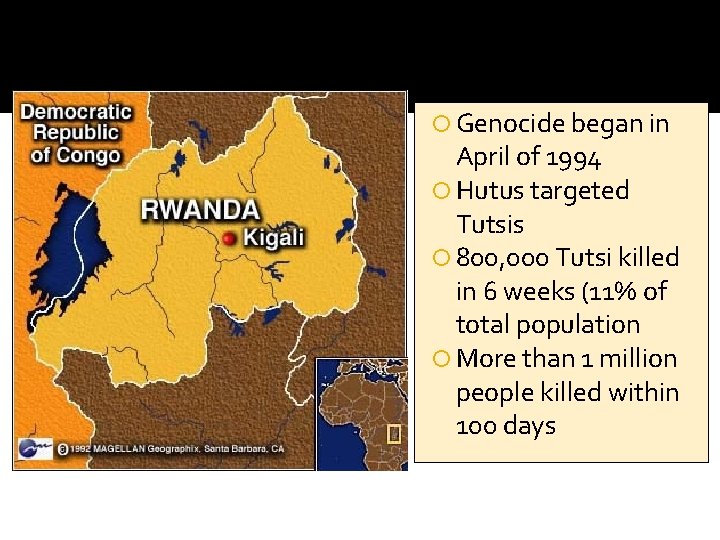
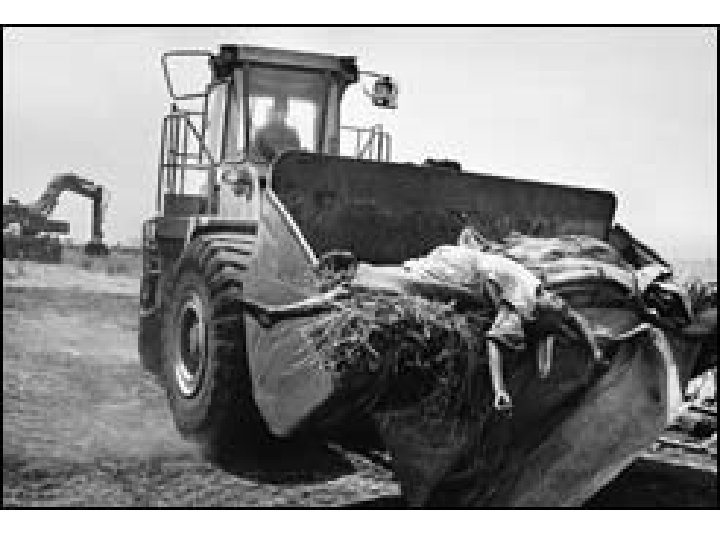
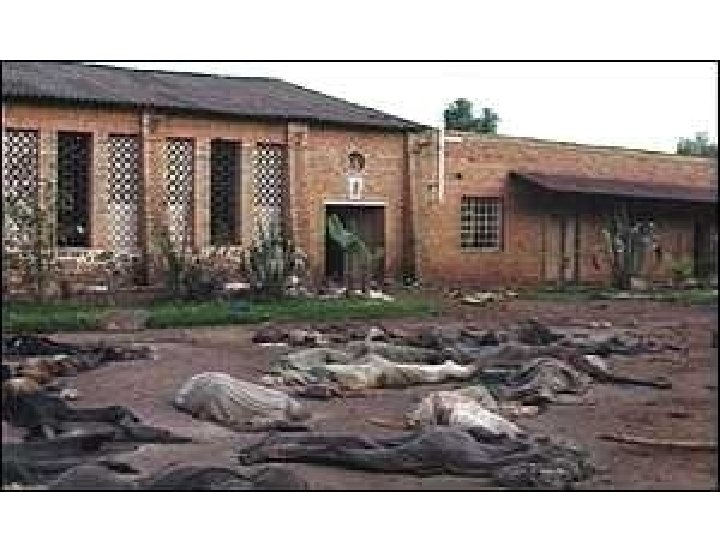
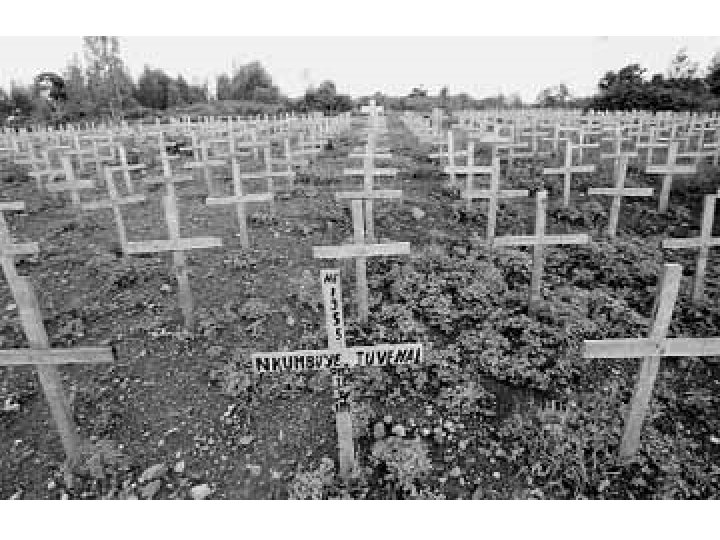
Ethnic Conflict – Hutus and Tutsis Genocide began in April of 1994 Hutus targeted Tutsis 800, 000 Tutsi killed in 6 weeks (11% of total population More than 1 million people killed within 100 days
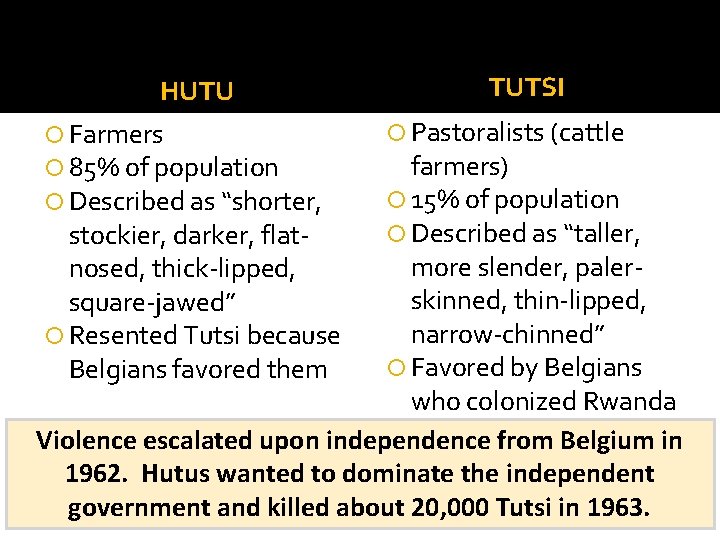
HUTU Farmers 85% of population Described as “shorter, TUTSI Pastoralists (cattle farmers) 15% of population Described as “taller, stockier, darker, flatmore slender, palernosed, thick-lipped, skinned, thin-lipped, square-jawed” narrow-chinned” Resented Tutsi because Favored by Belgians favored them who colonized Rwanda Violence escalated upon independence from Belgium in 1962. Hutus wanted to dominate the independent government and killed about 20, 000 Tutsi in 1963.
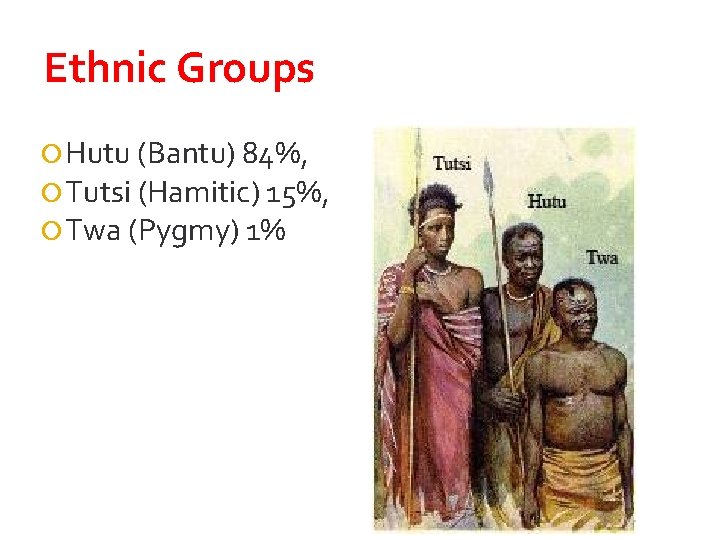
Ethnic Groups Hutu (Bantu) 84%, Tutsi (Hamitic) 15%, Twa (Pygmy) 1%

History: Racial Classification and Colonialism The size of the nose and the color of the eyes were factors that determined whether a person was classified as Hutu, Tutsi or Twa. Prior to colonization, the people of the region lived together. The Belgian colonization put one group above the others.
Timeline For centuries, the Hutus and Tutsis lived together peacefully in a feudal relationship. Hutus farmed and give food to Tutsis. In-turn the Tutsis give Hutus protection from invading tribes. 1959– 1960 – Hutus start an uprising in Rwanda & start killing Tutsis. Hutus overthrow Tutsi king 200, 000 Tutsis were driven into exile in neighboring countries 1962 – Rwanda and Burundi gain independence Hutus gain control of Rwanda Tutsis gain control of Burundi
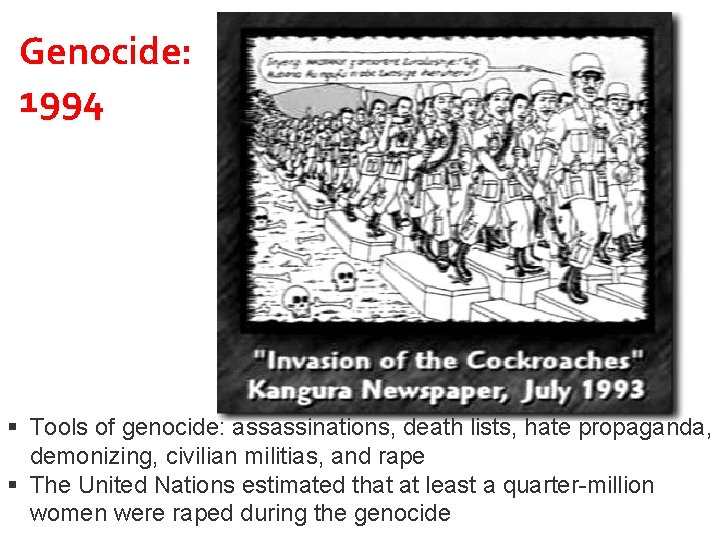
Genocide: 1994 Tools of genocide: assassinations, death lists, hate propaganda, demonizing, civilian militias, and rape The United Nations estimated that at least a quarter-million women were raped during the genocide
Timeline (con’t) 1990 – the children of the Tutsi exiles form the R. P. F. & begin a civil war against the Hutus in Rwanda April 1994 – the Hutu genocide against the Tutsis begins July 1994 – Tutsi forces gain power in Rwanda. approx. 2 million Hutu refugees (fearing Tutsi revenge) flee to neighboring countries Since then, most of the refugees have returned to Rwanda, but several thousand remained in the neighboring DRC and formed an extremist rebellion with the goal of retaking Rwanda. 1996 – Civil War erupts in Burundi between Hutus & Tutsis
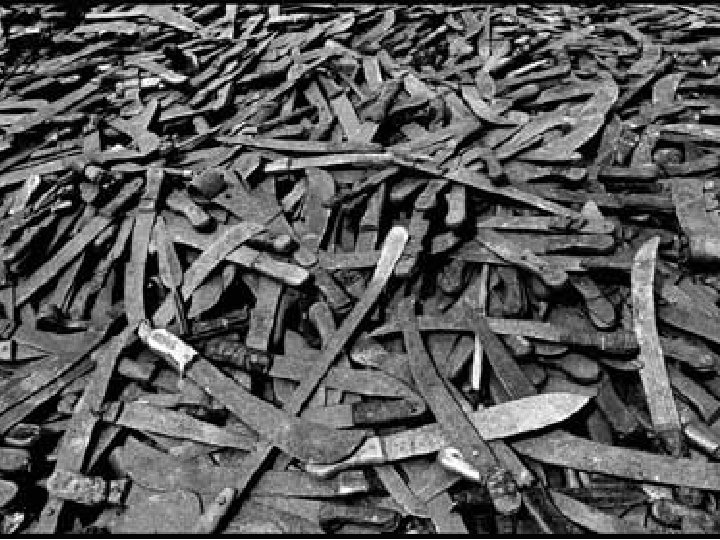
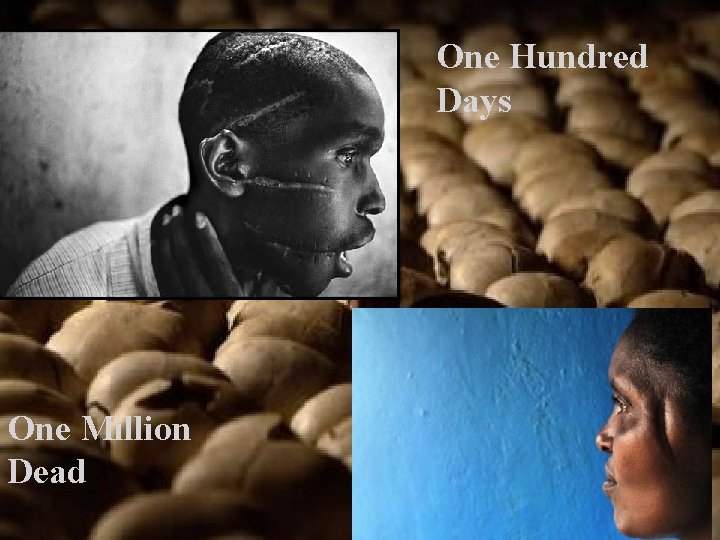
One Hundred Days One Million Dead
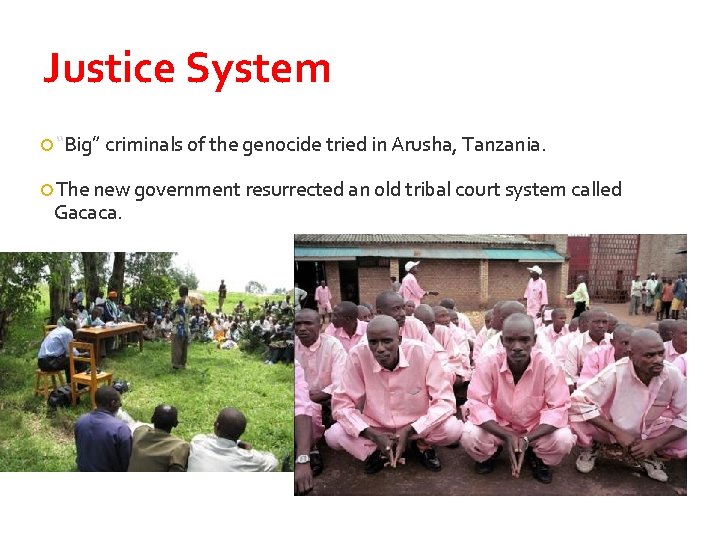
Justice System “Big” criminals of the genocide tried in Arusha, Tanzania. The new government resurrected an old tribal court system called Gacaca.
Tutsis vs. Hutus Tutsis “natural leaders” Warriors and Cattle Owners Favored by Belgians – promoted in society Hutus call them cockroaches Hutus Largest ethnic group in Rwanda Farmers by tradition Exploited by Belgians denied positions of authority until Belgians leave, then they are given all power in the government.
“Hotel Rwanda” (2004)
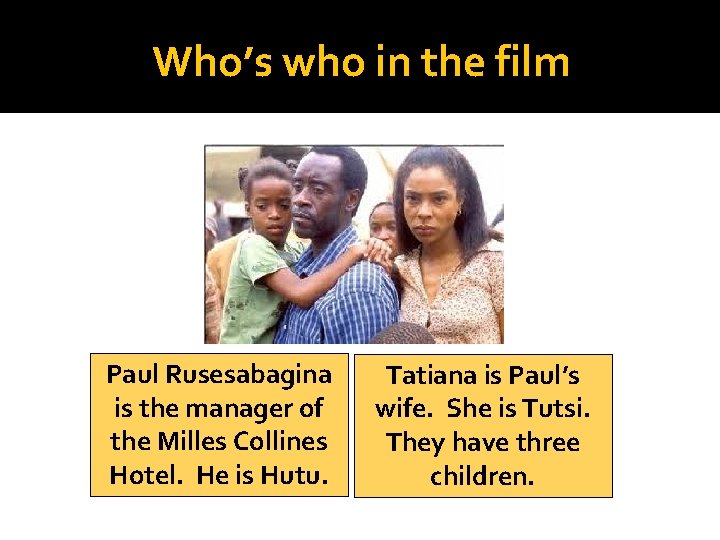
Who’s who in the film Paul Rusesabagina is the manager of the Milles Collines Hotel. He is Hutu. Tatiana is Paul’s wife. She is Tutsi. They have three children.
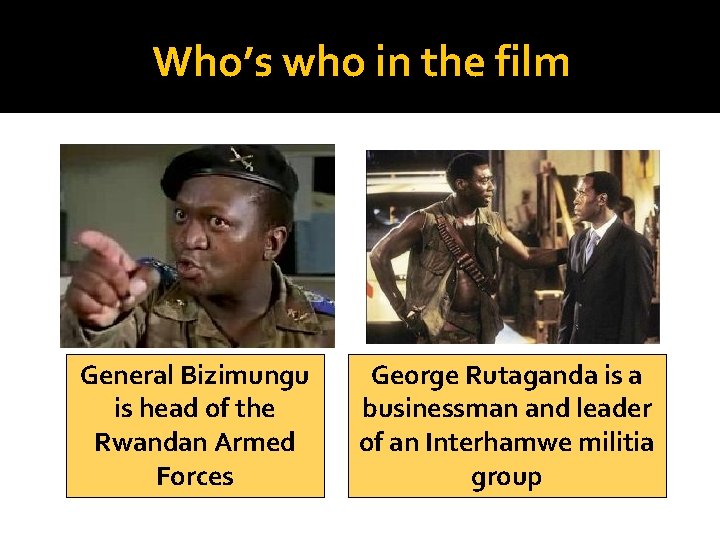
Who’s who in the film General Bizimungu is head of the Rwandan Armed Forces George Rutaganda is a businessman and leader of an Interhamwe militia group
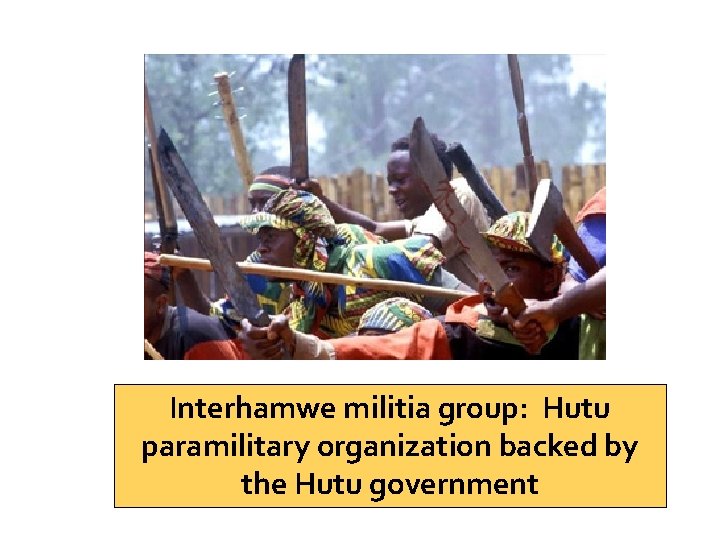
Interhamwe militia group: Hutu paramilitary organization backed by the Hutu government
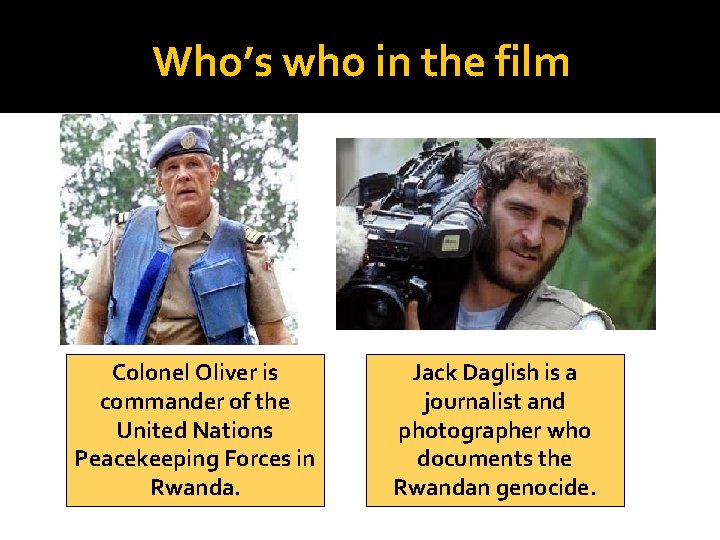
Who’s who in the film Colonel Oliver is commander of the United Nations Peacekeeping Forces in Rwanda. Jack Daglish is a journalist and photographer who documents the Rwandan genocide.
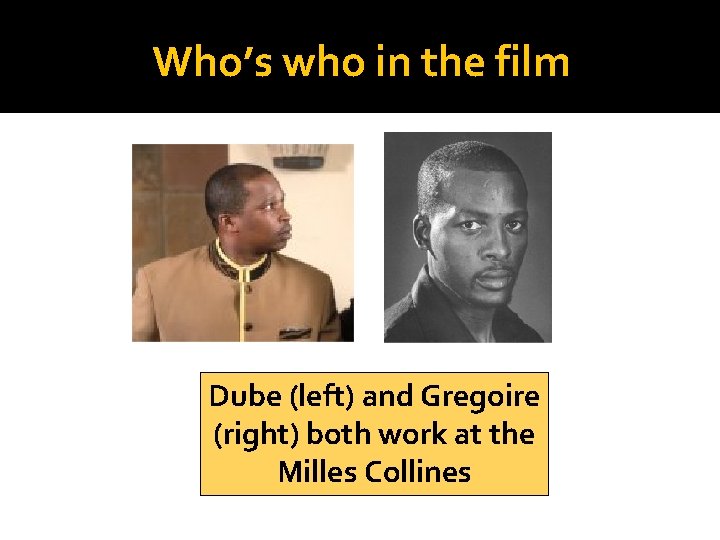
Who’s who in the film Dube (left) and Gregoire (right) both work at the Milles Collines
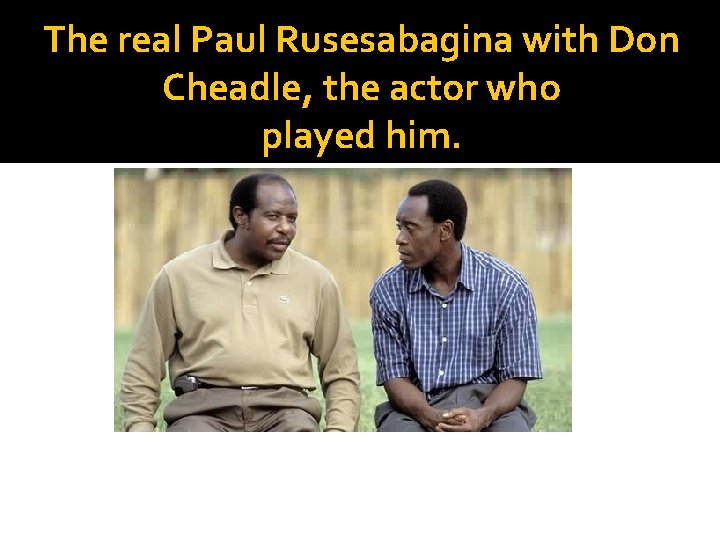
The real Paul Rusesabagina with Don Cheadle, the actor who played him.
- Slides: 23