RUSSIAN REVOLUTION FAIRY TALE MATRIX Story YehShen A
- Slides: 23
RUSSIAN REVOLUTION
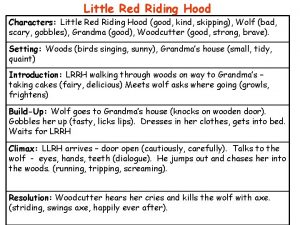
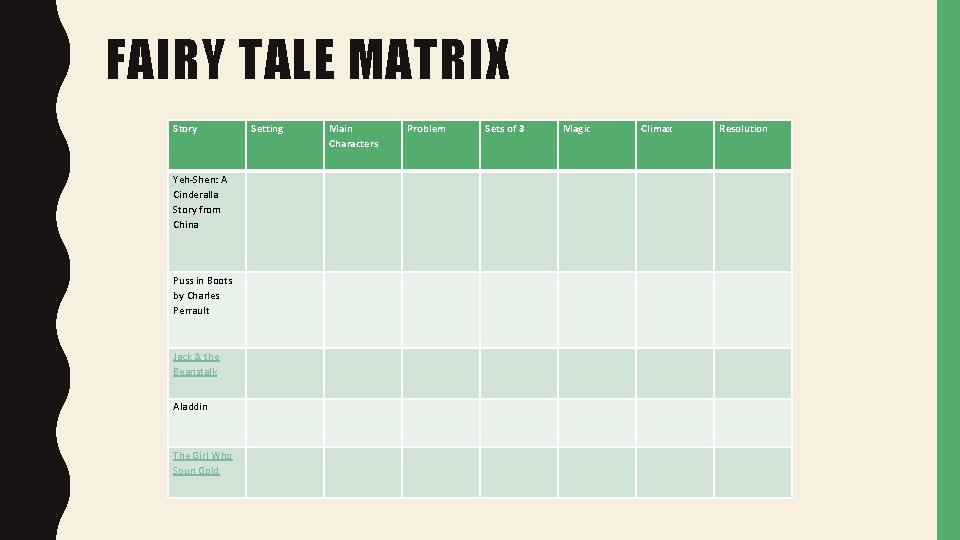
FAIRY TALE MATRIX Story Yeh-Shen: A Cinderalla Story from China Puss in Boots by Charles Perrault Jack & the Beanstalk Aladdin The Girl Who Spun Gold Setting Main Characters Problem Sets of 3 Magic Climax Resolution
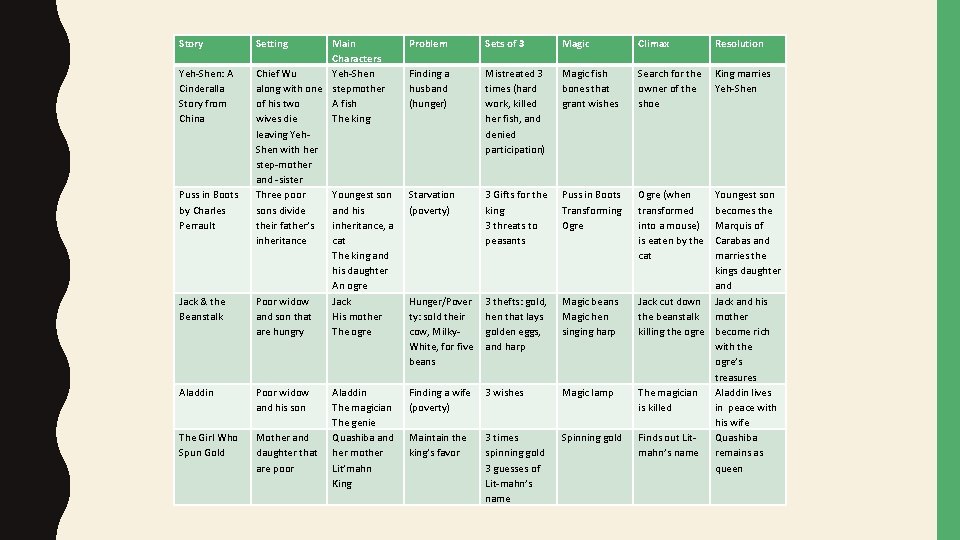
Story Main Characters Chief Wu Yeh-Shen along with one stepmother of his two A fish wives die The king leaving Yeh. Shen with her step-mother and -sister Three poor Youngest sons divide and his their father’s inheritance, a inheritance cat The king and his daughter An ogre Poor widow Jack and son that His mother are hungry The ogre Problem Sets of 3 Magic Climax Resolution Finding a husband (hunger) Mistreated 3 times (hard work, killed her fish, and denied participation) Magic fish bones that grant wishes Search for the owner of the shoe King marries Yeh-Shen Starvation (poverty) 3 Gifts for the king 3 threats to peasants Puss in Boots Transforming Ogre (when transformed into a mouse) is eaten by the cat Hunger/Pover ty: sold their cow, Milky. White, for five beans 3 thefts: gold, hen that lays golden eggs, and harp Magic beans Magic hen singing harp Aladdin Poor widow and his son Finding a wife (poverty) 3 wishes Magic lamp The Girl Who Spun Gold Mother and daughter that are poor Maintain the king’s favor 3 times spinning gold 3 guesses of Lit-mahn’s name Spinning gold Yeh-Shen: A Cinderalla Story from China Puss in Boots by Charles Perrault Jack & the Beanstalk Setting Aladdin The magician The genie Quashiba and her mother Lit’mahn King Youngest son becomes the Marquis of Carabas and marries the kings daughter and Jack cut down Jack and his the beanstalk mother killing the ogre become rich with the ogre’s treasures The magician Aladdin lives is killed in peace with his wife Finds out Lit. Quashiba mahn’s name remains as queen
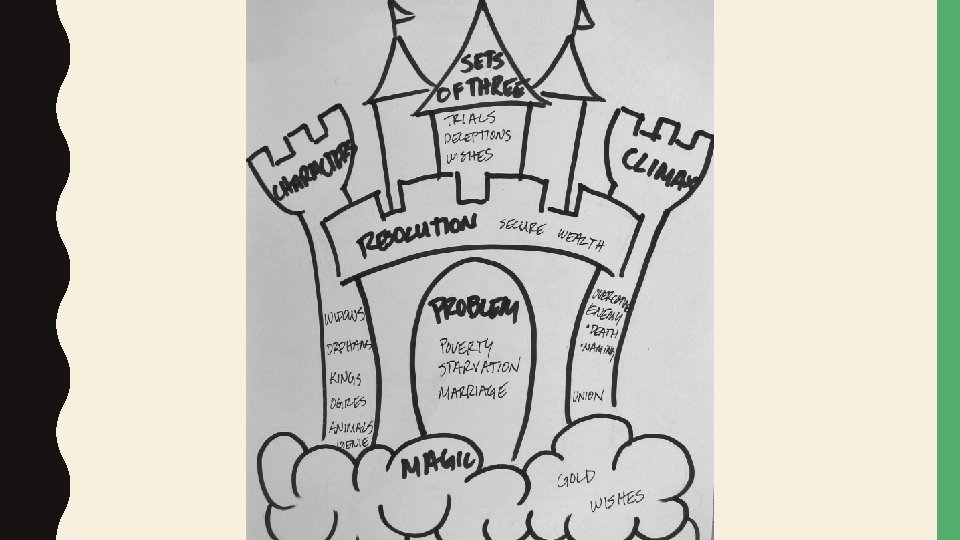
FAIRY TALE MATRIX • Rags to riches stories. – “happily ever after” means becoming wealthy – Obsession with wishes and gold • The structure of wealth or domination by a few is not changed. – Beauty, trickery, theft, deception, and violence are all means to rise in position – As the protagonist becomes wealthy he or she is absorbed into dominating class
WHAT IS COMMUNISM? WHAT WERE KARL MARX’S IDEAS?
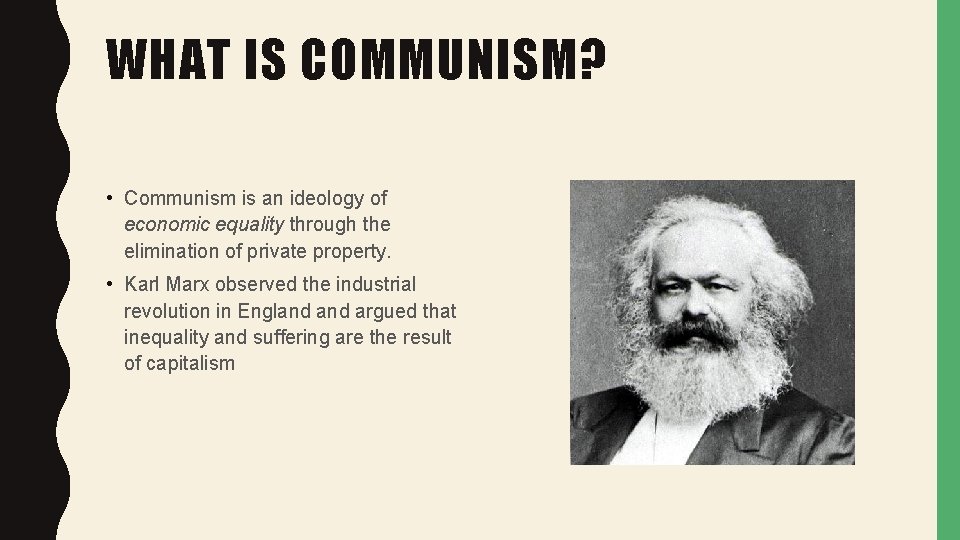
WHAT IS COMMUNISM? • Communism is an ideology of economic equality through the elimination of private property. • Karl Marx observed the industrial revolution in England argued that inequality and suffering are the result of capitalism
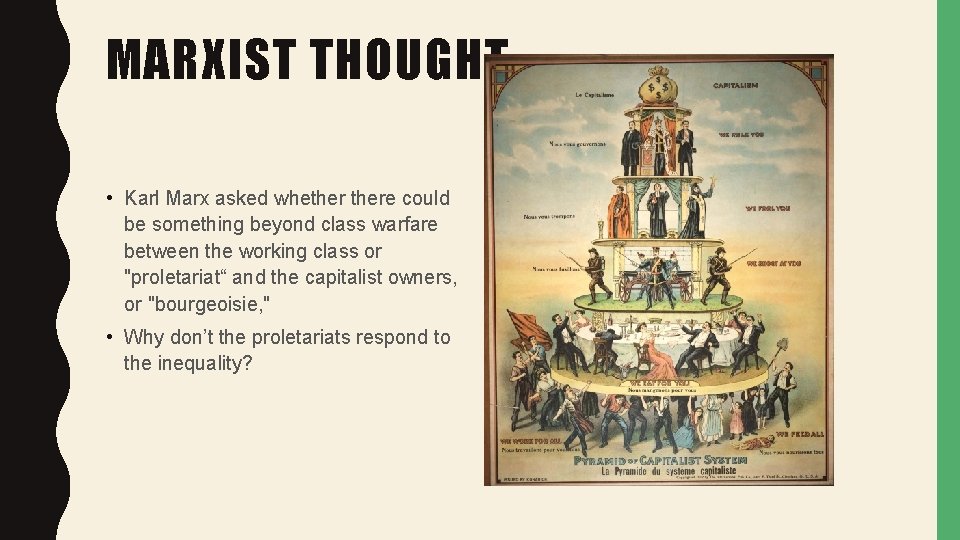
MARXIST THOUGHT • Karl Marx asked whethere could be something beyond class warfare between the working class or "proletariat“ and the capitalist owners, or "bourgeoisie, " • Why don’t the proletariats respond to the inequality?
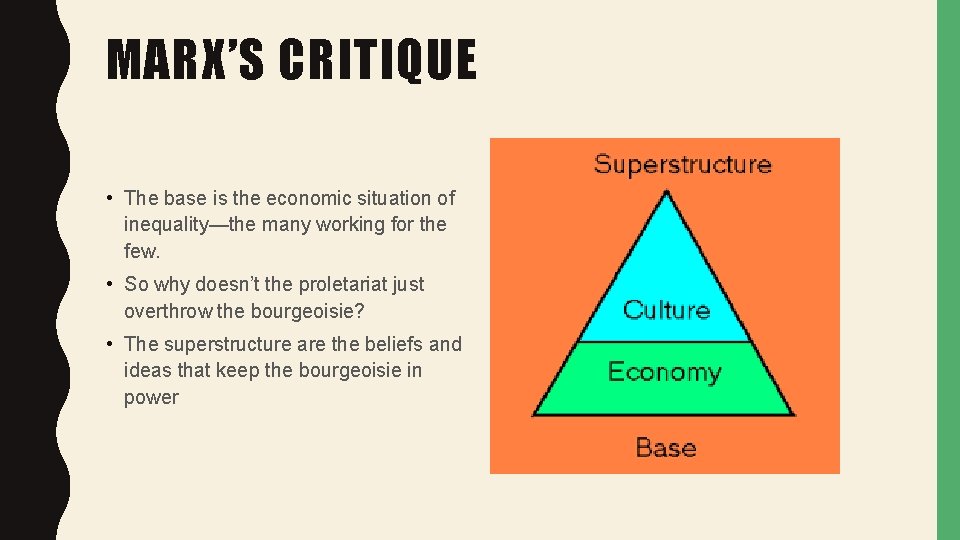
MARX’S CRITIQUE • The base is the economic situation of inequality—the many working for the few. • So why doesn’t the proletariat just overthrow the bourgeoisie? • The superstructure are the beliefs and ideas that keep the bourgeoisie in power
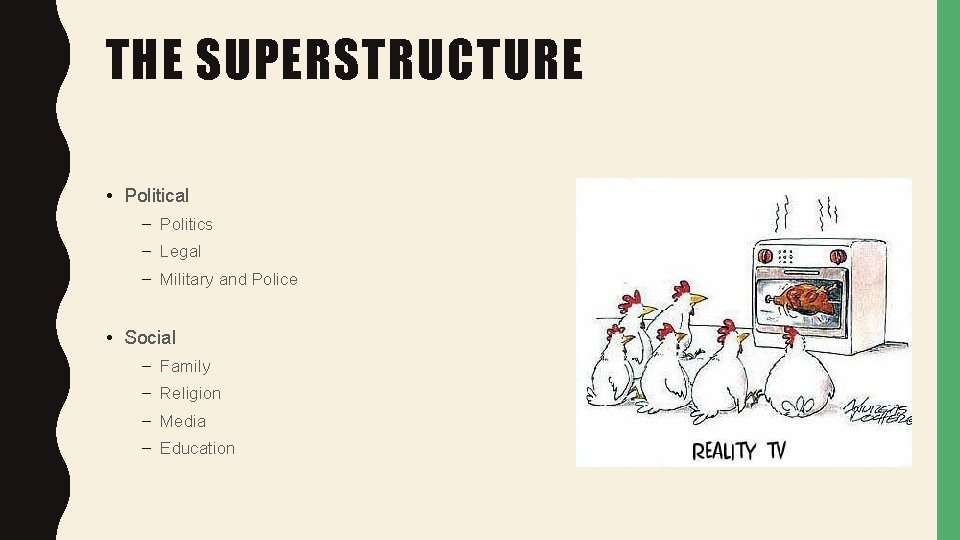
THE SUPERSTRUCTURE • Political – Politics – Legal – Military and Police • Social – Family – Religion – Media – Education
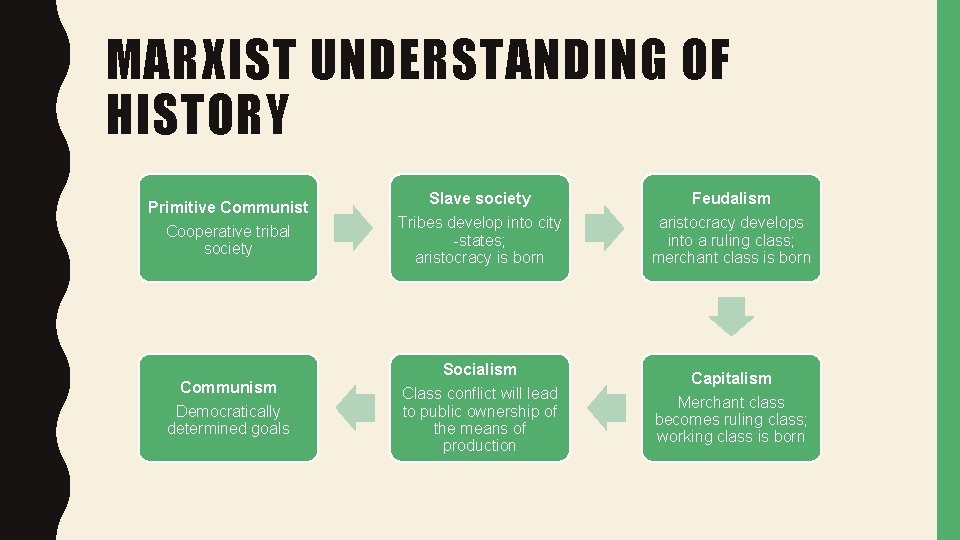
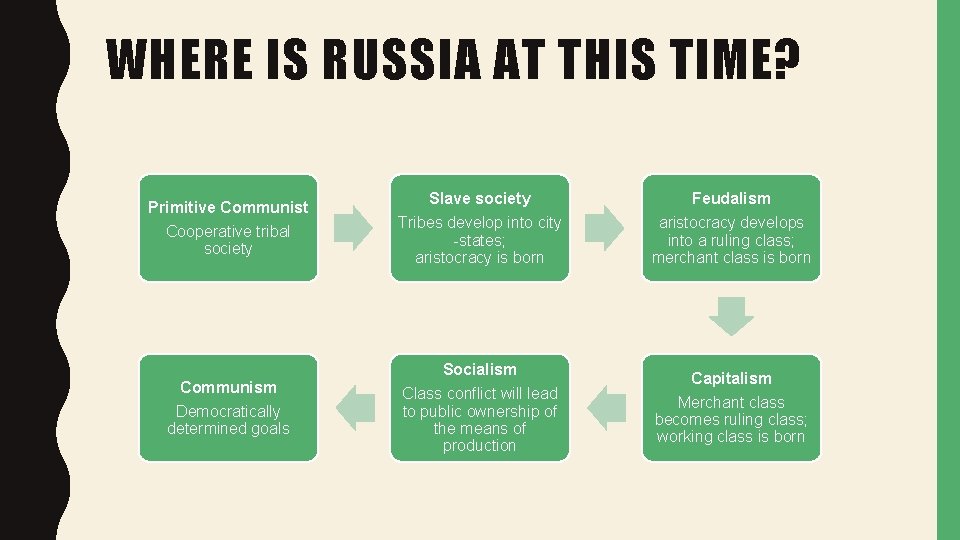
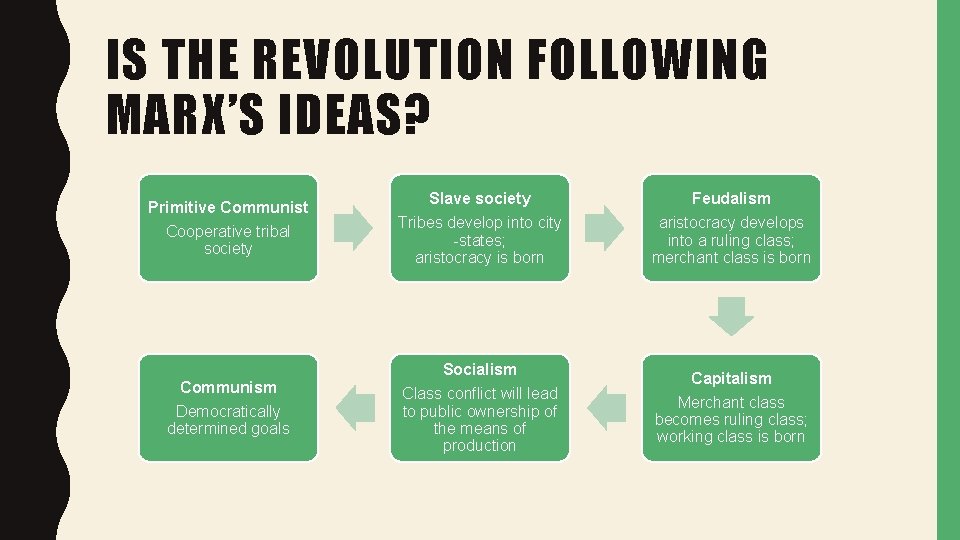
MARXIST UNDERSTANDING OF HISTORY Primitive Communist Cooperative tribal society Communism Democratically determined goals Slave society Tribes develop into city -states; aristocracy is born Socialism Class conflict will lead to public ownership of the means of production Feudalism aristocracy develops into a ruling class; merchant class is born Capitalism Merchant class becomes ruling class; working class is born
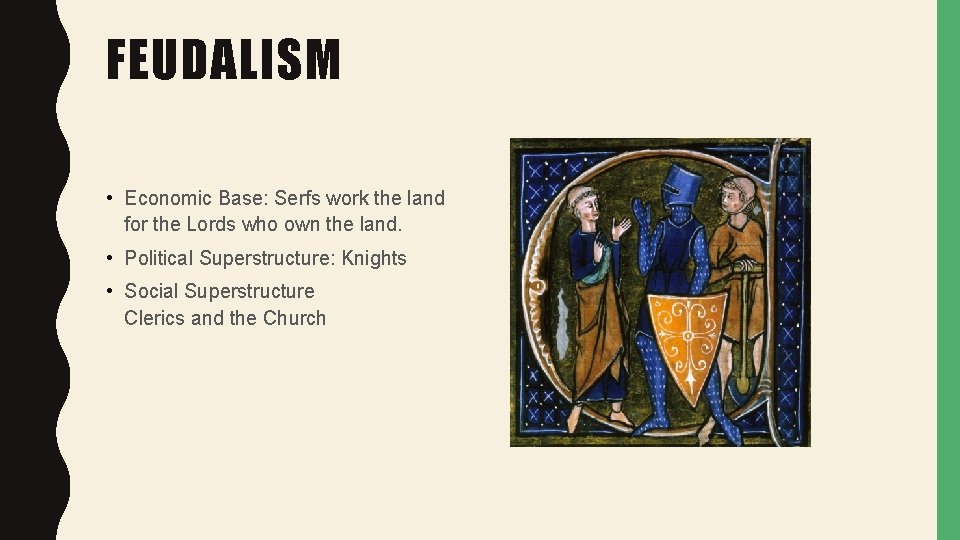
FEUDALISM • Economic Base: Serfs work the land for the Lords who own the land. • Political Superstructure: Knights • Social Superstructure Clerics and the Church
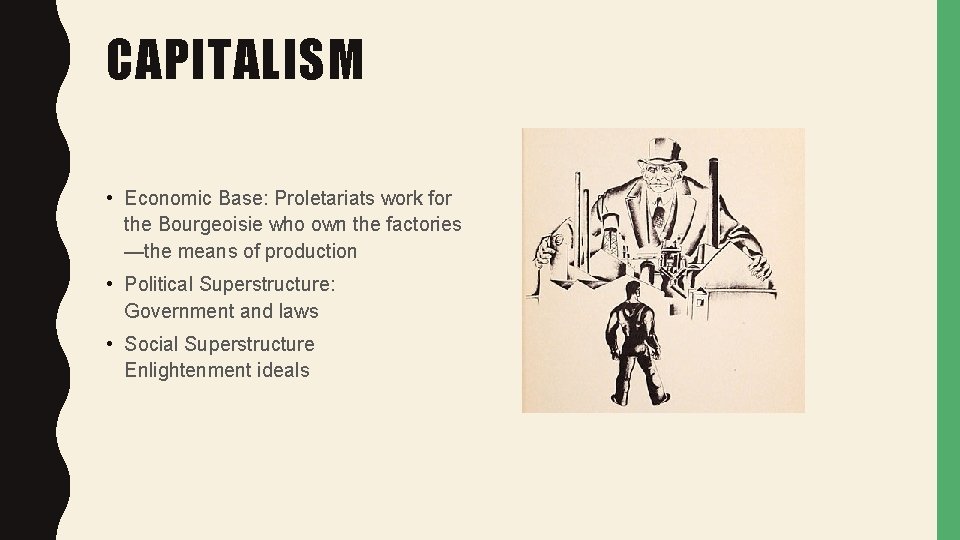
CAPITALISM • Economic Base: Proletariats work for the Bourgeoisie who own the factories —the means of production • Political Superstructure: Government and laws • Social Superstructure Enlightenment ideals
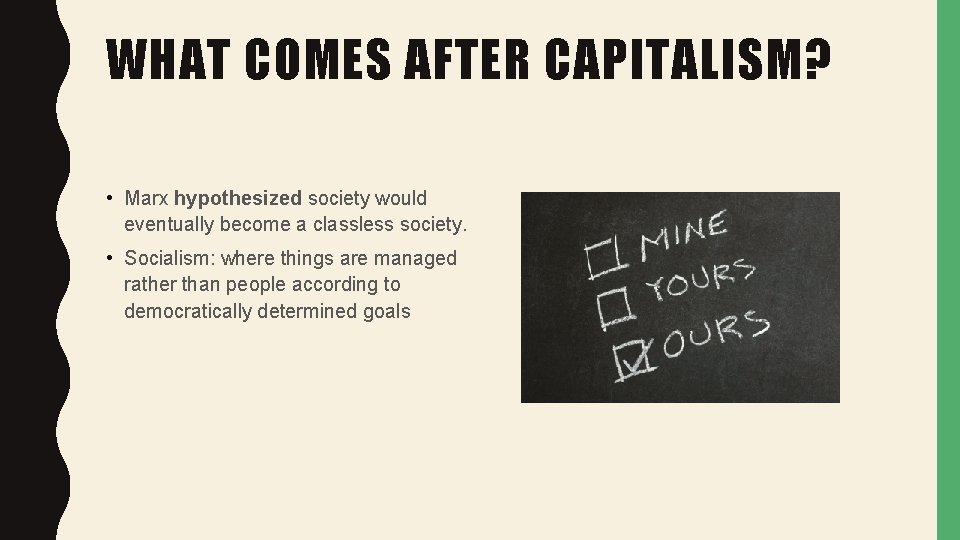
WHAT COMES AFTER CAPITALISM? • Marx hypothesized society would eventually become a classless society. • Socialism: where things are managed rather than people according to democratically determined goals
RUSSIAN REVOLUTION HOW WERE KARL MARX’S IDEAS APPLIED TO RUSSIA?
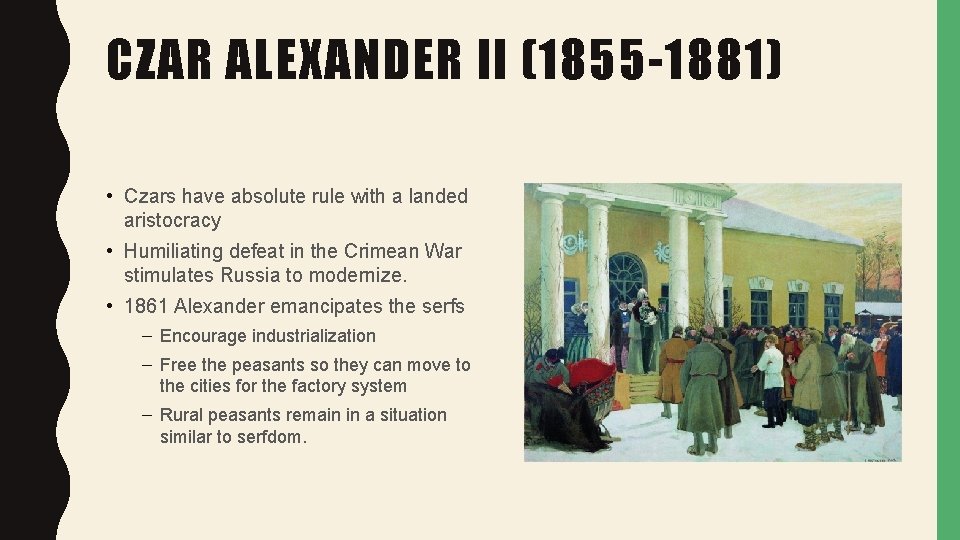
CZAR ALEXANDER II (1855 -1881) • Czars have absolute rule with a landed aristocracy • Humiliating defeat in the Crimean War stimulates Russia to modernize. • 1861 Alexander emancipates the serfs – Encourage industrialization – Free the peasants so they can move to the cities for the factory system – Rural peasants remain in a situation similar to serfdom.
WHERE IS RUSSIA AT THIS TIME? Primitive Communist Cooperative tribal society Communism Democratically determined goals Slave society Tribes develop into city -states; aristocracy is born Socialism Class conflict will lead to public ownership of the means of production Feudalism aristocracy develops into a ruling class; merchant class is born Capitalism Merchant class becomes ruling class; working class is born
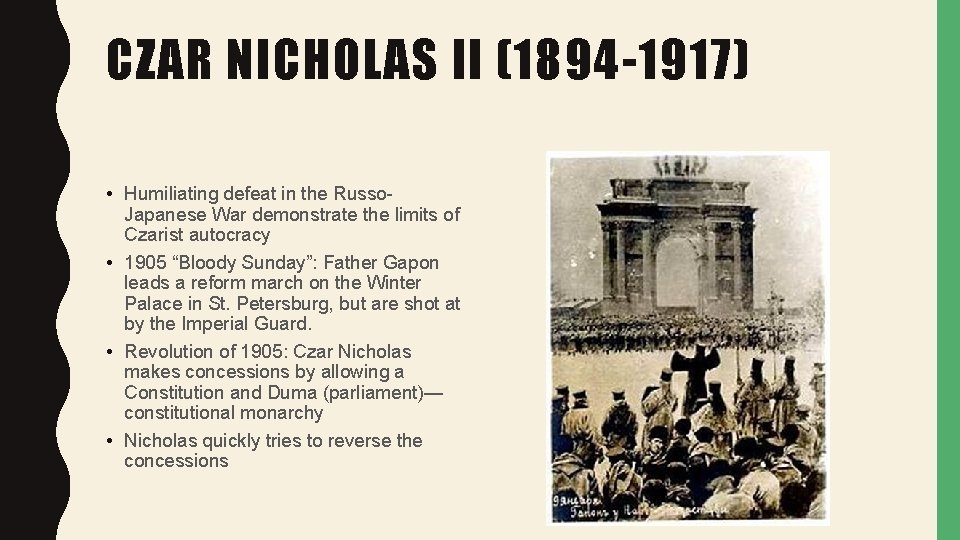
CZAR NICHOLAS II (1894 -1917) • Humiliating defeat in the Russo. Japanese War demonstrate the limits of Czarist autocracy • 1905 “Bloody Sunday”: Father Gapon leads a reform march on the Winter Palace in St. Petersburg, but are shot at by the Imperial Guard. • Revolution of 1905: Czar Nicholas makes concessions by allowing a Constitution and Duma (parliament)— constitutional monarchy • Nicholas quickly tries to reverse the concessions
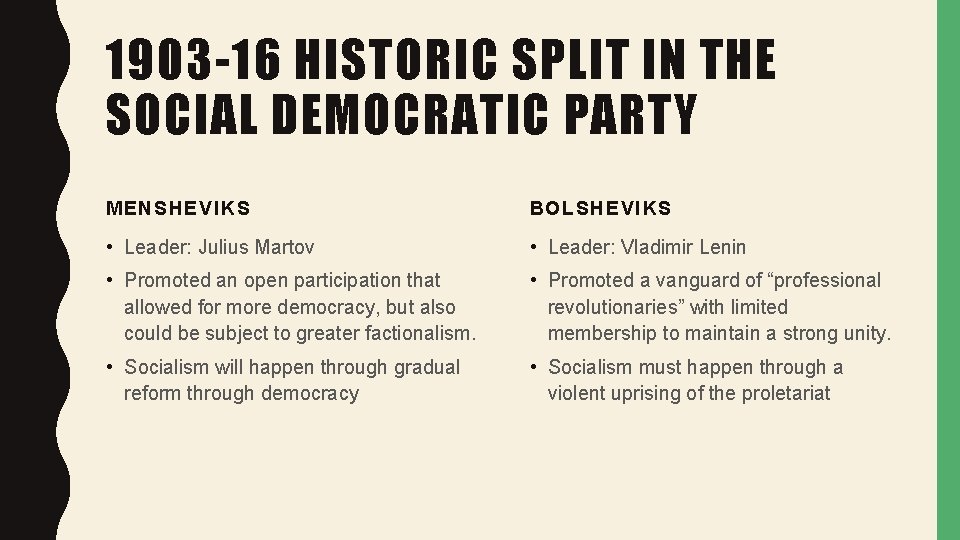
1903 -16 HISTORIC SPLIT IN THE SOCIAL DEMOCRATIC PARTY MENSHEVIKS BOLSHEVIKS • Leader: Julius Martov • Leader: Vladimir Lenin • Promoted an open participation that allowed for more democracy, but also could be subject to greater factionalism. • Promoted a vanguard of “professional revolutionaries” with limited membership to maintain a strong unity. • Socialism will happen through gradual reform through democracy • Socialism must happen through a violent uprising of the proletariat
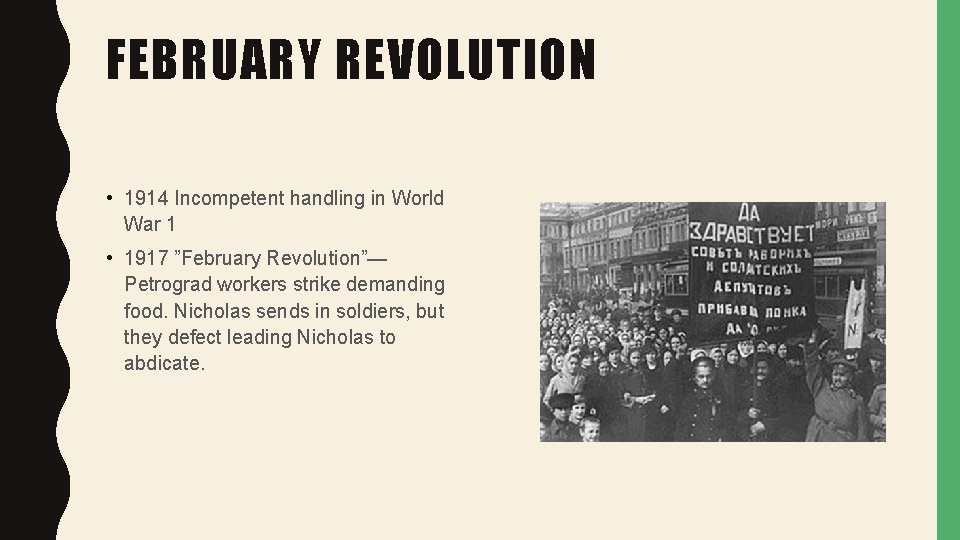
FEBRUARY REVOLUTION • 1914 Incompetent handling in World War 1 • 1917 ”February Revolution”— Petrograd workers strike demanding food. Nicholas sends in soldiers, but they defect leading Nicholas to abdicate.
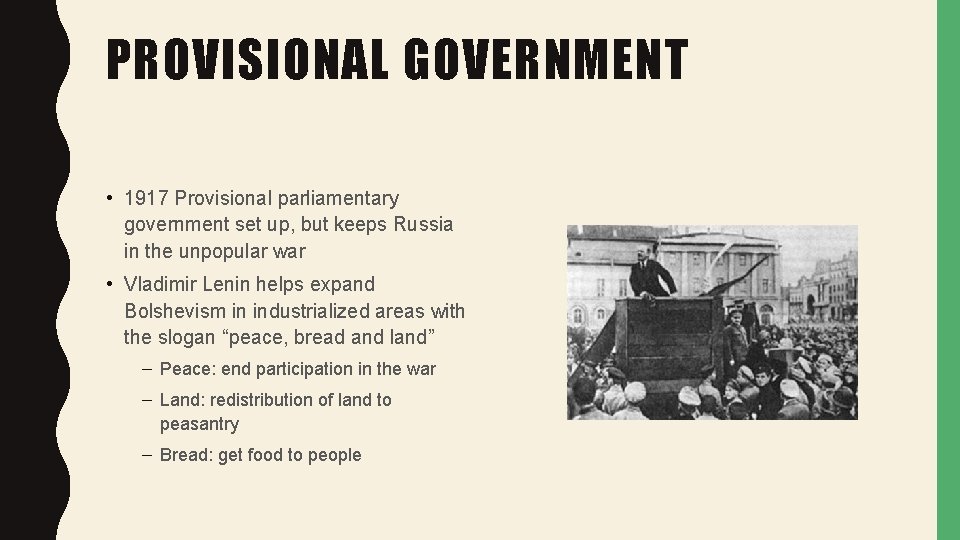
PROVISIONAL GOVERNMENT • 1917 Provisional parliamentary government set up, but keeps Russia in the unpopular war • Vladimir Lenin helps expand Bolshevism in industrialized areas with the slogan “peace, bread and land” – Peace: end participation in the war – Land: redistribution of land to peasantry – Bread: get food to people
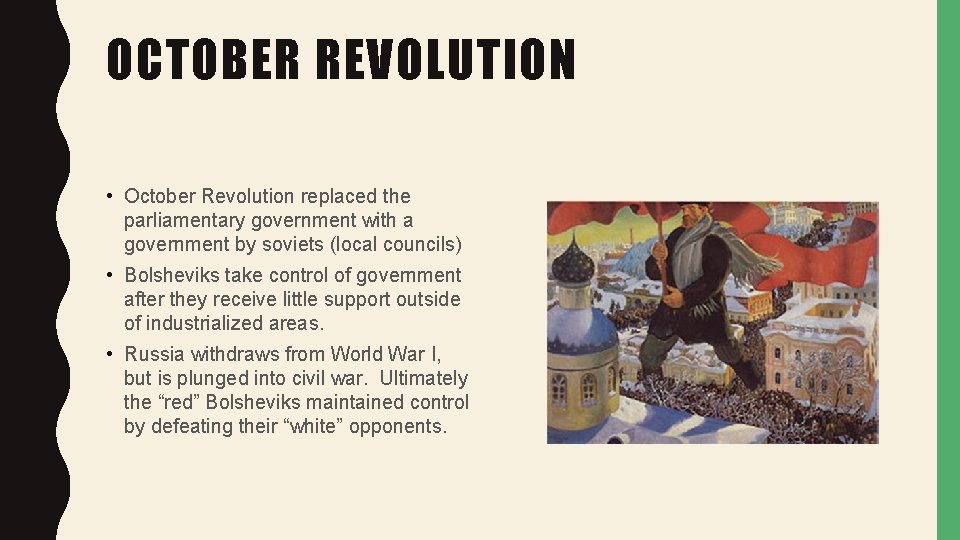
OCTOBER REVOLUTION • October Revolution replaced the parliamentary government with a government by soviets (local councils) • Bolsheviks take control of government after they receive little support outside of industrialized areas. • Russia withdraws from World War I, but is plunged into civil war. Ultimately the “red” Bolsheviks maintained control by defeating their “white” opponents.
IS THE REVOLUTION FOLLOWING MARX’S IDEAS? Primitive Communist Cooperative tribal society Communism Democratically determined goals Slave society Tribes develop into city -states; aristocracy is born Socialism Class conflict will lead to public ownership of the means of production Feudalism aristocracy develops into a ruling class; merchant class is born Capitalism Merchant class becomes ruling class; working class is born